
Introduction
In the competitive landscape of logistics and trucking, maintaining fleet hygiene is not merely a matter of aesthetics; it’s integral to operational efficiency and company reputation. A clean truck speaks volumes about a company’s commitment to quality and can significantly enhance its image both on the road and in the eyes of clients. Studies suggest that first impressions are lasting, and a well-maintained fleet gives clients confidence in the reliability of services offered. Moreover, routine truck washes can play a crucial role in reducing maintenance costs and prolonging the lifespan of vehicles by preventing the buildup of grime and corrosive substances. For fleet managers and business owners, investing in regular truck washes is an essential strategy that not only improves vehicle appearance but also ensures compliance with industry regulations. When your trucks shine, so does your company’s image, leading to increased customer satisfaction and loyalty.
Common Truck Wash Services
In the trucking industry, maintaining cleanliness is critical for both the vehicle’s lifespan and professional appearance. Here’s a list of common services offered by truck wash facilities, which fleet managers and operators might find beneficial:
- Exterior Hand Wash: Thorough cleaning to remove dirt, grime, and enhance shine through waxing.
- Underbody Wash: Critical to remove debris and salt accumulation that can cause corrosion.
- Wheel and Tire Cleaning: Focused service to clean tires and wheels, removing dirt and brake dust.
- Interior Cleaning: Vacuuming carpets, dusting surfaces, and shampooing seats for a tidy cabin environment.
- Detailing Services: Advanced cleaning procedures that may include clay bar treatment for a more polished look.
- Fleet Washing: Special services for companies with multiple vehicles, often including volume discounts.
- Environmental Care: Many modern washes implement eco-friendly practices and water recycling to reduce environmental impact.
These varied options allow fleet managers to keep their trucks in optimal condition, ensuring durability and professionalism on the road. For more insights on maintaining truck fleets, you can learn about the importance of regular trailer maintenance or get a sense of the industry’s compliance with emissions regulations.
Factors Affecting Truck Wash Prices
When evaluating the costs of truck washing services, fleet managers must consider various factors that influence truck wash prices. Understanding these elements can help in making informed decisions about budget allocation and service selection. Here are the primary factors:
1. Location
The geographical area where the truck wash is situated can significantly affect pricing. Urban areas might have higher costs due to rent and overheads, while rural locations may offer more competitive rates. Additionally, proximity to major highways can influence pricing, as convenience often comes at a premium.
2. Service Type
Different truck wash services vary in price. For instance:
- Basic Wash: A standard wash may include exterior cleaning and is typically the most affordable option.
- Detailing Services: More comprehensive packages that include waxing, interior cleaning, and engine cleaning tend to cost more due to the additional labor and materials required.
Fleet managers should evaluate their cleaning needs against the types of services offered to determine the most cost-effective solutions.
3. Truck Size
The size and type of the truck play a role in determining wash prices. Larger trucks, such as tractor-trailers, require more resources and time to wash than smaller vehicles. As such, many truck wash services have tiered pricing structures based on vehicle size, with larger vehicles consistently falling into higher price categories.
4. Additional Services
Optional add-on services can significantly increase the base price of a truck wash. Examples of such services include:
- Underbody Cleaning: This is essential for removing salt and grime that can cause corrosion but often comes at a higher cost.
- Special Treatments: Products like ceramic coatings or rust inhibitors can also add to the overall price but may offer longer-term benefits.
Conclusion
By carefully considering these factors, fleet managers can better assess the potential costs of truck washes and select services best suited to their operational needs. For more insights into maintaining fleet cleanliness, see our guide on importance of regular trailer maintenance and compliance with emissions regulations.
Table Comparing Truck Wash Costs
Here is a comparison table of the average costs associated with different types of truck wash services across various providers:
| Service Type | Price Range | Services Offered |
|---|---|---|
| Standard Wash | $30 – $50 | Exterior wash, tire cleaning, undercarriage rinsing |
| Full Detailing | $150 – $300 | Comprehensive interior cleaning, waxing, polishing, and upholstery care |
| Fleet Packages | Starting at $25 | Bulk washes, quick service, scheduling flexibility for large fleets |
For a more comprehensive understanding of truck wash services and their implications on compliance, you can learn about truck wash industry compliance and emissions regulations. Also, consider the importance of regular trailer maintenance in relation to wash frequency and practices.
Summary of Truck Wash Price Trends
-
Geographical Variability: Truck wash prices can vary significantly based on geographic location. Urban areas tend to have higher prices compared to rural locations due to higher operational costs, including rent and labor.
-
Service Range:
-
Basic Wash: Typically ranges from $10 to $30.
-
Standard Wash with Wax: Prices can range from $30 to $60.
-
Complete Detail Services: These can reach anywhere from $100 to over $200 depending on the extent of the services provided.
-
Seasonal Demand: Prices may fluctuate seasonally, with increases in winter months due to increased road grime and weather-related issues, and potentially lower prices in off-peak months when business is slower.
-
Competitiveness: Markets with more truck wash facilities often see more competitive pricing. For instance, regions with numerous service options (e.g., near major freight corridors) may drive prices down.
-
Specialization: Some truck washes offer specialized services, such as eco-friendly washes or detailing for food-grade trucks, which generally command higher prices.
-
Fleet Discounts: Many truck wash services offer discounts for fleet accounts, which can significantly lower the per-wash cost for fleet managers.
Understanding these general trends can help logistics and fleet managers make informed decisions about maintaining their vehicles efficiently and cost-effectively. For further details on industry compliance and maintenance practices, refer to learn more about industry compliance and the importance of regular trailer maintenance.
Long-Term Benefits of Regular Truck Washes
Maintaining a regular truck wash schedule has profound long-term benefits for logistics and freight companies, ranging from cost savings to improved vehicle performance. By investing in routine washing, fleet managers can significantly enhance their trucks’ overall longevity and efficiency.
Reduced Wear and Tear
Regular washing removes dirt, grime, and corrosive materials that can deteriorate a truck’s body and chassis. Over time, this preventive maintenance helps mitigate rust formation and damage to vehicle components. According to automotive experts, the costs associated with repairing undercarriage damage from neglecting regular washes can escalate quickly – sometimes exceeding a few thousand dollars each time permanent damage is incurred.
Improved Fuel Efficiency
A cleaner truck not only looks better but operates more efficiently. Studies have shown that removing dirt and debris can enhance a truck’s aerodynamics, leading to improved fuel efficiency. For instance, the American Trucking Association suggests that reducing vehicle drag by just 10% can translate to up to a 5% increase in miles per gallon (MPG), which can lead to substantial fuel cost savings over the long run. For a fleet of ten trucks averaging 10,000 miles annually, this could mean saving thousands of dollars in fuel costs each year.
Higher Resale Value
Trucks that are well-maintained and regularly washed command higher resale values. When a truck looks clean, free from rust, and well-maintained, it instills confidence in potential buyers. Industry reports indicate that maintaining a clean fleet can increase resale values by approximately 15-25%. This can result in a significant return on investment when it comes time for fleet upgrades or replacements.
Conclusion
In summary, the long-term cost-saving benefits of maintaining a regular truck wash schedule are clear. By reducing wear and tear, improving fuel efficiency, and enhancing resale value, truck washes can be a sound investment for any fleet management strategy. To delve deeper into the importance of regular maintenance practices, including truck washes, visit the importance of regular trailer maintenance. Furthermore, check out insights on compliance with industry regulations to understand the broader impact of well-maintained fleets.

- Preventative Maintenance: Cleaning trucks regularly prevents dirt, grime, and other residues from damaging the body and components over time.
- Safety and Efficiency: A clean truck is not only more appealing but also vital for ensuring safety. Ensuring clear visibility through clean windows and mirrors is crucial for safe driving.
- Regulatory Compliance: Maintaining cleanliness may align with industry regulations that require vehicles to meet specific standards.
Conclusion
In conclusion, maintaining clean and well-presented trucks is essential for any logistics or trucking business, not only for compliance with regulations but also for enhancing your fleet’s efficiency and reputation. Regular truck washes prevent the build-up of dirt and grime, contributing to health and safety, while also potentially prolonging the life of the vehicles. The pricing for truck washes varies significantly, influenced by factors such as the size of the truck, the level of service provided, and regional pricing differences. Basic washes might cost around $10-$20, while comprehensive detailing can reach up to $100 or more. Understanding these pricing factors can help fleet managers allocate their budgets effectively and ensure they’re getting the best value for their maintenance routines.
As a fleet manager, now is the perfect time to evaluate your current truck washing strategies. Take action and contact Triple A Truck Wash today to discuss how we can meet your truck washing needs with efficiency, quality, and affordability. Let’s work together to keep your fleet at its best!
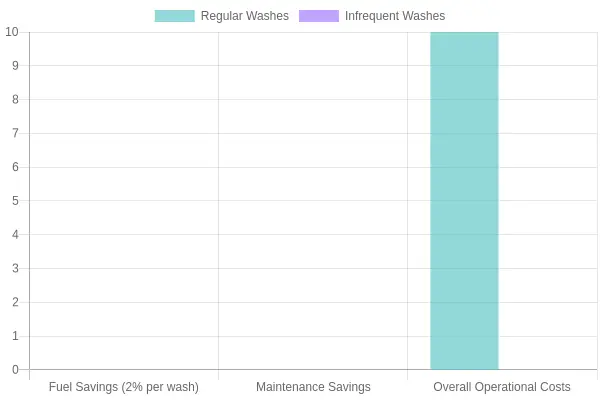
Potential Cost Savings from Regular vs. Infrequent Truck Washes
Maintaining a clean truck fleet is more than just a matter of aesthetics; it significantly impacts operational costs through fuel efficiency and maintenance savings. This comparison illustrates the potential cost savings over a one-year period for fleets that opt for regular truck washes versus those that wash less frequently.
Cost Comparison Chart
Here’s a bar chart that clearly delineates the savings associated with both approaches:
Summary of Savings
| Category | Regular Washes (% Savings) | Infrequent Washes (% Savings) |
|---|---|---|
| Fuel Savings (2% per wash) | 2% | 0% |
| Maintenance Savings | Early detection of issues | Hidden problems accumulate |
| Overall Operational Cost | 10% | 0% |
Investing in regular washes not only enhances fleet appearance but also potentially saves significant costs related to fuel and maintenance. For more insights, check out our article on the importance of regular trailer maintenance.