
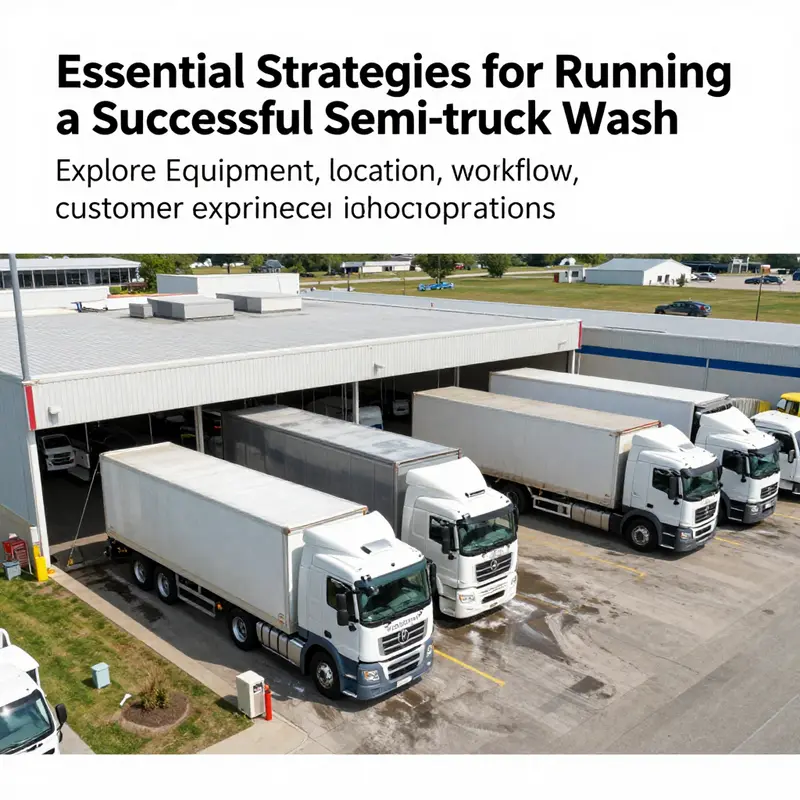
Running a semi-truck wash involves a complex interplay of specialized equipment, strategic positioning, operational efficiency, and superior customer service. As logistics and freight company fleet managers, trucking company owners, and supervisors from construction and mining fleets look for ways to maintain their vehicles efficiently and sustainably, understanding the nuances of this market becomes crucial. This article elucidates the core requirements to run a semi-truck wash effectively, emphasizing the roles of specialized equipment, the importance of location, the efficiency of washing workflows, and enhancing customer satisfaction. By breaking down these elements, we aim to provide actionable insights that can directly benefit fleet operations and management.
Gear, Flow, and Fleet Longevity: The Heavy-Duty Toolkit Behind a Semi-Truck Wash
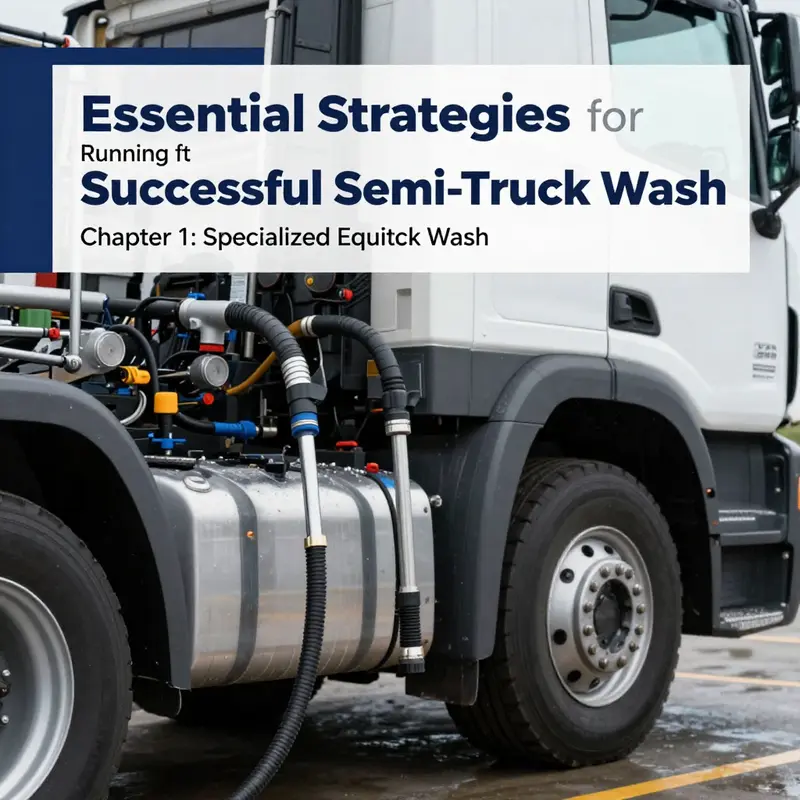
A semi-truck wash is less a simple rinse station than a carefully engineered ecosystem built to handle the scale, dirt load, and turnaround urgency of commercial fleets. The weight, length, and ground clearance of long-haul tractors, along with their undercarriages salted by winter roads or caked with quarry grime, demand a choreography of equipment that can endure hours of heavy use while delivering consistent, repeatable results. What follows is a narrative of the core tools that make that choreography possible, not as a shopping list but as a coherent system where hardware, software, and floor plan work in concert to protect assets, speed service, and reduce waste. The right toolkit is a strategic investment, and the way those tools integrate defines the facility’s capacity, uptime, and long-term profitability.
At the heart of modern semi-truck washing lies the automated, touchless wash system. These systems ride on rails or glide on a gantry, suspending high-pressure nozzles above the length of the vehicle and moving in precise synchrony with its chassis. The beauty of a rail-mounted, automated approach is its repeatability: every truck receives the same treatment, every spray arc follows the same sequence, and the need for manual labor is minimized without sacrificing cleaning quality. In practice, these systems can process a steady cadence of traffic—estimates in the upper single digits per hour for integrated multi-station configurations—while maintaining a safety margin that reduces contact with painted surfaces and sensitive components. The ability to scale throughput relies on thoughtful layout and robust control logic, including sensors that detect the vehicle’s presence, measure its dimensions, and tailor spray patterns to the truck’s profile. In many facilities, operators appreciate the fact that, once a wash cycle begins, the system can run through its program with only occasional operator oversight. Clear indicators, remote control options, and manual overrides are essential safeguards that keep the process predictable even when a truck arrives with unique dirt loads or irregularities.
The effectiveness of the wash itself depends on a combination of high-pressure water and targeted application. High-pressure jets are the primary workhorse, delivering a cleaning force strong enough to lift road film from tires, bumpers, frame rails, and undercarriages. The flow rate and nozzle array are calibrated to strike a balance between aggressive cleaning and surface safety. In technical terms, effective operations often rely on a water delivery rate measured in liters per minute and a diametric specification that ensures optimal jet trajectories. A representative engineering target is a robust flow that can be sustained throughout the cycle, with a dedicated feed to wheels and tires to shake loose embedded grime while avoiding excessive water usage that drives up makeup water and waste volumes. Cleanliness at these scales is not incidental but the result of precisely engineered hydraulics, filtration, and recirculation loops that maintain pressure while limiting energy consumption and effluent discharge.
To address the economics and environmental footprint, water recycling and conservation become non-negotiables, not add-ons. Modern semi-truck wash facilities lean on closed-loop or semi-closed-loop systems that reclaim and reuse most of the wash water. The goal is to minimize makeup water while maintaining visibility into water quality, surfactant concentration, and the removal of solids. Recycling isn’t just about saving water; it’s about sustaining steady performance across back-to-back cycles when fleets depend on predictable service windows. Filtration trains, settling basins, and intelligent controls work together to deposit grit in filters and keep surfactant levels within target ranges. When well-implemented, these loops allow the facility to operate with high throughput without the stigma of waste or excessive brine buildup that could degrade surfaces or irritate fleet managers. It also creates a platform for cost control, because water is one of the largest operating expenses in a high-volume wash environment. The maintenance crew learns to treat water like a consumable resource, scrutinizing flow meters, pump intake screens, and chemical injection systems with the same discipline they apply to pumps and valves.
Beyond the core wash, specialized tools extend the capability to handle stubborn contaminants and to preserve the long life of the fleet’s assets. Foam application tools, for example, are valued not just for their ability to pre-treat heavy grease and road salt, but for their strategic role in reducing rinse time and chemical usage. Foam cannons and foam brushes distribute a thick, clingy blanket that loosens encrusted soils before the water jets follow through with a focused rinse. In high-dirt environments—winter fleets, garbage collection, or heavy-duty construction transport—manual foaming can be used in tandem with automated cannons to ensure coverage over complex contours and behind protrusions where dirt tends to accumulate. The process is a dance between chemistry and physics: the foam loosens matter, the jets shave it away, and the surface finishes in a consistent, dry-ready state.
Undercarriage cleaning exposes a different engineering challenge. Salt and mud collect where ground clearance meets the road, and the undercarriage is a common site of corrosion and wear. Advanced undercarriage wash units use multiple high-pressure jets positioned beneath the vehicle, often paired with rotating spray arms or lift platforms that can adjust to different ride heights. The sophistication here lies in achieving thorough coverage without blasting suspension components or wiring looms. Sensors and adjustable nozzles help tailor spray intensity to the truck’s geometry, providing enough force to lift stubborn salt deposits while sparing vulnerable parts. For fleets that routinely traverse winter routes or corrosive environments, a well-tuned undercarriage wash is a non-negotiable in the maintenance program. It protects the truck’s value and reduces the lifetime cost of ownership by delaying the onset of structural corrosion—and fleets know that such longevity translates into fewer unexpected downtime events.
Wheel and tire cleaning stations form a complementary front to the central wash, particularly in high-dust or salt-laden settings. Heavy wheels, chunky tires, and heavy axles entertain debris that can persist even after the main wash cycle. Operators may choose between manual wheel-wash hoses or fixed, automated wheel-wash bays, with the latter delivering rapid, repeatable cleaning in high-volume facilities. The choice often hinges on cost, space, and turnover rate. Although automated wheel washing demands a larger upfront footprint, its speed and consistency make it a natural fit for hubs and depots serving busy fleets. The optimization here is to stage wheel cleaning early in the sequence so that debris doesn’t recontaminate the vehicle as it moves through subsequent zones.
In practice, the wash sequence is a carefully tuned pipeline. A truck arrives, the system identifies its dimensions and enters a pre-wash or foam pre-soak stage, followed by targeted sprays for tires, axles, and the undercarriage. A multi-zone approach ensures that no area is neglected; a typical cycle allocates dedicated passes for the cab sides, grill area, and bumper faces, then follows with a thorough rinse across all zones and a final drying phase. Drying systems, often comprising high-velocity blowers and air knives, shorten dwell times and enable quicker vehicle turnover. In cold or humid climates, dry-in-place strategies become even more critical to achieve a consistent finish and to prevent water spotting or freezing in winter months.”
Pinpointing the Pulse: Strategic Location and Market Demand for Semi Truck Washes
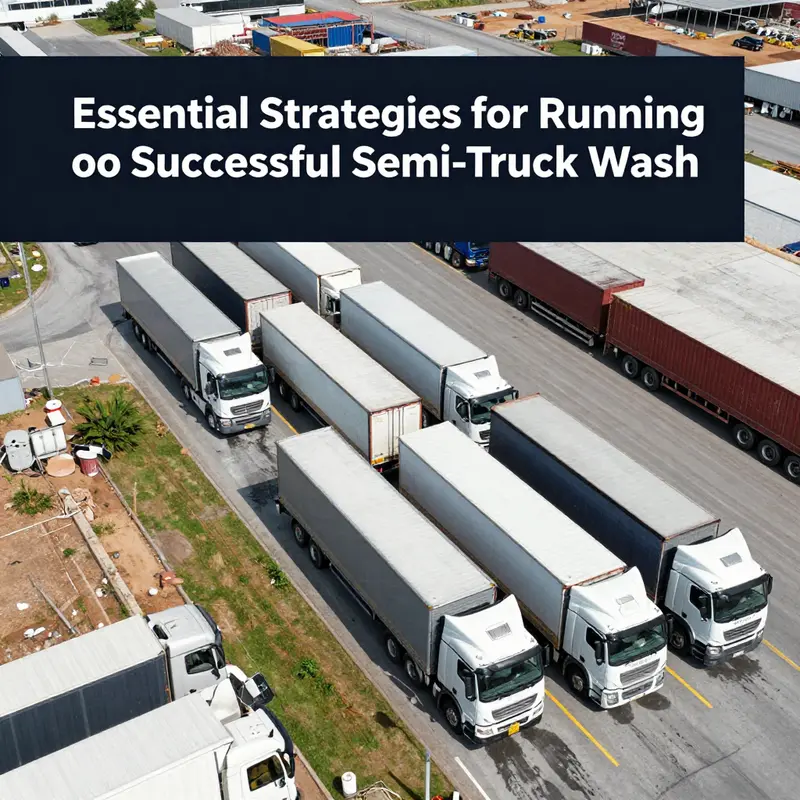
Strategic location is more than a convenience for a semi truck wash. It is a fundamental lever that determines throughput, reliability of demand, and the long run viability of the business. In a field where fleets move from one yard to another on tight schedules, the wash’s position on a map can translate into a steady stream of jobs, tight turnarounds, and predictable revenue. This reality has always been true, but the numbers and trends backing it are now more compelling than ever. The logistics and transportation sector continues to expand under the weight of e commerce, just in time delivery, and the growth of intermodal networks. As fleets shuffle between depots, ports, construction sites, and distribution centers, a wash facility that sits at the convergence of high traffic routes and the most active nodes of the network becomes a critical asset for operators who want to minimize downtime, maximize utilization, and preserve the integrity of their equipment.
A thoughtful location strategy starts with understanding where vehicle turnover happens in the supply chain. Regions with dense industrial activity, large freight corridors, and multiple hubs offer the most consistent demand. In global terms, dense urban centers and major freight corridors around industrial hubs create natural chokepoints where trucks accumulate and depart in bursts. The appeal is simple: more trucks pass by, more opportunity to service them, and less time wasted on circling for a wash between assignments. Industry trends confirm this approach. In recent analyses of heavy-duty cleaning equipment deployments, mature markets have shifted toward fixed-site washes in high-traffic zones where fleets converge for routine service and maintenance. The value of proximity is not purely psychological; it translates into tangible efficiency gains and higher utilization of the wash cycle.
The geographic logic behind location planning is reinforced by the practical realities of regional demand. Across large economies, intermodal terminals, port complexes, and major distribution centers act as magnet points for long-haul and regional fleets alike. In Asia, for instance, industrial belts around central provinces have evolved into efficient supply chains for heavy-duty cleaning systems, creating an ecosystem where parts, service, and installation are integrated with the fabric of freight movement. In North America, the same principle holds, with freight yards and highway arterial routes serving as the backbone for fleets that rely on quick, reliable wash services between legs of a journey. Fixed-site facilities near truck stops, distribution centers, ports, or interstate exits capture a steady flow of passing fleets, turning passersby into repeat customers. A practical measure of success is the consistency of visits. When a wash sits at a major node, even short-term disruptions in routing can be absorbed by the regular cadence of arrivals, reducing idle time for drivers and vehicles alike.
Reflecting on market demand data through a contemporary lens helps illuminate why the location question matters so much. A 2025 study conducted in a major urban market found that the physical location of a vehicle wash facility had a statistically significant positive impact on customer retention. Visibility, accessibility, and convenience were cited as decisive factors by fleets evaluating service options. In that study, facilities situated near truck stops, distribution centers, ports, or interstate highway exits experienced higher repeat use and shorter wait times, which translated into higher overall utilization. Those findings align with industry expectations that a high-traffic site should deliver a reliable billable throughput day after day, month after month. The economic implications are meaningful: fixed-site washes in optimal locations can generate annual revenues within a broad range, and margins tend to reflect the discipline with which operators manage capacity.
From a numbers perspective, the market signals are clear. When a wash facility is strategically positioned to serve a consistent volume of vehicles, annual revenue levels commonly fall in the mid to upper six figures, with profit margins that can span roughly from the low twenties to the mid-thirties percentage range. Those figures are not guarantees, but they reflect a robust relationship between location quality and financial performance in this niche. The logic is straightforward: more vehicles passing through means more opportunities to wash, seal, and upsell value-added services during the same encounter. It is not merely about washing; it is about turning every visit into a small but meaningful revenue event. The more predictable the flow of traffic, the easier it is to plan staffing, maintenance, and inventory across a week, a month, and a year.
A critical layer of this planning rests on understanding the broader supply chain geography. In parts of Asia, particularly around major manufacturing hubs, there is a mature ecosystem for heavy-duty cleaning equipment. Provinces known for advanced engineering talent, integrated supply chains, and proximity to export ports provide advantages not only for sourcing reliable machines but also for deploying them quickly where demand is strongest. This regional specialization supports a thoughtful pipeline approach to site development. Operators can align procurement, installation, and service with the pace of demand in key zones, rather than relying on scattered, ad hoc deployments. The result is a more resilient business model, one that can adapt to shifting freight patterns without sacrificing throughput or uptime.
Because the needs of fleet operators are central to location strategy, it is worth considering the value proposition from the B2B buyer’s perspective. Fleet managers, construction firms, and logistics operators look for more than price. They seek reliability, scalability, and partner stability. A wash provider that can promise predictable service levels, quick turnarounds, and flexible scheduling becomes a partner in fleet hygiene rather than a transactional vendor. In this light, the strategic location is not only about physical proximity; it is about embedding the wash into the routine operations of a fleet. Smart scheduling, real-time status updates, and transparent pricing are more meaningful when the facility is easy to access and capable of handling a high cadence of visits. This is where the integration of smart technologies—automatic scheduling, water recycling, and remote monitoring—adds value beyond the basic cleaning service. The location then acts as a gateway to a broader, more integrated fleet management experience.
The synergy between location and service quality helps explain why many operators pursue a dual focus: select sites that guarantee volume while designing the wash experience to convert that volume into recurring revenue. Proximity to anchor customers—large fleet operators or maintenance hubs—can stabilize demand and shorten the sales cycle. In turn, the facility’s design and operations must be capable of handling rapid cycles without compromising wash quality or vehicle safety. A multi-zone cleaning approach that targets tires, undercarriage, bumpers, and cab sides, combined with efficient drying and optional add-ons, ensures that a driver can complete a clean, check, and depart sequence within minutes. In a market where drivers and managers value time highly, speed is a competitive differentiator and a direct driver of repeat business.
The value proposition for operators is clear when viewed through the lens of market momentum. A location that serves as a reliable node in a larger freight network reduces the risk associated with weather, fuel price fluctuations, or seasonal demand swings. If you can count on a dependable flow of vehicles, you can align staffing and equipment maintenance with that cadence. And if the site can scale—accommodating more wash bays, expanding hours, or adding adjacent services without sacrificing efficiency—the revenue ceiling expands accordingly. This is where sound site planning meets disciplined execution. It is not enough to pick a busy street corner; a successful semi truck wash must harmonize traffic patterns, local regulations, water and waste management constraints, and the surrounding business ecosystem. In practice, that means performing due diligence on traffic counts, access points, turning radii, and queuing space. It also means understanding the environmental and regulatory boundaries that govern water use, chemical handling, and runoff mitigation. Smart operators treat location as an integral part of the business model, not merely a backdrop for the cleaning operation.
For operators seeking practical guidance on site design and management, the journey involves more than a map. It requires a relationship with the community of stakeholders who shape demand: fleet operators who need dependable service, construction sites with seasonal peaks, fuel stations and truck stops that act as access points, and local authorities who ensure compliance. The most successful sites become known not just for their machines but for their reliability, their clear signage and instructions, and their readiness to adapt to the evolving rhythm of the freight network. In this sense, location becomes a story about predictability and partnership as much as it is about proximity. The narrative is reinforced by the experience of customers, who value straightforward access, quick turns, and visible cleanliness as a proxy for professional discipline across the fleet.
To connect these ideas to practical action, consider how a car or a building facility manager would approach a new wash site. The first step is mapping the nearby traffic generators: ports, depots, yards, intermodal terminals, and highway junctions. The next is evaluating access and visibility: is the site easy to reach at all times of day, with clear directional signage? Are there dedicated lanes or a simple pull-through flow that minimizes confusion and reduces queue length? The third step is evaluating the footprint: is there enough space for multi-bay operations, staging, and drying without interfering with adjacent businesses or pedestrian safety? The final step is surveying the competitive landscape and potential partnerships: which nearby facilities suffer from bottlenecks that your site could alleviate? Which local businesses might benefit from a trusted, nearby wash partner? These questions guide the physical placement and the design of operations so that the site not only attracts traffic but sustains it.
Once the site is chosen, the ongoing challenge is to keep demand high and predictable. This is where beyond-location planning comes into play: building relationships with fleets, aligning with maintenance schedules, and offering flexible, value-added services that drivers and fleet managers appreciate during limited downtime. A well-located wash can become the hub of a broader ecosystem of services—interior detailing, engine bay cleaning, or treatment options that protect sensitive surfaces. But the core driver remains the same: a vehicle wash that sits in the right place, at the right time, with the right throughput, is a business built to endure. The convergence of demand, proximity, and service quality makes location not only a starting condition but a continuous competitive advantage.
For readers seeking a practical path to leverage location in their own planning, remember that the process is iterative. Start with a clear picture of expected traffic and fleet types in target regions. Use historical data from nearby yards, fuel stops, and maintenance facilities to estimate wash demand. Map peak periods and design the schedule to match those rhythms. Then validate assumptions by observing driver behavior around the site, the ease of entry and exit, and the speed of service as the fleet pool moves through cycles. Finally, formalize partnerships with key operators and add value with flexible access and integrated services that reinforce loyalty. This combination of data-driven site selection, efficient operations, and a compelling service proposition creates a resilient foundation for long-term success in a competitive market.
Internal resource for optimizing site operations can be a valuable supplement to these decisions. For example, you can explore facility management resources that focus on coordinating access, signage, scheduling, and maintenance to ensure a smooth customer experience. Facility management for truck wash businesses offers practical perspectives on turning a strategically located site into a well-run operation that consistently meets the expectations of fleets and drivers. Integrating those practices with a location-based demand strategy helps translate geography into revenue, a transformation that lies at the heart of running a scalable semi truck wash.
In summary, location strategy is not a standalone plan but an integrated approach that aligns market demand with the realities of the freight network. The most successful washes sit where fleets pass frequently, but they also operate with the discipline to convert that passing traffic into repeat visits. They combine proximity with speed, reliability, and the ability to adapt to changing freight patterns. They understand that the market reward for a well-placed wash is not just a one-time spike in customers but a steady, growing stream of business that can be scaled through smarter operations, smarter partnerships, and a sharper focus on customer experience. The future of semi truck wash profitability lies in locating at the intersection of demand density and service excellence, and then thoughtfully building the systems that turn that location into a reliable engine of recurring revenue.
External Resource: https://www.engineeringnews.co.za/article/semi-truck-automatic-wash-systems-gain-popularity-in-logistics-hubs-2024/
Efficient Operational Workflow: Designing Lean, Fast, and Reliable Semi-Truck Washing
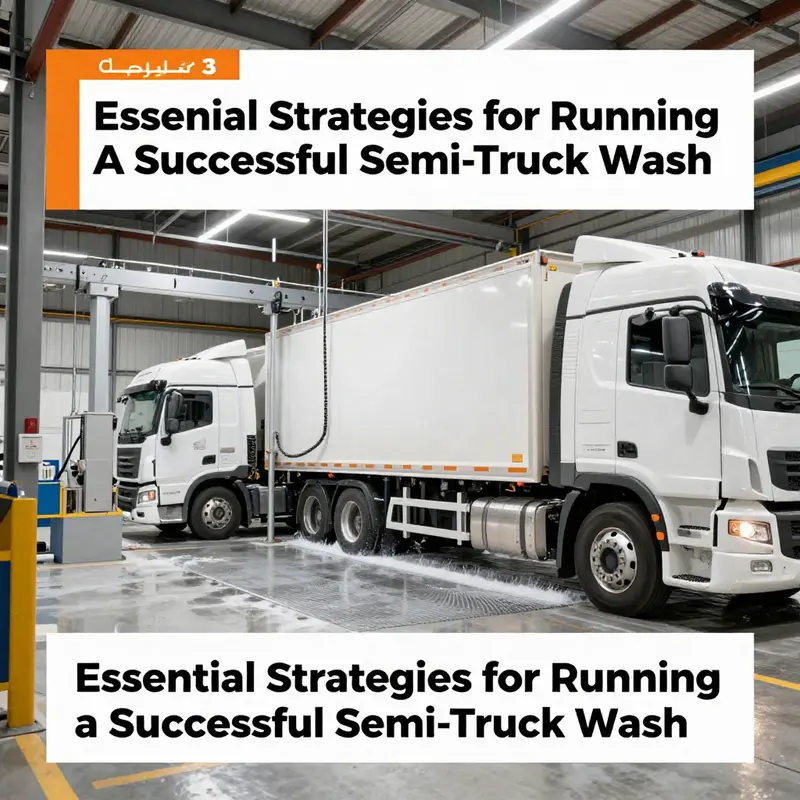
Efficient operational workflow is more than a checklist of tasks; it is the living blueprint that translates a clever concept into reliable throughput, consistent cleaning quality, and durable margins. In a semi-truck wash, where every minute saved compounds into more loads served and more satisfied drivers, the workflow must be deliberate, data-informed, and adaptable to real-world variability. The foundation rests on choosing the right wash platform for a given mix of fleets, sites, and schedules, but the true core lies in orchestrating the movement of trucks, water, chemicals, and personnel so that each vehicle experiences the same high-standard clean without bottlenecks or rework. This means embracing a continuum of options—from portable, on-site units to high-throughput, fixed-installation systems—while maintaining a disciplined approach to maintenance, safety, and sustainability.
A portable truck wash platform represents a versatile entry point for operations that demand flexibility. These mobile, self-contained units bring the wash directly to construction sites, seasonal operations, or small fleets that do not justify a permanent facility. The strength of such platforms is not only convenience but practicality: a compact footprint, integrated water recycling, and the ability to deploy where demand spikes or land-use constraints exist. In practice, on-site portable systems minimize travel time for drivers, reduce setup and teardown between jobs, and substantially lower the overhead of fixed-location infrastructure. They also embody a forward-thinking stance on environmental stewardship; the best portable units employ closed-loop recycling, which lowers fresh-water makeup requirements and curtails chemical runoffs. The on-demand nature of portable platforms dovetails with a service-oriented business model that emphasizes speed, reliability, and client-specific adaptability. Yet, for fleets with predictable, high-volume throughput, portable units are often a prelude to more scalable options.
For facilities focused on steady throughputs and standardized service, the drive-through truck wash and the overhead rail-mounted system present two ends of a continuum that share a common goal: minimize manual labor while preserving uniform cleaning outcomes across diverse vehicle configurations. Drive-through setups are designed to move a truck through a sequence of automated stages—pre-rinse, high-pressure cleaning, targeted jets for tires and undercarriage, and a finishing rinse. The design philosophy is to maintain a seamless flow that requires little operator intervention. When space, capital, and environmental management align, a drive-through system delivers impressive efficiency and repeatability. Overhead, rail-mounted configurations push throughput even higher, especially in hubs with heavy, continuous traffic. Trucks enter a protected wash corridor, glide along guided paths, and pass through zones where high-pressure jets, rotating brushes, and chemical applicators coordinate in precise timing. The result is a predictable cycle time and a consistent finish across all vehicles, which strengthens brand reliability and reduces the cognitive load on on-site staff.
Despite the allure of automation, a cohesive operational workflow does not rely solely on hardware. Automatic sensing and programmable controls are the glue that binds a complex wash sequence into a reliable process. Modern washing systems detect the presence and size of a vehicle, select an appropriate wash profile, and modulate parameters such as water flow, chemical concentration, and brushing speed in real time. This sensor-driven adaptability is crucial for handling the wide variety of semi-trucks in fleets—long-haul models with tall cabs, dump trucks with exposed undercarriages, or mixer trucks with irregular bumper shapes. The control logic can allocate water efficiently, switch to more aggressive cycles for extreme soiling, and transition to conservation modes when water resources are stressed. A well-tuned automatic system reduces human error, ensures repeatable results, and frees technicians to monitor quality rather than micromanage the process.
A multi-zone cleaning approach is essential to achieve a thorough result without compromising speed. High-pressure jets concentrate on tires and rims, where caked grime can degrade a vehicle’s appearance and potentially cling to components. Bumpers, undercarriage, and frame rails require targeted attention to remove mud, tar, and other heavy residues. Cab sides and mirrors deserve careful rinsing to prevent streaks and smudges that degrade first impressions. The best workflows integrate these zones so that orders of operations minimize water usage and chemical waste while maximizing cleanliness. In warmer climates, an efficient drying phase becomes a critical finishing step. Optional air blowers can accelerate drying, reducing downtime between vehicles and preventing water spots that slow subsequent clients from pulling in.
Efficient workflow is not simply about speed; it is also about predictability and safety. When drivers arrive on the lot or can access a site at any hour, 24/7 operations often become feasible. This requires robust safety protocols, well-lit work zones, and clearly marked ingress and egress paths. It also hinges on predictive maintenance that prevents unplanned downtime. Regular inspection of pumps, nozzles, filters, and moving parts ensures that the system maintains its peak performance. A disciplined maintenance culture reduces emergency repairs and preserves the consistency of wash quality, which in turn secures customer trust and long-term profitability. In this regard, the material construction of wash components matters as well. Stainless steel and corrosion-resistant polymers resist the harsh cleaning chemicals and the vehicle grit that are routine in heavy-duty washing environments. Such material choices translate into longer service life, fewer unexpected failures, and lower total cost of ownership as throughput scales upward.
Water management remains a central driver of both efficiency and sustainability. Closed-loop recycling systems minimize freshwater makeup and reduce wastewater generation. Even in high-throughput facilities, clever water reuse means that the washing cadence can continue with minimal interruptions due to water supply fluctuations. Recycling does not simply conserve water; it also stabilizes operating costs and aligns with environmental compliance expectations that fleets and facilities increasingly enforce. A properly engineered workflow integrates water storage, recycle loops, filtration stages, and monitoring dashboards that track turnover and capture performance data. Operators can observe trends in water consumption, identify rinse cycles that achieve the best balance between cleanliness and water use, and adjust the chemical dosing accordingly. The result is a more predictable, cost-conscious, and compliant operation that can scale with demand.
The human element, while diminished by automation, remains indispensable. In a lean workflow, technicians are experts in quality assurance and exception handling. They perform rapid quality checks on a subset of vehicles, verify that high-value clients get the attention they expect, and maintain the readiness of auxiliary services such as interior vacuuming, tire shine, or engine bay cleaning. The essential skill is to anticipate problems rather than react to them. A tired driver or a late delivery window should not derail the wash sequence, so the business must design buffers into the schedule. The best operators build a feedback loop: data from sensors and customer input converge with frontline observations to refine wash profiles, adjust queueing logic, and improve routing on-site. This dynamic adjustment is not ad hoc; it is a disciplined, data-informed practice that keeps throughput steady and quality high across shifts and weather conditions.
The rhythm of a semi-truck wash is also a function of the physical layout and the sequencing of tasks. A well-planned facility design considers the pacing of entry, the geographic separation of washing zones, and the speed at which recovered rinse water returns to the system for reuse. Even the smallest design detail—where hoses coil, where pumps are placed for ready access, or how a drying arch is positioned relative to the exit—can ripple through the entire operation, affecting cycle times, maintenance downtime, and customer wait times. In this sense, facility management for truck wash businesses, though often tucked behind the scenes, is a strategic lever. It shapes not only the pace of work but the ease with which crews can operate safely and consistently. To explore this dimension further, see the discussion on facility management for truck wash businesses.
To keep the workflow coherent and repeatable, operators must also embed a robust maintenance and safety cadence into daily routines. Regular, proactive maintenance minimizes the risk of a wash cycle failing mid-process, which would cascade into delays for subsequent vehicles. This means establishing clear intervals for inspecting pumps, nozzles, and filters; verifying the integrity of water lines and chemical dosing systems; and ensuring that filtration and recycling components remain clean and effective. Safety protocols must be woven into every stage of the process—from vehicle sensor calibration to the handling of high-pressure equipment and the storage of detergents and solvents. A culture of prevention is more economical than one of repair, especially when throughput is a core competitiveness variable. On a practical level, this approach translates into scheduled downtime for technicians, easy access to spare parts, and a design that anticipates maintenance needs rather than forcing operators to improvise when parts fail or components clog.
The aesthetic finishing touches can cap a high-quality wash and set a higher standard for customer experience. After the main wash, finishing tools such as a pneumatic (air) polishing machine play a critical role in addressing hard-to-reach areas and ensuring wheel rims, trim, and taillights gleam with a showroom-like finish. The portability and lightness of pneumatic tools make them ideal for edge cases and show vehicles, where appearance matters as much as performance. Integrating finishing steps into the workflow without disrupting the overall cycle requires careful sequencing and time budgeting. A well-timed polishing pass should feel like a natural extension of the wash, not an add-on that delays the next truck. In the most refined operations, detailing, interior touch-ups, or brief engine-bay cleanings can be offered as value-added services. These add-ons attract higher-margin revenue and strengthen relationships with fleet operators who are seeking convenience and consistency in a single, trusted partner.
The operational workflow thus becomes a living system that blends flexibility with rigor. The portable platform serves as a nimble entry point; the drive-through and overhead rail-mounted options offer scalable throughput for high-demand hubs. Automatic washing systems, guided by smart sensing, ensure that each vehicle receives an appropriately scaled clean while conserving water and chemicals. A robust maintenance regime and careful material selection underpin long-term reliability, so the same sequence can be repeated day after day, truck after truck. The cutting edge of this workflow lies in the integration of data-driven decision-making with hands-on expertise. Sensors, dashboards, and operator feedback converge to optimize cycle times, ensure consistent results, and reveal opportunities to reallocate resources for greater efficiency or expanded service offerings. When this orchestration works as intended, the wash becomes more than a service; it becomes a predictable process that fleets can count on in tight delivery windows and on busy routes.
As operations scale, the value of an integrated workflow becomes even clearer. A disciplined approach to lines, zones, and cycles reduces variability and enhances the reliability of the overall system. It also lowers the cost per wash by reducing chemical waste, water consumption, and the labor hours required per vehicle. The business case strengthens as throughput rises without sacrificing quality, and customer satisfaction follows with faster turnarounds and consistently clean vehicles. The chapter’s emphasis on platform selection, automation, water management, and maintenance reflects a holistic understanding of what it takes to run a semi-truck wash. It is a synthesis of engineering, operations research, and practical field experience that points toward a sustainable, scalable model for a growing fleet-services landscape.
For operators seeking guidance on the broader management and facility aspects that support this workflow, consider the insights available at facility management for truck wash businesses, which discuss practical considerations for layout, scheduling, and uptime across different wash configurations. This perspective helps align daily processes with longer-term scalability, ensuring that the workflow remains resilient as volumes rise and fleet mixes evolve. The combination of flexible platform options, automated control, thoughtful water recycling, and a culture of maintenance creates a virtuous cycle where efficiency begets reliability, reliability enables growth, and growth reinforces the value proposition of professional semi-truck washing. In the next section, we will explore how these workflow principles translate into concrete performance metrics, training implications, and customer-facing practices that sustain competitiveness in a dynamic market.
External resource: https://www.sae.org/standards/content/AS5712_202408/
Beyond the Clean: Crafting a Customer-Centric Semi Truck Wash Experience
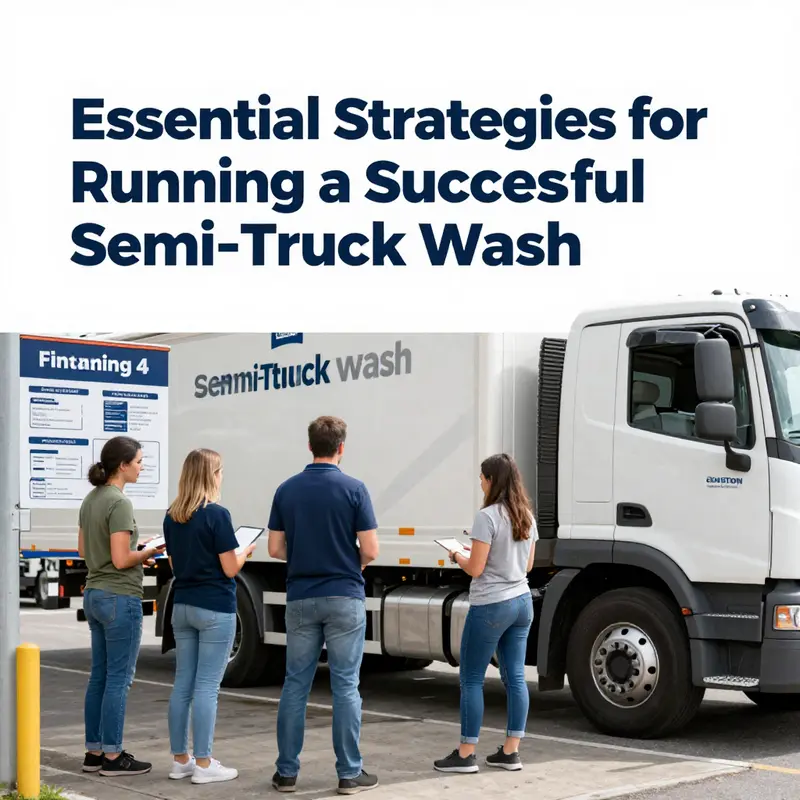
A semi truck wash operates at the intersection of logistics pace and fleet reliability. It isn’t enough to remove grime from steel; the real value lies in how quickly a driver can complete the task, how confidently the fleet manager can schedule the next asset, and how smoothly the site blends automation with human attention. When you run a semi truck wash with a customer-centric mindset, you are not just offering a cleaning service—you are delivering reliability, predictability, and a sense of care that fleets depend on daily. This chapter connects the hardware and workflows to a broader service design that treats drivers and fleets as partners rather than transactions.\n\nEfficiency and speed must come with quality. The goal is a workflow that minimizes waiting and movement without compromising the finish. Thoughtful bay layout, clear staging, and reliable drying zones create a rhythm from arrival to departure. Sensors and automation set a confident pace, while trained operators remain ready to intervene when nuances arise. The result is a predictable tempo that reduces disputes and accelerates post-service reconciliation.\n\nTransparency in pricing and status updates is essential. A simple digital menu or on-site display clarifies what each tier includes, and real-time updates answer the familiar question: where are we in the process? Drivers appreciate concise, actionable signals—Wash in Progress, Drying Complete, Ready for Pickup—and fleet managers benefit from accurate invoices tied to clearly defined steps.\n\nThe waiting environment matters as well. Comfortable seating, charging stations, lighting, and access to Wi-Fi turn downtime into productive time and reinforce the brand’s care for drivers.\n\nPeople remain central in an automated world. Friendly check-in, clear turnaround estimates, and proactive communication about issues build trust more than scripted promises. Training should emphasize customer encounters and quick, relevant information without overload.\n\nConsistency and reliability tie everything together. Standardized procedures, calibrated equipment, and regular maintenance prevent surprises and build long-term trust with fleets. A well-managed operation treats customer experience as a strategic asset—one that strengthens loyalty, accelerates cash flow, and sustains growth in a competitive market.
Final thoughts
The operation of a semi-truck wash hinges on several critical components that collectively drive success. Specialized equipment tailored for heavy-duty vehicles enhances cleaning efficacy, while a strategically chosen location maximizes accessibility and demand. The establishment of efficient workflows minimizes operational time and cost, while a focus on customer experience fosters loyalty and repeat business. By integrating these elements, logistics and freight companies can ensure their fleets are not only maintained to the highest standards but also supported by a reliable service. With the right approach, running a semi-truck wash can become a lucrative and essential asset in any fleet management strategy.