
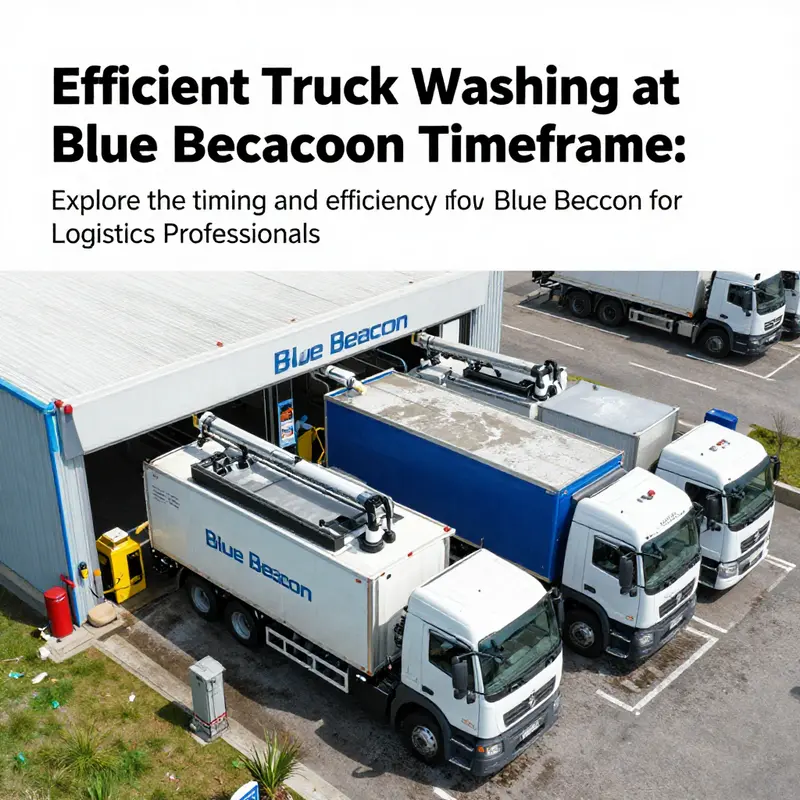
For logistics and fleet management professionals, understanding the time required for truck washes is crucial for maintaining efficiency and maximizing uptime. Blue Beacon’s operations are centered on speed and effectiveness, with washes typically completed in under 20 minutes. As we delve deeper into this critical service, our analysis will cover the fundamental factors influencing wash duration, customer experiences, operational insights, and how Blue Beacon compares to other truck wash services. By the end of this exploration, fleet managers and trucking operators will gain a comprehensive understanding of how Blue Beacon can support their needs more effectively.
Fast, Thorough, and Consistently Timed: Unpacking the Sub-20-Minute Blue Beacon Truck Wash
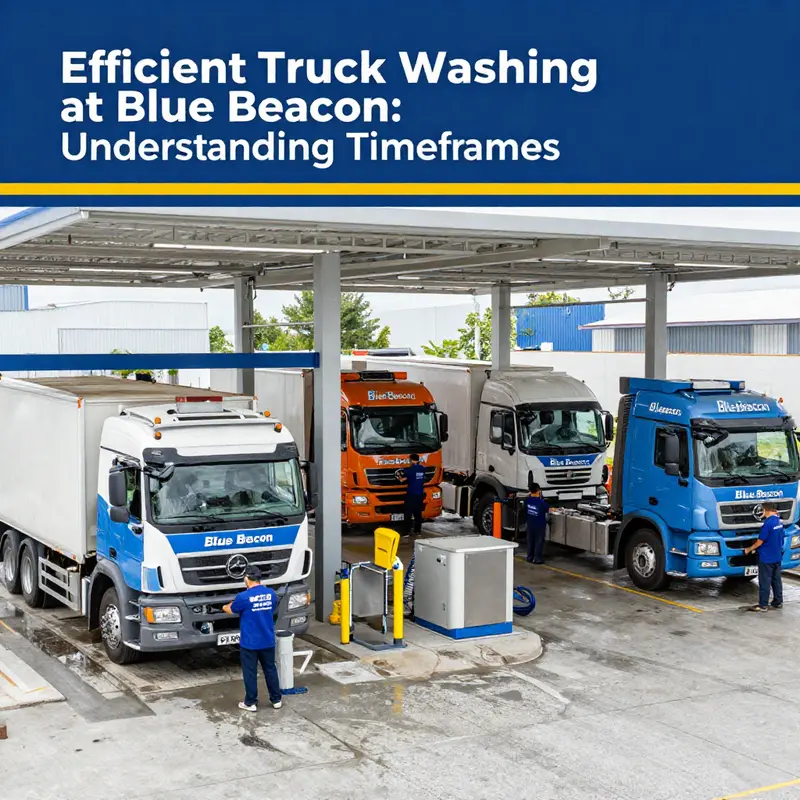
A truck wash that reliably finishes in under 20 minutes is more than a claim of speed; it is the outcome of a tightly choreographed system where every movement, every rinse, and every brush stroke is timed to perfection. At Blue Beacon, speed does not come at the expense of a thorough clean; rather, it is the product of deliberate process design, extensive staff training, and the careful alignment of people and machines. The result is a service experience that fleets can count on to fit between freight cycles, driver hours, and the many logistical demands that define modern trucking. When a driver rolls into a bay and the wash begins, the clock starts not as a guess but as a calibrated sequence that has been practiced countless times, refined through feedback, and validated by customer testimonials that repeatedly highlight the speed without sacrificing cleanliness. A review dated September 17, 2025 captures this sentiment in a single, striking observation: the wash felt astonishingly fast, leaving the customer astonished not by a miracle but by a well-oiled routine. Such remarks are not anomalies but a testament to how Blue Beacon has engineered time into quality, and how that time translates into value for fleets pressed to keep schedules tight and downtime to a minimum.
To understand how a sub-20-minute wash is achieved, one must look beyond the finished result and into the early steps that set the pace. The process begins long before the vehicle enters the wash bay. A quick, standardized pre-wash assessment helps staff determine the anticipated level of soil, grease, or road grime, and to assign the appropriate wash sequence. The emphasis is on consistency: every truck, regardless of size or load, moves through a similar framework that minimizes decision-making on the fly. This is important, because even small deviations from a standard can cascade into delays as operators re-check, re-adjust, and re-confirm the best approach for each vehicle. The importance of this standardization cannot be overstated. It creates a predictable rhythm—an invisible metronome—that keeps the entire operation in step. The staff, drawn from a broad age range and trained specifically for the demands of late-night shifts, brings a blend of energy, vigilance, and endurance to the scene. The age range mentioned in industry discussions—often 16 to 40 for midnight shifts—speaks to the physical stamina and alertness required to sustain quick, safe work during hours when fatigue can erode performance. Blue Beacon’s approach, however, demonstrates that training can bridge the gap between youthful vigor and seasoned steadiness; it cultivates a level of proficiency where even the most challenging soil patterns are handled with practiced ease.
The core of the wash itself unfolds in a sequence designed to maximize effectiveness while preserving speed. First comes a high-efficiency rinse that dislodges loose dirt and begins the wetting process for subsequent cleaning agents. The choice of detergents and the way water and cleaning agents are applied are calibrated to minimize dwell time while maximizing lift. This is followed by agitation—whether through automated brushes, rollers, or targeted spray nozzles—where the cleaners work on the most recalcitrant areas without requiring manual scrubbing from the staff. The idea is simple: let the machinery do the heavy lifting in the early stages, and save the manual labor for touch-ups later in the process. After agitation, a focused undercarriage spray addresses mud, road salt, and grime that tend to accumulate below the frame. The flow is continuous, so no bay sits idle while a component is waiting its turn; instead, the components move in a synchronized, high-efficiency cascade from one station to the next.
Rinsing, followed by a second pass of cleaning agents for especially stubborn areas, represents the point at which the efficiency of the system reveals itself most clearly. The staff’s role shifts from mechanical execution to quality assurance, ensuring that the outcomes meet the high standard demanded by drivers and fleet managers alike. The drying stage—often a combination of forced air and targeted hand finishes for edges and tight corners—cements the impression of a clean, dry surface in record time. What sets Blue Beacon apart is not just the speed but the conviction that the finish mirrors the speed: a uniform shine, an absence of water streaks in hard-to-reach places, and a visible sense of thoroughness that proves the wash is more than a cosmetic rinse. The result, as echoed by customers, is a clean that looks as though the vehicle has just rolled off a showroom floor, even though it has traveled long miles across rough, dirty routes.
The ability to sustain this level of performance throughout the day, including peak periods, rests on the operational architecture behind the scenes. Staffing and shift considerations are a key part of the equation. Blue Beacon relies on a workforce that is trained to execute multiple tasks within the wash sequence, ensuring flexibility and resilience when demand spikes or when staffing gaps arise. The specific age range noted in industry literature reflects the physical and cognitive energy necessary for late-night throughput—a signal that the company values stamina, focus, and safety as non-negotiable prerequisites for maintaining speed. But experience is equally important. Ongoing training programs are designed to embed best practices, reduce variance between operators, and continuously raise the bar on efficiency. In practice, this means new hires are quickly brought into a standardized routine, while seasoned operators are refreshed on incremental improvements to the process and updated safety protocols. The result is a workforce that can reproduce a sub-20-minute wash with the same confidence whether a bay is staffed by a veteran overnight crew or by newer team members who have learned the rhythm through hands-on practice.
Beyond people and procedures, the time factor at Blue Beacon also reflects the integration of technology and process design. Modern truck washes rely on precise water pressure control, optimized spray patterns, and sensor-guided workflows that keep a vehicle moving through the system at a steady pace. The staff’s role in this ecosystem shifts from manual intervention to monitoring and fine-tuning, stepping in only when a corner case arises where a manual touch is necessary to ensure a perfect finish. This balance between automation and human oversight is essential to sustaining the high throughput that customers expect while preserving the cleanliness standard that keeps drivers coming back. The faster the cycle without compromising results, the more likely a fleet will be able to schedule washes in tight windows between loads, rest periods, and road-time restrictions. In practical terms, that means a truck can arrive, be serviced, and rejoin the highway with minimal impact on delivery commitments—a reality that translates into tangible savings for fleet managers who measure performance not in gallons per minute alone but in minutes saved per trip and hours regained in a driver’s day.
For readers who want a deeper dive into the strategic side of fast cleaning without sacrificing quality, there is a line of thought that emphasizes the value of proven methods to keep grease and tar from sticking during the cleaning process. The idea is simple: adopt time-tested tactics that target common trouble spots efficiently, so the crew spends less time wrestling stubborn residues and more time delivering a consistently pristine result. This approach is reflected in industry discussions that highlight the importance of disciplined workflows, standardized toolsets, and ongoing training. The practical takeaway for operators and managers is to seek out a repeatable playbook—one that can be performed in any wash bay and by any trained staff member, regardless of the shift. In this sense, the Blue Beacon model embodies a philosophy that speed is the outcome of reliable practices rather than a mere happenstance of busy hours. It is a philosophy that invites fleet owners to consider how their own service ecosystems can bake in similar consistency, whether by adopting standardized sequences, investing in staff development, or embracing workflow technologies that shorten cycles without sacrificing depth of cleaning.
The human element never disappears from the equation, even as machines carry a substantial portion of the workload. A crucial part of achieving that sub-20-minute mark is how staff communicate, coordinate, and anticipate the next steps as the vehicle moves down the line. Clear signals, standardized cues, and the anticipation of a driver’s needs keep the momentum steady. When a driver approves a post-wash check or approves the drying stage, that moment becomes a predictable, repeatable endpoint rather than a secondary, unpredictable step. The predictability of the process is what makes the experience reliable, and reliability is what earns the trust of fleets that must manage complex schedules across multiple drivers and routes. The motivation is real: a clean truck completes its next leg with confidence, the driver spends less time waiting, and dispatch can align the wash cycle with loading and routing windows. The end result is a cycle that feels both effortless and highly engineered—a speed that is earned, not granted by accident.
For those who want to explore the practical and strategic aspects further, the industry conversation often points to the synergy between a fast wash and the broader operational health of a trucking operation. Efficient washes enable better asset utilization, shorter downtimes, and more predictable maintenance cycles. They support a culture where drivers are encouraged to arrive on schedule, knowing they can rely on a quick turnaround. They also encourage fleet managers to think about how servicing times aggregate across dozens or hundreds of trucks, translating into significant time savings and improved fleet availability. When a wash is reliably quick, predictable, and thorough, it becomes more than a service; it becomes a reliable capstone to the logistics process—an enabler that helps fleets keep moving and schedules intact. The confidence that comes from this reliability is itself a strategic asset, one that offers fleets a tangible competitive edge in an industry where every minute matters.
In addition to the internal dynamics that drive speed, customers who engage with Blue Beacon also encounter digital touchpoints that streamline the overall experience. The availability of a dedicated app, for example, offers a convenient channel to view service options, schedules, and perhaps appointment windows, reinforcing the sense that the wash is not only fast but also seamlessly integrated into a fleet’s broader operations. For readers who want to explore how such digital tools intersect with speed and reliability, a relevant external resource provides context on scheduling and access to digital infrastructure in the wash space. This digital dimension complements the hands-on efficiency described above and serves as a reminder that the fastest wash is increasingly the one that blends physical workflow with smart, accessible technology.
As with any high-efficiency operation, there is always room for refinement. The sub-20-minute benchmark is not a static ceiling but a dynamic target that can be influenced by factors such as vehicle mix, bay layout, and the cadence of shifts. Blue Beacon’s discipline around standardization, training, and execution creates a strong foundation for continuous improvement. The organization’s ability to preserve a high-quality outcome while maintaining speed reflects a culture that treats time as a resource to be managed with intent rather than an unavoidable constraint. For fleets, that translates into a reliable expectation: a clean, well-presented vehicle finished on a predictable schedule, enabling better planning, reduced downtime, and more efficient utilization of drivers and assets. The practical takeaway is not merely to seek a fast wash but to cultivate a system that reliably delivers a premium clean in a narrow window, and to recognize that such a system rests on the alignment of people, processes, and machines working in concert.
To close the circle, consider how the principle in this chapter—speed achieved through standardized practice, skilled staffing, and the harmonization of equipment and human action—applies across the broader ecosystem of truck maintenance and servicing. The same logic that drives the sub-20-minute turnaround at Blue Beacon can inform other facilities and operations in the industry. It suggests a discipline: measure the wash in terms of cycle time, quality outcomes, and the velocity with which teams respond to changing conditions, then invest in the levers that push those metrics toward a repeatable optimum. The result is not a mere snapshot of speed but a durable capability that fleets can count on as part of their everyday operations. And for readers curious about the role a mobile app or digital scheduling can play in supporting that capability, the industry’s latest practice points toward an integrated approach where digital and physical workflows reinforce one another, ensuring that the fastest wash remains both practical and consistently excellent. For further reading on how seasoned teams implement fast, reliable cleaning strategies, see the linked discussion on proven strategies for cleaning grease and tar off your trucks fast.
External resource for further context and the broader digital experience: https://apps.apple.com/us/app/blue-beacon-truck-wash/id1587975318
Under 20 Minutes: Tracing the Real Pace and Practice Behind Blue Beacon’s Truck Wash Timelines

When truck operators ask how long a wash takes at Blue Beacon, they are really asking about rhythm. The question carries more meaning than a clock on the wall. It hints at whether a fleet can stay on schedule, whether drivers can move on to the next assignment without delay, and whether a truck can roll out clean enough to pass the mandatory postwash checks that fleets depend on. In the experience of many customers, the answer comes back with a confident figure: less than 20 minutes from the moment the first water touches the chassis to the moment the last squeegee leaves the windshield. A review dated September 17 2025 in the Blue Beacon truck wash app captured this pace in a single, striking moment, describing astonishment at the speed of service. What that single data point reveals, when read across dozens of visits, is less about a magical shortcut and more about a carefully choreographed routine. It is a routine built on disciplined staff training, reliable equipment, and a process map that minimizes hesitation while maximizing cleanliness and safety. The speed is not an accident; it is a byproduct of deliberate design that accounts for every touchpoint a truck experiences as it moves through a wash bay.
To understand why the under-20-minute target feels effortless to the driver and credible to fleet managers, it helps to trace the sequence from arrival through exit. The moment a vehicle pulls into a bay, the team has a plan in mind. The intake phase is quick and predictable. The operator greets the driver, confirms the service level, and positions the truck for the wash cycle. The goal at this early stage is to establish the timing framework without losing sight of safety. A clear, concise briefing—sometimes verbal, sometimes supported by a touch screen in the bay—tells the driver what to expect and what the crew will handle. In most cases, the driver is asked only to stay with the vehicle long enough to keep communication channels open. This is not a waiting game; it is a precise sequence where every second is accounted for.
Once the truck is settled, the mechanical core of the operation comes into play. The wash itself begins with a pre-rinse designed to loosen road grime, dust, and the more stubborn accumulations that collect near the undercarriage and around the wheels. This is followed by a targeted application of detergents that are engineered to cling to different surfaces—metal, rubber, glass—without harming seals or decals. The team’s technique matters here. The crew members know which angles to approach from and how long to dwell on a stubborn stain. The objective is not just to foam everything up but to remove residues in a way that reduces the need for rewash or touch-up later in the cycle. The efficiency of this stage rests on two factors: trained hands and reliable machinery. When both are aligned, the cycle flows with a predictability that drivers can feel as a comfortable, almost familiar pace.
The middle portion of the wash is where the speed-to-clean ratio begins to shine. Automated brushes and high-pressure nozzles glide across the surface with a rhythm that has been tuned over countless shifts. The team monitors the process and makes micro-adjustments to pressure, brush contact, and rinse intervals to accommodate different trailer configurations, tire sizes, and bumper heights. It is the engineering of consistency, rather than brute force, that yields the quick turnarounds. The wash is designed to treat common truck designs with a uniform standard, so a cabs-and-tramp trailer configuration does not require bespoke handling beyond routine checks. In practice, this means fewer interruptions for setup changes and more time devoted to actual cleaning. When a fleet shows up in steady streams, the crew’s familiarity with these patterns reduces the cognitive load on the team and keeps the momentum intact.
A key enabler of the short cycle time lies outside the bay as well. The facility design itself favors flow. Wash bays are laid out to minimize cross-traffic, with clear sightlines from bay entry to exit. The drying phase follows a similar logic. Blow-dry arches are positioned to strike the vehicle from multiple angles, and technicians monitor the air pressure and nozzle motion to avoid over-drying or missed spots. Drying is not a luxury in this context; it is part of the quality assurance that ensures the vehicle meets the fleet standard before the driver pulls away. The moment of exit is, in effect, a moment of verification. A quick visual check by the operator confirms that glass is clear, chrome is free of splatter, and the undercarriage is free of standing rinse water. If any issue arises, the team can address it promptly without disrupting the rhythm that has already carried the wash to its nearly finished state.
That rhythm does not happen by accident. It rests on the backbone of staff training, which translates into a shared language of efficiency. The crew understands the sequence of stages, the typical dwell times, and the signs that indicate when a particular area requires attention. In a system designed around speed, communication becomes a key driver of performance. A single, well-timed instruction can save minutes by averting unnecessary pauses. The crew relies on mutual trust and a clear division of labor. One operator may focus on chassis and undercarriage areas, another oversees the upper body and cab surfaces, and a third coordinates the rinse and dry cycles. The result is a cohesive unit that moves as a single entity rather than a collection of individuals performing isolated tasks. This arrangement matters as much as any nozzle or brush. It creates a situational awareness that keeps the whole process on track even when a truck arrives with unusual features or when weather introduces a wrinkle to the typical workflow.
The customer experience at Blue Beacon, as evidenced by the app review and the broader feedback, centers on predictability. A driver pulling into a bay can anticipate a delivered outcome without the anxiety that sometimes accompanies longer wash times. The offer of speed is not a substitute for thoroughness; it is an assurance that quality and efficiency can coexist. The sensory cues reinforce this balance: the soft hum of pumps, the subtle hiss of the high-pressure spray, and the scent of clean soap that is neither overpowering nor faint. These cues create a mental map for the driver, a sense of being in capable hands. For many fleet operators, that sense translates into reliability across a route, a reduction in downtime, and the ability to plan downstream tasks with greater confidence.
The operational discipline behind the under-20-minute performance extends beyond the bay floor. Facility management practices for truck wash businesses emphasize standardization, continuous improvement, and monitoring. Even when a mechanic checks a nozzle or a filtration system, the information is captured, aggregated, and analyzed to prevent a decline in speed or quality. This is where the narrative joins with the broader industry context. The same principles that keep a wash cycle tight also support safety, compliance, and equipment longevity. A well-tuned system reduces the risk of accidents in the bay and diminishes the likelihood that a vehicle will be returned for a rewash due to incomplete cleaning. It also means that crews can maintain a consistent schedule across shifts, avoiding bottlenecks that can otherwise ripple through a fleet’s operations. The importance of the human element cannot be overstated, though. A crew that is engaged, well trained, and aligned with the facility’s goals turns a potentially routine service into a dependable component of fleet productivity.
To connect the dots between speed and service, it helps to look at how the pause points in the process are minimized. At the moment of arrival, the driver and the crew agree on the service level, which sets expectations for the cycle length. If the fleet has a standard package for routine washes, the crew can allocate time segments with a precision that would be difficult to achieve on a random, ad hoc basis. There is a quiet mathematics behind the clock: prewash time, detergent dwell, brushing, rinse, dry, and final inspection each occupy a defined window. When all parts of the equation align, the total can slip under the 20-minute threshold with room to spare for a brief, courteous check with the driver about any streaks or missed spots. This kind of proactive communication, short and direct, helps ensure the final outcome is not only fast but also acceptable to the operator who will observe the cleanliness of the trailer during the handoff.
The customer feedback loop is a critical data stream in this story. A positive review that extols speed does more than celebrate efficiency; it signals that the operational model is functioning as intended. In a market where customers value rapid service alongside dependable quality, a sub-20-minute wash becomes a badge of reliability rather than a one-off exception. But this does not imply complacency. A fleet that sustains such performance must continually invest in people, in training, and in the equipment that supports the core process. The maintenance schedule that keeps pumps, nozzles, and conveyors in top form is part of the same system that ensures a swift, thorough wash each time. In practice, this means routine checks, predictive maintenance, and a culture that treats each bay as a living part of a larger workflow. The drivers who rely on the service for predictable turnaround are not just customers; they are partners who contribute to the ongoing refinement of how a wash is done, how long it takes, and how clean a trailer ends up when the door finally opens.
For readers who want to anchor these observations in a broader context, a practical touchstone is the way knowledge is shared across the industry. The linked resources offer a window into the supporting practices that make a fast wash possible. One such resource focuses on facility management for truck wash businesses, a topic that captures the operational discipline behind speed and reliability. It speaks to how space planning, staff deployment, and equipment layout converge to sustain a short cycle without compromising safety or cleanliness. In many ways, this chapter demonstrates how a simple metric—time to wash—can reflect a deeper alignment of people, process, and place. When a driver exits a Blue Beacon bay in under 20 minutes, the scene is not merely about minutes saved; it is about a system that has learned to work with velocity while preserving the integrity of every clean surface and every safety check.
The end-to-end experience, then, rests on a chain of proven practices that fleet managers can recognize and rely on. The crew’s ability to execute a repeatable sequence, the facility’s layout that supports rapid movement, and the instrumentation and feedback loops that keep performance in view together create a mode of operation that is both efficient and resilient. This is not a one-size-fits-all model, but a robust approach that yields consistent outcomes under varying loads. A typical day in a busy yard might involve multiple trucks with similar profiles rolling in back-to-back. In such cases, the value of a reliable under-20-minute window multiplies. Every minute saved in one wash translates into minutes gained for the next truck, reducing the overall downtime in the yard and enabling more predictable scheduling for drivers and dispatchers alike. The result is a workflow that serves as a foundation for fleet reliability, helping operators meet the stringent time requirements that their customers, and their own operations, demand.
For readers who want to glimpse the practical, everyday relevance of this pace beyond the bay walls, the narrative offers a grounded reminder: speed is a feature, not an accident. It is the sum of a well-trained crew, a carefully engineered wash sequence, and a facility design that flows from intake to exit with minimal friction. It is also a signal that a company has earned its reputation not by serving as a mere stop along the route, but by turning a routine maintenance task into a reliable, repeatable, and high-quality service. In this light, the under-20-minute figure is less a random achievement and more an indicator of a working system that already knows how to respond when the next truck pulls in. The steady drumbeat of the wash bay—prewash, soap, rinse, dry, and final check—continues to prove its worth with each iteration, each satisfied driver, and each nod of approval from fleet managers who count on speed as a condition of performance, not simply a pleasant surprise.
External resource: https://apps.apple.com/us/app/blue-beacon-truck-wash-app/id1594637895
Within the broader ecosystem of industry knowledge, this chapter also nods to the importance of learning from peers and translating insights into actionable practices. The landscape of fleet maintenance is a shared space where operators compare notes on turnaround times, discuss the impact of bay layout on cycle length, and explore how different service levels affect downstream productivity. The exchange is not just about speed; it is about understanding which elements most influence the clock and how those elements can be tuned without sacrificing the thoroughness of the wash. In this sense, the under-20-minute target is a beacon for continuous improvement—an invitation to examine team training, equipment reliability, and process design with the same level of scrutiny that fleet managers apply to tire wear, brake performance, and fuel efficiency. The goal is simple in articulation but demanding in practice: maintain the balance between velocity and virtue, so every wash yields a clean result swiftly and safely.
In sum, the stories told by drivers who experience a Blue Beacon wash in under 20 minutes converge on a common truth. Speed here is a consequence of meticulous preparation, disciplined execution, and a facility that has designed itself around the needs of high-volume, high-stakes vehicle cleaning. The customer who steps out of the bay with a gleaming trailer knows not only that time has been saved but also that the service has stood up to the demands of real-world operation. This alignment between speed and quality—between the clock and the cautious pride of a job well done—defines the essence of what the article will continue to explore in future chapters. It is a reminder that behind every quick wash lies a coherent system, a human team that commits to excellence, and a space that makes speed safe, reliable, and repeatable for fleets that move the economy forward.
Fast, Thorough, and On Time: The Minute-by-Minute Reality of a Blue Beacon Truck Wash
When truck operators pull into a Blue Beacon truck wash, they are not simply dropping off a vehicle for a routine cleansing. They enter a carefully choreographed sequence designed to convert a potentially lengthy maintenance task into a streamlined, predictable moment in a driver’s day. The clock starts not with the first spray but with the readiness of the lane, the readiness of the crew, and the alignment of the equipment. The prevailing story across the chain is not about grandiose promises but about dependable, well-communicated timing. In practical terms, most wash cycles at Blue Beacon clock in at about twenty minutes, a figure supported by a review from September of 2025 in which a customer exclaimed, “All this was done in probably less than 20 minutes. WOW!” That line captures more than astonishment; it signals a structured operation where speed does not come at the expense of cleanliness, and efficiency does not erode thoroughness. The experience is a case study in how time, people, and technology converge to deliver clean trucks in a way that fits the demanding rhythms of a fleet operator’s schedule.
At the heart of this efficiency is a simple, repeatable rhythm. Vehicles move into a bay where trained technicians greet them, assess the dirt load, and confirm the service level. A well-trained crew understands that the truck’s condition—whether it’s a dry van, a tractor-trailer, or a heavy tanker—dictates the dwell times of certain steps. Yet even with this variability, the process is designed to minimize delays. Pre-wash checks occur almost instantaneously as the driver remains in the cab, ready to acknowledge any special instructions while the team lines up hoses, brushes, and nozzles in a synchronized fashion. The efficiency stems from both the predictability of the steps and the skill with which each step is executed. It is not an accident of luck or a single moment of luck-driven throughput; it is the result of years of refining routines, training crews, and calibrating equipment to work in concert.
The first phase of the wash is, in many ways, about preparation more than cleaning. A quick visual assessment determines whether the load calls for extra attention to wheels, undercarriage, or the vehicle’s front end where road grime tends to accumulate. This is where the operator’s eye, trained by experience, becomes a time-saver. Rather than running the entire system through a one-size-fits-all cycle, the team can adjust the initial spray pattern and the duration of the pre-soak based on the observed soil load. When the dirt is light, a standard pre-wash can proceed with minimal dwell, while heavier soil or grease on a tanker might require a longer dwell in a controlled, monitored manner. In either case, the goal is to condition the surface so that the downstream steps will work with maximum effectiveness, not just more water exposure.
The wash cycle itself is a blend of mechanical action and chemical choreography. Modern wash bays rely on automated or semi-automated washing arms, high-pressure jets, and strategically placed nozzles that deliver the right balance of cleaning agents. The choice of detergents and their application sequences is a topic of careful calibration. The cleaners are selected to target common contaminants in the trucking ecosystem—road film, salt residues, rubber marks, and the stubborn film that years of highway miles leave behind. The detergents are dispensed with timed precision so that the cleaning action is sufficiently aggressive to dislodge grime yet restrained enough to prevent surface damage or chemical waste. The result is a cycle that accomplishes the heavy lifting quickly, followed by targeted scrubbing in critical areas that demand more attention.
Rinse and drainage complete the bulk of the work. The rinse phase is not simply a rinse; it is a controlled cascade that ensures no residue remains from detergents while taking care to conserve water. In this era of environmental awareness, Blue Beacon facilities frequently optimize water usage by recycling and reusing treated effluent wherever possible. That approach does not slow the process; rather, it complements it by maintaining the speed of the cycle while reducing the overall resource footprint. In practice, drivers appreciate that the rinse is thorough enough to leave a streak-free finish, yet swift enough to avoid turning a routine wash into an endurance test. The pace remains brisk because the crew has rehearsed the sequence, and the equipment is maintained to perform consistently without surprises.
After the rinse, a drying and detailing phase often follows. Drying, sometimes the most overlooked part of the cleaning sequence, receives deliberate attention at Blue Beacon. Rapid air-drying systems, coupled with intermittent hand-drying for precision areas, help ensure that the vehicle exits the bay not just clean but also presentation-ready. The time invested here is measured and purposeful; it is not a luxury, but a necessary step that prevents water spots and ensures a professional finish for the truck’s exterior. The crew’s familiarity with the drying pattern—the flow of air across doors, panels, and undercarriage—speaks to the practice of working with the vehicle rather than against it. When technicians know the contours and the decision points for different vehicle configurations, drying becomes a performance discipline, not a bottleneck.
Quality control, the quiet confidence behind the twenty-minute figure, comes into play once the visible cleaning is complete. A quick inspection checks for missed spots and ensures that chrome, fenders, and lights reflect the light as intended. The check is not a postscript; it is integrated into the workflow. If a spot is noted, a rapid, targeted touch-up follows—sometimes a final wipe, sometimes a quick flash of extra spray in a problem area. This is the phase where speed and accuracy converge. The crew understands that revisiting a section later is far less efficient than a fast, decisive correction at the moment of inspection. The emphasis is on doing the job right as the job is being done, a principle that supports the overall speed without compromising quality.
From the driver’s perspective, the twenty-minute window has practical resonance. Fleet managers who schedule back-to-back washes or fit multiple detours into a single overnight route rely on predictable timing. The uniformity of the process across locations also matters. While dirt levels and vehicle types vary, the operational model—begin with a quick assessment, execute a disciplined wash, rinse, dry, and inspect—tends to yield a familiar cadence. That cadence reduces planning uncertainty and improves reliability in dispatch decisions. A driver knows that a clean tractor-trailer batch can fit into a tight window, and a fleet manager can front-load maintenance logs with confidence, knowing the wash time is unlikely to derail subsequent service commitments.
An important, often overlooked factor is the role of staff training in sustaining this tempo. The crew’s competence is not merely about speed; it is about knowing when to accelerate and when to decelerate to protect the truck’s finish. Training covers not just the mechanics of the wash, but the sequencing of tasks, safety protocols, and customer interaction. The goal is to keep the line moving without creating a sense of rushing the work. In many Blue Beacon facilities, new hires undergo a structured onboarding that emphasizes standard operating procedures, safety considerations, and the importance of consistent outcomes. As the team gains experience, the speed becomes a natural byproduct of familiarity rather than a forced performance metric. The result is a work culture where efficiency is a product of competence, not crunching numbers at the expense of quality.
What drives such consistent timing, beyond human skill, is the thoughtful design of the physical space and the supporting systems. Bay configurations are arranged to minimize travel distance for both vehicles and staff. Equipment is kept in good repair, with routine maintenance that prevents unexpected downtime. The wash arms, the conveyors, the drainage channels, and the drying stations all exist in a carefully choreographed ecosystem. This integrated setup reduces wasted motion and ensures that each minute of the cycle is productive. It is a reminder that the best way to shave seconds off a wash is not by rushing workers, but by aligning space, tools, and tasks so that everything functions like a precisely tuned machine.
Of course, there are real-world variances. A heavy-duty tanker with stubborn grease will demand more attention in localized areas, and an oversized trailer may take a moment longer to align with the wash arms. In such cases, the team adapts without breaking the rhythm. The twenty-minute norm remains a baseline, a target that signals efficiency while leaving space for adjustments without tipping into inefficiency or neglect. Drivers who understand this nuance tend to value the predictability—knowing that a particular service level typically takes a defined portion of time, yet remains flexible enough to handle outliers gracefully. In the end, the value proposition is not merely the speed; it is the combination of speed with reliability and a consistently clean result that meets fleet standards for appearance and maintenance.
The broader industry context reinforces why this matters. In fleets where time is money, the capacity to deliver a fast, dependable wash translates into more on-road miles for drivers or more deliveries completed per shift. The ability to reliably schedule a wash between legs of a route reduces wait times and helps keep drivers on schedule. In practice, that schedule discipline supports maintenance regimes that extend the life of highly used equipment. Trucks that leave Blue Beacon with a clean exterior are less likely to face corrosion-related problems and are easier to inspect during routine maintenance checks. The visual cleanliness also reinforces a sense of professionalism for operators who rely on their appearance to project reliability to customers and partners. The cumulative effect is a tangible return on investment in time, personnel, and equipment that resonates with fleet owners who must balance cost control with service expectations.
It is instructive to think of this twenty-minute figure as a performance target rather than a strict constraint. Managers may review throughput data, compare bay utilization, and adjust scheduling windows to match demand patterns. They may examine peak times, such as early mornings, late nights, or post-shift windows, to determine how to allocate staff without compromising the core speed. They may also examine the interplay between the wash and ancillary services, such as light detailing or trailer cleaning, which can be introduced in adjacent bays without disrupting the main wash cycle. In this sense, the twenty-minute benchmark is a compass, guiding ongoing improvements while maintaining the essential speed and quality that customers have come to expect. The real skill lies in maintaining consistency across days, crews, and locations, a feat that becomes more impressive once the number of variables in a busy trucking ecosystem is considered.
For readers who want to explore how such efficiency is measured and supported in practice, it is worth looking at the broader literature on operations in service-oriented maintenance facilities. The discipline encompasses workforce training, facility layout, equipment maintenance, inventory management of cleaning agents, and the metrics used to monitor performance. It also includes the subtle but crucial aspect of customer communication. When a driver arrives, there is often a short exchange that confirms the service level and any special requirements. Those moments of conversation, though brief, help prevent misalignment and ensure that expectations are met. In a high-turnover environment, clear communication reduces the likelihood of rework and contributes to a smooth, predictable experience that underpins the reliability of the twenty-minute standard.
Beyond the walls of one facility, this chapter’s focus on time in the wash sheds light on how a well-orchestrated service can become a competitive differentiator. The ability to clean swiftly without compromising quality is not simply a technical achievement; it is a reflection of organizational culture, disciplined operations, and a shared commitment to customer satisfaction. When a fleet operator experiences the speed and the result in a single visit, the impression lingers and becomes a reference point for future decisions about maintenance planning, route design, and partnerships with wash providers. The twenty-minute norm thus becomes a language of reliability—spoken fluently by crews, managers, and drivers who have learned to plan around it and to expect it consistent with the brand promise of the facility.
For those seeking a deeper dive into how facilities manage the complexity behind such performance, one can explore resources on facility management for truck wash businesses. This link offers a broader look at the principles that help keep every bay running on time and every crew aligned with a shared standard of excellence. facility management for truck wash businesses
In sum, the timeline of a Blue Beacon wash—roughly twenty minutes from arrival to exit—reflects a disciplined, integrated approach to service delivery. It is a function of trained people, well-maintained machines, thoughtful space design, and a culture that prizes both speed and thoroughness. The experience is made possible not by a single heroic effort but by an ecosystem that supports reliability at every tick of the clock. In a world where fleet operators average multiple stops per day, such reliability is not a luxury but a necessity. The twenty-minute standard, paired with the real-world nuance of vehicle type and soil level, offers a practical frame for fleets planning routes, schedules, and maintenance budgets. It is the quiet backbone of a service that keeps trucks moving, appearances polished, and fleets ready to meet the next mile with confidence. And as the data continues to accumulate—from customer reviews to digital app-driven timing—the blueprint for efficient, high-quality truck washing becomes clearer, not just in a single location but as a scalable model across the network.
External resource for further insight into efficiency tools and data-driven timing can be found at the Blue Beacon Truck Wash App, which provides additional context on how digital tools support the maintenance cadence of modern truck washes. https://apps.apple.com/us/app/blue-beacon-truck-wash/id1497837666
Speed That Moves the Fleet: Blue Beacon’s Truck Wash Turnaround
Turnarounds at the wash bay are brisk and disciplined at Blue Beacon. The typical exterior clean, window treatment, and tire refresh are designed to complete in well under 20 minutes, with automation guiding the sequence and staff intervening only when needed. This streamlined, single-pass workflow reduces idle time and improves asset utilization for fleets, while still delivering a high standard of cleanliness. Compared with broader service menus and multi-stage washes at other operators, Blue Beacon prioritizes speed and predictability, balancing efficiency with quality. The result is reliable throughput that supports tighter scheduling and greater uptime across a fleet network.
Final thoughts
Blue Beacon’s commitment to delivering quick truck wash services within an average time of under 20 minutes makes it an excellent choice for fleet managers and operators who value operational efficiency. This examination of truck wash durations, coupled with positive customer feedback and a look at operational procedures, demonstrates how Blue Beacon aligns with the needs of logistics professionals. By opting for Blue Beacon, companies can ensure their vehicles are consistently clean, thereby reducing downtime and enhancing the overall effectiveness of their operations.