
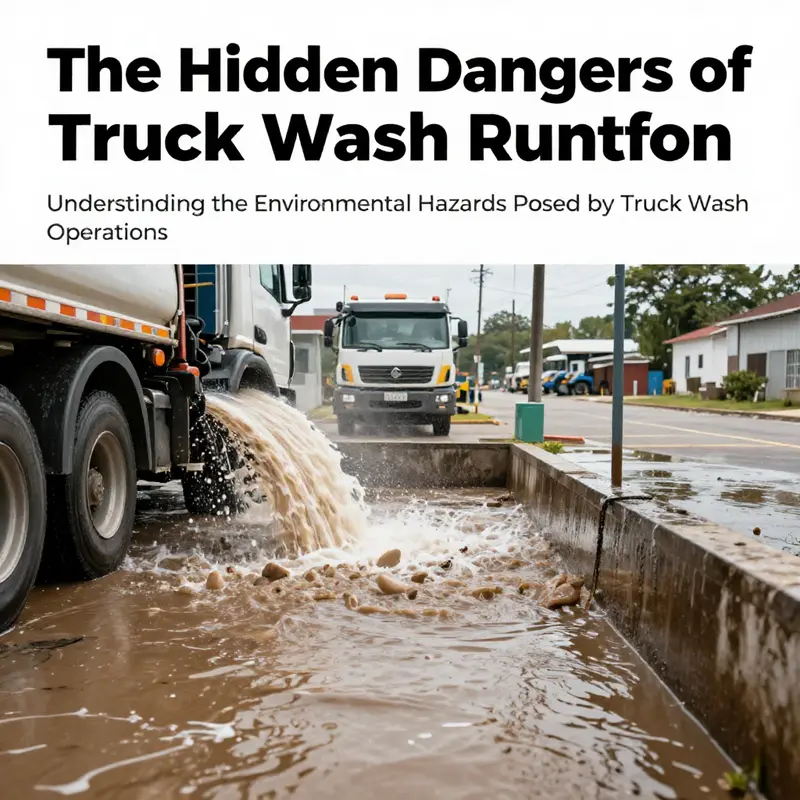
Truck wash runoff poses a significant environmental threat, particularly to water quality and aquatic ecosystems. As logistics and freight companies prioritize fleet maintenance, the inadvertent pollution generated during truck washing often goes unnoticed. This article aims to spotlight the detrimental impacts of truck wash runoff on the environment, explore critical contaminants, examine the regulatory landscape, and provide actionable best practices for fleet managers and operations teams. Through detailed case studies, we will illustrate the real-world repercussions of improper wastewater handling, with a goal of fostering awareness and compliance in the trucking and logistics industries.
Suds, Storm Drains, and Silent Hazards: The Environmental Toll of Truck Wash Runoff
When a fleet rolls into a truck wash, cleanup is practical and necessary. Yet the water that drains away after the suds have faded carries more than cleanliness; it carries a fingerprint of every surface the vehicle touched, every cargo it carried, and every spray of solvents used to remove grime. In industrial and transportation hubs, the runoff from truck washing is more than a routine nuisance. It is a concentrated stream of pollutants that can alter downstream water quality, threaten aquatic life, and ultimately circle back to human health through drinking water sources or contaminated sediments. This chapter tracks that journey from the truck bay to the broader watershed, not as a list of hazards, but as a coherent picture of how runoff forms, why its effects are persistent, and what operators and policymakers can do to rewire the pattern from risk to resilience.
The mixture that leaves a truck wash is complex and poorly forgiving. It includes hydrocarbons such as oil and grease that cling stubbornly to surfaces, heavy metals like lead, zinc, and cadmium that hitch rides on road grime, and detergents or surfactants that lower water’s surface tension and can alter oxygen dynamics when discharged into streams or storm sewers. Suspended solids, including silt, rust, and degraded paint, add sediment load that can smother benthic habitats and clog the feeding routes of aquatic organisms. Cargo residues on container floors and vehicle undercarriages can introduce additional chemicals, depending on cargo types, in turn broadening the spectrum of contaminants. The result is a wastewater cocktail that is rarely designed to be treated by municipal systems without pretreatment or on-site intervention.
A central concept here is the first flush—the initial surge of runoff that tends to carry the highest concentrations of pollutants. When rain or washing water begins to flow, the most contaminated materials on vehicle surfaces and the wash area are swept into the drainage system in a pulse that can overwhelm receiving waters. If this pulse bypasses any form of treatment, the impact is immediate and localized, yet the consequences can extend downstream, particularly during storm events when the same watershed experiences multiple inputs from numerous facilities. The problem is not merely the presence of pollutants, but their timing and concentration. Sustained, diluted inputs may still degrade water quality, but sharp pulses from first flush events can create spikes in contaminant levels that stress aquatic organisms and complicate regulatory compliance.
In practice, many truck wash facilities still lack adequate containment and treatment options. The typical setup might include gravity separation or simple sediment basins, but without a complete on-site treatment train, oils and solids can bypass capture, and detergents can transform into substances that reduce dissolved oxygen in receiving waters. When oils and greases mix with detergents, the resulting emulsion can be particularly difficult to separate, leaving dissolved-phase pollutants that travel with the water column rather than settle out. This is not a purely local issue. Water bodies do not recognize property boundaries, and pollutants from one wash bay can travel through storm drains into rivers, wetlands, and even coastal zones, depending on regional hydrology and drainage infrastructure.
The ecological stakes are real and multi-faceted. Heavy metals persist in the environment and bioaccumulate in organisms, moving up the food chain and potentially concentrating in fish that people eat. Even at lower concentrations, metals can interfere with reproduction, immune function, and growth in aquatic species. Hydrocarbons pose a different set of risks; they can form surface films that hinder gas exchange for aquatic life, reduce habitat quality, and accumulate in sediments where bottom-dwelling organisms may be exposed over long periods. Surfactants, while useful for cleaning, can alter microbial communities and oxygen dynamics, sometimes contributing to hypoxic conditions in slower-moving streams and sheltered bays. The cumulative effect is a degraded baseline for water quality, one that can erode the resilience of ecosystems that cities and industries rely upon for flood protection, fisheries, and recreational value.
Volume matters in this equation. Truck wash operations can consume large quantities of water each day, especially in fleets with high turnover or frequent detailing. Even when pollutants are present in small fractions per wash, the sheer volume of wastewater means that total pollutant loading can become substantial over weeks, months, and years. In areas with aging or inadequately designed stormwater infrastructure, infiltrating or exfiltrating contaminated water can overwhelm treatment capacity and disperse pollutants into multiple receiving waters simultaneously. This scenario underscores a practical truth: good environmental stewardship for truck washing requires more than occasional disposal compliance. It demands a system that captures, cleans, and, where possible, recycles water to limit the volume of harmful effluent and to reduce the risk of uncontrolled discharges during storm events.
Operationally, addressing the hazard begins with containment and containment alone is not enough. The absence of robust treatment on-site makes it easier for contaminants to bypass controls. A well-designed facility recognizes that wash water is not just dirty water; it is a coded signal of what vehicles have carried and what cleaning processes have used. Incorporating a layered treatment approach can transform a potential liability into a managed resource. On-site sedimentation basins, oil-water separators, and filtration systems are common components of such a system. The aim is not simply to shed water from the site, but to separate and remove contaminants before discharge. Recycling wash water is another powerful lever. Where feasible, treated water can be reused for subsequent washes, reducing both freshwater demand and the total pollutant load joined to storm drains.
The regulatory landscape has evolved alongside these technical shifts. Increasingly, jurisdictions require permit-based operations for commercial vehicle washing and mandate on-site pollution controls, moving beyond the old practice of washing on unpaved lots with runoff allowed to flow freely. The policy logic behind these requirements is straightforward: if storms drive runoff into natural water bodies, and if the wash process introduces contaminants at scale, then the facility bears responsibility for preventing harm. This has driven adoption of best management practices that align cleaning protocols with water protection goals. The institutions driving these changes emphasize BMPs such as source control, properly engineered runoff collection, and verified treatment and disposal pathways. The National Pollutant Discharge Elimination System framework in the United States, for example, shapes how vehicle washing operations must monitor and document discharges, what treatment steps are required, and how monitoring data should be reported. While the specifics vary by region, the underlying principle is consistent: prevent contamination at the source, treat what cannot be eliminated, and document actions to support ongoing improvement.
For operators seeking practical guidance on implementing these protections, there are resources that translate regulation into daily practice. A critical starting point is to view facility management not as a compliance chore but as a core operational discipline—one that integrates maintenance, process control, and environmental responsibility. The approach begins with site design: containment that minimizes uncontrolled runoff, on-site treatment to remove oil, solids, and dissolved contaminants, and water reuse where chemically and technically feasible. It extends into daily operations: using coverable wash bays to reduce spray, minimizing detergent loads to what is necessary, and performing regular maintenance on separators to maintain hydraulic performance and separation efficiency. It also includes training staff to recognize and respond to abnormal discharges and to report failures before they escalate into regulatory or ecological problems. Implementing such practices requires not only capital investment but a cultural commitment to stewardship. A practical, integrated resource that supports these efforts can be found in dedicated guidance on facility management for truck wash businesses, which discusses planning, maintenance, and compliance in a coherent, field-ready framework. facility management for truck wash businesses.
The broader takeaway is that environmental hazard from truck wash runoff is not an inevitability of mobility or commerce. It is the product of how a site handles water after cleaning, how it designs its treatment train, and how it aligns operations with evolving environmental expectations. When first flush pulses arrive, a well-equipped site has already captured and treated the majority of pollutants or has ensured that the water leaving the property is suitable for safe discharge or reuse. This shift—from treating water as a waste product to treating it as a resource—transforms the economics and ethics of truck washing. It protects downstream ecosystems, preserves urban water quality, and reduces the risk that communities must shoulder cleanup costs later. The path forward is practical: design for containment, invest in robust on-site treatment, embrace water recycling where possible, train staff for vigilance, and stay attuned to regulatory developments that reward proactive management.
For a broader, science-based framework on how to approach vehicle wash water and runoff control, a valuable external reference provides detailed guidance on permit requirements, best management practices, and case studies. See the EPA’s Vehicle Washing and Runoff Control resource for comprehensive guidance on managing vehicle wash water within the National Pollutant Discharge Elimination System framework. External resource: https://www.epa.gov/npdes/vw-vehicle-washing-and-runoff-control
From Suds to Streams: Contaminants in Truck Wash Runoff and Their Environmental Consequences
When a truck wash operates near a waterway or in an urban setting with shared stormwater infrastructure, the rinses and washwater carry more than bubbles and scent. They collect a suite of contaminants that originate on the vehicle surface, from engine drips to road grime, and then transport them into the environment with the same momentum as the soapy spray. The wastewater from truck washing is not just a simple effluent; it is a moving mix of oils, greases, detergents, suspended solids, and a variety of organic compounds that can persist in ecosystems long after the last rinse has evaporated. This is why the question of whether truck wash runoff constitutes an environmental hazard is not a narrow concern but a broad public and ecological issue. The chapter that follows traces the pathways these contaminants take, the risks they pose to water quality and aquatic life, and the kinds of infrastructure and practices that can reduce harm without sacrificing cleanliness for the fleets that rely on these services.
The primary pollutants in truck wash wastewater begin with oils and greases that originate from the vehicle itself. Engines may leak, seals can fail, and stubborn residues from lubricants and hydraulic fluids accumulate on the vehicle’s exterior and undercarriage. During a wash, these oils can be stirred into the rinse water and then dispersed across a catchment area. On the water surface, oils and grease form slicks that impede gas exchange, block sunlight, and create zones where oxygen exchange is stifled. Aquatic organisms—ranging from bacteria to fish—rely on dissolved oxygen, and even subtle reductions can alter metabolic rates, reproduction, and survival. The persistence of some hydrocarbon fractions means that oil-derived pollutants can remain in bottom sediments and release toxins over time, influencing organisms that feed on contaminated prey and potentially moving up the food chain. The visual cue of an oil sheen may be the most obvious signal, but the ecological implications extend far beyond what is immediately visible.
Suspended solids are another enduring feature of washwater. Road dust, clay, sand, and other debris cling to vehicles and are shed into the washwater during cleaning. When this turbid mix drains into storm sewers or surface waters, it clouds the water and blankets benthic habitats. Fine sediments can smother eggs, clog gills, and disrupt the delicate balance of aquatic communities. Even without chemical toxicity, the physical presence of sediment changes the habitat structure that fish and invertebrates rely on. Sediment particles can also act as vectors for bound contaminants, concentrating metals and organic compounds on their surfaces. In this way, the solid fraction of washwater becomes a carrier that enhances the spread of pollutants through rivers, lakes, and estuaries, expanding the footprint of any single wash run into a regional concern.
Detergents and surfactants, the cleaning agents that make washwater effective, contribute a different kind of stress. These chemicals reduce surface tension and improve the removal of grease and grime, but they can be toxic to aquatic organisms even at relatively low concentrations. Surfactants interact with cell membranes, disrupt hormonal processes, and, in some cases, impair the ability of organisms to cope with other stressors such as temperature changes and low oxygen. When detergents break down, they can release phosphorus and nitrogen compounds that act as nutrients in water bodies. This nutrient input can fuel algal blooms and stimulate eutrophication, a process that leads to excessive plant growth, oxygen depletion, and a cascade of impacts on biodiversity. The presence of detergents also complicates treatment scenarios, because many wastewater treatment systems are optimized for typical municipal loads and may not be configured to remove these specific organic compounds efficiently.
A broader set of organic compounds includes hydrocarbons from fuel, lubricants, and other operational residues. These substances may originate from drips, leaks, and the wear products that accumulate on tires and road surfaces. Hydrocarbons vary in volatility, solubility, and persistence. Some fractions readily volatilize or biodegrade, while others persist in sediments and bioaccumulate in organisms. The risk of bioaccumulation means that even if a single wash appears small, repeated exposure across many washes can lead to cumulative effects in higher-trophic-level predators. The subtlety of these processes often escapes casual observation, yet the potential for long-term ecological change is real, especially where wash activities occur frequently and near sensitive habitats.
The environmental consequences of these contaminants extend beyond the immediate effects on water chemistry. When wash runoff flows into storm drains that connect to streams or coastal zones, it can contribute to acute and chronic water quality problems. The immediate consequence is often a measurable decline in water clarity, accompanied by changes in dissolved oxygen and nutrient dynamics. This trio—suspended solids, oils, and nutrients—drives a shift in community structure. Species that are more tolerant of turbidity and chemical fluctuations may flourish, while sensitive native species decline. Over time, the altered community composition can reduce biodiversity, disrupt predator-prey dynamics, and degrade ecosystem services such as nutrient cycling and water purification. In urban settings, these disturbances may be compounded by the cumulative load from many wash operations across a region, turning what seems like a routine maintenance activity into a persistent source of pollution for local rivers, bays, and estuaries.
Regulatory regimes across many jurisdictions recognize the hazards posed by truck wash runoff. Discharge of untreated or inadequately treated washwater into storm systems or natural waters is frequently prohibited or tightly controlled. The enforcement landscape ranges from permitting requirements to mandatory on-site treatment and recycling programs. The rationale is straightforward: prevention of water quality degradation, protection of aquatic life, and avoidance of downstream costs associated with remediation and cleanup. For mobile and fixed wash operations alike, the compliance question is not merely a legal formality; it is a practical measure that determines the feasibility and sustainability of a fleet’s operations. Municipal stormwater management systems, in particular, can become stressed when treated as a repository for municipal responsibilities. When washwater bypasses treatment and enters the sewer or drainage networks, it can contribute to issues such as oxygen depletion in receiving waters or the overloading of municipal treatment facilities.
In this context, the environmental hazards associated with truck wash runoff are not isolated incidents but part of a broader pattern of cumulative stress on ecosystems. The combination of heavy metals, oils, and nutrients, coupled with physical changes to habitat from turbidity and sedimentation, creates a multifaceted challenge. Heavy metals, in particular, warrant attention because of their persistence and potential to bioaccumulate in organisms. Once metals accumulate in higher-trophic organisms, they can travel up the food chain, raising concerns about long-term exposures for wildlife and, in some contexts, humans who rely on local fish populations. Even when immediate toxicity is not evident in the water column, the latent effects of multi-pollutant exposures can manifest in subtle, chronic health impacts for aquatic communities.
Addressing these hazards does not require abandoning efficient cleaning practices. Instead, it invites a reframing of operations around containment, treatment, and reuse. On-site containment systems—such as impermeable collection basins and secondary containment barriers—prevent washwater from entering storm drains and reduce the risk of uncontrolled discharges. Filtration and separation technologies can remove solids and emulsified oils before effluent leaves the site. Filtration media, oil-water separators, and advanced biological or chemical treatment steps can substantially reduce contaminants to levels compatible with local discharge standards or, better yet, with water recycling streams. The most effective strategy often combines several layers of protection: capture, pre-treatment to remove the bulk of suspended solids and hydrocarbons, and a polishing stage to guard against trace contaminants. For mobile operators, adopting such a layered approach requires careful site design, operator training, and ongoing maintenance to ensure systems function as intended.
There is a practical, strategic dimension to this effort as well. Beyond hardware, the management culture of a truck wash operation matters. Clear procedures for wash-water handling, routine inspections of seals and hoses to reduce leaks, and routine maintenance of containment structures all contribute to minimizing pollutant loads at the source. The human element—technician diligence, awareness of environmental impact, and consistent adherence to best practices—plays a critical role in reducing the cumulative risk posed by wash runoff. In this sense, the problem is not only about installing the right equipment but about cultivating a culture of environmental stewardship within the operation. A practical framework for integrating these practices can be found in facility management for truck wash businesses, where site design, workflow optimization, and maintenance programs come together to minimize environmental risk while preserving cleaning efficacy.
Finally, the broader context of environmental protection and industry responsibility suggests that proactive wastewater management will have benefits beyond regulatory compliance. Reducing pollutant loads can improve operational resilience by lowering the risk of fines, improving community relations, and preserving water resources that support fleets, customers, and ecosystems alike. The path forward is not a single silver bullet but a suite of integrated practices that span capture, treatment, recycling, and continuous improvement. When these elements align, truck wash operations can deliver clean vehicles without imposing a heavier burden on the environment they share. For operators, this means designing facilities with an eye toward stormwater integrity, investing in reliable filtration and recovery technologies, and training staff to recognize when a wash process needs adjustment to protect water quality. The overarching goal is to ensure that cleaning does not come at the expense of rivers, lakes, and coastal zones, but rather supports a sustainable balance between fleet maintenance and ecological health.
External resource: For regulatory and technical baseline information, see the Environmental Protection Agency’s Water Technical Resources at https://www.epa.gov/region1/water-technical-resources.
Guardrails of Clean Water: Regulations that Shape Truck Wash Runoff and Protect Ecosystems
Runoff from truck washing carries oils, heavy metals, detergents, and sediment that can harm aquatic ecosystems and downstream communities. Regulations address this risk by requiring facilities to minimize pollutant discharges, implement best management practices (BMPs), and treat or reuse washwater before it leaves the property. The Clean Water Act provides the overarching framework, with many truck-wash operations governed by stormwater rules and permits issued under the National Pollutant Discharge Elimination System (NPDES). Facilities that could discharge to waters of the United States must obtain permit coverage and commitments to limit contaminants, control flow, and treat effluent. Permit specifics vary by state or locality, but the goal is consistent: prevent oil, grease, metals, and sediment from entering storm drains and natural bodies of water. Regulators provide templates and guidance on reporting, inspections, and monitoring to support compliant operations. A central element across jurisdictions is the implementation of BMPs that reduce pollutants at the source. Concrete pads, curbs, containment for chemicals, oil-water separators, sediment traps, and detention or capture systems help separate and retain contaminants. Closed-loop or recycle-forward washing systems are especially effective by limiting wastewater generation. The concept of treatment-to-discharge remains core: washwater is collected, treated, and then discharged, recycled, or disposed of in accordance with permits. Simple separation and filtration can suffice in some contexts, while more advanced recycling units reclaim water for repeated use. Ongoing compliance relies on robust recordkeeping, inspections, and monitoring results, providing regulators with a traceable history of actions and outcomes. Training, maintenance, and a culture of environmental responsibility reinforce daily discipline and reduce the risk of violations. Industry guidance and state-specific permit conditions complement federal rules, helping operators translate requirements into practical procedures. Regulations evolve as science advances and technologies improve treatment and monitoring. Proactive facilities partner with regulators, engineers, and environmental professionals to stay current and improve performance over time. The ultimate aim is to protect water quality while supporting efficient, responsible operations that meet customer expectations and community standards.
Guarding the Drain: A Cohesive Blueprint for Preventing Truck-Wash Runoff Environmental Hazards
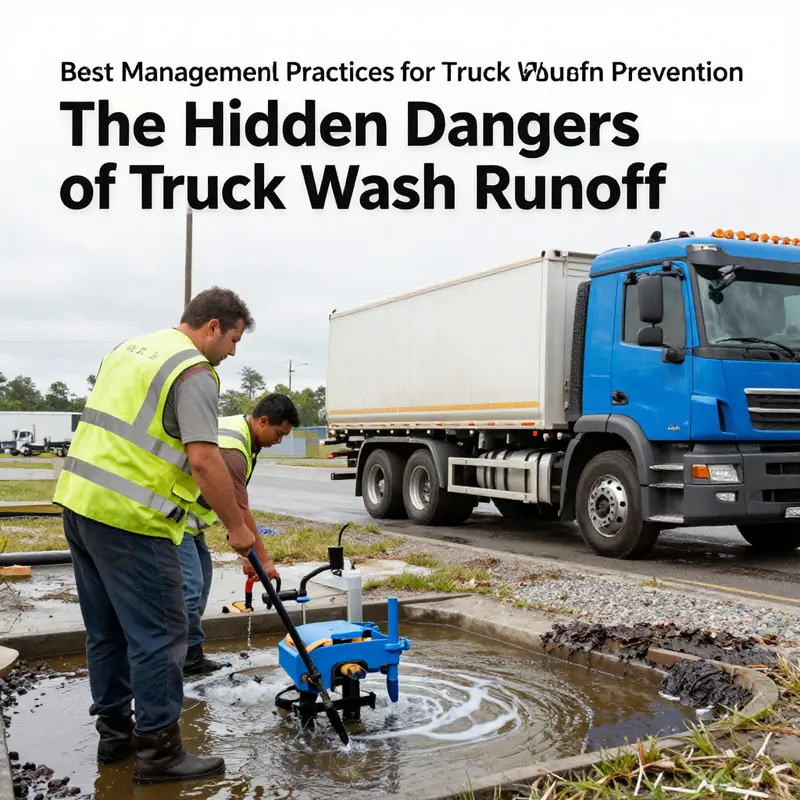
Every fleet operation relies on the ability to keep vehicles clean without paying a hidden price in water quality. Truck wash runoff is not merely a nuisance; it is a potential conduit for a cascade of pollutants that can move from parking lots and wash bays into storm drains and, eventually, into streams, rivers, and groundwater. The wastewater from truck washing carries a complex cocktail: heavy metals that cling to wheels and brake surfaces, oils and greases from engines and lubricants, detergents and surfactants that help detergency but can stress aquatic life, and a spectrum of particulates and residues that accumulate on vehicle surfaces between washes. When this mixture escapes through an unprotected drainage system, it can impair water clarity, reduce oxygen levels, and introduce toxins that accumulate in organisms over time.
Heavy metals such as lead, cadmium, zinc, and others behave as chronic hazards. They persist in the environment and can bioaccumulate up the food chain, presenting risk to fish, invertebrates, and, ultimately, human consumers of fish from contaminated waters. Oils and greases form a film on the surface of water, suffocating aquatic life and interfering with natural respiration and photosynthesis; detergents, even when biodegradable, contribute nutrients that encourage algal blooms and can alter pH and salinity balance in small water bodies. The sheer volume of water used in truck washes compounds the danger. A single site might pump thousands of gallons per day; even small concentrations of contaminants become meaningful when multiplied across the year. In regions with aging or undermaintained stormwater infrastructure, the cumulative effect can overwhelm treatment capacity and degrade downstream water quality.
Given these risks, regulators and industry groups advocate for a layered approach to runoff management. A SWPPP—Stormwater Pollution Prevention Plan—frames responsibilities, procedures, and emergency responses for a site. It codifies how wash water is collected, treated, and, if necessary, disposed of. The U.S. EPA’s stormwater guidance emphasizes that at industrial sites—mobile and fixed—runoff should be kept from direct discharge to storm drains, then treated or recycled to the extent possible. This regulatory backbone is not an obstacle but a design challenge: embed treatment into the wash operation itself and reuse water to minimize the flow that requires disposal. When BMPs are properly implemented, facilities can protect water quality, reduce liability, and promote a sustainable brand image among customers and communities alike.
At the heart of effective runoff prevention is a simple, practical architecture: keep the washwater out of the storm system, or transform it into a controllable stream that can be treated. The BMPs described below are not isolated tricks but a cohesive system. They work best when designed with the site’s flow patterns, vehicle mixes, and local rainfall in mind. The combined effect is a substantial reduction in pollutant loads, less wear on drainage infrastructure, and a more predictable operating cost profile thanks to water reuse and reduced waste disposal.
Best Management Practices for Runoff Prevention
Containment is the front line of defense. Around the wash area, curbs, ditches, or bermed edges create a physical boundary that channels wash water toward a designed capture system. The goal is to avoid uncontrolled sheets of water finding the storm system. If space is tight, a compact containment plan can still work, provided its components are connected to a central sump or a closed-loop system. The containment should be designed to accommodate peak wash volumes and be compatible with the filtration and treatment that follow. It is also essential to maintain the integrity of seals, joints, and coatings so that the containment remains watertight over time.
Oil-water separators (OWS) are another critical element. They remove free-floating oils and greases before water is discharged or sent to a treatment train. In practice, an OWS can be integrated into catch basins or sumps near the wash bays, handling both continuous flows and episodic surges. The right separator will accommodate the expected flow rate, provide clear separation, and be sized for routine maintenance. An essential detail is to provide adequate sludge holding capacity and an accessible cleanout to prevent buildup, which would reduce separation efficiency and invite odors or fouling of downstream components.
Recirculating wash systems are a potent accelerator of water resilience. Instead of discharging dirty water after every wash, these setups reuse water through a closed loop. They combine filtration stages—such as coarse filters to remove grit and hairline particulates, followed by finer cartridges or sand filters to reduce turbidity—and often incorporate chemical adjustments to maintain balance. The advantage is twofold: water use drops dramatically, and the volume of discharge at the end of the process shrinks, making controls and compliance easier and cheaper. In a fully integrated scheme, recirculation works hand in hand with OW S units and pre-wash debris management, reducing the load on the treatment chain and extending its life. The return water, once filtered, can be reused for ballast or simple rinsing while more heavily soiled streams pass through stronger treatment before disposal. The sustainable win is not just environmental; it is economic, translating into lower monthly water bills and fewer regulatory headaches.
Pre-wash debris removal is a deceptively simple step with outsized impact. Before any washing occurs, loose debris, mud, sand, or dust should be cleared from vehicles and surfaces using brushes or vacuum systems. This reduces the burden on filtration equipment downstream and lowers the risk of clogging lines, pumps, and separators. When debris is allowed to accumulate, it creates a backup of material that can bypass controls and overwhelm the system. A clean start means the water that enters the treatment train is more manageable and predictable, which in turn yields more consistent pollutant removal.
Detergents matter. The choice of cleaning agents should prioritize environmental compatibility—biodegradable, non-toxic formulations that break down readily in water and minimize secondary harm to aquatic life. Detergents with high foaming can complicate separation processes and saturate carbon filters; formulations with lower surfactant loads and non-ionic cleaners often perform better in washwater treatment while preserving cleaning power on trucks. Using more efficient cleaning formulations can also reduce the total chemical burden, contributing to a more stable treatment process and a lower risk for downstream ecosystems.
Maintenance is the quiet engine of any BMP plan. Routine checks of pumps, filters, separators, piping, and containment structures ensure systems stay functioning when they are most needed. An inspection schedule, coupled with a simple log, helps operators detect performance drift and address it before failures occur. Documenting maintenance activities is not bureaucratic padding; it creates traceability for compliance audits and provides a roadmap for continuous improvement. When maintenance is neglected, small leaks become large faults, and small inefficiencies become wasted water and uncontrolled discharges.
An operative SWPPP is more than a document; it is a living guide that assigns responsibilities, spells out emergency response actions, and coordinates with local authorities. The plan should specify who monitors runoff quality, who triggers system shutdowns, and how changes to wash operations affect discharges. The plan should also reflect the site’s vulnerability to rainfall events and flood risks. The SWPPP aligns with broader regulatory expectations like the National Pollutant Discharge Elimination System, making compliance part of the daily routine rather than a separate afterthought. In practice, the SWPPP becomes a training and accountability tool that shapes how teams approach every wash, how they respond to spills, and how they maintain equipment so that runoff is consistently managed rather than intermittently controlled.
People are often the strongest link in an environmental protection chain. Training tailored to the realities of a truck-wash facility—spill response, proper use of PPE, and the importance of routing washwater through the treatment sequence—builds muscle memory. Accountability ensures staff adhere to process steps even when demand spikes or weather complicates operations. When teams understand the why behind BMPs, they adopt them as part of the culture rather than as a constraint. A well-trained crew can recognize early signs of system strain, such as unusual odors, rising sump levels, or clogged pre-wash debris lines, and act before a minor hiccup becomes a consequence for downstream ecosystems.
Taken together, these practices create a resilient hydrological system around the wash site. The strategic shift—from disposal to treatment and reuse—reduces environmental harm while stabilizing operating costs. The benefits extend beyond compliance: improved water quality in local streams supports biodiversity, healthier communities, and a stronger social license to operate. For operators, the payoff is practical as well as ethical. Fewer fines, less downtime, and the ability to quote a transparent sustainability story to customers all come from a reliable, well-maintained set of BMPs. For guidance on translating these ideas into daily operations, many facilities find it helpful to consult general facility management resources that address broader site management alongside wash operations. For example, see Facility Management for Truck-Wash Businesses.
Operationally, this means building a performance culture that tracks measurable indicators. Facilities can monitor the first flush—the initial surge of runoff during rain events—and calibrate their system to ensure oil and grease are removed before water enters the main sump. Treatment efficiency can be evaluated by measuring turbidity, biochemical oxygen demand, chemical oxygen demand, and residual oil content. Some sites use simple dual-criteria checks: if the OWS shows signs of bypass or if the recirculation loop accumulates cloudiness beyond a threshold, operators trigger maintenance or temporary shutdowns to protect downstream water.
Finally, the regulatory horizon continues to emphasize collaboration between industry and government to curb stormwater pollution. While the specifics vary by jurisdiction, the core principle remains the same: treat and reuse where possible, contain where needed, and monitor relentlessly. The EPA’s Stormwater Management for Industrial Activities provides a comprehensive framework for implementing BMPs that fit a mobile washing operation within an NPDES permit structure. It offers guidance on site structure, flow control, treatment technologies, and long-term performance tracking that helps operators stay ahead of compliance changes and environmental expectations.
External resource: https://www.epa.gov/stormwater/industrial-stormwater
Case Studies in Truck Wash Runoff: Real Incidents, Real Repercussions, and the Road to Safer Practices
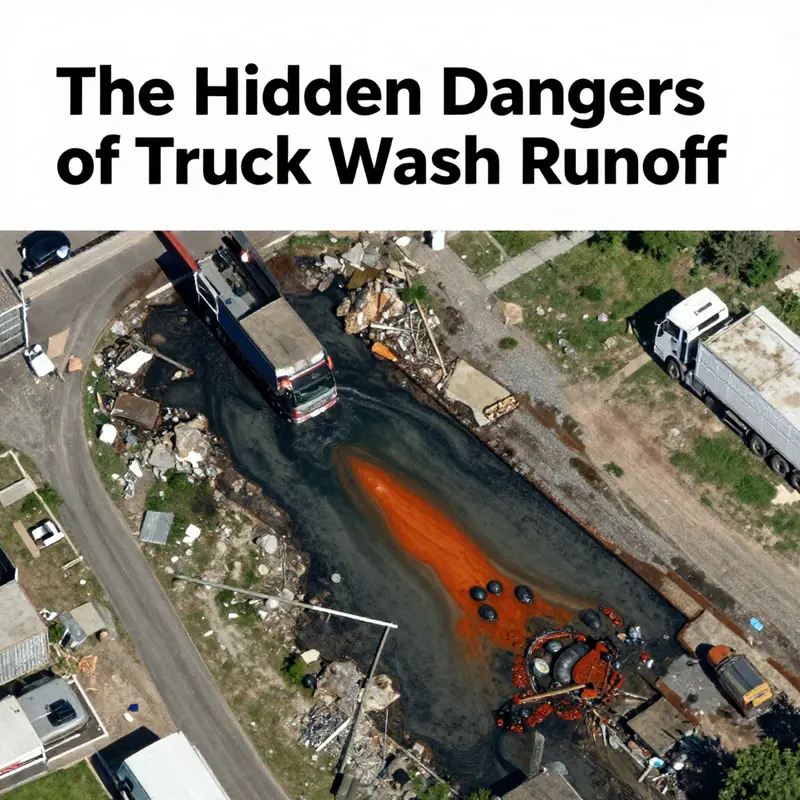
Truck wash operations sit at a critical crossroads where efficiency, cleanliness, and environmental stewardship meet. The runoff generated by these facilities is not merely a nuisance to nearby streets or storm drains; it carries a complex and potentially hazardous load that can alter water quality, stress aquatic ecosystems, and complicate local watershed management. The typical wash cycle lifts from vehicle surfaces a mixture of hydrocarbons, oils, greases, detergents, and the grime that vehicles accumulate on long hauls and urban stops. Mix that with suspended solids and a roster of metals picked up from road surfaces and brake linings, and the result is a pollutant profile that deserves careful treatment rather than direct discharge. What becomes clear from case studies and regulatory discourse is that the hazard is both chemical and hydraulic: a high-volume, high-concentration effluent that, if released untreated, can travel rapidly into stormwater systems, streams, and groundwater. The environmental stakes extend beyond immediate discharges. Heavy metals such as zinc, copper, lead, and cadmium can persist in the ecosystem, bioaccumulate in organisms, and find their way into food chains. The detergents and surfactants used in cleaning can alter the dissolved oxygen balance in water bodies, stressing fish and macroinvertebrates and increasing the likelihood of hypoxic conditions when volumes are high or flows are slow. In addition, the sheer volume of water involved—often in the thousands of liters per day for larger facilities—means even modest per-litre concentrations can translate into meaningful loads over time, especially in areas lacking robust stormwater infrastructure. These dynamics underscore the imperative that truck wash runoff be treated, reused, or qualified for safe discharge under an enforceable framework. The empirical record offers sobering demonstrations of what happens when this imperative is ignored, and it also reveals how intentional design, monitoring, and compliance can shift incidents from hazard to managed risk. The California case from 2018 presents a stark early warning: an operation that discharged wastewater directly into a storm drain system, with the effluent ultimately finding its way to a nearby river. The downstream consequences were immediate and tangible. A regulatory investigation followed, and the facility faced fines along with an order to install a comprehensive treatment system for wastewater. The episode did not merely trigger penalties; it catalyzed a reconsideration of how truck wash operations should be engineered to prevent such illicit discharges and how regulators might verify compliance through audits, permits, and ongoing reporting. The incident illustrates a central truth about runoff: once contaminants are released into a stormwater conduit, they are not easily contained. Movement through catch basins and culverts can extend the impact beyond the original site, widening the circle of harm to aquatic life and potentially impairing drinking water sources if the watershed is connected to groundwater recharge or surface water intakes. The California event also highlights a broader pattern: violations tend to reveal underlying gaps in infrastructure, oversight, and operator training. When a facility is not equipped with effective containment, pre-treatment, and routine monitoring, the temptation or pressure to cut corners increases. The regulatory response—fines, mandated treatment, and enhanced oversight—serves as a corrective mechanism, but it is not a substitute for proactive capital investment and culture change within the workforce. The Texas incident from 2021 deepens this narrative by pointing to longer-term ecological costs associated with improper disposal practices. Here, the runoff carried phosphate and nitrogen from cleaning agents into a local watershed, fueling algal blooms that depleted oxygen and precipitated fish kills. The consequences extended beyond the immediate area of the wash site, manifesting as altered community structure among aquatic organisms and a stressed food web that can persist across seasons. Algal blooms also threaten water quality by compromising aesthetic and recreational values and increasing treatment costs for downstream water utilities. This case emphasizes a crucial point: even when a disposal event is not catastrophic in a single moment, repetitive or poorly managed discharges can accumulate ecological debt. The lessons of both cases converge on a common prescription: implement robust on-site treatment, ensure dependable maintenance of treatment systems, and enforce strict adherence to environmental regulations. In practical terms, this means more than just pouring funds into filtration or separation equipment. It requires a holistic assessment of catchment design, storage, pretreatment, and reuse strategies, aligned with a culture of compliance among operators, managers, and contractors. A central component of this culture is the recognition that wash water is not ordinary wastewater; it is a resource that, if captured and treated properly, can be recycled or discharged safely. Treating wash water on-site reduces the volume of polluted runoff entering the storm system and minimizes the risk of unanticipated releases. It also frames water as a continuous asset rather than a waste stream, which can improve operational resilience during drought periods or regulatory changes. The literature on water treatment for vehicle washing supports a range of technologies that are appropriate for different facility scales and local conditions. Bioretention and other green infrastructure approaches have been advanced as cost-effective, space-efficient options that can integrate with site drainage and landscaping while providing a first line of defense against contaminants. The study Assessing Car Wash Runoff Treatment Using Bioretention offers a technical lens into how such treatments can reduce pollutant loads, including metals, nutrients, and hydrocarbons, before runoff enters the broader watershed. While the specifics of design depend on site characteristics, the underlying philosophy remains consistent: capture, treat, and, where possible, reuse the wash water. The practical implications for operators are clear. First, invest in a purpose-built wastewater management system that can handle expected wash volumes and contaminant loads. Second, integrate pretreatment steps to remove solids and oils before the water reaches biological or filtration components. Third, implement routine monitoring of influent and effluent water quality to ensure that treatment goals are being met and to detect any system failures early. Fourth, establish clear maintenance protocols and train staff to recognize warning signs of equipment degradation, such as rising turbidity, odors, or unusual foam. The human factor is as critical as the engineering. A well-designed system is only as effective as the people who operate and maintain it. Training programs that emphasize proper chemical handling, spill prevention, and emergency response are essential components of any compliant operation. In tandem with this operational emphasis, regulators increasingly require transparent reporting and third-party verification, which can drive continuous improvement and accountability. The regulatory discourse around this topic—what gets measured, how it gets measured, and who is responsible for enforcement—shapes the incentives for facility upgrades and compliance habits. The concept of “emissions regulations” for truck wash facilities is not merely about exhaust or air quality; it also captures discharge standards, containment requirements, and performance-based criteria for water treatment systems. The internal knowledge base within the industry is growing, and one can observe how facilities that invest in modern treatment and reuse capabilities tend to exhibit more stable relationships with regulators, communities, and customers. The broader environmental narrative tied to truck wash runoff is not limited to the avoidance of fines or remediation costs. It also encompasses ecosystem health, the integrity of freshwater resources, and the long-term quality of life in communities adjacent to busy transport corridors. When runoff enters a stream or estuary laden with oils, solids, and nutrients, it can alter habitat suitability for fish, amphibians, invertebrates, and microbial communities. These ecological changes, in turn, influence higher trophic levels and the functioning of the entire watershed. In urban and peri-urban settings, this linkage becomes even more pronounced, as stormwater networks collect inputs from many sources. The cumulative effect can overwhelm municipal treatment capacity and complicate downstream water management. From the perspective of a trucking operation, the forward-looking approach is to view wastewater management not as a compliance burden but as a strategic component of safety, reliability, and community responsibility. A facility that prioritizes water stewardship may find that treatment systems deliver co-benefits such as reduced odor emissions, lower maintenance costs for drainage infrastructure, and improved site aesthetics, which in turn can enhance reputational value and stakeholder trust. The road to safer practices is not a single stop but a continuous journey. It involves auditing current practices, upgrading infrastructure, training staff, and aligning operations with evolving environmental standards. It also requires collaboration across the value chain—from customers who expect responsible service to regulators who enforce standards and communities that watch for impacts. The lessons from the California and Texas cases underscore why this collaboration matters and why enforcement remains a necessary driver of improvement. They remind us that environmental harm can arise quickly when safeguards fail, but that harm can be mitigated through deliberate design, diligent operation, and vigilant oversight. As this chapter progresses into broader discussions of treatment technologies and facility design in the subsequent sections of the article, readers will gain a clearer picture of how the theoretical principles translate into practical, defendable outcomes on the ground. For those who want to explore how regulatory frameworks are shaping facility design and compliance practices, see the discussion on truck-wash-industry-compliance-emissions-regulations. A deeper technical synthesis of treatment approaches and bioretention strategies can be found in external research that analyzes the efficacy of these systems in real-world washwater contexts. For a deeper technical overview of treatment approaches, see this study: https://www.mdpi.com/2071-1050/13/12/6784.
Final thoughts
The environmental hazards posed by truck wash runoff cannot be ignored, as they result in severe ecological consequences and increased regulatory scrutiny. Fleet managers, trucking company owners, and construction supervisors must adopt comprehensive solution-oriented practices that not only comply with existing regulations but also protect aquatic ecosystems. By implementing effective management practices and being aware of the potential contaminants involved, companies can mitigate risks and contribute to the sustainable future of their industries.