
The truck washing industry presents a unique opportunity for profitability, particularly for logistics and fleet management professionals seeking reliable vehicle maintenance solutions. Given the market’s consistent demand from fleet operators, truck owners, and construction and mining supervisors, a thorough understanding of profitability is essential. This article delves into five critical aspects: assessing market demand, evaluating service offerings, optimizing location strategy, enhancing operational efficiency, and devising effective pricing strategies. By examining these components, fleet managers and trucking company owners can better position their businesses for sustained financial success in the truck wash sector.
Chapter 1: Reading Market Demand as the Engine of Truck Wash Profitability
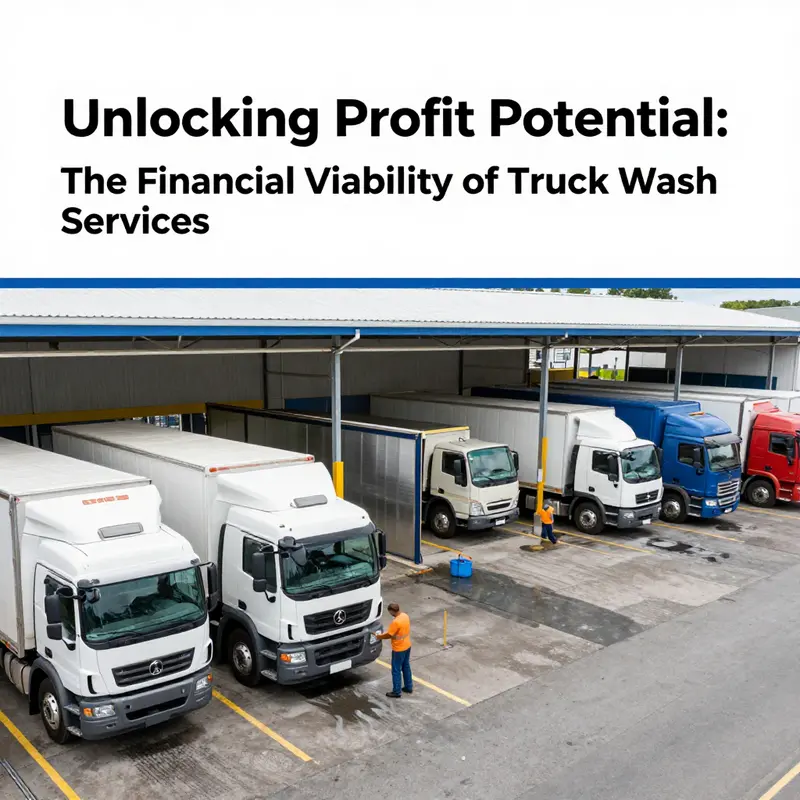
Profitability in the truck wash sector rests less on soap and spray and more on the strength and clarity of market demand. The pathway from clean trucks to healthy margins runs through a precise understanding of who needs washes, how often they need them, and what value customers are willing to pay for beyond a basic exterior rinse. The most compelling signal in this landscape is growth—growth not only in the number of trucks on the road but in the sophistication of the maintenance practices that fleets increasingly demand. The global truck washing system market, a ledger of demand that reflects fleet maintenance priorities, stood at approximately $477.44 billion in 2025 and is projected to reach about $648.40 billion by 2033. That trajectory, a compound annual growth rate of 3.9 percent from 2027 to 2033, signals a durable expansion rather than a passing uptick. It is a reminder that professionalized, efficient fleet maintenance is becoming a core element of operational logistics, not a discretionary expense.\n\nIn the United States, the story is equally bullish. The commercial vehicle washing sector has demonstrated a notable 12 percent annual growth, a pace that outstrips many other aspects of the transport economy. Within this momentum, certain hubs stand out for their strategic architectures: places with ready access to ports, freight corridors, and dense trucking activity. Tampa, for instance, has emerged as a notable focal point because of its port access and high freight volumes. These regional dynamics matter because they translate into predictable streams of demand and, critically, the ability to achieve higher utilization of washing assets. When a prime location aligns with a steady influx of fleet traffic, the wash operation can lean on recurring work instead of chasing one-off appointments. That predictability is a cornerstone of profitability.\n\nYet demand is not a mere function of volume. It is shaped by a constellation of regulatory, technological, and economic forces that together raise the bar for what a wash must deliver to be considered a sound investment. Regulatory compliance is no longer a backdrop concern; it is a driver of service specification. Global fleets must maintain windshields that offer clear visibility, an outcome that requires regular, high-quality washing practices. The consequences of neglect can extend beyond aesthetics to safety and compliance, making professional washes a non-negotiable part of fleet management. This is not about indulgence but about meeting external standards that fleets are obligated to uphold. In practice, that translates into a need for reliable systems, consistent performance, and meticulous attention to detail every time a truck passes through.\n\nTechnology has become a force multiplier in this context. Modern fleets increasingly rely on advanced driver-assistance systems and, in some cases, autonomous driving technologies. L2-level and above ADAS penetration has been projected to exceed 60 percent by 2025, a threshold that creates a distinct, high-margin niche for wash operators. The challenge—and the opportunity—is to provide cleaning processes that safeguard sensors such as cameras, radar, and lidar while delivering the thoroughness that fleets expect. This is not a matter of gimmicks; it is a cleanroom-grade precision task that demands careful water pressure, appropriate detergents, and an understanding of sensor placement and exposure. The consequence is a subset of the market with elevated willingness to pay for specialized cleaning that protects the sensors and maintains calibration, thereby turning a routine wash into a value-added service.\n\nBeyond compliance and sensors, the economic logic of efficiency drives profitability. A clean truck reduces aerodynamic drag, with studies suggesting fuel savings of up to about 3 percent for large fleets operating on tight margins. Even modest fuel savings accumulate into meaningful annual savings when multiplied across hundreds or thousands of vehicles. Maintenance costs also benefit from effective cleaning, as grime and corrosive substances accumulate more slowly on exteriors and undercarriages when regular washing is part of a preventive regime. In practice, fleets that invest in more frequent or higher-quality washes can realize a lower total cost of ownership over time, which sharpens the economic case for recurring wash spend. For operators managing fleets with thin margins, these savings translate into tangible improvements in the bottom line, making a robust wash program an essential line item rather than a discretionary expense.\n\nFrom a customer-preference perspective, the market is evolving toward smarter, faster, and more sustainable solutions. Automated touchless systems, which rely on high-pressure jets and biodegradable detergents, appeal to fleets seeking efficiency and reduced risk of paint damage. The absence of contact also minimizes the potential for introduce scratches or chafing, offering a controlled cleaning action that preserves vehicle aesthetics. In addition, mobile self-contained wash units have gained traction, particularly for small fleets, construction sites, and seasonal operations where fixed facilities are impractical. The appeal here lies in accessibility—service where the fleet operates or during critical project windows—without the capital expenditure of a full fixed-site facility. Subscription-based maintenance plans further tilt the economics toward predictable, recurring revenue. They create ongoing customer relationships, stabilize cash flow, and flatten seasonal variability by pre-selling a package of services over time.\n\nTaken together, these developments indicate a broader shift in the market away from commoditized, one-off services toward integrated, technology-driven solutions. The most successful operators will be those who can fuse reliability with environmental stewardship and technological sophistication. A truck wash that combines efficient throughput with a full-service offering—exterior washing complemented by interior vacuuming, sanitizing, and optional detailing—addresses a wider spectrum of fleet needs and unlocks higher value per vehicle. In practice, this means designing a service mix that reduces transaction friction for the customer while expanding the revenue line for the business. It is not enough to spray and rinse; operators must tailor a package that aligns with fleet policies, driver expectations, and the logistics rhythms of the markets they serve.\n\nLocation strategy, therefore, remains a central pillar of profitability, but it is now intertwined with the operational architecture of the wash. A site that leverages proximity to major highways, truck stops, freight hubs, or industrial zones can command higher throughput and steadier demand. Yet the modern site must also be built for efficiency. Automated or semi-automated systems play a critical role in accelerating cycles, reducing labor intensity, and preserving margins when volumes rise. In a climate where labor costs are a persistent challenge and customer expectations for reliability are rising, the ability to process more loads per hour without sacrificing quality becomes a defining advantage. Even with high-tech systems, successful profitability also depends on human capital: trained technicians who can manage the workflow, perform preventive maintenance on equipment, and deliver consistent customer experiences that build trust and repeat business.\n\nTo connect these threads, consider the strategic implication for a new truck wash aiming to compete effectively in this expanding market. A thoughtful location provides a steady feed of potential customers, while a well-designed service menu ensures that every pound of throughput translates into meaningful revenue growth. The pricing approach must reflect the value customers perceive in improved safety, reduced downtime, and a stronger fleet image. A loyalty program, combined with transparent service levels and predictable maintenance cycles, can convert one-time customers into recurring revenue streams. The economics also favor operators who can balance capex with opex through scalable automation, modular service offerings, and smart scheduling that minimizes idle time. In a market where demand is expected to push higher and customer expectations continue to rise, the profitable wash operator is the one who treats market signals as a blueprint—guiding site selection, service design, and pricing strategy toward sustained advantage.\n\nFor practitioners exploring the regulatory and compliance landscape, it is worth noting a recent resource that outlines the evolving standards around emissions and industry practices. Truck wash industry compliance and emissions regulations provides a concise map of how regulatory considerations intersect with service design and customer trust. This connection matters because fleets respond to compliance assurances as part of their risk management and budgeting processes. When a wash operation can demonstrate adherence to environmental and safety standards, it earns credibility with fleet managers and procurement teams, a factor that translates into repeat business and more predictable demand.\n\nThe market’s trajectory, current growth rates, and the regulatory and technology-driven forces at play all converge on a simple observation: profitability in truck washing is less about offering a cheaper wash and more about delivering a high-value, reliable, and scalable service that aligns with how fleets operate today. The most successful operators will blend location advantage with a rich service mix, supported by efficient, automated workflows and a cadence of subscriptions and loyalty that reduces churn. In that synthesis lies the heart of a profitable, resilient truck wash business, capable of thriving as the market expands and the pressures of modern fleet maintenance intensify. For those looking ahead, the question is not whether demand exists, but whether the business model can capture that demand with precision, consistency, and a touch of innovation that keeps customers coming back.\n\nExternal reference: Markets and Markets provides a detailed market analysis that complements these insights and situates them within broader industry trends. https://www.marketsandmarkets.com/Market-Reports/truck-washing-system-market-1527.html
Beyond the Brush: The Service Mix That Drives Profit in Truck Washes

A truck wash operates at the intersection of demand, capacity, and value perception. The vehicle that pulls onto the pad is not just a consumer of water and soap; it is a rolling asset that reflects a fleet’s reliability, safety standards, and professional image. The question of profitability hinges less on single, isolated services and more on how the service mix is designed to meet the varied needs of a diverse customer base. When a wash offers the right balance of speed, depth, and reliability, it transforms a routine maintenance activity into a predictable revenue stream. The essential truth is simple: service offerings must align with what fleets and operators are willing to pay for, while also enabling efficient operations that keep costs in check. In practice, that means building a portfolio of options that customers can mix and match, with each tier driving incremental value without eroding margins for the business.
Market demand in truck washing comes from recurring needs rather than one-off purchases. Fleets with stringent cleanliness standards, owner-operators who present a professional image to customers, and businesses that rely on clean fleets to maintain routes and schedules all demand a dependable cleaning partner. This is not about offering every conceivable add-on; it is about understanding the lifecycle of a vehicle in service. A typical truck arrives at a wash not only dirty on the exterior but often carrying dust, road grime, residue from freight handling, or even spills inside the cab. If a shop can anticipate these realities, it can structure its offerings to cover the most common pain points. Exterior washing is the gateway service. It reduces drag, protects paint, and improves visibility and branding. Yet the true profit engine is found when the exterior service is paired with interior maintenance, wheel and undercarriage care, and optional protection that extends the life of the vehicle.
A well-rounded service menu creates a ladder of value. A basic exterior clean may be priced to move, capturing steady volume, especially when located near transit hubs or highway interchanges. The next rung up could include interior vacuuming, window cleaning, and quick wipe-downs of surfaces in the cab. A premium tier can introduce thorough interior sanitizing, deep-clean upholstery or vinyl, odor control, and a more comprehensive exterior treatment that may include wax or sealant to lock in shine and guard against the elements. For fleets, a true differentiator is the ability to bundle services into predictable, repeatable packages—flat-rate programs that simplify budgeting and procurement for the fleet manager. This approach promotes longer-term contracts and higher retention because it reduces decision fatigue. It is not enough to be fast; customers increasingly want clarity, consistency, and the confidence that they will not be nickel-and-dimed for every little add-on.
The interior program tends to be where profitability can outpace the exterior work, provided the shop manages labor intensity and space constraints. Interior detailing, sanitizing, and odor control are not commodities; they are value-added capabilities that influence a fleet’s perception of a partner. When executed consistently, interior services can become a strong differentiator, especially in regions where fleets must meet hygiene standards for driver welfare, customer-facing operations, or regulatory requirements. The science behind this is straightforward: customers are willing to pay a premium for a clearly defined interior package that promises a healthier, more comfortable cab environment, with a predictable turnaround time. A robust interior offering also supports higher gross margins because it often leverages labor hours that are otherwise underutilized during slower periods. The key is to design processes so that interior cleaning can be completed efficiently, without sacrificing quality, while the exterior work remains scalable through automation and disciplined work flow.
Detailing, wheel and undercarriage care, and protective treatments represent another layer of revenue that can elevate profitability substantially when managed with care. Detailing is not about luxury for every customer; it is about delivering a durable, low-maintenance finish that reduces maintenance cycles for fleets and keeps units on the road longer. Wheel cleaning and tire care are critical for tire wear and braking performance perception, as grime in these areas can signal neglect to a fleet operator. Undercarriage wash, road-debris removal, and tar or grease removal services protect components from corrosive buildup that could otherwise translate into higher maintenance costs later. These services tend to carry higher price points and can be bundled with exterior packages to protect margins. The reality is this: every additional line item adds incremental labor or material costs, but if the service is structured with clear time estimates, it can be sold with minimal friction as part of a value-forward proposition.
A critical discipline is the design of pricing and customer retention programs. The more transparent the pricing—clearly defined bundles with set inclusions—the easier it is for a fleet manager to forecast expenses. Tiered pricing with stable intervals fosters loyalty, because operators like predictability in budgeting. A loyalty program that rewards repeated visits or referrals can convert occasional customers into regulars. The economics of repeat business are powerful: a loyal customer base tends to produce a higher lifetime value per vehicle, with lower acquisition costs over time. In practice, this means balancing incentives with margins. It also means minimizing churn by maintaining reliable service levels, particularly for fleets that rely on precise delivery windows and minimal downtime. The best operators use data—not just intuition—to refine their service mix. They track which packages drive repeat visits, which add-ons generate upgrade revenue, and which times of day or week produce the most throughput. The result is a self-reinforcing loop: a service mix that is aligned with customer priorities, supported by a price ladder that reinforces value, and sustained by operational discipline.
Operational efficiency is the unseen backbone of profitability. A thoughtfully designed service mix must be executable on the shop floor with minimal bottlenecks. Process design matters as much as the offerings themselves. When exterior washing, interior cleaning, and optional protection are sequenced to maximize throughput, a wash gains capacity without compromising quality. Automation and standardized work help here: automated rinse cycles, path flows that minimize backtracking, standardized vacuuming routines, and consistent drying sequences. While the specific technologies may vary, the principle remains universal: standardization enables predictability, which reduces labor costs and increases the speed of turnover. In practice, this translates to better utilization of space, faster cycle times, and higher daily vehicle counts, all of which translate into higher gross profit for the same fixed costs. The right balance of automation, trained personnel, and well-defined workflows keeps both quality and speed anchored, allowing the business to absorb rising material costs without eroding margins.
Location still anchors profitability. A service mix that works brilliantly in one market may underperform in another if it ignores local demand, driver expectations, and regulatory considerations. Proximity to highways, freight hubs, and maintenance corridors matters for volume, but it must be paired with a thoughtful service catalog tied to the types of fleets that frequent the area. The same exterior-first strategy can work in a busy corridor if it is paired with a compelling interior option that has clear value for long-haul drivers who are away from home for extended periods. Conversely, markets with a higher proportion of owner-operators may respond best to economical exterior options with optional interior add-ons. The sense of reliability—easy to access hours, predictable turnaround, clean facilities, and secure payment processes—also matters. Customers return to the shops that make their operations smoother, not just those that wash quickly. If a shop can fuse a strategic location with a compelling and well-priced service mix, profitability becomes less a function of one great feature and more the result of a cohesive system.
As operators refine their service offerings, they should remember that profitability is a dynamic target. The mix must evolve with market demands, maintenance technologies, and driver expectations. The most successful truck washes treat service offerings as a living portfolio, revisited quarterly, with adjustments to reflect what customers value most and what maximizes throughput. A practical way to manage this evolution is to couple offerings with facility management practices that ensure clean, safe, and efficient operations. For those looking to optimize the logistics and physical management of their wash, a guide to facility management for truck wash businesses offers practical perspectives on space planning, scheduling, and equipment maintenance. facility management for truck wash businesses.
In short, a profitable truck wash emerges not from a single, flashy service but from a carefully crafted service mix that captures recurring demand, supports efficient operations, and maintains competitive pricing. It requires listening to customers, designing value-forward bundles, and aligning labor and process with the realities of the work. When the exterior and interior programs are harmonized, when protection services are offered at the right price, and when loyalty is nurtured through consistent performance, profitability follows as a natural consequence of disciplined service design. The next part of this exploration will turn to the specifics of how operational efficiency circles back into financial performance, and how an optimized workflow can sustain high throughput without sacrificing quality or safety as market expectations continue to rise.
Steering Profitability: How Location Strategy Drives the Bottom Line for Truck Washes
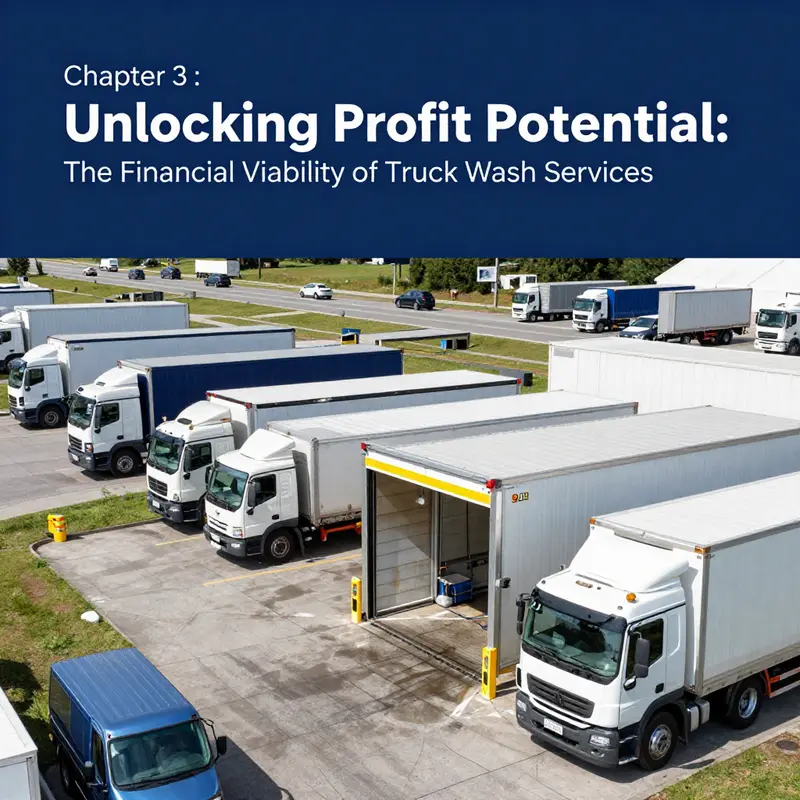
Choosing a site for a commercial truck wash is more than a matter of cornering enough traffic to fill bays. It is the compass that points the business toward sustainable profitability. A well-chosen location amplifies every other decision you make—from service mix to staffing, from equipment investment to pricing strategy. In practice, the right site acts as an ongoing operating leverage: it reduces drive time for customers, lowers access costs for fleets, and creates a predictable flow of high-value work that supports both throughput and higher-margin services. Profitability in this business hinges on steady utilization, not just a single peak demand moment. Location is the engine that keeps that utilization humming, day in and day out.
From a strategic perspective, the first question is simple to state, yet complex to execute: where can you maximize convenience for drivers and fleets while minimizing travel waste and competitive friction? The answer lies in proximity to the arteries of freight traffic. Major highways, interchanges, freight hubs, and industrial corridors funnel heavy-duty vehicles through specific lanes and neighborhoods. When a truck wash sits within a practical radius of these transit points—ideally within 10-20 miles of interstate interchanges or freight corridors—the everyday reality changes: longer queues become shorter, and the time a driver spends detouring is recaptured as repeat business. Convenience, after all, translates into reliability. Fleets that schedule maintenance around predictable routes appreciate a site that reduces backtracking and fuel burn, while owner-operators value the ease of accessibility for quick turnaround services between runs.
Beyond the obvious traffic counts, the quality of the location matters just as much as the quantity. A site that blends visibility with practical access—clear ingress and egress, wide drive lanes, and sufficient turning radius—minimizes the risk of bottlenecks during peak periods. A well-planned lay-out supports rapid turnover, which becomes critical when demand comes in waves: pre-trip cleaning on days when freight volumes surge, and post-delivery detailing on days with longer dwell times at hubs. The economics of the site are also subtle but potent: a property that can scale from a few bays to multiple bays, with room for storage and future expansion, enables an operator to grow throughput without proportionally increasing overhead. The cost of acquiring and preparing the land, the reliability of utilities, and the ease of environmental compliance all shape long-term profitability. A site with low competition and high demand—particularly along underserved urban corridors or growing industrial districts—can unlock a meaningful first-mover advantage that compounds over years.
Industry analyses reinforce these intuitions with real-world patterns. A comprehensive overview from a national trade association shows that truck wash facilities near regions with robust freight volumes consistently outperform more isolated competitors. In markets that host major freight corridors, facilities enjoy higher utilization rates and can command premium pricing reflecting both demand density and the professional needs of fleets. The practical implication is clear: a profitable truck wash is less about the splash-and-go option and more about a thoughtfully placed service hub that fleets can rely on as part of an efficient logistics cycle. This is not merely about being in the right city; it is about situating a site where the density of demand meets the density of opportunity. For planners and operators, this means prioritizing regions where freight activity is expected to rise and where zoning, utilities, and environmental standards align with the business plan. A data-informed approach—combining traffic analyses, competitor maps, and demographic insights—helps identify those prime zones before the land is bought and permits are secured.
To translate location strategy into measurable profitability, operators should pair site selection with a disciplined market analysis. Assess local competition not only by how many washes exist, but by what value they provide and how the new site can differentiate itself. Are there service gaps the market leaves unfilled? Are nearby facilities overloaded during certain shifts, leaving fleets without timely options? The best locations tend to be those where the market has not yet saturated with a similar service offering and where the facility can deliver a broader experience. A truly effective site balances ease of access with the capacity to scale. It should accommodate several bays from the outset and reserve space for future expansion, so growth does not require a new footprint. Environmental and regulatory requirements cannot be an afterthought; they shape the feasibility and the cost of operations over time. In some jurisdictions, the cost and complexity of compliance will influence the choice of equipment, water recycling systems, waste management, and even the layout of the facility to minimize runoff and contamination risks. The aim is to build a site that not only operates efficiently today but also remains adaptable as rules evolve and volumes grow.
Operational efficiency, closely tied to location, is another critical thread. A place with robust access to utilities—water supply with redundancy, power reliability, and suitable drainage—reduces downtime and maintenance expenses. The economics of water recycling and zero-discharge systems, while initially capital-intensive, pay off through reduced long-term water and sewer costs and by enabling rapid throughput during peak windows. In this sense, the site becomes a platform for efficiency, where layout choices, bay counts, and customer flow are optimized to minimize idle time. A well-executed site plan supports a balanced mix of service offerings—from a brisk exterior wash to more thorough interior cleaning and detailing—without overstretching staff or equipment during busy hours. The synergy between site design and service strategy is what transforms a location into a durable source of margin.
An important practical step is to embed the site search in a broader digital toolkit. Real-time geographic and demographic data, when fused with traffic patterns and competitor density, offers a powerful lens for prioritizing sites. Tools like geographic information systems enable a forecast of potential throughput, while a careful assessment of customer segments helps tailor the service mix to local needs. For operators thinking about expansion, this approach supports staged investments that align with demand signals rather than speculative growth. It also clarifies the value proposition for stakeholders, whether investors or lenders, by providing a data-driven narrative about expected utilization, revenue per bay, and break-even timelines. In this planning phase, it is helpful to consult general facility-management resources that cover site maintenance, equipment layout, and staffing implications. See the resource on facility management for truck wash businesses for practical guidance on turning site planning into a smoothly run operation. https://tripleatruckwash.com/facility-management-for-truck-wash-businesses/
Beyond the land and the numbers, the business model matters. As the market evolves, customers increasingly seek more than a basic wash; they want a reliable, full-service solution that preserves vehicle value and supports compliance with hygiene and branding standards. A full-service approach—exterior washing complemented by interior vacuuming, sanitizing, and optional wax or sealant—delivers higher revenue per customer and fosters loyalty. In a 2025 industry guide, comprehensive solutions are described as highly valued by owner-operators and customer-facing fleets, consistent with the broader trend toward one-stop service experiences in logistics. Location then becomes the vehicle for delivering this value: a site with efficient throughput, predictable access, and the capacity to offer a diversified suite of services is better positioned to convert high traffic into sustainable gross margins. The payoff is not just higher price points; it is the resilience of demand across different seasons and business cycles, reinforced by the reliability fleets expect from a trusted partner.
Of course, every opportunity comes with risks, and a poor location choice can undermine even the best service design. The upfront capital required for land, construction, and equipment, plus the anticipated time to reach a positive cash flow, must be weighed against the expected increase in utilization and pricing power. A misjudgment about zoning, environmental constraints, or utility access can erode margins through costly compliance fixes or extended time to opening. Yet these risks can be mitigated with a rigorous site-selection process anchored in market data and a phased buildout. In the end, the bottom line hinges on a simple equation: the location lowers the cost per customer and increases the probability of repeat business, while the service mix elevates the value captured from each encounter. When these elements align, profitability follows as a natural consequence of intelligent place and purposeful service.
For readers charting a path to profitability for a truck wash, the message is clear: the site is not just where you operate; it is how you operate at scale. The interplay of location, access, and capacity determines throughput, which in turn drives revenue opportunities from a broader service portfolio. By situating near high-traffic freight corridors, ensuring easy access, and aligning service offerings with fleet needs, a truck wash can realize consistent utilization and stronger margins. The strategic choice of a site, supported by market intelligence and careful planning, lays the groundwork for a business that remains robust through market cycles and adaptable to the evolving demands of the trucking ecosystem.
External reference: NATSO Market Trends Report 2024. https://www.natso.com/research/market-trends-report-2024
Maximizing Throughput and Margin: The Engine of Profit in Truck Wash Operations
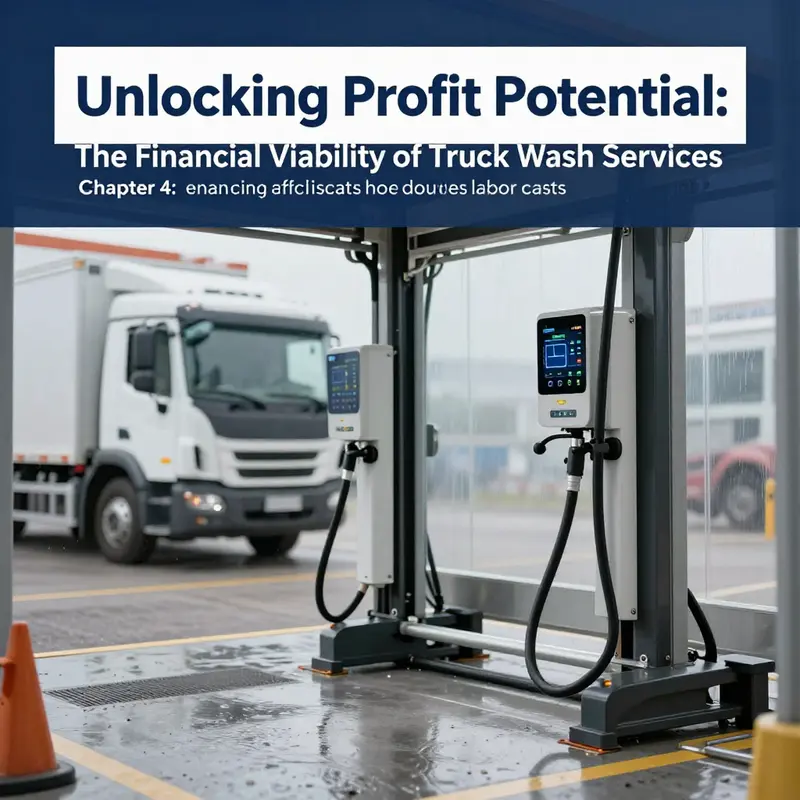
Profitability in the truck wash sector hinges less on a flashy single move and more on an integrated, data-driven engine that harmonizes people, machines, and processes. When operators view efficiency as a core asset—not just a cost-saver—they unlock capacity, raise the quality of service, and strengthen customer loyalty. The core idea is simple: more predictable flow, faster cycles, and fewer disruptions translate into higher throughputs and healthier margins. In practice, this means rethinking how work moves through the wash bays, how equipment is maintained, how staff perform routine tasks, and how digital tools knit everything together. The result is a cleaner bottom line that stands up to competitive pressure and fluctuating demand, while still delivering reliable, high-value service to fleet operators and owner-operators alike.
One of the most powerful levers is route network optimization, a concept borrowed from logistics that translates cleanly to fleet maintenance and vehicle throughput. By mining historical wash frequency data and aligning it with driver schedules, a wash station can align appointments with off-peak windows, reducing idle time for trucks and squeezing more cycles into a given day. The payoff is twofold: customers experience shorter waits, and the equipment operates closer to its maximum designed capacity. When a site maps out optimal service windows, the daily wash volume can rise meaningfully without adding new capital — a critical insight for operators watching tight margins. Industry analyses in the recent period highlight that data-driven scheduling can yield substantial throughput gains, illustrating how analytics can convert physical space into a more productive asset. This isn’t theoretical; it rests on measurable improvements seen at facilities that treat scheduling as a live, data-informed capability rather than a static timetable. For readers exploring practical examples, the linked case studies in industry reporting emphasize how even modest shifts in appointment windows can unlock meaningful capacity.
The second pillar is equipment maintenance and reliability. Downtime is the silent profit killer in a high-throughput operation. Trucks waiting for service or trucks returning to the road with unfinished cleaning work are not just dissatisfied customers — they represent a direct hit to revenue. A robust predictive maintenance program uses sensors and real-time monitoring to anticipate failures before they derail a day’s schedule. Operators who embrace this approach report fewer unplanned outages and shorter repair cycles, which translates into higher utilization of wash lines and better service consistency. The American Trucking Associations have documented a clear link between proactive maintenance and improved customer retention, underscoring how reliable equipment underpins sustainable profitability. In a market where customers value speed and dependability as much as price, the ability to keep the wash bays humming is a fundamental competitive advantage.
Beyond keeping machines healthy, the human element deserves equal attention. Staff training and workflow standardization are not luxuries but essential infrastructure for throughput. When teams operate from a shared playbook, cycles become repeatable, quality becomes consistent, and the time spent per vehicle drops. This is especially important as operators expand service menus beyond a basic exterior wash. Interior cleaning, engine bay detailing, and even light waxing or protective sealants add value for customers and raise the average revenue per vehicle. A 2025 case study highlighted by industry analysts shows that businesses that broaden service offerings saw a noticeable lift in gross profit margins within a relatively short window—around six months—precisely because standardized procedures and trained staff enable higher-value work to be completed efficiently without sacrificing quality. Training also supports safety, which is non-negotiable in environments that juggle hot water, cleaning chemicals, and busy traffic around bays. The payoff, again, is twofold: better customer outcomes and lower operating risk, both of which protect profitability over time.
Technology and digital tools knit these human and mechanical improvements into a cohesive system. Automated appointment systems and real-time status tracking reduce administrative overhead and increase transparency for customers. When drivers can see their truck’s progress, trust grows and the likelihood of no-shows or miscommunications declines. Digital tools also empower operators to reallocate resources quickly in response to changing demand, maintaining throughput without sacrificing service quality. The broader trend toward process automation mirrors what logistics firms have proven over years: digital transparency lowers friction, accelerates decision-making, and preserves throughput under pressure. A landmark cost-savings narrative from a leading logistics case study shows how process automation, integrated scheduling, and status visibility can generate substantial efficiency gains, contributing to a more resilient, customer-centric operation. In the context of a truck wash, these tools reduce the friction of car-by-car management and enable the facility to maintain a high utilization rate across varied demand.
A holistic efficiency strategy goes beyond isolated improvements. It requires treating data analytics, preventive maintenance, skilled labor, diversified services, and digital transformation as a single ecosystem. When viewed together, they form a barbell strategy: one end shaves costs and speeds up core exterior washing, while the other end adds high-margin, value-added services that increase revenue per vehicle. The data-informed scheduling feeds the throughput engine; predictive maintenance protects uptime; standardized workflows ensure every vehicle gets a consistent, high-quality result; and expanded service lines increase the average ticket. Operators who pursue this integrated approach are better prepared to weather market cycles, because they can scale throughput and maintain margins even as competitive pressure intensifies. The digital dimension ties everything together, enabling managers to observe, predict, and act in near real time. This alignment of people, machines, and information is the essence of modern profitability in a sector where margins can be tight and competition intense.
To bring this concept home, consider how a typical truck wash can leverage a lightweight, scalable ops spine. Start with a layout that supports fluid movement: clearly defined ingress and egress, logical sequencing of wash stages, and convenient staging areas for vehicles awaiting downtime or additional services. This physical design, paired with a lean standard work method for each stage, minimizes unnecessary handling and reduces cycle time. Then layer in predictive maintenance devices and sensor-based alerts that trigger automatic service reminders or technician dispatches before a fault shuts down a station. Add an intuitive appointment workflow that informs customers of each stage and estimated completion times, which reduces uncertainty and improves adherence to promised timelines. Finally, augment the core wash with high-demand add-ons such as interior detailing or exterior sealants and waxes. These services not only raise the average ticket but also improve perceived value, making customers more willing to schedule repeat visits on a predictable cadence.
Within this integrated framework, an internal link to practical guidance on facility management can help operators translate theory into concrete actions. For example, adopting structured facility management practices can optimize space utilization, safety, and equipment layout, reinforcing the efficiency gains described above. See more on this topic at facility management for truck wash businesses.
As chapters unfold, the overarching message remains consistent: profitability comes from enabling higher throughput without sacrificing reliability or service quality. Data-driven scheduling, predictive maintenance, standardized workflows, and a diversified service mix work in concert to unlock capacity and lift margins. Operators who embrace digital tools to provide transparency and reduce administrative drag will find themselves better positioned to capture the demand described in the market analyses referenced earlier. In practice, the most successful sites treat efficiency as an ongoing, data-informed discipline rather than a set of one-off improvements. They continuously monitor throughput, uptime, and service mix, adjust staffing and maintenance cycles in response to real-time signals, and use modern analytics to forecast demand trends. The payoff is not just a sharper monthly bottom line but a more resilient operation capable of delivering dependable service to fleets that rely on timely, clean, and professional vehicle presentation.
External resource for further reading on data-driven efficiency: https://www.logisticmanagement.com/optimizing-truck-wash-efficiency-through-data-and-digital-tools
Charging Ahead: Tiered Pricing, Transparent Value, and Loyal Fleets as the Engine of Truck-Wash Profitability
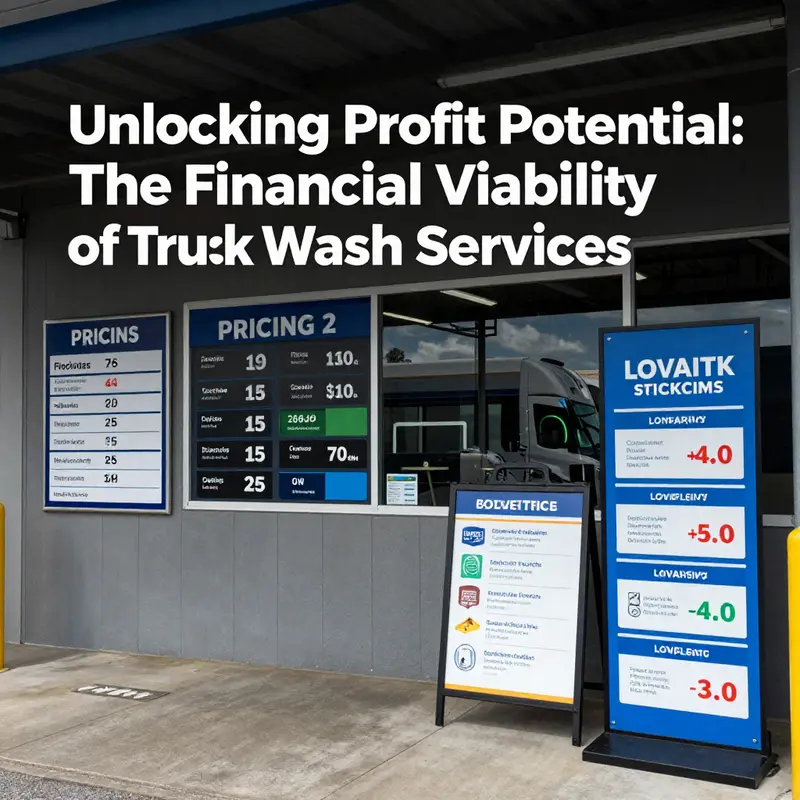
Profitability in the truck-wash business comes from aligning price with value and turning first-time customers into repeat partners.
Tiered pricing clarifies options, helps customers gauge outcomes, and enables fleets to plan expenses.
A basic exterior wash provides essential cleanliness at a baseline price, while a premium exterior or interior detailing package increases perceived value with additional protections and faster turnaround.
For fleets, bundled, predictable plans create stability and easier budgeting, converting sporadic revenue into recurring income.
Transparent pricing reduces objections at the point of sale and empowers staff to guide customers to appropriate tiers without pressure.
The key is to map each tier to concrete outcomes—turnaround time, protection level, and fleet-wide consistency across vehicles.
Retention strategies amplify profitability, with loyalty programs rewarding repeat usage and volume rather than a one-off discount.
Data-driven outreach, based on wash frequency and service mix, enables targeted upgrades to higher tiers.
Operational efficiency supports higher-value services by design: automated processes, skilled detailing, and workflow layouts that minimize delays.
The result is a margin-friendly model where pricing, service quality, and reliability reinforce each other.
Managers should weave pricing discussions into every customer touchpoint: online quotes, point-of-sale, and on-site briefings, with staff trained to articulate the value differences clearly.
Regularly review and refresh tiers to reflect changes in costs and customer expectations, while preserving a stable core offering that fleets can depend on.
In short, tiered pricing paired with intelligent retention strategies turns value into predictable revenue and sustains long-term profitability for truck-wash operators.
Final thoughts
Understanding the various factors influencing the profitability of truck washes is crucial for fleet managers and operators. From assessing market demand and diversifying service offerings to strategic location choices and implementing operational efficiencies, each element plays a role in enhancing financial outcomes. Additionally, establishing effective pricing strategies and retaining customers can forge a sustainable path for growth. With a systematic approach to these components, stakeholders can successfully leverage the truck wash industry’s potential for profitability.