
The use of automatic washing systems at truck stops raises important questions about paint protection for fleet vehicles. With many modern wash products relying on potent cleaning agents, fleet managers and logistics professionals must carefully assess the risks associated with certain chemicals, particularly acids. Ensuring the safety of painted surfaces hinges on a clear understanding of the chemical compositions involved, potential risks, and best practices for truck maintenance. This article examines the nuances of truck stop wash acids, focusing on their chemical makeup, associated risks, and expert recommendations for maintaining vehicle aesthetics and integrity. Each chapter uncovers essential insights that contribute to comprehensive fleet management strategies.
Acid Washes and Painted Trucks: A Cautionary Guide
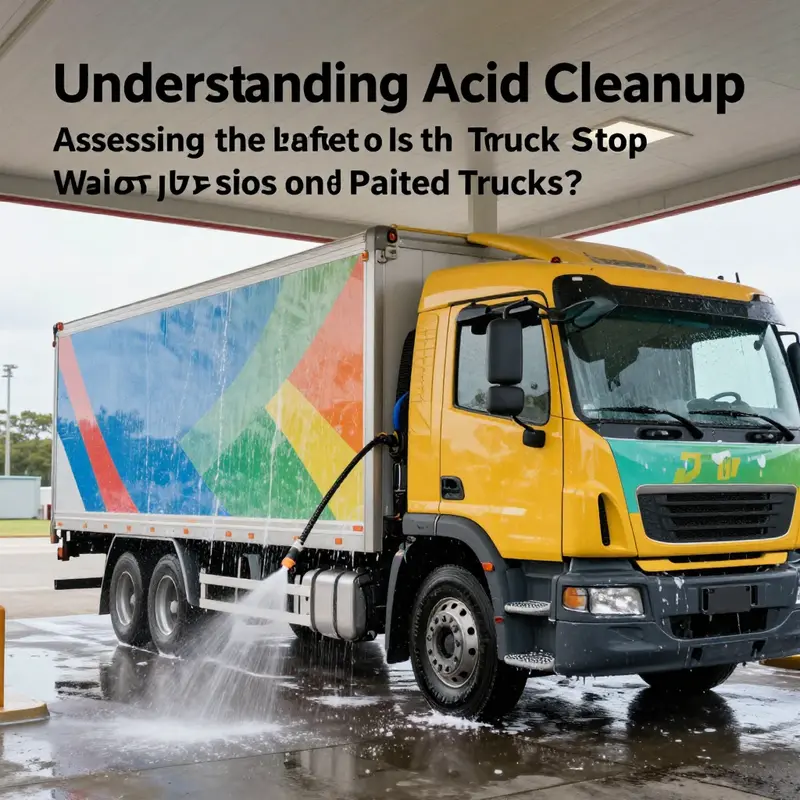
When trucks roll through a wash bay, the chemistry behind the cleaners matters as much as the timing of the rinse. Acid-based cleaners can threaten the integrity of modern polyurethaned finishes by etching the clear coat and dulling color. Neutral pH washes are the safer baseline for routine cleaning. Managers should ask about dilution, dwell time, and rinse thoroughness, and prefer cleaners labeled neutral or industry-approved for automotive finishes.
A disciplined approach includes staff training, proper PPE, and robust spill controls. Diversifying cleaning regimens to include gentler cleaners and targeted pre-washes helps minimize cumulative exposure while preserving gloss, color, and adhesion between layers. Clear communication with wash providers about product identities and concentrations is essential.
In the end, choosing neutral formulations and ensuring complete rinsing protects asset value and reduces risk to workers. For fleets with premium finishes, consider specialized detailing or mobile services that emphasize paint safety over speed.
Unraveling the Chemistry Behind Truck Stop Washes: Is Acid Safe for Painted Trucks?
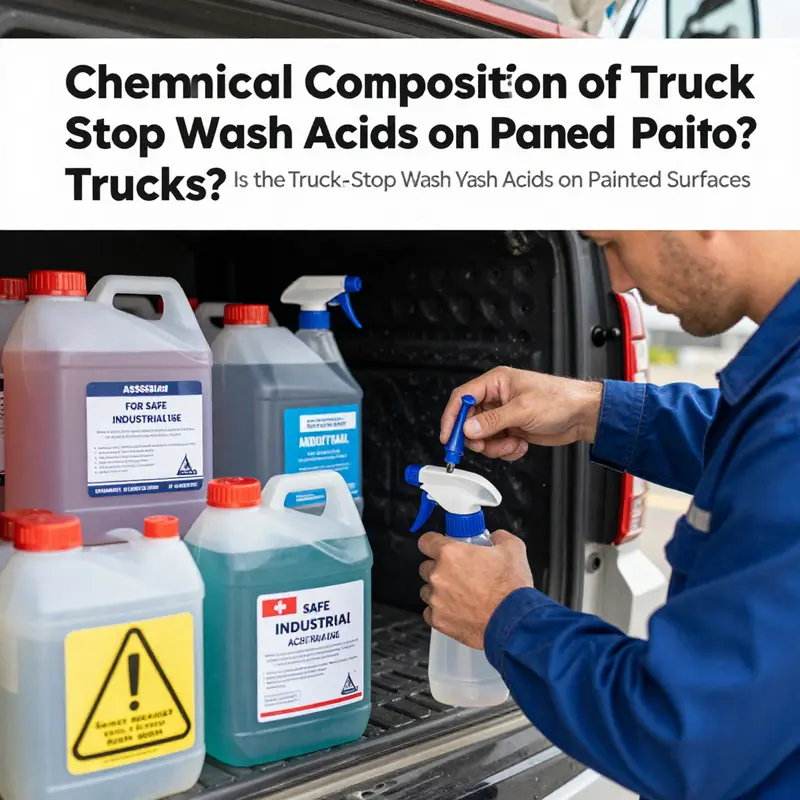
Dirt, grime, road salt, and tar all press against the paint like a long winter’s memory. A truck stop wash promises to lift this burden with speed and efficiency, but behind the curtain of rinse cycles and foamy suds lies a chemistry that can either preserve a fleet’s luster or slowly erode its protection. The central question—whether the wash acid used at truck stops is safe for painted surfaces—depends on a careful balance of chemical composition, application technique, and the conditions under which the cleaning occurs. It’s not enough to assume that a wash is gentle because it wipes away grime. The interaction between cleaning agents and the paint system—the clear coat, the base coat, and the substrate beneath—requires attention to details such as pH, dwell time, dilution, and rinsing thoroughness. In practical terms, the best practice starts with understanding what’s in the wash solution, how it behaves on contact with paint, and how a fleet can verify safety without compromising cleanliness.
A truck stop wash typically relies on a blend of surfactants, detergents, water softeners, and, in some formulations, mild abrasives or polymers designed to boost shine. Surfactants are the workhorses they lift dirt and oil by reducing surface tension, letting water run off more freely while carrying away contaminants. Detergents help break up greasy residues that ordinary water cannot touch. Water softeners reduce mineral interference that can leave mineral spots or soap scums, especially in hard-water regions. In many cases these ingredients are paired with polymers or conditioning agents that help protect the surface as the vehicle moves through the wash. The key variable, though, is the pH level. Paint surface chemistry—especially automotive clear coats—tends to tolerate a reasonable range of cleaning environments, but persistent acidity or alkalinity can alter the surface and, over time, dull the finish or promote micro-damage that isn’t immediately visible. Most well-formulated truck stop washes strive for a pH that is neutral to mildly alkaline, typically around pH 7 to 10. At this range, the solution is effective at saponifying or lifting oils without aggressively attacking the resin or pigment layers that seal the metal and provide gloss. In other words, a wash that sits at a neutral or slightly alkaline pH is more forgiving to painted surfaces than one that plunges into strong acidity.
Despite this general rule, there is a real caveat embedded in the broader industry narrative: not all products labeled as truck stop washes are created equal. The spectrum runs from high-quality, purpose-built automotive wash formulations to lower-quality blends that may be under-diluted or left to dwell on surfaces longer than recommended. When a wash contains stronger acids or harsh chemical blends, and when dilution is not properly managed or rinse cycles are insufficient, the risk to paint increases. The possibility of etching or dulling arises not only from the chemical itself but from the transfer of abrasive particles or metallic grit that might be introduced during the wash process. Abrasives in the formulation, or the use of rough wash materials like mitts or sponges, can scratch the clear coat and create micro-scratches that trap grime and sunlight, accelerating a faded appearance. The contrast between a gentle, paint-safe option and a more aggressive solution is often a matter of execution as much as formulation.
This is where the industry context—especially regulatory and safety considerations—begins to matter. A widely cited concern in the literature comes from regulatory bodies that caution against the use of certain harsh chemicals in consumer and industrial cleaning contexts. In particular, hydrofluoric acid, while effective at certain industrial cleaning tasks, is infamous for its potential to cause severe burns, disability, and even death if there is exposure. A report from a state labor and industries agency highlights the dangers associated with HF-based products and notes ongoing efforts to identify less hazardous alternatives for wash mixtures. The practical implication for fleets is simple but profound: the mere presence of a powerful oxidizer or acid in a wash doesn’t automatically doom a painted surface, but it does elevate the stakes for careful handling, thorough rinsing, and strict adherence to the label’s dwell times and dilution instructions. For many fleets, this translates into a rule of thumb: rely on pH-neutral or mildly alkaline formulations labeled as safe for automotive paint and avoid acid-rich blends unless there is a compelling mechanical or environmental reason to use them.
The dwell time—the period a cleaner sits on a surface before rinsing—emerges as a second critical axis of safety. Even a mildly alkaline wash can cause problems if it remains in contact with the paint for too long. Residence time matters because chemical reactions don’t stop at the moment you turn off the nozzle; the paint and its clear coat may continue to respond to residues as temperature and humidity shift during and after the wash. An inadequate rinse can leave residues behind, and residues can be particularly problematic in microenvironments such as around door seals or along edges where water can pool. In contrast, a thoroughly rinsed surface removes not only the bulk of the cleaner but also traces of minerals or abrasive particles that might contribute to micro-scratches or water spots as the vehicle dries. The practical counsel here is straightforward: choose a wash system that emphasizes complete rinsing, and maintain a schedule that minimizes dwell time variability across the fleet.
From a maintenance perspective, the best defense is knowledge. Fleet managers should request the Material Safety Data Sheet (MSDS) or the equivalent product specification from the wash facility. These documents provide the recommended dilution ratios, intended pH range, contact time, and instructions for safe handling. They also reveal whether the product is explicitly labeled as “paint-safe” or “safe for clear coat”—phrases that carry real weight in determining the risk profile of a given wash. Relying on informal assurances from operators can be dangerous, because real-world practice may diverge from the intended formulation due to dilution errors, maintenance lapses, or equipment wear. A simple, disciplined practice can mitigate these risks: confirm the cleaning agents used, request proof of testing against automotive paint, and prefer facilities that operate touchless or low-impact wash systems. Touchless systems rely primarily on high-pressure jets and detergents, reducing the potential for abrasive contact that can occur with mitts or brushes. Low-impact systems emphasize milder chemicals and controlled application, thereby decreasing the chance of scratches and etched areas on the painted surfaces. For fleets that carry high-value or specially painted equipment, the calculus shifts again. In such cases, a mobile detailing service that offers dedicated, paint-safe cleaning protocols is often worth considering. The promise is not merely aesthetic but protective—preserving gloss, color depth, and the resin integrity of the clear coat against the cumulative stress of road grime.
The field narrative also echoes one practical point that often emerges in shop talks and fleet best-practices guides: the human factor. Even the finest formulation cannot guarantee paint safety if technique is flawed. The inadvertent use of dish soap as a substitute for a purpose-made automotive cleaner is a classic example. Dish soap is designed for household use and tends to be more aggressive to oils on a vehicle’s surface than a vehicle-specific cleaner, especially if left to dwell or rinsed incompletely. Additionally, there is a temptation to scrape with rough mitts or to reuse washed towels that have become embedded with grit. Each of these missteps can introduce micro-scratches or embed minerals that reappear as dullness after the sun returns. A disciplined routine—using dedicated automotive wash products, avoiding dish soaps, ensuring clean rinse water, and performing careful post-wash inspection—serves as a practical hedge against the uncertainties of mixed formulations at busy truck stops.
The broader conversation about safety, however, should not be constrained to the details of chemistry alone. It encompasses how fleets decide when a wash is appropriate and what alternatives exist for particular classes of equipment. The literature supports the idea that most commercial washes provide adequate safety for painted surfaces when used correctly. The challenge is ensuring that “used correctly” remains the consistent rule across all trucks and all stops. That means implementing a few simple governance practices: verify the wash chemical family and pH with the facility, insist on proper rinsing, avoid long dwell times, and opt for systems with minimal physical contact. For long-term preservation, consider a phased approach that uses paint-safe cleaning products for routine maintenance and reserving stronger, more aggressive cleaners for heavily soiled, non-painted components or for occasional deep-cleaning under controlled conditions. In the end, the best practice is a blend of chemistry, technique, and a culture of care that treats the painted surface as a long-term investment rather than a disposable surface.
The narrative above is not merely an abstract caution. It translates into actionable choices that fleets can implement without sacrificing cleanliness. For example, a fleet might adopt a policy that all wash cycles must be performed with a pH-neutral to mildly alkaline product that is explicitly labeled as safe for automotive paint, coupled with a documented rinse protocol that ensures no residual cleaner remains on the surface. If a location uses a more acidic or aggressively formulated wash, the policy might require additional inspection or the use of a dedicated rinse cycle with a separate neutralizing step. It is also worth noting that high-durability coatings or aftermarket paint systems will have different levels of resilience, and the MSDS will reflect those nuances. While the goal remains to remove grime effectively, the method must respect the integrity of the finish and the long-term appearance of the fleet. The dialogue between fleet managers, wash facility operators, and maintenance staff is essential in achieving this balance, and it is through that dialogue that safer, paint-friendly solutions emerge as standard practice rather than exceptions.
In the practical sense, the chapter’s core message is that there is a spectrum of safety in truck stop washes. Moderately acidic or strongly alkaline formulations carry higher risk, particularly if mishandled. Neutral to mildly alkaline, properly diluted products used in rinse-forward systems with thorough post-cleaning checks tend to be kinder to paint. The industry’s ongoing evolution toward safer options—notably in the quest to replace HF-containing or similarly hazardous blends with less hazardous alternatives—reflects a broader commitment to safeguarding not only the asset but the people who operate around and with these systems. Fleet operators who adopt a cautious, evidence-based approach—demanding MSDSs, verifying paint-safe labeling, prioritizing touchless or low-impact systems, and engaging in ongoing technician training—are more likely to see sustained paint integrity even as trucks accumulate miles and weather their environments.
For readers who want a concrete pointer toward deeper, fleet-focused strategies, one route is to explore practical guidance about cleaning practices that prioritize both efficiency and paint safety. In particular, fleets that share best practices about dealing with heavy grease and tar without over-relying on harsh cleaners can benefit from a set of proven approaches. The linked resource below offers insights described in the context of real-world maintenance and cleaning strategies that align with the chapter’s emphasis on safety, efficiency, and long-term asset preservation. You can explore this related guidance at: proven strategies for cleaning grease and tar off your trucks fast.
Finally, while the specific chemical mixture you encounter at any given truck stop may vary, the overarching principle remains constant: a painted surface reveals its worth through the care it receives. A fleet that treats wash selection as a decision rooted in chemistry, technique, and proactive maintenance will preserve gloss, color, and protection longer than one that treats washing as a routine nuisance. The science of wash chemistry need not be a barrier; it can be a guide that helps you choose safer, paint-friendly practices and build a culture of maintenance that benefits every inch of your fleet’s exterior surface. For fleets that want to explore beyond the immediate practice of washing, there is a broader ecosystem of resources that connect facility management, fleet standards, and maintenance outcomes. These resources emphasize that consistent, well-communicated maintenance policies translate into measurable reductions in surface wear and improved fleet presentation over time. In short, paint safety is less a single moment of choice and more a practice woven through procurement, protocol, and continuous improvement in how trucks are cleaned, checked, and cared for across the road.
External reference for deeper safety context: https://www.autorepair.com/2023/09/08/are-truck-stop-washes-safe-for-your-paint/
Paint Under Pressure: Navigating Acid Safety in Truck Stop Washes for Painted Fleets
Paint on a working truck is more than a cosmetic layer. It stands as the first line of defense against corrosive road salts, airborne contaminants, UV exposure, and a long list of environmental threats that trucks encounter daily. For fleet operators, the wash bay at a truck stop seems like a straightforward service: a clean exterior that shouts maintenance and professionalism. Yet behind the curtain of spray arches and foaming detergents lies a complex calculus about chemistry, dwell time, coatings, and the paint’s resilience. The core question—whether the wash acid is safe for painted surfaces—unfolds into a broader conversation about responsible maintenance, long-term value, and the practical realities of operating a fleet in diverse conditions. The safety of acids in truck washes has nothing to do with fear of cleanliness alone. It hinges on knowing what is in the cleaning solution, how it is applied, and how surfaces are protected after the wash. In recent years, industry discussions have highlighted that hydrofluoric acid, among other aggressive acids, can pose serious risks to workers and can compromise painted finishes when mishandled. A cautionary note from state occupational safety resources underscores that HF exposure can cause severe burns and long-term disability, even death, prompting a continual search for safer formulations. This context matters not just for the safety of people in wash bays, but for the resilience and appearance of the trucks themselves over the life of a fleet. The practical implication for operators is clear: routine washes should rely on chemistries and protocols that respect the integrity of paint while delivering the clean that fleets expect. In most modern truck wash operations, the visible difference lies in the emphasis on pH-balanced cleansers designed to lift dirt without stripping wax or dulling clear coats. The idea is to strike a balance between effective cleaning and surface preservation. When a process leans too heavily on acidity or fails to rinse thoroughly, the risk to the paint increases. Micro-scratches, subtle etching, and wax layer degradation can accumulate over time, especially when a vehicle travels through cycles of heavy contamination and repeated washes. This is not purely theoretical. The practical experience of fleet maintenance is that the coating system on a painted truck is a layered defense, often including wax or polymer sealants that provide gloss and a protective barrier against contaminants. If an acidic solution briefly slips into contact with that barrier, or if it remains on the surface even for short periods due to insufficient rinsing, the impact can be cumulative. The core obligation, then, is to ensure that the wash chemical system is compatible with painted surfaces. Compatibility implies more than simply avoiding metal corrosion; it means using detergents and cleaners formulated to respect the wax and clear coats, and to work with the vehicle’s protective layers rather than against them. The emphasis on chemical compatibility becomes even more important when fleets operate in climates with heavy mineral deposits or persistent road grime. In these conditions, operators might be drawn to more aggressive cleaners or specialized acids to tackle mineral buildup. Yet the risk escalates if dwell time is extended or rinsing is incomplete. A dedicated wash system can deliver a strong cleaning result while maintaining surface integrity if the chemistry is carefully matched to the paint system and coatings. That is a nuanced distinction, and it rests on three practical pillars: chemical composition, application protocol, and post-wash care. The first pillar, chemical composition, is where the risk register begins. Not all acidic formulations are equal. Some acids are highly reactive with certain waxes or sealants; others are buffered or formulated to remain gentle on clear coats. The industry guidance coming from safety and maintenance literature emphasizes that while some acidic components are effective at removing mineral deposits and tough grime, their use must be deliberate and well-regulated. The second pillar, application protocol, governs how the detergent is delivered. A wash should not be a free-for-all spray that lingers on the surface. It should be a controlled process with proper dwell times, uniform coverage, and an emphasis on rapid and thorough rinsing. In the absence of complete rinsing, even pH-balanced cleansers can leave residues that interact with UV exposure or weathering, gradually dulling shine or eroding protective films. The third pillar, post-wash care, recognizes that even a well-executed wash is not the end of the story. After a wash, the surface benefits from a protective follow-up—be it a wax, ceramic coating, or another durable sealant. These protective layers not only boost shine but also create a barrier against contaminants that would otherwise have an easier path to bond with the paint. The interplay among these pillars becomes the practical framework through which fleets assess the safety of wash acids. The reality on the ground is that many commercial stops operate with detergents that are explicitly labeled as safe for painted surfaces and compatible with common automotive coatings. The language of labeling matters because it translates the chemistry into an operational guarantee. Fleet managers and wash operators who insist on such labeling are taking a precaution that aligns with best practices in the industry. However, labeling is not a universal safeguard. There are variations in formulation, dilution practices, and rinse performance. A poorly formulated acidic solution, even if labeled as safe for paint, can become problematic if it is not properly diluted or if the rinse system fails to remove residues completely. This is why many practitioners advocate for a cautious approach: prefer pH-balanced products that are designed to lift dirt without penetrating or stripping protective layers. This is not to say that all acids are inherently dangerous or that aggressive cleaners should never be used. It is a matter of context, including how the wash system is engineered, how operators are trained, and how the vehicle’s paint system is cared for outside the wash bay. For high-value or custom-painted fleets, the stakes are even higher. The decision to rely on a truck stop wash for regular maintenance must be weighed against the benefits of more controlled, paint-safe methods. Mobile detailing services, for example, can tailor cleaning methods to specific paint systems, with attention to surface chemistry, sensor-safe techniques, and the use of gentle, paint-friendly products. In practice, the safest strategy is often a blended one: use the truck stop wash for routine cleansing in conjunction with periodic, professional detailing that can address more intricate concerns such as protective layer refreshment, paint restoration, and scratch repair. This approach aligns with a broader principle of fleet maintenance: protect the investment by balancing convenience and care. When operators engage with wash facilities, asking pointed questions about chemical inventories and wash protocols can pay dividends. The questions should focus on three areas: the chemical family and pH range of the cleaners, whether any acidic components are used in the process and under what dilution and dwell-time conditions, and how the rinse sequence is designed to ensure complete removal of residues. In addition, operators might seek confirmation about how often brushes, foams, or other contact mediums are cleaned or replaced, and whether any pre-wash or post-wash coatings are recommended or required by the facility. The aim is not to create a barrier to cleaning but to build a transparent dialogue that reduces risk. An informed driver or fleet manager draws a map of potential trade-offs: the convenience of quick, in-and-out washes versus the longer-term benefits of paint protection and meticulous rinse control. The decision pathway becomes clearer when framed within the broader context of fleet risk management and cost of ownership. A damaged paint job does not simply affect aesthetics; it can alter curb appeal for fleet branding, reduce resale value, and necessitate costly corrective work that interrupts operations. Even minor etching or dulling of clear coats can accelerate the wear of protective wax layers, increasing the vulnerability of underlying pigments to UV and contaminants. These considerations extend beyond immediate appearance and into the economics of fleet management. The practical consequences of inadequate wash practices frequently reveal themselves in terms of maintenance cycles, the frequency of re-coating, and the overall life expectancy of the paint system. For operators who maintain premium looks as part of their brand promise, the cost of paint correction can be a recurring stressor, whereas a disciplined approach to wash chemicals and rinse dynamics reduces that liability. The broader narrative about acid safety in truck washes thus becomes a story about stewardship: stewardship of paint, of crew safety, and of the fleet’s reputation. It invites a careful mindset that favors documentation, training, and routine verification over reliance on a single method or a shortcut that might yield immediate cleanliness but compromise long-term results. In this sense, the conversation moves beyond the question of “Is the wash acid safe?” to a more integrated inquiry: How can a fleet ensure that its washing practices, whether performed at a stop or by a mobile detailer, harmonize with the vehicle’s protective systems and with the expectations of safety, efficiency, and value retention? The answer lies in recognizing that safety is not a binary attribute but a spectrum that encompasses chemical safety, mechanical safety in wash bays, and the ongoing protection of paint. When fleets adopt pH-balanced, paint-friendly approaches and insist on thorough rinsing and appropriate post-wash protection, they create a resilient standard that serves both appearance and durability. This is not an abstract prescription but a practical framework for daily decision-making. For those seeking a broader sense of how such standards fit within industry discussions, the topic is commonly explored in the context of Truck Wash Industry Compliance and Emissions Regulations, which offers a lens into how operators navigate environmental, safety, and performance expectations across jurisdictions, teams, and equipment. For readers who want to explore that broader context, see Truck Wash Industry Compliance and Emissions Regulations. As with any maintenance program, the goal is to align the shortest path to clean with the longest path to paint health and fleet value. The chapter’s core takeaway remains simple: safe wash practices are less about the absence of acidity and more about the responsible use of chemistry, precise application, and proactive aftercare. When these elements synchronize, a truck stop wash can deliver clean, bright surfaces without compromising the integrity of the paint or the investment in the coating system. The world of truck washes is a landscape of variable practices, and that variability makes dialogue between operators and fleet managers essential. The questions posed by one fleet manager—what chemicals are used, how are they diluted, what is the dwell time, and how is rinsing verified—are not merely bureaucratic checklists. They are instruments for protecting the finish that vehicles wear and the brand they carry. In turn, that careful attention reverberates through maintenance logs, resale valuations, and the steady rhythm of a fleet that keeps moving with confidence. For those who want to extend their practices beyond the wash bay, consider integrating routine surface protection in the form of post-wash treatments that reinforce gloss and provide an extra barrier against UV and contaminants. This approach helps preserve the paint’s integrity between washes, reducing the likelihood that harsh residues linger or that the paint’s protective layer degrades prematurely. It is not a guarantee against all risk, but it is a practical enhancement to a washing strategy that already respects the fundamental limits of paint while delivering the cleanliness that customers expect from a well-run fleet. In sum, the conversation about whether truck stop washes are acid-safe on paint trucks is best understood as a composite of chemistry, technique, and care. The best answers come from a combination of labeled, paint-friendly formulations; disciplined application protocols; and deliberate post-wash protection. When these elements align, the result is a fleet that looks professional and performs reliably, with the paint remaining a durable, radiant shield rather than a vulnerable surface. For broader industry context and ongoing updates on compliance and best practice, refer to the linked industry resource above, and for a deeper dive into the specific safety dimensions of wash chemistry in practice, explore the general guidance provided in the external resource mentioned here. External resource: https://www.abkwash.com/guide-to-truck-washing
null
null
Final thoughts
The consideration of whether truck stop wash acids are safe for painted trucks ultimately revolves around understanding chemical compositions, recognizing the risks involved, and implementing best practices for vehicle maintenance. Fleet managers and operators should confirm the chemical safety of products used at wash facilities, opt for gentler wash systems, and prioritize preventive measures to safeguard vehicle aesthetics. Awareness and diligence in choosing the right washing techniques can significantly affect the longevity and appearance of fleet vehicles.