
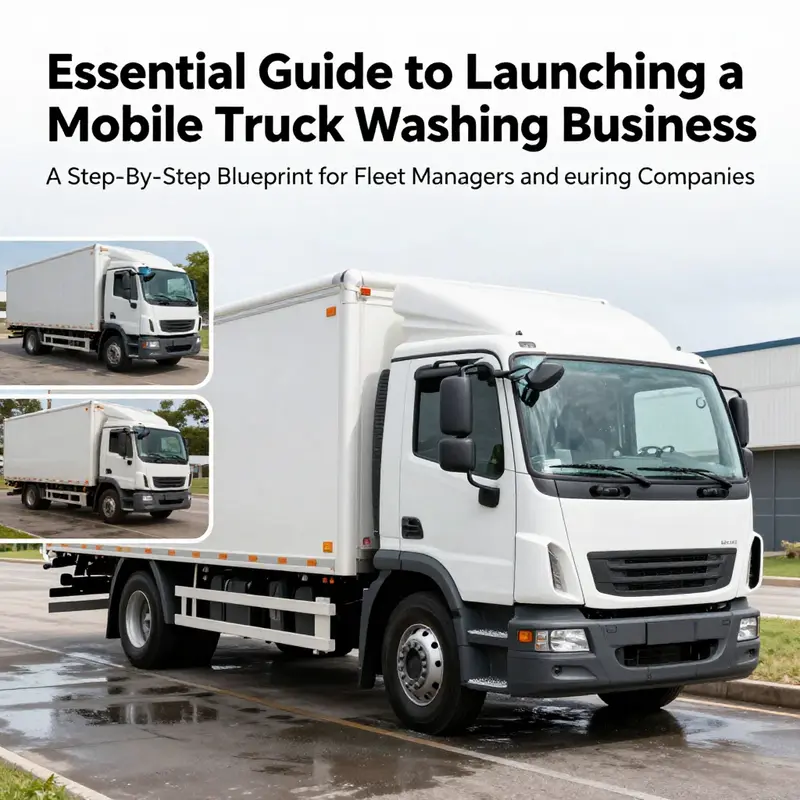
Establishing a mobile truck washing business is a strategic step for logistics and freight companies aiming to maintain fleet appearance and extend vehicle lifespan. With growing industry demands and the importance of branding, a clean fleet can significantly enhance company image and operational efficiency. This guide breaks down the crucial steps necessary to launch your mobile truck washing business effectively, covering everything from market analysis and compliance to equipment selection, service offerings, and digital marketing strategies. Each chapter builds on the previous one to create a comprehensive framework for your business ventures.
Validating Demand and Building a Practical Plan: Market Research and Business Strategy for Your Mobile Truck Washing Venture
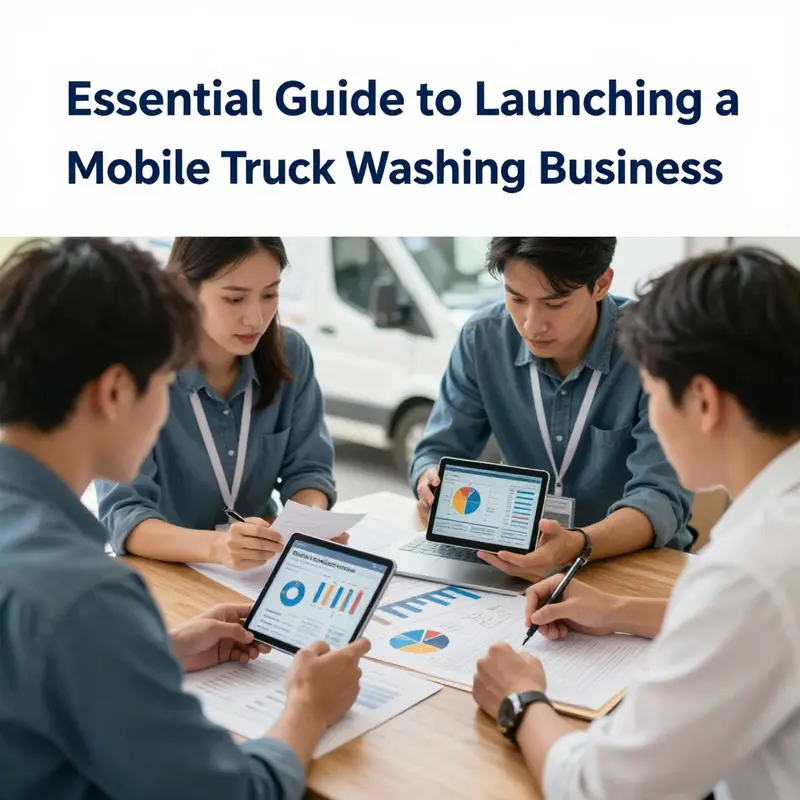
Turning Observations into Opportunity
Before you invest in equipment or a vehicle, invest time in understanding the local marketplace. A focused market study reveals not only how many potential customers exist, but also when and how they want service, what they will pay, and which gaps your business can reliably fill. Start by mapping the types of customers in your area: independent owner-operators, regional fleets, local delivery companies, refrigerated freight services, and municipal or contractor fleets. Each group has distinct pain points—scheduling conflicts, inconsistent in-house washing standards, regulatory pressure on runoff, or limited staff training—and each represents a chance to tailor an offering that feels indispensable.
A practical local market analysis tracks three things at once: client volume, usage patterns, and service preferences. Count potential accounts within a reasonable service radius and estimate the fleet size at each. Ask simple questions: how often do trucks need washing to meet company standards? Do they prefer scheduled weekly service or ad-hoc spot washes after long hauls? Are there peak windows—early mornings before dispatch or late evenings after returns—when a mobile wash offers maximum convenience? These answers shape route planning, workforce scheduling, and vehicle choice.
Competitor research completes the picture. Walk competitor lots, audit their visible pricing and service lists, and note the mix of fixed-site versus mobile providers. Pay attention to what customers praise and what they criticize online. If existing providers are inconsistent on convenience or environmentally friendly practices, you can position your business to solve those specific problems. Distinguish your service through reliability, speed, or specialized cleaning for certain cargo types, but keep promises you can deliver consistently.
Translating Research into a Business Plan
A concise but comprehensive business plan turns market intelligence into operations. Begin with an executive summary that highlights the problem you solve and the market opportunity you captured. Your company description should explain the operational model: single-unit owner-operator, multi-vehicle route-based system, or franchise-ready platform. The market analysis section is where your research pays off—use estimates of reachable fleet size, frequency of service, and competitor weaknesses to justify projected market share.
Operational logistics require explicit detail. Define the number of mobile units you will run initially and how that scales. Specify vehicle requirements, storage and secure parking, staffing needs, fuel estimates, and expected chemical and water usage per wash. Account for insurance, licenses, and any environmental permits needed for your jurisdiction. Outline safety procedures for working around heavy vehicles and for handling wastewater, especially near sensitive equipment.
Service offerings and packaging should be informed by demand analysis. Offer clear, tiered packages: a quick exterior-only wash for drivers with tight schedules, a combined exterior-plus-interior option for fleets that want full upkeep, and premium detailing for specialized clients. Include fleet pricing and volume discounts to secure recurring revenue. Make payment terms explicit and consider contracts for scheduled routes to stabilize cash flow.
Financial projections must be realistic and conservative. Build spreadsheets that model fixed and variable costs, break-even analyses, and cash flow for the first 12 to 24 months. Factor in upfront capital: vehicles, pumps, tanks, and water-recycling systems where applicable. Estimate recurring costs such as cleaning agents, fuel, vehicle maintenance, and payroll. Project conservative growth scenarios and identify a clear pathway to profitability, including the number of weekly washes required per unit to cover costs and generate a margin.
Operational Blueprint: From Vehicle to Route
Efficiency is the backbone of a mobile operation. Decide on vehicle size based on equipment and anticipated client needs; a compact cargo van or small delivery truck often balances maneuverability and storage for tanks, pumps, and gear. Plan for water use: portable tanks sized for multiple washes and the option of on-board water recycling reduces resupply time and appeals to environmentally conscious customers. Select equipment that minimizes downtime and maintenance complexity.
Route design must minimize deadhead miles. Use your market map to cluster clients geographically and prioritize long-standing locations such as freight yards, logistics hubs, and dedicated truck parking. Schedule appointments to match client peak preferences uncovered in your research. For large fleets, offer dedicated weekly routes and a single point of contact to simplify billing and coordination.
Staffing and training determine service quality. Hire technicians with a practical mindset and teach standardized cleaning procedures, safety around heavy vehicles, and correct use of biodegradable chemicals. Document processes so service is consistent across technicians and locations. Training improves speed and reduces waste—both crucial to maintain margins when competing on convenience and reliability.
Mitigating Risk and Meeting Regulations
Regulatory compliance is non-negotiable. Secure a business license and register your business name. Investigate local environmental requirements for runoff and wastewater handling; in many areas, mobile wash services must use portable containment or recycling systems to prevent contamination. Liability insurance protects against accidental damage to vehicles or property and should be calculated into pricing.
Operational risk also includes equipment failure, staff no-shows, and fuel price volatility. Maintain a preventive maintenance schedule for pumps and vehicles, cross-train technicians to cover shifts, and build a small operating reserve to smooth through short-term disruptions. These measures increase reliability—a competitive advantage in this sector.
Scalability and Strategic Growth
Design your initial business model with clear scaling steps. If you start with one unit, document systems that can be replicated: route templates, pricing bands, customer onboarding checklists, and quality-control inspections. Plan for adding services such as interior detailing or grease and tar removal as you develop expertise and demand. Explore partnerships with businesses that host trucks—repair shops, warehouses, and fleet operators—to secure recurring contracts and reduce customer acquisition costs.
Long-term success depends on a disciplined approach to measurement. Track key metrics: washes per week per unit, average ticket size, fuel and chemical cost per wash, customer retention, and technician utilization. Use those figures to refine pricing, adjust routes, and decide when to add a second vehicle.
Practical Tools and Templates
A few practical resources accelerate implementation. Use simple mapping tools to visualize client clusters and optimize routing. Maintain a client database that records vehicle types, wash frequency, and preferred service windows. Create a basic contract template for repeat customers and a standardized invoice system to speed payment. For guidance on building a robust business plan tailored to mobile service operations, see a structured industry guide that outlines step-by-step planning and financial modeling.
By combining disciplined market research with a focused, practical business plan, you shape a mobile truck washing operation that meets real needs and scales predictably. The plan you build from this research becomes the operational roadmap you follow, refine, and replicate as your business grows.
Facility management considerations for truck wash businesses
External reference: https://www.shopify.in/blog/box-truck-business-plan
Navigating Legal and Regulatory Requirements for a Mobile Truck Washing Business

Starting a mobile truck washing business means more than buying a van and a pressure washer. Legal and regulatory compliance is central to operations. It shapes your service design, determines your costs, and affects sales opportunities with large fleet customers. Treat compliance as a competitive advantage: clear processes, proper permits, and documented training make it easier to win long-term contracts and to avoid costly enforcement actions.
At the heart of regulation for mobile washing is environmental protection. Municipal, state, and federal rules often target wastewater, chemical handling, and water use. Rinse water from trucks can contain oil, grease, detergents, and heavy metals. Discharging that water into storm drains or soil can violate laws and lead to fines. Many jurisdictions require wash operators to capture and treat rinse water on-site or to use approved disposal methods. That means choosing equipment and workflows that prevent uncontrolled runoff. Simple steps include using berms or absorbent pads around wash areas, routing water through a portable filtration or closed-loop recycling system, and ensuring captured wastewater is transported to licensed treatment facilities when necessary.
Chemical selection and handling are closely regulated. Authorities increasingly require biodegradable, low-toxicity cleaners, particularly for operations near sensitive water bodies or in areas with strict municipal codes. Read and follow product safety data sheets and local chemical-use restrictions. Label and store chemicals in secondary containment to prevent spills during transport. Train technicians on correct dilution ratios to avoid unnecessary chemical waste and to reduce the risk of environmental harm. Maintain an inventory log and incident procedures so regulators can quickly see your commitment to safe practices if inspected.
Water conservation rules also influence how you outfit your service. Many places either incentivize or mandate water-saving technologies for mobile wash operations. Systems that recycle a high percentage of water can reduce both your utility costs and regulatory burden. When selecting equipment, consider models designed for portable use that can filter and recirculate rinse water while meeting local discharge quality standards. Investing in these systems pays off by lowering water consumption and positioning your business as an environmentally responsible service—valuable when pitching to corporate fleets with green procurement policies.
Beyond environmental rules, vehicle and transportation regulations come into play. If your service vehicles meet the definition of a commercial motor vehicle, they must adhere to Department of Transportation requirements for registration, inspection, and insurance. Drivers may need specific qualifications or licenses. Keep accurate maintenance logs and ensure drivers understand hours-of-service rules where they apply. If your operation transports bulk chemicals or other regulated substances, you must follow hazardous materials regulations. That includes proper labeling, placarding on vehicles when required, and specialized employee training for handling and emergency response.
Liability and business licensing are equally important. Obtain the local business license and register your business name. Secure comprehensive insurance covering general liability, automobile liability, and, if you have employees, workers’ compensation. Policies should explicitly cover mobile operations and on-site work at client locations. Consider pollution liability coverage that protects against claims from accidental releases of contaminants. Well-structured insurance reduces risk and reassures prospective clients, especially larger fleets or public agencies that contract only with insured vendors.
Operational protocols are a practical extension of compliance. Standardize procedures for every job: pre-work site assessments, containment setup, equipment checks, and post-wash cleanup. Create checklists that technicians follow and log for each visit. These records become evidence of compliance if authorities request documentation. Implement incident reporting and corrective-action plans so hazards are addressed quickly and processes are improved over time. Training programs should be formal and documented. Teach staff safe chemical mixing, spill containment, confined-space awareness where applicable, and safe work practices around electrical systems, brakes, and other sensitive truck components. This training reduces accidents and protects your reputation.
Recordkeeping and reporting are rarely optional. Keep permits, inspection reports, chemical inventories, training certificates, waste manifests, and maintenance logs organized and accessible. Many regulators rely on records during routine checks. Clear documentation speeds inspections and simplifies renewal of permits. Use digital tools to centralize these records and timestamp entries. A mobile-friendly management system that ties service records to locations and technicians streamlines audits and enables rapid responses to customer questions about environmental practices.
Engaging with local regulators and community stakeholders proactively pays dividends. Before launching, request a meeting with municipal environmental staff to review local discharge rules and preferred disposal pathways. Ask about permit types and timelines. Some localities offer guidance programs for small businesses launching potentially impactful services. Build relationships with certified waste transporters and treatment facilities so you have reliable disposal options. These partnerships ensure compliance even when customers require service at remote or regulated sites.
Certifications and third-party audits add credibility. Independent verification that your practices meet recognized standards reassures customers and supports bidding for larger contracts. Certification bodies and testing organizations offer audits, product testing, and compliance guidance that help you meet technical requirements. Consider periodic third-party reviews of your wastewater treatment systems and operational policies. An external audit can also identify cost-saving efficiencies and areas where additional training is needed.
Contract language must reflect compliance realities. When negotiating with clients, include clauses that address site access, permitted discharge zones, and responsibilities for incidental contamination discovered during service. Clarify whether you or the client will supply water at the site, and who is responsible for arranging wastewater disposal if on-site capture is insufficient. For fleet accounts, negotiate terms for recurring services that specify environmental procedures and a mechanism to report non-compliance or incidents.
Finally, align compliance with your marketing. Many customers prioritize vendors with documented environmental stewardship. Use your permits, certifications, and documented recycling rates as part of sales materials. Highlighting eco-friendly practices helps separate you from lower-cost competitors who may cut corners. When fleet managers evaluate vendors, trust and reliability matter as much as price.
For readers seeking deeper technical and regulatory guidance, industry-specific resources can clarify standards and certification paths. The organization UL Solutions provides detailed resources on regulatory compliance and certification that apply across industries and can help frame your compliance strategy for broader market access.
For a practical industry perspective on regulatory expectations and emissions compliance within the truck wash sector, see this article on truck wash industry compliance and emissions regulations.
Complying with environmental, transportation, and commercial rules is never a one-time task. Treat compliance as part of daily operations. Build systems that prevent violations, document adherence, and make continuous improvement a routine activity. Doing this protects your business, supports sales, and positions your mobile truck washing operation for sustainable growth.
Gear Up for Growth: Selecting Vehicles and Equipment for a Mobile Truck Washing Business
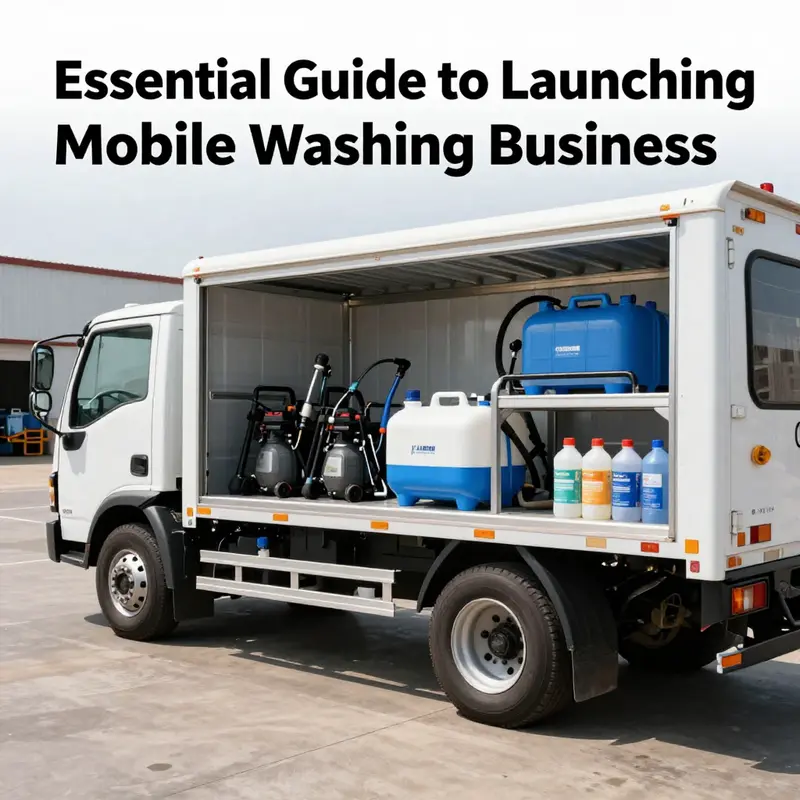
The equipment and vehicles you choose are more than tools; they are the engine of your mobile truck washing business. They shape not only what you can clean, but how fast you can move, how reliably you can serve fleets, and how efficiently you manage water, waste, and cost. A thoughtful selection blends core washing power with practical mobility, strong safety practices, and room to grow as your client base expands. In practice, this means dialing in three intertwined layers: the primary cleaning system, the water and power setup that keeps you going on the road, and a vehicle platform that can carry it all with space, durability, and a professional appearance. As you plan, keep in mind that every choice should align with the types of fleets you want to attract, the environments where you’ll work, and the regulatory requirements you must meet.
Central to your offering is the high‑pressure washing system. For a truck-focused business, you want a machine that delivers robust cleaning power while preserving finishes. A target rating of at least 3000 PSI provides the muscle to remove heavy grime, grease, and road film from steel and aluminum surfaces. Equally important is adjustability. The ability to dial down pressure for delicate trim, seals, and chrome reduces the risk of accidental damage during on‑site work near brakes, wiring, or sensors. Durability is non‑negotiable in a mobile context; look for pump systems designed to withstand vibrations, temperature swings, and long shifts. The option of hot water can assist grease breakdown, but it adds weight and maintenance considerations. In many markets, a cold-water setup paired with effective detergents and proper pre-soaking delivers consistent results with fewer moving parts to service.
Water supply and management sit at the heart of efficiency and reliability. A mobile operation functions best when you can stay on site long enough to complete multiple washes with minimal interruptions for refilling. Large-capacity tanks, typically in the 300 to 500 liter range, are a practical starting point. They reduce the number of trips back to a water source and enable you to service fleets at yards, docks, or rest areas without constant logistics juggling. Onboard filtration, whether integrated or pre-filtered, helps protect your spray nozzles and pumps from sediment and debris, especially when you encounter dirty water or dust from construction zones. Some operators also explore simple recirculation or closed‑loop options to conserve water and simplify disposal, a feature that can differentiate your services to environmentally minded fleets. Your refilling strategy should be straightforward: consider self‑suction options or gravity fills for quick replenishment, while keeping an eye on local water-use regulations and facility requirements. In the long run, water‑saving designs and responsible discharge practices become part of your value proposition to fleet owners who manage complex environmental expectations.
Power setup is the other axis that determines where and when you can work. Battery-powered systems are increasingly appealing for urban work—quiet operation, no fuel odor, and the ability to work near residential or commercial sites without disruption. They demand careful planning around runtime, charging cycles, and the scheduling of back‑to‑back washes. Gasoline or diesel generators offer dependable, high-output power for lengthy shifts or extended jobs in yards where outlets are scarce, but they bring weight, noise, and ongoing fuel costs. A hybrid approach—vehicle-integrated power for routine tasks, supplemented by a portable generator for peak demand—often yields the most balanced solution. When evaluating power configurations, consider the total energy draw of your pump, heater (if used), vacuums, and any steam or auxiliary tools. You want a system that sustains your busiest days without forcing frequent breaks for recharging or refueling. The aim is steady performance, not just raw capability.
Beyond the power plant, the range of cleaning tools you carry will determine the quality and speed of each job. Start with high-quality microfiber towels and chamois for safe, streak-free drying. Wheel, undercarriage, and body brushes designed for heavy-duty grime help you reach tight spaces and stubborn deposits without scratching paint or trim. A robust degreaser, paired with a foam cannon or foam gun, enables even pre‑soaks that loosen dirt before contact cleaning. An interior detailing kit—vacuum, upholstery cleaner, and a steam option when appropriate—opens opportunities for interior packages that command higher margins. If you anticipate frequent interior work, a compact vacuum system and a small extractor can be invaluable, but keep in mind weight, space, and power draw in a mobile setup. Accessories such as a dedicated wheel cleaner, a safe tire-dressing applicator, and modular tool racks keep your workflow organized and efficient, reducing on-site confusion and speeding turnover.
As you contemplate service scope, remember that there are premium options that can help you stand out in a competitive market. A portable steam cleaner enables interior sanitizing with minimal chemical reliance, appealing to fleets with hygiene commitments. An on-site air compressor powers tire inflators and light pneumatic tools for minor on-site repairs or adjustments, which adds a convenience factor for fleet managers. A compact carpet dryer accelerates interior drying after heavy cleaning, shortening downtime between appointments and increasing daily capacity. Finishing touches, like a precise tire dressing process and careful attention to trim, contribute to a showroom-like result that reinforces your premium positioning. These add-ons are not essential at launch, but they offer clear pathways for expanding revenue as you win more fleet contracts and earn repeat business.
Water management and environmental responsibility are not just compliance concerns; they are marketable differentiators. A well‑designed mobile wash operation minimizes water use and controls wastewater, which aligns with the expectations of fleets, rest areas, and municipal rules. If you aim for fleets with strict supplier requirements, you will want to communicate your water management approach clearly and document discharge practices. This is also a smart area to discuss with local regulatory bodies as you plan expansion, ensuring your method aligns with environmental standards and local permits. Even when water savings are not your primary selling point, demonstrating responsible stewardship of water and waste helps build trust with customers and reduces risk as you scale.
Vehicle selection is the tangible face of your business on the road. A customized electric van or electric delivery vehicle is a natural starting point for urban markets. The quiet operation and zero‑emission profile appeal to fleets that must meet noise and air-quality standards in denser areas. When assessing candidates, prioritize a built-in water tank with a practical capacity, a secure mounting system for the high‑pressure assembly, and dedicated storage for hoses, nozzles, and protection gear. A reliable power source—whether an integrated battery system or a robust generator—should be able to sustain a full day of work with a clear plan for charging or refueling. In markets with tighter lanes or more constrained parking, a compact, maneuverable platform can deliver the same service with less logistical friction.
Converted three‑wheeled electric vehicles offer another compelling option for tight spaces and lower upfront costs. Their smaller footprint and agile handling suit urban cores and suburban routes where access is limited. A well‑designed three‑wheeler can house a substantial water tank, a compact high‑pressure setup, a built‑in vacuum, and modular storage, enabling a lean operation that still feels professional and capable. Consider how these platforms can scale as you add more technicians or expand to multi-location contracts. For some premium fleets, dedicated mobile steam wash vehicles provide a distinct selling point, leveraging the efficiency of steam technology and the reduced water footprint to justify higher service rates.
In certain markets, niche operations may explore light‑duty, on‑the‑spot capabilities using smaller electric platforms. These setups emphasize speed, rapid response, and simple on-site logistics. While not designed for the most demanding exterior jobs, they serve as a strategic entry point for smaller fleets, new routes, or maintenance sweeps where full‑scale washing is not yet required. The overarching principle remains: select a platform that aligns with your target customers and geographic footprint, and ensure you can deliver consistent quality with a professional, well‑organized mobile operation.
Bringing all these elements together requires prudent planning and disciplined execution. Start with a practical, scalable core: a customized electric van or a reliable converted three‑wheeler equipped with a durable high‑pressure system, a sizable water tank, and essential cleaning tools. Prioritize energy efficiency, ease of transport, and a professional brand presentation that communicates readiness, reliability, and care for fleets. As you gain traction, you can layer in advanced services like steam cleaning or interior detailing, along with more sophisticated water management and backup power options. Above all, ensure you secure the regulatory groundwork—business licenses, insurance, and any wastewater or environmental permits—so you can operate with confidence and consistency. For regulatory context, refer to the Truck Wash Industry Compliance and Emissions Regulations. This alignment between equipment capability, vehicle practicality, and compliance sets the stage for predictable service delivery and scalable growth. External resources can offer deeper technical guidance on equipment selection and best practices for mobile wash setups, such as equipment guides that lay out the spectrum of options and configurations available to operators in 2026: https://www.mobilewashpro.com/equipment-guide-2026
The path to a successful start is never about chasing every latest gadget at once. It is about choosing a robust, flexible core that lets you clean efficiently, move quickly, and present a professional image on every job. Your fleet becomes a moving billboard for the business you intend to grow. When fleets see a well‑equipped, well‑organized operator arriving on site—one who respects safety, water, and time—they are far more likely to become repeat customers and even a reliable source of referrals. In that sense, gear and vehicle selection is not just a technical decision; it is a strategic decision that shapes your reputation, your profitability, and your capacity to expand into new markets. As you refine your plan, keep the dialogue with potential clients open about how your equipment and processes support their goals—lower downtime, cleaner trucks, and compliant, responsible operation—and you will build a foundation that sustains growth well beyond the launch phase.
null
null
Digital Marketing Mastery for a Mobile Truck Washing Business: Turning Clicks into Fleet Contracts
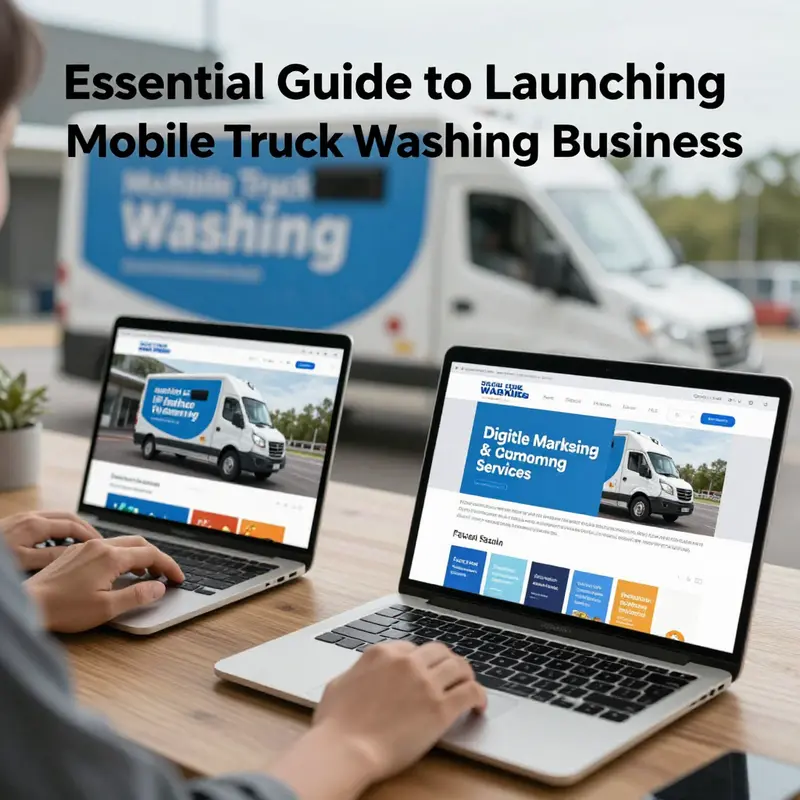
A mobile truck washing business lives or dies by how effectively it connects with the people who actually drive the market: fleet operators, logistics managers, independent contractors, and maintenance teams who decide which service provider keeps their wheels turning clean and on schedule. Marketing here isn’t a one-off ad or a shiny brochure; it’s a disciplined, data-informed approach that translates the immediacy of on-site service into enduring relationships that fleets rely on week after week. The digital layer of this strategy must mirror the reliability, speed, and eco-conscious rigor you offer on the ground. When your online presence communicates the same precision you bring to a wash, you transform curiosity into appointments, and appointments into recurring contracts. It begins with a clear value proposition and a narrative that explains why a mobile wash is not just convenient, but essential to fleet efficiency and vehicle longevity. Fleet managers juggle tight schedules, regulatory concerns, and driver turnover, so your marketing must acknowledge these realities and promise measurable benefits: reduced downtime, predictable pricing, water-conscious cleaning, and transparent reporting that fits into their existing maintenance workflows. The most persuasive message is often simple and concrete: we come to you, we clean thoroughly without interrupting operations, we provide options that fit a fleet’s budget, and we back our work with accountability. In practice, turning that message into results requires a careful orchestration of digital touchpoints that align with the physical experience you deliver.
At the heart of effective digital marketing for a mobile truck wash is a precise understanding of your target audience and their decision journey. Your ideal customer is not a vague profile but a set of people and organizations with distinct priorities. A fleet manager at a regional logistics firm may value speed and consistency, while an owner-operator prioritizes cost control and scheduling flexibility. A maintenance director at a warehousing complex seeks documentation for compliance and routine reporting. Your content must speak to these different angles without becoming a generic sales pitch. The first step is to craft a message architecture that clearly communicates three pillars: reliability, eco-friendliness, and convenience. Reliability shows up in testimonials about on-time arrivals, consistent results, and transparent invoicing. Eco-friendliness translates into water-saving methods, biodegradable cleaners, and waste-conscious disposal practices. Convenience is the ability to book, reschedule, and manage multiple vehicles through a simple process, with real-time updates and clear pricing. When these pillars are embedded in every digital channel, the brand feels coherent from the first click to the final wipe down.
To make this coherence real, practitioners should embrace a marketing funnel that respects the realities of a busy fleet environment. In the awareness phase, the goal is to surface credibility. Here, content should illustrate the value proposition with visuals that show a mobile wash unit in action, paired with concise, outcome-focused captions. The consideration phase demands specificity: how long does a typical exterior wash take? What are the environmental safeguards? How does interior detailing impact driver comfort and vehicle resale value? The decision phase seeks to remove friction: an easy-to-use online booking interface, transparent pricing tiers, and the ability to approve a service quickly via mobile devices in the field. The journey doesn’t end with the booking; it extends through the service itself, with reminders, post-service surveys, and follow-up offers that encourage loyalty. A critical realization is that every touchpoint—search results, social posts, after-service emails—must reinforce a single narrative about efficiency, responsibility, and partnership. Even the act of requesting a quote should feel seamless, almost electric, because it signals that you understand the fleet manager’s need for speed and predictability.
Digital channels must be treated as extensions of the service experience rather than separate marketing silos. Local search presence is pivotal. Managers often search for “truck wash near me” or “fleet maintenance partners in [city]” while at a yard or cranking through a driver shift. Your online listings should feature current service areas, a concise value proposition, and simple ways to initiate a wash or schedule a pilot. A mobile-optimized, fast-loading website or app is indispensable. It should present service options in clear tiers, illustrate what each tier includes, and provide a straightforward quote flow. Visuals matter because fleets incentive is often about outcomes: cleaner exteriors reduce drag and improve heat management, interior spaces support driver comfort, and regular detailing protects critical components from corrosive residues. In this context, before-and-after photos, short clips of the wash process, and snippets of customer feedback become powerful social proof that accelerates trust. When a fleet manager sees a real world transformation on a digital platform, they are more likely to convert to a scheduled service.
The social dimension of digital marketing for mobile truck washing should be practical and credible. Build a presence in professional networks where fleet operators and procurement teams convene, not as a vanity project but as a resource hub. Share content that helps operators think about maintenance planning, water conservation, and compliance. Publish case studies that quantify outcomes—minutes shaved off downtime, gallons saved per wash, improvements in driver satisfaction—and pair them with client logos in a respectful, non-intrusive way. Social proof matters, but so does nuance. Prospective clients want to see your process: how you protect vehicle surfaces, how you handle waste, and how your tech supports scheduling and invoicing. Behind-the-scenes glimpses of your team training, your water-recycling setup, and your on-vehicle equipment maintenance build trust and reduce perceived risk. Engagement should be genuine and local. Comment on industry discussions, answer practical questions, and invite conversations with fleet managers about their unique needs. In this space, credibility is a currency, and a well-tended profile can convert exploratory browsing into a real inquiry.
Analytics become your compass in this evolving landscape. Implementing a disciplined measurement approach helps you understand what works and why. Track cost per lead, conversion rates, and customer lifetime value, but don’t stop there. Look at the path from first contact to booked wash, and then from first wash to repeat service. Identify channels that deliver the best quality customers, not just the most clicks. Use cohort analysis to see if new customers who receive a welcome package or a first-wash incentive become recurring clients at higher rates. Monitoring on-time booking rates, completion times, and post-service satisfaction scores reveals operational strengths and bottlenecks that marketing should reflect back to your service team. Marketing investments that align with operational realities—such as a mobile-optimized booking flow, clear pricing, and transparent communication—tend to yield higher retention as fleets grow accustomed to a predictable, dependable cadence of service.
Education plays a crucial role in empowering you to optimize this system. A foundation in digital marketing analytics equips you with the tools to interpret data and translate it into practical decisions. Enrolling in a beginner-level course that covers the essentials of digital marketing metrics—such as how to interpret traffic patterns, measure engagement, and translate data into actionable campaigns—can be a smart move for a small business owner wearing multiple hats. The combination of hands-on experience and theoretical grounding helps you avoid vanity metrics and focus on what drives genuine growth: bookings, loyal customers, and scalable operations. For instance, a simple shift in messaging or a small adjustment to the booking flow can dramatically reduce friction and increase completed bookings. The real power of analytics lies in turning raw numbers into a story about your customers, their needs, and how your service uniquely solves their problems.
A practical convergence emerges when you couple data-driven insights with a tangible, repeatable sales process. Create clear paths for inquiries to become bookings: a fast quote process, a transparent pricing tier, and an all-in-one booking-and-payment experience on mobile. When a prospect fills a form or taps a link, the system should respond with a concise confirmation, a forecasted service window, and a straightforward next step. This reduces cognitive load at a critical moment and increases the likelihood of conversion. Once the first wash is completed, the relationship should continue with value-added touchpoints: a quick feedback survey, a summary of the work performed, and an invitation to enroll in a loyalty program or bundled fleet offer. Loyalty programs can be designed with tiered benefits that reward frequent customers with faster scheduling, discounted rates for multi-vehicle contracts, or priority dispatching during peak periods. These measures not only increase retention but also enable better forecasting and capacity planning, which in turn reinforces the reliability your marketing promises.
A useful lens through which to view these practices is the story of ongoing growth: marketing is not a standalone campaign but an integrated system that informs, and is informed by, operations. The marketing narrative should reflect the day-to-day realities of a mobile wash: the logistics of arriving at a yard, the care you take to protect brakes and electrical components during interior work, the discipline of water use and chemical stewardship, and the discipline of scheduling that minimizes vehicle downtime. When your digital footprint mirrors the actual service experience, you reduce misalignment and maximize trust. The result is a sustainable loop: credible marketing attracts qualified inquiries, efficient bookings sustain reliable service, and consistent performance fuels positive word of mouth and referrals. In time, this creates a library of tangible proof—case studies, testimonials, and quantified outcomes—that can be shared with prospective fleets and embedded into proposals.
For those looking to deepen their understanding of digital marketing analytics, there are structured resources that translate numbers into actionable guidance. A respected, beginner-friendly course offers insights into how to use analytics to shape campaigns, measure impact, and drive growth in a service-based business like mobile truck washing. It’s not just about collecting data; it’s about turning data into decisions that improve the customer experience and the bottom line. Reading the Derrick Wolfe trucking success story can provide a practical example of how data-driven marketing and exceptional service converge in a real-world context, illustrating the credibility and results that good marketing can unlock for a mobile operation. Derrick Wolfe trucking success story
As you build your digital presence, remember that the ultimate objective is to convert online interest into booked visits and then into lasting partnerships. Your marketing should feel like a clear, helpful guide that coaches fleets through their decision process. The content you produce—whether it’s a before-and-after gallery, a short clip demonstrating your eco-friendly cleaning method, or a customer testimonial—must be grounded in honesty and operable in the field. The channels you choose should be chosen for their relevance to fleets, not for their popularity alone. And your analytics should be used not to chase vanity metrics but to refine the service experience. When this synthesis occurs, you nurture a brand that stands for reliability, responsibility, and responsiveness. In that world, a mobility-focused service that comes to a yard, cleans thoroughly, and communicates transparently becomes a standard that fleet operators return to and even promote within their networks. The marketing engine then supports growth that stays aligned with the core promise of your business: clean trucks, on your terms, with minimal disruption and maximum accountability.
External resource for deeper learning and practical application: https://www.coursera.org/learn/digital-marketing-analytics
Final thoughts
Launching a mobile truck washing business offers significant opportunities for growth and profitability within the logistics and freight sector. By following the structured approach outlined in this guide, you can not only establish a successful business but also provide essential services that enhance vehicle longevity and customer satisfaction. The synergy between quality services, efficient operations, and strategic marketing will position your business to thrive in competitive landscapes. Embrace the challenge and start your journey today.