
Accurate pricing insight for mobile truck wash solutions is vital for fleet managers and company operators striving for efficiency and effectiveness in fleet maintenance. Truck cleanliness directly impacts a fleet’s professional image, performance, and resale value. In this context, understanding mobile truck wash service pricing can prove invaluable. The following chapters will provide a comprehensive breakdown of costs, from basic models suited for infrequent tasks to advanced commercial systems designed for large fleets, ultimately aiding decision-makers in optimizing their washing solutions.
What a Mobile Truck Wash Costs: Typical Rates and the Reasons Behind Them
Understanding the baseline: why most mobile truck washes fall between $50 and $250
When people ask how much a mobile truck wash costs, the simplest answer is a range: expect about $50 to $250 per vehicle for standard professional service. That span is the industry baseline for one-off jobs and reflects a balance between the size of the vehicle and the service depth. It is not a fixed sticker price. Instead, it expresses common market practice shaped by several predictable variables.
Size and surface area are the clearest starting points. A compact pickup or a small box truck requires less water, less labor time, and less cleaning solution than a full tractor-trailer rig. A light wash on a small truck will sit near the lower end of the range. A heavy-duty exterior clean of an 18-wheeler will push toward the top.
Soil type and difficulty matter next. Surface dust wipes off quickly. Road grime, grease, tar and baked-on salts demand more time and stronger treatments. Those treatments may require specialized cleaners, extended dwell time, and more mechanical agitation. When a job needs degreasing or tar removal, the price moves up. Tankers or food-grade trailers often need extra steps and certification to meet safety standards, which raises costs further.
Location and access shape pricing as well. If a crew can park next to the vehicle and work with unobstructed access, the job proceeds faster. Tight lots, steep yards, or locations that require long tool runs increase setup time. Urban zones with travel congestion can add travel fees. Remote sites may attract a distance surcharge to cover fuel and crew time.
The depth of service is a major lever. A basic exterior rinse and soap will cost less than a full exterior wash that includes wheels, chassis rinsing, chemical softening, and spot treatment. Add interior cleaning, engine detail, or cab sanitizing and the per-vehicle price rises. Many operators package options. A base service sits low, while mid- and premium packages bundle more work and charge accordingly.
Time and manpower determine cost dynamics. A single technician working half an hour is cheaper than a two-person team taking over an hour. High-pressure systems, hot water or steam cleaning, and truck-mounted units speed the work. Faster systems can lower hourly labor costs but carry higher capital expenses that show up in per-job pricing. Skilled technicians command higher fees, but they also reduce callbacks and improve finish quality.
Regulatory and environmental compliance can affect the final bill. In many areas, water runoff must be captured, filtered, and disposed of according to local regulations. That requires containment systems and sometimes waste hauling. When a service includes environmental controls, prices climb to cover the equipment and disposal costs. Businesses that serve sensitive sectors, like food-grade tankers, will often have documented procedures and additional fees to maintain compliance and traceability. For operators, investment in best practices pays off by avoiding fines and attracting regulated clients.
Supplies, detergents and consumables are steady but important expenses. High-quality cleaners and degreasers are not cheap. For fleets in tough conditions, stronger chemistries are necessary. Foam, rinse agents and protective coatings add per-job cost. Many professional outfits include these in their packages, so the per-vehicle quote reflects both labor and materials.
Equipment and amortization matter over time. A premium mobile unit with high-pressure pumps, onboard water tanks, and diesel generators represents a large upfront investment. Operators pass some of that cost to customers as part of the per-wash price. Conversely, small portable units have lower capital costs, and their operators can offer lower rates for smaller jobs. The choice of equipment also affects the type of work offered. Steam or hot-water systems command higher prices because they deliver deeper cleaning and faster drying.
Contracting, frequency and fleet discounts change effective pricing. One-off washes are priced higher per job than recurring contracts. Fleets that commit to scheduled washes typically receive discounts. A weekly fleet program will reduce the per-vehicle cost and stabilize revenue for the service provider. Long-term contracts create predictable work and encourage providers to price more competitively.
Seasonality and market conditions lead to price shifts. Mud season, salt-heavy winters and harvest times increase demand and the difficulty of cleaning. Demand spikes push prices up. Conversely, slower months can bring promotional pricing or bundled offers. Regional supply and labor costs also influence rates. Urban markets with higher wages and real estate costs tend to sit at the higher end of the range.
How quotes are structured matters. Many providers quote per vehicle, while others use hourly or square-foot models. Per-vehicle quotes simplify budgeting. Hourly pricing can be fair when jobs vary unpredictably in scope. Some shops quote by service package and vehicle class. To compare quotes meaningfully, you must ensure apples-to-apples comparisons. Ask what is included, which surfaces the quote covers, and whether waste handling is part of the price.
Sample scenarios clarify how the range is applied. Consider a light exterior rinse on a pickup: a quick wash, basic soap and a rinse, and you often pay near $50. A mid-sized refrigerated truck receiving a full exterior clean, wheels and chassis rinsing might land around $125 to $175. A full-service wash on a tractor-trailer, including degreasing, tar removal and wheel cleaning, commonly lands in the $175 to $250 band. Add interior cab cleaning or special surface protection and the price moves higher.
Special vehicles and specialized services command a premium. Tanker cleaning, food-grade sanitization, and hazardous-spill remediation require trained personnel and documented procedures. They also require containment and sometimes third-party oversight. These jobs are priced well above the basic range and depend on complexity rather than square footage alone.
Negotiation and cost control are practical. Ask about bundling opportunities. Schedule regular washes and you can often secure lower rates. Prepare vehicles to reduce on-site labor time. Removing loose debris ahead of time can cut cleaning duration. Ask about volume discounts if you manage a fleet. Clarify cancellation and rescheduling policies to avoid unexpected charges.
Watch for red flags. Extremely low quotes can indicate shortcuts, lack of proper disposal, or inadequate equipment. Firms that avoid discussing runoff management or refuse to show proof of insurance and permits should be treated cautiously. Proper documentation, transparent pricing, and clear service descriptions protect you as a buyer.
Preparing an accurate quote request helps vendors provide fair prices. Provide vehicle dimensions, the number and type of vehicles, typical soil conditions, preferred frequency, and any access constraints. Photos are useful. Describe regulatory or industry standards you must meet. Good vendors will ask these questions before quoting. They will also explain what their price covers and how they handle wastewater.
Finally, consider value rather than price alone. A low cost per wash might save money today. But poor-quality cleaning can hide corrosion, reduce resale value, and increase downtime. High-quality cleaning extends component life and maintains image. For fleets, consistent cleanliness supports safety inspections and brand reputation. Weigh the service scope, provider reliability, and compliance practices alongside the quote.
For a deeper look at industry pricing drivers and how to interpret quotes, consult the industry guidance on mobile truck wash pricing. It explains the variables that affect per-vehicle rates and outlines best practices for getting accurate estimates: https://www.autocare.org/resources/mobile-truck-wash-pricing
If you manage or plan a truck wash program, learning about facility management practices can help you evaluate providers and develop efficient schedules. See this resource on facility management for truck wash businesses for operational context: https://tripleatruckwash.com/facility-management-for-truck-wash-businesses/
This chapter outlines the typical baseline for mobile truck wash pricing and explains the factors that move a job within that range. Use it to benchmark quotes, structure contracts, and ask the right questions when shopping for service. By focusing on vehicle class, soil type, service depth, compliance needs and frequency, you will land on a price that matches both budget and expectations.
Real Costs and Value: Mid‑Range Mobile Truck Wash Units Explained
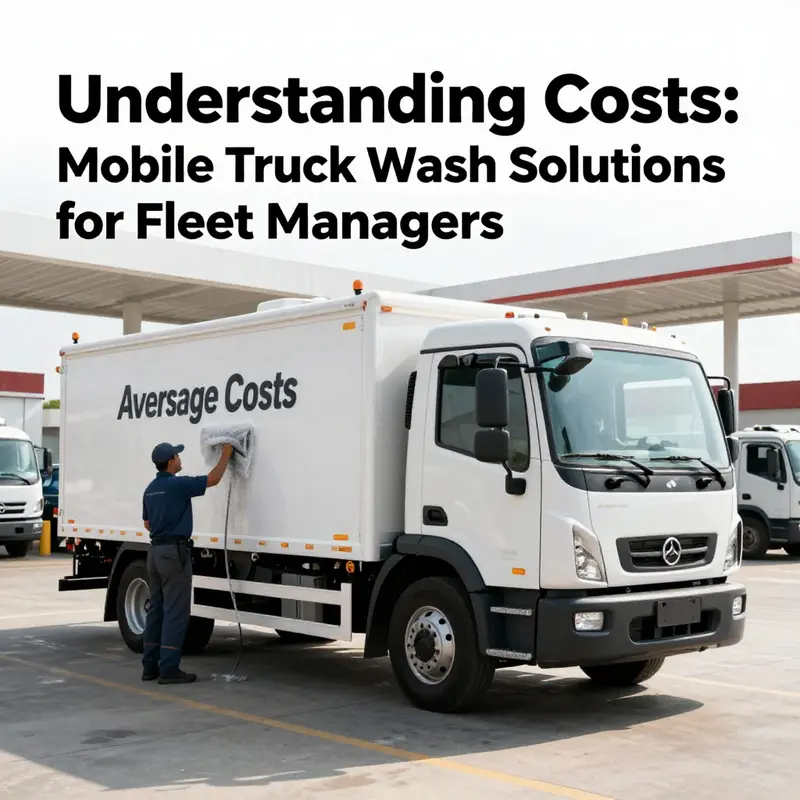
Understanding the true cost of a mid‑range mobile truck wash means looking past the sticker price. It requires seeing how equipment, vehicle platform, regulations, and daily operations combine to shape both upfront expense and long‑term value. This chapter lays out what most buyers actually pay, why those figures sit where they do, and how to evaluate a mid‑range package in practical terms.
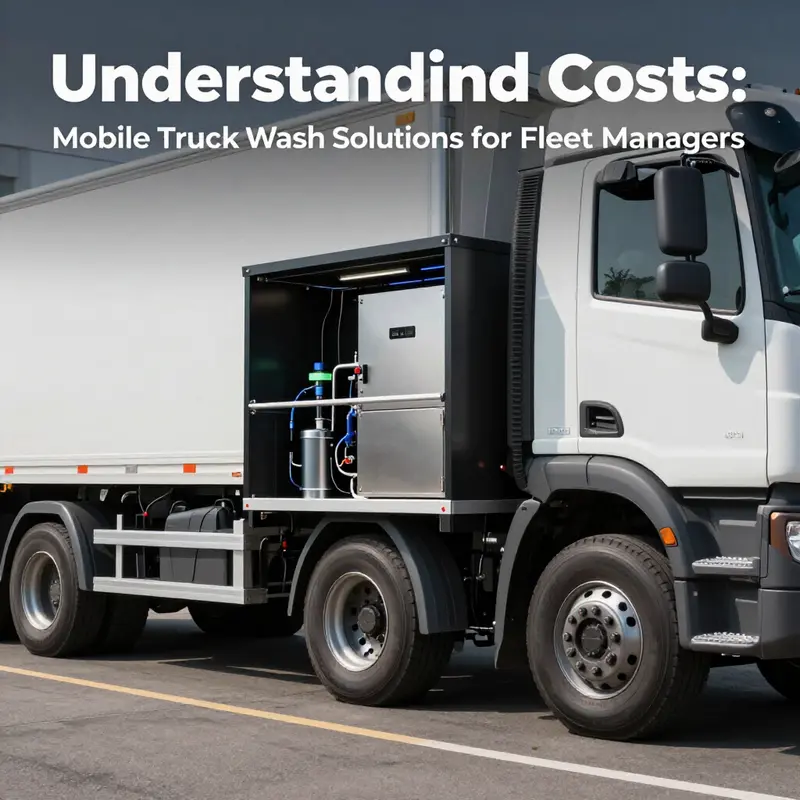
A mid‑range mobile truck wash package typically falls between $50,000 and $100,000. That range covers a fully mobile unit built on a light‑duty truck or trailer. These systems generally include a pressure washer capable of 2,500–4,000 PSI, a 300–500 gallon water tank, a gas or diesel power unit, storage for cleaning agents, and basic onboard filtration and containment. The cost reflects a balance: sufficient power and capacity for commercial work, without the automation and specialty features that drive prices into six figures.
Several cost drivers determine where a specific quote will land within that band. First, the pressure washing system itself varies by pump quality, flow rate, and brand reputation. Pumps rated closer to 4,000 PSI and higher GPM (gallons per minute) deliver faster cleaning. They also use heavier duty materials and require more robust mounts and plumbing. Second, water capacity affects both unit size and operational flexibility. A 300‑gallon tank keeps the vehicle lighter and more maneuverable. A 500‑gallon tank reduces refill frequency, but increases upfront cost and vehicle requirements. Third, the power source—small diesel or gas generators versus electric hybrid systems—changes equipment layout, fuel planning, and noise considerations. Fourth, environmental and wastewater handling systems add significant cost if local rules require containment, filtration, or recycling.
Beyond hardware, equipment configuration matters. A mid‑range unit that integrates a water recycling system will cost more initially, but saves on water consumption and disposal fees. Many municipalities now impose strict rules on wastewater run‑off. For operators who work in regulated urban environments, investing in onboard containment and recycling shields against fines and expands usable service areas. Biodegradable chemical dispensers and precise dosing systems increase chemistry effectiveness and reduce chemical waste, but they raise the package price. For businesses prioritizing sustainability, these features are central to long‑term viability.
Labor and time savings are often underappreciated when evaluating mid‑range systems. A well‑matched pressure washer with the right nozzle packages and hose reels cuts cleaning time per vehicle. Faster turnaround boosts daily throughput and increases revenue potential. When estimating payback periods, factor in typical job length, travel time, and capacity per shift. For a contractor servicing multiple fleet clients, reducing wash time by even 20 percent can turn a marginal investment into a profitable one within the first year.
Maintenance expectations should shape the buying decision. Mid‑range units trade off between repair frequency and initial cost. Higher quality pumps and components reduce downtime but command higher prices. Budget for routine maintenance items: pump rebuilds, hose replacement, filter swaps, and fuel system checks. Create a realistic parts and labor reserve equal to a percentage of the equipment cost each year. That reserve helps keep total cost of ownership predictable and prevents unexpected shocks that erode margins.
Financing options influence what price bracket operators target. Many vendors offer lease or finance packages that spread the capital cost over several years. For startups, financing lowers the barrier to entry and aligns cash flow with revenue. For established fleets, using capital reserves may yield better long‑term savings. Compare finance rates, maintenance inclusions, and end‑of‑term options carefully. A low monthly payment that omits a maintenance plan can be more expensive over the life of the equipment than a higher payment that includes service coverage.
Customization and scale determine final costs as well. A mid‑range unit built on a small truck will cost notably less than one built to handle heavy tractor‑trailer fleets. Adding features such as retractable hose reels, high‑capacity foam systems, heated pressure washing, or specialized nozzles for tar removal raises the build price. Each addition should be evaluated against expected use cases. If you plan to serve food‑grade tankers or municipal vehicles, include compatible cleaning chemistries and wash protocols in your calculations. Those features can command a premium but open doors to higher‑margin contracts.
Regulatory compliance is not optional in many markets. Local rules around wastewater discharge, chemical runoff, and stormwater protection dictate which containment and treatment systems you must have. Because compliance decisions often fall to operators after purchase, including compliance features in a mid‑range build avoids retrofits and downtime. For more on regulatory requirements and industry standards, operators will find useful guidance in discussions of truck wash industry compliance and emissions regulations.
Return on investment hinges on two variables: utilization and pricing. A mobile wash unit that stays busy will amortize its cost quickly. Successful operators price services to cover fuel, labor, chemicals, maintenance, and capital recovery. Typical mid‑range units can pay for themselves within one to three years when run at solid utilization levels and when contracts or recurring clients exist. For operators who plan to sell subscription services or fleet maintenance contracts, the predictable revenue stream magnifies the value of higher initial investment in efficiency and water‑recycling capabilities.
Operational planning influences both experience and costs. Consider route density, refill locations, and water availability. A unit with a 500‑gallon tank needs larger refill windows or access to onsite water sources. Conversely, a low‑water or recycling‑focused system reduces water dependency. Fuel consumption and generator run hours are recurring costs, and planning routes to minimize idle time is critical. Training staff on efficient wash patterns and equipment care reduces wear and prolongs pump life.
Insurance and liability are part of the operating cost equation. Mobile washing involves slip hazards and chemical handling. Insuring equipment, vehicles, and liability protects revenue but adds to monthly expenses. For fleet operators, adding a mobile wash to existing coverage may be straightforward. New businesses should obtain quotes that factor in the added risk. Some insurers offer rate reductions for units with built‑in containment or automatic shutoff features.
Comparing mid‑range units to lower‑ and higher‑end alternatives clarifies their market position. Basic portable washers under $1,000 serve homeowners and occasional users. They lack the flow, tank capacity, and durability needed for commercial work. On the other hand, fully automated industrial systems and large steam cleaning rigs exceed $150,000. Those systems automate processes and handle the most demanding cleaning tasks, but they require larger investment and more complex service support. Mid‑range units occupy the sweet spot for many operators. They combine professional power and adequate capacity, while keeping capital outlay manageable.
When soliciting quotes, ask suppliers for detailed breakdowns. Request itemized lists that show pump specifications, tank materials, generator ratings, containment options, and any included warranties. Compare warranties on pumps and other high‑wear items. Clarify installation costs, chassis modifications, and any additional labor charges. Get sample operating budgets that project fuel use, water consumption, and maintenance over three to five years. Those projections reveal realistic life‑cycle costs and help compare alternative builds.
Sourcing parts and technical support matter for uptime. Choose suppliers with established service networks or who provide clear parts lists and documentation. For mobile operators, fast access to replacement pumps and hoses reduces downtime. Consider entering maintenance agreements that include scheduled inspections and emergency response. These agreements raise operating expenses, but they stabilise performance and reduce the risk of unexpected job cancellations.
Finally, think about resale and upgrade paths. Mid‑range units often retain market value, especially when maintained and equipped with compliant wastewater systems. Upgrading pumps or adding recycling components later is possible, but retrofits cost more than including the features initially. Factor expected business growth into the purchase decision. If you plan to scale rapidly, consider starting with a slightly higher capacity unit to avoid premature replacement.
Choosing a mid‑range mobile truck wash is a strategic decision. The $50,000 to $100,000 band reflects practical compromises between performance and cost. Prioritize features that match your markets, plan for maintenance and compliance, and model operations realistically. That approach reveals not just what a mid‑range unit costs today, but how it contributes to durable, profitable service tomorrow.
For a representative vendor breakdown and mid‑range package specifications, see Mobile Wash Solutions’ mid‑range truck wash packages: https://www.mobilewashesolutions.com/mid-range-truck-wash-packages
Pricing the Fleet-Grade Clean: A Comprehensive Look at Mobile Truck Wash Systems
Pricing the fleet-wide cleanliness of a truck fleet is not a single number but a spectrum shaped by system type, power source, automation, and the scale of cleaning you expect to perform on a regular basis. Operators who depend on on-site cleaning to cut downtime, protect asset values, and maintain professional appearances quickly learn that the price of a mobile truck wash is less a fixed sticker price than a carefully balanced equation. The numbers you’ll see across the market reflect not just the hardware in a box, but the expectations you set for reliability, throughput, water use, chemical efficiency, and the level of service that comes with the machine. It helps to start with the broad ranges and then consider how each factor shifts the total cost of ownership over the life of the equipment and the service model you choose.
Across the spectrum of mobile wash options, the price ladder typically begins with basic, portable, or handheld models. These entry points are designed for light dirt, dust, or small vehicles and are often powered by a 12V source or compact batteries. The price range for these simple devices generally sits from about $30 to $200. They are designed to be light, easy to transport, and simple to operate, ideal for occasional personal use rather than full-scale fleet cleaning. As the cleaning needs rise and the want for better pressure and more robust motor performance becomes practical, mid-range electric and cordless models enter the market. These deliver noticeably higher water pressure and more durable components, with a typical price corridor of $200 to $1,000. They are capable of handling regular home use or small-scale personal washing and may feature added conveniences like foam generators and larger water tanks.
For fleets and professional operators who need regular, reliable service for larger vehicles, high-end portable and professional mobile wash units form the next tier. The typical price range here broadens dramatically—from roughly $1,000 to $15,000+. These machines are designed for frequent use, emphasizing higher-pressure pumps, substantial water capacity, durable construction, and more advanced features, such as adjustable spray nozzles, automatic soap dispensers, and other engineering choices aimed at reducing wash times and improving consistency. In this tier the line between consumer-grade tools and professional equipment becomes clear: the intent of the purchase shifts from occasional use to consistent, repeatable performance in demanding environments. Although this range captures a broad swath of equipment, it still represents a decision that hinges on the volume of work you expect to perform per day or per week.
Beyond the portable and semi-portable classes lie the commercial and industrial-grade mobile wash systems. This is the domain where fleets and large service operators think in terms of capacity, automation, and total cost of ownership. Prices for truly professional systems can begin at several thousand dollars and climb well beyond the mid six figures for turnkey, automation-enabled solutions designed for high-volume operations. The stated ranges here are wide, spanning roughly $3,000 to $30,000+, with significant variation depending on the sophistication of the system, the level of automation, and the scale of the operation. In practice, it’s common to see a huge gulf between a basic commercial wash unit designed for a handful of vehicles per day and a fully automated, multi-station installation capable of cleaning large fleets with minimal human intervention. The core drivers, however, are always the same: how much you value uptime, throughput, and the long-term stability of the cleaning process.
A more specific and telling price envelope emerges when looking at high-end, fully customized mobile wash systems that are aimed squarely at fleet operators. In certain market discussions, high-end, fully customized setups are quoted in the neighborhood of $40,000 to $45,000 per set, with a minimum order quantity of one unit. These figures reflect not just the hardware, but the engineering, materials, and ongoing support that accompany premium installations. They also imply a philosophy about ownership: when a system is designed to be a central, long-term asset with lifetime online support and extensive customization, the price is a function of guaranteed performance, reliability, and the integration of the wash process into a broader fleet maintenance program. This tier also underscores that the most robust solutions often come loaded with service commitments, training, and the possibility of tailoring the equipment to unique operational requirements, from water reuse strategies to chemical dosing optimized for particular dirt profiles.
All of these price layers do more than shape the initial capital outlay. They also influence ongoing operating expenses, because the price of the system interacts with how you perform the cleaning, the throughput you require, and the depth of cleaning you intend to achieve. When you factor in the daily or weekly use, the equipment’s efficiency, and the labor or technician time required, the economics of a mobile wash program begin to reveal themselves in practical terms. The ongoing costs are not just the purchase price amortized over time; they include consumables, energy, water, maintenance, and the cost of skilled labor necessary to operate and supervise the system when needed.
Operational expenses, distinct from the upfront price of the machine, are crucial to understanding total cost of ownership. For a mobile wash service that cleans a single truck, typical on-site cleaning costs range from $50 to $250 per truck, depending on several factors. Vehicle size matters, of course, but dirt level, geographic location, and the level of cleaning required are equally important. A light wash in a relatively clean locale can be near the bottom of that range, while a heavy exterior detailing or tar removal in a harsher environment can push the price toward the top. In cases where the service involves more specialized work—such as high-standard interior cleaning or waxing—the price can rise further, with estimates commonly falling in the $150 to $300 band for more involved cleaning. When contractors and fleets opt for interior detailing or extra protective coatings, the costs can increase by another $20 to $150 depending on the scope. These figures illustrate how a single truck’s cleaning bill is a composite of exterior and interior tasks, labor intensity, and the chosen service level.
For operators evaluating potential systems, the service model remains a critical determinant of total cost. Automatic or semi-automatic washes, particularly those designed for high-volume throughput, generally carry different pricing mechanisms than touchless systems. Estimates from industry discussions suggest that an automatic truck wash service typically charges around $60 to $80 per truck, reflecting the efficiency and automation embedded in the process. A more advanced touchless system—relying on higher-tech cleaning methods and more sophisticated maintenance—tends to command $80 to $100 per truck because the equipment, sensors, and consumables contribute to higher ongoing costs. This distinction matters because if a fleet is considering an on-site, on-demand mobile wash, the per-truck price becomes a proxy for the expected speed, consistency, and results of the wash, as well as the residual wear and tear on surfaces.
The price you pay for equipment and the price you charge for the service you offer are not independent decisions. They are linked in a way that shapes your business case. A higher upfront investment in a robust system may yield lower per-truck charges when you achieve faster wash cycles and better water efficiency, especially in high-volume settings. Conversely, a leaner setup may keep purchase costs down but could require more labor or longer wash times, thereby affecting throughput and profitability. In practice, fleet managers and service operators evaluate these trade-offs with a careful calculation: how many trucks per day can you reliably clean, what is the expected maintenance cadence, and how does your staff productivity translate into cost per hour of operation? The calculus becomes even more complex when you consider long-term energy and water costs, maintenance cycles, and potential downtime caused by equipment failures.
A key practical takeaway for anyone considering a mobile wash investment is that the price landscape is not a single ceiling or floor but a spectrum built around the system’s intended use. If your goal is to serve a small local fleet with modest throughput, a straightforward, mid-range portable or compact automated unit may deliver the best balance of upfront cost and reliability. If your objective is to operate at scale, with multi-station capability, automation, and potential for long-term contracts, a higher-ticket installation with rich service agreements becomes more compelling. The decision hinges on volume, the required level of cleaning precision, and the degree to which you want to control variables such as chemical use, water consumption, and operating downtime.
For operators who want to see how these choices dovetail with environmental and regulatory considerations, there are important implications to reflect on. Environmental regulations and emissions considerations often influence the lifecycle cost of wash operations, particularly in markets with strict water discharge and chemical handling standards. A well-designed, compliant mobile wash system can reduce waste, minimize runoff, and optimize chemical use, delivering not just a cleaner truck but a cleaner compliance footprint as well. For those seeking to align purchasing choices with environmental requirements and emissions considerations, the relevant compliance and emissions guidance can be reviewed in depth at the dedicated resource linked here: truck wash industry compliance and emissions regulations.
While the external cost landscape is dominated by the machine and the service level, the broader procurement decision also benefits from understanding the total cost of ownership. This includes the initial capital outlay, the expected maintenance costs, the cost of consumables such as soaps and brushes, and the energy requirements to operate the system. In higher-end setups, service agreements and online support can be significant value-adds, offering predictable budgeting and reduced downtime through proactive maintenance. For a fleet operator, this means a decision not only about what to buy but also about how to maintain it, how to train staff to operate it efficiently, and how to schedule washes to maximize asset uptime. The result is a plan that optimizes both cleanliness and cost across the fleet’s lifecycle.
In the end, the question, “how much is a mobile truck wash?” can be answered with nuance. The cost is not merely the sticker price of a device or a service but the sum of capital investment, operational efficiency, and the strategic alignment of wash capability with fleet needs. A basic, portable wash device can be purchased for under a hundred dollars, but a reliable, professional-quality mobile truck wash system designed for heavy-duty cleaning and sustained use will generally fall in the $1,000 to $15,000 range for many fleets, while commercial and industrial systems can cost substantially more, depending on the level of automation and customization. The three pillars—equipment capability, service model, and lifecycle costs—together determine the true price of keeping a fleet looking sharp, protecting resale value, and maintaining uptime across all routes.
For operators already on the path to a mobile wash program, the practical next step is a structured cost-benefit analysis. Start with baseline wash frequency, average truck size, and expected dirt levels. Then estimate the number of washes per week and per month, along with labor hours and travel time to and from a cleaning site if on-site options are used. Add anticipated maintenance costs, water and chemical consumption, and any potential downtime due to equipment maintenance. With those inputs, you can translate the sticker price into a forecasted monthly cost and a projected return on investment. The aim is to achieve a predictable cost per wash that supports stable budgeting, while delivering the throughput needed to keep trucks moving—and customers satisfied.
External resource: https://www.epa.gov/
Rolling Clean, Real Numbers: Costs, Capabilities, and Choices in Commercial Mobile Truck Wash Solutions
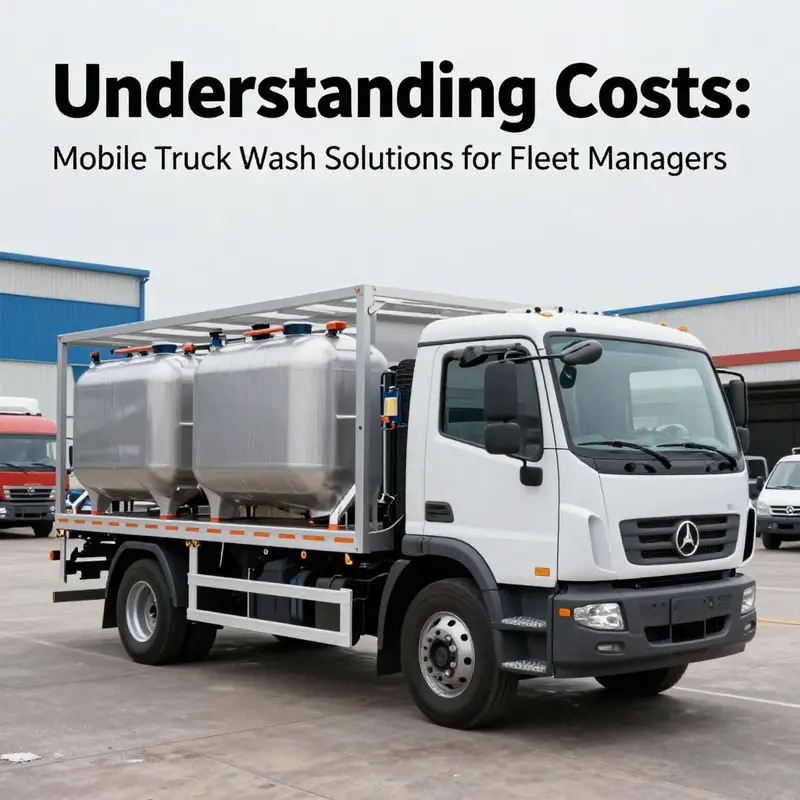
A fleet’s decision to invest in a mobile truck wash system or rely on third-party services hinges on more than sticker prices. It rests on a practical calculus that weighs up-front costs against ongoing savings, the scale of the operation, and how clean a fleet must be to protect duty cycles, asset longevity, and brand perception. When fleets examine what a mobile wash costs, they quickly discover a spectrum that spans the affordable end of the market to enterprise-grade systems, with service pricing reflecting vehicle size, soil level, geographic location, and the depth of cleaning required. On the service side, operators often pay between fifty and two hundred fifty dollars per vehicle, a range that accommodates variations from a quick rinse for a lightly soiled van to a thorough treatment for a heavily soiled delivery rig. This price band, while straightforward, masks the bigger story: the economics of mobile truck washing are not just about a single wash; they’re about uptime, predictability, and the ability to scale cleanliness with demand. A small fleet may find outsourcing more economical up front, but as the fleet grows or as the cost of downtime climbs, investing in a mobile system can become a strategic decision that pays dividends in consistency and control over the wash process.
The drivers of cost, both when purchasing equipment and when contracting services, are largely practical rather than mystical. For businesses planning their own mobile wash capability, the initial capital outlay is substantial and deliberately tied to how often and where the wash will occur. A compact, portable unit may cost little enough to justify occasional use, especially if it draws power from a vehicle’s 12-volt system or uses rechargeable batteries. Such basic units are suitable for light dust removal or spot cleaning on smaller trucks and trailers, and they typically sit at the lower end of the price spectrum—often well under a hundred dollars for the simplest devices, with more capable handhelds nudging into the low hundreds. But as needs become more frequent or as the fleet expands to include larger heavy-duty vehicles, the economics shift. Mid-range electric and cordless models, priced roughly from two hundred to a thousand dollars, offer noticeably stronger pressures, better reliability, and features like larger reservoirs or foam-generation capabilities. These are the practical sweet spot for many mid-size fleets that want solid results without venturing into professional-grade gear.
Beyond that mid-range lies the realm of high-end portable and professional mobile wash units. Here prices climb from roughly one thousand dollars into the five-figure territory, depending on how rugged the build is and how sophisticated the features become. A typical professional unit may boast higher-pressure pumps—capable of four thousand pounds per square inch (PSI) or more—along with large water tanks, durable construction, and options such as automatic soap dispensers, adjustable spray nozzles, and even integrated drying cycles. These features are not mere luxuries. In a fleet setting, they translate into faster cycle times, more consistent outcomes, and the possibility of performing a broader range of cleaning tasks, from heavy-duty exterior soils to more delicate surfaces that demand controlled agitation.
At the far end of the spectrum are the commercial and industrial grade mobile wash systems. These are designed for high-frequency use, large fleets, and high-volume environments. Prices in this tier push well beyond the five-figure mark and can reach the six-figure range when automation and integration with fleet management are factored in. The appeal of these systems lies in efficiency, repeatability, and the capacity to scale cleaning across dozens, or even hundreds, of vehicles with minimal manual intervention. They often feature automated pre-soak cycles, high-pressure spray arrays, brush or roller undercarriage access, and automated drying and waste management sequences. In many cases, operators trade capital intensity for long-term operating efficiency—reducing labor costs, cutting cycle times, and achieving a level of standardization that is hard to replicate with ad hoc wash setups.
The decision to invest in a mobile wash system versus outsourcing, then, becomes a question of how much control is worth to a fleet and how quickly the investment can be amortized. One practical rule of thumb is to consider the total cost of ownership over a typical fleet cycle. Outsourcing costs, while predictable per wash, accumulate into a monthly or quarterly line item that varies with usage. An internal system, by contrast, carries upfront capital charges but can significantly reduce recurring service expenses, especially for fleets with tight maintenance windows or operations that demand rapid redeployments of cleaned vehicles. In this framework, the value proposition of a mobile wash is not only about the clean vehicle but about reliability and scheduling certainty. When a fleet can guarantee that a truck will be cleaned on a given day at a known cost, it eliminates the stress and schedule risk that can accompany external washes parked behind delayed or customized service demands.
In the real world, the economics also hinge on the technology and the environmental footprint of the wash process. Modern commercial mobile wash systems often incorporate water recycling technology, a feature that is not only environmentally responsible but financially prudent for fleets in water-scarce regions or jurisdictions with wastewater constraints. Recycling systems can cut water use by up to seventy percent compared with traditional, non-recycling methods. The environmental benefit dovetails with cost savings, reducing the frequency and volume of fresh water drawn for each wash and minimizing the expense of wastewater disposal. The more a fleet emphasizes sustainability, the more compelling these systems become, since waste treatment and water usage can drive up operating costs if not controlled.
Customization is another central theme. Vehicle types vary widely across fleets, from light-duty delivery vans to heavy haulers, and each category imposes different needs on wash hardware. Equipment providers offer a range of customization options, from nozzle configurations and brush types to waste management and sludge handling. For heavy-duty truck washing, a tailored approach can optimize cleaning effectiveness for rough-surfaced underbodies, mud-caked tires, and stubborn residue on doors and cabs. This level of customization is one of the reasons why commercial and industrial-grade systems command higher upfront costs, but it also means the resulting operation is better aligned with a fleet’s particular mix of vehicles and operating conditions.
The serviceability and durability of the equipment are equally important. Reputable suppliers typically back their systems with long-term support and warranties, including substantial online assistance and, in many cases, a multi-year warranty. A robust support structure is critical for fleets that rely on a mobile wash as a core maintenance function. Downtime is costly, and a system that can be diagnosed and repaired quickly reduces the risk of delays in service schedules and the knock-on effects of late wash cycles on other maintenance tasks.
From a practical standpoint, a fleet manager weighing options for own-operations versus outsourcing should also consider the integration of wash operations with the broader maintenance workflow. The most effective mobile wash solutions plug into existing fleet management practices, with scheduling, maintenance records, and perhaps even automated reminders embedded in the same digital ecosystem that tracks oil changes, tire rotations, and other routine upkeep. This is where the value of a portable or fixed system extends beyond the simple act of cleaning. It becomes a capability that shapes how fleets present themselves on the road: consistent cleanliness, predictable turnaround times, and a professional image that signals care for equipment and for the roadworthiness of every vehicle that leaves the depot.
For operators planning to run their own wash, a well-chosen system also necessitates practical considerations about space, drainage, and waste management. The footprint of a mobile wash setup, whether mobile or stationary, must be compatible with the depot layout and the local environmental requirements. Water collection, filtration, and discharge controls are not just regulatory obligations; they influence ongoing operating costs and the ease with which the wash can be deployed at different locations. In this sense, the discussion of costs is inseparable from the discussion of process design and facility management. For fleets seeking a deeper dive into how to align wash operations with broader facility management goals, consider resources that discuss facility management for truck wash businesses, which cover space planning, environmental compliance, and process optimization in a way that complements the engineering decisions behind the wash system itself. Facility management for truck wash businesses.
Another practical aspect often reflected in pricing and features is the balance between automation and human labor. Automated cycles—such as pre-soak, high-pressure rinse, brush application, and controlled drying—offer consistent outcomes and repeatable timing. They can drastically reduce per-vehicle labor requirements, which translates into lower ongoing expenses for high-volume operators. However, automation also elevates purchase costs and can demand specialized maintenance. The optimal mix is often a function of fleet size, cleaning frequency, and the nature of the dirt encountered. For fleets with a steady stream of vehicles that require uniform treatment, automation tends to pay back faster. For more episodic needs or smaller fleets, a manual approach with a portable system may strike a more favorable balance between cost and uptime. The key is to map the wash process to the fleet’s daily rhythm and to ensure that the chosen system can be scaled if demand grows or shifts.
This is where the long-run value of a mobile wash solution reveals itself. If a fleet commits to a comprehensive wash program, the benefits extend beyond mere cleanliness. Regular, predictable cleaning helps protect paint finishes, extend the life of seals and weatherstripping, and reduce corrosion on undercarriage components. Clean vehicles also project a more professional image to customers and partners, which can translate into stronger service-level expectations and, in some cases, contract advantages. And while initial outlays may be significant, the payoff comes in reduced dependence on third-party services, greater control over wash quality, and, for larger fleets, more consistent maintenance scheduling that can help avert downtime.
The pricing picture, therefore, does not resolve to a single number or a single decision point. It is a mosaic built from several interlocking parts: the volume of washes, the size and type of vehicles, the required thoroughness of cleaning, the geographic spread of depots, and the fleet’s environmental and regulatory obligations. A light, occasional wash on a compact vehicle could be perfectly well served by inexpensive, portable equipment and occasional outsourcing to a local service. But a national or multinational fleet with dozens of heavy-duty trucks and a demand for standardized cleaning across sites will almost inevitably reach for a more capable, automated solution. In such cases, the initial investment may be substantial, but the long-term benefits—in uptime, control, and fleet appearance—often justify the spend.
From a practical standpoint, the economics are not merely about sticker prices. They involve assessing the total cost of ownership, the expected maintenance burden, and the reliability of the technology under demanding conditions. The capability to recycle water, the degree of automation, the ease of adapting to different vehicle types, and the strength of after-sales support all influence the total value that a mobile wash system can deliver. And as markets evolve, the choice is increasingly framed not only by what a wash costs today but by how much it costs to keep the fleet clean tomorrow, next quarter, and next year.
For readers who want a broader view of how these systems can be scaled and managed within a fleet, consider how facility strategies align with equipment choices. The idea is to ensure that washing becomes a controllable, repeatable process embedded in the fleet’s maintenance program. It is not merely about a machine; it is about a reliable capability that supports uptime, cost control, and brand integrity across all vehicles that carry a company’s name. In short, the journey from the most basic portable device to a fully automated, industrial-scale mobile wash system is a journey of trade-offs: cost versus control, labor versus automation, and short-term expenditure versus long-term value. When planned thoughtfully, the result is a cleaner fleet, a more resilient maintenance cycle, and a clearer pathway to achieving consistent cleanliness at scale. For readers seeking practical planning guidance or deeper dives into facility considerations, the next steps involve aligning wash system capabilities with fleet needs and ensuring compliance with environmental and operational standards, so that every vehicle that hits the road meets a standard of cleanliness that supports safety, efficiency, and professional appearance. For further reading on pricing and efficiency in mobile truck wash solutions, an external resource provides additional context about market offerings and system configurations: https://www.alibaba.com/product-detail/Mobile-Truck-Wash-Prices-Efficient-Cleaning_1600545783591.html.
Final thoughts
Understanding the pricing tiers associated with mobile truck wash solutions is crucial for effectively managing fleet operations. From basic models that cater to occasional needs to professional and commercial units designed for regular, heavy-duty cleaning, each offers distinct advantages tied to budget and operational requirements. Fleet managers and operators can leverage this knowledge to make informed choices that enhance their fleet’s cleanliness, compliance, and longevity.