
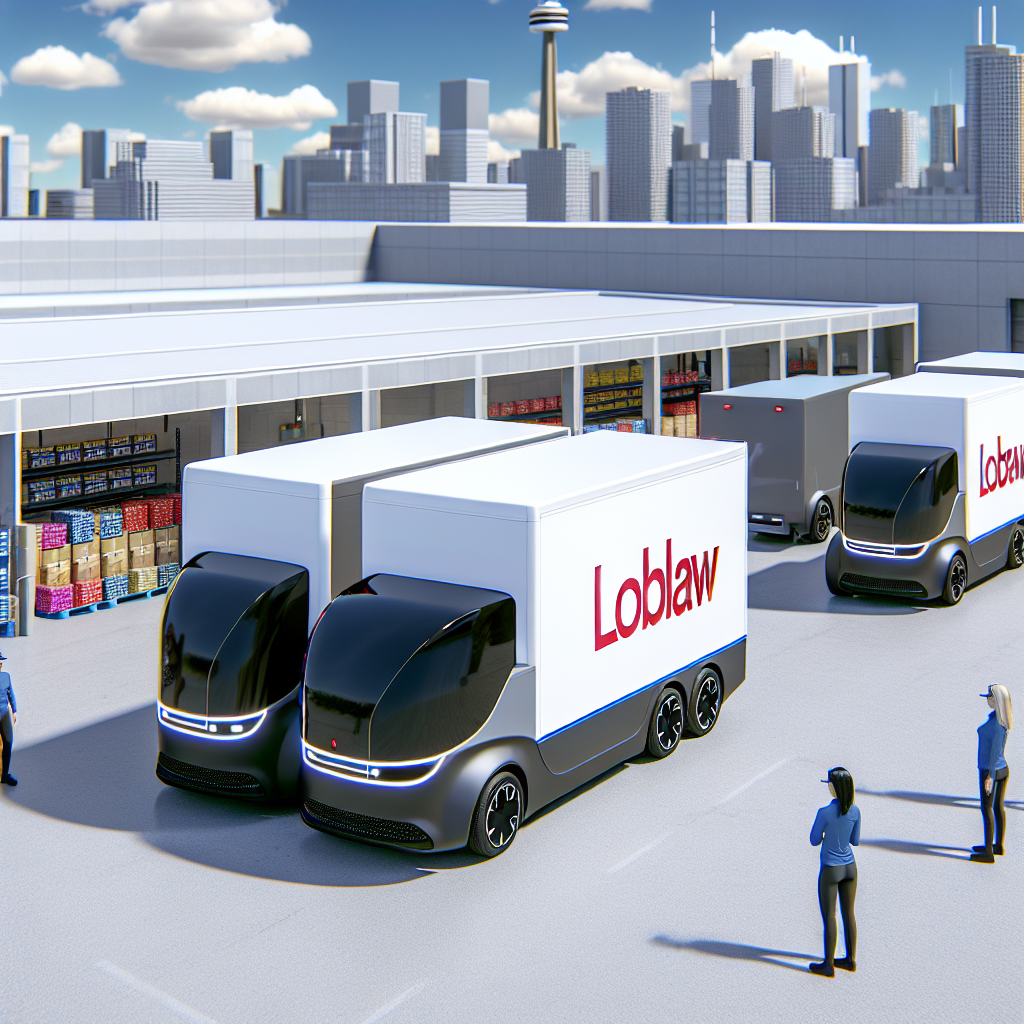
In a groundbreaking development for the autonomous trucking sector, Loblaw is set to deploy 50 Gatik autonomous trucks in the Toronto area, marking its largest planned implementation of such technology in North America. This ambitious venture is more than just a technological upgrade; it represents a leap towards enhanced supply chain sustainability.
With an initial rollout of 20 trucks by the end of this year, followed by an additional 30 by 2026, Loblaw is positioning itself at the forefront of logistics innovation. According to Gautam Narang, CEO of Gatik,
“This is a transformational moment, not just for Gatik and Loblaw, but for the autonomous trucking sector globally.”
As the transportation industry faces challenges like driver shortages, this initiative could redefine delivery logistics and create a more sustainable future.
Project Details
Loblaw Companies Limited, in partnership with Gatik, is embarking on an ambitious deployment plan that will dramatically change its logistics and delivery operations in the Greater Toronto Area (GTA). This initiative will see the introduction of 50 Gatik autonomous trucks over a multi-year period, representing the largest planned implementation of autonomous trucking technology in North America.
Number of Trucks and Timeline for Deployment
- 2025: The deployment will kick off with an initial group of 20 autonomous trucks by the close of the year.
- 2026: A further 30 trucks are set to be added by the end of this year, bringing the total to 50 autonomous trucks operational in Loblaw’s distribution network by the end of 2026.
Operational Phases
The deployment will occur in several distinct phases to ensure operational efficiency and safety:
- Initial Phase: During the first phase, the Gatik autonomous trucks will operate with safety drivers aboard. This will facilitate a smooth integration into Loblaw’s existing logistics processes while ensuring safety and compliance.
- Transition Phase: After successful initial operations, the fleet will transition to a driverless operation under a Freight-Only framework. This transition aims to enhance the frequency and responsiveness of deliveries to over 300 Loblaw stores in the region.
This expansion is not only a technological innovation but is also regulated under Ontario’s Automated Commercial Motor Vehicle (ACMV) Pilot Program, which became effective on August 1, 2025. This program permits medium-duty autonomous trucks to operate on all provincial highways and streets, further supporting Loblaw’s commitment to safety and efficiency.
Furthermore, Loblaw’s strategic investment in Gatik underscores its commitment to innovation, supply chain sustainability, and addressing the challenges of driver shortages in the logistics sector. As Gautam Narang, CEO of Gatik, noted, “This is a transformational moment, not just for Gatik and Loblaw, but for the autonomous trucking sector globally.”
With the deployment of Gatik autonomous trucks, Loblaw is set to redefine the standards of regional distribution and enhance supply chain sustainability in the modern logistics landscape.

A visual representation of a Gatik autonomous truck, showcasing its technological features and branding elements in a regional distribution setting.
Insights from Rob Wiebe
Rob Wiebe, the Chief Administrative Officer of Loblaw Companies, expressed his enthusiasm for the expanded partnership with Gatik, emphasizing its pivotal role in advancing both technological innovation and sustainability in the supply chain. Wiebe acknowledged that this collaboration is not just a step forward for Loblaw but also represents a significant commitment to enhancing environmental sustainability throughout its operations.
In his remarks, he stated, “This expanded partnership with and investment in Gatik represents a significant step forward in our commitment to innovation and supply chain sustainability.” Wiebe’s insights underline how leveraging autonomous truck technology can lead to more efficient logistics operations by reducing carbon emissions and streamlining distribution processes.
The introduction of Gatik’s autonomous trucks into Loblaw’s distribution model is expected to optimize delivery routes, thus minimizing fuel consumption and maximizing efficiency. This aligns with the broader industry movement towards sustainability, meeting consumer demands for greener practices while also addressing the pressing issue of driver shortages in the logistics sector. By investing in this transformative technology, Loblaw is positioning itself as a leader in sustainable logistics, driving not only operational efficiencies but also contributing positively to environmental outcomes for the communities it serves.
As the deployment of autonomous trucks unfolds, it is anticipated that Loblaw will set new standards in supply chain operations, making significant strides towards sustainability in the retail landscape.
Overall, Rob Wiebe’s insights reflect a future where innovation and sustainability are at the heart of Loblaw’s logistics strategy, ensuring a resilient and environmentally friendly supply chain for years to come.
Comparison of Traditional vs. Autonomous Logistics
| Metric | Traditional Trucking | Autonomous Trucking |
|---|---|---|
| Efficiency | Dependent on driver availability and working hours | Continuous operation with optimized routes |
| Cost | Higher labor costs due to driver wages | Reduced operational costs by eliminating driver expenses |
| Safety | Higher accident rates due to human error | Enhanced safety features; reduced human error |
| Delivery Speed | Limited by driver fatigue and regulations | Increased delivery speed due to 24/7 operations |
| Environmental Impact | Higher emissions due to inefficient routing | Potentially lower emissions with optimized routes |
The comparison table above illustrates key metrics where Gatik’s autonomous trucks provide significant advantages over traditional trucking methods. By enhancing operational efficiency and safety while reducing costs, Gatik is paving the way for the future of logistics.
Anticipated Impacts
The deployment of 50 Gatik autonomous trucks in the Greater Toronto Area represents a seismic shift in logistics, promising to address several pressing issues in the transportation sector. One of the foremost challenges is the enduring driver shortage that has plagued the industry. This situation has become more critical in recent years due to an aging workforce and a growing demand for goods and deliveries.
By integrating autonomous trucks into its delivery model, Loblaw aims to alleviate this shortage and redefine the standards of operational efficiency.
Addressing the Driver Shortage
The autonomous trucks operated by Gatik are designed to function effectively without the constant need for human drivers once fully deployed. This radical shift could transform the logistics landscape, especially in an era where finding and retaining qualified drivers is increasingly difficult.
By automating routine short-haul trips, Loblaw can optimize its logistics operations, ensuring timely deliveries even in the face of labor shortages. Moreover, this reliance on autonomous technology provides a sustainable solution, reducing the pressure on the existing driver workforce by minimizing the need for multiple drivers on the same route.
Improving Operational Efficiency
The anticipated impacts extend beyond merely addressing labor shortages. Gatik’s autonomous trucks are engineered to operate around the clock, maximizing operational hours and significantly boosting delivery capacity. This continuous operation allows for more efficient and timely product deliveries, ultimately enhancing customer satisfaction.
Additionally, the incorporation of advanced routing algorithms enables optimized delivery routes, which reduces fuel consumption and operational costs while simultaneously decreasing emissions—aligning with sustainability goals.
The efficiency of autonomous deliveries also leads to reduced turnaround times at distribution centers, fostering a streamlined supply chain. Improved logistical planning can create a more responsive system that adapts to fluctuating demand and unexpected disruptions, ensuring that Loblaw consistently meets consumer expectations.
Conclusion
In summary, the deployment of Gatik autonomous trucks in Toronto is poised to usher in a new era of logistics that addresses the critical driver shortage and enhances overall operational efficiency. By embracing this innovative technology, Loblaw is setting itself up for success in a rapidly evolving supply chain landscape, paving the way for a more sustainable and effective logistics model.
Governmental Perspective
The Ontario Ministry of Transportation has emphasized the importance of advancing automated commercial vehicle technology for regional development. They have initiated programs to test and evaluate automated commercial motor vehicles (ACMVs) on provincial roads, with goals to assess performance and enhance road safety in the trucking sector.
Additionally, Ontario’s Vehicle Innovation Network (OVIN) has received $56.4 million to support next-generation electric, connected, and automated vehicle technologies, aimed at positioning Ontario as a North American hub for automotive innovation.
Through these initiatives, the Ministry underpins its commitment to embracing new technologies that enhance the provincial transportation network, drive economic growth, and foster regional development.
As stated by a representative from the Ministry, “Investing in automation and innovation within the trucking sector is crucial for shaping a sustainable and efficient transportation ecosystem that benefits the entire region.”
In conclusion, the deployment of Gatik’s autonomous trucks by Loblaw marks a significant turning point in the logistics sector, offering transformative potential not only for the company’s operations but for the broader landscape of sustainable supply chain management. This initiative highlights an integration of advanced technology that promises to reshape how goods are delivered, reducing reliance on human drivers and addressing critical challenges such as labor shortages. The insights shared by industry leaders, such as Gautam Narang and Rob Wiebe, reinforce the notion that this project is not merely a step forward in transportation efficiency; it represents a foundational shift towards a more innovative and eco-friendly logistics framework.
As Loblaw positions itself at the forefront of these advancements, the deployment of autonomous trucks serves as a testament to the company’s commitment to sustainability and operational excellence. This initiative symbolizes a broader commitment to reducing carbon footprints and enhancing the resilience of supply chains—imperative components in our fight against climate change.
In essence, the road ahead brings an exciting confluence of technology and sustainability, paving the way for a future where logistics are not only about moving products but also about making a positive impact on society and the environment. With continued investment and innovation in autonomous solutions, we can anticipate a new era in logistics that champions efficiency and sustainability, ensuring long-term benefits for businesses and communities alike.
Deployment of Gatik Autonomous Trucks in Toronto: A New Dawn for Logistics
In a groundbreaking development for the autonomous trucking sector, Loblaw is set to deploy 50 Gatik autonomous trucks in the Toronto area, marking its largest planned implementation of such technology in North America. This ambitious venture is more than just a technological upgrade; it represents a leap towards enhanced supply chain sustainability. With an initial rollout of 20 trucks by the end of this year, followed by an additional 30 by 2026, Loblaw is positioning itself at the forefront of logistics innovation. According to Gautam Narang, CEO of Gatik, “This is a transformational moment, not just for Gatik and Loblaw, but for the autonomous trucking sector globally.” As the transportation industry faces challenges like driver shortages, this initiative could redefine delivery logistics and create a more sustainable future.
Project Details
Loblaw is embarking on an ambitious deployment plan in partnership with Gatik that will dramatically change its logistics and delivery operations in the Greater Toronto Area (GTA).
Number of Trucks and Timeline for Deployment
- 2025: 20 autonomous trucks by the end of the year
- 2026: An additional 30 trucks bringing the total to 50 operational trucks within Loblaw’s distribution network by the end of 2026.
Operational Phases
- Initial Phase: The Gatik autonomous trucks will operate with safety drivers onboard, facilitating a smooth integration into Loblaw’s logistics processes while ensuring compliance.
- Transition Phase: The fleet will transition to a driverless operation under a Freight-Only framework, enhancing the frequency of deliveries to over 300 Loblaw stores in the region.
This deployment is regulated under Ontario’s Automated Commercial Motor Vehicle (ACMV) Pilot Program, effective August 1, 2025.
Furthermore, Loblaw’s strategic investment in Gatik underscores its commitment to innovation, supply chain sustainability, and addressing driver shortages. As Gautam Narang noted, “This is a transformational moment for the autonomous trucking sector globally.”
A visual representation of a Gatik autonomous truck, showcasing its technological features and branding elements in a regional distribution setting.
Insights from Rob Wiebe
Rob Wiebe, the Chief Administrative Officer of Loblaw, emphasized the role of this partnership in advancing technological innovation and sustainability in the supply chain. He stated, “This expanded partnership with and investment in Gatik represents a significant step forward in our commitment to innovation and supply chain sustainability.”
Wiebe’s insights underline how leveraging autonomous truck technology can lead to more efficient logistics operations by reducing carbon emissions and streamlining distribution processes.
By investing in this transformative technology, Loblaw is positioning itself as a leader in sustainable logistics, driving not only operational efficiencies but also contributing positively to environmental outcomes for the communities it serves. As autonomous trucks navigate Toronto, they will represent a confluence of technology and sustainability.
Comparison of Traditional vs. Autonomous Logistics
| Metric | Traditional Trucking | Autonomous Trucking |
|---|---|---|
| Efficiency | Dependent on driver availability and working hours | Continuous operation with optimized routes |
| Cost | Higher labor costs due to driver wages | Reduced operational costs by eliminating driver expenses |
| Safety | Higher accident rates due to human error | Enhanced safety features; reduced human error |
| Delivery Speed | Limited by driver fatigue and regulations | Increased delivery speed due to 24/7 operations |
| Environmental Impact | Higher emissions due to inefficient routing | Potentially lower emissions with optimized routes |
The comparison table above illustrates key metrics where Gatik’s autonomous trucks provide significant advantages over traditional trucking methods. By enhancing operational efficiency and safety while reducing costs, Gatik is paving the way for the future of logistics.
Anticipated Impacts
The deployment of 50 Gatik autonomous trucks represents a seismic shift in logistics that promises to address the enduring driver shortage and enhance operational efficiency.
Addressing the Driver Shortage
By integrating autonomous trucks, Loblaw aims to redefine standards of operational efficiency. Such trucks will function without the constant need for human drivers, addressing labor shortages while providing a sustainable solution by minimizing the number of drivers needed for delivery routes.
Improving Operational Efficiency
Gatik’s autonomous trucks will operate around the clock, maximizing operational hours and significantly boosting delivery capacity while optimizing routes, reducing fuel consumption and operational costs. This aligns with sustainability goals, fostering a more responsive system that can adapt to fluctuations in demand.
Conclusion
The deployment of Gatik’s autonomous trucks by Loblaw is a pivotal moment in logistics, heralding a future rich with innovation and sustainability. This venture serves as a beacon of change for the autonomous trucking sector, setting new standards in supply chain operations. With each automated delivery, Loblaw is not just simplifying transport but reshaping how goods are distributed, contributing positively to communities and paving the way for a greener planet.
Governmental Perspective
The Ontario Ministry of Transportation has initiated programs to test and evaluate automated commercial motor vehicles (ACMVs), emphasizing its commitment to advancing automated vehicle technology. Investments in innovation aim to position Ontario as a North American hub for automotive advancement.
In sum, the deployment of Gatik autonomous trucks is a blueprint for success in an evolving supply chain landscape, ensuring a resilient and environmentally friendly logistics model for years to come.
SEO Optimization
To enhance the visibility of this article, it’s essential to integrate keywords relevant to our topic. Important keywords include autonomous trucking solutions, logistics technology advancements, Gatik autonomous trucks, and supply chain sustainability. This strategic selection aims to improve search engine ranking and attract a broader audience interested in these advancements in the logistics sector.
As Loblaw prepares to integrate Gatik’s autonomous trucks into its distribution network, understanding the fundamental differences between traditional logistics methods and this innovative approach is crucial. Rob Wiebe’s insights highlight the transformative potential of autonomous vehicles, not only in enhancing operational efficiency but also in fostering a more sustainable logistics framework. This transition not only advances Loblaw’s commitment to innovation but also sets the stage for a careful evaluation of how autonomous trucking can outperform conventional delivery systems.
With this context, we can now explore the detailed comparison of traditional versus autonomous logistics, examining the metrics that illustrate their distinct advantages.
Gatik Autonomous Trucks Deployment Overview
Introduction to Gatik’s Initiative
- Loblaw’s Ambitious Plans: Deployment of 50 autonomous trucks in Toronto.
- Largest Implementation: This rollout signifies the largest planned autonomous truck deployment in North America.
Key Objectives
- Enhance supply chain efficiency.
- Address driver shortages in the logistics sector.
- Improve sustainability initiatives.
Project Details
Overview of the Project
- Partnership: Loblaw Companies Limited collaborates with Gatik.
- Technological Leap: Introduction of Gatik’s autonomous trucks to revolutionize logistics in the Greater Toronto Area.
Number of Trucks and Timeline for Deployment
- Yearly Deployment Goals:
- 2025: 20 autonomous trucks by year-end.
- 2026: 30 additional trucks, totaling 50.
Operational Phases
- Initial Phase: Safety drivers onboard for compliance.
- Transition Phase: Shift towards driverless operations.
Insights from Rob Wiebe
- Sustainability Commitment: Emphasis on environmental and operational efficiency.
- Transformative Impact: Quote from Rob Wiebe highlights the importance of this initiative for Loblaw’s logistics strategy.
Comparison of Traditional vs. Autonomous Logistics
Key Differences
| Metric | Traditional Trucking | Autonomous Trucking |
|---|---|---|
| Efficiency | Dependent on drivers | 24/7 operations |
| Cost | Higher labor expenses | Reduced operational costs |
| Safety | Human error risks | Advanced safety features |
| Delivery Speed | Limited by driver schedules | Continuous and optimized |
| Environmental Impact | Higher emissions | Potentially lower emissions |
Anticipated Impacts
Addressing the Driver Shortage
- Autonomous Trucks Benefits: Reducing reliance on human drivers.
Improving Operational Efficiency
- 24/7 Operations: Boosting delivery capacity.
- Optimized Routing Algorithms: Reducing fuel and operational costs.
Conclusion
- Revolutionary shift in logistics with Gatik trucks addressing staffing challenges.
- Sustainability Focus: Paving the way for a greener future in logistics.
Governmental Perspective
Ontario’s Transportation Initiatives
- Support for ACVM Technology: Encouraging innovation and economic growth.
- Investment Focus: $56.4 million for automated vehicle technologies.
Call to Action
Explore the future of logistics with Gatik’s autonomous trucks and join the conversation about sustainable transportation solutions. Stay updated on advancements in autonomous vehicle technology and its impact on the industry.