
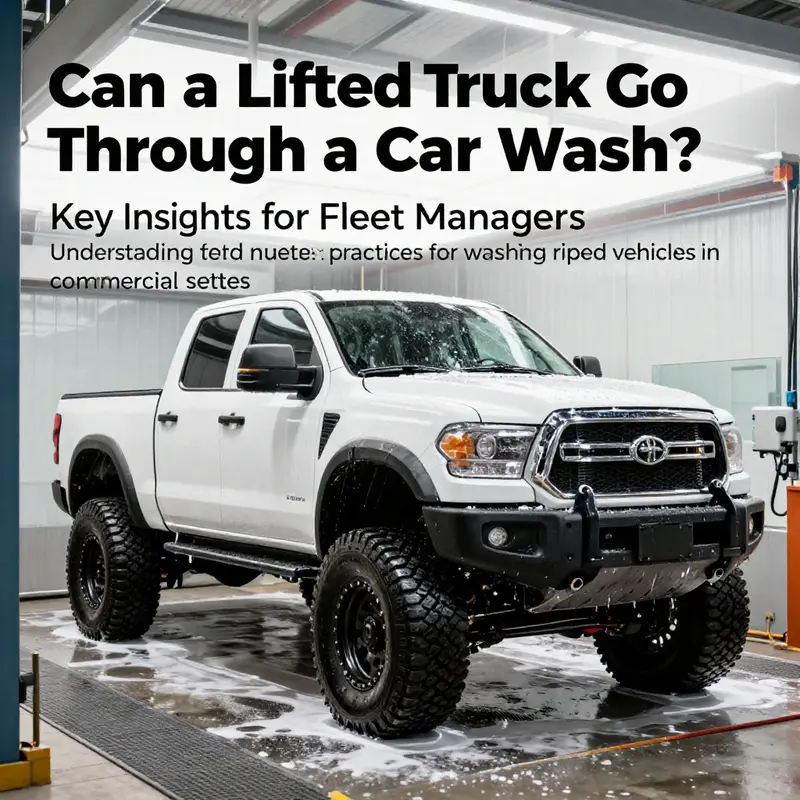
For fleet managers, trucking company owners, and operations supervisors in construction and mining, the upkeep of vehicles is critical. As lifted trucks are increasingly popular in these sectors, it’s essential to address whether and how they can be washed effectively. A thorough understanding of the implications involved in getting these vehicles through a car wash can prevent costly repairs and ensure proper maintenance. This article will cover various aspects, including the ability of lifted trucks to utilize car washes, safety considerations, choosing the right wash facilities, innovative equipment for washing, and strategies to mitigate risks during the washing process.
null
null
Clearance, Control, and Cleanliness: Navigating Car Washes with Lifted Trucks

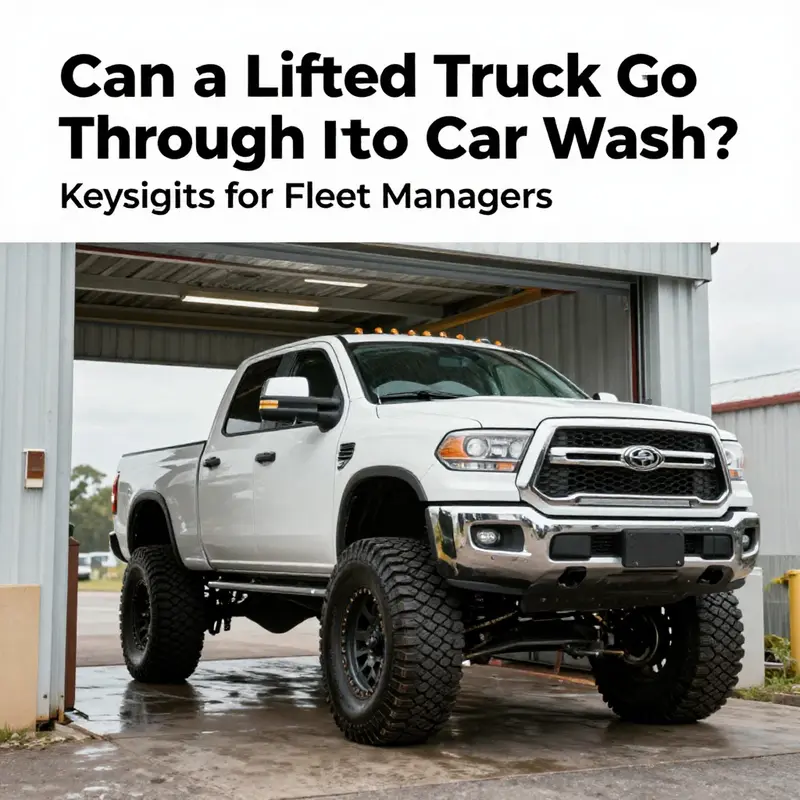
The question of whether a lifted truck can pass through a car wash often invites a careful pause. Lifted vehicles, by design, live in a higher, more exposed world than their stock cousins. They ride on taller suspensions, boast larger tires, and frequently carry aftermarket components that alter aerodynamics and undercarriage profiles. In practice, this means a simple wash trip becomes a test of geometry, timing, and judgment. The core concern is not merely whether the wash can physically accommodate the truck, but whether the entire process can be executed without unintended contact, misalignment, or water misdirection that could damage vital parts. Yet with thoughtful preparation and the right choice of facility, a lifted truck can indeed be cleaned safely and efficiently. The path to that outcome rests on three intertwined considerations: height clearance, mechanical stability during the wash cycle, and the compatibility of the wash system with an unconventional vehicle silhouette.
Height is the most obvious and potentially most dramatic factor. Car wash tunnels are built with a clear height limit intended to protect both the vehicle and the wash equipment. A lifted truck often sits higher than an unmodified pickup, particularly when the lift kit adds four inches or more of ground clearance and the wheel wells are enlarged by bigger tires or front-end modifications. The risk is not simply striking the tunnel ceiling; it also includes interference with the wash bay’s internal components, such as sensors, nozzles, and early detection systems that guide the paths of brushes and jets. To mitigate this, a disciplined driver checks all height signs before entry and measures the combined height of the truck in its current configuration. If a roof-mounted equipment rack, lights, or a spike from a bull bar adds to the total height, that extra inch could become the deciding factor between a clean pass and a costly misfit. For many owners, this calculation is the decisive argument in favor of a facility that explicitly advertises the ability to handle lifted or large vehicles. It is here that the nuance of facility management for truck wash businesses comes into play, offering guidance on clearances, lane width, and vehicle profiles. For facility operators and truck owners alike, the goal is to ensure that the wash tunnel has been vetted for the precise combination of height and length presented by the lifted configuration. A practical approach is to plan a pre-visit where the crew confirms the tunnel clearance and confirms there are no obstructions—such as overhead piping or equipment—near the entry point. A careful, pre-entry check helps to prevent instances where a miscalculation leads to a scrape on the truck’s roof or a jam in the wash line.
Even when a lifted truck clears the tunnel, the ride through the wash is a study in stability and geometry. Lifted suspensions are designed to articulate more freely than factory setups. During the wash cycle, the vehicle can experience greater pitch, roll, and vertical movement as the undercarriage travels along uneven wash surfaces or as the truck responds to water jets and rotating nozzles. That movement, minor in a standard vehicle, can be significant enough to bring wheels or chassis into contact with the wash tunnel sides or with rotating brushes that are designed to scrub the lower profile of a stock pickup. The risk isn’t only cosmetic; repeated contact can lead to scratches, dents, or the gradual loosening of sensitive components. It also raises the possibility that the vehicle’s electronics, brake lines, or other exposed systems could be compromised if water or pressure finds an unintended path into critical seams. Thus, drivers must understand that the suspension and frame of a lifted truck behave differently in a confined space, and the wash cycle should be matched to the vehicle’s profile. If a wash system is well calibrated for typical sedans and light trucks, it may not offer a safe passage for a lifted rig, even if the tunnel appears to have adequate headroom.
The third layer of safety concerns centers on the wash system’s own mechanics. Automatic car washes vary widely in design. Some rely on traditional, soft or hard brushes that travel along the vehicle’s surface; others are modern, touchless setups that spray with high-pressure jets and rinse without physical contact. Lifted trucks can pose a mismatch with these systems, especially when the wash path is designed for standard vehicle widths and profiles. A misalignment can trigger misdirected jets or brushes that contact protruding bumpers, chrome accents, or lift-mounted hardware. The result can be more than a cosmetic blemish; it can bend brackets, stress mounting points, or disengage sensors that feed the wash’s automated choreography. In addition, water pressure directed at an aggressively undercarried area—such as a lifted front end with extended control arms or a lifted rear—can push water into seals and connectors not typically exposed, increasing the chance of corrosion or electrical shorting over time. These realities underline why many owners of lifted trucks favor touchless or soft-touch cycles whenever possible. The absence of hard contact significantly reduces the risk of mechanical interference, while still delivering a thorough cleanse.
Given these considerations, the prudent strategy centers on facility selection and careful operation. First, choose a facility that explicitly states it can accommodate lifted vehicles or offers a large-vehicle wash option. This may involve an on-site assessment or a pre-arranged agreement with the wash staff to ensure the vehicle aligns with the wash bay’s clearance and motion paths. Second, conduct a thorough inspection of the wash tunnel prior to entering. Look for height restrictions, low-hanging obstacles, or changes in the tunnel profile that could pose a problem for a taller truck. Third, if available, opt for gentle cycles. A soft-touch or touchless wash minimizes contact with raised body kits, running boards, and other extensions that could suffer from small-scale impacts. Fourth, consider manual washing when feasible. Hand washing a lifted truck with a hose and bucket provides maximum control and eliminates the risk of automated misalignment or brush contact. Where hands-on washing isn’t practical, a professional detailing center or full-service wash that uses specialized equipment—such as four-post lifts or in-ground lifts designed to accommodate lifted vehicles—can offer a safer alternative. These setups provide a stable, level platform for static washing and detailing, a configuration that reduces the chance of sudden shifts during the wash cycle and ensures full, even access to the undercarriage without compromising the suspension or body components.
In framing safe practice, it helps to view the decision tree not as an obstacle course but as a set of guardrails. The guardrails begin with height verification and a straight path through a facility that has been vetted for lifted trucks. The next set involves the dynamics of the wash cycle and the need for a profile that respects the vehicle’s altered geometry. Finally, the wash system itself must be compatible with the truck’s silhouette, offering either contactless cleansing or gentle contact that won’t risk scribing the finish or bending undercarriage mounts. When all three layers align, the lift’s presence ceases to be a liability and becomes a reliable parameter in a well-executed cleaning routine.
Ultimately, the question is less about whether a lifted truck can physically pass through a car wash and more about whether the operation can be conducted with a margin of safety. The broader implication is that lifted trucks demand a higher level of planning and facility awareness. This is not merely about avoiding damage to the truck; it is also about staff safety and the integrity of the wash equipment. A well-informed driver who respects clearance limits, maintains cautious entry and alignment, and selects an appropriate wash cycle reduces risk for both vehicle and facility. The result is a safer, more predictable wash experience that preserves the lifted truck’s investment while keeping its appearance at the peak of its capability. For owners and operators alike, the takeaway is clear: do the upfront work to verify clearance, choose the right wash environment, and lean toward cycles that minimize contact. If those conditions are met, a lifted truck can indeed emerge from the wash looking as good as it did when it rolled in.
null

null
Raising the Wash Standard: Cleaning Lifted Trucks Without Compromise

Curiosity about whether a lifted truck can pass through a car wash is understandable. The short answer is yes, but it requires selecting the right wash type and a facility prepared for tall vehicles. Lifted trucks can be cleaned safely when the bay has sufficient clearance and operators choose touchless or manual-control options. Key factors include vehicle height, wash bay clearance, and the ability to access the undercarriage without forcing the lift or causing damage. For most lifted trucks, touchless washes minimize risk by avoiding brushes and rollers that can contact raised components, while self-service bays allow targeted undercarriage cleaning under careful operator supervision. Overall, the goal is robust cleaning that respects the vehicle’s geometry and avoids costly contact with wash equipment.
Above Ground, Safe Wash: Navigating a Lifted Truck Through the Car-Wash Process

A lifted truck sits higher than its stock counterpart, its undercarriage and suspension forming a landscape that rarely sits comfortably in a standard wash bay. The question of whether a lifted rig can pass through a car wash is less about fit and more about restraint—restraint in choosing the right wash type, restraint in knowing the bay’s clearance, and restraint in washing technique. The practical answer is yes, a lifted truck can go through a car wash, but only when the risks are acknowledged and the approach is deliberate. The path to a safe process hinges on three intertwined pillars: selecting the appropriate wash method, respecting the vehicle’s altered geometry, and applying a methodical wash routine that protects electrical systems, suspension components, and the finish. For anyone who has invested in a lift kit, this isn’t about avoiding responsibility; it’s about maintaining the truck’s value and reliability while still enjoying the convenience of a public wash.
The first decision point is the wash type. Lifted trucks, especially those with more than a four-inch lift, almost always encounter trouble in a traditional automatic wash with rotating brushes and high-pressure jets. The risk is straightforward: brushes can make contact with the lower rocker panels, aftermarket body components, or extended fender flares, while the tunnel’s ceiling clearance may be tight enough to pose a collision with the top of the lift or accessory mounts. In practice, the safest options are touchless washes or self-serve bays where you control water pressure and nozzle position. A touchless system relies on high-pressure, chemical cleaning without physical contact; a self-serve bay lets you tailor the spray pattern and distance, reducing the chance of inadvertent strikes on sensitive points. Some professional detailing centers and full-service washes are equipped to handle lifted vehicles with specialized setups, such as four-post lifts or in-ground lifts, which hold the vehicle securely at a safe height while the wash proceeds. These arrangements provide stable access for thorough cleaning and minimize the risk of the vehicle shifting or contacting moving machinery. For shop operators and fleet managers navigating these choices, facility management for truck wash businesses offers a framework to align equipment, training, and workflow with lifted trucks. facility-management-for-truck-wash-businesses
Beyond choosing the wash method, the height and the bay’s geometry demand respect. Lifted trucks alter the envelope of what is safe, and the moment a vehicle enters a bay with a restricted clearance is the moment a wash becomes risky. Before driving into any wash, measure the lift height and compare it to the bay’s stated clearance. If the spec is even close, opt for the low-clearance alternative or skip the wash altogether. This preflight check is not a drag; it’s a smart risk management step that keeps expensive components, seals, and the undercarriage intact. In addition, operators should ensure the vehicle is in a stable configuration: the parking brake set, transmission secured, and the vehicle level and centered to avoid any rolling contact with wash bay features or walls during the process.
With the decision to wash and the clearance confirmed, the chapter of risk begins. The most prevalent concern is water intrusion into electrical components and sensors. Lifted trucks often carry modified wiring harnesses, additional sensors for lift height or off-road modes, and aftermarket electronics that may not be completely sealed. A jet or spray directed at the engine bay, wheel wells, or along the frame rails can push water into connectors, fuse boxes, or control modules, potentially causing shorts, corrosion, or longer-term reliability issues. The mitigation is simple, though it requires discipline: avoid direct pressure on electrical housings. Use a low-pressure setting, or switch to a gentle spray from a bucket and sponge when cleaning around electrical components. Before washing, cover critical junctions, relays, and sensor housings with waterproof plastic or tape that can withstand the wash cycle. Focus the cleaning on exterior surfaces with a cautious approach to the engine bay, and use a light touch to remove dust and grime rather than forcing water deep into protected spaces.
Suspension and steering components form another axis of risk. A lifted suspension includes tie rods, ball joints, control arms, and steering linkages that are more exposed than factory designs. High-pressure water directed at these components can dislodge grease, wash away protective lubricants, or push contaminants into bearings, accelerating wear or triggering corrosion. The mitigation relies on lowering pressure and distancing the spray when working near joints and bushings. Maintain a safe distance—roughly 18 to 24 inches is a practical guideline—and use a broad, fan-pattern spray rather than a concentrated jet. After the wash, inspect and, if needed, re-lubricate grease fittings to ensure proper lubrication. It may seem meticulous, but this step preserves steering feel and response and reduces future maintenance concerns.
The undercarriage demands particular attention due to exposure to road salt, mud, and moisture. Without thorough cleaning, abrasive residues can trap moisture against metal surfaces, inviting rust and corrosion around frame rails, axle housings, and suspension brackets. The recommended approach is to apply a dedicated undercarriage cleaner or a strong degreaser designed for automotive use, letting it dwell to loosen grime before a careful rinse. Start from the front and work toward the rear to prevent pushing debris into sensitive areas. While high-pressure washing is valuable for removing stubborn dirt, use it judiciously around thin sheet metal, weld seams, and critical joints. The final step is to ensure the undercarriage dries completely, perhaps aided by compressed air to reach inside frame rails and other crevices. A dry undercarriage helps prevent water-induced corrosion and makes subsequent inspection easier.
The vehicle’s paint and finish constitute another layer of concern. A lifted truck often bears more exposed lower panels, where chips and micro-abrasions are more visible. High-pressure streams or abrasive cleaning tools can intensify paint damage on these surfaces, especially if the finish is compromised or recently waxed. The mitigation here centers on gentle, non-abrasive tools and a moderate water pressure. Soft microfiber towels, sponges, and brushes are preferable to stiff bristles or steel wool. A wide, fan-shaped spray is suitable for the body, while high-pressure jets should be reserved for wheels and the undercarriage. Washing in shade helps prevent water spots and streaks that can mar a finish. These careful steps preserve the appearance of the lift kit and the body panels, which matters not just for resale value but for the pride of ownership as well.
Safety is not just a matter of not injuring the vehicle; it’s about personal safeguards too. If you must wash the underside while the vehicle remains on the ground, the risk of a sudden shift or collapse is real. The safest practice is to use certified, stable equipment such as a vehicle lift or jack stands rated for the truck’s weight. Never rely on a hydraulic jack alone; secure the vehicle on level ground with the parking brake engaged and the transmission in Park or first gear for manual transmissions. Following safety protocols protects you and preserves the lift’s integrity—two essentials when working with heavily modified machines.
The practical workflow for a lifted truck in a car wash is a blend of strategic choices and careful technique. If you’re handling this as a fleet manager or a detailer, you’ll likely rely on a professional facility that can accommodate lifted rigs—ideally one that uses four-post or in-ground lifts to hold the vehicle steady and provide unimpeded access for thorough cleaning. This arrangement keeps the wash process efficient and reduces the chance of incidental damage to the lift system or the vehicle’s modifications. For the rest of us, the decision to wash at a public facility should be preceded by height clearance verification, a call to confirm the wash type, and a plan for post-wash checks. The goal is not to conflate speed with safety but to balance convenience with the long-term health of the truck’s hydraulic suspension, wiring, and finish.
In closing, a lifted truck can indeed go through a car wash, but it requires disciplined preparation and a wash approach that respects the unique risk profile of elevated suspensions. By selecting a touchless or self-serve option with careful pressure control, validating clearance, and applying a conservative washing technique—especially around electricals, suspension joints, and the undercarriage—you preserve the truck’s performance and appearance. And if the operation includes a professional center, the presence of specialized lifting equipment further enhances safety and wash quality. For readers seeking broader guidance on operations and safety in wash facilities, the linked resource above offers a framework to align procedures with professional standards. External resource: https://www.nhtsa.gov/.
Final thoughts
In summary, understanding how to properly wash lifted trucks is vital for fleet managers and supervisors in construction and mining sectors. Recognizing the unique challenges posed by the height and configurations of these vehicles can help in selecting appropriate car washes and washing methods. By prioritizing safety, equipping the right facilities, and employing suitable technologies, operations can maintain vehicle aesthetics and functionality without incurring unnecessary damage, ultimately saving resources and ensuring compliance with safety standards.