
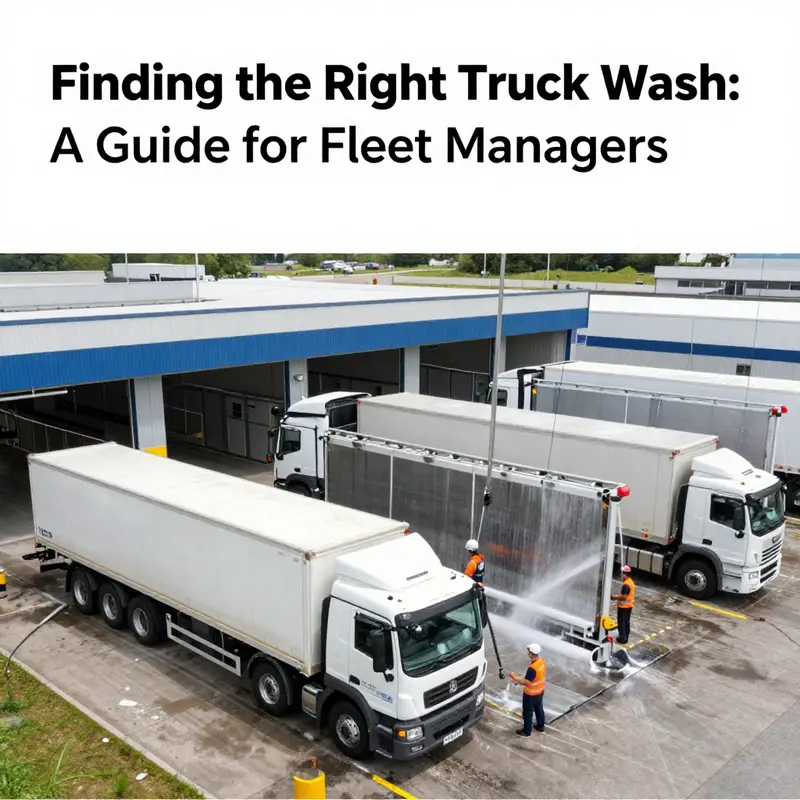
Maintaining a clean fleet is crucial for logistics and construction companies, impacting fleet performance and brand image. Several modern truck wash solutions cater specifically to industry needs, ensuring that every vehicle is spick and span. This guide explores different types of truck washes available and how to find them based on location, allowing fleet managers, trucking owners, and supervisors in construction to make informed decisions. We will delve into touchless truck wash systems, mobile wash units, self-service stations, and advanced cleaning hubs to help you determine the best options for your fleet’s maintenance needs.
Touchless Truck Washes Close at Hand: A Practical Guide to Finding a Nearby Facility
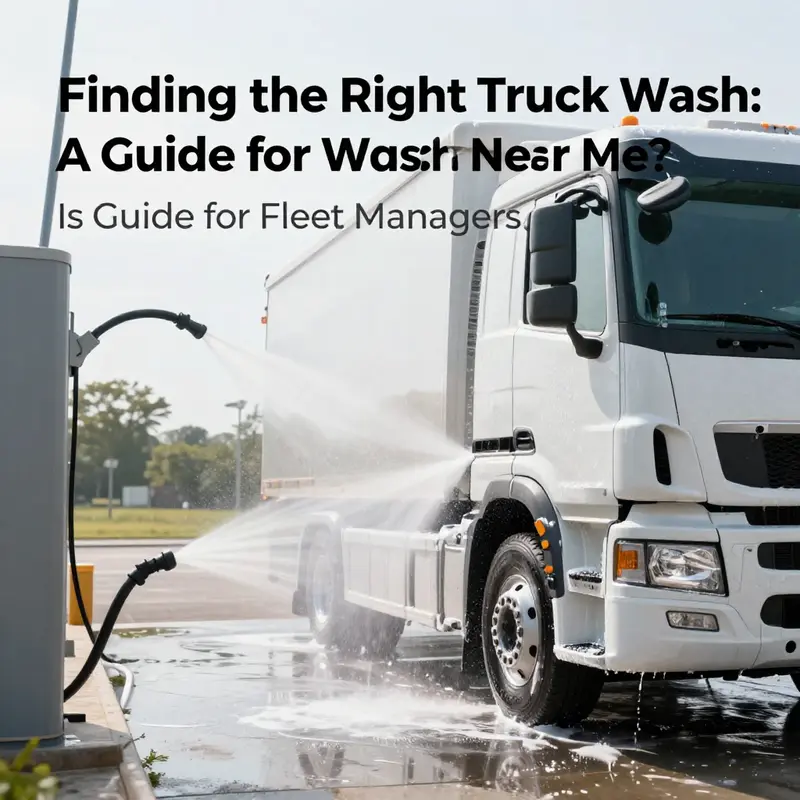
Touchless systems operate differently from traditional washes. They rely on high-pressure water jets and specially formulated detergents that clean the exterior, undercarriage, wheels, and sometimes even the wheel wells without any physical contact. The absence of brushes or rollers minimizes the potential for paint damage and tire scuffing. In practice, these systems are designed to handle a broad spectrum of road grime, from light dust to road salt and dried tar. The result is a cleaner vehicle with less downtime and lower risk of surface imperfections. A typical touchless wash can deliver a 360-degree clean, using a combination of fan, cone, or rotary spray patterns tuned to distribute detergents evenly at pressures that commonly range from 800 to 2,000 PSI. This versatility makes touchless washes particularly attractive to fleets with varied vehicle types, including long-haul tractors, trailers, and oversized equipment that gamble heavy exposure to road grime.
To locate a nearby facility that offers true touchless cleaning, a practical approach is to survey local logistics hubs, truck stops, and maintenance centers. The emphasis should be on facilities that advertise fully automated, contact-free cycles capable of treating the entire vehicle, including hard-to-reach areas. When you visit a site or speak with staff, confirm that the system is truly touchless rather than relying on mechanical brushes that claim minimal contact. A quick query about the cleaning pattern and the surfaces covered can save time and prevent misaligned expectations. In many markets, these centers provide a seamless experience by staging a vehicle in a dedicated wash bay, initiating a pre-programmed cycle, and sending the truck on its way with a consistent level of cleanliness.
The practical benefits of touchless systems extend beyond paint protection. Labor costs can drop as automation handles repetitive washing cycles, and throughput often increases, allowing fleets to maintain tighter schedules. The efficiency gained from repeatable cycles also lends itself to standardized maintenance windows, which helps dispatchers plan load assignments with greater certainty. In addition, the detergents used are frequently formulated to be biodegradable or low-toxicity, aligning with broader environmental objectives that many fleets are pursuing. Of course, the exact environmental profile depends on your chosen provider and the chemicals employed, so it is wise to ask for a Safety Data Sheet (SDS) and a description of water management practices.
With this clarity in mind, the strategic choice between touchless and traditional washes should hinge on two factors: the cleanliness level required and the condition of the vehicle fleet. If your trucks regularly collect heavy grease, tar, or agricultural residue, you may find that even a superior touchless cycle benefits from a pre-wash or a targeted spot treatment for stubborn deposits. Conversely, fleets operating in sunny, relatively clean environments may achieve near-perfect results from a single touchless pass. Understanding your typical grime profile helps you set expectations for a given wash and minimizes the risk of re-washing or driver complaints. The pattern of usage also matters; depots that host high-volume traffic can benefit from subscription-based or tiered pricing models offered by some advanced hubs. These models make budget planning predictable and help maintain a steady cadence for fleet cleanliness.
As you pursue a nearby touchless option, consider the broader implications for fleet maintenance and operations. The choice of wash partner can ripple through driver schedules, fuel planning, and even the resale value of vehicles if paint integrity is preserved over the vehicle’s lifecycle. To support informed decision-making, it helps to frame the conversation around reliability, environmental responsibility, and cost-effectiveness. Reliability includes uptime of the wash bays, predictable cycle times, and staff responsiveness when issues arise. Environmental responsibility involves water reuse, filtration, and the management of runoff. Cost-effectiveness isn’t only about the sticker price of a wash; it also encompasses labor savings, reduced maintenance interruptions, and the potential for predictable budgeting through subscriptions or bundled services.
If you are building a larger fleet maintenance ecosystem, you will eventually consider how a touchless wash fits into the overall facility strategy. The infrastructure in place today can influence your long-term plans, including whether to install dedicated wash bays, link wash cycles to fleet scheduling software, or assess the potential for on-site mobile wash units that travel between parked fleets. In this broader context, the role of facility management for truck wash businesses becomes central. For further reading on how facilities optimize wash operations and workforce engagement, you can explore resources that discuss how teams scale washing capabilities while maintaining high standards of cleanliness and driver satisfaction. facility management for truck wash businesses.
To aid your search, remember that a nearby touchless wash is not just about proximity. It is about the right level of service, reliable equipment, and a partner that communicates clearly about capabilities and limits. A truly modern facility will provide a clear description of the wash process, the PSI range used for each pass, and the sequence of steps in a standard cycle. It will also outline any optional add-ons, such as undercarriage rinse or wheel rinsing, and whether these add-ons can be incorporated into a subscription plan. If a center offers eco-friendly detergents or water-recycling features, these should be highlighted as part of the value proposition. When you talk with facility staff, ask about cycle times, peak-hour management, and whether you can observe a live wash or review a standard operating procedure. These questions help you calibrate expectations with the actual capabilities of a nearby wash.
As you finalize your list of near-term options, remember that the closest facility may not always be the best fit. A facility that is a few miles farther away but offers faster cycle times, more consistent results, or a better environmental profile can deliver greater value over a month or quarter. Take note of the hours of operation, the ability to handle your typical trailer configurations, and the capacity to accommodate mobile or on-site wash units if your fleet requires rapid turnaround or urgent cleaning between routes. In practice, the optimal choice balances proximity with performance, and it may be worth a short drive to a top-performing center rather than settling for the nearest option that lacks consistent outcomes.
Finding a touchless wash near you is therefore a balance of science and practicality. The science lies in the mechanics of high-pressure cleaning, precise chemical delivery, and the safe, contact-free treatment of your fleet’s surfaces. The practicality rests on how well the service integrates with your schedule, your drivers’ routines, and your budget. It is not just about a single wash; it is about establishing a pattern of maintenance that protects the appearance and value of your fleet while supporting efficient operations on a daily basis. For many fleets, that means identifying a trusted nearby partner, validating it against your performance metrics, and planning ahead for the occasional exception when a heavy contamination event requires a tailored approach. If you want to explore how these centers manage their day-to-day operations and how a broader facility strategy can support steady cleanliness, consider consulting resources that address wash facility management and workforce engagement.
Finally, as you experiment with different wash options near you, keep a simple but regular feedback loop with drivers and maintenance staff. A fast, effective wash is only as good as the post-wash assessment. If you notice residual grime in wheel wells or undercarriage areas, or if cycle times consistently run long during peak hours, these are signals to re-evaluate the choice of facility or to negotiate adjustments with the wash operator. On the other hand, if a center routinely delivers uniform results, minimal driver downtime, and a transparent process for chemicals and water management, you have found a partner that not only cleans your trucks but also aligns with your broader fleet-management goals. For those who want an additional starting point, a quick search for near-by touchless truck washes on Google Maps can help you compare options, read reviews, and gauge accessibility in real-world conditions. External resource: https://www.google.com/maps/search/touchless+truck+wash+near+me.
Rolling Clean at Your Doorstep: The Rise of Mobile Truck Wash Units and the Near-Me Question
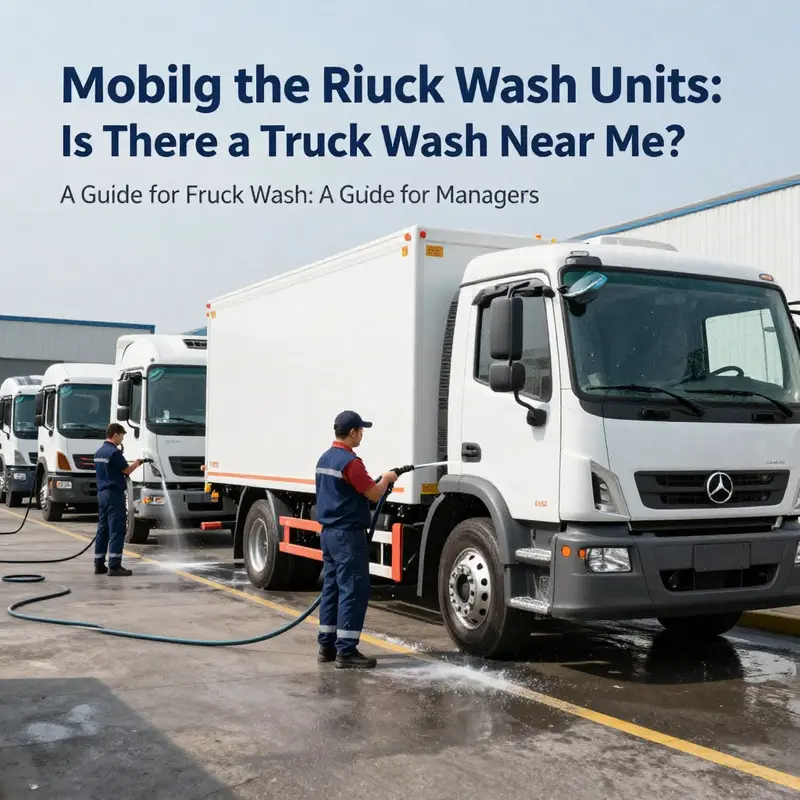
When a fleet must stay on the road as much as possible, the question is not only where to wash a truck, but when a wash can happen with minimal disruption. Mobile truck wash units answer a practical constraint many operators face: the need to keep rigs clean without pulling them off schedule or venturing into crowded maintenance yards. These on the move cleaning teams bring the wash to a depot, a rest area, a terminal, or even a private facility, and they do so with a degree of convenience that fixed stations seldom match. The appeal is not just about saving time; it is about preserving uptime, protecting paint and undercarriage, and maintaining a standard of cleanliness that translates into better fuel efficiency, longer vehicle life, and compliance with industry expectations. In this light, the near me question becomes less of a search for a distant facility and more of a strategic alignment with a mobile service that can slot into a fleet calendar with predictable timing. The reality today is that mobile cleaning is no longer a niche option. It has evolved into a dependable, scalable element of fleet maintenance that speaks directly to the rhythms of daily operations rather than to the inertia of fixed cleaning sites. The truck is not simply a means of transport; it is a moving workspace that carries heavy wear and tear from miles of pavement, winter salting, and the inevitable contact with road grime. A clean exterior is more than a shine; it is a barrier against corrosion, a signal of professional maintenance to customers, and a contributor to safer operation by improving visibility and sensor performance on certain model lines. The advent of mobile cleaning recognizes that the best way to care for a vehicle is often where it sits—on the road—rather than where it happens to be parked. In practice, mobile units come equipped with a balance of power and precision, using high pressure water jets and specialized detergents designed to lift grease, oil, tar, and road salt without compromising finishes or sensitive components. The technology behind these services has advanced in ways that look almost routine in urban fleets: controlled water pressure, heated wash cycles that soften tough residues, biodegradable cleaners that minimize environmental impact, and carefully designed touchpoints that protect chrome, rubber, and painted surfaces. What makes the mobile model particularly compelling is the ability to tailor the wash to the truck’s duty cycle. A depot or terminal that hosts long-haul fleets may require quick exterior refreshes between long legs, while a regional operator might benefit from a more thorough midweek wash that includes undercarriage and wheel wells. In either case, the on site crew can adapt the sequence to the vehicle’s needs, sometimes performing a light rinse to clear salt or dust and then following with a deeper rinse for tar or grease when the schedule allows. The result is a smoother workflow, where maintenance and cleaning occur in tandem rather than in competition, and where the fleet manager can verify that each unit returns to service cleaner and more compliant with preventive maintenance standards. The Tampa example, offered as a case in point, underscores how local conditions shape the adoption of mobile cleaning. A city with strong freight activity around a busy port corridor tends to produce a cluster of service providers who can reliably reach a variety of customers with minimal downtime. In such markets, mobile crews often deploy advanced cleaning technology, including water jets heated to a high temperature and detergents that break down oil and tar effectively while remaining biodegradable. The emphasis on undercarriage cleaning is particularly telling. Road spray, winter salt, and heavy brake residue accumulate below the frame and along suspension members, areas that fixed stations sometimes struggle to address without extra downtime or specialized wash bays. Mobile services bring this deeper cleaning into the regular maintenance equation, offering a practical way to extend vehicle life and reduce corrosion risk. Industry observers note that more than eight out of ten logistics operators are prioritizing consistent exterior cleaning and undercarriage upkeep as part of a broader equipment longevity strategy. This shift reflects a growing understanding that every mile of road exposure compounds wear in ways that are not immediately visible but accumulate over time. A clean surface isn’t a cosmetic concern alone; it is a protective measure that helps engines, cooling systems, and braking components perform as designed. The perception of value here goes beyond aesthetics. Fleet managers report that mobile washing arrangements can be scheduled to align with loading and unloading windows, maintenance holds, or driver shift changes, minimizing idle time and reducing the risk of missed maintenance intervals. The operational flexibility of mobile units is central to this value proposition. They can service a mix of fleet types—from long haul tractors to regional day cabs and even heavy-duty refuse trucks at municipal depots—without the need for a dedicated fixed site. In essence, mobile washing converts a fixed constraint into a variable resource, a dynamic instrument that can be deployed where it is most efficient. For operators seeking to locate a service near their current location, the path is increasingly practical. A search for mobile wash near me now often yields a menu of options within range, including providers that will travel to a specified site or coordinate with the fleet manager to lock in a wash window that minimizes downtime. The consideration set expands beyond the basic wash to include environmental elements and regulatory compliance. Reputable mobile providers integrate water-saving approaches and waste management practices into their operating model. They might employ closed loop water systems or capture and reuse rinse water where feasible, reducing the environmental footprint of on site cleaning. They also maintain documentation that supports regulatory needs, including wash logs, chemical usage notes, and safety certifications for the personnel involved. The practical upshot is a cleaner truck and a cleaner operational footprint, with the added benefit of predictable service times that fit into daily schedules. To discover a mobile wash option, operators typically rely on location based search services or directories that gather fleet maintenance offerings in a given region. While the specific platform may vary, the process remains straightforward: search for the service area, review coverage and schedule options, and evaluate whether the provider supports on site cleaning, the type of residues they handle, and the ecological commitments they maintain. The mobile model thrives on adaptability and reliability. When a fleet organization issues a wash request, the on site crew needs clear directions about gate access, safety protocols, and the preferred wash sequence. A typical engagement begins with a short assessment to confirm access points and any vehicle restrictions. Then the crew proceeds with the wash, often starting with a pre rinse to wet the vehicle and loosen heavy soils, followed by targeted application of cleaner to grease and tar spots, and ending with a high pressure rinse that reveals a bright, uniform finish. Because mobile units operate in varied environments, their personnel are trained to protect truck components, including weather seals, sensors, and warning decals that could be damaged by abrasive contact or harsh chemical exposure. They are also versed in working around sensitive areas, such as cab interiors and electrical housings, ensuring that the wash does not intrude on any ongoing operations or create slip hazards for yard staff. The logistical dimension also merits attention. Scheduling a mobile wash requires a cooperative cadence between the fleet manager, the site contact, and the cleaning crew. In high activity periods, operators might opt for a recurring cadence—weekly, biweekly, or monthly—so that exterior cleanliness and undercarriage health are maintained without the need to micromanage each visit. In less busy intervals, a one off deep clean may suffice, with the understanding that a quick exterior refresh can be slotted between runs. The flexibility to choose a deep clean or a light touch is a hallmark of the mobile approach, making it easier for fleets to calibrate maintenance spending against tangible benefits like fuel economy improvements and reduced downtime. For managers who want to connect the cleaning process to broader fleet standards, there is ample room to weave the wash into a holistic maintenance strategy. That strategy links exterior appearance with core mechanical checks, undercarriage inspection, and even routine tire and brake inspections that might occur in tandem with a wash stop. A clean exterior not only looks professional; it also makes it easier to spot leaks, fluid drips, or corrosion that could indicate the need for deeper maintenance. In this sense, mobile washing becomes a touchpoint for ongoing condition monitoring, a small but meaningful contribution to a data-rich maintenance ecosystem that values proactive care over reactive fixes. A useful way to think about the near me question is to view mobile washing as part of a service ecosystem that keeps fleets moving efficiently. The growth of on site cleaning aligns with broader trends in fleet care that emphasize accessibility, sustainability, and the seamless integration of maintenance into daily operations. It is not merely about removing dirt; it is about preserving vehicle life, reducing unplanned downtime, and reinforcing safety and compliance as core operational priorities. To further explore how cleaning intersects with fleet strategy, consider a broader context of fleet maintenance practices and emergency readiness, which helps connect cleanliness to standardization and safety decision making. Fleet standardization and emergency response offer a lens through which to view the value of regular cleaning as part of a disciplined maintenance program. Fleet standardization and emergency response. External resources and industry insights continue to shape how operators approach mobile wash services, balancing convenience with environmental stewardship and cost efficiency. As markets evolve, so too will the capabilities of mobile cleaning—potentially including more automated diagnostics, real time service tracking, and even coordinated, subscription based models at fleet hubs that serve as eco friendly centers of gravity for ongoing maintenance.
External resource: https://www.mobiwash.com
Swipe, Stop, Spray: Understanding Self-Service Garbage Truck Wash Stations and Finding a Nearby Facility
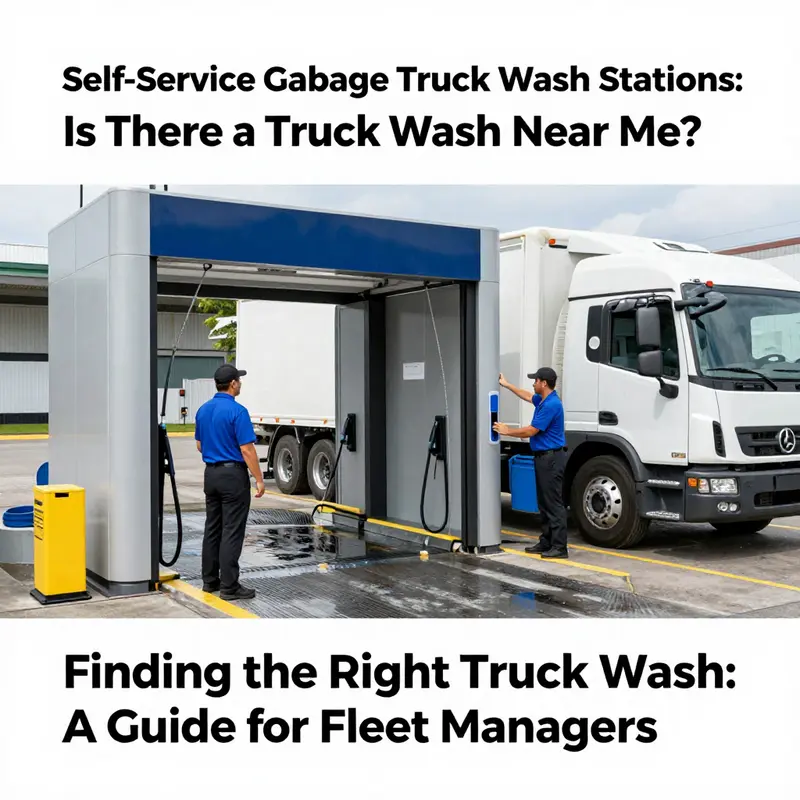
When a fleet travels far from its base, the simplest question often becomes the hardest to answer: is there a truck wash near me that can handle the heavy-duty needs of a municipal or waste-management operation? For fleets that operate out of fixed depots with high vehicle turnover, self-service garbage truck wash stations offer a pragmatic answer. They are built to move large, stubborn grime quickly through automated cycles, letting operators drive in, select a wash, and let the machine do the rest. The appeal is clear: reduced labor costs, faster turnarounds, and predictable results. The core idea behind these stations is to replace hands-on scrubbing with a controlled sequence of mechanical actions. Most systems are automated and require little more than steering the vehicle into the bay and choosing a wash program. Touchless high-pressure jets, undercarriage sprays, and side washes come together to deliver a thorough cleansing that targets the areas most exposed to waste handling. The automation is designed to standardize outcomes so that fleets can anticipate turnaround times and maintenance budgets with greater confidence. Operators appreciate that the cycle is pre-programmed, meaning the wash steps stay consistent from vehicle to vehicle, reducing the chance of human error that can occur with manual cleaning. A well-designed self-serve station will also feature user-friendly interfaces—touchscreens or keypads that let fleet managers pick the level of cleaning needed, from a quick rinse to a more thorough, all-systems cleanse. The emphasis on accessibility is telling: these facilities recognize that municipal crews may return to the depot after long shifts and still need a fast, reliable wash before the next service run. In practice, the most common configurations emphasize two things: power and water. The high-pressure side sprays address the exterior surfaces, while robust undercarriage systems tackle the underside, a region often neglected in routine maintenance but essential for trucks collecting waste materials. The detergents used in these programs are typically biodegradable and chosen to balance cleaning power with environmental considerations, a growing priority in fleet management today. In other words, self-service garbage truck wash stations are not merely about pushing grime away; they are about delivering an efficient, repeatable process that respects operator time, fuel use, and environmental impact. Still, nothing in this setup is a magic bullet. The automated approach performs best when the grime is within the expected range for a standard wash cycle. If the vehicle carries dried-on waste or particularly tenacious tar and grease, the system may need a pre-soak step or a longer dwell time that exceeds what a quick pass-through program can deliver. In practice, that means a fleet sometimes benefits from a hybrid approach: run a pre-soak or a manual pre-wash before entering the automated sequence, or schedule a follow-up manual wash for stubborn spots. The risk of mechanical downtime is another reality. Any automated system involves moving parts, sensors, and pumps. When a component is offline or undergoing maintenance, the wash bay can become unavailable for hours or even days. For fleets that operate on tight schedules, this is not a trivial concern. Even when the equipment is functioning, access to all the chassis spaces can depend on the bay design. A self-service station may have a limited reach into tight spaces or certain angles where hoses and nozzles must work in concert. Operators should understand that while automation brings speed, it may also present blind spots where an experienced driver’s eye and technique still matter. Cost is another variable. While automated cycles typically reduce labor expenses, a portion of the price comes from water use, detergent consumption, and equipment depreciation. In municipalities with strict environmental standards or water recycling programs, these costs can be offset by incentives or subscription-based models that promise predictable monthly fees and consistent service levels. The economics often hinge on throughput: the more trucks you can cleanse per hour, the more favorable the equation. In environments with high turnover, the value proposition becomes particularly strong. The comparison between automated self-serve systems and fully manual cleaning is not simply a matter of price. It’s about reliability, speed, and consistency. Operators who deal with waste streams know that the exterior of a garbage truck is only part of the job. Undercarriage cleanliness, wheel wells, and exposed components near the chassis are equally important to prevent corrosion and ensure long-term performance. In some stations, the undercarriage spray is engineered to reach hard-to-access areas that manual cleaning might miss, helping fleets maintain a cleaner baseline with less effort. At the same time, the lack of customization that automated stations impose can be a drawback for fleets with specialized needs. Some trucks may require longer dwell times in certain zones or bespoke cleaning sequences that differ from the standard programs. For those cases, operators might still turn to manual touch-ups or select a more flexible cleaning solution elsewhere. This tension between automation and customization is a reminder that the “best” wash approach depends on a fleet’s specific vehicle profile, the typical grime encountered, and the local constraints around water use and space. For fleets evaluating a self-service model, practical considerations matter as much as the dream of effortless cleaning. How easy is it to access the bay during shift changes? Are there clear instructions on screen, in multiple languages, that guide operators through payment, safety checks, and selecting the correct wash level? Is there a simple way to report a malfunction or schedule maintenance to minimize downtime? In municipal depots, where multiple crews rotate through a fixed facility, these questions are not academic. They translate into real-world throughput and the ability to keep fleets on the road rather than in a line waiting for a wash. For those exploring nearby options, the search process mirrors other location-based needs. A straightforward approach is to use the most common map-based search terms—“truck wash near me” or “garbage truck wash”—and then filter results by proximity, hours, and available wash programs. Local directories and fleet maintenance guides can reveal which depots or regional wash hubs have automated self-serve options that align with a fleet’s schedule. The choice to park in a self-service garbage truck wash station often reflects a larger strategy of reliability and efficiency. Many fleets operate in a region with several depots and wash facilities, each offering a slightly different balance of automation, speed, and price. A fleet manager might favor a station that can handle surge cleans during peak times, or one that offers subscription-based plans with predictable monthly costs. In some markets, facilities have also started to design their layouts around principal routes and port access, creating hubs that reduce travel time between loading, washing, and maintenance cycles. This is where the concept of a “near me” search evolves from a simple convenience into a tactical planning tool. As you weigh options, there are practical steps to compare facilities without getting lost in glossy marketing. First, verify that the station can accommodate your fleet’s typical vehicle size and configuration. Some garbage trucks have extended chassis or larger wheelbases that require extra clearance. Second, ask about wash cycle options and whether the system can tailor a pre-soak or longer rinse for stubborn grime. Third, consider the station’s uptime history and maintenance schedule. A facility with a robust preventive maintenance program is more likely to stay open during peak demand. Fourth, inquire about environmental standards and detergent options. Eco-friendly cleaners, water recycling, and waste management practices are not mere bells and whistles; they affect compliance with local regulations and long-term costs. Digital interfaces matter too. Modern self-service stations usually provide intuitive touchscreens or keypads that guide operators through payment, wash selection, and safety checks. Some interfaces include multilingual support and simple tutorials that reduce the chance of operator error. A well-designed system minimizes downtime by offering quick-start options and clear feedback if a parameter is out of range. For fleets curious about the broader ecosystem of on-site fleet cleaning, there is value in examining how these automated stations fit within a larger maintenance strategy. In practice, many operators pair automated washes with other solutions—on-site detailing, mobile wash units for in-between-dock cleaning, or access to a larger cleaning hub when heavy-duty cleaning is required. The best arrangements blend the convenience of automation with the flexibility of human oversight, ensuring that a vehicle leaves the bay in a condition that supports safety, compliance, and performance. When it comes to locating a nearby option, tools and guides exist to simplify the search. Mobile apps and online directories can show you the closest self-service wash stations and describe the available wash programs. In addition to search results, fleet managers often rely on industry resources that discuss best practices for cleaning different waste-handling vehicles, ensuring that the selected wash aligns with the vehicle’s design and the typical grime encountered. For anyone managing a fleet, a useful way to deepen understanding while planning a local roll-out is to consult resources that focus on fleet facility management and the practicalities of keeping a wash operation running smoothly. For example, you can explore topics around facility management for truck wash businesses to tailor a site’s capabilities to your demand and staffing levels. This kind of guidance can help you design a workflow that minimizes downtime and maximizes throughput, especially in depots where trucks circulate through regularly. If you’re curious about the operational side of setting up or refining a self-serve wash station, a detailed discussion on facility management for truck wash businesses can offer valuable perspectives on staffing, maintenance, and scheduling. You can learn more about this topic through dedicated resources that focus on how to structure processes, monitor performance, and optimize the user experience for drivers and fleet managers alike. To help you navigate the practicalities, a current, user-friendly point of reference is to explore a nearby wash option via map services. A real-time search on a map platform will not only locate the nearest self-service bay but also provide directions, hours, and any service notices that affect availability. The reliability of such maps is especially important when coordinating between yard shifts and route planning, ensuring that a wash stop is feasible within a tight operational window. In short, self-service garbage truck wash stations represent a practical, scalable approach to fleet cleaning in depots with heavy turnover. They blend automation with a straightforward user experience, delivering consistent results while helping control labor and water usage. The key to maximizing their value lies in understanding the grain of your operation—how dirty the vehicles typically are, how much downtime you can tolerate, and how important it is to standardize the wash process across crews. When you combine this understanding with a targeted search for nearby facilities and a readiness to adapt to a hybrid cleaning approach, you gain a clearer path to keeping fleets clean, compliant, and ready for the next job. For those who want a quick starting point in locating a nearby option, a practical next step is to perform a map-based search for truck wash facilities in your area. This simple action can yield a handful of candidates with details on operating hours and accessibility, which you can then compare against the needs of your fleet. If you want to dive deeper into the operational side of on-site fleet cleaning, consider exploring guidance on facility management for truck wash businesses, which can help you tailor a site’s capabilities to your demand and staffing. By reading broadly about how to structure a wash operation—through workflow design, preventive maintenance, and performance monitoring—you’ll be better positioned to choose a facility that aligns with your fleet’s routine and its environmental responsibilities. For a direct starting point to locate nearby facilities and verify capabilities in real time, see facility management for truck wash businesses. To expand your search beyond the immediate area, you can also consult general resources that map truck wash locations. When you do, keep in mind that your goal is a balance between proximity and capability: a nearby bay that can handle the typical load and turn vehicles quickly back into service is usually more valuable than a marginally closer option that can’t meet your standard cleaning requirements. If you want to see how a broader network approaches fleet cleaning, look for hubs that offer scalable options for municipal fleets, with service levels that can be tailored to the volume of trucks you move through each week. In the end, the question “Is there a truck wash near me?” often resolves into a practical formula: proximity plus capability, plus a straightforward path to maintenance and throughput that keeps your operations moving. For anyone who needs real-world guidance on locating locations and understanding the nuances of automated wash cycles, the route forward is to combine map-based search with a quick review of facility capabilities, then validate with a short call or message to confirm current availability and pricing. And as you implement this approach, remember that automation does not eliminate the need for driver judgment and regional knowledge. Keeping a fleet clean involves both the precision of automated cycles and the discernment of seasoned operators who know when a cycle is sufficient and when a follow-up wash is warranted. External resource: For immediate access to verified truck wash locations and services, you can search “truck wash near me” on maps to see real-time results, directions, and hours of operation: https://www.google.com/maps/search/truck+wash+near+me
Road-Ready Hubs and Hidden Cleaners: Navigating Advanced Fleet Cleaning Hubs to Find a Truck Wash Near Me
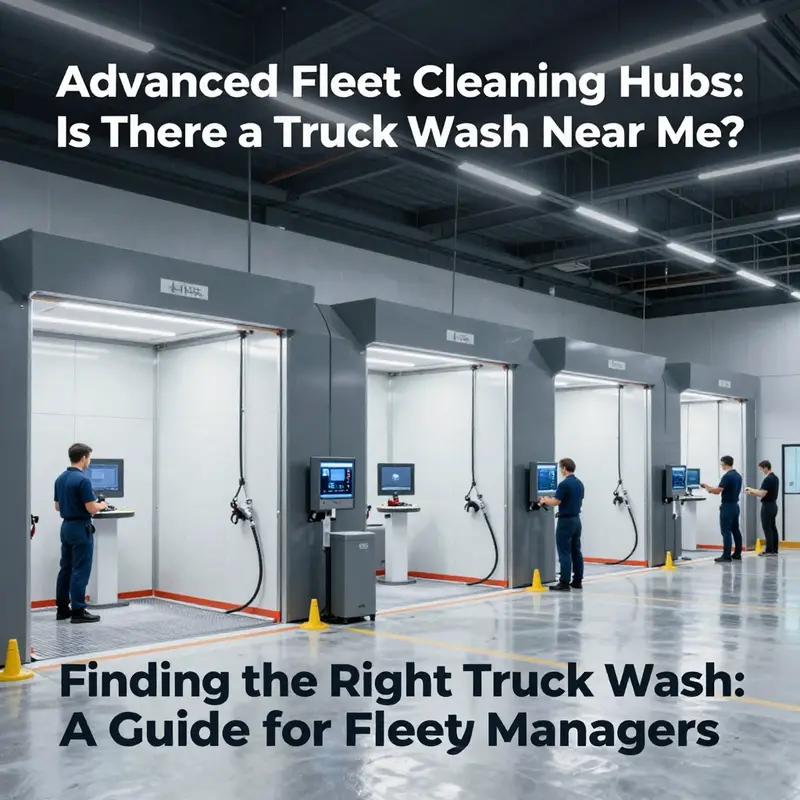
What qualifies as an advanced fleet cleaning hub is not merely a row of bays under a flashing sign. It is a carefully engineered ecosystem that blends high-velocity water, clean-energy detergents, precision drying, and data-driven management into a seamless service for large-road fleets. When a driver or fleet manager asks, “Is there a truck wash near me?” the answer is increasingly less about a single wash stall and more about a network of hubs that form a regional cleanup backbone for cargo movement. In many logistics districts, these hubs sit at crossroads where port activity, intermodal connections, and long-haul routes converge. They are designed to handle a broad spectrum of trucks—from dry vans to tankers—and to adapt to seasonal workloads, fluctuating freight volumes, and the evolving regulation landscape around emissions and water use. The shift from simple, manual washes to automated, intelligent hubs has been driven by efficiency demands, environmental considerations, and the growing scale of truck fleets that must stay on the move with minimal downtime. The practical upshot for a fleet seeking proximity is straightforward: nearby advanced hubs can deliver faster turnaround, more consistent cleaning quality, and better alignment with the operational rhythms of a modern transport operation. The idea of a “near me” wash becomes a question of network density as much as location. A hub map can reveal a cluster of facilities around major freight corridors, port-centric districts, and industrial parks where multiple service lines converge. A driver might pass through a touchless, automated wash during a daily route, then return on a weekly schedule to a more thorough, manual or overhead-cleaning option chained to a regional maintenance hub. In this sense, the near-me question evolves into a search for a reliable, scalable, and context-aware cleaning network rather than a single facility. The modern hub understands the unique needs of fleets. It recognizes that some vehicles arrive with stubborn grease from last night’s turnover, others require a quick refresh between job sites, and a few demand meticulous cleaning after heavy-duty loads. This diversity is met with a layered set of services that can be combined in real time, depending on current demand, weather, and substrate conditions. The core technologies behind these hubs—high-pressure washing, biodegradable detergents, and advanced drying systems—form a triad that balances cleanliness with surface integrity. High-pressure washing is calibrated to lift grime without waging war on paint, seals, or decals. Detergents are selected for environmental performance and compatibility with vehicle materials, reducing the risk of long-term damage while keeping the surfaces visibly clean. Drying systems, often using heated air or advanced air-drying rails, minimize water spots and shorten the post-wash downtime. The goal is not merely a clean truck but a vehicle that is ready to roll on schedule, with reduced risk of rust, corrosion, or streaking that could signal maintenance problems down the line. Within this framework, the concept of touchless cleaning has gained prominence. Automated, non-contact washes minimize the chance of abrasion, a critical consideration for fleets that operate in environments where paint repair is both costly and time-consuming. The frictionless experience is complemented by the precision of overhead or rail-mounted cleaning modules in some hubs. These systems guide nozzles along the full length of the vehicle, enabling thorough coverage with less manual handling. Yet the hub story does not end with hardware. The real evolution lies in the services layered atop the equipment. Mobile detailing units, for instance, bring the wash directly to the fleet if a site lacks on-site infrastructure or if a specific job requires a rapid turn-around between construction-site assignments and mainline routes. These mobile units often run on water recycling cycles, which recapture and reuse wash water to minimize consumption and waste. When fleets operate near large ports or industrial corridors, specialized services can be deployed to address the most demanding cleaning tasks. For example, when trucks shuttle between port terminals, the exposure to salt air, tar, and heavy soils is higher. Hubs that offer advanced cleaning options are prepared to tailor the approach: more aggressive wash cycles for tar and grease, followed by gentler passes for antennas, chrome, and reflective surfaces. The same logic applies to fleets that carry sensitive cargo. The hub ecosystem anticipates additional handling considerations and integrates steps to sanitize or deodorize compartments without compromising the containers or the payload. While the technical core matters, the orchestration of these services depends on digital tools that help managers and operators coordinate across locations. Fleet-management platforms provide dashboards that track vehicle status, scheduled cleanings, and the timing of next maintenance windows. They offer alerts if a vehicle misses a scheduled wash or if a bay becomes unavailable due to maintenance work. In practice, this digital optimization translates into more predictable wash cycles, less idle time on hot days, and a clearer picture of the total cost of ownership for cleaning across the fleet. It also heightens security by enabling remote monitoring of wash bays, ensuring that operations comply with internal policies and external regulations. The ability to monitor, in real time, when a truck enters a cleaning bay and when it exits can deter unauthorized activity and reduce the risk of losses. For fleet managers facing the question of proximity, the path forward is guided by several practical steps. First, verify that near-me facilities are certified to deliver cleanings with the latest environmental and safety standards. Certification, in this context, is less about a logo and more about demonstrated practices—water recycling capabilities, waste management, and the proper handling of cleaning solvents and effluents. Second, assess the hub’s environmental footprint. Eco-friendly practices vary in scale but share a common aim: minimize water use, improve recycling, and reduce chemical discharge. Third, map the service mix to your fleet’s needs. Some journeys require high-touch cleaning in certain weather conditions; others demand fast, touchless refreshment between legs of a trip. A hub that offers a spectrum of options can reduce the total time your trucks spend out of service. The search itself benefits from digital maps and local directories, while still benefiting from a more qualitative sense of service quality. A nearby hub that can handle your most challenging cleaning tasks, offers on-site or mobile equivalents when needed, and provides a transparent pricing and scheduling model is often the best long-term partner. In this sense, the near-me question evolves into a planning exercise rather than a simple geographic lookup. It becomes about aligning routes, maintenance calendars, and driver rosters with a hub network that can adapt to demand surges and weather disruptions. For fleets that carry specialized loads, such as food-grade products or hazardous materials, a strong hub network can provide a higher level of assurance. Some hubs maintain cold-chain compatible cleaning lines, with protocols to prevent cross-contamination and to maintain product integrity. In other cases, the focus is on minimizing downtime through rapid, validated cleaning cycles that are compatible with seasonal peaks in freight activity. The operational model that emerges from these hubs often includes subscription or membership-like arrangements, where fleets gain predictable access to bays, priority scheduling, and bundled environmental services. The economics of this approach can be favorable for larger fleets, but even smaller operators benefit from predictable costs and the ability to plan maintenance around the wash cycle rather than vice versa. As with any service that touches mobility and compliance, the proof lies in performance data. A hub that can share anonymized metrics—average wash times, defect rates post-clean, and on-time delivery of clean vehicles—offers more confidence than a glossy brochure. For managers who want deeper guidance, a concise guide on the practice of cleaning specific vehicle types exists online. It highlights best practices for cleaning food-grade tankers and other sensitive configurations, offering a structured approach to reduce risk and maintain compliance. You can explore this resource here: Best practices for cleaning food-grade tankers. Beyond technical know-how, the hub story is also about people. The teams that operate these facilities are skilled at coordinating complex wash sequences, troubleshooting issues on the fly, and communicating with drivers about timing windows. Their expertise is a form of service continuity that helps fleets stay productive even when disruptions arise. In the end, the question “Is there a truck wash near me?” is best answered not by a single facility but by a network that can adapt to the scale, speed, and sustainability demands of modern freight. The near-me factor becomes a driver for smarter route design, more reliable maintenance schedules, and longer vehicle life. In the absence of a nearby hub, the modular model—a mobile unit that can come to you, or a temporary bay that can be deployed on-site—ensures that no truck spends more than a minimal amount of time out of service. Fleet professionals increasingly measure success not only by the cleanliness of their rolling assets but by how clean and ready they are at the moment they need to move. The integrated approach to fleet cleaning hubs reflects a broader trend in logistics: ecosystems designed around reliability, environmental stewardship, and data-driven decision-making. In this sense, the discovery of a nearby advanced cleaning hub becomes less a search for a service and more a step toward a more resilient and efficient operating model. External resources can offer deeper dives into platform-based fleet management and cleaning hub optimization. For readers seeking additional context on how modern cleaning hubs operate within a broader fleet-management strategy, see this external resource: https://www.karcher.com/fleet
Final thoughts
Choosing the right truck wash is essential for fleet maintenance, boasting benefits like improved vehicle longevity, operational efficiency, and enhanced brand image. From touchless washing solutions to mobile units and advanced cleaning hubs, the options available cater to diverse needs in the logistics, construction, and mining sectors. By using location-based platforms and keeping abreast of modern cleaning technologies, fleet managers can ensure that their vehicles are not just clean but also maintain their resale value and operational efficiency. Prioritize finding a facility that aligns with your specific needs, and invest in your fleet’s appearance and functionality.