
Every fleet manager knows the sinking feeling when a rig rolls back from a hard season looking worse for wear. Road grime, corrosive road salts, and chemical residues silently attack exposed metal surfaces and undercarriage components. The question is not whether your trucks will accumulate buildup-it is whether you will treat that buildup as a cosmetic nuisance or a long-term liability. Understanding how to wash truck equipment properly is the first step in protecting one of your largest capital investments from premature depreciation.
What many fleet operators overlook is that a neglected wash schedule directly accelerates corrosion on brake lines, electrical harnesses, suspension components, and frame rails. The American Transportation Research Institute has consistently ranked corrosion-related failures among the top causes of roadside out-of-service violations during DOT inspections. A single preventable violation can sideline a revenue-producing asset for hours or days, eroding utilization rates and damaging your CSA score. When corrosion goes unchecked, repair bills escalate quickly-rusted brake calipers, failed air lines, and compromised electrical systems can cost thousands per truck per year.
Resale value tells the same story. At auction, a well-maintained truck with a clean history and preserved paint commands a premium of 15 to 25 percent over a comparable unit showing visible corrosion and neglect. Buyers and lessors alike read a dirty truck as a sign of deferred maintenance across the board. Your fleet’s appearance also speaks before your drivers do. A clean, professional rig signals reliability to shippers, brokers, and regulatory inspectors. It builds the brand trust that wins repeat contracts and premium freight rates.
This article reframes truck washing not as a discretionary cosmetic expense but as a disciplined maintenance function that preserves asset value, ensures compliance, and protects your bottom line. How to wash truck fleets effectively-using proper techniques, appropriate chemistry, and consistent scheduling-is a strategic investment every fleet manager should master.
Why Proper Truck Washing Directly Impacts Your Bottom Line
For fleet managers, a washing program is not merely a cosmetic exercise – it is a strategic financial decision. Routine fleet truck washing protects equipment assets, ensures regulatory compliance, and safeguards brand equity. When neglected, the costs compound rapidly across three critical areas.
1. Corrosion Prevention
Road salt, chemical residue, and accumulated grime accelerate undercarriage rust, attacking brake lines, suspension components, and electrical wiring. Industry experts estimate that corrosion costs North American fleets over $25 billion annually in repairs and premature asset replacement. A consistent washing schedule – especially during winter months – removes corrosive agents before they compromise structural integrity, extending vehicle life and reducing capital expenditure.
2. Regulatory Compliance
DOT inspections scrutinize vehicles for visible leaks, loose debris, and safety hazards that grime can easily conceal. A dirty truck may hide oil drips, cracked lighting, or failing seals – violations that result in out-of-service orders, fines, and lost revenue. Regular trailer maintenance and thorough washing ensure that inspectors can identify issues early, keeping your fleet on the road and avoiding costly downtime.
3. Brand Reputation
Every truck in your fleet is a moving billboard traveling thousands of miles daily. A clean, well-maintained vehicle signals professionalism, reliability, and attention to detail to clients, partners, and the public. In an industry where trust drives contracts, a dirty rig can damage your company’s image faster than any marketing campaign can rebuild it.
Building a culture of fleet truck washing across these three pillars directly protects profitability. With the stakes clear, the next step is understanding the specific cleaning methods that deliver these results. Below, we outline a practical, step-by-step guide to washing your truck effectively.
Cost Comparison: Corrosion Repairs vs. Regular Washing
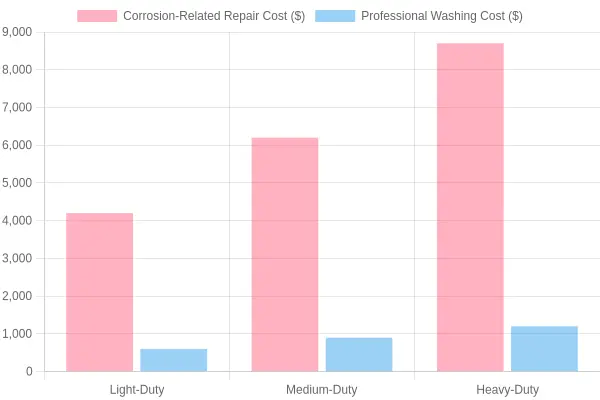
Fleet managers routinely face the question: Is investing in regular professional washing truly worth the expense? The data below provides a clear, data-driven answer.
Source: Based on fleet maintenance industry data.
What the Numbers Reveal
The chart above compares two critical cost categories across three vehicle classes:
| Vehicle Category | Annual Corrosion-Related Repair Cost | Annual Professional Washing Cost | Potential Annual Savings |
|---|---|---|---|
| Light-Duty | $4,200 | $600 | $3,600 |
| Medium-Duty | $6,200 | $900 | $5,300 |
| Heavy-Duty | $8,700 | $1,200 | $7,500 |
The ROI Argument Made Simple
For every $1 spent on professional washing, fleet operators can avoid $7 or more in corrosion-related repair costs. The math is compelling:
Heavy-duty trucks – Spending $1,200/year on washing avoids up to $8,700 in corrosion repairs. That is a 7:1 return on investment.
Corrosion does not merely affect aesthetics. It compromises structural integrity, degrades brake lines, weakens frame components, and accelerates wear on electrical systems. Left unchecked, rust-related failures lead to costly downtime, compliance violations, and shortened vehicle life cycles.
Why Professional Washing Matters
A consistent professional washing program removes road salts, chemical deicers, mud, and industrial debris before they can initiate or accelerate corrosion. Unlike basic rinsing, professional truck wash services use specialized detergents, undercarriage cleaning systems, and high-pressure applications that reach hidden corrosion-prone areas.
For fleet managers looking to implement or upgrade their wash programs, understanding the importance of regular trailer maintenance is a critical first step toward protecting asset value. Additionally, proven strategies for cleaning grease and tar off your trucks fast can help address the toughest soils that accelerate corrosive damage.
Bottom Line
Regular professional washing is not an expense – it is an investment with measurable returns. The data demonstrates that proactive cleaning programs reduce total cost of ownership, extend equipment life, and deliver substantial savings that go straight to the bottom line.
Essential Truck Washing Equipment & Supplies
Selecting the right truck washing equipment is a capital decision that directly impacts wash quality, water efficiency, and labor productivity. Fleet managers must balance upfront cost against durability and cleaning performance to protect the value of their assets. Below is a practical comparison of essential washing equipment every commercial fleet operation should evaluate.
| Equipment | Purpose | Recommended Spec | Approx. Cost |
|---|---|---|---|
| Pressure Washer | High-pressure water delivery for removing caked-on dirt and grime | 4,000 PSI / 4.0 GPM (commercial gas-powered) | $1,200 – $3,500 |
| Truck Wash Soap (pH-neutral) | Gentle but effective cleaning that preserves paint, decals, and wax | pH 6.5-7.5 concentrate (dilutes 1:10-1:20) | $40 – $80 per gallon |
| Soft-Bristle Brush (extension pole) | Surface-safe scrubbing for tall panels, roofs, and hard-to-reach areas | 10-14 in. head, Nylex bristles, 4-6 ft telescoping pole | $30 – $90 |
| Underbody Sprayer | Targeted cleaning of chassis, wheel wells, and undercarriage components | 16 in. cleaning path, 4+ spray nozzles, stainless steel | $40 – $120 |
| Degreaser (biodegradable) | Breaks down petroleum-based grease, oil, and road film without harming ecosystems | Enzyme/solvent-free biodegradable formula | $45 – $95 per gallon |
| Microfiber Drying Towels | Lint-free drying to prevent water spots and corrosion after washing | 300-600 GSM, 16×24 in. or larger, sold in bulk (50-100 packs) | $1.50 – $4.00 per towel |
For fleet operations facing heavy grease and tar buildup, proven strategies for cleaning grease and tar off your trucks fast can further refine your wash protocol. Investing in the right combination of equipment from this table will reduce labor hours, extend vehicle finish life, and deliver a consistently professional appearance across your entire fleet.
Step-by-Step Guide – How to Wash a Truck Correctly
A proper how to wash truck routine is essential for protecting fleet assets, preserving resale value, and maintaining a professional brand image. For fleet managers and owner-operators managing Class 5 through Class 8 vehicles, following a structured, methodical wash process prevents paint damage, removes corrosive buildup, and extends the life of exterior components. Below is a detailed, eight-step protocol designed for commercial trucks.
Step 1: Pre-Rinse with Cold Water
Begin every wash by rinsing the entire truck using cold water from a pressure washer or hose. Start at the top of the cab and work downward to dislodge loose dirt, road salt, and surface debris before any soap is applied. Tip: Use a wide-angle nozzle (40 degrees or higher) during this step to avoid forcing grit deeper into the paint.
Step 2: Apply Degreaser to Wheels and Undercarriage
Spray a heavy-duty, citrus-based or alkaline degreaser onto the wheels, wheel wells, and undercarriage. These areas accumulate the most grease, brake dust, and road grime. Allow the degreaser to dwell for 3-5 minutes – but never let it dry on the surface. Tip: For stubborn buildup, agitate the degreaser with a dedicated wheel brush before rinsing. For more aggressive solutions, see our proven strategies for cleaning grease and tar off your trucks fast.
Step 3: Soap from Top Down Using the Two-Bucket Method
Fill one bucket with a pH-neutral truck soap and water, and a second bucket with clean rinse water. Dip your wash mitt or sponge into the soap bucket, wash a panel section, then rinse the mitt in the clean water bucket before reloading with soap. Tip: This method prevents trapped dirt particles from scratching the clear coat – a critical practice for high-mileage fleet vehicles.
Step 4: Agitate with a Soft-Bristle Brush
Use a soft-bristle brush or microfiber wash mitt to agitate the soap solution across all painted surfaces. Work in straight, overlapping lines rather than circular motions to minimize micro-marring. Pay special attention to grille areas, mud flaps, and panel seams where grime collects. Tip: Always use separate brushes for the lower body panels and wheels to avoid cross-contamination.
Step 5: Pressure Rinse in Overlapping Passes
Rinse the truck thoroughly using a pressure washer, working from the top down in consistent, overlapping passes. Ensure every trace of soap and loosened debris is flushed away before proceeding to drying. Tip: Maintain a distance of 12-18 inches from painted surfaces and keep the nozzle moving to prevent concentrated pressure on any single spot.
Step 6: Dry with Microfiber Towels (Avoid Air Drying)
Blot and wipe the truck dry using clean, plush microfiber towels. Swap towels frequently as they become saturated to avoid redistributing moisture. Never allow the truck to air dry, as mineral deposits from hard water will leave unsightly spots and etch into the clear coat over time. Tip: Use one towel for the upper body panels and a separate towel for the lower sections where dirt accumulates.
Step 7: Apply Wax or Sealant to Paint
Apply a high-quality synthetic sealant or carnauba-based wax to protect the paint and enhance gloss. Use a foam applicator pad to spread the product in thin, even layers, then buff to a shine with a clean microfiber towel. Tip: For fleet vehicles that operate in harsh conditions, a ceramic spray sealant offers longer-lasting protection than traditional wax.
Step 8: Clean Windows and Mirrors
Finish by cleaning all windows, mirrors, and cab glass with a streak-free glass cleaner and a dedicated microfiber glass towel. Inspect the glass for any spots missed during the rinse stage. Tip: Clean windows in a vertical motion on the outside and horizontal on the inside – this helps you identify which side a streak is on.
⚠️ Critical Warning on Pressure Settings: Pressure washers are powerful tools, but misuse can cause costly damage. Never exceed 1,500 PSI on painted surfaces. Higher pressures can strip paint, damage clear coat, force water into seals, and crack cab trim. For fleet operations, consider using a pressure washer with an adjustable regulator and always test on an inconspicuous area first. Maintaining proper technique and respecting PSI limits is just as important as the wash steps themselves – and it’s a key reason why understanding the importance of regular trailer maintenance extends to every wash cycle you perform.
“The single biggest mistake we see in fleet yards is using stiff-bristle brushes and the same dirty water across multiple trucks. That’s how you scratch clear coats and spread contaminants from one unit to the next. A dedicated two-bucket system with a pH-neutral soap isn’t a luxury – it’s the minimum standard for protecting a six-figure asset. Fleet operators who skip this step are essentially signing up for premature paint failure, corrosion hotspots, and diminished resale value. The two-bucket method, paired with a soft-bristle brush and grit guard inserts, traps sediment at the bottom so you’re not scrubbing dirt back into the paint. I’ve walked yards where a single brush is used on wheels, frames, and body panels – that’s a contamination highway. If you’re managing a fleet, you need to enforce a strict wash protocol: separate mitts for wheels and paint, fresh water changes between trucks, and brushes that won’t chew through your clear coat. It’s not complicated, but it requires discipline.”
- Mark Torres, Fleet Maintenance Director, National Trucking Association
This professional insight underscores why the soft-bristle brush and two-bucket method are non-negotiable for fleet managers. For additional guidance on protecting your equipment, explore our proven strategies for cleaning grease and tar off your trucks fast and review best practices for cleaning food-grade tankers for specialized applications.
5 Common Truck Washing Mistakes That Damage Your Fleet
Even well-intentioned fleet managers can inadvertently accelerate vehicle deterioration through improper washing techniques. Routine commercial truck washing is essential for maintaining equipment value and brand image, but the wrong methods can shorten a truck’s lifespan significantly. Below are five critical mistakes that cause unnecessary damage to your fleet.
-
Using Household Dish Soap – Dish soaps are formulated to cut grease, which means they aggressively strip protective wax coatings and degrade rubber seals around doors and windows. Over time, this leads to premature paint oxidation, fading, and moisture intrusion into the cab. Always use a pH-balanced automotive detergent designed for heavy-duty vehicles.
-
Washing in Direct Sunlight – Cleaning trucks under harsh sun causes water and soap to evaporate too quickly, leaving behind stubborn residue films and mineral-laden water spots. These spots can etch into the paint if not removed promptly, requiring costly polishing or repainting. Schedule washes during cooler morning hours or in shaded areas.
-
Neglecting the Undercarriage – Industry data suggests that roughly 70% of truck corrosion begins underneath the vehicle, where road salt, mud, and chemical de-icers accumulate. Failing to clean the undercarriage allows rust to compromise critical components like brake lines, suspension parts, and the frame. Regular trailer maintenance includes thorough undercarriage washing as a corrosion-prevention essential.
-
Using High Pressure on Decals and Electronics – Cranking the pressure washer nozzle too close to fleet graphics, sensors, or wiring connections can peel vinyl decals and force water into sensitive electronic connectors. This leads to electrical failures, warning-light malfunctions, and expensive decal replacements. Maintain a wider spray distance and use lower PSI settings near vulnerable components.
-
Skipping the Drying Step – Allowing trucks to air-dry invariably leaves behind mineral deposits from hard water, which etch the clear coat and create permanent blemishes. These water spots reduce resale value and often require professional compounding to remove. Use microfiber towels or a spot-free rinse system to finish the job properly.
The True Cost of These Mistakes
Collectively, these errors accelerate paint degradation, electrical repairs, and rust-related structural damage, with a full fleet repaint costing anywhere from $12,000 to $22,000 per truck and corrosion repairs running significantly higher. For proven strategies on tackling tough contaminants while preserving your fleet’s finish, adopting a standardized wash protocol is one of the most cost-effective investments a fleet manager can make.
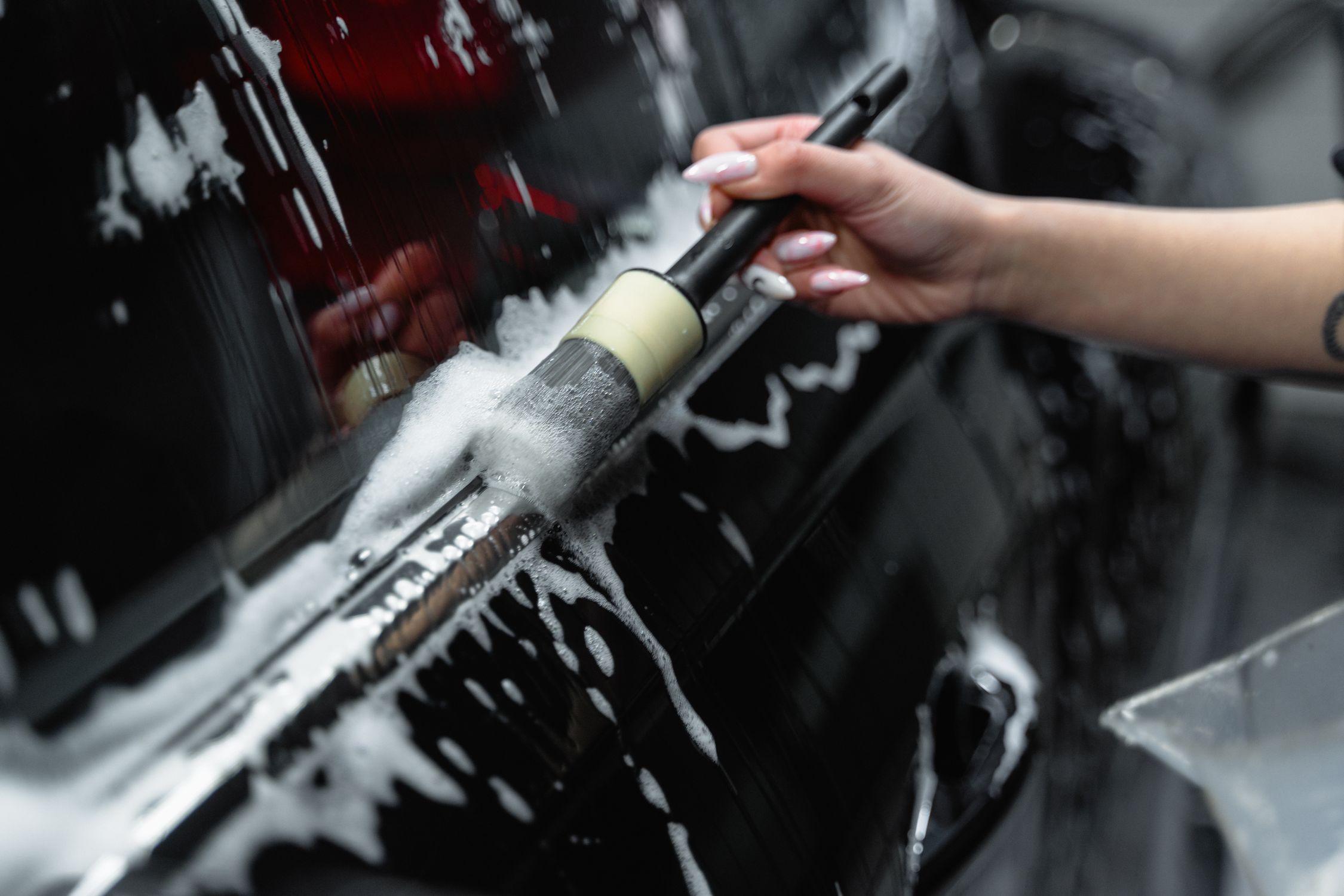
Proper brush angle and technique – a soft-bristle brush held at 45° against the truck panel allows soapy water to carry contaminants away while minimizing surface contact friction.
Proper Brush Angle and Technique on Truck Surfaces
Using the correct brush angle and technique is one of the most important yet overlooked aspects of fleet vehicle washing. When wash crews wield brushes incorrectly – pressing too hard, using flat angles, or scrubbing in circular motions – they risk embedding grit into the paint and clear coat, leading to microscratches that accumulate over time.
The 45-Degree Rule
For optimal results, a soft-bristle brush should contact the truck panel at roughly a 45-degree angle. This technique offers several advantages:
- Deflects debris away from the surface – Rather than grinding dirt particles into the paint, the angled bristles lift and channel contaminants off the panel.
- Reduces bristle-to-surface pressure – A 45° approach lowers the perpendicular force applied to the paint, minimizing the risk of swirl marks.
- Promotes even soap distribution – Soapy water runs naturally downward, carrying dissolved grime away and preventing recontamination of cleaned areas.
Proper Brushing Motion
Equally critical is the direction of the stroke. Industry best practices recommend:
- Long, straight, overlapping strokes – Work from the top of each panel downward, letting gravity assist the cleaning process.
- Avoid circular scrubbing – Circular motions trap particulate matter against the paint and create visible buffer swirls under bright light.
- Rinse the brush frequently – Dip the brush in clean water between panels to prevent transferring dirt from one section to another.
Key Insight: The image above demonstrates the ideal 45° brush angle on a blue truck panel. Notice how the soapy water cascades downward while the soft bristles make minimal surface contact – this is the “gentle but effective” approach that preserves fleet finishes over the long term.
Selecting the Right Brush for Fleet Use
| Brush Type | Bristle Material | Best Use Case | Risk Level |
|---|---|---|---|
| Soft Detail Brush | Microfiber / Boar’s Hair | Paint panels, mirrors, trim | Low |
| Medium Boar’s Hair | Natural boar bristle | General body panels | Low-Medium |
| Synthetic Polyester | Soft synthetic | Wheels, wheel wells | Medium |
| Stiff Scrub Brush | Nylon / Polypropylene | Tires, undercarriage | High (avoid paint) |
For day-to-day fleet washing, soft microfiber or boar’s hair brushes are the recommended choice for painted surfaces. These materials are less likely to harbor abrasive particles and provide sufficient agitation without damaging the clear coat.
Common Mistakes to Avoid
- Using a dry brush – Always wet the brush and apply soap solution before contacting the panel.
- Excessive pressure – Let the soap and water do the cleaning; forcing the brush into the surface increases scratch risk.
- Skipping the pre-rinse – A high-pressure pre-rinse removes loose dirt before any brush touches the paint, drastically reducing scratch potential.
- Neglecting brush maintenance – Brushes should be cleaned and inspected after each use to remove embedded debris.
By standardizing a 45° brush technique across your wash team, you can significantly extend the life of fleet paint jobs and maintain a professional appearance for your trucks. For more on keeping your fleet in top condition, read about proven strategies for cleaning grease and tar off your trucks fast and the importance of regular trailer maintenance.
Post-Wash Inspection Checklist – What to Look For While It’s Clean
A freshly washed truck presents a rare opportunity: an unobstructed, well-lit canvas for proactive inspection. Dirt and grime routinely mask developing issues that, left unchecked, escalate into costly repairs or roadside violations. Fleet managers who integrate inspection into their truck maintenance washing routine gain a significant diagnostic advantage. Use this checklist while the surface is still clean and dry:
-
Check for new chips, scratches, or rust spots – A clean finish reveals paint damage that corrosion will exploit. Document any new findings and schedule touch-up paint immediately to prevent structural degradation.
-
Inspect rubber seals and weatherstripping for cracks – Deteriorated seals allow moisture into the cab and sleeper, leading to mold, electrical corrosion, and driver discomfort. Replace any brittle or split sections before the next rain.
-
Look for oil or fluid leaks on a clean surface – A spotless undercarriage and engine bay make drips unmistakable. Trace the source of any fresh fluid – whether oil, coolant, or transmission fluid – and address it before it affects component life.
-
Verify decals and reflective tape are intact (DOT requirement) – Faded or missing conspicuity tape is a common FMCSA violation during roadside inspections. Replace damaged reflective material immediately to maintain compliance and nighttime visibility.
-
Examine wheel wells for excessive grease buildup – Accumulated grease often signals a failing wheel seal or over-lubricated bearing. Catching it early prevents brake contamination and unplanned downtime.
-
Test lights and reflectors for visibility – With the truck clean, there is no excuse for dim or obstructed lamps. Verify all marker lights, turn signals, and brake lights are functioning at full brightness.
Turning this post-wash window into a structured inspection habit ensures you catch small problems before they become fleet-wide expenses. Once the checklist is complete, the next question becomes: how often should your trucks go through this process? Let’s examine the optimal wash frequency for different fleet operations.
How Often Should You Wash Fleet Trucks?
Determining the optimal fleet truck washing frequency depends primarily on vehicle type, operating environment, and cargo requirements. A one-size-fits-all schedule leaves some trucks over-washed (wasting time and money) and others under-washed (risking corrosion, compliance violations, and brand damage). Below is the recommended cadence based on real-world fleet operations.
Recommended Wash Frequency by Use Case
| Fleet Type | Recommended Frequency | Key Rationale |
|---|---|---|
| Highway Trucks (Over-the-road) | Every 2 weeks | Road grime, salt, and bug accumulation occur gradually; bi-weekly washing preserves paint and trailer integrity without excessive downtime. |
| Local Delivery Vans | Weekly | Frequent stop-and-go driving in urban areas accelerates dirt buildup; weekly washing maintains professional branding and driver morale. |
| Construction / Off-Road Trucks | After every shift or daily | Mud, dust, and corrosive materials (e.g., cement, chemicals) cause rapid damage. Daily washing protects undercarriage components and extends equipment life. |
| Food-Grade Tankers | After every load | Cross-contamination risks are severe. Tankers must be sanitized between hauls to meet FDA and FSMA compliance standards. Learn more about best practices for cleaning food-grade tankers. |
The chart below visualizes how quickly grime accumulates across these four fleet types, with each approaching the \”must wash\” threshold (Grime Accumulation Index of 7) at different intervals.
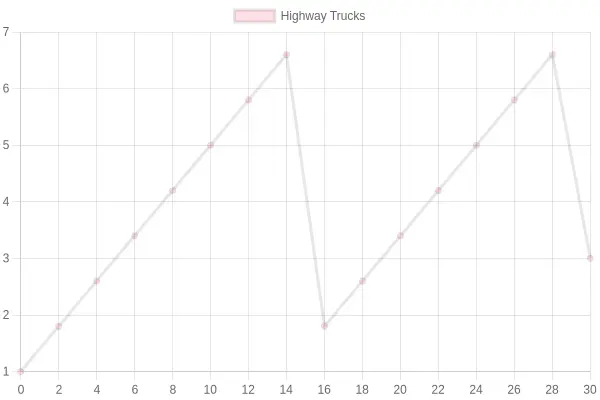
Figure: Grime Accumulation Index over 30 days. Highway trucks reset every 14 days, local delivery vans every 7 days, food-grade tankers every 2 days, and construction trucks daily.
As the chart illustrates, construction and food-grade trucks hit the threshold far sooner than highway or delivery vehicles – confirming that a tailored approach is essential. For fleets managing multiple vehicle classes, consider implementing a color-coded tracking system or partnering with a professional wash service that can accommodate varied schedules. Proven strategies for cleaning grease and tar off your trucks fast can also help extend the window between deep cleans.
When in doubt, wash when dirt is visible from 50 feet.
Conclusion: Protect Your Investment, Elevate Your Fleet
Proper washing is far more than a cosmetic exercise – it is a strategic imperative for any fleet operation. As we have explored, consistent and thorough washing safeguards your trucks’ asset value by preventing corrosion, paint degradation, and long-term structural damage. It ensures compliance with Department of Transportation (DOT) standards and environmental regulations, helping you avoid costly fines and operational delays. And perhaps most visibly, a clean, well-maintained fleet projects professionalism and reliability to clients, regulators, and the public – reinforcing the trust that drives your business forward.
Beyond the wash bay, the next step in protecting your fleet’s appearance and performance is investing in quality equipment that stands up to the elements. That is where Summit Fairings comes in.
Ready to elevate your fleet’s appearance? Summit Fairings delivers premium, custom-fit fairings that blend style and durability – designed specifically for the trucking industry. Whether you are building a cohesive fleet look or protecting your trucks from road debris, weather, and aerodynamic drag, we have you covered. Our direct-to-consumer model means you save 10-40% compared to other sites, and with our 6-hour response promise, you get the support you need – fast. Don’t wait – protect your investment today. Click, customize, and drive with confidence. Your perfect truck fairing is just a few clicks away. Act now!
For more guidance on maintaining a compliant, professional fleet, explore our comprehensive guide to truck wash industry compliance and emissions regulations and proven strategies for cleaning grease and tar off your trucks fast.
– The Triple A Truck Wash Team