
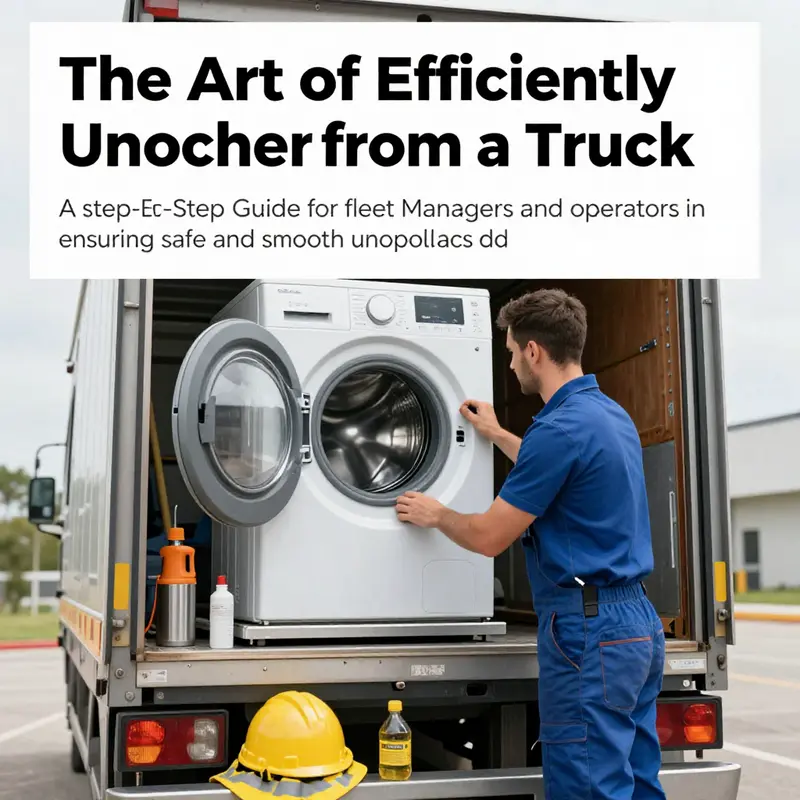
Unloading a washing machine from a truck presents unique challenges that require planning and adherence to safety protocols. For logistics and freight company fleet managers, trucking company owners, and construction fleet supervisors, understanding the intricate process ensuring safety and efficiency is essential. This guide provides a detailed exploration of preparation steps, essential unloading techniques, effective equipment usage, and final procedures, ensuring a comprehensive approach to mastering this task.
Quiet Confidence on the Ramp: Preparation as the Foundation for Safely Unloading a Washer from a Truck

The moment a washer sits in the back of a truck, the entire unloading operation hinges on calm preparation. It is the quiet, methodical groundwork that prevents mishaps, protects the appliance, and keeps people safe as a heavy object moves from a bed to a floor. The scenario is straightforward in theory: you park on level ground, secure the vehicle, clear the path, verify the machine’s packaging remains intact or has been prepared for transfer, and then execute a controlled descent onto suitable supports. In practice, preparation is where many hands-on mishaps are avoided. It rewards patience and a disciplined approach more than brute force or improvisation. For anyone facing the task, the first steps deserve the kind of attention that would be given to a high-stakes move within a home, a process that blends physics, leverage, and careful choreography. This chapter unfolds in that intentional rhythm, stitching together the practical checks with the physical realities of moving a heavy home appliance from truck to destination while preserving its integrity and safeguarding the people involved.
Begin with the vehicle. A washer is heavy, compact, and awkwardly shaped, with a footprint that can shift unexpectedly if the truck moves. The safest starting point is to ensure the truck is parked on a flat, stable surface. The engine should be off, and the parking brake engaged. These are not mere formalities; they are the guarantees that the bed won’t shift, that gravity won’t suddenly tug at a loose strap, and that the steps you take next won’t be met with a backfire of motion from the vehicle itself. In addition to a level surface, confirm there are no hidden slopes or soft ground nearby that could compromise balance when the weight is shifted during unloading. As with any heavy lift, the environment is as critical as the technique.
Next, scan the path from the truck bed to the final resting place. The ground should be dry, clean, and free of debris that could snag a wheel or tear a protective pad. A clear corridor reduces the risk of tripping or stumbling into an obstacle while steering a dolly or coordinating a two-person lift. This isn’t just about avoiding cosmetic damage to the floor or the machine; it is about ensuring the bearings and suspension of the washer are not stressed by awkward handling. If the area has uneven floor tiles, carpets, or thresholds, plan a route that minimizes transitions between surfaces. A short, smooth transition from bed to floor is far safer than a longer, irregular carry that tests balance.
Assess the washer itself before even touching it. If the unit was shipped in its original packaging or wrapped with protective padding, keep those materials nearby. They can come in handy during any repositioning or final installation to shield edges or to cradle the unit as it settles into its new location. Mobility is easier if the machine remains aligned with its shipping orientation until you are ready to move it onto a moving platform such as a dolly. If the washer was partially disassembled for transport, confirm all parts have arrived and are accounted for in a plan that won’t require you to reach into awkward spaces after the first shift. A quick physical check may reveal loose hoses or protruding knobs that could snag on straps or supports if left unsecured.
Security during unloading is about restraint and balance. If the washer was secured with straps, inspect them for wear and confirm they are still snug. A single loose strap can let the unit shift suddenly, a risk no one wants when handling a heavy object. If water remained inside for any reason, drain it completely before moving. Standing water adds weight and increases the risk of uneven surface contact or slip hazards. If the machine was transported with the drum locked or with internal components immobilized, verify that these settings remain intact or have been reset in a controlled manner that won’t force internal components to bear unusual loads during the transfer.
With the stage set, attention turns to the crucial decision about moving tools. The most reliable and protective option is a moving dolly or hand truck with wide, non-slip wheels. A dolly distributes the weight across a larger contact area, reducing the peak pressure on any single point and making the machine easier to maneuver around corners and door frames. The process should begin by positioning the dolly under the washer in a way that the weight is balanced. If the unit is high and heavy, you may need to tilt it slightly to slide the dolly wheels beneath. Once the washers’ weight rests on the dolly, lower the machine gently so that it feels stable and secure before you roll. If a dolly is not available—but preferably never by choice—two able-bodied people should coordinate the lift to avoid twisting or bending in ways that could injure the back or shoulders. The goal is to keep the washer as close to the body as possible and to move with controlled, deliberate steps rather than jerky motions.
The lifting technique, when a dolly is not used, is where the body’s mechanics come into sharp focus. Bend at the knees, not the back. Stand with feet shoulder-width apart to create a stable base. Keep the load as close to the torso as possible to minimize lever arms that pull on the spine. The lift should be slow and deliberate, with both participants moving in unison to maintain balance. Communicate clearly—before any lift—who will take the lead and when to start and stop. Advise one another to pause if any tremor in the grip or a wobble in the stance appears. Do not tilt the washer more than about 45 degrees, because tilting can place abnormal stress on the drum bearings and disrupt the suspension alignment. Those safeguards are not about rigidity; they are about preserving the appliance’s internal coordination and preventing misalignment or damage as weight transfers from the truck bed to the ground.
As a general rule, the dolly remains the safer bridge between the truck and the destination. When you slide the machine onto the dolly, you should check the balance again and ensure the unit is secured with straps or protective padding so it cannot slip off. If you must lift the washer onto the dolly in stages—such as lifting one side at a time to relieve the weight—do so with a patient, incremental approach and with a helper aligned to the same goal. Once the washer rests on the dolly, you can move slowly and steadily toward the final location. The journey from truck bed to floor should be calm and unhurried, with the dolly bearing the weight as you navigate any small obstacles and doors. The principle is simple: minimize the number of times you fully lift the appliance, maximize the points at which you maintain contact with a stable platform, and keep the movement smooth enough to avoid jostling any internal components.
If a dolly is not present and lifting becomes unavoidable, the team must adopt a well-rehearsed rhythm and maintain eye contact. Each person should have a clear plan of who controls which end, how load shifts will be synchronized, and when to lower. Teamwork becomes the governing factor in these moments because the margin for error grows with the absence of equipment. The human factor is not a weakness here; it’s a critical adaptability that recognizes the real-world limits of your space and strength. In such scenarios, keep movements deliberate and level. Avoid any tilt beyond the threshold that your joint effort can sustain without compromising balance or instrument integrity. The idea is to treat every axis of motion—vertical, horizontal, and rotational—with equal caution, recognizing that a mere inch of drift could translate into a dent or misalignment.
As the washer begins its transition off the truck, invite a final check of the landing zone—the surface that will cradle the unit once the load is lowered. Lay down a protective mat, blanket, or thick layer of padding to prevent scratching and to dampen minor shocks if the ground surface isn’t perfectly flat. If you’re working in a space where nearby walls or fixtures could threaten the edges of the appliance, reposition to give the machine a clean buffer area as it rests on the final surface. The aim is to achieve a stable, level final placement that won’t require immediate repositioning. A good landing becomes a quiet, almost ritual moment: the unit settles, the dolly is rolled away, and the space is re-evaluated for any post-move adjustments such as hose connections, water supply checks, or electrical considerations when the machine is installed or moved to its final utility points.
Preparation also extends beyond the physical steps. It includes a mental map of the sequence, so you aren’t improvising as the weight shifts. It means having gloves for grip and protection, a towel or mat to catch drips, and a clear path from the truck bed to the final destination. It means acknowledging the washer’s weight range, which, for a typical front-loading unit, can land in the neighborhood of 150 to 200 pounds (68–91 kg). That weight range matters in your planning because it informs the type of equipment you should use and the level of manpower required. It might seem obvious, but it is easy to overlook the cumulative effect of repeated micro-adjustments, which can accumulate strain on your body and the machine alike. When you approach unloading with this level of awareness, you’re not just moving a heavy object; you’re orchestrating a sequence that respects physics, space, and safety.
The final moments of the process are as telling as the first. After you have placed the washer securely on the ground, take a moment to inspect for any signs of damage—dents, scratches, or loosening of components that might have occurred during the ride or the lift. If you notice anything unusual, address it before you connect hoses or power. A post-move inspection can save you from a filigree of issues down the line, from water leaks to misaligned drums. If you’re storing the unit before final installation, re-secure it with straps to prevent any movement during a period of inventory or restrained positioning. By treating this phase with care, you honor the machine and reduce the risk of shock or injury during subsequent steps of the installation process.
In practice, preparation for unloading a washer from a truck becomes a practice of translated caution: a blend of environmental awareness, physical technique, and practical logistics. The emphasis on using a dolly whenever possible, on maintaining a tight, balanced hold when lifting, and on careful final placement creates a smooth, replicable sequence that you can rely on again and again. It is a workflow that informs future tasks—from moving a washer into a tight space in a small apartment to staging other large appliances at a home renovation site. This is why the focus on preparation—on the front end—pays dividends in safety, efficiency, and the long-term condition of the appliance you’re handling. For teams and individuals who routinely navigate heavy-lift situations at work, adopting a consistent preparation mindset can be as transformative as any technique itself. It is the quiet confidence that carries you through the ramp and into a secure, stable setup, with the machine ready to be connected and tested in its new location.
To knit these ideas together with broader industry practices, it is helpful to remember that such preparation resonates with maintenance principles across the broader transport and equipment handling world. The discipline of checking ground conditions, verifying securing methods, and planning the route echoes the mantra found in well-run trailer operations: preparation is the foundation of reliable performance. For teams that want to deepen this practice in the context of trailer readiness and unloading operations, consider importance of regular trailer maintenance. This link provides a reflective touchstone for how consistent checks and proactive care support smoother handling, fewer delays, and safer outcomes when heavy items are moved on or off vehicle frames. It isn’t a distraction; it’s a reminder that the root of safe unloading lies in routine, attentive upkeep that keeps every move predictable and controlled.
In sum, the unloading sequence is not a sprint but a measured, deliberate performance. The preparation steps—the parking on level ground, the area clear, the washer drained and secure, the right equipment at hand, and the clearly choreographed team effort—create a foundation that allows every subsequent action to unfold with minimal risk. When these conditions are met, the physical act of moving a washer from truck bed to floor becomes less about brute force and more about controlled, confident execution. The result is a process that protects the appliance, reduces the chance of personal injury, and leaves you with a ready-to-install washer in its new location, awaiting the final connections, tests, and setup that will bring it fully online. For those who approach unloading with this mindset, the task is less a moment of exertion and more a demonstration of careful planning translating into dependable, repeatable safety and efficiency.
External reference: https://www.thespruce.com/how-to-move-a-washing-machine-4135579
From Truck to Floor: Safe and Efficient Unloading of a Washer

Unloading a washing machine from a truck is a measure-by-measure task that rewards careful planning and calm execution. It is not about speed but about maintaining balance, protecting the appliance, and keeping the team safe. The corridor from the truck bed to the installation area is narrow, and every step should flow into the next with purpose. The following guidance outlines preparation, lifting technique, and placement in a way that minimizes risk and maximizes reliability.
Preparation begins before any movement: park on a level surface, engage the parking brake, and clear the path of debris, water, or slick spots. Check the washer for any transit-related damage, confirm that it is drained and stable, and gather the right equipment—ideally a dolly with non-marking wheels and straps to secure the unit. If a dolly is not available, assemble a small, coordinated team and agree on a plan: who handles the front edge, who controls the back, and how you will communicate during the lift.
Lifting and moving are performed with controlled motion. Keep the washer level, avoid twisting the torso, and never attempt to lift alone. Use the dolly to distribute weight and maintain a low center of gravity, and when negotiating thresholds or doorways, proceed slowly and pause to realign as needed. If heavier equipment such as a pallet jack, crane, or forklift is required, ensure operators are trained and follow manufacturer guidance for load points.
Placement is the final critical step: protect the floor with a mat or blanket, position the washer against a wall or in a dedicated alcove, and verify that its feet rest evenly. After landing, inspect for misalignment, secure any wrap or straps, and allow the unit to settle before connecting hoses or power.
Safe Load, Smooth Roll: Mastering Equipment and Technique to Unload a Washer from a Truck

unloading a washing machine from a truck is a hinge point in any moving or installation workflow. It is where preparation meets practical execution, and where careless handling can ripple into costly damage or serious injury. The goal is not merely to get the appliance to ground level but to move it with control, using the right tools and a calm, deliberate sequence. When done well, the process feels almost routine; when rushed or under-equipped, it becomes a risk that compounds with every step. The chapter that follows treats unloading as a cohesive, frictionless workflow built around three pillars: equipment choice, safe lifting technique, and controlled movement from truck to final resting place. By aligning these elements, you reduce strain on the body, prevent damage to the washer’s drum and electronics, and preserve the surrounding space from scratches and mishaps. The emphasis here is on practical, repeatable practice that can be adapted to different truck heights, floor surfaces, and layout constraints, while staying faithful to core safety principles.
Preparation begins long before any hands touch metal. The truck should be parked on a level, stable surface with the engine off and the parking brake engaged. This simple precaution prevents any inadvertent movement while you maneuver a heavy load. The path from the truck bed to the destination area should be cleared of debris, loose carpet, or cables that could snag a wheel or trip a foot. Lighting matters too; a well-lit area reduces missteps as you align equipment and guide the machine down the ramp or onto a dolly. A quick double-check of the washer itself is a prudent step. If it was transported with water inside, ensure it is completely drained. If any disassembly was done, confirm that all parts are present and accounted for. These checks may seem procedural, but they set the stage for a quiet, confident, and efficient unload.
The toolbox of equipment is the quiet protagonist of a safe unload. The most effective configuration features a heavy-duty appliance dolly with large, smooth-rolling wheels and a broad, low-profile frame. A dedicated washer dolly is designed to distribute the machine’s weight evenly and to glide across uneven concrete or slight irregularities in the truck bed. The dolly should be used in conjunction with a ramp or loading dock whenever possible. The ramp reduces the vertical gap between truck bed and the floor, helping to maintain a low center of gravity as you roll the machine out. If a ramp is not available, a stable approach to the truck’s edge with a plan to lower the machine gradually to ground level becomes essential. In either case, ensure the dolly is properly aligned and the machine is balanced before attempting to roll. The combination of a solid dolly and a ramp creates a controlled pathway that minimizes the risk of sudden shifts or jerky movements.
Lifting straps or harnesses, though optional, deserve a place in your toolkit for added control. They help distribute weight more evenly across your body and can make the difference when navigating tight spaces or slight inclines. When used with a dolly, straps stabilize the washer during the transfer from truck bed to wheelbase, ensuring the unit remains upright and in line with the dolly’s axis. The straps should not replace the dolly; rather, they complement it by providing a steady, tactile cue that you are maintaining a straight course and equal weight distribution. Secure straps snugly but not so tight that they pinch or deform the washer’s panels. Have spare straps ready in case you need to re-anchor as you adjust position on the dolly or when you transition from truck to ramp.
A final component of equipment readiness is the securing gear you use for the transition from truck to final location. When the washer is on the dolly or near the ramp, prepare a few temporary tie points to hold the load steady for the crucial moments when you align for the next movement. Once the machine is on the ground or on a mat, you can further secure it for storage or repositioning if it will sit for a while. The overall aim is to keep the machine upright, balanced, and free from lateral movement that could cause the drum or suspension to strain or misalign. Even the best equipment can fail if the team loses track of balance, so constant communication during movement is essential. A simple cue system—one person guiding the course, another controlling the wheel latch or brake—can prevent missteps and keep momentum smooth.
With equipment laid out and checks complete, the unloading sequence begins. If the washer is on a dolly, align the dolly with a ramp or with the ground path toward its destination. The most careful method is to position the dolly under the washer so that the mass rests as close to the dolly’s center as possible. This keeps the center of gravity low and reduces the risk of tipping when you push forward. If you are navigating a slope or a slight incline, set the parking brake on the dolly and test the wheels’ grip on the surface before starting the descent. Rocking or jerking the machine at this moment can cause the wheels to slip or the strap to shift, so make the movement slow, deliberate, and continuous. Once the washer is on the dolly, do not rush the transition to the ground. Roll it slowly and steadily toward the destination, keeping the load close to your body, your back straight, and your elbows tucked in. The body mechanics you employ here matter as much as the equipment you use, because the same lifting principles that protect your spine when you lift from the floor apply when you push a heavy object along a stable path.
If a dolly is not available, the unloading becomes more teamwork-intensive. It is absolutely critical to have at least one other person to share the load. Communicate clearly before beginning: who will guide which end, who will operate the dolly if one becomes available, and when to start and stop. Lift together, synchronizing your movements so that the washer stays level and upright. Do not tilt the unit more than about 45 degrees; excessive tilting can place dangerous stress on the drum bearings and the suspension system, potentially leading to misalignment or damage. Maintain a steady tempo and avoid sudden lifts or abrupt changes in direction. The two-person lift should keep the machine as close to the ground as possible while maintaining balance. If you must transition from standing to the ground without a dolly, create a short, controlled horizontal transfer where the bottom edges of the machine remain in contact with the ground or a protective mat, and ensure the two lifters still move in unison to prevent twisting the appliance.
As the machine begins its transition from truck to floor, the role of the ramp becomes central. A ramp reduces the vertical drop and provides a smooth ladder-like corridor for the dolly to trace. The ramp should be stable, with a secure edge to prevent the dolly wheels from slipping off. When the washer begins to descend, keep your eyes on the wheels and your hands on the handles or straps. Listen for any creaks or sounds from joints or the truck bed. The moment you detect resistance, pause to recheck the weight distribution, adjust your stance, and confirm that the path ahead is free of obstacles. If weather or surface conditions make the ramp slick, consider placing a traction mat or a piece of protective backing down to improve grip. The aim is to maintain continuous contact with the ground and the dolly, ensuring that every inch of movement is controlled and predictable.
Placement on the final surface deserves equal care. Whether the washer will be installed immediately or stored for a later week, create a stable landing zone. A flat, level surface is ideal, ideally protected by a blanket, mat, or soft flooring to prevent scratches on the cabinet sides or the kick panel. Position the unit against a wall to improve stability and reduce the risk of tipping if bumped. The floor itself should be free of nails, screws, or debris that could catch a wheel or poke a wheelbed. If the washer will be moved again soon, secure it with straps or ropes to prevent any shifts during storage or transit. The moment the machine sits in its new place, perform a quick visual inspection: dents on the cabinet, loosened screws, or the presence of any water or residue around the base. Any anomaly should trigger a pause for a more careful assessment before continuing with installation or use.
Incorporating best practices into the unload process extends beyond the physical act of moving the machine. It also shapes how confidence grows on the job and how teams interact under pressure. The more you rehearse the steps—checking the truck bed, clearing the path, selecting and setting up the correct equipment, and coordinating the team—the less your mind will race during the actual move. A calm, methodical rhythm is the true predictor of success here. This is not about brute force; it is about applied physics, ergonomic technique, and procedural discipline. The equipment acts as a force multiplier, but only when paired with steady hands, clear communication, and a shared understanding of the objective: to get the washer onto a solid, level surface without drama or damage.
The broader context of unloading a washer from a truck often sits within a larger workflow that facilities and fleets manage daily. In operations where equipment must be moved with consistent safety standards, standardizing the unloading protocol helps reduce variation and injuries across teams. That standardization often involves a written checklist, a labeling system for straps and dollies, and a designated storage area that keeps tools ready for the next job. In the field of truck-wash facilities and related fleets, a recurring theme is the alignment of manpower, equipment, and floor plan to create a predictable path for heavy loads. For teams overseeing such operations, the approach described here can be adapted to a wide range of settings—from compact loading bays to open outdoor yards. This chapter emphasizes that the most confident unloads are those performed with a reliable toolkit and a shared mental model of the sequence, not with improvisation and last-minute improvisations.
For readers who want to connect this practice to broader operational standards, a related perspective on facility management for truck wash businesses offers additional context on coordinating equipment, personnel, and space in a way that complements the unload process. See the discussion on facility management for truck wash businesses for a practical lens on how unloading protocols integrate with daily operations and space planning. facility management for truck wash businesses.
The unloading sequence, supported by the right equipment and disciplined technique, also dovetails with safety guidelines that govern manual material handling in industrial settings. While the washer’s weight is a fixed fact, the variables—surface texture, ramp grade, wheel condition, and team familiarity—can shift outcomes dramatically. The essential practice, however, remains constant: move slowly, keep the load balanced, and use tools that reduce exposure to high forces. If any part of the operation feels uncertain, pause, reassess, and proceed with a revised plan. A pause in a potentially risky moment rarely costs time; it often prevents injuries or damage that would cost far more later.
In closing, unloading a washing machine from a truck is not a solitary effort or a rushed sprint. It is a carefully choreographed routine that uses equipment as its anchor, leverages proper lifting techniques to protect the body, and follows a disciplined sequence that guides the appliance from bed to floor with grace and reliability. When you combine a capable appliance dolly, a safe ramp, optional lifting straps, and clear team communication, you create a process that is not only safer but more efficient. The result is a smooth roll from truck to destination—an everyday operation that, properly executed, feels almost effortless.
External safety resources provide further guardrails for teams looking to deepen their practice. For a broader look at manual handling and workplace safety guidelines, refer to established safety guidelines at https://www.osha.gov/.
null

null
Final thoughts
Incorporating systematic preparation, safe lifting techniques, effective use of equipment, and crucial post-unloading procedures greatly enhances the unloading process of a washing machine from a truck. By adhering to these comprehensive guidelines, fleet managers and operators can ensure safety and efficiency, minimizing risks associated with potential damages. These methodologies do not just apply to washing machines but can serve as best practices for unloading various appliances and heavy equipment.