
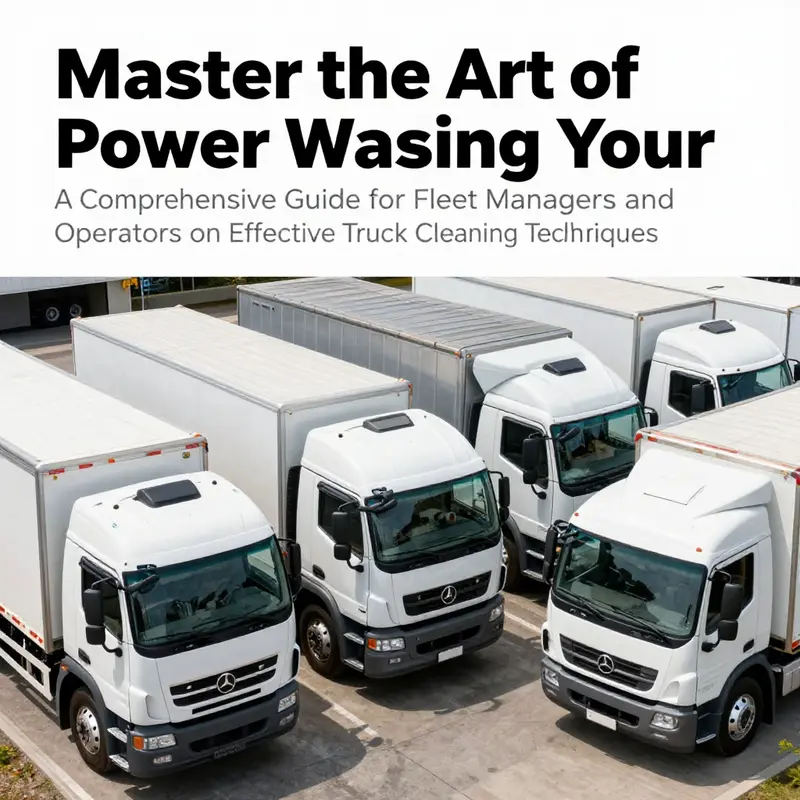
Maintaining fleet vehicles is paramount for logistics and construction companies, not only for aesthetics but also for prolonging the truck’s lifespan and ensuring compliance with industry standards. Power washing is a crucial part of vehicle maintenance, providing an efficient method to remove costlier dirt and contaminants that degrade vehicle performance. This guide delves into the essentials of power washing a truck, focusing on preparation, pre-rinsing, selective cleaning, scrubbing techniques, and finalizing steps, offering a clear path for fleet managers, trucking company owners, and construction supervisors to enhance their fleet maintenance practices.
Prep That Protects: Laying the Groundwork for a Safe, Effective Truck Power Wash

Laying the groundwork for a power wash isn’t a cosmetic step; it is the shield that keeps paint vibrant, hardware intact, and the environment protected. Preparation shapes every hundred-dollar decision you’ll make during the wash, from choosing the right nozzle to shielding sensors. When you start with the right mindset and routines, the actual cleaning becomes smoother, faster, and far less risky. This chapter explores how to set the stage properly, so the truck endures the wash and you maintain control from the first spray to the final wipe.
Begin with the right spot. A flat, well-drained area is essential, not just for the truck’s stability but for controlling runoff. Parking on a level surface prevents a shift that could bring a high-pressure stream toward doors or vulnerable trim. It also reduces the chance of water pooling around tires and suspension components, which can mask dirt and create slippery hazards as you work. Choose a location with good drainage and minimal environmental impact—avoid storm drains or areas where runoff could flow into stormwater systems. In other words, select a spot that keeps dirt contained and the environment safer, while giving you comfortable access to every angle of the vehicle.
Power off and set the stage for safety. Turn the engine off completely and engage the parking brake before you touch a nozzle. This serves a simple purpose but one that pays out in safety: you reduce the risk of vehicle movement while you’re handling hoses, cleaners, and bulky brushes. Clear the bed, cab, and trailer of loose debris that could be tossed around by the spray or dislodged by a passing gust. Loose packaging, stray tools, or stray cargo can become projectiles when hit by pressure. A quick emptying of the cargo area is a small precaution with a large payoff.
Inspect and prepare the equipment. The pressure washer is the heart of the method, so give it a careful check. Inspect the pump, hoses, and spray gun for signs of wear, leaks, or cracking. Confirm the nozzle is appropriate for the task—general cleaning often benefits from a wide-angle setting such as 25° or 40°, which provide enough surface coverage without concentrating force into a narrow line. Adjust water pressure to balance effectiveness with gentleness on chrome, plastic trim, and seals. As you set up, wear protective gear—safety goggles, gloves, and non-slip footwear—not as a formality but as a practical safeguard against flying debris, chemical splashes, or slips on a damp surface. A moment spent in proper PPE is a margin of error you won’t regret.
Choose cleaners with care. A truck-specific, pH-neutral or mildly alkaline detergent is typically the right choice for painted surfaces. Household dish soap, while tempting for its availability, often strips wax, dulls shine, and can leave a residue that invites streaks and water spots. For oil and grease in stubborn areas, a dedicated degreaser or industrial cleaner designed for automotive use is more effective while preserving protective wax layers. Read the manufacturer’s instructions on dilution and dwell time; these guidelines help you avoid over-wetting or under-wetting surfaces. Avoid applying cleaners directly to highly sensitive components unless you know the product won’t affect plastics, gaskets, or electrical seals. If you’re uncertain, test a small, inconspicuous area first and comply with product safety notes.
Shield the sensitive parts. Engine bays, air intake ducts, electrical connectors, and exposed sensors demand careful treatment. A simple, practical approach is to cover these areas with plastic bags or tape them off before washing, especially if you’re planning to clean the undercarriage or engine bay later in the process. This shielding isn’t a guarantee against all moisture, but it dramatically reduces the risk of water infiltration, corrosion, or short circuits. As you shield, remember that heat can change the behavior of cleaners; keep the engine bay cool and avoid closing off random vents that could trap moisture in tight spaces. If you’re using a degreaser near the engine, apply it with a damp cloth rather than direct spray to minimize risk while letting the product break down grime gradually.
Secure water supply and drainage. A reliable water source keeps the flow steady and the pressure consistent. If you’re connected to a municipal supply, confirm that the feed line remains uninterrupted as you work around corners and wheels. Drainage should be considered from the start; ensure there is a plan for wastewater management. Wastewater from cleaning products, dirt, and road grime should be directed away from storm drains and comply with local environmental rules. In a commercial setting, you may have wash bays with controlled drainage and filtration. If you’re washing at home, consider a portable containment approach to keep runoff out of soil and gardens. The clean water you use is the same that protects your hardware and paint, so a steady supply matters as much as the right detergent.
Protect the undercarriage and hard-to-reach areas with intention. The undercarriage, wheel wells, and fender arches accumulate the most abrasive dirt from road grime, brake dust, and caked mud. Plan a targeted approach: a low-angled spray from a respectful distance can loosen heavy soils before you lift them away with a softer brush. This is where the earlier choice of nozzle and dwell time pays off. If you anticipate tar or tough residues, a brief pre-wash dwell on those spots can help loosen stubborn deposits without requiring aggressive scrubbing. When you do scrub, use a soft brush or sponge that won’t scratch paint or trim. The goal isn’t to scour like a metal brush but to lift and release, so you can rinse away in a controlled, flowing motion.
Integrate practical safeguards into the workflow. A well-planned sequence matters. Start with the high, clean surfaces—roof and hood—then move to sides, and finally reach the lower panels and undercarriage. Keeping the nozzle moving prevents etching or water spots and reduces the risk of damp areas that invite mildew. If you encounter stubborn contaminants, switch to a targeted approach—use a mild brush in combination with a dedicated cleaner on problem zones rather than blasting away at full pressure. Remember that over-pressurizing can damage trim, seals, or sensors, especially when the nozzle is too close. A general rule is to maintain space, typically 12 to 18 inches from the surface, and keep the spray moving to avoid concentrating force on one spot.
Let knowledge guide the process, not force. If you’re unsure how a cleaner interacts with a particular paint finish or trim, consult reputable guidance before proceeding. When stubborn grime remains, you can explore proven strategies for cleaning grease and tar off your trucks fast. This approach helps you address challenging areas without resorting to harsher methods that could compromise finishes. The aim is a clean, even surface that dries promptly with minimal spotting, not a rushed job that creates new problems.
With the preparation complete, you’re ready to transition into the pre-rinse phase, a critical step that removes loose dirt and reduces the risk of scratching during scrubbing. The better you prepare, the less you’ll rely on brute force during the wash, and the longer your truck’s finish will look showroom-ready. If you ever need deeper, industry-standard guidance on maintenance and preparation, fields like heavy-duty vehicle upkeep offer extensive resources that align with best practices for protecting complex systems during washes. For additional context and deeper exploration of these principles, see the Hunters’ Guide to Heavy-Duty Vehicle Maintenance external reference.
External reference: https://www.hunterstech.com/truck-maintenance-guide/
Wet Foundations: The Quiet Power of a Thoughtful Pre-Rinse in Truck Washing

The first move in power washing a truck is often the least glamorous, yet it is arguably the most decisive. A proper pre-rinse does more than wet the surface; it sets the stage for every minute that follows. Think of it as the calm before the cleaning storm, a step that dissolves the boundary between stubborn grime and the sheen you want to reveal. When you approach the truck with a plan to wash, the pre-rinse becomes your most economical tool for protecting the finish, preserving hardware, and saving time in the long run. It works like a gentle driveway sweeper that loosens what would otherwise be forced into place by a stronger spray and a scrubbing pad. The result is not only a cleaner truck but a less aggressive process that reduces the risk of micro-scratches and swirl marks that can dull a once-bright coat.
The kinds of contaminants you’ll encounter on a heavy-duty vehicle are often a mosaic of grit, dust, dried mud, road film, insect residue, and a stubborn layer of brake dust from the wheels. Each of these has different sticking power. Loose dirt can be shed with even a modest rinse, but the real challenge lies in the fine particles that cling to surfaces and migrate into crevices. A vigorous, unfiltered blast risks grinding those particles across the paint as you scrub. A well-executed pre-rinse, in contrast, reduces the chance of dragging abrasive material along the surface. It keeps the paint in a kinder, slower state, allowing later cleaners to work more effectively and without forcing the stubborn residue into sensitive areas like seals and trim.
Technique matters as much as timing. Start with a broad, forgiving spray pattern that covers the entire body from top to bottom. Move the nozzle steadily, never pausing too long in one spot, and maintain a safe distance. The goal is not to strip dirt away in a single pass but to gently loosen it so that the subsequent cleaning steps can finish the job. This gentle approach also helps you identify problem areas early. If tar or grease has baked onto a panel, a pre-rinse will reveal its extent without the risk of pushing it deeper into the paint during scrubbing. In off-road or heavily used fleets, the pre-rinse is particularly valuable because these vehicles accumulate a mix of road grime and organic residues that cling more tenaciously than ordinary dust.
From a practical standpoint, the pre-rinse should be performed with a low-to-medium pressure setting. This is not the moment to unleash peak power; it is the moment to preserve the integrity of the surface while liberating debris. A key part of this approach is to keep the nozzle in motion and to avoid lingering directly over any one spot. The water’s force should be enough to wet and loosen, not enough to force stubborn matter into tiny gaps. In an ideal workflow, you would begin at the highest, sun-safe portion of the truck—usually the roof or cab—then work your way down to the lower panels, always maintaining coverage that prevents dry patches. Keeping the surface thoroughly wetted helps ensure the subsequent cleaner can do its job without drying too quickly, which would otherwise create micro-drying lines or water spots.
To maximize consistency in professional or fleet settings, many operators incorporate a pre-rinse station or unit. A deck-mounted pre-rinse option or a simple add-on faucet can produce a consistent, controlled spray that is tailored for this critical phase. These systems enable operators to deliver the same gentle rinse irrespective of how dirty a given truck is, which is especially valuable when turnover is high and speed matters. The predictability of a pre-rinse system aligns with the broader goal of standardization across a fleet: to minimize variance in cleaning outcomes while protecting finishes and components. When you couple this stable starting point with a measured application of cleaner later on, you form a process that is both efficient and respectful of the vehicle’s bodywork. For those who want to deepen their understanding of how to handle heavy contaminants efficiently, there are renowned guidance resources that discuss the broader strategies for removing stubborn grime with minimal risk to the substrate. In particular, the notion of pre-rinse as the foundation of mobile cleaning is highlighted as essential to achieving optimal results on a fleet scale. This perspective reflects a broader consensus in professional mobile wash operations: starting with a thorough pre-rinse dramatically improves overall cleaning outcomes and reduces wear on the vehicle’s surface.
An important practical note concerns the timing and environment of the pre-rinse. The best results tend to come when you wash in shade or during cooler parts of the day. Direct sun and high temperatures accelerate the drying of cleaning solutions, which can leave spots or cause an uneven appearance after the rest of the wash is complete. By pre-wetting in shade, you allow the initial moisture to soften and loosen grime evenly, creating a smoother transition into the cleaning phase. This is not merely about comfort; it’s about maintaining consistency in how the dirt releases from the paint and trim. It also helps protect sensitive areas that can be more vulnerable to heat-induced damage if exposed to fast-drying liquids.
The pre-rinse carries implications for sections you may later treat more aggressively. The engine bay, for instance, is a zone where caution rules the day. Even during a pre-rinse, you should avoid high-pressure jets near sensors or electrics, and you should respect any components that could trap water. The broader principle is to use water to prep, not to push grime into places that are harder to reach with cleaner and brushes. By loosening and removing surface debris first, you reduce the risk that those materials will be forced into gaps around door seals, trim, and gasket lines when you begin scrubbing and applying cleaners later in the process.
In the same spirit of careful preparation, consider cross-referencing a broader set of cleaning strategies for particularly challenging residues. For instance, when heavy grease or tar is present, pre-rinse lays the groundwork for more effective treatment without resorting to excessive scrubbing pressure, which could compromise the finish. You can further explore approaches that address such contaminants with proven effectiveness by consulting resources focused on grease and tar removal. Proven strategies for cleaning grease and tar off your trucks fast. This connection emphasizes that the pre-rinse is not just a preparatory step but a doorway to smarter, safer, and faster cleaning outcomes that keep fleets on the road with minimal downtime.
Beyond the mechanical benefits, the pre-rinse also has hygiene implications. A thorough initial soak helps prevent the buildup of residues that can harbor odors or degrade coatings over time. When you rinse away the largest chunks of dirt first, you reduce the amount of cleaning solution and time needed for the rest of the wash. This means fewer chemical exposures for operators and less chance of streaking or spotting as you move into washing the body and wheels. In this sense, the pre-rinse is both a protective measure for the vehicle’s finish and a safeguard for the crew performing the wash.
Finally, never underestimate the simple but important discipline of timing your pre-rinse with respect for the overall wash sequence. Skipping this step or rushing it can undermine the entire process. Without a thoughtful pre-rinse, high-pressure cleaning can drive embedded particles into paint or seal lines, inviting micro-scratches and long-term finish wear. By giving dirt a light, initial dismissal, you enable the cleaner to do its best work, with less effort and less risk. This is the core idea behind a well-structured wash: every phase reinforces the next, and the pre-rinse is the quiet, powerful prologue that makes the rest of the chapter—the actual cleaning—clear, efficient, and safe.
For readers seeking broader safety and technique guidance, further reading on pressure-washer methods can be helpful. See an external resource dedicated to safe washing practices to reinforce these ideas and to provide additional context for the broader steps that follow the pre-rinse stage: https://www.safewash.com/guides/how-to-wash-car-with-pressure-washer. By aligning practical instructions with established safety guidelines, you ensure that every truck wash respects the finish, the equipment, and the people involved in the process.
In sum, the pre-rinse is the unsung cornerstone of a successful power wash. It is where preparation meets protection, where dirt begins its loosening retreat, and where the rest of the wash becomes more predictable, efficient, and safe. Treat the pre-rinse with intention, and you’ll find that the subsequent steps—cleaner surfaces, fewer reworks, and a finish that lasts longer—fall naturally into place. The pre-rinse is not an afterthought; it is the foundation on which a flawless, efficient, and safe truck wash is built.
Selective Cleaner Application: Precision in Power Washing a Truck

Applying cleaner selectively is more than a step in a workflow; it is a disciplined approach that protects delicate finishes while lifting stubborn grime from the toughest trouble spots. When you power wash a truck, the goal is to move cleaning power precisely where it is needed without saturating sensitive areas or wasting effort on areas that do not require it. This precision begins with the pre-rinse, but its true value emerges in how you identify targets, choose appropriate cleaners, and apply them with control. The result is a cleaner, safer process that preserves the truck’s appearance and its components over time.\n\nAfter you’ve begun with a thorough pre-rinse to remove loose dirt, you should look for zones that consistently accumulate the most grime. Wheels and tires are obvious culprits, resisting even the strongest sprays with road film, brake dust, and grease baked into crevices. The undercarriage is another high-priority zone; mud, road salt, and moisture can cling to every nook and edge, inviting corrosion or staining if left unattended. The engine bay and chassis also demand careful attention; oil and grease smears can spread when solvent and spray contact those areas, so targeting them requires thoughtful selection of cleaners and application methods. By mapping these zones before you apply any cleaner, you create a plan that reduces over-wetting of sensitive surfaces and minimizes accidental damage from aggressive scrubbing near seals or wiring.\n\nChoosing the right cleaners is the next mark of precision. For the body panels, use a truck-specific, pH-neutral wash soap. Dilute it exactly as the manufacturer instructs, and keep the concentrate away from chrome finishes and soft plastics where residues can cause streaks. For wheels and tires, employ a dedicated wheel- and tire-cleaner designed to cut through tough grime without degrading rubber or painted rims. This kind of cleaner often works best when allowed to dwell briefly in the most polluted wheel wells, spokes, and lug areas, but it should never be permitted to dry on hot metal or in direct sunlight. When it comes to the engine bay and undercarriage, reserve a heavy-duty degreaser for those stubborn oil and grease deposits. The degreaser can loosen crusted grime, but you must apply it with care, avoiding sensors, wiring, and exposed electronics. The key is to use the right tool for the right job, then let the chemistry do the heavy lifting without forcing it to interact with parts that were not designed to withstand solvent exposure.\n\nWith cleaners chosen, the application must be deliberate and measured. Begin by applying cleaners from top to bottom, even when targeting specific zones. This approach helps keep run-off from staining sections you have already cleaned and prevents contaminated spray from dripping onto freshly treated areas. Use a soft brush or sponge for the body panels, concentrating your effort on door jambs, mirrors, and trim where dirt accumulates most. When you reach the wheels and tires, switch to the wheel-and-tire cleaner and allow it to work in the deeper crevices for a short dwell time. The emphasis remains on controlled coverage rather than wide, indiscriminate spraying. Avoid saturating the engine bay with high-pressure spray; instead, apply a light mist or damp cloth with a specialized degreaser if the bay is particularly greasy, and never direct high-pressure streams at electrical connectors or wiring harnesses.\n\nA crucial part of selective cleaning is monitoring dwell time. Let cleaners sit only long enough to break down the most stubborn spots, usually a minute or two for most products, but never so long that residues begin to dry on the paint or plastics. In direct sun or on very hot surfaces, cleaners dry quickly and can leave streaks or mineral deposits; if your climate is hot, work in shaded areas or during cooler parts of the day. During this phase, you should frequently re-evaluate the zones you’re treating. If a patch has loosened debris, give it another gentle scrub with a soft brush rather than lashing it with more cleaner. The goal is to keep the surface wet enough to lift grime while preserving the original sealant, wax layer, and paint finish you want to protect.\n\nRinsing remains integral even when applying cleaners selectively. Once a zone has received its cleaner, perform a careful rinse before moving to the next. Start from the top and flow downward, allowing rinsed solution to exit behind you rather than dripping onto an area you’ve already treated. For wheels and undercarriage, a slightly longer rinse helps ensure all cleaner residues are washed away from crevices where they could dry and leave residue. After all targeted zones have been addressed, complete a thorough top-to-bottom rinse to remove any lingering solution and to flush away loosened debris that could otherwise recontaminate clean sections as you dry.\n\nDrying is the final breath of control in selective cleaning. Use a clean microfiber towel or a chamois, drying from the top down and ensuring you capture moisture before it can leave water spots or mineral deposits on paint, trim, or glass. If you notice any remaining residue, a light buff with a dry microfiber can help, but avoid forcing moisture into gaps around doors or weather stripping. A touch of protection after drying—such as a wax or sealant—can seal in the cleanliness and make future selective cleanings easier by reducing the cling of road film sitting on the paint surface after a hard day of driving.\n\nThis targeted method has a practical value beyond mere aesthetics. It helps protect sensitive parts of the truck by reducing the chance of water pressure infiltrating sensors, alternators, or delicate wiring. It also keeps rubber seals supple and prevents cleaner oversaturation that can degrade plastic trim over time. The beauty of selective cleaning is that it respects the truck’s architecture—the fast-moving components and the static surfaces alike—without turning a routine wash into a risk-filled operation. For ongoing professional development around the broader discipline of truck care, you can explore a resource focused on training commitments within a major truck-centre network, which emphasizes standard practices and continuous improvement in maintenance workflows. Kenworth Truck Centres Training Commitment.\n\nIn practice, the selective approach also helps you optimize time and resource use. You don’t over-wet every panel, you don’t apply high-pressure streams to sensitive spots, and you don’t waste cleaner on areas that come clean with water alone. The more you train your eye to spot the zones that benefit most from treatment, the faster and safer your wash becomes. This is especially valuable when you maintain fleets where consistency matters as much as cleanliness. A well-executed selective cleaning strategy translates into less post-wash touch-up, cleaner wheel wells for longer, and a reduced risk of staining from road film sitting on the paint surface after a hard day of driving.\n\nAs you integrate these practices into routine maintenance, remember that every truck has its quirks. Some finishes tolerate more aggressive cleaners, while others are sensitive to certain plastic trims or chrome accents. Observe how your truck responds after a test spot and adjust dwell times, coverage, and rinse patterns accordingly. If you are new to power washing or working on a vehicle with extended coatings, err on the side of gentleness and gradual progression. The goal is to preserve the finish while achieving a cleaner, more professional look that lasts. In time, selective cleaning becomes almost instinctive—a rhythm of identifying hot spots, applying the right cleaner with the right intensity, and completing the process with a thorough rinse and careful drying.\n\nExternal resource for a broader perspective on washing practices can be found at Car and Driver’s guide, which complements the hands-on advice in this chapter and offers additional context on effective technique and safety considerations: https://www.caranddriver.com/features/a48372561/how-to-wash-a-truck/.
Scrubbing with Precision: Hand-Driven Techniques for Truck Power Washing
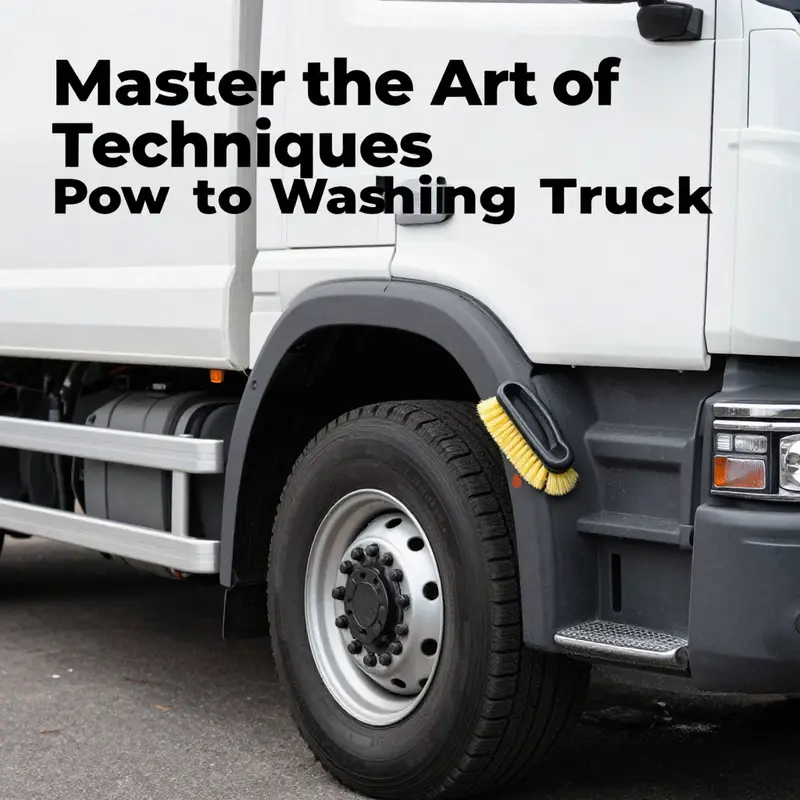
Scrubbing is the tactile heart of power washing a truck. It is where clean becomes something you can feel as you glide a brush across a shield of paint, where careful contact replaces reckless scrubbing, and where the ordinary wash becomes a vehicle-preserving routine. The goal is not just to remove dirt but to loosen grime without dulling color or compromising seals. A disciplined scrubbing approach blends the right tools with technique, and it rewards the operator with a finish that looks catalog-new and endures longer under sun, road salts, and the daily grind of highway travel. The emphasis in this chapter is on the motions, angles, and rhythms that lift grime from rugged surfaces while staying respectful of delicate edges, rubber seals, and trim. It is a hands-on, integrated process that grows out of clear steps rather than guesswork, and it connects seamlessly to the broader care regimen that keeps a truck reliable and visually sharp.
A rotating nozzle assembly stands at the core of efficient scrubbing in modern truck washing. When used with restraint, its 360 deg water distribution can reach wheel wells, undercarriages, and crevices where mud and brake dust stubbornly lodge. This is not a magic wand but a precise tool that requires deliberate distance and controlled motion. Maintaining a safe distance—typically 12 to 18 inches from the surface—and keeping the nozzle in constant motion helps prevent pinching, marring, or forcing water into seals. The rotating action helps break away caked residue in places universal brushes struggle to reach, yet it should never replace the human touch in the dirtiest nooks. In practice, the nozzle works best as a first line of attack that softens grime, while the scrubbing hand finishes the job with gentler, more deliberate strokes.
Equally important is choosing the right mechanical companion for the scrub phase. In facilities that deal with large fleets or long-haul work, mobile power jet washes or similar systems are common. They blend pressure with a rotating or fixed scrubbing head to provide mechanical agitation that loosens embedded dirt. The value of this combination lies in reducing manual effort while delivering consistent results across a full-sized vehicle. The operator can focus on high-contact zones—the door jambs, lower panels, and the edges of mirrors—where dirt tends to accumulate and where a rough surface can invite micro-scratches if not treated with care. The technique is to coordinate the jet’s sweep with a soft brush, letting the water’s force lift grime while the brush’s texture lifts it away from paint without dragging abrasive particles across the finish.
Pre-rinsing remains the critical first step, a practice often underestimated in its importance. A thorough pre-rinse removes loose dirt and debris before any cleaner touches the surface. Starting at the top and moving downward helps gravity carry contaminants away from the clean zones rather than toward them. Special attention should be paid to the undercarriage, wheel wells, and fenders—areas prone to thick mud and brake dust. Pre-rinsing forms a protective shield of cleaner time, reducing the likelihood that abrasive grit will skitter across the paint during scrubbing. It also minimizes the risk of creating micro-scratches as you move from panel to panel.
The choice of cleaner is a pivotal detail in the scrub stage. A pH-neutral, truck-safe solution serves best, applied evenly with a foam cannon or spray wand from top to bottom. Avoid household detergents, which can strip wax and dull clear coats. Stubborn stains—tar, tree sap, or road film—benefit from a brief dwell time, typically three to five minutes. The cleaner should never dry on the surface, so a damp, controlled dwell is preferred. In this context, the scrubbing action then becomes the partner to chemistry: the cleaner loosens, and the brush or soft sponge dislodges. It is also important to shield sensitive components like the engine bay or exposed electrical connections. A dedicated engine-degreaser approach should be reserved for those areas that require it, following strict safety cautions and not relying on high pressure near sensors or wiring.
Scrubbing the body and wheels demands a combination of gentleness and persistence. With the body, use a soft brush or sponge applicator, focusing on door handles, mirrors, and door seams where grime tends to nest. Circular or light back-and-forth motions help lift dirt without grinding it into the paint. For wheels and tires, a dedicated wheel cleaner is advisable, followed by a thorough rinse to wash away dirty runoff that can recontaminate the body if left to dry. A stiff-bristled brush can penetrate wheel spokes and crevices, but care should be taken to avoid aggressive scrubbing on delicate rims or plastified trim. Rinse thoroughly to remove all cleaner residues, then proceed to the next section of the wash sequence. The aim is a clean surface free of visible cleaner residue and a smooth finish that reflects light evenly.
Angle, rhythm, and coverage are the triad that governs the scrubbing sequence. A typical, effective approach uses a medium pressure and a motion that mimics the shape of the panel being cleaned. Swaths should be broad enough to avoid concentrating force in one spot, yet narrow enough to keep the control you need to avoid edges, corners, and trim where paint often meets rubber. The 45-degree angle is a practical standard for the spray when the goal is to strike grime without loading water against seals or caulk lines. This angle helps keep the water oriented to lift away rather than push dirt into gaps. The brush or sponge should be kept nearly perpendicular to the surface in high-risk zones while relaxing into a more oblique angle on flatter panels to maximize contact without applying unnecessary pressure. This disciplined, angle-aware approach reduces the chance of marring and keeps the scrub predictable across the truck’s variable geometry.
In settings that require repeated cleans across many vehicles, the scrubbing phase often benefits from mechanical augmentation. A brush head with rotating motion or a light scrubbing element can partner with hand scrubbing to loosen stubborn matter before a final pass with a soft cloth. The synergy comes from the brush doing the heavy lifting on the most tenacious grime while hands guide the brush, monitor pressure, and ensure sensitive areas stay protected. This collaboration should always respect the paint’s tolerance and the wheel wells’ depth, where a misstep can push grime into crevices and invite scratches.
As the wash advances toward its final stages, the final rinse and drying become the quiet, decisive moments that preserve the work you have done. A thorough final rinse from top to bottom removes all cleaning agents, preventing residue from seeping into rubber seals or trimming. Immediately drying with clean microfiber towels or a chamois prevents water spots and mineral deposits that can dull the finish. The drying step is not a mere afterthought; it seals the surface briefly, mitigates streaking, and leaves a receptive canvas for protection products such as wax or sealant. The goal is a uniform, gleaming surface with no visible streaks or watermarks a sign that the scrub was performed with respect for the vehicle and attention to detail.
Special considerations must frame the more technical or sensitive areas. The engine bay deserves a cautious approach: cool engine, damp cloth or low-pressure spray, and avoidance of high-pressure contact near sensors, alternators, or wiring harnesses. The interior, though not part of power washing, deserves its own careful maintenance plan—vacuuming, targeted cleaners for dashboards and seats, and separate attention to carpets and mats. Finally, the overarching rule of safe power washing remains: if it can pinch, kink, or force moisture where moisture should not be, back off and adjust the distance, angle, or pressure. The result should be a clean, protected surface that resists water spots and still looks remarkably fresh after every wash.
The scrubbing techniques described here are not abstract ideas but an integrated practice. They flow from pre-rinse to cleaning solution, from careful agitation to disciplined rinsing, to immediate drying and optional protection. In fleets and facilities where volume matters, a measured, repeatable scrubbing rhythm translates into reliable results and fewer touch-ups. This is where the craft of scrubbing becomes a reliability strategy, saving time, extending paint life, and supporting a professional, presentable fleet. For stubborn grime or tricky job sites, the extra knowledge can be paired with proven strategies that augment manual scrubbing. The end result is a clean, protected truck fleet ready for the next leg of its journey.
null

null
Final thoughts
Effective power washing is an essential component of vehicle maintenance for trucking and logistics operations. By following the structured approach outlined in this guide—from meticulous preparation to careful execution of the washing process—fleet managers and operators can ensure their vehicles remain in optimal condition, enhancing their operational efficiency and longevity. Consistently adhering to these best practices not only preserves the appearance of the fleet but also helps prevent the long-term damage that can be caused by accumulated grime and dirt.