
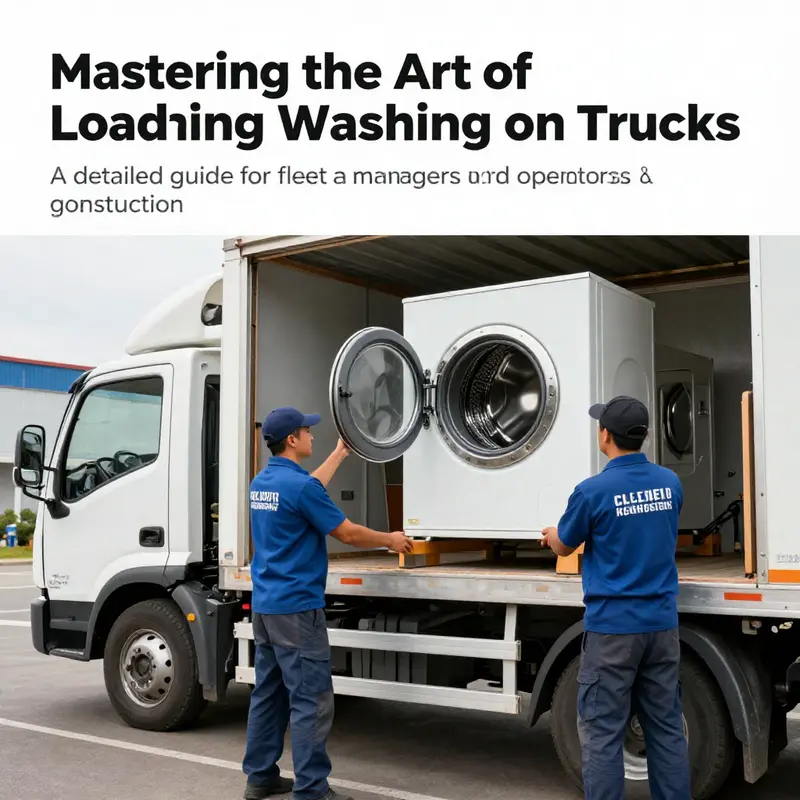
Loading a washing machine onto a truck requires meticulous planning and safe practices to prevent damage and ensure smooth transportation. This guide outlines essential preparation steps, lifting techniques, loading practices, and final checks that are crucial for fleet managers and operators involved in logistics and transportation. Each chapter provides practical insights that, when integrated, will enhance your operational efficiency and safeguard your equipment during transit.
Groundwork for Safe Transport: Meticulous Preparation to Load a Washer on a Truck
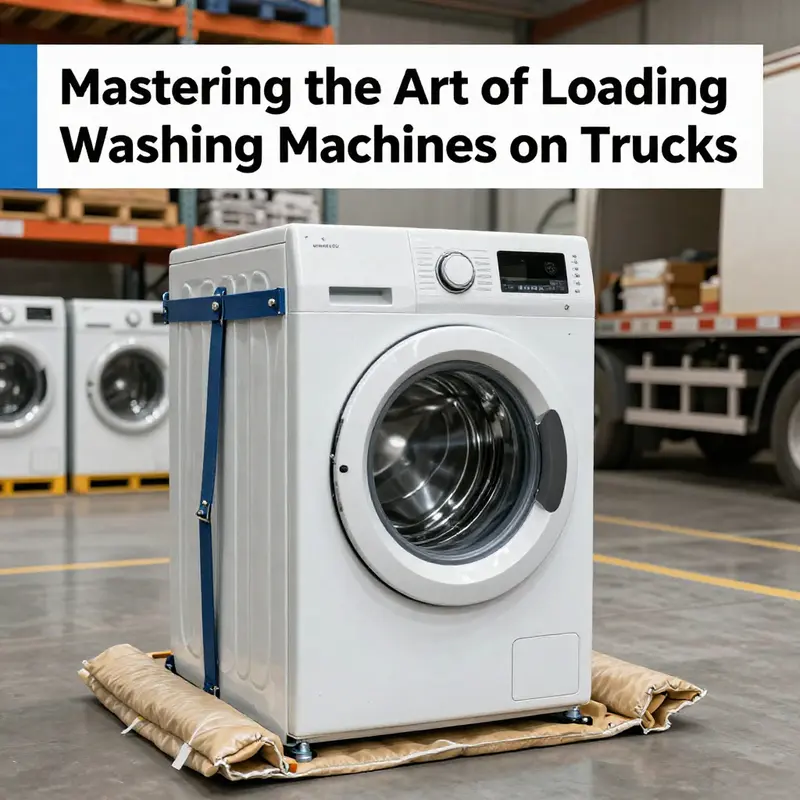
When you prepare to move a washing machine onto a truck, the safest path begins long before the first contact with a ramp. Preparation isn’t a single action but a sequence of deliberate choices that guard against damage to the machine and injury to the people involved. A well-planned start sets the tone for the entire operation, easing later handling, reducing the risk of costly repairs, and keeping everyone on the crew out of harm’s way. The goal is to create a stable, protected environment inside the truck and to establish a controlled flow from room to road. It is a process that rewards patience and disciplined execution, not improvisation.
First, the dimensions dictate the entire plan. Take precise measurements of the washer—length, width, and height—and precisely compare them with the available space in the truck bed or cargo area. If the machine’s height exceeds the bed opening, you may need to slide it in through a rear doorway rather than the side. If the tailgate is bulky or the ceiling clearance is tight, every fraction of an inch matters. A misjudgment here can mean forcing the appliance, risking scratches to the paint, dents to panels, or a compromised balance once the truck is in motion. In the end, ensuring a near-perfect fit is as much about space planning as it is about physical handling.
With fit established, attention shifts to securing the machine so the journey remains uneventful. For front-loading or top-loading drum washers, reinstalling or tightening the transit bolts is a recommended precaution. These bolts anchor the drum and internal components, preventing the heavy mass from shifting during movement. They are the structural guardrails that keep the drum from contacting the housing or other components in a way that could produce misalignment, stress the seals, or crack the drum. If the transit bolts are missing or inaccessible, the next best line of defense is a careful layer of protective material—think sturdy cardboard, foam padding, and moving blankets—that cushions the appliance from the walls of the truck and from each other.
Protection is the first practical step in the packaging phase. Wrap the washer with moving blankets or foam sheets and, where appropriate, bubble wrap. The aim is not to conceal beauty but to prevent scratches, scuffs, and minor impacts that accumulate into visible damage after a few miles of road conditions. Put simply, padding buys time and preserves the finish. The wrapping should be snug but not constricting; you don’t want to compress delicate components or impede the machine’s air vents. An upright position is preferred during transport because it preserves the internal balance and reduces the risk of shifted weights that could jeopardize the drum’s alignment. Laying a washer on its side or, worse, upside down for extended periods can unsettle internal balance weights or seals and invites damage that isn’t immediately visible but shows up soon after arrival.
Positioning within the truck requires careful assessment of the floor and boundaries. If space allows, transporting the washer in an upright stance is advisable, but you may need to adjust based on the truck’s layout and the position of other cargo. A ramp or a dolly with robust wheels can transform a strenuous lift into a controlled roll, reducing strain on the back and shoulders and providing a predictable, steady motion onto the bed. When a dolly is used, the machine’s weight is distributed more evenly, and small misalignments become manageable rather than catastrophic, especially when you are navigating a tailgate ramp. If you don’t have a ramp, a straight, short incline with a helper can be a workable alternative, but never attempt to lift the appliance over a curb or into a truck without mechanical aid and a second person’s assistance.
Once the washer is inside the cargo area, securing it to the truck becomes the next essential step. The anchor points in modern trucks are designed to handle heavy, slippery loads, but straps must be used with judgment. Use heavy-duty ratchet straps or cargo nets to immobilize the washer, ensuring the straps cross or loop across multiple sides of the unit. The aim is to eliminate any wiggle room while avoiding over-tightening that could deform the exterior shell or compress vulnerable components. Padding should also line the contact points of straps to prevent edge damage. A common practice is to place protective edge guards where the strap would press against sharp edges, especially around corners where the unit’s hard plastics and metal exteriors meet. The distribution of the load matters as much as the straps’ tension. Do not cluster straps in a single location; spread them to hold the machine firmly in the middle of the bed and away from walls that could cause friction or chafing during transit.
The step from securing to stabilizing is where a disciplined mind and teamwork prove their worth. A washer, particularly a larger front-loader, can be awkward to secure without two people. The person at the opposite end of the device can anticipate shifts as the other person tightens straps, ensuring that no sudden jerks dislodge the unit from its perch. Communication is crucial. A clear plan of action, with agreed cues for when to tighten, loosen, or reposition, minimizes the risk of injuries and damage to the appliance. In practice, securement should feel deliberate and methodical, not rushed, with frequent checks as the truck begins to move. It’s not unusual to recheck strap tensions after the first mile, as road irregularities can influence how a heavy appliance behaves, particularly if you’ve loaded other items nearby that could shift against it.
The concept of proper load security is not just about avoiding a single incident; it’s about aligning with universal safety standards that apply to all heavy, boxy appliances. The practice is often reinforced by guidelines for securing multiple units in bulk shipments. In such contexts, three or four points of restraint around the washer, along with cross-bracing, can provide a stable, vibration-free ride. The use of ratchet tie-downs, widely available and designed to withstand the rigors of transport, is standard; it’s important to avoid any strap that binds directly to rough surfaces that could abrade the appliance’s finish. The goal is to leave no loose parts and no exposed edges. If the washer will be moved frequently, or if the trip includes long hauls through rough terrain, a more robust tying system may be warranted, with consideration for additional anchor points along the truck bed.
Safety also extends to visibility and compliance. Ensure that the load does not block the driver’s view, interfere with the controls of the vehicle, or violate height limits. Weather is another factor. A waterproof tarp or a lightweight cover should be used to shield the washer from rain, snow, or splashing spray if the truck is required to drive through adverse weather. Weather protection is not simply a courtesy; it protects the equipment’s exterior, moisture-sensitive components, and seals from deterioration that might arise from exposure during transit. Even if rain is not anticipated, keeping the washer dry is a prudent precaution because moisture can dampen cardboard packaging, reduce padding effectiveness, and complicate securement if it soaks into the straps or floor lining.
Incorporating guidance from broader professional practices can further enhance safety. For fleets and individuals seeking a broader framework, it helps to reference industry-wide compliance and safety resources that summarize best practices for securing appliances during transport. A practical, widely used reference is a resource that highlights compliance and emissions considerations for truck-wash operations. It is helpful to review such materials as part of a broader risk-management approach and to align with the conventions of teams that routinely move heavy, sensitive goods. For further reading, you can explore the resource titled truck-wash-industry-compliance-emissions-regulations, which provides a concise overview of how securement tactics fit into a larger safety program. The link is embedded here for convenience: truck-wash-industry-compliance-emissions-regulations. This reference grounds the physical steps in a legitimate safety framework and can guide future improvements to loading procedures while maintaining due regard for the welfare of all personnel involved.
The whole sequence—from measuring the space to pulling the last strap tight—should feel like a careful choreography rather than a rush through a checklist. A successful load relies on deliberate actions, clear roles, and constant vigilance. It also requires the humility to pause when something doesn’t look right. If the washer does not sit squarely on the bed, or if any strap exhibits fraying or excessive movement, stop and re-evaluate. A moment spent adjusting the plan is often far more valuable than a hurried move that ends in damage or injury. The aim is not to prove speed but to prove reliability: a reliably protected appliance, firmly secured, that reaches its destination intact and ready for installation or use.
This approach to preparation dovetails with the broader arc of safe material handling in transport. It is not merely about getting the washer into the truck; it is about preserving every component—drum, seals, bearings, and housings—so that the machine will operate as designed once it is unhitched and set up. The prep work also has a direct, practical payoff: fewer call-backs for damaged merchandise, less wear on equipment and personnel, and a smoother workflow for the crew that moves a range of items in the same shift. Everything done before the lift—the measurements, the bolts, the padding, the anchoring, and the weather protection—contributes to a safer, more economical, and more predictable transport operation.
As the team looks ahead to the next phase of the journey, the emphasis on thoughtful preparation remains constant. The same attention you give to one appliance should carry over to others in the same shipment or in future moves. That consistency reduces variability, lowers risk, and supports a culture of careful, professional handling. The chapter of the load ends not with a loud decision to strap tighter but with a quiet, confident confirmation that every aspect of the preparation has been considered, tested, and executed to standard. When the machine is finally secured, upright, padded, and anchored, the road ahead becomes a measured, steady passage rather than a gamble with gravity and motion.
For readers who want to connect this preparation mindset to broader safety principles, consider the general guidance that underpins secure transport. Compliance with safety standards and a disciplined approach to securing appliances are part of a larger system that protects people and property alike. As you move into the next steps of loading and stabilizing, keep in mind that the same care you invest in a single washer translates to the safe movement of many units across a fleet. This is how professional practice evolves from a series of careful actions into a reliable operating standard that can be replicated, audited, and improved over time. In that sense, preparation is not a one-off but a foundation—a steady platform upon which every successful move is built.
External safety reference: https://www.nhtsa.gov/vehicle-safety
From Ground to Bed: Mastering the Safe Lift and Secure Transport of a Washer on a Truck

Moving a washing machine onto a truck is less a test of brute strength and more a test of balance, planning, and restraint. A well-executed lift preserves the machine, protects the handlers, and keeps the load stable through every bump and turn. The core idea is simple: keep the washer vertical, control its weight with proper technique, and lock it in place so it cannot shift during transit. Everything else—padding, straps, and careful positioning—serves that single purpose. The process begins with preparation that acknowledges the machine’s internal stability and its outer protection, then flows into a deliberate sequence of lifting, loading, and securing that reduces risk at every stage. While the specifics vary with household models, the underlying discipline remains constant: steady moves, controlled forces, and a configuration that resists movement when the truck accelerates, decelerates, or negotiates corners.
Preparation matters as much as the lift itself. Front-loading machines, in particular, rely on transit bolts that lock the drum in place for transport. If these fasteners are loose or absent, the drum can shift during movement, potentially bending the suspension, stressing the seals, or even causing leaks. Before any hands touch the unit, verify that those bolts are snug enough to hold the drum steady. If the machine is a top-loader, the stabilization concerns shift, but the principle remains: secure internal components to prevent movement that could twist fragile mounts or misalign sensors during the ride. Alongside the secure-fastener mindset, wrap the washer in protective padding—foam, bubble wrap, or a sturdy cardboard cover—to shield the case from scratches and dents. This outer protection helps when you slide the unit onto a dolly or into a ramp and again when it sits on the truck bed, where vibration and minor impacts are unavoidable. The padding isn’t merely cosmetic; it cushions the edges and provides a buffer between the machine and any securing material that might bite into plastic panels or metal corners.
As the lifting plan comes together, the technique itself becomes the hinge on which success rests. Body mechanics matter most. The loader should bend at the knees, keep the back straight, and stay centered over the feet. The object remains close to the body to reduce leverage that could strain the spine. Twisting while lifting is a recipe for back injury; instead, pivot with the feet to reorient toward the truck or dolly. This principle is especially important when the washer is heavy—most household units fall into a 20–40 kilogram range, and even lighter models gain leverage as they rise away from the floor. When more than one person is available, a two-person lift is strongly recommended. One person supports the bottom base, the other stabilizes the top or sides. Never try to wrestle the unit alone unless it is unusually small. Practically, this means coordinating moves, communicating clearly about when to lift, and maintaining eye contact during the most awkward handoffs. Aware handling also means avoiding the temptation to lift by the door handle, control panel, or any feature not designed to carry weight. Those components can buckle, crack, or detach under pressure, creating hazards and delaying the entire operation.
The load journey from ground to bed calls for moving aids that reflect common sense more than bravado. A dolly with large, robust wheels spreads the load’s weight and reduces friction on the floor. A loading ramp makes the ascent to the truck bed smoother and safer than gripping and sliding the unit up a vertical face. When ramps aren’t available, a sturdy hand truck can still help by providing a secure vertical frame for the machine to rest against during the transfer. Regardless of the device, the goal is to minimize manual lifting by keeping the washer off the ground as soon as possible and rolling it along a guided path. If you must carry the washer at any point, do so with the entire body and not with a single muscle, so that momentum remains controllable and predictable rather than abrupt and dangerous.
Loading the washer into the truck raises a second set of decisions about orientation. The safest and most stable posture is to keep the washer upright. In tight spaces, you may temporarily tilt it on its side to fit, but you should pad between the drum and the surface to prevent deformation or scratches. Laying a washer flat for extended periods is discouraged because internal components—especially heavy balance weights in drum configurations—can shift, stressing suspensions and seals. If you must place the unit on its side to make space, place padding between the drum and the surface and keep movement slow and deliberate. Once the washer reaches the truck bed, slide it onto the surface rather than forcing it up and over the edge. A ramp helps, but a dolly that can roll up the bed and lock in place will dramatically reduce the risk of drops.
Securing the washer on the truck is where the plan becomes a law of physics. Use strong cargo straps or ratchet tie-downs that can anchor to fixed points in the truck bed, such as frame rails or eye bolts. Avoid attaching straps to loose or flimsy components, and never allow straps to press raw edges that could slice through the strap or scratch the finish. Place straps over the top and down the sides of the washer, creating a cradle that resists vertical motion and lateral shifts. The tension should be firm but not so tight that it compresses or distorts panels. If the washer must be laid down temporarily to fit in a tight space, do so only with padding placed between the drum and the surface and ensure the straps still hold the unit securely upright when possible. Filling gaps around the unit with foam blocks or packing material helps minimize vibration and prevents the washer from shifting during acceleration, braking, or cornering. After securing, a gentle shake test—trying to rock the unit by hand—provides a practical check: the washer should not move or tilt under normal truck maneuvers. This test, while simple, often reveals loose straps or uneven weight distribution that might otherwise become a problem on the highway.
For front-loading drum washers, it is especially important to maintain the upright position during transit. Keeping the drum aligned reduces the chance of internal movement that could loosen seals or misalign bearings. The transit bolts discussed earlier are part of this strategy, serving as an extra line of defense against drum movement. If the washer will be relocated again soon, confirm that bolts remain correctly engaged before starting the trip. This ongoing check is part of a responsible approach to moving appliances and reflects a broader discipline of securing cargo in a way that respects the machine’s design and the road’s unpredictability. In the bigger picture of truck operations, these steps echo the standard practices used to secure bulky, fragile equipment: anticipate movement, isolate the item from dangerous contact points, and create a restraint system that balances effectiveness with gentleness toward the equipment.
Beyond the immediate mechanics of lift and strap lies a wider context of safe, efficient transport that connects to everyday routines inside truck operations. The method described here aligns with broader facility practices and process standards that govern how large items are handled, staged, and moved within busy yards and loading zones. For practitioners who manage fleets or coordinate multi-item moves, this approach offers a dependable template that can be scaled up or adjusted for different appliance sizes and truck configurations. It is not merely about one lift; it is about a consistent, repeatable cycle that reduces risk, increases speed, and maintains the integrity of both people and equipment. When these practices become part of a standard operating rhythm, the occasional tight fit on a dense schedule becomes less of a problem and more a routine that can be reliably executed.
To connect this approach to broader operational standards, consider how it mirrors the emphasis on careful handling found in professional facility management for truck operations. The emphasis on upright transport, padding, secure anchoring, and post-load checks echoes the same commitment to protecting assets and people across the supply chain. This mindset, practiced consistently, helps teams minimize damage claims and injuries while keeping deliveries on time. It also supports a culture of preparedness where crews regularly review their lifting plans, confirm bolt security for front-loaders, and verify that all anchor points and straps are in good condition before each move. The idea is simple: a well-planned, well-executed lift reduces the chance of error and widens the path to safer, smoother deployments. For readers seeking a broader perspective on how these practices integrate with other truck-related operations, a detailed overview exists within industry resources that discuss facility management for truck wash businesses and related logistics considerations. Facility Management for Truck Wash Businesses.
In the end, the sequence of preparation, lifting, loading, and securing is a practical choreography. It requires attention to detail, a respect for the machine’s design, and a willingness to slow down when needed to protect both people and property. The result is a securely positioned washer that rides upright, with no loose components or risky shifts. The team, equipped with the right dolly, ramp, and a set of durable straps anchored to solid points, stands ready to face the road. The truck bed becomes a stable cradle, not a stage for improvisation. A little extra padding, a careful tighten on each strap, and a final stability check—these are the quiet but powerful moments that distinguish a routine move from a costly misstep. As the operation wraps, the memory of each careful decision lingers, a reminder that safe transport is a discipline built on solid technique, deliberate planning, and a respect for the machine and the people who handle it.
External reference: For guidance on professional lifting and securing practices, consult the HomeAdvisor resource on moving a washing machine safely at https://www.homeadvisor.com/app/answers/detail/a_id/1538/.
Lock, Pad, Load: Mastering the Safe, Efficient Haul of a Washing Machine on a Truck

Loading a washing machine onto a truck is a task that tests more than strength; it tests discipline, foresight, and a respect for the machine’s delicate internals. When the drum sits on an unstable surface or the straps bite through a corner, the risk isn’t just cosmetic. A misstep can ripple through fragile bearings, seals, and balance weights, turning a routine move into a costly repair or, worse, a dangerous incident on the road. The choreography is simple in idea but demanding in practice: secure the appliance before you move it, protect its surfaces, use proper lifting mechanics, place it in a stable position on the truck, and lock it in place so it cannot rattle, tip, or shift during transit. It is a sequence built from common-sense physics, reinforced by a pocket of transport experience that recognizes washers as bulky, awkward, and surprisingly resilient—yet surprisingly vulnerable when treated as disposable freight rather than held as a valuable asset. The goal is not to rush but to create a predictable, repeatable process that can be taught, practiced, and audited, whether you are moving a single unit across a small lot or choreographing a bulk shipment for a fleet that never slows down.
The preparation begins with the drum and its securement. Front-loading machines rely on transit bolts—the shipping bolts that were removed during installation—to hold the drum rigidly in place. Reinstalling those bolts before a move is not a cosmetic step; it is a protective measure that keeps the internal components from shifting during vibration and jolts. If those bolts are missing, the drum has more latitude to move, which can transfer shock to the drive system, the bearings, and the suspension of the machine itself. If you cannot locate the original bolts, the recommended approach is to use manufacturer-approved temporary fixings or consult the machine’s guidelines. The aim is to maintain an environment inside the cabinet where the drum remains firmly anchored, so that action during transit does not feel like a playground ride to the system. In practice, this means gathering the right tools, passing the bolts through the mounting holes, and snugging them with the appropriate torque. Even a small shift inside the drum can cascade into a disconcerting array of noises, misalignment, and subsequent wear, so this step anchors the entire loading operation in a discipline that respects the machine’s geometry.
With the drum secured, the outside of the unit needs protection. The second act is about safeguarding the washer’s finish and its sensitive edges from impact, scratches, and the occasional knuckle-bump during handling. Wrap the machine in padding—foam, bubble wrap, or a sturdy cardboard shell works well enough—to create a soft shield against the rough surfaces of floors, ramps, and truck beds. Even a light layer of padding around the corners can absorb energy from minor bumps, and the overall presentation is evidence of care that pays off when a unit arrives at its destination undamaged. This protective cocoon also helps to minimize the noises that come with metal-to-metal contact as the unit slides, skids, or settles into its resting place. The wrapping should be thorough but not excessive; you want to preserve ventilated clearance for the cooling system and allow the machine to be moved without overheating the packing material itself.
The lifting phase is where the training becomes tactile wisdom. The body mechanics of moving a heavy appliance demand attention to the spine, legs, and stance. The principle is straightforward: lift with the legs, not the back. Position yourself close to the washer, bend at the hips and knees, and keep the back straight as you engage the legs to raise the load. Avoid pulling on handles with a rounded back or attempting to drag the unit across a slick floor; both actions invite injuries and uncontrolled slips. For most washers, especially larger front-load models, this is a two-person job. Teamwork reduces the strain on any one person and mitigates the risk of a drop, which can happen even with padding and proper technique. When two people lift, they synchronize their steps, counting to maintain an even lift and then stepping toward the truck together. Clear communication remains essential: one person guides the path, the other stabilizes the opposite side, and neither allows the unit to tilt toward the edge of the ramp or the bed.
Once the washer is off the floor, the question becomes how to move it into the truck with the least risk of damage. A ramp or a dolly is not a luxury but a safety essential for controlled movement up an incline or across a threshold. A loading ramp acts as a bridge between the floor and the truck bed, reducing the need for hard lifting and distributing weight more evenly as the unit slides up rather than being heaved. If a dolly is used, ensure the wheels are large, solid, and capable of traversing irregular surfaces without bogging down. Position the unit so it remains stable on its side or upright—careful judgment should govern which orientation yields the best balance for the specific model in question. Laying a washer flat for an extended period is generally ill-advised, as internal components such as balance weights or seals can be compromised if subjected to gravity in a non-neutral fashion for too long. The orientation should be chosen based on how you can keep the appliance from shifting and how you can maintain access to the power cord and hoses once the unit is in place.
When the unit rests in the truck, securing it becomes the final bridge between a successful move and an eventful journey. Heavy-duty cargo straps or ratchet tie-downs are the standard tools to immobilize the washer; they must be anchored to the truck’s fixed points—pre-existing hooks or frame rails designed to hold loads in place. The technique is to place the straps over the top and down the sides of the unit, ensuring the strap ends do not contact sharp edges or corners that could abrade the strap or, worse, carve into the appliance. The straps should then be tightened gradually with a ratchet to a point where the washer cannot move forward, backward, or sideways. This is not a one-and-done task; it requires checking for slack through all axes and re-tightening after the first few minutes of motion, as vibration and temperature changes can loosen fittings that were initially snug. Automotive-grade or industrial-grade tensioners provide reliability and peace of mind, particularly when you are transporting multiple units in a single load. In those instances, you will often see a more elaborate system that includes multiple anchor points and a thoughtful layout that prevents the units from colliding with one another.
The conversation about securing does not stop with straps. Padding is not merely cosmetic; it is an integral part of the stress reduction strategy. Foam sheets, anti-slip mats, or layered cardboard can absorb shocks that arise from road irregularities and engine vibrations. These layers act as buffers that dampen energy transfer to the washer, reducing the chance of dents and preserving the integrity of the exterior panels. The load should be checked again for stability after the truck begins to move, with a quick walk around to verify that nothing has loosened or shifted. Finally, the load balance must be monitored to ensure the vehicle’s weight distribution remains within safe limits. A heavy appliance placed excessively toward one side can alter steering dynamics or suspension loads, particularly on longer hauls or on uneven terrain. If there is more than one unit, careful planning should prevent stacking unsafely and ensure that each washer has its own space, protected by padding and tied down with appropriate clearance between units.
For commercial transport, the approach often scales up. Large trucks moving multiple units rely on more sophisticated restraint systems and a disciplined cargo management routine. Industrial-grade tie-downs, with automatic tensioners and reinforced anchor points, are designed to secure heavy loads under demanding conditions. These systems are engineered to withstand a wide range of temperatures and environments, from frigid early mornings to hot desert afternoons, and to handle the stresses of long-distance, multi-stop journeys. In practice, this means planning for a chain of hold points, testing each strap, and having redundancy in the securing method to ensure a unit remains captive even if one strap loosens unexpectedly. This is the kind of rigor that logistics professionals rely on when moving numerous appliances on a schedule.
As you plan and execute these steps, you may find it helpful to consider broader operational guidance that addresses the day-to-day realities of trucking and warehousing. For a broader operations perspective and facility considerations, see the guide on facility-management-for-truck-wash-businesses. This resource offers practical context on how loading practices fit into the lifecycle of a fleet’s operations, including how facilities, workflows, and equipment choices intersect to support rigorous loading and unloading discipline. It is not a substitute for the tactile skills outlined here, but it helps align individual moves with a larger standard of practice that reinforces safety, efficiency, and asset protection across the board. (https://tripleatruckwash.com/facility-management-for-truck-wash-businesses/)
In the end, the act of loading a washing machine onto a truck is a study in restraint, precision, and respect for the machine’s delicate interior. It requires preparation, protective care, proper lifting technique, thoughtful orientation, and robust securing. The aim is to create a transport experience that is predictable rather than perilous, that preserves the integrity of the appliance, and that keeps every person involved safe and confident in the process. The discipline learned here carries beyond one move: it becomes a standard that can be taught to new team members, documented in checklists, and audited in routine safety meetings. The washer is not simply cargo; it is a valuable asset that reflects the broader commitments of the fleet—the commitment to careful handling, to clear communication, and to a culture of safety that travels with it down every mile of the road.
For those who transport in bulk, the specifics become a matter of dynamics and logistics as much as physical ability. The same care that protects a single unit scales into a cargo plan that acknowledges the cumulative weight, the distance, and the potential for vibration over hours of transit. In those contexts, the use of specialized tie-down systems and methodical load-securing patterns becomes not optional but essential. The guidance provided by industry resources emphasizes the importance of repeatable practices, correct harnessing, and continuous verification—habits that reduce risk and improve reliability. If a mistake occurs, the consequences are rarely contained to a single unit and can ripple through the fleet’s schedule and customer commitments. The prudent operator treats each step as a deliberate investment in safety, a choice that pays dividends in uptime, asset preservation, and, most importantly, human well-being.
External resource: For further guidance on securing heavy loads, see the industrial tie-down guidance offered by leading providers here: https://www.hanmabolt.com
Final Safety and Stability Checks Before Driving Off with a Washer

When the washer is already inside the truck and straps are drawn tight, the last checks decide whether the load will arrive undamaged and without incident. These final steps are practical, sequential, and quick when done with a methodical approach. Think of them as a short pre-departure inspection that focuses on stability, legal compliance, and minimizing risk on the road. Start by standing back and looking at the washer from several angles. A visual sweep will reveal obvious tilts, insecure straps, and parts that may be pressing against the truck sides. If the appliance leans forward, backward, or to either side, make adjustments now. A washer that is slightly off-balance will shift under braking or cornering, which can quickly convert a minor nuisance into significant damage.
Next, confirm the washer’s orientation. For most machines, transport upright is safest. Laying a washer on its side can stress seals and displace balance weights. If space constraints force an alternate position, check the manufacturer’s guidance. If the unit must travel on its side for only a very short distance, cushion it thoroughly and secure it to prevent rolling. However, as a general rule, upright and level is best. If the washer sits on an uneven surface within the truck, use wood blocks, wedges, or dense foam beneath its feet to level it. These simple shims keep the machine from rocking and reduce the chance of sudden movement when you turn or brake.
Transit bolts and internal restraints deserve special attention. Many drum-type washers shipped from factories have transit bolts or shipping brackets that immobilize the drum during transport. Before you depart, verify whether these bolts should remain installed for this move. Some manufacturers instruct that bolts must stay in place for long-distance transport. Others require removal for local moves to prevent damage to mounting points. Consult the owner manual or the label inside the machine. If transit bolts were installed for your move, ensure they are tightened to the specified torque. If they were removed, confirm that any temporary supports are secure and that nothing inside the drum can shift.
Padding must be tidy and stable. Wrapping and cushioning are only effective if they cannot slide or bunch. Check every corner for loose foam, bubble wrap, or moving blankets. Tuck materials into gaps between the washer and truck walls. Use flat pieces of cardboard to distribute strap pressure and to protect cabinet edges from chafing. If you used blankets, consider a final layer of plastic stretch wrap. This keeps padding from shifting and helps resist wind and moisture if you travel in an open-bed truck. Also inspect control panels and knobs. Cover them with a thin protective layer and, if possible, fasten a small board over sensitive controls to prevent accidental damage from straps or cargo above.
Securing the washer with straps is the most critical step. Ratchet straps and heavy-duty cam straps are common choices. Attach them to solid anchor points on the truck bed. Avoid tying to hooks or bolts that appear rusted or loose. Run straps over the machine’s strongest parts, like the top corners and near the base. Place padding under straps where they contact painted surfaces to prevent scratching. Tighten straps evenly and avoid over-torquing. Excessive tension can crumple panels or damage the cabinet. Once tightened, give each strap a firm tug to confirm it will not slip. If your truck has multiple anchor rails, use more than one strap to limit both lateral and forward motion.
Think about load distribution within the truck. Place heavy objects close to the truck’s center of gravity and over the axle whenever possible. A washer loaded at the extreme rear can alter handling and reduce braking efficiency. If the washer is the sole cargo, position it slightly forward of the axle. If you have additional gear, stagger items to keep weight even across the bed. This reduces lateral forces during turns and lowers the risk of trailer sway if you tow. After arranging the load, lie down briefly behind and beside the truck to check sightlines. Ensure the washer does not block brake lights, license plates, or mirror sightlines. The driver must retain clear rear visibility or rely on properly adjusted mirrors and sensors.
Check that no part of the washer extends beyond legal dimensions. Local rules vary, but most jurisdictions restrict how far a load may overhang the rear, sides, or top of a vehicle without flags, lights, or permits. If the washer protrudes, mark the extension with a bright flag and add reflective tape for night travel. Keep in mind that long loads can affect handling, so drive cautiously and at reduced speeds. If you anticipate a long haul, plan a route that avoids low overpasses and narrow lanes.
Perform a final hardware inspection. Look at the washer’s feet, plugs, and hoses. Fasten hoses into the drum or exterior compartments so they cannot slap against the truck or tangle in straps. Remove any loose lint or small items from inside the drum. Verify that the power cord and water lines are secured and will not dangle. If you covered the washer with a tarp, secure the tarp edges with straps or bungee cords and tuck them under the base. Wind can quickly transform a loose tarp into a sail that shifts the appliance or damages the truck bed.
Take a short test drive before committing to the full journey. Drive a few blocks at normal speeds and perform gentle braking and turns. After this walk-around, stop and re-check everything. Tighten any straps that have settled. Reposition or add padding where movement has occurred. If something has shifted significantly in that brief test drive, find a safer way to stabilize the load, and consider calling for additional help or equipment. A secure load should remain unchanged after a short drive.
Document the condition of the machine with photos. Snap several pictures from different angles. Include close-ups of straps, anchor points, and any padding. These images provide a record in case of a dispute or damage claim. They are also useful reference for unloading and for future moves. Label and store this documentation with your delivery paperwork.
Safety gear and emergency planning matter. Keep a toolkit, spare straps, and extra padding in the cab. Carry gloves, a flashlight, and a multi-tool. If a strap fails mid-trip, you should be able to stop safely and re-secure the appliance. Know where you can pull over safely and plan stops every hour for longer journeys. If transporting multiple appliances, consider using cargo nets or additional cross-anchoring to prevent chain reactions of shifting items.
Be mindful of road and weather conditions. Rain, ice, and wind increase the forces acting on your load. Reduce your speed and increase following distances in adverse weather. If heavy rain or high winds are forecast, delay nonessential transport. Long-term exposure to moisture can also damage exposed control panels and metal parts even when wrapped. If you must proceed, ensure the washer is covered and that water cannot pool on or around it.
Before you drive away, run through a quick, consistent checklist to ensure nothing is missed. Confirm the washer is upright and balanced. Verify transit bolts or restraints are addressed per manufacturer guidance. Ensure padding is snug and straps are tight. Check weight distribution and visibility. Confirm legal compliance for size and overhang. Test drive briefly and re-inspect. Keep spare straps, tools, and documentation at hand. This short routine saves time and prevents costly mistakes.
If you manage a fleet or transport appliances regularly, consider formalizing these checks into a written protocol. Training helps drivers and loaders identify common failure points. Regular maintenance of truck anchor points and straps prevents surprises. For related guidance on keeping trailers and cargo areas in reliable condition, review resources about the importance of regular trailer maintenance. That guidance pairs well with the checks described here and helps maintain a safe, predictable system.
Following these final checks turns a loaded truck into a safe transport system. The effort you invest before pulling away prevents damage, reduces liability, and improves the odds of a smooth delivery. When you arrive at the destination, reverse these steps. Untighten straps carefully, support the washer as you remove padding, and prepare for a controlled unload. Preparation at the beginning makes the conclusion orderly and safe.
External reference: U.S. Department of Transportation cargo safety guidelines can provide additional legal and safety context. https://www.transportation.gov/vehicle-safety/cargo-transport-guidelines
Final thoughts
Adhering to the guidelines for loading washing machines onto trucks is paramount for fleet managers and operators in logistics and construction. By following thorough preparation steps, employing correct lifting and loading techniques, and executing final checks, you can ensure the safety of both personnel and equipment during transport. These practices not only protect your assets but also enhance the operational efficiency of your fleet.