
Mining trucks operate in some of the harshest environments, encountering dirt, dust, and debris on a daily basis. Regular washing is crucial not only for maintaining the vehicle’s aesthetics but also for ensuring operational efficiency and extending vehicle lifespan. Fleet managers and supervisors must be well-informed about the appropriate washing frequencies to implement effective maintenance strategies. This article explores how often mining trucks should be washed, the impact on maintenance and longevity, economic considerations, and best practices to enhance compliance and operational effectiveness.
Rinsing Against the Dust: How Frequency and Environment Shape Mining Truck Wash Schedules
Mining trucks slice through landscapes pounded by wind and drill, where dust is as constant as the roar of engines. In such settings, washing is not a luxury but a routine part of operation. The frequency of washing is not fixed by a single rule; it emerges from a synthesis of how often the trucks run, what they haul, and how the climate shapes the dirt that clings to metal and rubber. The simplest rule—wash after every shift—appears compelling in arid, dusty mines, yet this cadence can loosen in tropical or temperate regions where humidity and rain help curb visible dust but do not eliminate fine particles that silently corrode and clog heat exchangers. The decision, in practice, rests on more than the eyes; it hinges on the full spectrum of maintenance that keeps machines available and safe.
Frequency of washing, in the mining world, tends to cluster around two standard baselines: after each shift, or at least once per day. In dry, wind-blown environments, dirt collects fast, and the next load can be a clogged radiator of a truck that has just come off a long haul with its cooling system battling a heat load. In these contexts, operators often wash trucks when they return to the worksite or before they head out for another shift. The aim is twofold: to minimize dirt carryout on public roads and to reduce the risk of mechanical wear that dirt accelerates. In more humid or rainy settings, the same trucks may experience less visible buildup on the exterior, yet the interior and undercarriage still gather mud and moisture that can support corrosion if left unchecked. Consequently, teams strike a balance—regular, targeted cleaning that preserves visibility, protects components, and respects water usage. The cadence is not purely about aesthetics; it is about prolonging component life, controlling heat management, and maintaining operator confidence.
Materials matter. The mine’s cargo—coal, iron ore, copper ore, sand, or phosphate—carries different residues and dust characteristics. Coal dust, for example, can cling stubbornly to crevices and filters, whereas wetter ore can form sludge that fills gaps and invites rust if not removed. Sand particles grind at seals and bearings, and their abrasive quality wears down gaskets and joints. The type of material also shapes how quickly a truck becomes encrusted in mud or dust along the underbody and wheel wells, where grit can trap moisture and contribute to corrosion. The environment compounds this effect. A desert pit with persistent winds and low humidity will push dirt into every crack and seam, while a rainforest mine with frequent showers will push moisture into surfaces, creating a different corrosion profile and a different set of maintenance priorities. In both cases, washing becomes a critical element of the broader maintenance discipline, signaling a truck’s readiness and signaling to operators that the machine is clean enough for the day’s challenges.
Automated washing systems have started to reshape these decisions. At some mines, entrances and exits to haul roads are equipped with wash bays that spray water, and sometimes detergents, as trucks enter or leave the site. The concept is straightforward: remove the majority of dust before a truck transitions between the mine and public roads, reducing airborne dust, water runoff issues, and the chance that abrasive debris is tracked into towns. Automation helps operators stay consistent and frees up crew time for more specialized cleaning, inspection, and maintenance tasks. Beyond purity of the vehicle, this approach supports safety, as clean windows and mirrors improve visibility and reduce blind spots. It also supports compliance with environmental rules that govern water usage and runoff, since the rinse cycles can be tuned to the site’s needs and monitored for effectiveness. In practice, many operations integrate these automated bays with broader washing strategies that consider the mine’s hours of operation, traffic patterns, and the sequence of other maintenance activities. This integration often sits within a larger framework of facility management for truck wash businesses that aims to standardize process, quality, and throughput. See more on this approach in integrated facility management discussions, such as facility management for truck wash businesses.
Even with automation, human judgment remains essential. Operators and maintenance crews assess the truck’s duty cycle, weather forecasts, and observed residue to decide whether a full wash, a targeted undercarriage rinse, or a quick wipe-down is appropriate. The objective is not to detergent-spot the machine but to remove enough debris to prevent heat-related issues, corrosion, and drag, which can reduce efficiency and increase fuel use. The radiator grill, air intakes, and fuel filtration areas are critical zones where dirt accumulation can have outsized effects on performance. When dust blankets these areas, cooling efficiency declines, engine temperatures creep upward, and long-term reliability can suffer. In regions where rain is scarce, crews often allocate dry-cleaning days precisely to avoid wasting water while ensuring the truck’s sensor housings, cameras, and lights are clear. In more temperate zones, a routine mix of dry brushing, high-pressure rinse, and underbody wash is common, with particular attention paid to the undercarriage where grit travels and moisture lingers.
Another practical dimension is the washing cadence’s alignment with maintenance windows, inspections, and component life cycles. Washing your trucks is not a stand-alone activity; it is part of a sequencing that includes lubrication, inspection for wear, and quick corrosion checks. Companies that track wash time against inspection findings often find a direct link between sensible washing frequencies and longer intervals between major overhauls. The idea is to catch contamination early, before it accelerates wear on seals, brakes, and electrical connectors. More frequent cleaning can also help operators spot leaks, cracks, or chafed hoses that muddy coatings might otherwise hide. The pattern of blasting dust away after periods of intense use serves as a proactive checkpoint rather than a reactive chore. Good practice means balancing water use, chemical use, and the time spent by crew members across the fleet, with wash cycles designed to minimize downtime while maximizing uptime.
Context matters, too. The mine’s location, the road network, and the jurisdiction’s environmental rules shape how washing is conducted. A remote mine may rely on on-site water reclamation and closed-loop rinses to minimize water discharge and to manage wastewater. A mine near a town may face stricter road-safety and dust-emission standards that push for more frequent exterior cleaning so trucks shed dirt before they re-enter public traffic. In climates with sharp seasonal swings, the washing schedule can vary within the year: dry seasons demand more frequent exterior cleaning, while the wet season prompts careful management of runoff and more attention to drenched undercarriage spaces. Across these settings, the essential message is consistent: washing frequency should be calibrated to environmental exposure, cargo type, and the mine’s safety and maintenance objectives. When correctly tuned, washing is less a ritual and more a performance lever—one that keeps vehicles reliable, operators safe, and the site compliant.
Finally, the choice to wash has implications beyond simple cleanliness. Water usage, detergent selection, and waste management become visible expressions of a mine’s commitment to sustainability. The most effective washing programs combine efficient water use with targeted cleaning, allowing for rapid residue removal while minimizing environmental impact. The full value emerges when washing is embedded in a broader culture of upkeep, where crews anticipate dirt as a routine that deserves attention rather than a nuisance to be endured. In this frame, the question ‘how often should mining trucks be washed?’ becomes less about a fixed timetable and more about a dynamically updated plan that reflects the day’s reality on the ground. The cadence can stretch or tighten as needed, but it remains anchored in three constants: the truck’s duty cycle, the material’s dirt profile, and the climate’s influence on accumulation.
To anchor these ideas, consider how a practical cadence might unfold across two contrasting environments. In a desert operation with high winds and low humidity, a daily exterior wash after each shift is common, with additional undercarriage attention during periods of heavy hauling and tailings exposure. In a humid, rain-soaked forest site, exterior cleaning may be scheduled less frequently, but the interior and undercarriage receive more frequent care, and a routine rinse of cooling system intakes becomes a standard preventative step. The lesson across these examples is not a prescriptive timetable but a reasoned approach that treats washing as a living part of maintenance planning. It is a response to real-world conditions, not a ritual of habit.
The chapter’s ideas align with a shared industry understanding: consistent washing protects heat exchange systems and brake assemblies, preserves operator visibility, reduces corrosive moisture retention, and helps ensure that trucks stay compliant with safety expectations. When planning washing schedules, teams weigh the cargo, the terrain, the climate, and the mine’s regulatory environment. They also draw on broader maintenance data to optimize resource use and minimize downtime. For many operators, this integration of washing into a holistic maintenance strategy—where every cycle informs the next inspection—delivers tangible, long-term benefits in reliability and cost control. The broader conversation around mining truck washing is as much about efficiency and safety as it is about responsible stewardship of water and land. As industry standards evolve, operators continue to refine the cadence to reflect lessons learned and the unique demands of each site. For more on standardized maintenance and washing practices, see the external reference linked at the end of this chapter.
External reference: https://www.mining.com/industry-standards-for-mining-truck-maintenance-and-washing/
How Often Do Mining Trucks Get Washed? The Clean Schedule That Guards Maintenance and Extends Longevity
Dust swirls through open pits and ramps, and mud clings to steel like a stubborn stain on a worker’s memory. In mining, the rhythm of a truck’s life is not just about miles logged or tons hauled; it is about the cadence of cleanliness that keeps critical systems performing under pressure. The question of how often mining trucks should be washed is not a trivial one. It sits at the intersection of environmental reality, maintenance economics, and fleet resilience. In many mining operations, trucks are washed on a regular schedule that aligns with shift patterns—often after each shift or at least within a 24 to 48 hour cycle. The exact cadence, however, is not a one-size-fits-all prescription. It adjusts with the environment: dusty, arid open-pit sites demand more frequent cleansing, while wetter or less abrasive settings can tolerate a modest extension between washes. The decision is not merely cosmetic; it is a deliberate strategy to protect components, improve cooling and lubrication, and reduce downtime—all of which compound into meaningful gains in fleet reliability and life-cycle cost.
In dusty environments, the case for daily or near-daily washing becomes compelling. Fine dust behaves like an abrasive coating that gnaws at moving parts, clogs cooling fins, and settles into crevices where it can trap moisture and promote corrosion. Brakes, suspension joints, and wheel bearings are particularly sensitive to contamination. When dust accumulates around brake assemblies, it can increase heat and reduce braking efficiency, posing safety and performance risks. Mud, once it dries, can form a porous barrier that traps heat and impedes airflow to radiators and hydraulics. In other words, the dirt isn’t just an aesthetic issue; it is a direct vector for accelerated wear and impaired cooling, which can translate into higher fuel consumption, more frequent part replacements, and longer repair queues.
The operational reality, then, is that maintenance planning and washing schedules must be tightly coordinated. A truck that returns from a shift in a particularly harsh environment is an opportunity to perform a quick diagnostic sweep alongside the wash. This approach creates a cascading benefit: a clean surface makes it easier to inspect for leaks, loose wiring, or damaged hoses; it also improves accessibility for lubrication and inspection tasks. When a fleet practice integrates washing with maintenance windows, technicians can detect early signs of problems—such as unusual wear on brake calipers or hydraulic lines—before they evolve into field-defining failures. In wetter environments, water runoff can help rinse away surface contaminants and reduce the immediate burden on the cooling system; yet, rain or wet dirt can also complicate the washing process if grime is smeared across surfaces rather than rinsed away. A well-tuned washing cadence recognizes these environmental nuances and uses them to optimize both cleaning efficacy and the timing of inspections.
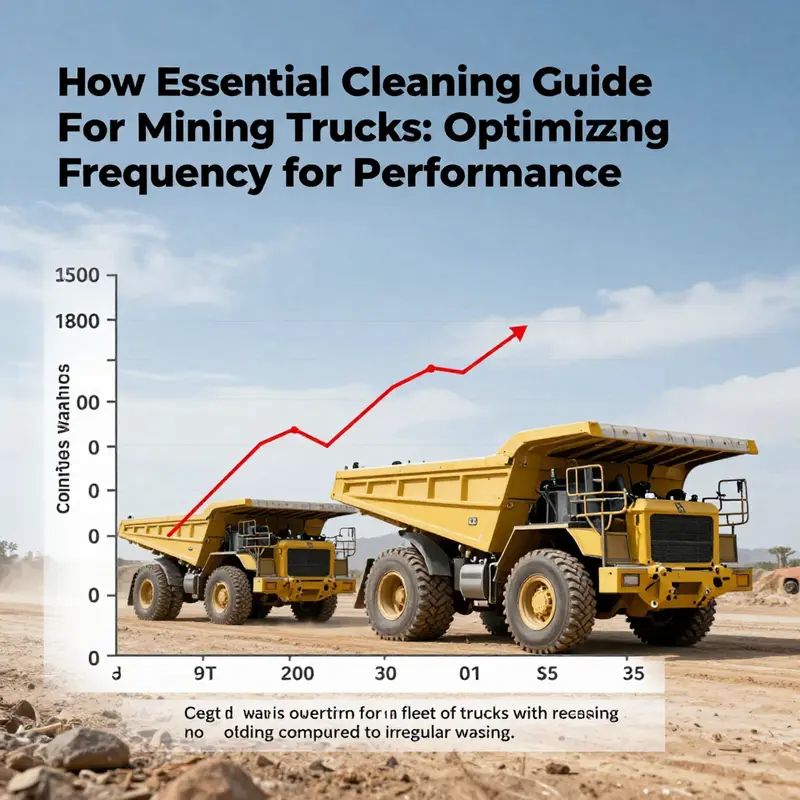
A central pillar supporting this cadence is evidence from peer-reviewed work that links cleaning frequency with reduced contamination-related failures. A comprehensive study by the International Journal of Mining Science and Technology in 2023 highlighted that mines implementing daily wash routines reported up to 25 percent fewer mechanical failures related to contamination than sites with irregular or infrequent cleaning practices. That statistic is not a mere footnote; it embodies a practical truth: when vehicles operate in dust, grit, and moisture, routine cleansing acts as a preventative maintenance layer. It slows the ingress of abrasive particles into sensitive interfaces and keeps lubricants and coolants functioning with less impediment. The study’s implications extend beyond the individual truck. They ripple through maintenance planning, parts inventory, and downtime management, translating into a fleet that is more predictable in its uptime and more resilient to the erratic demands of a harsh workday.
The advent of modern automated wash systems compounds this effect. These systems deliver thorough cleaning with consistent results, which is especially valuable when fleets scale up and the volume of wash bays must keep pace with usage. Automation reduces the manual labor required, freeing technicians to focus on diagnostics and targeted maintenance instead of routine washing chores. Automated washes also promote standardization; the same cleaning protocol applies to every vehicle, which minimizes the variability that can creep into manual cleaning. This consistency is meaningful because irregular cleaning schedules are often the source of inconsistent maintenance outcomes. When a fleet operator establishes a reliable wash cadence—supported by automation where feasible—the probability of unexpected downtime due to contamination declines, and the fleet’s overall reliability rises.
Putting these insights into practice requires a thoughtful integration of washing with the broader fleet maintenance ecosystem. The cadence should be codified in standard operating procedures that reflect not only environmental conditions but also the fleet’s repair history, component sensitivity, and the impact of wash water on corrosion risk. In a typical cycle, an after-shift wash is followed by a lightweight inspection sweep that targets the most vulnerable areas: the brake assemblies, wheel hubs, cooling pack, radiator fins, and hydraulic lines. In arid or highly dusty settings, the same cycle might progress to a more thorough wash mid-shift in anticipation of continued operation in dirty conditions, ensuring that cooling systems remain unobstructed and that contaminants do not accumulate in critical joints. In wetter climates, a gentler approach can be employed, with emphasis on rinsing to remove surface grime while preventing pooling around electrical connectors or vulnerable seals. The goal is not only cleanliness but also the preservation of the truck’s functional envelope—the cooling system, braking system, electrical harnesses, and hydraulic circuits that collectively enable safe, reliable operation.
An important practical detail concerns the logistics and cost-benefit calculus of washing frequency. A daily wash, while appropriate in contested dust regimes, also entails labor and utility costs. Yet, the cost of neglect can be higher: unscheduled downtime, accelerated wear, and knock-on effects such as reduced brake life or cooling-system fatigue. When operators quantify the ROI of washing, they typically consider the reduction in downtime, the savings from fewer urgent repairs, and the extended service life of components that would otherwise be stressed by grit and heat. In many cases, a simplified rule emerges: the more abrasive the environment, the more frequent the cleans. The rule is tempered by the practicalities of labor availability and wash infrastructure, but even conservative schedules can yield notable improvements when paired with targeted inspections aligned to the wash cycle.
To connect these threads back to the broader discipline of field maintenance, many fleet operators recognize that regular cleaning is a cornerstone of preventive care rather than a housekeeping afterthought. The cleaning routine serves as an early-warning filter. Corrosion around exhaust manifolds, pinched wiring around muddy harnesses, or minor leaks that appear only after a thorough wash can be spotted with greater ease when the truck is clean. Such visibility feeds into a proactive maintenance culture, where technicians anticipate wear before it becomes a performance-limiting constraint. This culture is not about chasing spotless machines; it is about enabling predictable, high-quality performance in the most challenging environments. It is about recognizing that a clean machine is a well-illuminated slate for honest diagnostics. In this sense, washing is a disciplined investment in reliability and operational continuity.
As fleets grow and operations expand to more remote or hazardous sites, the value of a robust wash policy becomes more pronounced. The practice aligns with broader facility-management principles for fleet operations, where cleanliness is a lever for safety, efficiency, and asset longevity. For operators seeking to embed this principle into everyday practice, the path is clear: establish a wash cadence that reflects environmental severity, integrate washing with routine inspections, leverage automation where feasible, and support the policy with data on downtime and maintenance costs to demonstrate tangible returns. See the discussion of facility management for truck wash businesses for a broader framework that underpins these decisions: Facility Management for Truck Wash Businesses.
Beyond the immediate mechanics of washing and the structure of maintenance timetables, the human dimension remains central. Cleaning regimes require discipline, coordination, and a shared understanding of priorities. Operators need to know that washing is not optional in harsh conditions; it is a safeguard with clear implications for safety and reliability. Technicians benefit from a predictable cycle that keeps their workloads manageable and their inspections purposeful. Dispatchers gain reliability in scheduling and uptime promises. In practice, this means that washing is embedded in the day’s workflow rather than treated as a separate task. The most successful fleets synchronize wash bays with inspection lanes and service bays, creating seamless transitions from cleansing to diagnostic assessment, and from assessment to corrective work. When such synchronization works, trucks return to service with confidence: their cooling systems clear, their brakes responsive, their harnesses secure, and their metalwork free from the corrosive bite of dirt.
In the end, the question of frequency is not only a technical calculation; it is a governance choice. It reflects how a mining operation values uptime, how it allocates scarce maintenance resources, and how it translates environmental adversity into disciplined, repeatable actions. The evidence supports a clear direction: regular, well-timed washing—informed by environment and reinforced by automation where possible—helps protect critical systems, reduces the likelihood of contamination-driven failures, and extends the overall longevity of mining trucks. This is the clean discipline that keeps fleets moving in conditions where dust, heat, and heavy loads test every component. The implication for future practice is straightforward: when washing is treated as an essential, data-driven maintenance activity, the fleet becomes more durable, more predictable, and more capable of delivering consistent performance under the demands of modern extraction and hauling.
External resource: https://www.sciencedirect.com/science/article/pii/S1876954X23000458
The Wash Cycle Dilemma: Economic Reasoning Behind How Often Mining Trucks Should Be Washed
Dust clings to steel like a memory that refuses to fade. In mining and heavy construction, trucks ingest the grit and grit in turn wears away at the very edges of reliability. Washing, therefore, is not merely a cosmetic ritual; it is a disciplined maintenance choice that guards critical systems, trims downtime, and protects the bottom line. From the outset, operators see that the frequency of washing is shaped by the terrain, the season, and the economics of the job. The trucks that rumble through barren ore fields or along unpaved roads accumulate a thick coat of dust, rock fragments, and mud. In such settings, the undercarriage and suspension bear the brunt of the load, and the debris that clings to them can accelerate wear on bearings, seals, and hydraulic lines. Cleanliness becomes a proxy for life expectancy. The basic premise is straightforward: when abrasive material sits on moving parts, it acts like sandpaper. It shortens the interval between part replacements and raises the risk of unplanned downtime. The result is a cash outlay that looks not only like the price of a wash but also like a bet on the equipment’s future health. The frequency with which a mining fleet is washed, then, sits at the intersection of physics, maintenance science, and the economics of downtime. It is a deliberate choice, not a reflex, and it demands a careful accounting of costs and benefits that extend far beyond the water bill.
The economic logic begins with durability. A clean undercarriage keeps you far from the edge where corrosion, rock damage, and grit-induced wear do the most harm. In heavy-duty fleets, components such as suspension systems, axle housings, and hydraulic lines live close to the ground, where mud and dust readily migrate into crevices and joints. Debris can abrade seals, accelerate rust, and hinder lubrication pathways. Regular washing helps preserve the integrity of these components, reducing the probability of expensive, disruptive failures. When a truck spends less time in the shop for preventable wear, the fleet’s availability rises. Availability, in turn, becomes a driver of productivity. Operators who track fleet performance know that time lost to unscheduled maintenance compounds quickly. A wash, then, is not a luxury; it is a strategy to stabilize maintenance intervals and lower the risk-adjusted cost of ownership. The dollars saved by avoiding a sudden breakdown can dwarf the water and labor costs of the wash itself, especially in environments where material buildup is relentless.
Direct costs and long-term savings form the core of the cost-benefit calculus. Washing a truck requires water, cleaning agents, labor, and energy. In some operations, trucks are washed after each shift; in others, when conditions demand, a more staggered schedule emerges. The direct costs—water, soap, staff time, and fuel for the wash equipment—are tangible and easy to track. Yet the indirect benefits can be more consequential. By reducing abrasive buildup, a clean truck helps maintain fuel efficiency, preserves braking surfaces, and keeps sensors and hydraulic lines free of grit that could impair performance. These effects accumulate over hundreds of cycles, yielding a measurable improvement in overall equipment effectiveness (OEE). A body of research in mining maintenance suggests that proper cleaning and maintenance routines can cut unscheduled downtime by as much as thirty percent. That improvement translates into more productive shifts, fewer delays, and a more predictable schedule for crews, which itself reduces idle time and overtime costs. When a company runs a fleet of mines or quarries, the compounding effect of uptime gains becomes a decisive financial lever. The wash schedule then becomes a lever to optimize both immediate operating costs and longer-term capital expenditure timelines.
Environmental factors also tilt the balance. Arid, dusty environments demand more frequent washing, as contamination accumulates quickly and adheres stubbornly to surfaces, especially in wheel wells, the undercarriage, and the cab skirt. By contrast, in conditions with regular rain or softer dust, the rate of buildup may be slower, allowing for longer intervals between washes without compromising performance. The choice resembles a dynamic optimization problem: the more extreme the environment, the more value resides in maintaining a consistent cleaning cadence. In addition to environmental intensity, the vehicle’s workload matters. A truck that migrates from a drill site to a processing plant will encounter different contaminant mixes and temperatures, which influence how aggressively dust clings and how quickly grime hardens into stubborn tar or clay. In extreme cases, operators adjust wash frequency seasonally, aligning it with the most demanding weeks of the year while dialing back during calmer periods. This adaptability avoids watering down the economic argument, ensuring that wash cycles respond to real conditions rather than fixed calendars.
The frequency question did not originate in anecdote alone. The literature on maintenance strategy in mining operations supports the idea that optimization should be data-driven. Companies increasingly rely on maintenance planning tools that ingest environmental data, fleet utilization, and historical failure records to identify the wash cadence that minimizes downtime and extends component life. The central insight is simple: a one-size-fits-all schedule rarely yields the best balance of cost and reliability. Instead, the optimal wash frequency emerges from a probabilistic assessment of wear risk versus the direct costs of cleaning. In some operations, the best approach is a routine after every shift when dust levels are pathological or when the next workload will subject the fleet to maximal contamination. In others, the cadence is a few days, tuned by moisture, wind speed, and the severity of the site conditions. The economics are not merely about savings on soap or water per wash; they are about the larger calculus of maintenance windows, spare parts availability, and the predictable orchestration of a fleet that must stay in motion to meet production targets.
The case for a disciplined wash cadence grows stronger when a fleet is managed with analytics. Data-driven maintenance planning uses real-time environmental readings, machine health indicators, and production schedules to flag periods of elevated risk and to trigger washes accordingly. In practice, this means a wash may be rescheduled or intensified to preclude a more expensive intervention down the line. The approach aligns with broader goals—reducing unplanned downtime, improving reliability, and smoothing production throughput. When a truck is clean, it is easier to inspect; when it is easy to inspect, technicians can spot small issues before they escalate. This early detection can prevent cascading failures that would otherwise result in multi-day downtime and costly part replacements. The ripple effect touches labor planning, inventory management for spare parts, and even the safety culture of the operation. A clean fleet is easier to maintain, easier to inspect, and easier to manage for a workforce that is constantly on the move.
Policy and practices also shape the economics of washing. Many mining firms codify wash schedules in maintenance policies, linking cadence with environmental conditions, truck duty cycles, and maintenance intervals. The policy is not arbitrary; it reflects a risk-reward calculus that weighs the immediate costs of cleaning against the downstream costs of wear and downtime. Advanced operations may integrate wash scheduling with other routine maintenance tasks, so a wash aligns with lubrication changes, brake inspections, or undercarriage checks. Such alignment reduces separate labor costs and minimizes the fuel and energy footprint of the maintenance window itself. In other words, washing becomes a coordinated activity that serves multiple maintenance goals, rather than a stand-alone event that only adds a line item to the budget. When this coordination is in place, the wash cadence can support a healthier, more predictable maintenance cycle, which is a prized outcome in high-stakes mining environments.
External context helps illuminate why washing frequency has become an economic focal point. The broader literature emphasizes that maintenance strategies have a material impact on equipment longevity and operating costs. A well-tuned cleaning regime contributes to a higher overall equipment effectiveness score by reducing the likelihood of unplanned stoppages and extending the life of sensitive components. The cost curve is not linear; it demonstrates diminishing returns after a point, where additional washes yield progressively smaller gains in reliability. This reality underscores the importance of tailoring the wash schedule to the actual conditions faced by the fleet, rather than pursuing a higher cadence as a reflex. Companies that succeed in this realm typically rely on a combination of historical data, live environmental indicators, and fleet-wide performance metrics to guide decision-making. The pragmatic upshot is that washing frequency becomes a disciplined variable in maintenance economics rather than a cosmetic ritual or a fixed calendar anchor.
In tying the narrative back to the broader topic, it is clear that the wash frequency of mining trucks is a strategic choice shaped by durability, direct and indirect costs, environmental realities, and the advantage of data-driven management. The optimal schedule is not the same for every operation. It emerges where the cost of cleaning—the water, the detergents, the labor, and the energy—meets the benefit of reduced wear, fewer breakdowns, and steadier production. The most economical wash cycle is one that acknowledges the site’s dust dynamics and the fleet’s duty cycles, then translates those dynamics into a clean, consistent maintenance rhythm. And while the exact cadence may vary—from after every shift in the most abrasive conditions to every few days in milder settings—the guiding principle remains constant: cleaning is an investment in uptime. For industry professionals seeking further context on how regulatory and emissions considerations intersect with maintenance practices, relevant discussions can be found in resources covering truck wash industry compliance and emissions regulations. truck wash industry compliance and emissions regulations.
As the chapter closes on the economics of the wash cycle, the picture is one of practical prudence. The wash frequency is neither arbitrary nor purely technical; it is a policy born of cost accounting, risk management, and the daily realities of operating in harsh environments. The most effective approach treats washing as a lever—one that can be pulled with precision when the data indicate heightened wear risk or increased downtime pressure. The result is a fleet that stays cleaner, runs longer between major repairs, and remains more reliably in service when production demands are highest. The endgame is straightforward: maximize uptime, minimize unexpected maintenance, and optimize resource use without sacrificing safety or performance. The evidence, drawn from maintenance science and mining operations research, supports this approach and invites operators to move beyond habit toward a deliberate, data-informed cadence that benefits both the equipment and the people who depend on it. External research in mining maintenance echoes this conclusion, reinforcing the central idea that disciplined cleaning contributes meaningfully to durability and cost efficiency. See the external resource for a deeper dive into maintenance strategies and their financial implications for mining operations.
External reference: Impact of Maintenance Strategies in Mining Operations, available at https://www.sciencedirect.com/science/article/pii/S187654282200199X
The Wash Schedule That Keeps Mines Moving: How Often Mining Trucks Should Be Washed and Why It Matters

Dust, heat, mud, and a rotating schedule of shifts shape not only how mining trucks perform but how long they will last. The wash cadence is more than a routine chore; it is a strategic variable that affects machine longevity, component reliability, and the safety of both the operators and the site. A practical rule of thumb sits close to the edge of production rhythms: wash a mining truck regularly, with cadence calibrated to environmental conditions and regulatory requirements. Many sites wash after each shift or at least once every 24 hours. This cadence aligns with the need to prevent the buildup of dust and debris that, if left unchecked, can insidiously degrade performance. When the dust is thick, or when the landscape is dry and windy, the frequency often increases. In those conditions, it is not unusual to wash the trucks more than once per day to preserve cooling efficiency, brake performance, and connection points that must stay free of abrasive material. The logic is straightforward: the cleaner the surface and undercarriage, the more predictable the hydraulic, braking, and cooling systems will behave under load. The opposite is also true. When dust and debris accumulate, heat loads rise, air and cooling paths become constricted, and wear accelerates. The cumulative effect is a higher probability of unscheduled downtime, increased fuel burn, and earlier replacement cycles for components that depend on clean interfaces and free airflow. In this sense, washing is a guard against cascading maintenance issues that can ripple through a fleet, especially on rugged sites that demand high reliability from heavy-duty powertrains and traction systems. That is not to say cleanliness should trump production. Rather, it is to acknowledge that a well-timed wash program can be integrated into daily operations so that it supports, rather than disrupts, the work cycle. The optimal cadence is a conversation among operations, maintenance, and environmental teams, with the goal of preserving equipment, protecting the workforce, and staying compliant with site rules and external regulations. The pace chosen has to reflect real site conditions: the type of ore, the moisture content of the soil, the season, and the proximity of the wash bay to the loading zones and processing lines. When a site experiences heavy seasonal dust, for example, the wash cadence may climb from a daily routine to multiple cleanings within a 24-hour window. In wetter seasons or in mines where dust suppressants and traffic management reduce exposure, the cadence may settle closer to every 24 hours or after a designated number of operating hours. The reality is that the decision is pragmatic. It rests on visible indicators and measurable outcomes such as undercarriage cleanliness, radiator and intercooler clarity, air intake condition, and exhaust system integrity. The last thing a mine wants is a false economy: saving a few minutes by skipping a wash can cost more in downtime later when a clogged cooling system or a fouled air filter triggers a failure. The human element matters, too. Operators who understand that cleanliness is tied to performance tend to support the wash schedule more consistently. A structured routine helps crews anticipate maintenance windows, coordinate with the wash bays, and prepare the truck for the next cycle of heavy work. In practice, this means a streamlined sequence that begins with a quick inspection, followed by the high-pressure rinse focusing on the undercarriage, tires, axles, and engine bay, then targeted treatment in areas where material tends to cling—around seams, crevices, and highly worn components. Cleaning agents are applied only where needed, and the rinse is designed to avoid harming sensitive electrical components or leaving soap residues that could attract more dust later on. The aim is to remove the bulk of the material with a thorough first pass, then use a second pass for fine detailing and drying, ensuring all surfaces are left dry and free of standing water that could freeze or promote corrosion in cold climates. The human body of work at the wash bay matters as much as the nozzle pressure. A well-trained crew knows when to switch from a gentle rinse to a more aggressive spray, when to use degreasers for grease and tar, and how to prevent water intrusion into critical systems. Automation is increasingly common in modern operations, and it brings a level of consistency that helps standardize the cadence across the fleet. Automated wash systems can time the sequence to ensure that every truck gets the same thorough treatment, regardless of who is operating the nozzle. This consistency translates into predictable maintenance demands, fewer surprises, and the ability to schedule preventive tasks with higher confidence. Yet even with automation, there remains a need for human oversight. Operators and maintenance personnel should verify that wash performance meets the site’s cleanliness standards and that the wastewater streams are being managed properly. The environmental dimension of washing is not a peripheral concern. Wash bays must be positioned to minimize runoff toward active work zones, with drains and containment that prevent soil and groundwater contamination. Water treatment and recycling considerations are increasingly common; a well-designed wash facility will capture solids, separate oils and greases, and treat or reuse water where feasible. The goal is to limit ecological impact while still delivering effective cleaning. This requires thoughtful facility design, proper signage, and clear workflows that keep the wash cycle integrated with the day’s operations without generating safety hazards. For many operations, the wash schedule is part of a broader fleet maintenance philosophy. The idea is to align the act of washing with routine checks that occur at the same moment in the vehicle’s daily cycle. For instance, a post-shift wash can be synchronized with a quick after-work inspection, during which technicians confirm fluid levels, tire wear, and any obvious signs of leakage or damage. This approach helps catch issues early and preserves component life, particularly for highly stressed assemblies like the differential, drive shafts, and suspension components that benefit from the removal of abrasive dust and moisture. Collaboration across departments is essential. A well-communicated schedule reduces bottlenecks at the wash bay and prevents wash crews from becoming a choke point that slows production. When the site has mature processes around wash timing and bay management, trucks arrive on time, the work day stays on track, and maintenance tasks can be queued with the right lead time. A visitor to a well-tuned site will notice the cadence in the air—quiet, predictable, and purposeful. The atmosphere around the wash bay reflects the larger culture of maintenance. The aim is not just to remove dirt but to safeguard critical systems. Dust can insinuate itself into cooling channels, radiator fins, and air intake paths; once there, it can restrict airflow and raise operating temperatures. Tar and grease from loading operations can clog seals and reduce lubrication efficiency. Water and soil contaminants can interfere with braking performance and wheel-end components. The percentage of time a truck spends in front of the bay may appear minimal, yet it is an investment with returns in uptime and resale value. The best practices emphasize a structured wash-down routine that is integrated into daily operations rather than treated as an afterthought. This includes allocating a fixed period for wash activities, selecting the appropriate combination of high-pressure water, targeted detergents, and, where necessary, degreasers, and ensuring the sequence is completed before the truck returns to active service. It also means designing the wash area with safety in mind: non-slip surfaces, defined pedestrian zones, proper lighting, and clearly marked hazards around high-pressure equipment. It is equally important to document the standard operating procedure so that new crew members can learn quickly and existing staff can audit performance. The industry recognizes that harvesting the benefits of a robust wash program requires more than hands-on effort; it requires an architectural approach to how wash operations fit into the mine’s broader asset management system. For those seeking a structured view of how to operationalize washing within a fleet program, the concept of facility management for truck-wash businesses provides a practical blueprint. This approach addresses not only the equipment and processes but also the governance around who is responsible for what, how it is funded, and how compliance is maintained across shifts and seasons. Facility management for truck-wash businesses is a reminder that washing is a service operation that must be designed, managed, and measured with the same rigor as any other critical piece of the fleet. It also signals that the wash bay is a node in a larger network that includes scheduling, waste handling, and environmental stewardship. As sites adopt more sophisticated wash strategies, they can realize improvements in fuel efficiency, reduced downtime, and longer component life, while maintaining compliance with environmental guidelines and safety standards. Those gains are not merely theoretical. Real-world gains come from reducing the rate at which cooling systems clog, from maintaining clean air paths into engines, and from preserving the integrity of braking systems and drive train interfaces that are essential to safe operation in demanding environments. The cadence may vary, but the principle remains constant: keep the vehicle clean enough to operate at peak performance while respecting the site’s environmental responsibilities. In closing, the wash cadence is a management lever as much as a maintenance practice. It is a guard against the corrosive and abrasive elements of the mining environment and a contributor to predictable, reliable production. The best results come when wash timing, cleaning methods, facility design, and environmental safeguards work in concert. By embedding wash routines into the daily flow of operations, powered by both human vigilance and automated systems, mining fleets can extend life cycles, improve efficiency, and reduce the risk of unplanned downtime. And while every site will tailor its cadence to its unique conditions, the guiding principle holds true: regular, well-executed wash-downs protect the heart of the machine and keep the work moving forward. For those who want a deeper dive into how the industry frames these practices, a detailed external reference provides additional guidelines and standards for mining truck maintenance and cleaning practices: https://www.mining.com/industry-news/mining-truck-washing-best-practices/.
Final thoughts
In conclusion, establishing a regular washing schedule for mining trucks is crucial to ensuring their reliability and longevity. The environmental conditions they operate in demand a strategic maintenance plan that accounts for frequent washings, ideally at least once a week. The benefits of such practices extend beyond aesthetics; they significantly enhance the operational efficiency of the fleet, minimize repair costs, and promote a safer working environment. By adopting best practices and understanding the economic implications, fleet managers can make informed decisions that protect their investments.