

Truck wash businesses have emerged as essential partners for fleets across logistics, trucking, and construction sectors. Understanding the financial landscape of this industry can help stakeholders make informed decisions about maintenance and investment strategies. This article delves into the profitability of truck wash owners, exploring profit margins, revenue streams, and the factors that significantly influence earnings. We will unpack the business model followed by truck wash operators and analyze how they can maximize their profitability over time, while also tying back to the needs of logistics and freight company fleet managers, trucking company owners and operators, as well as construction and mining fleet supervisors.
From Revenue Streams to the Bottom Line: Unraveling How Much a Truck Wash Owner Actually Earns
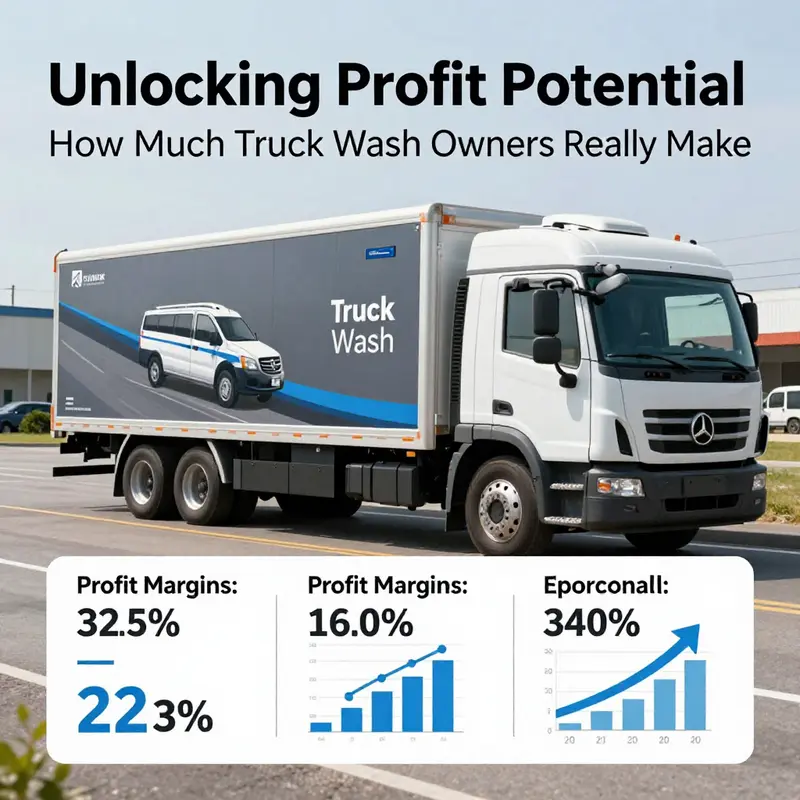
When people ask how much a truck wash owner makes, they’re really asking about the balance between revenue and cost, the volume of business, and the discipline applied to the daily operations. A truck wash is not a single lever you pull to increase profit; it is a system of interdependent parts that shape the final take-home. The most valuable truth to begin with is simple: profit margins in this industry can be healthy, often ranging from twenty to thirty-five percent, but those margins are not guaranteed. They are earned through careful market positioning, smart service mix, efficient waste and water management, and the ability to convert regular fleets into dependable, recurring customers. In regions with high freight activity, near major depots, or along busy commercial corridors, revenue tends to run higher. In quieter landscapes, profitability might hinge more on efficiency and value-added services than on sheer volume. This means the owner’s take-home is not a fixed salary but the result of a living, adaptable model that flexes with demand, costs, and strategy.
The revenue side of the equation is best understood as a menu of services that can be combined to fit the needs of fleet managers, owner-operators, rental fleets, and customer-facing businesses that rely on clean, presentable vehicles. Exterior washes provide a steady base, a reliable cash flow that is less sensitive to seasonal weather than interior work. Yet, the true growth—both in revenue and in margins—often comes from a layered service approach. Full-service washes, which blend exterior cleaning with interior vacuuming, sanitizing, carpet or mat care, and optional wax or sealant finishes, are premium offerings that command higher prices per vehicle. They are particularly appealing to owner-operators who want a professional image or to fleets that must maintain a uniform standard across hundreds of vehicles. The premium services come with a trade-off: longer processing times and greater labor needs, which can compress throughput if not balanced by scheduling and staffing. The key is a well-designed process that minimizes idle time and maximizes the number of trucks that pass through each day.
Think of revenue streams as a spectrum rather than a ladder. On the lower end, you have basic exterior washes and perhaps wheel cleaning. These still attract a steady stream of customers, particularly if the site is visible from a highway or a major corridor. Moving up, you layer in interior care, sanitizing protocols, leather or fabric protection, and wax or sealant programs. Each layer increases the average ticket and enhances the customer’s perceived value. The real opportunity lies in the recurring business model offered by fleets and owner-operators. Fleets that contract with a truck wash for regular maintenance visits can stabilize cash flow and push revenue higher without linearly increasing marketing spend. In these relationships, the wash becomes a trusted partner for fleet maintenance rather than a one-off stop. The ability to secure such contracts often depends on reliability,speed, and the willingness to tailor services to a fleet’s particular standards.
A parallel and equally important dimension is the mix of customers. A shop that caters to owner-operators and smaller fleets might rely on high-volume, mid-range pricing with quick turnovers. A facility that targets large fleets and rental companies can leverage longer-term contracts and premium services for greater margins. In the best programs, a single vehicle can contribute multiple revenue streams within a single visit: exterior wash, interior cleaning, sanitizing, and a wax or ceramic-sealant upgrade. The incremental revenue from each added service can be substantial when the facility operates with precision and discipline. The result is a higher average ticket per vehicle and a more predictable revenue stream, which in turn supports steadier cash flow and better planning for the owner’s compensation and reinvestment.
Beyond the service menu, the location and physical footprint set the stage for profitability. A high-traffic site near distribution hubs or along major freight routes typically experiences greater demand and more predictable volumes. Accessibility matters: wide drive lanes, ample waiting areas for drivers, and clear signage reduce bottlenecks and improve the customer experience. A well-located site often translates into a higher volume of pass-through traffic, more repeat customers, and the capacity to price premium services without fear of losing volume. The scale of the operation matters as well. A single storefront may suffice for moderate demand, but multiple bays and automated systems can dramatically raise throughput and, with disciplined scheduling, maintain or even improve margins as revenue climbs. The interplay between location, scale, and service mix is central to understanding what the owner can reasonably expect to take home.
Operational efficiency is the second pillar that supports earnings. Water and chemical costs are not mere line items; they are lived realities of the wash process. Efficient water use, closed-loop recycling systems, and responsible chemical management can slash expenses while aligning with environmental and regulatory expectations. A truck wash that invests in water recycling and energy-efficient pumps, heaters, and lighting can reduce utility bills by a meaningful margin over time. The initial capital outlay for such systems can be significant, but the payback is typically measured in months rather than years depending on scale. Efficient waste management further reduces disposal costs and protects margins. When a shop runs like a well-tuned machine, the cost per vehicle declines as throughput rises, and every incremental improvement in speed or quality translates into more vehicles processed per day without a proportional rise in labor or materials.
Labor management deserves focused attention. Staffing is the largest variable cost in most truck wash operations. The right team makes the difference between a clean vehicle and a timely, positive experience that invites returning customers. Wages, benefits, training, and turnover all have a direct bearing on the bottom line. A skilled crew with a clear standard of work reduces rework and spills, supports faster processing times, and fosters consistency across shifts. A well-designed scheduling system helps ensure that peak periods are covered without overstaffing during lulls. Incentives tied to performance and customer satisfaction can align workers with the goals of higher throughput and higher-quality outputs. The owner’s role often shifts from hands-on cleaning to managing people, processes, and performance, ensuring that the operation scales with demand rather than outgrowing its capacity to deliver.
Pricing strategy is another critical lever. A thoughtful price structure balances market rate, service complexity, and the value delivered to customers. The base exterior wash price remains the anchor, but profitable growth comes from price differentiation. Upselling premium services, offering bundled packages, and creating loyalty programs can lift the average ticket. Yet pricing must be grounded in the market realities of the local area and the willingness of fleets to pay for the added value. A data-driven approach—tracking the mix of services purchased, time per vehicle, and the incremental revenue from add-ons—helps the owner adjust pricing and promotions without eroding margins. The most successful shops continually test and refine their offers, learning which combinations yield the strongest per-vehicle revenue without sacrificing throughput.
The association between revenue and profit becomes clearer when you examine the typical ranges reported by industry data. The average annual revenue for a truck wash business tends to fall between four hundred thousand and nine hundred thousand dollars, though the exact figure hinges on region, customer base, and the scale of operations. The wide band reflects how much market access, service mix, and capacity influence top-line results. In markets with abundant fleet activity and high demand for premium cleaning, revenue skews toward the upper end. Conversely, in markets where competition is intense and visits are shorter, revenue spends more time in the middle range. Importantly, revenue alone does not determine earnings—the margin earned per dollar of revenue is what eventually fills the owner’s pocket. Margin figures in the twenty to thirty-five percent range are commonly cited for well-run operations that manage to secure high-volume throughput while maintaining cost discipline across water, energy, materials, and labor.
Turning to the take-home, or the owner’s earnings, requires separating profits from owner compensation. A profitable business might post a net margin of, say, twenty-five percent. On a six hundred thousand dollar top line, that nets about one hundred fifty thousand dollars before the owner’s draw, taxes, and reinvestment. The actual cash the owner takes home depends on governance, tax strategy, debt service, and whether the business is run as a corporation, partnership, or sole proprietorship. In many cases, owners will structure compensation to reflect both salary and draws that align with the company’s cash needs and growth plans. It is common for owners to reinvest a portion of profits back into facility upgrades, additional bays, or new equipment to sustain long-term growth. The balance—what the owner takes as take-home cash after reinvestment and debt service—will vary by market conditions and the owner’s personal financial goals. The best operators frame profitability in a forward-looking way, recognizing that a high-margin month might finance a needed capital expenditure, while a lean month could necessitate stricter cost control and tighter scheduling.
The role of the business model matters as well. Some owners pursue a steady, location-bound operation with a few bays and a lean crew focused on efficiency. Others pursue a more expansive model with multiple sites, mobile services, or on-site partnerships with larger fleets. The latter can deliver higher revenue ceilings but also demand more sophisticated management of logistics, scheduling, and customer expectations. Mobile or on-site services, for example, can command premium pricing and capture new customers who would not visit a fixed-location wash. Yet they bring higher overhead in terms of transportation, fuel, and crew readiness. The choice between a single-site focus and a multi-site strategy often boils down to the owner’s appetite for scale, capital, and the ability to manage a dispersed service footprint. The most resilient operators design a hybrid approach: a core, high-volume site anchored by efficient processes, plus strategic mobile offerings or a second site that captures adjacent markets. This kind of strategy can push margins outward and expand the total take-home in a way that aligns with risk tolerance and long-term goals.
A practical way to think about earnings is to translate revenue and margins into a realistic owner compensation plan. Suppose a shop processes an average of about two hundred thirty to two hundred eighty vehicles per day during peak months, with a blended average price per vehicle of around eighty to one hundred dollars for a full-service mix. That could push annual revenue into the six hundred thousand to seven hundred fifty thousand range, depending on seasonal variations and the exact mix. If the net margin is twenty-five percent, the pre-tax profit would be around one hundred fifty thousand to around one hundred eighty-seven thousand dollars per year. After accounting for taxes, debt service on equipment or real estate, and any reinvestment in upgrades, the remaining cash should be considered the owner’s take-home. In practice, smart owners will allocate a portion of that profit to ongoing training, facility maintenance, and system upgrades to ensure that margins remain resilient as the business scales. It is also common for owners to draw a salary reflecting their leadership role in the company, with additional profit distributions tied to performance and cash flow. For some, the salary represents a steady, predictable income, while for others, growth-driven profits form the majority of take-home money. Either approach requires clear governance, cashflow forecasting, and a disciplined approach to balancing growth with profitability.
Of course, not every chapter of the owner’s financial narrative is about cash flow and margins. Risk management, compliance, and environmental stewardship shape both costs and reputation. Regulations around wastewater, chemical handling, and air quality can influence both operating expenses and the ability to attract enterprise customers. A shop that invests in compliant operations, staff training, and transparent reporting not only reduces the risk of costly penalties but also builds trust with fleets that prioritize reliability and safety. In many cases, compliance becomes a value proposition in itself, helping to justify premium pricing and longer-term contracts. The same attention to standards that protects the environment and the community also sustains the business by preventing costly interruptions and damage to equipment. In other words, good governance and best practices are not merely overhead; they are part of the revenue engine, reinforcing margins and strengthening the owner’s ability to earn.
An important nuance lies in the business structure chosen by the owner. A sole proprietor may benefit from straightforward tax treatment and direct control over profits, but this path can expose the owner to personal liability and limit growth options. A corporation or limited liability company can offer liability protection and benefits in terms of scaling and attracting investment, but it introduces administrative complexity and tax considerations that must be managed carefully. Partnering with a financial advisor or an accountant who understands the trucking and fleet-services sector can clarify the most advantageous structure for profit retention and growth. The decision matters because it influences how much the owner can reasonably expect to keep after taxes and reinvestment, and it sets the stage for whether the business serves as a vehicle for personal income or as a platform for scalable enterprise.
Throughout this discussion, a recurring theme is the need for strategic planning that extends beyond a single wash bay. The owner’s earnings are not a one-time target; they are the product of a living plan that adapts to market conditions, technology, and workforce dynamics. The most successful operators operate with a profit-first mindset while maintaining a high standard of service. They monitor metrics that matter: throughput per hour, average revenue per vehicle, labor productivity, water and chemical usage per vehicle, and the rate of repeat business. They also invest in predictive maintenance for equipment, ensuring uptime and reliability that keep the line moving. When these practices align, margins improve without compromising customer experience, and the owner’s compensation grows in step with the business’s health. In this sense, understanding how much a truck wash owner makes is less about a fixed number and more about the narrative of profitability—how revenue streams are layered, how costs are controlled, and how the business scales responsibly while delivering consistent value to customers.
For readers who want a deeper dive into industry benchmarks and cost structures, a careful review of market data can help anchor expectations in real-world parameters. Industry research cited in the broader article indicates a typical margin range of twenty to thirty-five percent under well-executed strategies. This aligns with the practical scenario of a mid-sized operation where service mix, efficient systems, and fleet contracts come together to produce meaningful earnings while maintaining competitive pricing. The emphasis on high-volume throughput paired with value-added services is not accidental; it is the combination most likely to sustain elevated margins during a period of fluctuating fuel prices, labor costs, and regulatory changes. A thoughtful forecast for any prospective owner should begin with a realistic revenue model, continue with a cost management plan that prioritizes energy and water efficiency, and culminate in a staffing strategy that supports growth without sacrificing service quality. When these elements are in harmony, the owner’s earnings are a natural consequence of a well-run, customer-centered operation.
In practice, the path to profitability often includes a mix of near-term wins and longer-term investments. Near-term wins come from optimizing scheduling to reduce downtime, promoting premium services to raise the average ticket, and strengthening relationships with fleets through responsive service and predictable quality. Longer-term investments may include upgrading to more efficient wash technologies, adding a second bay to increase capacity, or implementing an automated appointment system to smooth peak periods. The decision to invest hinges on a clear financial case: will the upfront cost be repaid through higher throughput, reduced labor, energy savings, or enhanced customer retention? If the answer is yes, the move is likely to improve margins and, by extension, the owner’s take-home. The prudent owner treats investment not as a cost but as a strategic lever that expands revenue potential while preserving or improving margins over time.
The economic reality of truck wash ownership, then, is a blend of art and science. It requires a sensitivity to market demand, a disciplined approach to cost control, and a long-range perspective on growth. The questions an owner should continually ask include: Are we attracting enough repeat customers and fleets to sustain the base revenue? Are our premium services delivering a meaningful uplift in average tickets without creating bottlenecks? How efficient are our water and energy systems, and what is the payback on upgrades? Is staffing aligned with demand, and do we have the right incentives to encourage high performance? The more these questions guide daily decisions, the more predictable and sizable the owner’s earnings become. And while the numbers will shift with location and scale, the underlying framework remains robust: generate steady demand, price for value, operate efficiently, and reinvest strategically. In this framework, the truck wash owner’s earnings reflect a well-balanced, disciplined, and continually evolving business rather than a simple dividend from a single service line.
For readers who want a concise takeaway, the core truth remains straightforward. Revenue comes from a diversified service mix and favorable location. Costs shrink through efficient systems, smart energy and water use, and disciplined labor management. The owner’s take-home depends on how well these elements are aligned and how effectively the business scales with demand. If a shop can maintain high throughput and deliver premium value while containing costs, margins will sit in the twenty-to-thirty-five percent corridor and the owner’s compensation will reflect that strength. If, however, a site relies on price cuts to drive volume or experiences costly downtime due to aging equipment or supply chain hiccups, margins compress and the owner’s earnings decline accordingly. The balance is delicate, but with thoughtful strategy, it is entirely achievable to build a profitable, scalable truck wash business that offers meaningful, sustainable earnings for the owner and reliable, high-quality service for customers.
To weave these ideas into practical guidance, consider how you might apply them in a real-world plan. A prospective owner should start by mapping the local demand landscape and identifying the service mix that best fits the fleet profiles nearby. Then, craft a pricing strategy that reflects value while remaining competitive. Plan the layout and equipment choice to maximize throughput without sacrificing quality. Build a staffing model that prioritizes performance, training, and retention. Finally, institute a robust cost-tracking system that separates fixed and variable expenses, making it possible to see exactly where margins are widening or narrowing. When you can hold that line, you are not just calculating what the business makes; you are shaping what the business can become. And in the end, the owner’s earnings will reflect the craft of that leadership, the cadence of the operations, and the steady march toward sustained profitability.
For further context and benchmarks on profitability and cost structure, see external industry insights that synthesize data across multiple markets and scales. This broader view helps anchor expectations and informs strategic planning as you evaluate opportunities in your own market. LazrTek’s overview of profitability, costs, revenue, and practical insights for truck wash operations. In addition, if you want to explore leadership and people strategy as a lever for fleet success, you can read about investing in people as a cornerstone of strong service delivery at this resource: investing-in-people-key-to-truck-fleet-success.
From Roads to Revenue: How Location and Efficiency Drive a Truck-Wash Owner’s Earnings
When people ask how much a truck wash owner makes, they usually expect a single number. The truth is a balanced equation where location and efficiency interact with service choices, fleet demand, and daily operations. In markets with steady freight movement, a well-run truck wash can push net margins into the 20% to 35% band, but that range is earned through high volume, disciplined cost control, and a facility that invites repeat business. Earnings aren’t simply a product of price; they come from throughput, waste reduction, and a customer experience that keeps fleets coming back for routine maintenance and the peace of mind that a clean truck delivers on the road. Nearly every successful operator will tell you that the key levers are obvious in theory and intricate in practice: where the wash sits, how efficiently it runs, and how well it turns a steady stream of trucks into a sustainable cash flow month after month.
Location, first and foremost, is the stage on which all profitability plays out. A strategically located facility near major highways, busy interchanges, or close to freight hubs is not just convenient; it becomes part of a fleet’s daily rhythm. Long-haul carriers might prefer a site that sits at a natural stopping point on a route, where drivers choose to clean up before or after a long leg of a journey. Local and regional fleets, meanwhile, tend to schedule maintenance windows around their depot cycles, so a site that aligns with these cycles can absorb a handful of washes each day with remarkably low marketing friction. The geography of demand matters as much as the visibility of the sign. A campus or industrial district that funnels a high volume of trucks past the gate will naturally translate into higher daily throughput and more opportunities for high-margin add-ons. A facility merely positioned on a map but not integrated into a network of feeders and drop sites tends to rely on sporadic foot traffic, making revenue more volatile and less predictable.
Beyond geography, the range of services a truck wash offers becomes a direct amplifier of revenue potential. A basic exterior wash can be refreshing to a fatigued driver, but adding undercarriage cleaning, wheel/brake detailing, and quick interior detailing opens a path to higher price points and longer dwell times. Fleet maintenance packages, wash-and-go bundles, and loyalty programs can convert a one-off touchpoint into a recurring contract or preferred-provider relationship. The service mix matters because it determines pricing power and customer lifetime value. In markets with competitive pressure, differentiation through a thoughtfully curated menu—carefully priced to reflect time, effort, and business value—can sustain healthy margins even when labor costs rise. The literature on truck-wash profitability emphasizes that high-demand areas with well-structured service offerings typically realize stronger net profits than shops that rely on a narrow service line or sporadic promotions. In practice, this means that an operator who carves out a differentiated value proposition—one that aligns service depth with fleet maintenance needs—will see a steadier revenue stream and more predictable profitability.
Operational efficiency acts as the other pillar, quietly shaping earnings by trimming overhead and accelerating service. Overhead costs—rent or mortgage, utilities, insurance, and labor—eat into margins whenever productivity lags. An efficient facility uses space and equipment to maximize throughput without sacrificing quality. Efficient layouts reduce walking distances for staff, shorten cycle times, and minimize downtime between vehicles. In a well-run shop, a clean, logically arranged bay system lets teams move from wash to rinse to dry to add-ons with minimal friction. When every step in the process is optimized, the business can serve more vehicles per day without proportionally increasing labor, utilities, or maintenance expenses. The performance of a truck wash is measurable in several numbers: the number of vehicles processed per hour, the average ticket size, the rate of repeat customers, and the speed at which a wash can be turned around without compromising quality.
A core contributor to efficiency is the adoption of water recycling and automated wash bays. Water reuse reduces a driver’s impact on local resource consumption and cuts monthly utility bills, which, in turn, improves cash flow. Automated bays bring consistency to the wash cycle, minimize human error, and free up staff to handle more throughput or higher-value tasks. When you pair automation with water-reuse systems, you achieve two benefits at once: a faster service and a smaller ecological footprint. The environmental angle is not a mere compliance concern; it is a marketable capability that can attract eco-conscious fleets and public tenders that reward sustainable operations. These systems require upfront capital but typically deliver meaningful operating savings over the life of the equipment. They also support a more predictable service model, reducing the variance in daily revenue due to weather, shift changes, or seasonal staffing fluctuations. The result is a more stable income that is easier to forecast and plan around.
The human element—training, scheduling, and productivity—still anchors the practical side of earnings. Well-trained staff perform tasks more efficiently, deliver higher-quality results, and generate higher customer satisfaction scores. Customer experience is a currency of its own; quick, reliable service and visible attention to detail can convert first-time customers into repeat clients. A workforce that is skilled across a spectrum of services—from a fast exterior wash to detailed undercarriage cleaning—creates the flexibility to adapt to demand fluctuations without sacrificing margins. In this business, downtime is a silent revenue killer. Poor scheduling, miscommunications between shift changes, or underutilized bays can erode throughput and stretch labor costs. Conversely, a workforce that operates with a smooth cadence—with clear standard operating procedures and ongoing cross-training—can serve more vehicles while maintaining the quality that keeps fleets coming back. The management approach that couples efficient processes with employee development tends to produce both better earnings and better long-term viability.
Another dimension affecting earnings is the depth of fleet relationships. Owner-operators, rental fleets, and delivery fleets represent recurring demand that can stabilize income in ways that one-off customers cannot. A site that binds itself to fleet maintenance cycles, with agreed service levels and predictable scheduling, reduces the marketing burden and creates a more predictable cash flow. The pricing strategy in this context shifts from one-off transactions to value-based contracts, where loyalty rewards and volume discounts are offsets for assured throughput. Efficient operations, in turn, support these contracts by guaranteeing service times that align with fleets’ operational schedules. The interplay between volume-driven pricing and cost-controlled operations creates a virtuous circle: higher volumes enable more leverage on fixed costs, while efficiency keeps the cost per vehicle serviced low enough to sustain margins even when price competition intensifies. This is the practical pathway from high throughput to stable profitability.
As with any capital-intensive service business, the economics hinge on careful capital planning and disciplined financial management. The initial investment in land, permitting, building, wash equipment, and automation is non-trivial, but the long-run payoff can be substantial if the site achieves the right throughput mix. Beyond the upfront costs, ongoing amortization, maintenance of equipment, and periodic upgrades must be tracked against revenue to determine true profitability. It is not enough to chase volume; the operator must ensure each incremental wash contributes meaningfully to the bottom line after accounting for labor, water, energy, and depreciation. A strategically chosen service mix, aligned with local demand and the facility’s capacity, can amplify earnings while still preserving lean operations. In this light, the business case for a well-located site with efficient processes becomes clear: it is the combination of steady, high-volume demand and low operating friction that transforms a truck wash from a seasonal convenience into a reliable generator of profit.
Within the broader market context, the connection between location, efficiency, and earnings becomes more evident when you consider the channel through which customers discover the shop and the channels through which they return. Signage and proximity to transit corridors draw initial business, but repeat visits and fleet contracts lock in cash flow. The facility should be accessible to trucks moving at typical freight speeds and resilient to peak-period traffic. Operational efficiency cannot compensate for a poor location, but even the best site benefits greatly from disciplined process design. A well-thought-out facility layout, combined with precise labor deployment and automation, makes it possible to raise throughput while holding or reducing unit costs. This synergy is what separates shops that scrape by on occasional spikes in demand from those that create predictable, sustainable earnings over time. It is the practical embodiment of the idea that earnings in this industry rise not just from price, but from the disciplined orchestration of where you wash and how you wash.
To anchor these ideas, consider the broader industry research that links location and efficiency directly to profitability. High-demand areas with streamlined operations tend to generate substantially higher net profits, particularly when the service mix is tailored to fleets and owner-operators who require consistent maintenance. The data suggest that margins compress or expand in response to how well an operator lines up capacity with demand, and how effectively the business controls costs without sacrificing service quality. In this sense, a truck wash is less a seasonal shop and more a well-tuned value proposition—one that delivers reliability for fleets and steady income for owners. For readers seeking a deeper market view, a detailed analysis of revenue trends in truck washing provides a broader frame for interpreting the numbers you see in individual facilities. See the external reference at the end of this chapter for a broader industry context.
The practical path from concept to earnings, therefore, starts with site selection rooted in demand forecasts and logistics realities. A successful operator will map traffic patterns, fleet bases, and contractor schedules, then validate these insights with day-to-day demand from nearby docks, warehouses, and maintenance yards. Next comes capability: automate where it makes sense, and design the workflow to minimize downtime between stages of the wash, while preserving quality. The combination of a robust service menu and a highly efficient process is what allows a site to absorb sudden increases in volume without deteriorating margins. Efficient sites also position themselves to leverage eco-conscious buyers who want to minimize water usage and environmental impact. In practice, this means customers are more likely to choose a facility that can demonstrate responsible resource use and high standards of cleanliness, even when facing pricing competition. The takeaway is simple: location is the stage; efficiency is the performance; together they define how much a truck wash owner makes.
As you weigh these levers, consider how you might apply them in a real-world setting. If you were selecting a site, you would study traffic counts, proximity to trucking corridors, and convenience for drivers who stop for fuel, rest, or meals. If you already own a site, you would audit your workflow from arrival to departure, identify bottlenecks, and test whether your current equipment configuration is delivering the throughput you expect at your price points. You would examine your water management strategy and quantify the savings from recycling, both in dollars and in public relations value. And you would spend time with your team, ensuring they understand the importance of consistency, speed, and accuracy, especially in services like undercarriage cleaning, which can demand more time and manpower but also deliver a premium perceived value. This is where theory meets practice, and where the reality of earnings is determined by the daily discipline of the business rather than any one magical factor.
To acknowledge the practical wisdom behind these findings, you can explore more about facility management for truck wash businesses and how to structure a site for optimum performance. This resource discusses layout, staffing, maintenance, and safety considerations that influence both throughput and profit. It serves as a reminder that the path to higher earnings is not a single adjustment but a series of deliberate, compatible changes across location, workflow, and service mix. While the specifics of every market differ, the underlying principle holds: a well-located facility that operates with disciplined efficiency will consistently outperform a less strategic site with fragmented processes. In this sense, the question of how much a truck wash owner makes is answered not by a single number, but by the quality of decisions about where to locate and how to run the operation every day.
For readers who want to situate these insights within a broader industry context, the following external resource offers a more expansive view of revenue dynamics in truck-wash businesses. It provides a broader market lens that complements the practical guidance outlined here, helping owners and aspirants gauge potential earnings against regional demand, capital requirements, and operating costs. https://www.lazrtk.com/blog/how-much-revenue-does-a-truck-wash-make
Profit in the Wash: How Truck Wash Owners Turn Volume, Efficiency, and Service Into Durable Earnings
Truck washing is a business built on volume, efficiency, and the right mix of services. For owners, earnings come from throughput, service mix, and disciplined cost control, with margins that reflect scale, capital plan, and demand. The core idea is to convert daily vehicle traffic into a steady profit stream by optimizing throughput, maintaining service quality, and pursuing recurring revenue through fleet contracts and value added services. Location, capacity, and a clear capital plan determine how earnings scale over time, while strong operations, marketing, and cost management sustain margin and cash flow for reinvestment.
Final thoughts
Truck wash ownership presents a lucrative business opportunity with profit margins that can reach as high as 35%. By understanding revenue streams and the framework of operational efficiency, truck wash owners can enhance their profitability. Considerations such as research into location demand, customer base, and integration of advanced technologies are paramount in optimizing earnings. Fleet managers, trucking operators, and construction supervisors must also acknowledge the strategic benefit of partnering with reliable truck washes that offer high-quality services, thereby ensuring the longevity and efficiency of their fleets.