

Truck washing costs are a critical consideration for logistics and trucking company fleet managers. With a variety of washing services available, understanding the pricing landscape is essential for effective fleet management. From basic exterior washes to comprehensive detailing services, fleet managers can significantly impact both the aesthetic and longevity of their vehicles. This guide outlines the essential cost factors in truck washing, the types of services available, and market variations, ensuring informed decision-making.
The True Price of Clean: Decoding How Service Level, Vehicle Size, and Location Shape Truck Wash Costs
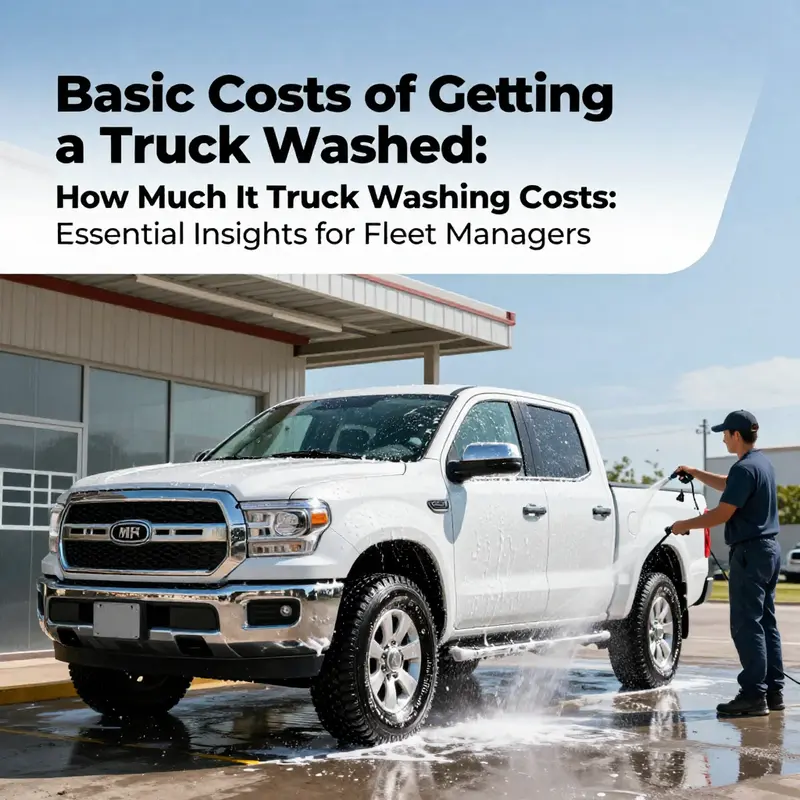
Price, to most truck owners, is more than a number. It is a signal about time, effort, protection, and the condition of a fleet that moves goods, raw materials, and services across the country. When people ask how much it costs to get a truck washed, they are really asking a layered question: What level of cleanliness do I need? What kind of vehicle am I washing? And where is the wash taking place? The answers are not uniform, and the variability is a feature, not a bug. It reflects market realities, the diversity of trucks in operation, and the different outcomes that customers value when they step onto a wash bay or drive through an automated tunnel. As with any service that blends labor, equipment, and chemistry, the price you see is a product of multiple moving parts that interact in predictable ways, but with a lot of local texture.
To begin, the service level matters more than most people expect. A basic exterior wash, intended to remove dirt, dust, and the kind of grime that accumulates after highway travel or a dusty worksite, sits at the low end of the price spectrum. In many markets, a simple exterior wash for a standard-sized pickup or light-duty truck can be modest. Some shops price this tier as low as the teens, while others position the baseline a bit higher, reflecting regional labor costs, water usage policies, and the quality of the rinse and soap program. A compounding factor here is the relative size of the vehicle. A midsize or crew-cab pickup might fit neatly into a standard bay, while a heavy-duty configuration, or a larger commercial chassis used in fleet operations, demands more time in the wash cycle, more water, and perhaps more attention to wheel wells and undercarriage surfaces. The cost curve thus tilts upward with vehicle size and complexity, even within the same service tier.
Beyond the basic exterior sweep, larger services begin to incorporate additional elements that drive up price. A deluxe exterior wash, for example, often bundles waxing, tire dressing, and undercarriage cleaning with the exterior rinse. These touches are not cosmetic only; they aim to extend the interval between more rigorous cleanings, reduce corrosion from road salt and grime, and improve overall appearance for fleet branding or business outreach. The price range here broadens to reflect the added labor and consumables. In many markets, deluxe exterior packages sit in the mid-to-upper range of the general spectrum, and the precise figure can hinge on the quality of the wax or sealant used, the sophistication of the tire dressing, and whether special pre-wash steps or undercarriage treatments are included. The natural consequence is a higher per-vehicle cost, but with a longer run between touchups for some fleet operators.
A full interior and exterior detailing represents a different calculus altogether. When a shop commits to an interior overhaul—vacuuming, shampooing of upholstery or carpets, dashboard sanitization, and odor control in addition to the exterior wash—the price point rises, even for customers seeking full-service treatment for a standard truck. In many cases, the interior detail is priced similarly to the deluxe exterior package, which can be surprising at first glance. The rationale is straightforward: interior detailing is labor-intensive, often requiring specialized tools and products to lift stains from fabric or leather, address debris in crevices, and restore a sense of cleanliness that reflects well on a company’s image. For fleets that require consistent interior hygiene—think food-grade transport, hospitality-related supply chains, or drivers who spend long hours on the road—the value proposition shifts from a simple cosmetic upgrade to a measurable improvement in driver comfort, cabin health, and job satisfaction.
Another channel through which pricing manifests is the automated drive-through wash. These quick, convenient options have earned broad adoption in many regions due to speed and predictable cost. On a per-session basis, the price can be strikingly affordable, commonly falling within a low single-digit to mid-teens bracket. Yet the caveat is clear: these facilities are naturally constrained by size, water pressure, and the uniformity of the cleaning cycle. A truck that towers over the typical vehicle profile may not fit properly in the tunnel; a truck with heavy undercarriage grime or salt crust may require an additional manual scrub or a custom rinse. For some operations, the automated wash offers a budget-friendly quick fix between longer, more thorough cleanings; for others, it’s a starting point rather than a complete solution.
In the field, the numbers often cited by shops and industry observers illustrate the same variability in different words. A basic exterior wash for a midsize pickup might be described in one place as a straightforward rinse and soap application with wheel cleaning and drying, priced modestly. In another market, the same service might be presented as a middle-tier option that includes a more thorough pre-soak, extra detailing in the wheel wells, and a higher-grade drying process. The practical upshot is that consumers should expect a range rather than a fixed price and should plan to confirm exactly what is included in the quoted price before consenting to service. The reason to be vigilant is simple: some packages are structured to appear cheaper up front but omit essential steps that affect the final cleanliness or the protection of the vehicle’s finish.
The size and type of the truck—ranging from standard pickups to semi-trailers or other heavy-duty commercial configurations—further shape the cost spectrum. Heavy-duty trucks demand more time and more manpower, and the equipment used to reach undercarriages or regions that accumulate grime differs from what is typical for passenger vehicles. As a result, a wash for a semi-truck or dump truck can sit at a higher price band than a typical pickup, even when the same level of exterior cleaning is requested. The price ladders up not only because of the additional water use and chemical requirements but also because the job may require specialized handling, additional safety steps, and perhaps a larger, dedicated bay. Fleets, with their recurring cleaning cycles, intersect with pricing in a different way: many operators negotiate contracts or volume-based pricing that reduces the per-vehicle cost and stabilizes budgeting across months. These arrangements reflect a different set of economics than the one-off retail wash but deliver predictable cleanliness outcomes across a statewide or regional footprint.
Location matters as well. Local labor costs, environmental regulations surrounding water runoff and chemical use, and competition among providers all contribute to the sticker price. Rural shops with lower overhead might price more aggressively, while metropolitan facilities with higher rent, more formal compliance regimes, and a greater demand for premium services can command higher rates. The geographic mosaic—the mix of urban centers, industrial corridors, and rural routes—shapes what customers see as the baseline price in their area. And with the growth of fleet operations that span multiple markets, buyers increasingly encounter a mosaic of prices for the same service type, depending on where the truck washes happen to be located during a given cycle.
An important layer to add to this discussion is the notion of value beyond the surface-level appearance of a clean truck. Price is not only about aesthetics; it often carries implications for maintenance and longevity. For example, undercarriage cleaning, included in many higher-tier packages, can help reduce rust and remove corrosive contaminants that accelerate wear on chassis components. Waxing and sealants performed in deluxe washes offer a protective shield against road grime and the elements that can degrade paint and trim over time. Tire dressing, while cosmetically appealing, can also reduce stone-throw damage on paint and rims by minimizing the buildup of grime that can harbor abrasive particles. These added steps contribute to a longer-term cost-to-benefit calculation: fleets may find that a higher upfront price yields lower long-term maintenance costs and more consistent vehicle appearances for branding purposes. Even in this light, customers should be mindful of any “hidden” costs such as mandatory upcharges for peak times, added fees for special materials, or surcharges for rush service. A transparent quote is the strongest signal of a shop’s reliability and willingness to align the service with a buyer’s particular needs.
For readers seeking practical guidance on budgeting, it is worth interpreting price as a spectrum rather than a single line. A basic exterior wash might anchor the lower end, with mid-range packages offering a balanced mix of exterior and lifestyle enhancements, and premium services delivering interior detailing, undercarriage work, and protective coatings. The dealer’s or shop’s geographic footprint will influence where a given client’s environment falls on that spectrum. Fleet managers who plot a path across multiple locations must recognize that a one-size-fits-all price rarely exists. Instead, they should anticipate a portfolio of local prices and build a budgeting framework that accommodates regional variation while seeking centralized standards for service levels and outcomes. In that sense, cost management becomes a matter of calibrating expectations about the level of cleanliness, the protection offered to the vehicle’s finish, and the reliability of service delivery across a network of wash facilities.
To make these ideas concrete, consider a typical procurement approach for a small fleet that operates a mix of midsize and heavy-duty trucks in an urban-suburban corridor. The fleet manager identifies three target service levels: essential exterior wash, moderate exterior plus undercarriage cleaning, and a full-service package with interior detailing plus protective wax. For each category, the manager builds a range anchored by local price observations but adjusted for the truck mix. The essential exterior wash might cluster around a low-to-mid price band, with a cushion for seasonal demand. The middle tier, which adds undercarriage attention and wheel cleaning, tends to sit higher but still offers a reasonable return on investment when reflecting the longer run between full details. The premium tier is where the cost-to-value story becomes most pronounced. Here, the decision hinges on the fleet’s branding standards, driver comfort, and the potential for longer-term maintenance savings. The procurement approach also recognizes that volume discounts and loyalty programs often exist, though not everywhere or for every service type. When present, these programs can shift the effective price curve downward for fleets that commit to regular washes or bundled services.
From a consumer perspective, the most effective tactic is to obtain a clear, itemized quotation that explicitly lists what is included in the price. Ask for a breakdown of pre-wash steps, soap formulations, rinse methods, drying techniques, and any optional add-ons. Verify whether undercarriage cleaning is included or offered as an upgrade, and confirm whether wax, sealant, or tire dressing are part of the package or available as add-ons. This diligence helps prevent sticker shock and ensures that the final bill aligns with the value delivered. It is also prudent to compare quotes not only on price but on what the price entails. A lower price might reflect fewer service steps or lower-quality materials, which could incur higher costs later in terms of re-cleaning or paint wear. Conversely, a higher price might reflect premium products, extended service times, and better protection for the vehicle’s finish—factors that matter when a truck represents a company’s public image or when the owner cares deeply about long-term asset preservation.
When considering where to allocate dollars, it helps to view washing as part of broader maintenance planning. If a fleet experiences salt exposure, for instance, undercarriage cleaning becomes a priority; if a fleet frequently travels through muddy work sites, a robust wheel and fender cleaning process becomes essential. Seasonal considerations also shape pricing decisions. In colder climates, undercarriage cleaning may be offered as a mandatory component to combat rust, while in other regions the emphasis might be on shine and protection against UV exposure. The bottom line is that pricing is inseparable from purpose: what you want the wash to do for the truck, how often you plan to wash, and how much protection you expect to gain from the service all pull pricing along different directions.
For readers who want a direct connection to the industry’s broader pricing landscape, a widely cited reference provides a snapshot of wash costs across service levels and vehicle types. The source emphasizes that the most accurate pricing comes from local shops, since regional factors almost always override national averages. It also notes the major price bands for basic exterior cleaning, mid-tier packages, full detailing, and automated options, while highlighting how fleets often negotiate for volume and loyalty. This broader view confirms what practical experience already tells us: truck-wash pricing is not a fixed number, but a dynamic set of options that must be interpreted in the context of vehicle type, service expectations, and local market conditions.
As you walk through this price landscape, it helps to remember that the cost is not the only thing that matters. The speed of service, the reliability of scheduling, the quality of the final finish, and the shop’s attention to safety and environmental compliance all contribute to the overall value of a wash. A well-chosen package can reduce downtime for drivers, minimize maintenance risk, and project a professional image for a fleet with a customer-facing profile. Conversely, a bargain wash that omits important steps can lead to more frequent re-cleaning or accelerated wear, eroding any short-term savings. In short, price is a proxy for much more than the cleanliness of a cab and chassis; it is a signal of how a business manages assets, supports drivers, and presents itself in the market.
To close this circuit, consider one practical step that aligns price with value: speak with local wash facilities about your specific needs and ask for a tailored quote that reflects your actual truck mix, typical grime levels, and desired outcomes. In the linking of price to performance, a careful price inquiry becomes a planning instrument. It enables you to forecast maintenance budgets, align wash schedules with driver shifts, and ensure that every dollar spent on cleanliness contributes to asset longevity and brand integrity. For readers looking to explore a structured approach to facility planning and fleet cleanliness, there is a resource that delves into the operational side of running a truck-wash business and the governance that keeps it efficient and compliant: Facility management for truck wash businesses.
The broader takeaway is straightforward. While numbers matter, the real story behind the cost of washing a truck is the balance between service level, vehicle size, regional pricing norms, and the value you assign to long-term protection versus short-term appearance. The cost is not a single line; it is a spectrum that reflects how a fleet, a driver, and a company choose to invest in cleanliness, maintenance, and presentation. And because markets evolve—with changes in regulation, water usage pricing, and labor costs—the prudent path is to stay informed about local options, compare apples to apples, and view wash pricing as part of a larger asset-management strategy rather than a one-off expense.
External reference for further context: Road Warrior’s overview of truck wash costs offers an expansive view of the pricing landscape, including varied service tiers and considerations for different truck types. https://www.roadwarrior.com/blog/truck-wash-costs
Shine and Spend: How Much Does It Really Cost to Get a Truck Washed?
A truck wash is often treated as a routine maintenance task, a cosmetic touch that keeps a vehicle looking sharp. Yet the price tag attached to a wash reveals far more about what the service actually delivers than a simple gloss of soap and water. Across the country, the cost to wash a truck can swing widely, not because the drivers are choosing to overpay, but because the service itself spans a spectrum from a quick exterior rinse to a full interior detail with protective coatings, and because the practical realities of operating a trucking operation—location, fleet size, vehicle type, and the specific cleaning required—shape every quote. In practice, the most basic exterior wash for a midsize to heavy-duty pickup tends to sit in a broad range that starts around thirty dollars and climbs to around seventy dollars. That spread captures the difference between a lean, no-frills rinse and a more thorough exterior cleanse that tackles stubborn grime, road film, and some residual contaminants that cling to chrome, paint, and underbody surfaces after long hauls. If a facility offers self-serve or standard wash options, those prices frequently fall in a narrower band—roughly thirty to fifty dollars—reflecting a more automated or hands-off approach where the vehicle owner or operator takes a more active role in the cleaning process. The wider thirty-to-seventy-dollar bracket for basic exterior service is not merely a quirk of pricing; it’s a reflection of the balance between labor costs, water usage, chemical formulations, and the level of manual attention the wash receives. The same logic applies as you step up from a basic rinse toward deluxe and comprehensive packages. When a shop adds wax protection, tire shine, and undercarriage cleaning, the value proposition shifts decisively. These deluxe packages can push the price up into a seventy-to-one-hundred-and-fifty-dollar range, a level at which the service begins to offer a visible enhancement in appearance and, for many operators, an extra layer of environmental or protective benefit. The degree of improvement, of course, hinges on the vehicle’s condition and the operator’s goals. For instances in which the goal is a pristine interior alongside a cleaned exterior, the pricing landscape can be surprisingly similar to, or even exceed, the exterior-focused deluxe tier. A full interior and exterior detail—an intensive process that includes thorough treatment of interior surfaces, upholstery, and carpets in addition to the exterior wash—often lands somewhere in the range of roughly seventy to one hundred fifty dollars, though in some markets or for premium detailing with specialized products, the final tally may exceed that range. The reason for this is straightforward: interior detailing demands time, care, and the use of products tailored to different materials—fabric, leather, vinyl—plus attention to odor control, stain removal, and restoration. The market recognizes this differentiation, and the prices reflect the labor intensity, the capture of hidden dirt, and the risk of potential wear on sensitive surface materials. For fleets with heavy-duty or oversized vehicles, the cost dynamics can shift again, underscoring how vehicle size and weight influence pricing. A larger truck or commercial rig typically requires more wash time, more water, and sometimes specialized equipment or settings to accommodate taller bodies, wider frames, and longer wheelbases. The result is a pricing envelope that tends to sit higher than a midsize truck’s wash, with the same service depth costing more because the logistics and equipment demands scale up. In the realm of fleets, automated truck washing systems have become a practical and increasingly common option for achieving consistency, speed, and scalability. For larger commercial fleets or heavy-duty trucks such as semis and trailers, the upfront cost of these systems can be substantial. A typical automated system package may run somewhere in the vicinity of forty thousand to forty-five thousand dollars per set, with additional expenditures for installation, water management, filtration, and ongoing maintenance. Those figures reflect not only the projection of labor savings but also the long-term benefits of improved cleaning consistency, reduced chemical usage, and better control of waste and water discharge. A fleet owner weighing a capital investment like this must consider the total cost of ownership, including installation, training, maintenance, and the possibility of equipment upgrades as cleaning standards evolve. In other words, the initial price tag is only part of the equation; the real economics hinge on life-cycle costs, labor replacement rates, and the potential for higher throughput on a per-shift basis, which can translate into lower per-truck cleaning costs over time. For operators who prioritize flexibility, mobile and on-the-road washing services offer another dimension to the price conversation. Mobile truck washing, provided by companies that operate across multiple regions or states, can command a premium because of the convenience, the need for specialized equipment on site, and the logistical overhead tied to travel, scheduling, and weather windows. The premium is not simply a surcharge for mobile service; it’s a reasonable reflection of the extra coordination and the value of reduced downtime and workflow disruption for a fleet that spans geographic regions. The upward price pressure from mobility is another reminder that the price you see for a truck wash is a function of the overall service design, not just the act of cleaning itself. In practice, the cost picture broadens when we step back to consider a few core factors that consistently influence what a particular truck wash will charge. The depth of service is the most obvious driver: a one-time wash is cheaper than a recurring program that includes preventative maintenance, seasonal cleaning, or post-harvest decontamination. The choice between manual and automated processes also matters. Manual scrubbing and hand-finishing can deliver a seemingly more meticulous result, but they cost more in labor, especially for larger fleets, and they may yield slower throughput. Automated cleaning systems promise speed and uniform results, yet they require upfront capital and ongoing infrastructure investment. The environmental dimension matters too. Businesses that operate under strict environmental regulations or in regions with water-use restrictions can see higher costs embedded in compliance practices, water recycling, and safer chemical formulations. Geography adds another layer of reality to pricing. Urban shops in high-cost areas, luxury markets, or regions with higher labor rates frequently charge more than rural or price-competitive markets. The reputation of a shop can influence price as well; with service quality tied to repeat business and referrals, a shop that has demonstrated reliability may command premium pricing. And within all these factors, there are the practical realities that touch every fleet and every truck: the frequency of service, whether the wash is a one-off or part of a recurring fleet program, whether the process is manual or automated, and the extent of environmental compliance features required by the customer or the site. In terms of practical decision-making, the chapter’s practical takeaway is to treat a wash quote as a menu that maps to a set of outcomes rather than a single line item. If you need the exterior to look pristine for a regional trade show, you may justify the deluxe exterior package. If a truck has accumulated salt and road grime from a winter crossing, you may decide that an undercarriage cleaning is essential for longevity and rust prevention, which can add to the cost but save future maintenance. If a fleet operates across varied terrains, you may balance the need for interior cleanliness with the speed of automated exterior options, because time is money in fleet operations. For individuals evaluating quotes, consider the total package rather than the sticker price. A basic wash may be cheap, but it may fail to deliver the long-lasting cleanliness or protection you want. A mid-level or deluxe package can deliver noticeable improvements in gloss, protection, and interior hygiene. If you are weighing a full interior and exterior detail, you should think about how the detailing will influence resale value, cabin comfort for drivers, and the cleanliness of hard-to-reach areas such as door jambs, under-seat compartments, and cargo spaces. A disciplined approach to pricing involves asking for quotes that reflect the scope of your needs: current vehicle condition, desired outcomes, and the expected frequency of service. It’s not unusual for fleets to negotiate volume-based pricing, loyalty discounts, or bundled maintenance packages that include wash services alongside other routine care tasks. In many markets, shops may offer discount packages or loyalty programs designed to reward consistent business, whether that means prepaid wash plans, multiple-will-service credits, or bundled pricing with undercarriage or interior detailing. To guide readers who want a grounded perspective on cost management within trucking operations, one can look to detailed analyses and case studies that connect maintenance spend to broader fleet performance indicators. For instance, discussions about cost management in trucking emphasize how small savings on routine maintenance, including wash services, can compound into meaningful annual totals when multiplied across a large fleet. The idea is simple: better cleaning practices reduce corrosion, extend component life, and support safer, more reliable operations, which can translate into lower repair costs and less downtime. It’s worth noting that the pricing narrative can be fluid and region-specific; while the numbers presented here provide a reasonable benchmark, every shop writes its own line items according to its local constraints, its equipment inventory, and its service philosophy. As a reader moves from one shop to another, a few patterns recur. The first is that the same core services—the exterior wash, undercarriage cleaning, waxing, tire shine, and interior detailing—appear across providers, albeit with different emphases and price points. The second pattern is the operational reality that the total cost often includes more than the visible line item for the wash itself. Installation and maintenance for automated systems, water treatment and disposal considerations, staff training, and EPA or local environmental compliance measures can all carry long-run implications for price. Finally, the practicality of comparison shopping cannot be overstated. Fleet managers who optimize wash cycles by balancing volume, frequency, and depth of service tend to achieve not only cost efficiency but also a higher standard of cleanliness, which supports vehicle longevity and driver satisfaction alike. In this sense, a truck wash is more than a cosmetic fix; it’s a small but meaningful component of the operational discipline that keeps a fleet moving smoothly. For readers who want to explore how these concepts play out in practice, a careful review of related industry discussions and case studies can provide deeper insight into the relationship between wash pricing, service depth, and fleet outcomes. If you are curious about the broader budgeting and cost-management themes that intersect with truck washing, you can explore a detailed analysis linked to trucking growth and cost management insights here: Derrick Wolfe trucking growth cost management insights. As you assess quotes, you’ll see that the best value is not a single number but a carefully chosen combination of service depth, scheduling consistency, and reliability of the provider, all aligned with the operational realities of your specific fleet. When considering a one-time wash versus a recurring maintenance plan, the math should account for savings in labor, time, and potential wear on surfaces that affect resale value and overall vehicle performance. If you own or manage a fleet, you may find it advantageous to factor in the long-term economics of water use and chemical management, which can also influence overall cost. And for readers who want a sense of the broader market mechanisms at play, it’s helpful to recognize that markets frequently reward efficiency and consistency. In practice, a fleet that leverages a well-chosen mix of exterior and interior services, implemented at strategic intervals, will generally reduce the total cost of ownership for its vehicles over time, while maintaining a professional, driver-friendly appearance that supports brand perception and driver morale. In closing, the price you pay for a truck wash reflects more than a momentary decision about cleanliness. It encodes a deeper choice about how a fleet spends its money, balances speed and thoroughness, and manages long-term durability and performance. Whether you are a single-owner driver seeking a reliable basic wash, or a fleet manager aiming to optimize maintenance budgets, the path to value lies in understanding the service depth you need, the size and condition of your vehicles, the regional price environment, and the total cost of ownership that emerges when you consider recurring costs, labor implications, and the potential savings from improved durability and uptime. To broaden your view on systems and options in the truck-wash ecosystem, you can explore external resources that discuss automated solutions and their long-term financial implications, including capital costs, installation, and maintenance considerations: https://www.alibaba.com/product-detail/Customized-Logistic-Truck-Washing1600575891516.html?spm=a2700.galleryofferlist.pproductGalleryList_1.10c44d51TnWZtX
Market Movements and Pricing Realities: Understanding the True Cost of Washing a Truck
Pricing a truck wash is rarely a single number you read on a price board. It tends to be the result of a conversation among several interacting factors: what level of cleaning you want, what kind of vehicle you drive, where you park or where the service travels, and how much work you’re asking the crew to do beyond a simple rinse. A midsize to heavy-duty pickup or a full-size work truck occupies a sizable volume and more surface area than a typical sedan, and that alone changes the math. Add in the conditions around your vehicle—coarse dirt from a road trip, salt residues from a winter month, mud from a construction site—and you begin to see why the sticker price on a wash can vary so much. In practice, the price you pay is often a function of service tier, location, and the scope of cleaning required. This is not simply the cost of water and soap; it is the cost of labor, equipment, and the provider’s investment in keeping a fleet of rigs and technicians ready to roll when the next customer pulls in.
Across the United States, there is a fairly consistent baseline for a standard exterior wash, but even within that band there is a spread that can surprise someone who expects a single fixed price. In many commercial truck wash facilities, the standard exterior wash typically falls within a broad range—roughly $20 to $50 for a straightforward rinse and soap application. For larger, heavier-duty trucks or for those drivers who want a thorough cleaning of the outside surfaces, the price climbs toward the upper end of that range or beyond. When a shop includes the removal of built-up grime, soap application with agitation, and a careful rinse, it becomes a matter of how deep the cleaning goes and how much labor is required. If you’re simply removing light dust or road grime, a lower figure is reasonable. If you’re dealing with clay, dried mud, or industrial residues, you’re more likely to see numbers at the higher end of the spectrum. These differences aren’t just about vanity; they reflect the operational costs and the level of service a shop is prepared to offer on any given day. The result is a price that can be broadcast in a menu or discussed in a short quote and then adjusted as needed when the technician starts inspecting the truck in person.
There are more elaborate offers that move beyond the basics. Deluxe or premium packages that include additional services—waxing, tire shine, and undercarriage cleaning—can push the price into a higher tier. If you’re looking to protect the vehicle’s paint and chassis from the elements, these enhancements can be worth the extra cost. A deluxe exterior wash with wax and undercarriage cleaning tends to land somewhere in the $70 to $150 range for many mid- to large-sized trucks, depending on the shop and your location. When interior elements enter the equation as well—interior detailing and upholstery cleaning—the total price commonly overlaps with the deluxe exterior package, particularly if the interior cleaning is thorough and includes carpet and mat treatment. Some high-end detailing services may exceed these price points when specialized products or treatments are used, but those are typically targeted to fleets or individuals with particular protective or aesthetic priorities.
To understand what drives these differences, it helps to consider the broader market dynamics. Regional labor costs matter a great deal. Areas with higher wages naturally push up service prices, while regions with lower wage norms can offer more affordable options. Equipment quality and the sophistication of the washing system also play a critical role. A facility that uses high-pressure multi-jet systems, computerized wash cycles, and modern foam formulations may justify higher base prices because these technologies can deliver more consistent results, reduce cycle times, and minimize the risk of leaving streaks or residue. Similarly, shops that emphasize environmentally friendly cleaning solutions may incur higher material costs, but they also appeal to customers who prioritize sustainability and want to align with their own environmental commitments. For some buyers, the assurance that a shop uses biodegradable soaps or water reclamation methods adds value that isn’t always visible in a headline price.
Another layer of pricing complexity comes from what is commonly known as bulk or subscription pricing. For businesses operating large fleets, many truck-wash operators offer discount structures or membership-style programs. These arrangements can reduce the cost per wash by as much as 30 percent or more when applied to frequent service. The logic is straightforward: a steady stream of revenue and predictable downtime is valuable to operators who must keep dozens or hundreds of trucks in service. If you manage a fleet, the best outcome is not a single lower price on one wash, but an overall reduction across dozens or hundreds of services over a given period. The practical impact is that a fleet manager who negotiates a contract for ongoing maintenance can achieve better economics than handling sporadic washes on an as-needed basis. The mathematics may involve tiered pricing, service-level guarantees, or bundled maintenance offers that align with the business’s utilization patterns. In any event, it pays to explore these alternatives rather than settle for a one-off quote.
Mobile truck wash services add another dimension to the pricing picture. The convenience of a crew arriving at your location—whether a job site, a depot, or a port facility—carries a premium. On-site washing can command a premium typically ranging from $40 to $80 per wash, reflecting travel time, vehicle depreciation, and the added complexity of performing a service outside a traditional shop setting. The upside is clear when you consider the cost of downtime. A truck that is out of service for an extended period can disrupt routes, delay deliveries, or require a replacement vehicle. For many operators, the ability to keep the fleet moving—while maintaining a reasonable exterior and interior condition—justifies the premium. Mobile services also cater to fleets that operate in remote locations or scattered locations where a fixed wash facility would require significant travel to reach. The decision to choose a mobile service often hinges on a balance between the value of time saved and the premium charged for that time.
Regional variations add another layer of nuance. In industrial zones with high truck traffic and dense logistics activity, some facilities offer discounted rates for frequent users. The logic mirrors volume-based pricing in other industries: more washes from a single customer translate into more predictable business, which can justify lower per-wash costs for that customer. Conversely, in markets with limited competition or higher operating costs, prices may be anchored higher, but customers may gain from faster service, broader service options, or superior quality. The research context notes that even in regions where data is sparse, direct inquiries with local providers yield the most accurate current pricing. This is a reminder that prices are not abstract numbers; they reflect real-world decisions by shop owners and managers who respond to the specific mix of demand, labor, equipment, and local market competition in a given town or district. A case in point from a regional study highlights how industrial activity shapes service ecosystems. While the exact numbers may differ, the principle holds: proximity to major transportation corridors or ports often correlates with more frequent service needs, and providers adapt their pricing strategies accordingly. The takeaway for the reader is simple: never assume a price based on national averages alone. Always check with local shops to capture the full picture, including any promotions, loyalty programs, or fleet-based discounts that could alter the final cost.
For individuals and fleet managers alike, the practical approach to pricing is to view it as a tool for budgeting rather than a hurdle. Start with a baseline understanding of what you need. If you only require a basic exterior wash, the price will be on the lower end of the spectrum. If you want to protect the vehicle’s finish with a wax layer and you need extra attention to the undercarriage and wheel rims, you should anticipate a higher charge. If the interior is in need of a deep refresh—dust removal, stain treatment, upholstery cleaning—that adds another dimension of cost and time, often aligning with the higher end of the exterior-plus-interior packages. The most valuable insight is to know what’s included in each price tier. Some shops list only the base price with optional add-ons, while others present a bundled package. A consumer should examine the inclusions: Does a base exterior wash include a thorough rinse and soap? Is the undercarriage cleaning performed during the same cycle or as a separate service? Are there any guarantees about streak-free results or protective coatings that can extend the life of the finish?
The decision-making process is easier when you approach it with a structured mindset. Gather quotes from multiple shops, and compare not just the price but the scope of service. Ask about what is included in the wash, what cleaning agents are used, how long the process takes, and whether the shop provides any warranty or follow-up touch-ups if staining or spotting remains after the wash. Consider the long-term value of protective components like wax or sealants. Even if the upfront cost is higher, the extended protection can reduce the frequency of future washes or help maintain the vehicle’s appearance over longer periods, ultimately lowering total ownership costs. For fleet operators, the calculus broadens to include downtime and scheduling flexibility. A facility that can align wash times with a truck’s downtime in a maintenance window or a lull between routes can reduce operational costs more effectively than a shop that offers a lower price but longer turnaround times.
From a business perspective, the landscape of pricing in the truck-wash market looks less like a single chart and more like a spectrum. It starts with the fundamental exterior wash and climbs through a sequence of add-ons and premium services. It expands when you factor in the availability of mobile teams, fleet contracts, and regional promotions. It contracts when you compare part-time or one-off services against bulk deals that share pricing across dozens or hundreds of units. The critical takeaway is that cost is not merely a sticker price; it is a composite of inputs, constraints, and opportunities shaped by location, service demand, and the operator’s business model.
For readers who want to translate this overview into actionable steps, the first move is to identify your specific needs and constraints. If you are managing a fleet, you may benefit most from a pricing plan that blends predictable monthly fees with a certain number of standard washes and a set rate for additional services. If you are a solo driver or a small independent operation, you may want to balance the convenience of a mobile option with the cost savings of a fixed-site visit, depending on your routes and time availability. Regardless of the path chosen, it pays to be proactive. Contact local providers to obtain current price points, ask about what is included in each tier, and inquire about any loyalty programs or multi-wash discounts. If you are exploring options for a larger fleet, request a customized quote that reflects your typical wash frequency, service mix, and desired turnaround times.
In support of the broader goal of making informed choices, it is useful to consult resources that summarize industry-wide trends and practical pricing patterns. For operators looking to optimize pricing and operations, see facility management for truck-wash businesses. This kind of guidance helps translate price into value, showing how a well-managed washing operation can support uptime, equipment longevity, and driver morale. In addition, readers who want to explore ongoing industry dynamics beyond the local price point can consult broader market references such as the Truck Wash industry overview. For current industry pricing trends, see Truck Wash. These perspectives provide a backdrop against which individual pricing decisions can be evaluated and refined over time, ensuring that truck owners and fleet operators can balance cleanliness, protection, and cost in a way that serves their operational goals.
Final thoughts
Understanding the costs associated with truck washing is crucial for effective management of fleet resources. From basic washes to comprehensive detailing, each service offers unique benefits that can enhance vehicle longevity and aesthetics. Fleet managers must consider the various market factors influencing prices to make informed decisions that align with their operational budgets and maintenance goals.