
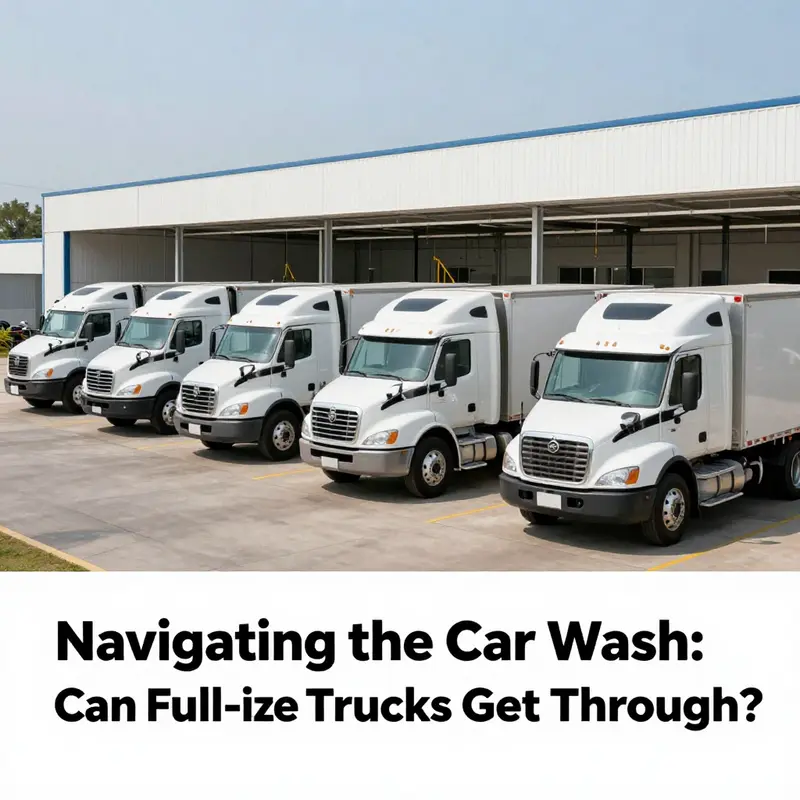
Understanding whether full-size trucks can effectively pass through car wash facilities is vital for fleet managers and operators. The car wash industry has seen advancements geared towards accommodating larger vehicles, such as trucks, buses, and construction vehicles. Each fleet manager or trucking company owner must be cognizant of their options, specifically the design and specifications of different car wash systems. This article will dissect the capabilities of various wash facilities, delving into the essential specifications, comparing different wash styles tailored for larger vehicles, assessing safety concerns, and evaluating the economic implications of choosing commercial car washes for fleet maintenance. Each chapter provides a layer of understanding crucial for making informed decisions regarding vehicle care.
null
null
Sizing the Wash: Can a Full-Size Truck Safely Traverse a Modern Car Wash?
When a fleet manager or a long-haul driver asks whether a full-size truck can go through a car wash, the answer is not a simple yes or no. It hinges on the facility, the design of its wash system, and the vehicle’s exact dimensions. In the real world, many automated washes are engineered to handle large vehicles—buses, delivery trucks, and heavy-duty utility rigs—while others are optimized for standard passenger cars and may fall short for anything bigger. The difference lies in the space, the way the wash equipment operates, and the precautions built into the system to protect both the vehicle and the wash itself.
At the core of this discussion is the recognition that car wash systems come in multiple flavors. Some facilities offer tunnel-style, fully automatic washes where the vehicle remains stationary and the brushes, spray nozzles, and wipers sweep along the length of the vehicle. Others rely on overhead or ramp-mounted systems that scrub from above or from side rails as the service bay accommodates the truck’s length. When we talk about full-size trucks, we’re typically referring to rigs that approach the size of mid- to large commercial vehicles, with longer wheelbases, higher roofs, and broader widths than a typical sedan. In many high-throughput operations, the design goal is to maximize throughput while maintaining uniform cleaning coverage, including the often-tricky undercarriage, rocker panels, and rear sections that accumulate road grime on long hauls.
What makes a wash capable or unsuitable for a full-size truck is a constellation of specifications, not a single datum. The vehicle must physically fit within the bay or tunnel without the mirrors, antennas, or other protrusions making contact with equipment. It must leave the wash clean without risking damage to paintwork, chrome, or sensors. And it must do so within an efficient cycle that supports fleet schedules. When all three of these conditions align, a facility becomes a viable option for trucks, utilities, and other oversized vehicles. Conversely, if the bay clearance is tight, or if the wash cycle relies on equipment designed for narrow, low-profile cars, the risk of scuffing, bending, or incomplete rinsing increases markedly.
One practical way to think about this is to compare common dimensional benchmarks used by wash designers. A robust system intended for large vehicles often accommodates vehicles up to roughly eighteen meters in length, about four meters in height, and around two and a half to three meters in width. These figures reflect a balance between the geometry of typical full-size trucks and the physical envelope of automated wash hardware. Such a system usually features a three- or multi-zone wash approach: a preliminary rinse, followed by scrubbing in zones that target front, mid, and rear surfaces, and a high-pressure rinse and drying stage. In many setups, the vehicle remains stationary while brushes and nozzles move around it, ensuring consistent coverage with less risk of scraping corners or door handles. For fleets that require frequent cleaning of large vehicles, this stationary approach can yield a reliable, repeatable result with minimized vehicle movement.
Within this framework, it’s essential to distinguish between the types of wash equipment and how they interact with size and shape. Rail-mounted systems, a common configuration in industrial settings, suspend wash components above the vehicle and move along its length. This geometry is particularly advantageous for trucks because it keeps brushes and spray arms out of the truck’s frame while still delivering thorough contact to the sides, roof, and undercarriage. The undercarriage, in particular, benefits from spray coverage and a dedicated pre-soak or rust-preventive stage that helps remove road film and salt. Material choices for these systems play a critical role in longevity and reliability. Corrosion-resistant alloys and high-grade stainless steels are typical in exposed components subject to water, detergents, and the elements. In the long run, this durability is as important as the cleaning performance, since fleets expect a predictable wash cycle and a system that can endure thousands of hours of operation without frequent maintenance interruptions.
Alongside structural robustness, the performance metrics become meaningful when evaluating fit. Water pressure in these industrial washes often ranges from eight hundred to two thousand psi, depending on the degree of cleaning required and the delicacy of vehicle finishes. Cycle times commonly fall in the three- to seven-minute bracket, a cadence designed to balance quality and efficiency in busy facilities. Throughput—how many trucks can be cleaned per hour—can reach up to a dozen to twenty vehicles in optimized layouts, a scale that is rarely needed by individual owner-operators but is critical for fleets and logistics hubs. The best systems for large vehicles also provide flexibility: adjustable arms, modular configurations, and optional features such as wax application, drying modules, and extended rinse sequences to handle specialty finishes or heavy dirt loads. Yet, even with flexibility, some machines cannot accommodate extremely tall, wide, or irregularly shaped vehicles. A mismatch in size can lead to unsafe contact with equipment or uneven cleaning results, so correct sizing is not just a convenience but a safety and quality imperative.
For drivers and fleet planners, the practical process is straightforward but sometimes overlooked. Before attempting to wash a full-size truck, verify the wash facility’s maximum vehicle dimensions—length, height, and width—and confirm that the system can handle the truck’s specific configuration. If there is any doubt, a quick call or email to the facility’s staff can prevent an awkward encounter at the bay. In addition to dimensional considerations, prepare the vehicle for the wash. Fold or retract exterior mirrors if possible, secure any loose antennas or accessories, and ensure doors and hatches are closed. Drivers should also check for clearance around the cab and any protruding equipment that could strike a nozzle or brush. These preparatory steps, while simple, maximize both cleaning quality and safety for the vehicle and equipment.
From a fleet-management perspective, the decision to washing a full-size truck at a given facility also hinges on throughput and scheduling. A high-capacity system that can process up to twenty trucks per hour is valuable in a busy depot, but the actual throughput will depend on the wash cycle length, the bay’s loading area, and the readiness of the driver to position the vehicle precisely in the bay. In some operations, the vehicle remains stationary as the wash apparatus moves, while in others, the truck advances through a sequence of stations. For fleet operators, the ability to align wash timing with maintenance windows, fueling, and charging cycles can translate into significant time savings and improved equipment uptime. When a facility has already standardized its processes for large vehicles, the standard wash sequence becomes predictable—a critical factor for drivers who must coordinate with other fleet services.
An additional consideration is the level of conditioning a truck receives beyond cleanliness. For fleets that depend on appearance for customer-facing roles, the option to apply protective waxes, spot-free rinses, or anti-spot drying can extend the vehicle’s visual life and reduce post-wash maintenance. Many large-vehicle wash systems incorporate these enhancements as optional modules. The result is not merely a brighter finish; it is a more resilient surface, better able to stand up to repeated exposure to road grime, salty winter roads, and the UV exposure that comes with highway life. As with any automation, however, operators must balance the desire for additional finishes with the realities of cycle time and budget. The wash is only as effective as the calibration that underpins it, and calibration, in turn, depends on periodic maintenance and system checks.
For operators seeking guidance on facility planning and fleet maintenance, the topic extends beyond the mechanics of the wash itself. It includes the strategic design of the wash area, the flow of traffic around the bay, and the integration of wash cycles with broader fleet-support activities. A thoughtful approach to facility management for truck wash businesses can smooth out peak-period challenges and create consistent customer experiences. facility management for truck wash businesses. The best environments embrace adaptability: adjustable equipment, durable materials, and a clear understanding that larger vehicles require more space, more robust hardware, and a cleaner finish performed within a well-orchestrated process.
Ultimately, the question remains conditioned by the facility and the vehicle. A full-size truck can go through a car wash, but not every car wash is up to the task. If the dimensions align, and the equipment is designed for larger vehicles, the result can be a fast, efficient wash that leaves a durable, showroom-clean finish. If there is any misalignment—whether because the bay is too tight, the vehicles’ dimensions are at the upper end of the system’s tolerance, or the wash cycle is optimized for smaller cars—the risk of damage or incomplete cleaning rises. In that case, the prudent choice is to seek a wash facility specifically designed for large vehicles or to schedule maintenance in a dedicated truck-wash bay that offers the necessary clearance and dedicated resources for thorough cleaning. For operators wrestling with the decision, a quick site check and a clear understanding of the system’s specifications go a long way toward keeping trucks clean, fleets efficient, and insurance and maintenance costs in check.
External resources can offer deeper technical context for the design choices behind truck-wash systems. A detailed technical guide on material grades, structural design, and industrial implementation provides valuable benchmarks for those evaluating or upgrading a facility. See the external resource for more on truck wash system specifications: https://www.industrialcarwash.com/truck-wash-systems-material-grades-and-specifications/.
Giant Wash, Narrow Passages: Navigating Full-Size Trucks Through the Car Wash Landscape
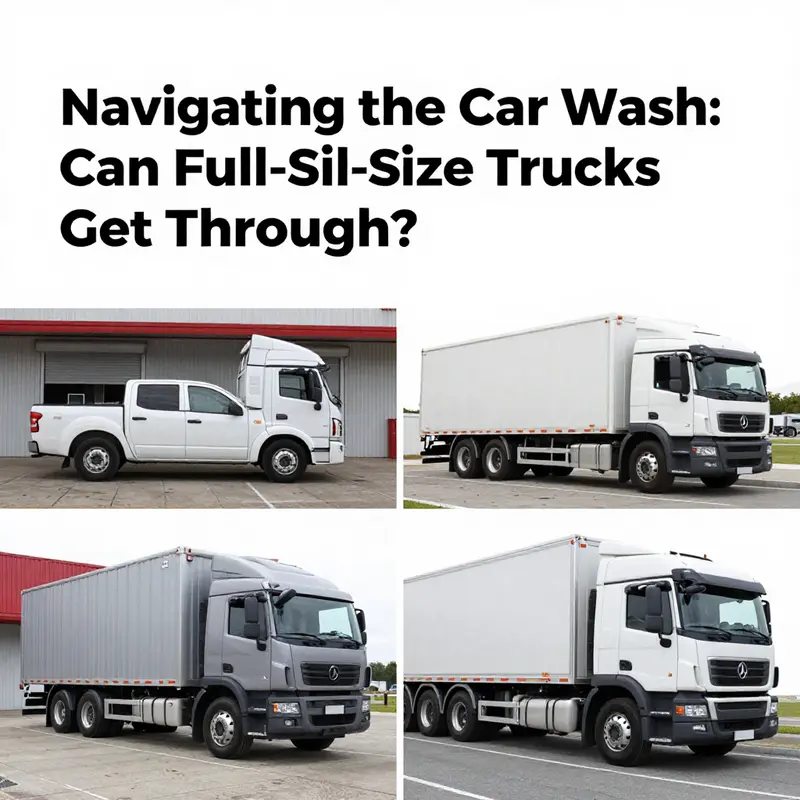
Can a full-size truck fit into a car wash without forcing awkward compromises or risking damage? The short answer is: it depends on the wash facility and how its design anticipates oversized vehicles. A full-size truck, especially a long-hauler or a heavy-duty work truck, occupies space that many standard tunnels and bays were not built to handle. Yet the market for large-vehicle washing is real, and the industry has evolved to accommodate size, weight, and the stubborn grime that commercial fleets accumulate. The question is less about capability and more about compatibility—the truck’s exact dimensions, the wash type, and the facility’s engineered tolerances must align for a safe, thorough, and efficient clean.
To understand where a full-size truck can and cannot pass through, it helps to visualize the spectrum of wash systems that fleets encounter. Tunnel-style automated washes, once the workhorse of urban and suburban car care, are designed to process a high volume of passenger cars and light commercial vehicles. They rely on a long, enclosed passage where cars are guided by rails or sensors, while brushes and spray nozzles move along the vehicle. For most standard tunnels, height clearances hover around two meters, give or take, and width and approach angles are calibrated for compact silhouettes. The result is reliable, fast service for the typical sedan or small van, but the design language of these tunnels is not inherently supportive of the tall, wide, or lengthy profiles characteristic of many full-size trucks. Attempting to force a large truck through a tunnel wash can invite clearance issues, contact with frangible components, or worse, damage that triggers costly insurance concerns.
That is where the broader landscape of car wash technologies comes into view. Channel wash systems, sometimes referred to as large-vehicle bays or pit-type configurations, embrace the geometry of bigger machines. Rather than sending the vehicle through a moving tunnel, these installations position the truck within a spacious, sturdy bay and apply cleaning elements around the stationary vehicle. The hardware is designed to span greater widths and heights, with structural supports and mounting designed to withstand heavier loads and longer service cycles. In practical terms, a channel wash can accommodate trucks that are several meters long and several hundred centimeters wide, while offering multi-directional cleaning with rotating nozzles, robust spray arms, and undercarriage wash features. These systems are purpose-built for large vehicles, including fleets with trucks, fleet delivery vans, and other heavy-duty equipment that routinely endures tough contamination.
The key differentiator here is the combination of space, time, and control. In a channel-wash setting, the truck remains stationary or nearly stationary while the wash heads operate with precision around it. This approach minimizes the risk of brush contact with doors, mirrors, or prominent trim that could occur if a tall or wide vehicle were forced through a tunnel where the vehicle itself competes for limited clearance. The result is a more thorough clean that can address contaminants common to heavy-duty work—from road grime and tar to mud splashes and diesel spray—without compromising the vehicle’s integrity. Still, not every facility can or will install a channel system, and not every fleet has the space to devote a dedicated large-vehicle wash bay. The investment in a channel system—structural reinforcement, drainage considerations, and recycled-water infrastructure—demands careful planning and expected throughput. For fleets with a mix of vehicle types, it becomes worth weighing the volume of oversized vehicles against the capital and operational costs of a large-vehicle wash bay.
Beyond stationary-channel configurations lie mobile or semi-permanent high-pressure jet options. High-Pressure Water Jet (HPWJ) solutions, often used on-site at distribution centers, construction sites, mining operations, and staging yards, provide formidable cleaning power while preserving flexibility. Portable jet rigs can address stubborn grime on heavy-duty chassis, tires, and undercarriages without requiring the vehicle to enter a fixed facility. The operator can move the jetting rig into position, target localized deposits, and perform a preliminary pass or a detailed rinse as needed. The upside is obvious: no fixed tunnel or bay constraints, the capacity to tailor the wash to specific contamination profiles, and the ability to scale cleaning intensity with the grime load. The caveat is that HPWJ work relies on skilled operators who can manage nozzle pressure, distance, and spray patterns to avoid paint and finish damage. It is an approach that pairs well with fleet maintenance in yard environments or construction sites where response time and on-demand service matter most.
To merge efficiency with fleet management, many fleets now lean into rotating-arm and 360° spray systems. These configurations place articulating arms or rotating spray heads around the vehicle and adjust in real time to vehicle size, height, and width. The beauty of this approach is twofold: coverage is comprehensive—from sides to roof to undercarriage—and automation can be paired with sensor-based sizing logic that adapts spray reach and intensity to each truck’s dimensions. The outcome is a clean that rivals the thoroughness of manual washing but with repeatable results, reduced labor costs, and consistent water use. The trade-off is cost. A smart, multi-axial system designed for fleets requires significant upfront investment and ongoing maintenance to keep the sensors and actuators performing reliably. Still, for fleet maintenance centers that serve a stable roster of large trucks, the long-term savings in labor, environmental compliance, and rinse quality can justify the expense.
Self-service wash stations, common in consumer markets, present a more nuanced fit for oversized trucks. Some large-format bays exist that can accommodate trucks up to a point, but the practical limits quickly become a bottleneck. For most semi-trucks or long-haul tractors, reach, wash arm range, and the ability to cover the undercarriage and wheel areas are compromised in self-serve designs. Operators may find it possible to remove the heaviest surface grime, but the coverage of wheel wells, undercarriage nooks, and high panels often remains incomplete. For those reasons, self-service options tend to be best suited to light-duty trucks or smaller commercial vans rather than the most demanding heavy-duty profiles. The value proposition here hinges on cost containment and the desire for local control, rather than a full, dependable deep-clean for oversized vehicles.
Of course, any decision about bringing a full-size truck through a car wash must begin with the practical step of verifying facility specifications. Vehicle owners and fleet managers should measure height, width, and length and compare them to the wash’s published clearances and processing envelope. A truck might fit in a given channel bay with inches to spare, but if the approach angle or transfer conveyors are misaligned, the misfit can create delays or damage. It is equally important to consider the weight-bearing capacity of the wash bay, the presence of any fixed obstacles, and the water-recycling or drainage arrangements that could affect operations and environmental compliance. In the best cases, facilities with large-vehicle capabilities publish detailed dimensions and allow prospective users to pre-check compatibility with the vehicle profile. If such information is not readily available, a quick site visit or a call to the facility’s maintenance or operations team can prevent misadventures at the gate.
From a maintenance and operational perspective, washing a full-size truck is as much about care as it is about cleanliness. The undercarriage, a major repository of road grime, mud, and salt exposure, benefits from targeted cleaning, which is more readily achieved in channel or rotating-arm setups than in tunnel configurations where undercarriage access may be limited. In fleet operations, consistent cleaning routines help prolong component life, reduce corrosion risk, and improve fuel efficiency by minimizing drag from caked grime. They also support compliance with environmental guidelines that govern wash-water runoff and chemical usage. The choice of wash type, therefore, becomes a strategic logistical decision that aligns with fleet size, routes, maintenance windows, and environmental stewardship.
For readers seeking practical, field-tested guidance on tackling stubborn grime—whether in the yard or in a maintenance shop—there are proven, experience-based strategies that complement the mechanical choices. For instance, scheduling targeted wash sessions to precede long-haul cycles or after heavy-duty loads can keep surfaces manageable and prevent grime from taking hold. A useful reference to distilled, field-tested best practices is available here: proven strategies for cleaning grease and tar off your trucks fast. That resource emphasizes a disciplined approach to cleaning—prioritizing access to undercarriage areas, using appropriate detergents, and adjusting pressure and nozzle angles to protect finishes while maximizing dirt removal. In practice, fleets that combine the right wash type with disciplined maintenance routines report lower repair costs and fewer downtime events, a win for uptime and productivity.
As the industry continues to adapt to ever-larger vehicles, the decision framework for can a full-size truck go through a car wash becomes clearer. Tunnel washes may work for smaller trucks and vans in some facilities, but for true full-size profiles, channel wash systems provide the most reliable balance of space, coverage, and safety. Rotating-arm systems offer excellent cleaning for fleets with high turnover and a demand for repeatable results, while mobile high-pressure jets bring flexibility to on-site cleaning at yards and job sites. Self-service stations remain a partial option, best suited for limited scopes and lighter vehicles. In short, yes, full-size trucks can go through car washes, but not all car washes are created equal for them. The right combination of vehicle dimensions, wash design, and facility readiness determines whether the journey through the wash is seamless or fraught with compromise. For fleets and drivers who navigate this landscape regularly, the goal is to align the vehicle profile with a wash system engineered to meet it—so cleanliness, efficiency, and safety rise together rather than collide.
External reference: https://www.itljournal.org/issues/2026/february/heavy-vehicle-washing-solutions
The Big Clean: Navigating Safety, Space, and Strategy When a Full-Size Truck Enters a Car Wash
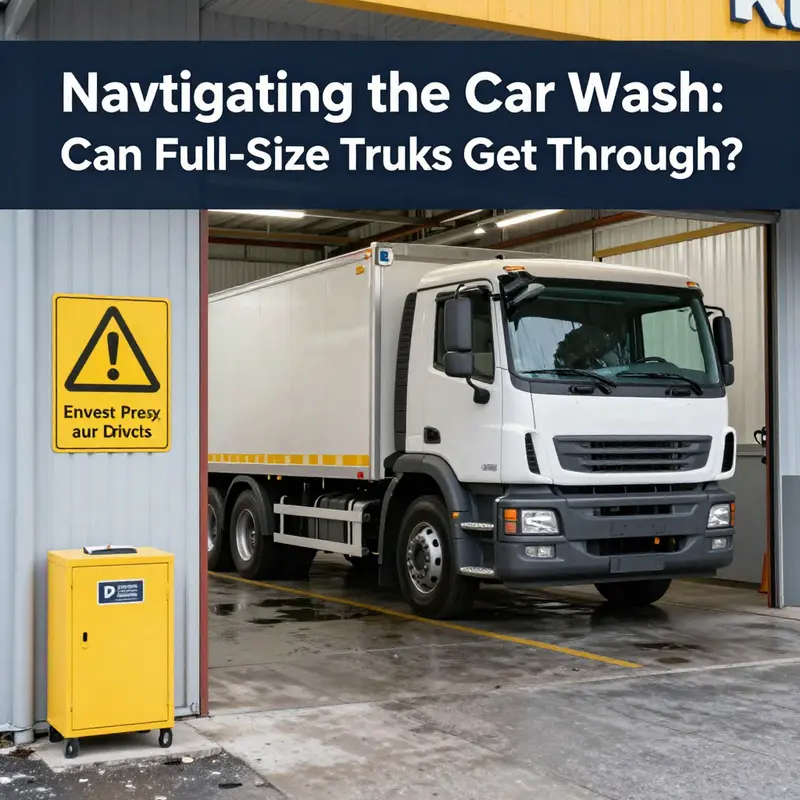
The question of whether a full-size truck can pass through a car wash is more about the specifics of the facility than the vehicle alone. In practice, many automated washes are built to accommodate larger fleets, but not every tunnel or stall can handle the dimensions of a big pickup, a service body, or a high-roof cargo hauler. The practical answer rests on three pillars: the design of the wash, how the vehicle is prepared, and how the wash is operated. When these align, a full-size truck can be cleaned efficiently without drama; when they don’t, the scene becomes loud with warnings and the risk of damage rises. In modern facilities that serve large vehicles, the mechanics of cleaning are often framed around a stationary truck while movement happens around it. A three-roll-over brush system, with two lateral brushes and one overhead brush, is a common arrangement for big machines. It allows the spray nozzles and brushes to circle the vehicle rather than forcing the truck to weave through narrow lanes. Such a setup, if sized correctly, can accommodate trucks up to several meters in width and height and can manage substantial lengths as long as the tunnel and bay clearances are ample. The key takeaway is not the romance of the machine, but the match between the truck’s footprint and the wash’s envelope. In practical terms, a full-size truck can be cleaned in a system designed to handle large vehicles, but this is only true when the facility’s dimensions—its width, height, and length—are specifically engineered for big equipment. For fleets that operate high-sided service bodies, flatbeds with tall goosenecks, or containers on long chassis, the need for generous headroom and wand clearance is non-negotiable. A typical design recognizes a minimum width range that begins around three and a half meters and can extend to four and a half meters. Heights are often planned up to five meters or more to account for elevated decks or roof-mounted accessories. Length is constrained less by the vehicle than by the tunnel’s internal geometry and staging areas, but a well-built system accommodates vehicles well beyond standard passenger cars, provided the chain of operations is calibrated to those dimensions. In this context, the central physical truth is that space and clearance trump speed. A truck does not need to travel through a wash at freeway pace. In many large-vehicle washes, the truck remains stationary as the brushes and spray arms move around it. This approach minimizes the risk of collision with rigid structures and reduces the chance of side mirrors or roof racks hitting moving components. It also improves washing coverage because the entire surface area of the vehicle can be reached with a consistent spray and brushing sequence. For operators and owners, the implication is clear: when selecting a facility, verify the exact limits. Confirm not only the advertised dimensions but also the interior clearance around the brushes, the length of the wash tunnel, and any overhead equipment. A misfit at any of these points can turn a straightforward job into a time-consuming and potentially damaging ordeal. The design conversation then naturally shifts to how a driver should approach the process. Vehicle preparation becomes a ritual of prevention. Before entering the wash, close all windows, sunroofs, and the trunk to prevent water intrusion into sensitive interiors and electrical components. Retract side mirrors completely; they are among the most vulnerable assets in the wash environment. External accessories deserve equal attention: roof racks, antennas, or loose signage should be secured or removed to avoid detachment or entanglement during the cleaning cycle. Preparation is not merely about protecting finishes; it is about ensuring the wash operates as intended without interruptions or damage to the vehicle’s exterior seals and seals around doors and hatches. Once inside, the operator’s role becomes the hinge on which the process turns. The facility’s directions are not mere suggestions; they are procedural guardrails that keep the system synchronized with the vehicle. Driving slowly and steadily through the wash is essential. Stopping or shifting gears mid-cycle can disrupt the automated sequence and create mechanical misalignment with brushes and spray arms. Transmission settings—neutral for automatic transmissions, neutral with hands off for manual ones, and the handbrake released—are standard prescriptions in most instructions. If the wash uses a towing system to position the vehicle, staff directions must be followed precisely to avoid unintended movement. The human element extends beyond the driver. Operators should wear appropriate protective gear when near high-pressure hoses and electrical components. Emergency stop buttons must be clearly marked and accessible, and all equipment should be properly grounded to prevent electric shock. Regular inspection of hoses and nozzles helps ensure there are no leaks or cracks that could cause sprays to misdirect or water to back up into electrical compartments. The environmental conditions around the wash also matter. Wet, windy, or stormy weather can complicate the process by introducing debris or driving rain into the wash bay, potentially affecting spray patterns and nozzle performance. Water quality and reservoir cleanliness are not aesthetic concerns; they directly influence wash efficiency and the longevity of pumps and spray components. Nozzle clogging is a practical enemy of effectiveness, so routine checks help keep the system reliable. Maintenance becomes the quiet backbone of safety. Daily inspections of lubrication, electrical systems, and structural integrity prevent breakdowns that could strand a truck mid-cycle. In colder climates, antifreeze additives in the pipes protect against freezing that could rupture lines or damage seals. The operational discipline that supports a big-vehicle wash is not just about one-off usage; it is an ongoing practice that maintains performance and safety across the fleet. In this regard, facilities that serve large vehicles often emphasize robust organizational practices. They adopt systematic preventive maintenance, documented checks, and clearly defined roles for staff, all aimed at preserving the wash’s integrity and the truck’s safety. For facilities aiming to optimize how they manage large-vehicle washes, robust facility management for truck wash businesses is essential. It helps ensure that equipment remains aligned with the facility’s stated dimensions and that the workflow can accommodate fleets without compromising cleanliness or safety. This emphasis on careful management also supports consistent wash quality, reduces downtime, and keeps drivers confident about the process. As a fleet owner or driver weighs the option to run a full-size truck through an automated wash, it is helpful to think of the journey as a collaboration among three elements: the space provided by the wash, the preparation performed by the driver, and the procedural discipline enforced by the operators. When each element is given due attention, the result is a clean truck and a safer workplace for the wash staff. The decision to proceed should begin with a straightforward check of site specifications. Confirm the maximum width and height allowances, and inquire about the tunnel length and the reach of the brushes. If the vehicle exceeds those constraints, a different wash solution, perhaps a larger tunnel or a drive-through design with adjustable gantries, should be considered. If the truck fits, then the ritual described above—careful preparation, patient entry, and adherence to staff directions—offers the best path to success. In that sense, the car wash becomes less of a barrier and more of a controlled cleaning environment that respects both the vehicle’s needs and the reliability of the wash system. For readers seeking further practical guidance on facility operations and ongoing maintenance, a broader discussion of industry practices can be found in external research resources that highlight safety considerations in large-vehicle washing. See NBC News for a detailed examination of safety protocols and real-world challenges associated with washing large trucks. https://www.nbcnews.com/tech/innovation/large-truck-auto-wash-safety-considerations-1234567890
Riding the Clean Wave: The Economic Realities of Washing Full-Size Trucks in Large-Vehicle Car Washes
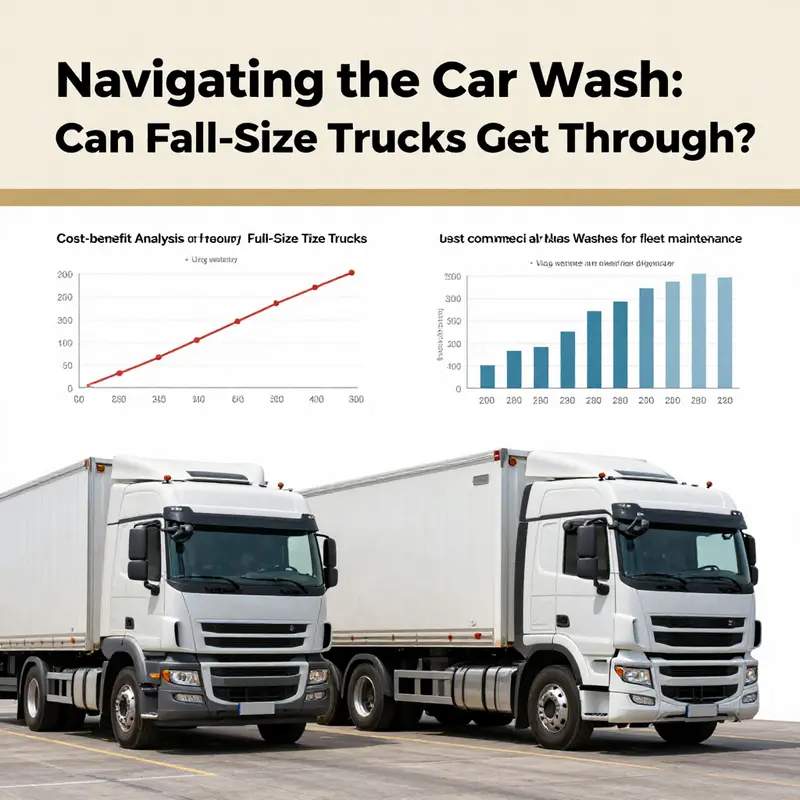
When a fleet covers miles of highways and job sites, keeping vehicles clean is asset stewardship rather than vanity. Full-size trucks in long-haul, urban delivery, or construction fleets accumulate dirt, tar, and road hazards that damage paint, accelerate corrosion, and can affect a professional image. Professional washing is thus an investment decision with clear economics. The market now accommodates larger vehicles, with growth in both fleet-focused and large-vehicle systems. In many markets, demand for fleet hygiene, regulatory compliance, and reputational value is expanding, and operators ask not only if a truck fits through a bay but what the return on investment looks like for washing trucks in a facility designed for large vehicles.
Designwise, facilities for trucks diverge from passenger-car tunnels. Trucks are often stationary while automated brushes, spray arrays, and drying systems operate around them, reducing misalignment risk and driver maneuvering. Large-vehicle washes commonly feature three roll-over brushes and a robust spray array to reach higher elevations and broader surfaces. This enables reliable service for long fleets without constant lane recalibration. Typical specifications may include lengths around eighteen meters, heights near four meters, and widths up to about 2.7 meters, though these figures vary. Operators should verify facility specs before wash to avoid delays or unsatisfactory results.
Economically, the cost side and the revenue/savings side pull in two directions. Demand for car and truck wash services is growing globally, with projected increases from roughly US$40.4 billion in 2024 to about US$44.2 billion by 2030. The segment focused on large-vehicle systems is growing faster than passenger-car systems. The commercial car wash system market, valued around US$3.2 billion in 2024, is expected to reach about US$5.1 billion by 2033, with mid-single-digit to mid-teens growth from 2026 onward. Taken together, these trends reflect rising willingness among fleets to invest in specialized infrastructure. For fleet owners, professional truck washing is increasingly a strategic capability rather than a discretionary expense.
Operations can also improve with large-vehicle washes. Stationary-truck designs can reduce labor hours and improve throughput, while automation optimizes detergent application, recycles water, and minimizes waste. Throughput gains and lower labor and material costs translate into a lower total cost of ownership for cleaning, aiding budgeting and asset utilization. Clean trucks can improve brand perception, supporting customer confidence, bid success, and supplier relationships. In regulated sectors, efficient wash systems that minimize wastewater and chemical run-off align with sustainability goals. For fleet managers, investing in large-vehicle washing helps extend asset life, reduce operational risk, and sustain service levels.
Before expanding into large-vehicle washing, operators should weigh upfront capital costs against long-run savings and consider marketing advantages that attract contractor fleets, municipal vehicles, and logistics providers. A facility that markets itself as capable of servicing high-volume truck fleets can differentiate itself in a crowded market. If a truck fits a large-vehicle design, the economic upside can be meaningful when operations are optimized. For further market context, external resources such as Grand View Research provide broader industry context and investment patterns related to commercial car wash systems.
Final thoughts
In conclusion, understanding the compatibility of full-size trucks with car wash facilities is crucial for effective fleet management. By recognizing the specific requirements and safety protocols, fleet managers can make informed choices that optimize maintenance operations. Evaluating the economic aspects and advantages will also guide them towards solutions that enhance the value of their fleet. Awareness and proactive decisions can lead to better longevity and performance of vehicles, ultimately achieving successful operational outcomes.