
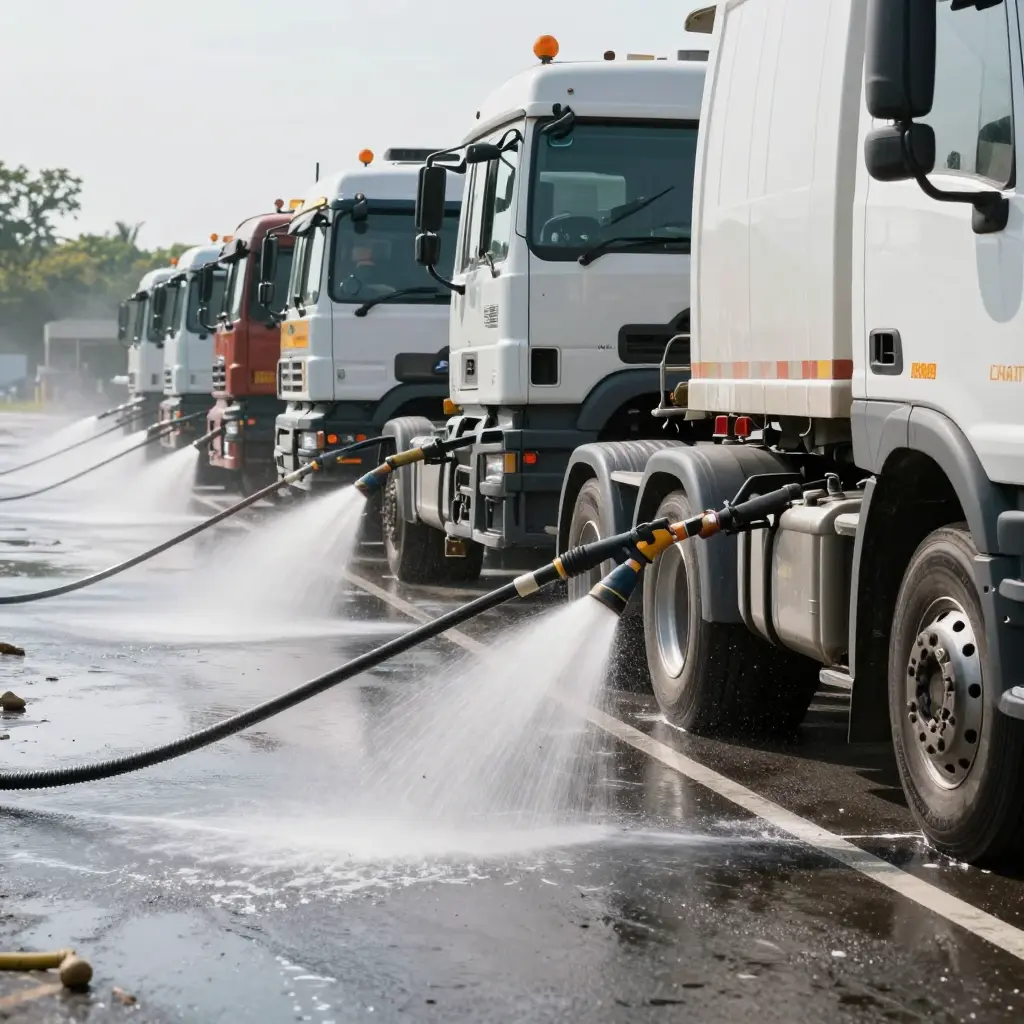
What Road Film Actually Is
Road film is not loose dirt sitting on a surface. It is a thin, bonded layer of mixed contaminants that forms where heat, friction, and exhaust meet the road.
Water alone will not remove it. Most of its ingredients are oily, carbon-rich, or chemically reactive, so they cling to painted panels, chrome, aluminum, and undercarriage metal instead of rinsing away. Water slides over the layer and leaves it intact, which is why truck fleet cleaning depends on pre-soak chemistry and controlled nozzle pressure rather than more water.
The ingredients that make it stubborn:
- Diesel soot – fine carbon particles settle into microscopic pores in the paint and darken the finish; water cannot lift carbon that has worked into the surface.
- Brake dust – metallic particles from pads and rotors cling to wheels and lower panels, and some corrode the surface once they are wet.
- Oxidized oil and grease – once oil bakes onto hot engine and drivetrain surfaces, it thickens into a gummy film that repels water.
- Tire rubber polymers – abraded rubber fuses to fenders and mud flaps and bonds tighter over time.
- Tar – asphalt residue softens in heat and re-hardens on contact with paint, trapping dust and grit as it sets.
- Bug residue – proteins and acids in insect remains etch and adhere, especially on hoods and mirrors.
- Road salt residue – chloride crystals hold moisture against the surface and accelerate corrosion underneath.
These substances bond to the surface both chemically and physically, so the fix is chemistry first, pressure second. A pre-soak softens and breaks those bonds, then mechanical action and rinse remove what is left. For heavier deposits, these proven strategies for cleaning grease and tar help crews work faster.
Treat road film as a bonded chemical layer and match pre-soak and pressure to it, and a truck comes clean instead of just looking wet.
How Pre-Soak Changes What Pressure Has to Do
Pressure alone does not clean a truck; it blasts. A pre-soak does most of the work by converting the chemical bonds that hold road film together into a removable suspension. Once that film is loosened, the wand is only rinsing suspended dirt away instead of fighting it.
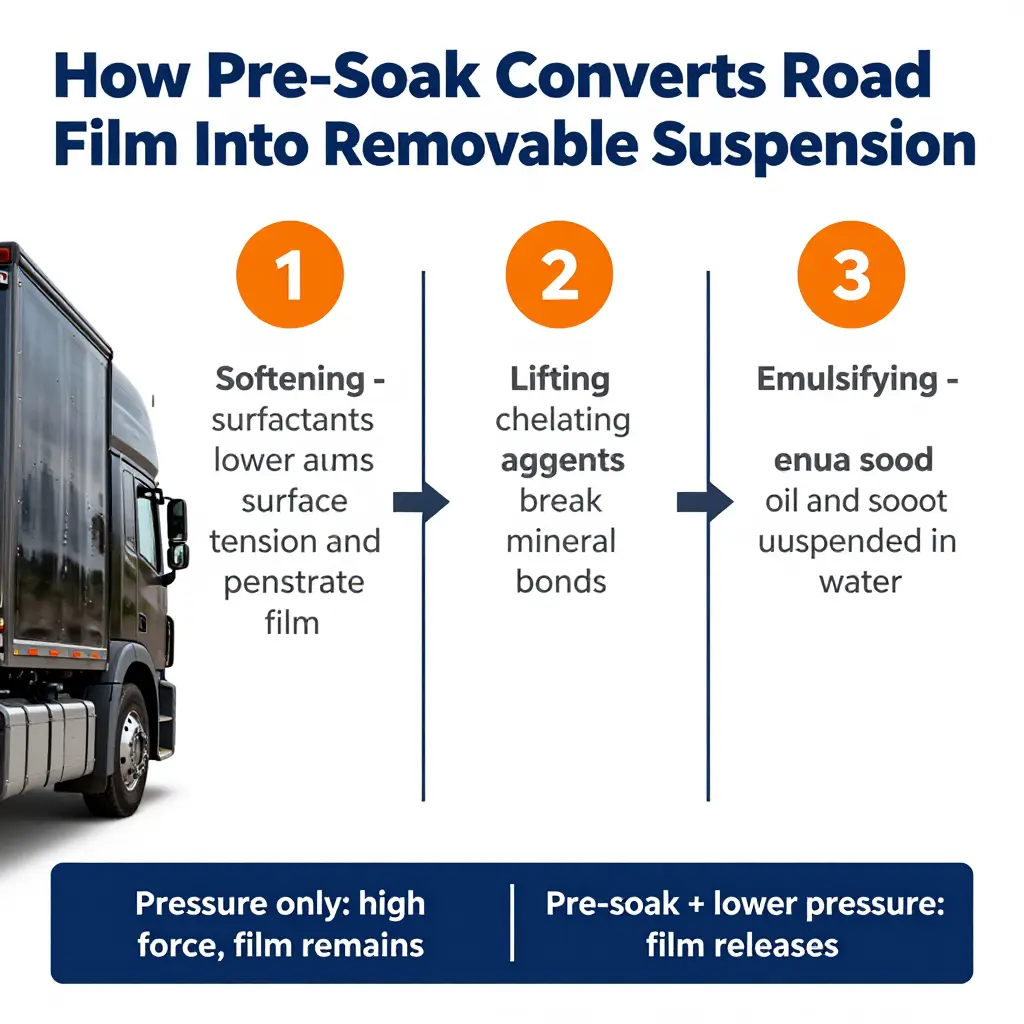
Road film is a cocktail of bitumen, diesel soot, oxidized rubber, oil, and mineral deposits baked onto paint and metal by heat, sun, and road salt. Water and high pressure shear off the top layer and leave the rest bonded. A pre-soak breaks those bonds first.
The Chemistry Doing the Work
Pre-soak formulas rely on two classes of ingredients:
- Surfactants lower the surface tension of water so it wets and penetrates the film instead of beading off, then surround oil and grease molecules so they lift into suspension.
- Chelating agents grab dissolved minerals like calcium and iron, breaking the mineral bridges that glue deposits to the surface.
Together they soften, lift, and emulsify. A truck treated with the right pre-soak gives up its road film at lower nozzle pressure, which cuts wear on decals, seals, and clear coat and reduces water and fuel use.
Matching the Chemistry to the Soil
Contaminants do not respond to the same cleaner:
- Alkaline degreasers (pH 10-13) attack oil, grease, and soot, the everyday grime of fleet truck power washing.
- Acidic cleaners (pH 2-4) dissolve mineral deposits, hard water spots, and road salt residue.
- Neutral pH options (pH 6-8) clean safely on sensitive finishes, aluminum, and polished wheels without etching.
Using the wrong one wastes product and can streak paint or corrode bare metal.
Why Dwell Time Decides Everything
Dwell time, the minutes a pre-soak sits before rinsing, matters more than any other variable here. Too short and surfactants never penetrate, so the film stays bonded. Too long, especially in direct sun, and the cleaner dries and re-deposits loosened soil back onto the surface, which forces heavier pressure. Follow the label, work in shaded bays, and never let pre-soak dry.
For the greasiest jobs, proven strategies for cleaning grease and tar off your trucks fast can help you dial in the right balance of chemistry and contact time.
Match nozzle pressure to the surface you are cleaning and the road film you are actually removing, and confirm whether a pre-soak stage is required.
| Nozzle Pressure Range | Typical Surface Target | Road Film Type Best Addressed | Pre-Soak Required (Yes/No) | Risk of Surface Damage |
|---|---|---|---|---|
| Under 1000 PSI | Cab exteriors, decals, vinyl wraps, sensitive paint | Light dust and fresh water-soluble road film | Yes | Low – gentle rinse only |
| 1000-2000 PSI | Painted body panels, aluminum, plastic trim | Everyday traffic film, light road grime, bug residue | Yes | Low to moderate – keep the nozzle moving |
| 2000-3000 PSI | Undercarriage, wheels, fenders, mud flaps | Dried road film, brake dust, salt spray, light oil | Recommended (bridging stage) | Moderate – avoid seals and seams |
| 3000-4000 PSI | Frames, wheel wells, heavy-duty chassis steel | Caked road film, tar spots, heavy grease, mud | Yes | Moderate to high – can strip coatings |
| Above 4000 PSI | Bare metal, frame rails, non-painted structural steel | Baked-on tar, hardened grease, industrial buildup | Yes (aggressive pre-soak) | High – never on painted or decaled surfaces |
Pressure alone does not decide the outcome; it has to match the substrate and the contamination. Pair the right pre-soak with the right road film and pressure to keep the film from leaving residue or damaging the finish. For stubborn buildup, review these proven strategies for cleaning grease and tar off your trucks fast.
Nozzle Pressure: The Mechanics and the Trade-Offs
Pressure Must Match the Substrate
Effective fleet truck power washing starts with a simple rule: pressure is a tool, not a weapon. No single nozzle pressure works for every surface on a rig. A chrome bumper, a polished aluminum fuel tank, and a painted door panel each tolerate a different amount of force.
Truck fleet cleaning aims to shear away road film without disturbing what sits beneath it. That means setting nozzle pressure for the substrate in front of the wand, not for the biggest number the pump can produce.
Orifice Size and Spray Angle Set Impact Force
Two variables decide how hard a water jet strikes a surface: nozzle orifice size and spray angle.
- Orifice size governs flow. A larger orifice passes more water at the same pressure, producing a wider, gentler stream. A smaller orifice squeezes that pressure into a tighter, more aggressive jet.
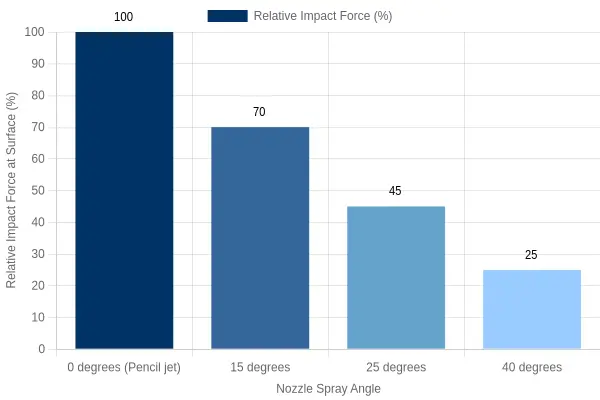
- Spray angle governs concentration. A 0-degree pencil jet puts all its energy on a single point, while a 40-degree fan spreads the same energy across a much larger area.
This is where PSI and GPM diverge. PSI measures pressure, how hard each drop presses. GPM measures flow, how much water actually arrives. Cleaning power depends on both. A high-PSI, low-GPM unit can clean slower than a moderate-PSI, high-GPM unit, because flushing road film takes volume to carry grit away, not just pinpoint force.
For stubborn buildup, the right balance of flow and chemistry usually beats raw pressure; these proven strategies for cleaning grease and tar off your trucks fast show how.
Over-Pressurizing Damages Equipment
Excessive nozzle pressure is expensive:
- Strips paint and clear coat, leaving dull, chalky patches.
- Lifts decals and vinyl graphics at the edges.
- Forces water past seals and gaskets into bearings and housings.
- Gets into electrical connectors, causing corrosion and faults that are hard to trace.
Matching pressure to each surface protects those parts while still removing road film. Start low, step up only as needed, and let flow and pre-soak do most of the work.
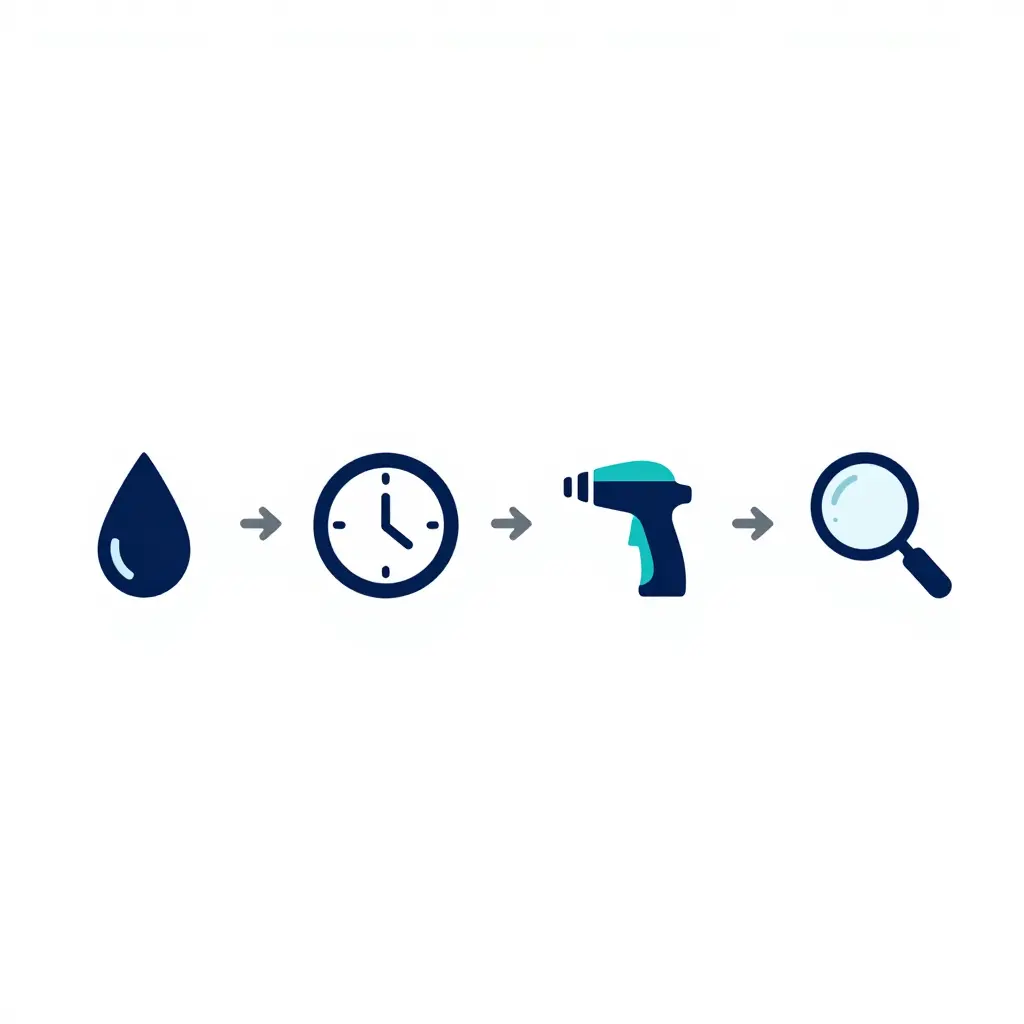
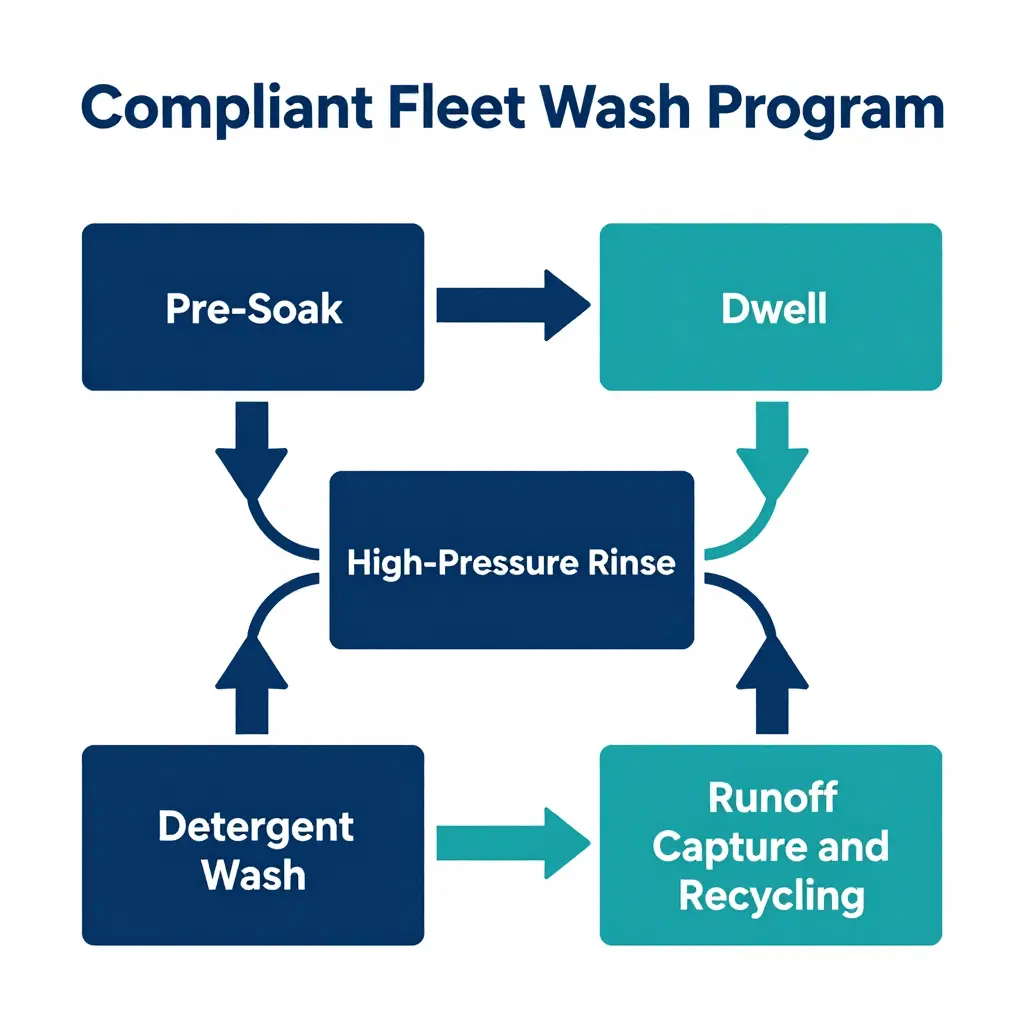
The diagram shows the four stages of a wash cycle: pre-soak softens and loosens road film, a controlled dwell time lets the chemistry break down bonded contaminants, a pressure rinse lifts the loosened residue away without damaging surfaces, and a final inspection confirms the result before the unit returns to service.
Why Pre-Soak and Pressure Only Work as a Pair
Fleet managers often treat pre-soak and nozzle pressure as two separate dials, one for chemistry and one for force. They are two halves of a single process. Sequenced correctly, they change what road film leaves behind on your equipment. Used apart, they just move the problem around the truck.
Consider pre-soak without enough follow-up pressure. The chemistry lifts and emulsifies the bonded layer of road film into a loose slurry, but if the rinse lacks force, that residue never leaves the panel. It dries back down, trapping the same contaminants you just paid to break apart. For stubborn layers, pairing the right soap with sound technique matters, which is why fleets study proven strategies for removing stubborn grease and tar before locking in a routine.
Now reverse it. Blast a dry, untreated panel with high nozzle pressure alone and the stream drives abrasive grit, road salt, and diesel soot across the surface and into seams, welds, and door gaps, where it accelerates corrosion from the inside out.
Re-deposition is the quiet failure most fleets never measure. Loosened road film that is not flushed at the correct angle settles somewhere else, often on the panels you just cleaned. Angle and flow matter as much as raw force.
- Rinse top-down so loosened film travels toward the ground, never back across clean panels.
- Hold the nozzle at a consistent working angle to push residue off, not along, the surface.
- Respect dwell time, letting pre-soak react before pressure ever touches the truck.
- Match nozzle pressure to the panel, easing off around seals, decals, and seams.
In a fleet truck power washing program, a documented two-stage method, pre-soak first and then a controlled pressure rinse, produces consistent results and protects your assets.
Road Film Removal Efficiency by Nozzle Pressure
Nozzle pressure and pre-soak chemistry decide how much highway road film comes off a truck’s finish, and the chart below shows the relationship. Removal efficiency climbs steadily from the lowest setting into the 2000-3000 PSI band, then levels off and slips past roughly 4000 PSI when there is no chemical help, which tells us that raw force alone eventually wastes water and wears the surface without finishing the job. With a pre-soak applied first, the whole curve shifts upward and reaches a higher, flatter plateau, holding its efficiency even at elevated pressures. For fleet managers, the practical conclusion is that the right pre-soak with moderate pressure beats simply raising the PSI. This matters most when you are removing stubborn road film and grease, where pre-soak does the heavy lifting before the wand ever touches the paint.
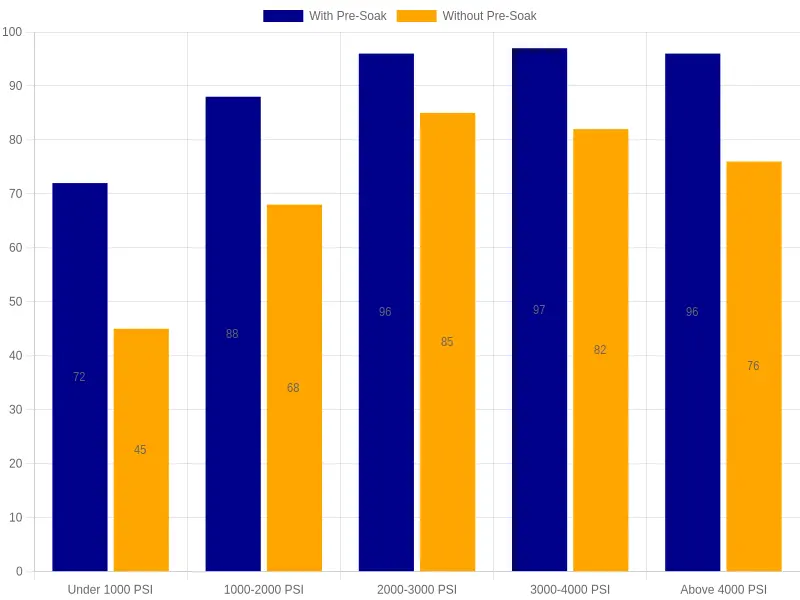
Caption: Pre-soak raises road film removal efficiency across every nozzle pressure range, delivering its biggest gains at low and moderate pressures.
Frequently Asked Questions
What nozzle pressure is safe for painted trucks?
Most painted fleet trucks are safe at a nozzle pressure between 1,000 and 1,500 PSI when the wand stays at least 12 inches from the surface. Pushing beyond that range can strip clear coat, dull the finish, or force water past seals. Start low, test on a hidden panel, and use a wide spray angle to spread the force.
How long should a pre-soak dwell before rinsing?
A pre-soak generally needs three to five minutes of dwell time to break down grime and road film before rinsing. If it dries on the surface, it can leave streaks, while rinsing too early wastes the chemistry. Work in shaded areas and keep panels wet throughout the dwell window.
Does higher pressure remove tar and grease faster?
Higher nozzle pressure can knock off heavy tar and grease faster, but it also raises the risk of paint, decal, and seal damage. The smarter approach pairs a quality pre-soak with moderate pressure so chemistry does most of the work. For stubborn deposits, these proven strategies for cleaning grease and tar off your trucks fast show how targeted degreasers beat brute force.
How do I prevent decal damage during washing?
Keep nozzle pressure moderate, hold the wand at a distance, and never aim straight at decal edges. A pre-soak softens dirt so you need less mechanical force across graphics. Always angle the spray and avoid concentrating the stream on a single spot.
Can a pre-soak alone replace pressure washing?
Pre-soak alone rarely removes everything, especially bonded road film and oily residue. It loosens contaminants so a lower-pressure rinse can finish the job efficiently. Most fleets get the best results by combining pre-soak with a controlled fleet truck power washing pass.
How often should fleets wash to control road film?
For most fleets, washing every one to two weeks controls road film before it bonds and becomes harder to remove. High-mileage or winter-exposed trucks may need weekly service. Consistent scheduling also protects paint, decals, and resale value.
Compliance, Maintenance, and Fleet Program Foundations
Proper fleet truck power washing is not a cosmetic chore. It is a compliance and asset-management decision that touches budgets, regulators, and the lifespan of every unit you own.
Runoff, detergent selection, and water use are part of that decision, as is the way you document and repeat the wash routine across the fleet.
Runoff, Detergent, and Water Use
Every wash produces wastewater carrying oils, heavy metals, and suspended solids. In many jurisdictions, sending that runoff straight to a storm drain invites fines, so treat it or capture it through an oil-water separator.
Detergent choice matters just as much. Biodegradable, pH-neutral formulas lift road film without leaving a corrosive residue on paint or connectors. Because these choices map onto environmental and emissions rules, understand truck wash industry compliance and emissions regulations before you standardize a chemistry. Water conservation is the third piece: a pre-soak stage softens baked-on soil so a shorter, lower-volume rinse finishes the job, cutting gallons and labor per unit.
Maintenance and Equipment Life
Regular washing protects more than appearance. It strips the abrasive grit, salt, and chemical film that accelerate corrosion on frames, landing gear, and electrical connectors, which is why routine cleaning belongs inside a broader trailer maintenance routine. Clean assets fail less, last longer, and hold resale value.
Some deposits resist a standard cycle. When grease and tar build up, proven strategies for cleaning grease and tar off your trucks fast keep your bays moving without harsh guesswork.
Repeatable Programs Win
A wash routine that is documented and repeatable stays consistent across drivers, shifts, and locations, and it holds up when vehicles must deploy at short notice. Treating wash standards as part of a wider fleet standardization and emergency response plan makes the routine part of operational readiness.
Disciplined fleet truck power washing ties environmental compliance, asset longevity, and readiness together.
Conclusion: Control the Two Variables That Matter
What remains on a truck after washing comes down to two controllable inputs: nozzle pressure and pre-soak. Get them right, and fleet truck power washing strips road film cleanly while protecting paint, decals, and metal. Get them wrong, and road film stays bonded, trapping grime and accelerating wear.
For fleet managers, trucking companies, and vehicle maintenance professionals, a few practical steps make the difference:
- Calibrate nozzle pressure for each surface type, using lower pressure on decals and seals while still lifting road film.
- Set a pre-soak dwell time long enough for the chemicals to break down road film before the pressure stage begins.
- Standardize chemical dilution, dwell time, and pressure settings in a single written wash procedure.
- Track results over time and adjust when equipment, routes, or seasons change.
Treat these choices as the foundation of building a repeatable wash standard rather than a one-time effort. Do that, and fleet truck power washing keeps delivering consistent, protective results.