

Maintaining a clean fleet is crucial for fleet managers, trucking company owners, and supervisors in the logistics and construction sectors. A DIY semi truck wash presents an efficient and cost-effective solution, allowing operators to take charge of cleanliness while optimizing both time and resources. This comprehensive guide explores the various self-service options available, highlights the top-rated facilities in diverse locations, provides essential tools for effective truck cleaning, and analyzes pricing structures to evaluate the value of DIY truck washes.
Self-Service on the Open Road: Finding Do-It-Yourself Semi Truck Washes Near You
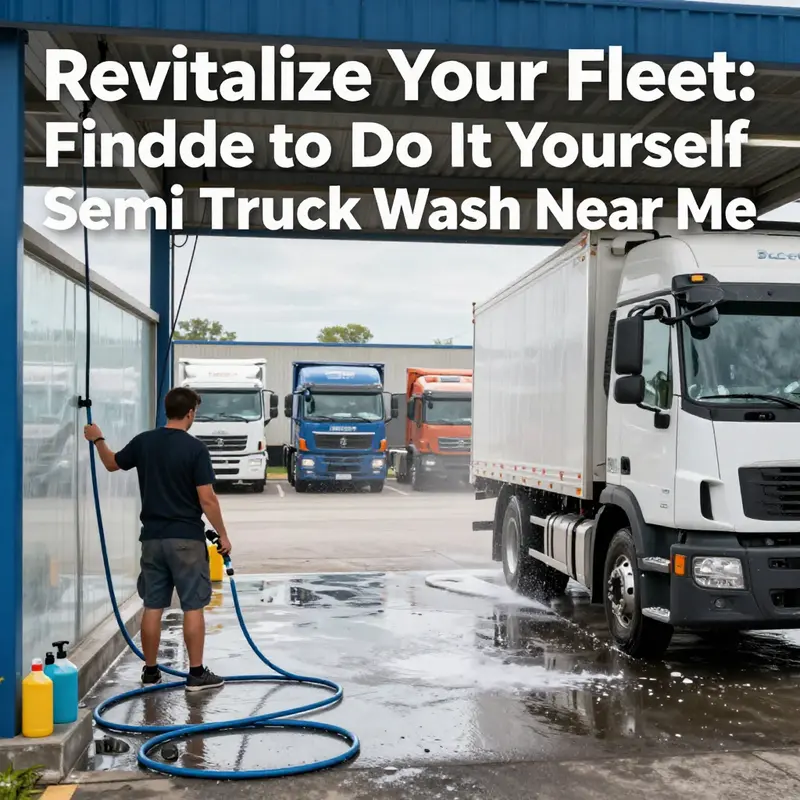
The road calls, but so does the need to keep a rig clean and corrosion-free. A do-it-yourself, self-service semi truck wash near you can be a practical answer for fleets and individual drivers who want control over every step of the cleaning process, from the initial rinse to the final undercarriage scrub. DIY washes deliver a blend of independence and efficiency. They let you tailor the wash to the truck’s exact needs, accommodate stubborn grime in hard-to-reach areas, and manage downtime in a way that means less waiting for the next available scrubbing station. The appeal is clear: you manage the workflow, you control the water and chemical use, and you can often complete a thorough job for a fraction of the cost of a full-service car wash, especially when you’re handling large, heavy-duty equipment that spends long hours on the road and in industrial environments. Yet the convenience comes with a few practical considerations—finding the right location, understanding the available equipment, and knowing how to sequence your wash so you maximize results without wasting time or water.
To locate a self-service semi truck wash near you, you’ll want to lean on maps and directories that specialize in heavy-duty vehicle services. Start with online mapping services and search with phrases like “self-service truck wash near me” or “do-it-yourself semi truck wash.” The results typically present facilities that offer high-pressure hoses, multiple cleaning bays, and a range of tools designed for big rigs. The listings usually include essential details you’ll need before you pull in: operating hours, the types of equipment available (undercarriage wash, wheel brushes, high-volume sprayers, and foam applicators), and customer reviews that can reveal how a site handles peak times, the reliability of the pressure settings, and the cleanliness of the facilities themselves. In practice, the most reliable guides are those that combine user feedback with current hours, because both can shift with seasonal demand and maintenance schedules. When time is money, a quick glance at reviews, a phone call to confirm availability, and a look at posted price structures can save you a lot of back-and-forth once you’re already on the approach.
Within the landscape of self-service washes, an important factor to consider is the consistency of the equipment and the payment flow. The typical self-service bay is designed around a straightforward, if slightly old-school, workflow. You’ll encounter coin-operated or card-activated payment systems, which control access to the spray wands and the various cleaning modes. The hardware is rugged, built to withstand diesel grime and winter salt, but it’s not immune to the occasional jam or miscalibrated spray. That’s why a well-run facility maintains responsive pay stations and clearly labeled controls. Adjustable pressure nozzles let you dial in the force—strong enough to blast away caked-on mud and road grime, but not so intense that you fling debris or risk damage to seals and paint. The ability to modulate pressure is a small detail, but it matters a lot when you’re cleaning sensitive components around the engine bay, around undercarriage components, or near vulnerable chrome and trim.
An equally critical feature is water management. Many self-service bays incorporate water recycling systems that conserve valuable resources while still delivering dependable cleaning power. If you’re operating a fleet where environmental considerations are paramount, or you’re simply trying to reduce water expenses on a long-haul schedule, a facility with recycling features can be a decisive factor. The concept is straightforward: after the wash, water reclamation filters and reuses as much of the wash runoff as possible, reducing overall consumption and minimizing effluent. This not only helps the environment but can also lower your operating costs when you’re performing routine cleanings across multiple vehicles. When you’re comparing facilities, note whether the bays advertise recycling features and whether their maintenance schedules include regular checks of filtration and pump efficiency. Even with recycling, you’ll still want to plan for a thorough initial rinse and a targeted scrub, particularly for the undercarriage and wheel wells, where road grime and chemical residue tend to accumulate.
The equipment lineup you’re likely to encounter is tailored for industrial-scale cleaning, not consumer-grade convenience. You’ll find high-pressure hoses with adjustable spray patterns to reach around stairs, steps, and the valve covers; wheel brushes that can be slid around rims and hub assemblies without gouging metal; and undercarriage sprayers designed to spray up from the crevices where oil, gravel, and salt linger. Some bays also offer foam applicators or detergent injectors that help loosen tar, grease, and caked-on mud. If you’re dealing with grease or tar—common in fleets that operate in heavy urban or industrial corridors—an efficient approach is to apply a degreasing agent to the most stubborn spots and allow a brief dwell time before a rinse. The right sequence is essential: start with a broad rinse to remove loose debris, then tackle the undercarriage to dislodge salt and road spray, then focus on the wheels and brake areas where brake dust can embed into rubber and metal. A careful order reduces the likelihood of re-depositing dirty water onto already clean surfaces and minimizes the amount of repeated scrubbing you’ll need to do.
Pricing in self-service facilities tends to be straightforward but varies by region and facility type. A common model charges by the minute or by the cycle, with rates typically ranging from roughly $0.15 to $0.30 per minute. It’s not unusual for fleets or larger operators to negotiate customized arrangements, especially when they require frequent, bulk access or a consistent setup for a defined number of trucks. For those who crave a higher level of automation or additional care, some facilities offer options that approach the pricing of mild, soft-touch or even touchless wash systems designed for fleet sanitation. These options can involve higher upfront costs in the long run, sometimes cited as starting around $40,000 for advanced commercial-grade setups, though these figures vary with the scope of the system, the number of bays, and whether installation includes maintenance contracts. When you’re evaluating options, it’s wise to map out expected wash frequency, the typical time you’ll need per truck, and the anticipated scale of your operation. If you anticipate a higher volume of cleanings or a fleet with many trailers to care for, a straightforward DIY wash can pay for itself in a relatively short time, especially if your maintenance windows are narrow and you must minimize downtime.
As you map your route and select a site, a key piece of the decision-making puzzle is the equipment’s reliability and the station’s layout. Some facilities provide multiple mirrors of the wash bays—the kind of setup that helps minimize waiting time during busy periods. A well-run self-service site will also offer clear signage detailing the recommended wash sequence, the order in which to apply soaps and degreasers, and the best practices for avoiding streaks and water spots on large metal surfaces. The top-tier sites provide accessible bays with adequate lighting, clean soap dispensers, and a straightforward path to exit after the rinse, so you aren’t left maneuvering a heavy vehicle in a cramped space or looping back through a congested area. The clarity of these operational cues can dramatically improve efficiency, which matters when you’re trying to complete a line haul with minimal detours or delays.
If you’re seeking additional guidance on practical cleaning strategies, you can explore dedicated approaches to removing stubborn grease and tar from trucks. For readers who want a detailed playbook on tough residues, a trusted resource offers proven strategies you can adapt for a semi truck. Proven Strategies for Cleaning Grease and Tar Off Your Trucks Fast provides actionable steps, from selecting the right degreasers to optimizing dwell times and rinse pressures. Integrating those insights with a DIY wash routine can dramatically reduce the time you spend scrubbing while boosting the overall cleanliness of your fleet. This internal link serves as a practical reference, bridging the general guidance of locating self-service options with a more technical, technique-focused resource.
Finding the right DIY option is not a one-off decision; it’s a practice in balancing cost, time, and effectiveness. In the field, operators learn to plan wash cycles around the vehicle’s schedule, coordinating with dispatch to ensure that a truck’s downtime is minimized while still leaving the rig in a reliable, inspection-ready state. For fleets, there’s a broader strategic value to integrating regular self-service cleanings into a maintenance program. Keeping undercarriages free of caked grime and removing road salt can extend the life of components that are vital to performance and safety. The value isn’t simply about aesthetics; it’s about protecting metal surfaces from corrosion, preserving seal integrity, and maintaining curb appeal that matters for resale value and professional image. The discipline of regular maintenance—done with a DIY wash in mind—can help managers anticipate how often a given truck will need a deep clean, ensuring the right allocation of resources and drivers’ time.
As you travel from one region to another, you’ll notice differences in facility density and availability. In metropolitan regions or along major freight corridors, you’ll often find a richer ecosystem of self-service options with extended hours and a higher likelihood of near-term wait times during peak windows. In rural or remote areas, a self-service option might be fewer in number, but the ones that exist tend to be more spacious and easier to navigate for larger vehicles. Either way, the key to success is preparedness. Know your wash plan before you roll in: which bays you’ll use for the initial rinse, which ones will host your wheel cleaning, and where you’ll manage clay or tar removal if needed. Bring along the essentials—clean rags for final detailing, a couple of microfiber towels to prevent water spots, and a spare set of nozzle tips or brushes in case a bay lacks a specific tool. A well-prepared operator minimizes downtime and ensures that the wash remains a quick, repeatable routine rather than an improvisational scramble.
To ensure your chapter of the journey remains connected to the broader conversation about truck cleanliness and fleet efficiency, it’s worth recognizing that many operators and fleet managers view DIY washes as part of a broader maintenance culture. Regular, disciplined cleaning complements routine mechanical service, helping to reduce corrosion risk and improve fuel efficiency by maintaining smoother surfaces. When combined with scheduled undercarriage inspections, tire and brake checks, and timely paint touch-ups, do-it-yourself wash sessions contribute to a holistic approach to keeping a fleet in peak condition. If you’re building a culture where drivers take pride in the cleanliness of their rigs, you’ll likely see improvements in on-time departures, reduced roadside breakdowns caused by road grime, and a stronger sense of accountability across the team. The method is practical, the outcomes measurable, and the process, when executed with forethought, can become a routine that supports reliability on long hauls and tight schedules alike.
External resource: For up-to-date locations and hours of truck wash facilities, you can consult a widely used directory of truck stop wash locations: https://www.loves.com/truck-wash-locations. This external reference offers a practical way to verify the current availability of self-service bays as you plan your next run, keeping you aligned with live information while you focus on the efficiency of your own wash routine.
null
null
On-Site Brilliance: Building a Practical, Near-You DIY Semi-Truck Wash Toolkit
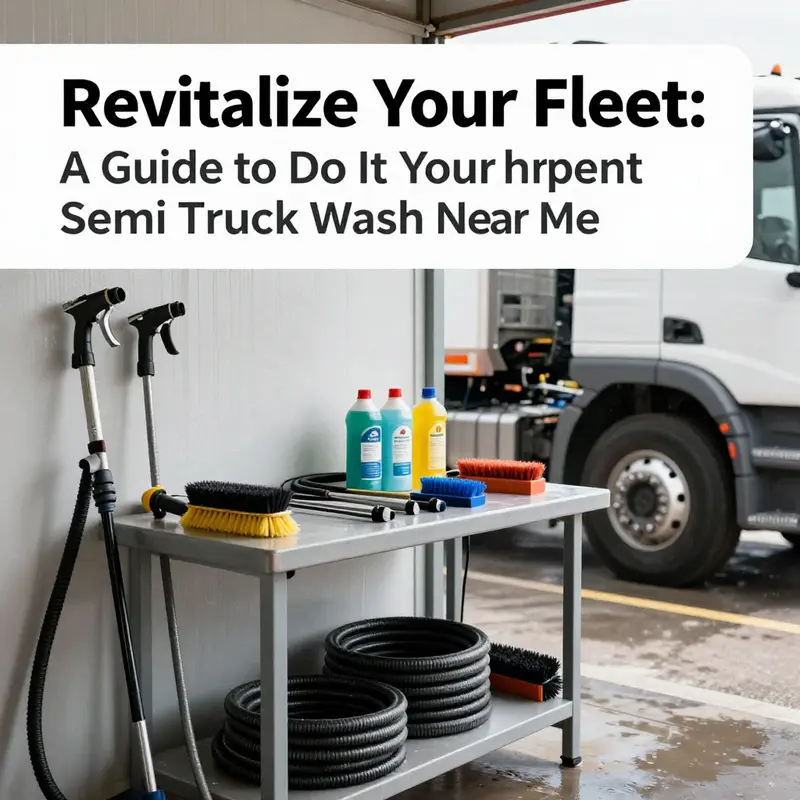
When a semi-truck pulls into a yard or a convenient stop near you, the difference between a cursory rinse and a thorough, road-ready cleanse often comes down to the toolkit you bring to the wash. DIY truck cleaning is not just about spraying water; it’s a carefully choreographed workflow that blends mechanical power, chemical chemistry, safety discipline, and environmental stewardship. The goal is to strip away road grime, tar, grease, and winter salt without compromising the finish, while keeping the operation efficient enough to fit into a busy fleet schedule. The first step is understanding how the right equipment shapes every step of the process, from the initial pre-rinse to the final rinse and dry. A well-chosen set of tools makes it possible to control water pressure, temperature, detergent action, and coverage, so you can tackle stubborn deposits with confidence rather than brute force alone. In this sense, the DIY approach becomes less about improvisation and more about assembling a purpose-built kit that works where you park, whether that’s a regional maintenance yard, a customer lot, or a remote outpost along a long-haul route.
At the core of any DIY semi-truck wash is a robust high-pressure water system. This is not merely a fancy hose; it is a dedicated unit that can deliver the range of pressures typical for heavy-duty cleaning—generally in the 2,000 to 4,000 pounds per square inch range. The value of high pressure is twofold. The stream’s force dislodges road grime, tar, and caked grease from painted surfaces, undercarriages, and wheel wells. It creates a standoff distance from the truck’s sensitive components, allowing the jet to reach recessed areas without brute contact. With proper technique, a high-pressure rinse reduces the time needed for manual scrubbing and preps the surface for detergents. In many fleets, the ability to customize the water temperature—from cool for initial wetting to warm or hot for emulsifying oil-based residues—significantly improves effectiveness. Heating water to the 150°F to 200°F range enhances the bond-breaking action of detergents and helps rinse away residues that cling to metal and plastics. It is essential, however, to manage heat safely, ensuring hoses, nozzles, and handles remain cool enough to handle and that the truck’s surfaces are not exposed to thermal shock or paint damage from sudden temperature swings.
Beyond power and temperature, a mobile or semi-permanent wash unit gives you the flexibility to work where you park. A portable washing solution that integrates a water heater, high-pressure pump, and spray nozzles into a single, self-contained system can move with you—from a yard to a customer site, or to a remote location where a fixed wash bay is not available. The portability is more than convenience; it is a strategic capability for fleets that manage seasonal routes, multi-stop contracts, or on-demand service windows. The unit’s compact footprint helps minimize the space required for setup and teardown, reducing downtime between cleans and allowing drivers to return to service quickly. This mobility is complemented by thoughtful design that prioritizes ease of use, durable construction, and safety features, so a single operator can run a wash without disruption to other fleet activities.
For those times when a yard or facility intends to deliver more consistent, uniform coverage across every surface, a wash platform—often rail-mounted or otherwise installed as a fixed or semi-fixed system—offers another path. The platform concept situates the cleaning apparatus above and around the truck, moving along the vehicle’s length to ensure even application and abandoning the need for manual, repetitive passes in tight or awkward angles. A rail-mounted setup can deliver reliable results for large commercial vehicles by maintaining a consistent height, angle, and spray envelope as the truck glides through the system. It minimizes blind spots like wheel arches and underside panels, which can accumulate heavy grime that defeats a hand-scrub approach. The trade-off is upfront capital and installation considerations, but for fleets that regularly clean numerous vehicles of similar dimensions, the platform approach delivers repeatable, predictable results and frees up labor for other maintenance tasks.
No matter the cleaning system you choose, detergents and cleaning agents are the magic in the mix. Environmentally friendly, truck-specific detergents are formulated to cut through oil, grease, and road film while protecting paint, chrome trim, and rubber sealants. The right cleaners work in concert with hot water to loosen and emulsify residues, making rinses quicker and more complete. It’s important to select formulations that are compatible with the materials on your truck—exhaust shields, plastics, painted surfaces, and chrome can be sensitive to certain chemistries. A good practice is to apply cleaners in a controlled sequence: a pre-wash to loosen surface soils, a targeted degreasing step for the undercarriage and wheel wells, and a final, all-surface wash that leaves a clean finish without streaks or dulling. In the broader workflow, the detergents should be used judiciously to avoid excessive runoff and to minimize waste in the drainage system. The choice of cleaners also ties into environmental considerations. As a practical guideline, use biodegradable, low-foaming formulations that are designed for large-scale washing operations; they tend to be safer for operator exposure and easier to manage within containment systems.
Safety and support equipment form the backbone of responsible DIY washing. Non-slip mats across the wash deck reduce the risk of slips when water and detergents are on the surface. Protective eyewear and gloves shield workers from splashes and chemical exposure, while a sturdy, accessible ladder or elevated platform lets you reach higher surfaces like mirrors, roof cans, or light fixtures without straining. A robust containment and drainage plan is not a luxury but a necessity. Without proper runoff controls, you risk environmental contamination, which can lead to costly fines and work stoppages. A well-designed setup channels used water to a designated treatment or recovery area, with filters or sediment traps to capture solids and large debris. Even with mobile units, portable filtration solutions or temporary containment dikes can help manage runoff during a wash on an external lot. This is not only about regulatory compliance; it’s about demonstrating professionalism and preserving the environments around the facilities where trucks operate daily.
Operational discipline is the quiet engine behind a successful DIY wash. Pre-rinse loosens loose debris before you apply detergents, especially in areas with heavy caked mud around the frame and under the cab. A deliberate wash sequence—starting with the top of the cab and sides, then moving to the hood, doors, and mirrors, followed by the undercarriage and wheels—helps keep dirt from re-depositing on freshly cleaned panels. Wheels and tires deserve special attention, as brake dust clinging to chrome and plastic trim can smear if not thoroughly rinsed and brushed. A soft brush or wheel mitt, used in tandem with the cleaner, can dislodge stubborn residues without scratching surfaces. In this context, the phrase “top to bottom” is not a cliché; it’s a practical rule that reduces the risk of streaking, water spots, and recessed grime sliding back onto already-clean areas.
An integrated approach to equipment and workflow also must consider the realities of space, power, and water supply. In urban or suburban settings, available electrical circuits may limit how powerful a pump can be without tripping breakers, so it’s wise to plan a load calculation that accommodates simultaneous equipment use, such as heat, pump, and water heating. Water supply is equally critical; in some setups, a dedicated water tank or a reliable municipal line with appropriate pressure is necessary to sustain a steady wash without starving the system mid-task. In remote locations or temporary sites, a portable water supply tank can be a lifesaver, ensuring you don’t lose time hunting for hydrants. Space considerations matter, too. A compact, well-organized layout minimizes operator movement and keeps hoses and cords out of the way of vehicle traffic. The result is a safer, faster, more repeatable process that reduces the chance of accidents or missed spots.
While the hardware forms the backbone, the soft skill of maintenance cannot be overlooked. Regular checks for hoses, fittings, nozzles, and seals prevent leaks and pressure drops that degrade performance. Nozzle wear, in particular, can alter spray patterns and performance; replacing worn tips is a simple, low-cost maintenance that preserves cleaning quality. A clean, organized tool station helps operators keep track of brushes, squeegees, and wipe-down cloths so nothing is left lying in the shadow of a mud-splattered wheel. Documentation and checklists can help keep the crew aligned on daily, weekly, and monthly tasks, ensuring that nothing slips through the cracks when the schedule tightens. The goal is to build a culture where safety, efficiency, and environmental responsibility are part of the standard operating procedure rather than afterthoughts.
In practice, nearby facilities often become your best teachers for the “near me” portion of the equation. When you search for a DIY semi-truck wash near you, you’re not just locating a place to scrub; you’re identifying a partner that understands the local environment, the road grime you’re likely to encounter, and the regulatory context in which you operate. In regions with harsher winters, you’ll encounter salt and calcium deposits that demand more robust degreasing power and a sturdier undercarriage rinse. In places with warmer climates or higher humidity, evaporative drying and streak prevention become the focus. The beauty of DIY is that you can tailor your toolkit to the specific needs of your routes and your fleet’s operational tempo. You can, over time, refine the sequence that yields the most consistent results, trimming steps that seem redundant and reinvesting in tools that yield faster, cleaner outcomes. This iterative approach is the practical heart of making a near-you wash truly yours.
To bridge the practical with the practical-technical, consider how this toolkit translates into real-world results. A high-pressure water system, paired with heated water and a mobile unit where you can set up quickly, gives you the capability to address heavy soils efficiently at a moment’s notice. The wash platform, if you choose to install one, multiplies your consistency across multiple vehicles by removing the guesswork from where the sprinkler heads point and how the spray covers the frame rails. The chemical regimen, designed for heavy-duty residues yet mindful of environmental impact, ensures you’re not fighting stubborn film with brute force alone. The safety and containment steps protect your crew and the community, while disciplined workflow and maintenance keep the operation reliable through back-to-back washes.
For those who want to explore a proven, discipline-driven approach to removing stubborn contaminants, there is a wealth of practical guidance available. For proven strategies for cleaning grease and tar off your trucks fast, a targeted resource offers field-tested techniques and tips that complement the hardware and detergents described here. This kind of guidance helps you adapt the general framework to the specific grime you meet on your routes, ensuring you’re not reinventing the wheel with every wash. It’s about turning knowledge into repeatable results, so every truck returns to service clean, protected, and ready for the next leg of its journey.
In the end, the near-you DIY semi-truck wash is less about chasing a single perfect setup and more about curating a dependable kit that travels with your operation wherever the next access point to water, power, or shade may be. The core ideas—powerful yet controlled cleaning, mobile flexibility, surface-safe chemistry, rigorous safety and containment, and disciplined workflow—combine to deliver consistency, speed, and pride in workmanship. When you assemble and maintain the right mix of high-pressure capability, hot water, portable or platform-based cleaning, and smart detergents, you empower every driver and technician to do their best work close to where trucks actually operate. And in a landscape where maintenance windows are tight and schedules are tight, that proximity becomes a strategic advantage worth investing in.
External resource for deeper technical context: For a detailed overview of high-end, integrated wash machine specifications and best practices, see this external resource: https://www.made-in-china.com/products/2026/01/01/CB-730-Bus-Wash-Machine-Truck-Washer.html
Beyond the Metered Hoses: Pricing, Value, and Real-World Decisions in DIY Semi Truck Washes Near You
The question of how much a do-it-yourself (DIY) semi truck wash costs is only part of the picture. To truly understand pricing, you must look beyond the posted hourly rate or per-session fee and examine the broader value equation. When a driver pulls into a self-service bay, the sticker price may reflect a combination of location, available amenities, and the sheer scale of the truck wash that can handle a heavy vehicle without turning away. Yet the real decision rests on what that price buys you in terms of time saved, vehicle longevity, and the steady maintenance of appearance that fleets rely on to project reliability. In most markets, a DIY wash station charges somewhere in a narrow range—roughly between twenty and fifty dollars per session. The exact number depends on several practical variables: the level of access to high-pressure hoses and extension wands, the presence of biodegradable detergents, whether there are on-site drying stations, the drive-through configuration, and even the local cost of utilities that feed the water flow and electrical power to pumps and pumps’ heat exchangers. These direct costs are easy to quantify; they’re the price tag that greets a driver when the bay attendant hands over the key or the timer. They do not, however, capture the full economic picture that a fleet or independent owner must weigh.
If you want the full sweep of costs, you have to account for the wear and tear on your own cleaning gear, the incremental cost of water usage, and the opportunity cost of time spent in manual labor. Cleaning a semi is no small task. It involves physically scrubbing large panels, corners, cavities, and the undercarriage, where caked grime and road film accumulate. The larger the truck and the more miles it has carried, the greater the labor commitment. The upfront price of a DIY wash might seem attractive, but there’s an implicit trade-off: your time is now a factor in the equation. For a single vehicle, the time spent might be reasonable, but fleets with a dozen, or more, units quickly realize that the hours spent cleaning manually can accumulate into substantial labor costs, not to mention the opportunity cost of a driver or a technician pulled away from operations.
Beyond the immediate bill, there is the question of effect on the finish. DIY washes give you control—control over the scrubbing intensity, the amount of water used, and the timing of the rinse. But control comes with responsibility. The wrong brush pressure, a misapplied detergent, or a rushed rinse can leave streaks, soap residues, or micro-scratches that dull paint and degrade seals and chrome over time. In an era when fleets are increasingly mindful of aesthetics as a component of branding and resale value, this is not trivial. A DIY approach can be perfectly adequate if you have a clear protocol, quality tools, and a conscientious routine. The risk of improper technique, however, grows with the scale of the operation and the pace you set yourself. It’s not just about removing dirt; it’s about preserving finish integrity so that the vehicle remains easier to wash next time and continues to project a professional image on the road.
From a value-creation standpoint, there is a spectrum. On one end sits the straightforward DIY session: you provide the elbow grease, and the facility provides the space, water, and detergents. On the other end are professional services that bundle multiple cleans, add mobile detailing options, and leverage eco-friendly formulations under a subscription model that aligns with business needs. In markets where fleets are expanding and service levels are tied to uptime, these bundled solutions often present a more predictable cost structure. They may include access to automated or semi-automated wash systems, which can deliver consistent results with less manual labor. While the initial monthly commitment may seem higher than paying per session, the long-term savings appear in predictable budgeting, reduced labor hours, and a cleaner, more durable finish that can withstand more demanding routes.
Industry data reflect a broader shift in how commercial vehicle washes are evolving. A steady, roughly double-digit growth trend in the U.S. market signals that operators are seeking efficiency and sustainability in equal measure. This means many facilities are expanding their service models, investing in water reclamation, eco-friendly detergents, and equipment that reduces manual labor while maintaining cleaning efficacy. For a fleet manager or independent owner, that trend translates into higher value for solutions that blend DIY flexibility with the confidence of professional-grade results. A DIY approach can still be a smart choice—especially for smaller fleets or owner-operators who want to tailor the process to specific needs. But like any fleet improvement decision, the value calculus benefits from a clear view of frequency, workload, and the long tail of maintenance considerations.
To make a meaningful comparison, consider the practical scenarios you face. If your schedule permits regular, modest cleanings, a DIY bay can be an efficient way to maintain appearance and curb buildup without incurring a fixed monthly expenditure. You’ll need to be disciplined about the sequence of steps: pre-rinse to loosen heavy soil, targeted scrubbing of accumulated dirt on doors and panels, and a thorough rinse that leaves no soap film. The drying stage is equally important; residual moisture can promote water spotting and, eventually, corrosion in exposed metal seams if not addressed promptly. Each of these steps has its own time and resource cost, which should be factored into the overall price. For fleets with high miles or with specialized equipment that requires gentler handling—such as truck bodies with delicate decals or chrome trim—the DIY approach can demand even more careful technique or additional tools.
On the other hand, professional arrangements often come with a predictable cadence. Subscriptions or multi-wash plans can provide a steady monthly expense that covers routine maintenance, with add-on options for more intensive detailing or on-site mobile visits. The value here isn’t solely in the cleanliness of the truck; it’s in the consistency of the finish, the reduced risk of human error, and the potential to preserve resale value through regular, documented care. Another advantage is time: professionals who manage fleet detailing can deliver results with less downtime for the driver, helping to keep the vehicle in service and on schedule. The trade-off is the loss of granular control over the exact approach used in each wash, which may matter for fleets with very specific branding or finish requirements.
To ground this comparison in real-world decision-making, you’ll want a framework that examines cost, time, and outcome across your fleet. Start by mapping the volume of washes you expect per month. If you’re washing several trucks weekly, it may be worth evaluating a tiered plan that covers routine sessions and offers a discount per unit at higher volumes. Price-per-vehicle analytics can reveal economies of scale that aren’t obvious when you look at a single session. Then assess the value of ancillary services that align with your operation. Do you need mobilized detailing to keep wheels and undercarriage spotless after heavy-duty routes? Is there a need for environmentally friendly detergents that comply with local regulations and corporate sustainability goals? The answers to these questions will tilt the balance toward a structured professional solution or reaffirm the flexibility of a DIY approach.
One practical way to compare is to consider the lifecycle maintenance of your fleet. A clean truck is not simply a cosmetic win; it helps protect surfaces from corrosive road grime, reduces drag that can impact fuel efficiency, and can shorten the time between more comprehensive, costly detailing sessions. In some cases, a DIY wash with a strong daily maintenance habit can be enough to preserve the finish and meet branding standards, especially if the operation is geographically convenient and time-efficient. But when dirt and salt accumulate on critical components, a more thorough professional intervention can pay off in fewer repairs and longer intervals between major overhauls. The decision becomes a balance between immediate cost savings and longer-term protection of the asset. When you factor maintenance cycles, inspections, and the potential uplift in vehicle uptime, the value proposition for professional, tech-enabled solutions often strengthens.
For fleets navigating this decision, the local geography matters. In areas with high miles, frequent washes near freight hubs, and access to drive-through self-service bays, the appeal of DIY is magnified. A well-located facility can minimize downtime and maximize throughput for drivers who are balancing wash time with loading schedules. In addition to location, consider the quality of the facility’s infrastructure: steady water pressure, clean and well-maintained hoses and nozzles, available trash and waste-water disposal, and the presence of drying stations that reduce the risk of water spots and cached moisture left in crevices. A neat, well-run bay is not just a convenience; it’s a signal about how seriously a fleet takes maintenance and presentation. While the specifics of each facility will differ, the features that enable efficient, repeatable results are the same: reliability, predictability, and a clean workflow that minimizes back-and-forth, waiting times, and re-dos.
To offer a concrete, implementable path, imagine a typical week where several trucks rotate through DIY bays. Start with a quick pre-rinse during a lull in dispatch to dislodge loose dust and road grime. Then switch to a standard wash cycle that uses a biodegradable detergent, focusing scrubbing efforts on high-traffic areas—doors, hood seams, and wheel wells—where dirt tends to accumulate. Finally, perform a thorough rinse followed by a controlled dry using towels or a drying station. Schedule deeper cleaning for the weekends or a designated maintenance day when the fleet is idle. If a truck has been on particularly dirty routes or has accumulated heavy grease or tar, allocate extra time or consider a supplementary detailing add-on. Over time, you’ll collect data on which routes produce the most grime and which washes yield the best results with the least effort. This insight helps you refine your DIY protocol, reducing wasted time and enhancing the overall value of self-service cleaning.
As you weigh the options, remember the branding and the appearance of your fleet. A clean truck communicates reliability and professionalism to customers and partners, which can translate into smoother freight operations and potentially better negotiation leverage with clients who value a well-maintained asset. Within the DIY decision framework, a disciplined approach to cleaning can become a strategic asset rather than a simple maintenance chore. If you ever want to explore a blended approach, consider a hybrid model: use a DIY self-service bay for routine maintenance and selectively employ a professional service for periodic detailing or for fleets that require a uniform, high-end finish across every vehicle. This hybrid strategy can maximize value by controlling costs while preserving the advantages of professional-grade outcomes.
The practical path forward is to assess your current operations, forecast future maintenance needs, and then map those findings to the available options. If you are reading this from a major freight hub or a city with a growing logistics footprint, you’ll likely find self-service bays with modern amenities, and you may encounter providers that are expanding into eco-friendly and efficient cleaning technologies. It is also worth noting that the landscape is evolving; some markets are experimenting with water reclamation and energy-efficient pumping to minimize the environmental impact of regular washing. These improvements can reduce the true cost of ownership for DIY cleaning, especially in regions with stringent water use regulations or high wastewater charges. The long view is that pricing will continue to reflect not only the immediate service but the broader value of a responsible, efficient cleaning practice that preserves asset integrity and supports sustainable operations.
To further enrich your decision process, you can explore practical cleaning strategies that have stood the test of time in the trucking community. For example, the use of targeted, proven techniques to remove stubborn contaminants—grease and tar, in particular—can dramatically reduce the effort needed for a complete wash, even at a DIY bay. These strategies emphasize sequence, tool choice, and the interaction between detergent chemistry and mechanical scrubbing. They are designed to maximize effectiveness while keeping wear on your own equipment to a minimum. If you’re curious to see a distilled guide to these techniques, you can read more on proven strategies for cleaning grease and tar off your trucks fast, which provides practical, field-tested methods that align with a DIY workflow while offering a bridge to professional techniques when needed.
In sum, the pricing discussion for DIY semi truck washes near you is not a simple ledger of fees. It is a layered assessment of what you spend, what you save, and what the vehicle gains in return over time. The most cost-effective choice hinges on your fleet size, schedule, and tolerance for hands-on maintenance. It depends on your priorities—whether you value absolute control and immediate cost savings or prefer predictable budgeting and reduced labor demands. It depends on the local market—distance to the nearest self-service bay, the quality of the wash infrastructure, and the availability of green cleaning options. It hinges on the durability of your truck’s finish and how much resale value you want to preserve. The decision is nuanced, and the right path can vary from one fleet to another. By evaluating direct costs, hidden costs, and long-term value, and by keeping an eye on industry trends that favor efficiency and sustainability, you can choose a DIY approach that aligns with your operational realities and your strategic goals.
For readers who want a straightforward next step in this process, a practical approach is to test the waters with a single DIY session and track your time, water use, and the finish quality. Compare that outcome with a single, professional wash session to calibrate your expectations about results and downtime. Document the total month-by-month cost, including labor and any ancillary products you may add in, and you will have a solid basis for deciding whether to scale your DIY program, switch to a hybrid model, or migrate entirely to a professional solution. The goal is a sustainable, repeatable routine that keeps your fleet looking clean, moving efficiently, and presenting a professional image on every mile of road.
As you navigate this decision, keep in mind that the right choice is highly situational. It is shaped by your fleet’s size, the geographic realities of your routes, your maintenance philosophy, and your appetite for hands-on cleaning. The most resilient approach is flexible enough to adapt as your operation grows or as external factors—like fuel prices, labor availability, or environmental regulations—shift. In other words, pricing is not a fixed barrier but a benchmark for value that you can optimize through careful planning, disciplined execution, and informed selection of either a DIY or professional route. The pathway you choose should be one that aligns with the rhythm of your operation, reinforces your branding, and ultimately enhances the reliability and longevity of your most important asset: the fleet you drive.
If you’d like to explore a concrete method for integrating a DIY wash into your broader maintenance program, consider the linked resource on effective grease and tar removal techniques as a practical, time-tested component of DIY care. This approach can equip you with the know-how to achieve professional-like results in a self-service setting, without sacrificing control over your process. proven strategies for cleaning grease and tar off your trucks fast. For local opportunities to compare options, you can search nearby in a maps interface that aggregates user ratings, hours, and real-time feedback from drivers like you. This kind of local search is invaluable for validating the assumptions in your cost-versus-value model and helps ensure you’re choosing a facility that matches your standards for efficiency, cleanliness, and reliability. If you’re ready to begin the local scouting, the following external resource can guide your initial exploration: https://www.google.com/maps/search/diy+semi+truck+wash+near+me
Final thoughts
In conclusion, opting for a do it yourself semi truck wash allows fleet managers, trucking company owners, and fleet supervisors to exert greater control over maintenance while benefiting from cost savings. With a variety of self-service options available, top-rated facilities to consider, essential tools at your disposal, and a clear understanding of pricing structures, investing time in a DIY cleaning strategy is not only practical but advantageous for any fleet manager’s operation.