
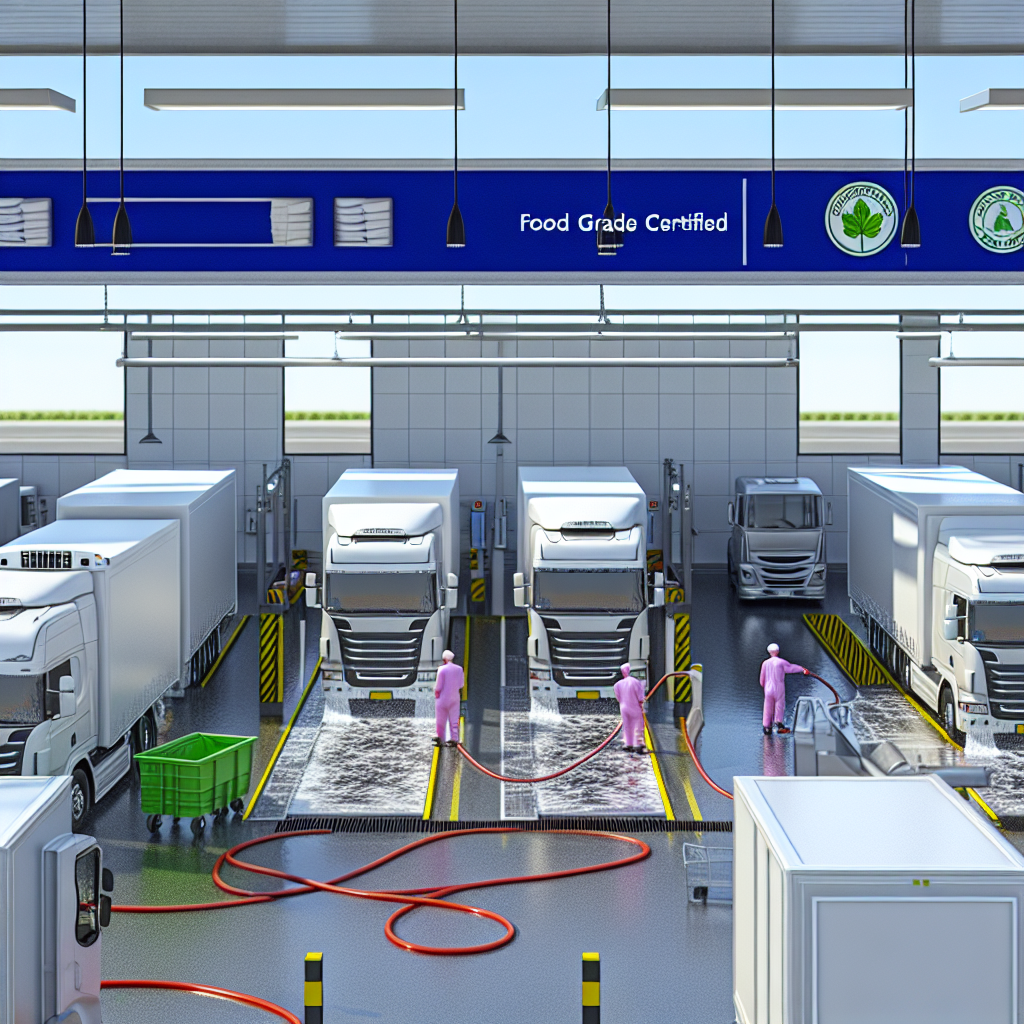
In the competitive world of trucking, innovative strategies to enhance revenue have become crucial for success. One such opportunity is the establishment of a food grade-certified truck wash, which simultaneously boosts operational efficiency and provides a profitable revenue stream. Derrick Wolfe Trucking exemplifies this approach, growing from a modest fleet of one truck to a remarkable nearly thirty in just eight years.
This impressive expansion not only reflects efficient logistics but also highlights the strategic decision made by Wolfe to introduce a food grade wash bay. By offering washing services tailored for other carriers’ food grade tankers, he has effectively diversified his business model, ensuring consistent revenue while adhering to the strict safety and sanitation standards vital to the industry. This initiative has empowered Wolfe Trucking to strengthen its position within the trucking sector while delivering exceptional service to its partners.
As Derrick Wolfe himself states, “I try my best to stay relevant… I’m also the person that’s in a truck doing the same job every single day.” This philosophy underscores his commitment to understanding the industry from the ground up, ensuring that his business adapts to the evolving needs of his clients.
As Derrick Wolfe expresses, “To lead effectively in the trucking industry, one must remain grounded in the daily grind. My hands-on approach allows me to evolve alongside my business, ensuring we meet challenges head-on and stay ahead of the curve.” This encapsulates his philosophy and commitment.
The food-grade trucking industry is witnessing a marked increase in market demand due to the growing consumption of food and stringent regulations surrounding food safety. As of 2024, the North American food-grade trailer sanitation services market is valued at approximately USD 910 million, which signals a thriving sector expecting a compound annual growth rate (CAGR) of 6.2% through 2033. The escalation in demand is largely driven by the food and beverage industry’s commitment to maintaining high safety standards, where over 2.2 trillion pounds of food are processed annually in the U.S., with liquid products comprising nearly 40% of this volume.
Due to these factors, there is an increasing need for food-grade washes that comply with strict sanitation requirements. The Food Safety Modernization Act (FSMA) mandates that food manufacturers implement robust food safety plans and preventive controls, making compliance a significant concern within the industry. Specifically, the FSMA’s Sanitary Transportation of Human and Animal Food rule requires maintaining critical tracking information throughout the food supply chain.
With the landscape of food-grade trucking expanding, companies investing in advanced sanitation technologies and processes are well-positioned to capitalize on this market opportunity. The regulatory framework, while challenging, also highlights the necessity for specialized washing services catering to food-grade vehicles. By aligning operations with strict regulatory standards, businesses can not only ensure compliance but also establish a profitable profit center in the burgeoning sanitation services market.
Market Demand for Food-Grade Truck Washing Services
The food-grade truck washing services market is a specialized segment within the broader truck washing industry, focusing on the sanitation of vehicles used for transporting consumable goods. While specific statistics for this niche market are limited, insights can be drawn from related sectors:
-
Truck Washing System Market: In 2025, the global truck washing system market was valued at approximately USD 443.12 billion, with projections indicating growth to USD 614.51 billion by 2034, reflecting a compound annual growth rate (CAGR) of 3.7%.
Source -
Food-Grade Trailer Sanitation Services: In 2024, North America led this market segment, accounting for about 35% of the global market value, equating to approximately USD 910 million. The region’s dominance is attributed to a well-established logistics infrastructure and stringent food safety regulations. The market is expected to maintain a steady growth trajectory, with a projected CAGR of 6.2% through 2033.
Source
Regulatory Influences
Regulatory frameworks significantly impact the demand for food-grade truck washing services. In the United States, the Food Safety Modernization Act (FSMA) mandates regular cleaning and sanitation of food transportation vehicles to prevent contamination. Similarly, the European Union enforces comprehensive food safety regulations that require strict hygiene standards for food transport. These regulations drive the need for specialized sanitation services to ensure compliance and maintain food safety standards.
Source
In summary, while precise data on the food-grade truck washing services market is scarce, related industries indicate a growing demand driven by stringent regulatory requirements and an increasing focus on food safety.
Financial Benefits of Adding a Food Grade Wash Center
Integrating a food grade wash center into a trucking business can yield substantial financial benefits. Key financial statistics and advantages include:
- Increased profit margins: Profit margins for food grade wash services are estimated between 30% and 50%. This high profitability encourages companies to invest in this facility, leading to a swift return on investment.
- Enhanced operational efficiency: By having in-house washing services, trucking companies can control the quality and frequency of washes. This ensures that trucks are consistently maintained to meet strict food safety standards, ultimately minimizing delays that might arise from third-party vendors.
- Cost savings: Handling washing internally results in significant cost savings on outsourced services, eliminating hidden fees. It also prolongs the lifespan of the vehicles, reducing maintenance expenses over time.
- Retention of fleet value: Properly maintained trucks retain higher value, presenting a favorable financial outlook for the business.
Derrick Wolfe Trucking exemplifies this success. By establishing a dedicated wash facility, Wolfe has effectively diversified revenue streams while upholding the highest sanitation standards and positioning the business competitively in the food-grade trucking sector.
| Profit Center | Potential Revenue | Description |
|---|---|---|
| Food Grade Washes | $50,000 – $200,000 | Revenue generated from washing services tailored for food-grade trucks. |
| Fuel Sales | $100,000 – $500,000 | Revenue from selling fuel to clients and within the fleet. |
| Maintenance Services | $75,000 – $250,000 | Income from mechanical services and repair offered to other carriers. |
| Custom Cleaning Packages | $30,000 – $100,000 | Additional income from specialized cleaning services for unique needs. |
| Parking Rental | $20,000 – $80,000 | Fees collected from renting out parking space to other trucking companies. |
| Profit Center | Potential Revenue | Description |
|---|---|---|
| Food Grade Washes | $50,000 – $200,000 | Revenue generated from washing services tailored for food-grade trucks. |
| Fuel Sales | $100,000 – $500,000 | Revenue from selling fuel to clients and within the fleet. |
| Maintenance Services | $75,000 – $250,000 | Income from mechanical services and repair offered to other carriers. |
| Custom Cleaning Packages | $30,000 – $100,000 | Additional income from specialized cleaning services for unique needs. |
| Parking Rental | $20,000 – $80,000 | Fees collected from renting out parking space to other trucking companies. |
Success Story of Derrick Wolfe: From 1 Truck to Nearly 30
Derrick Wolfe’s success story is compelling, showcasing tenacity and ingenuity in the trucking sector. Since its founding in 2017, Wolfe expanded his company from 1 truck to nearly 30. Initially focused on hauling liquid sweeteners with a single truck, he recognized the need to diversify to sustain growth.
To capitalize on this strategy, Wolfe established a food-grade-certified wash bay in Avon, New York. This facility not only services his own fleet of Kenworth and Peterbilt trucks powered by Cummins but is also accessible to other carriers, enhancing overall revenue. This wash service has become a crucial profit center. In fact, Wolfe aims to solidify the wash service as its own profit generator while still supporting the trucking side of the business.
The wash bay maintains essential safety standards, reinforcing the company’s reputation in the competitive food-grade transportation sector. With Kosher washing capabilities alongside extensive operational reach, Wolfe attracted additional business from various nearby carriers seeking certified cleaning services, further boosting his company’s growth.
As of April 2025, Derrick Wolfe Trucking operates with 21 company drivers, 7 owner-operators, and 10 non-driving employees, showcasing substantial workforce expansion reflecting the business’s growth trajectory. With approximately 2,607,794 logged miles in the previous year and remarkably low turnover of only 4 employees since inception, Wolfe’s effective management shines.
Derrick’s strategy illustrates a comprehensive model of modern trucking that embraces both logistics and sanitary operations, ensuring compliance with industry regulations while yielding profits from both freight and wash services. His evolving business encapsulates the adaptive spirit needed to thrive in the ever-competitive trucking landscape, positioning Derrick Wolfe Trucking as a forward-thinking leader in the food-grade transportation industry.


Financial Benefits of Adding a Food Grade Wash Center
Integrating a food grade wash center into a trucking business can yield substantial financial benefits. Key financial statistics and advantages include:
- Increased profit margins: Profit margins for food grade wash services are estimated between 30% and 50%. This high profitability encourages companies to invest in this facility, leading to a swift return on investment.
- Enhanced operational efficiency: By having in-house washing services, trucking companies can control the quality and frequency of washes. This ensures that trucks are consistently maintained to meet strict food safety standards, ultimately minimizing delays that might arise from third-party vendors.
- Cost savings: Handling washing internally results in significant cost savings on outsourced services, eliminating hidden fees. It also prolongs the lifespan of the vehicles, reducing maintenance expenses over time.
- Retention of fleet value: Properly maintained trucks retain higher value, presenting a favorable financial outlook for the business.
Derrick Wolfe Trucking exemplifies this success. By establishing a dedicated wash facility, Wolfe has effectively diversified revenue streams while upholding the highest sanitation standards and positioning the business competitively in the food-grade trucking sector.
Industry Comparisons: Profit Center Strategies in Trucking
Trucking companies frequently enhance profitability by diversifying their services into various profit centers such as truck washes, fuel sales, maintenance services, and custom cleaning packages. Below is a summary of how these strategies compare to Derrick Wolfe’s innovative model of operating a food grade-certified truck wash as a profitable segment of his business.
-
Roseville Truck Wash’s Expansion and Partnership
Roseville Truck Wash, located in Metro Detroit, began as a service for its private fleet but expanded to offer retail truck washing services to external customers. In partnership with InterClean Equipment, they installed an advanced hybrid wash system, allowing them to wash over 40 tractor-trailer units daily. Their ongoing growth has led to plans for a second wash bay to meet rising demand.
-
FleetWash’s Comprehensive Service Offerings
FleetWash, the largest mobile truck washing service in the U.S., provides additional services like undercarriage cleaning and loading dock cleaning. Their diversified approach not only enhances the value they provide but has also led to increased profitability across varying client sectors.
-
Astar Wash Pros’ Mobile Fleet Washing Services
Astar Wash Pros thrives on eco-friendly practices and customized wash schedules, ensuring minimal downtime for clients. By focusing on specialized cleaning solutions tailored to the needs of different types of fleets, they attract a wide range of customers.
-
Profitability Insights from the Truck Wash Industry
The truck wash industry reports annual revenues between $400,000 and $900,000, with profit margins of 20% to 35%. Factors like strategic location, diverse service offerings, and operational efficiencies through technologies like water recycling contribute significantly to these profit margins.
-
American Truck Wash Group’s Predictive Maintenance Analytics
American Truck Wash Group focuses on predictive maintenance analytics to provide fleet services. Their model incorporates data-driven solutions that improve efficiency and customer satisfaction through fixed pricing strategies, yielding a high retention rate among clients.
Comparison with Derrick Wolfe’s Model
Derrick Wolfe’s truck wash aligns with these successful strategies by prioritizing specialized, food-grade washing services that adhere to stringent safety regulations. By offering such tailored services, Wolfe captures a niche market that demands high sanitation standards. This specialized approach not only allows Wolfe to charge premium rates but also fosters customer loyalty, significantly boosting profitability.
In conclusion, successful trucking businesses utilize a variety of profit centers to enhance their financial performance, much like Derrick Wolfe’s food-grade-certified wash model, which exemplifies how specialization and quality can lead to substantial revenue generation in the trucking industry.
Conclusion
In today’s increasingly competitive trucking industry, the significance of food grade-certified washes cannot be overstated. As exemplified by Derrick Wolfe’s journey from a single truck to nearly thirty, integrating a food grade wash facility has emerged as a transformative strategy for profitability and operational excellence. By recognizing the growing market demand for high sanitation standards, Wolfe has not only enhanced his own logistics operations but has also carved out a vital service for fellow carriers.
The lessons learned from Wolfe’s successful model underline the importance of investing in compliance-driven solutions that uphold food safety regulations, ultimately contributing to a safer transportation environment. Furthermore, his approach illuminates the decision-making process that emphasizes thorough understanding of industry needs and customer expectations. For trucking companies aiming to thrive in a dynamic market landscape, establishing a food grade wash service stands as a crucial opportunity to diversify revenue streams while ensuring the highest standards of cleanliness and safety.
Derrick Wolfe’s Success Story: From 1 Truck to Nearly 30
Derrick Wolfe’s journey in the trucking industry is a remarkable story of determination, strategic expansion, and community commitment. Founded in 2017, Derrick Wolfe Trucking began with a single truck, focused on hauling liquid sweeteners, juices, and other food-grade liquids. Over the past eight years, Wolfe has successfully expanded his fleet to nearly thirty trucks, including 21 company drivers, seven owner-operators, and ten non-driving employees. This growth is not merely a reflection of his operational prowess but also of his innovative strategies designed to enhance service quality and profitability.
A critical aspect of Wolfe’s success is the establishment of a food-grade-certified wash bay in Avon, New York, which he introduced to cater not only to his fleet but also to other carriers. This strategic move allowed Wolfe Trucking to diversify its revenue streams while ensuring that safety and sanitation standards were strictly upheld within the industry. The wash bay embodies Wolfe’s belief in maintaining operational excellence, utilizing advanced washing technologies to comply with the Food Safety Modernization Act (FSMA) regulations. The commitment to sanitation has garnered Wolfe Trucking a solid reputation in the food transportation sector, as clean and certified vehicles are crucial for safety compliance and customer satisfaction.
In 2024, the food-grade tank trucking market was valued at approximately USD 5.52 billion, projected to reach about USD 9.32 billion by 2033, reflecting the growing need for safe transportation of food products (openpr.com). This industry growth aligns with Wolfe’s vision, positioning his business for long-term sustainability and profitability.
Wolfe’s hands-on approach also reinforces his leadership style. By personally driving his trucks, he stays connected with his drivers, fosters a collaborative work environment, and maintains a close understanding of his customers’ needs. His philosophy of being actively involved in daily operations has cultivated a strong team spirit, contributing significantly to employee retention; remarkably, only four employees have left since the company’s inception.
In addition to his operational success, Derrick Wolfe Trucking actively participates in community involvement, sponsoring youth sports teams and supporting local initiatives, such as Truckers Against Trafficking and the Suicide Awareness Coalition of Livingston County. Wolfe demonstrated his passion for motorsports by becoming the presenting sponsor of a drag racing team in 2025, further solidifying his engagement with the community and enhancing his brand visibility.
In conclusion, Derrick Wolfe’s journey from operating a single truck to successfully managing nearly thirty trucks exemplifies an adaptive strategy that combines quality service, financial insight, and community engagement. His establishment of a food-grade wash facility not only drives revenue growth but also sets a benchmark for safety within the food-grade trucking sector, ensuring that his company remains at the forefront of the industry.

Comparative Analysis of Profit Center Strategies in the Trucking Wash Industry
In the trucking wash industry, several companies adopt diverse strategies to create profit centers, reminiscent of Derrick Wolfe’s successful model. Wolfe has effectively integrated a food-grade-certified wash bay into his trucking operations, allowing him to capture a specialized market segment with notably increasing relevance in today’s safety-conscious landscape.
Overview of Profit Center Strategies
- Diversification of Services
Companies frequently offer comprehensive services that go beyond standard washes, which can include interior cleaning, engine degreasing, premium wash packages, and specialty treatments. This strategy not only broadens the customer base but also enhances potential revenue. For instance, a facility that provides automated detailing services may command higher prices.
- Mobile Truck Wash Services
Mobile wash operations are increasingly popular, allowing technicians to perform on-site washes, which reduces downtime for drivers and trucking companies. This service type can command a premium due to the convenience offered to the customer.
- Automated Wash Systems
Investing in advanced automated washing systems allows for consistent service quality and streamlined operations while increasing vehicle throughput. Such systems often represent substantial upfront costs but can lead to significant long-term savings and enhanced profitability.
- Self-Service Facilities
Self-service wash bays enable drivers to wash their vehicles, reducing personnel costs and appealing to independent truckers. This model can be tailored for a budget-conscious clientele looking to save on operational costs.
- Strategic Location Selection
The location of wash facilities plays a crucial role in profitability. Establishing operations near highways or logistical hubs facilitates a steady influx of customers, thereby enhancing income potential.
Derrick Wolfe’s Unique Model
Derrick Wolfe’s food-grade wash bay uniquely positions his business within the trucking wash landscape. By specializing in food-grade washing, he fulfills a critical industry need for high sanitation standards in food transportation. Wolfe’s specialization creates a strong competitive advantage, allowing him to command premium service fees.
Additionally, Wolfe’s model exemplifies a customer loyalty lock-in effect. Clients needing reliable and compliant food-grade transportation prefer his washing services due to their necessary safety certifications. This approach fosters strong customer relationships, leading to repeat business and lower customer acquisition costs compared to competitors that may not offer specialized services.
Comparing with Other Industry Approaches
- Roseville Truck Wash’s Expansion
Roseville Truck Wash began serving its private fleet and expanded to retail services, bolstered by enhanced partnering technology. They focus on general truck washing but face competition from specialized services that cater to food-grade standards.
- FleetWash’s Comprehensive Offerings
FleetWash provides mobile washing and additional services like undercarriage cleaning but lacks the niche advantage seen in Wolfe’s offerings, which may reduce their ability to charge premium rates in certain segments.
- American Truck Wash Group’s Predictive Maintenance
Although they utilize data-driven techniques for operational efficiency, without a specialized service like Wolfe’s food-grade washing, their customer retention rates can struggle against more specialized competition.
Conclusion
The trucking wash industry demonstrates various profit center strategies, yet Derrick Wolfe’s focused approach offers a compelling case study in specialization. By building a food-grade certification into his service offering, Wolfe not only elevates operational standards but also ensures a consistent and loyal customer base, setting a robust framework for both compliance and profitability. Companies within the industry looking to replicate his success must consider investing in specialized services that cater to specific regulatory environments, similar to Wolfe’s food-grade wash bay model.