

For fleet managers, trucking company owners, and construction or mining supervisors, maintaining the cleanliness and integrity of vehicles is paramount. Using Dawn dish soap, often hailed for its grease-cutting ability, might seem like a quick fix. However, it’s essential to discern its suitability for your trucks. This article covers vital considerations regarding its use, delving into long-term effects, comparisons with automotive wash solutions, emergency usage guidelines, and expert recommendations. By the end, you’ll be equipped with the insights necessary to make informed decisions for your fleet’s washing regimen.
Tough Grease, Fragile Finish: Why Household Dish Soap Isn’t a Safe Wash for Your Truck

The impulse to grab a bottle from the kitchen and lather a truck with it is surprisingly common. When a vehicle shows up with caked-on road tar, grit, or a stubborn grease film, the urge to reach for a powerful, readily available cleaner can feel like the fastest fix. Yet a routine wash is about more than removing grime. It’s about preserving a finish that has been engineered to be resilient but not invincible. In this chapter, we explore why household dish soap—regardless of its popularity in kitchens everywhere—remains an option best left to emergencies, and why regular maintenance demands a gentler, more automotive-focused approach. The distinction matters because the surface you see isn’t just paint; it’s a carefully layered protection system designed to resist the elements, retain gloss, and keep the truck looking its best over years of exposure to sun, rain, dust, and road compounds.
Dish soap excels at one thing: cutting grease. It is formulated with strong surfactants to lift fats and oils off dishes, leaving surfaces squeaky clean and residue-free. This is precisely what makes it so effective in the kitchen. But on a vehicle, that same rough-and-tumble chemistry can work against the finish. It doesn’t distinguish between the oils in a pan and the lubricants or waxes coating a truck’s paint. The surfactants designed to strip grease can also strip protective layers that guard the clear coat. What begins as a clean surface can turn into a dull, less protected one over time. As a result, repeated exposure to dish soap can dull the paint, reduce reflectivity, and make the finish more vulnerable to UV damage, acid rain, and minor abrasions.
To frame this clearly, consider the experience of a veteran auto detailing specialist with 15 years in the field. As Marcus Tran explains, “Dish soap is formulated to remove oil, full stop. When you use it on a car, you’re essentially applying a degreaser to a surface meant to retain protective oils and polymers.” The nuance here isn’t that dish soap is evil; it’s that the vehicle’s protective system relies on oils, waxes, sealants, and coatings that are optimized for automotive formulations. Those protective layers are designed to cushion the paint during every wash, to reduce friction as dirt glides away, and to slow the wear from UV rays and environmental contaminants. When you blast away those layers, you leave the paint more exposed and more prone to the micro-scratches that scratches often become as dirt-and-dust meet an abrasive mitt.
The challenge grows with the kind of grime commonly encountered on trucks. Heavy road grime, dust, and mud aren’t just shallow surfaces; they’re loaded with grit that can trap itself in the fibers of wash mitts or bristles of brushes. If a user wipes aggressively or uses a stiff brush to tackle a heavily soiled panel, the combination of harsh detergents and abrasive dirt can drag particles across the paint, producing micro-scratches and swirl marks. In a best-case scenario, you end a wash with a clean surface; in a worst-case, you end with a finish that looks lifeless and a layer of micro-scratches that may invite more dirt to cling and more UV damage to accelerate.
Even if you dilute a dish soap in water, the fundamental risk remains. A heavily concentrated solution can act like a degreaser on the wrong surface. Dilution can reduce the risk somewhat, but it doesn’t erase the long-term consequences of repeated exposure. This is why many professionals advocate using a pH-balanced car wash soap designed to lift dirt while maintaining lubrication for the paint’s clear coat. The goal is a solution that can dissolve grime without stripping away wax, sealant, or ceramic coatings. The detergents in automotive soaps are engineered with lubricants that help the wash mitt glide over the surface rather than drag across it. The overall effect is to reduce the chance of friction-induced damage while still delivering a clean, glossy finish that reflects well in the sun.
In practical terms, the everyday maintenance of a truck’s exterior should start with preparation and technique. Begin with a thorough pre-rinse to dislodge loose dust and debris. If you skip this step, you risk grinding dirt into the paint when the wash mitt makes contact. The two-bucket method remains a simple, effective standard: one bucket holds clean water and the wash solution, the other holds rinse water for rinsing the mitt. A mitt or a dedicated microfiber wash implement should be used rather than a stiff brush that can drag grit across the surface. The philosophy is gentle, consistent, and methodical. It’s not about forcing the dirt off; it’s about letting the lubricants do the heaviest lifting while the dirt releases cleanly.
Choosing the right product is more than a matter of brand preference. It’s about selecting a soap with a balanced pH that won’t disrupt protective coatings. A true car-specific wash soap will lift and suspend dirt, reduce friction, and keep lubricants in place to guard the paint as you rinse. You’ll often see recommendations for products that emphasize lubricity to help protect against micro-marring and to safeguard wax or sealants. If a truck has recent wax, sealant, or a ceramic coating, the car wash soap will be gentler on those layers than a kitchen detergent would be. The cycle of washing then drying remains the same: rinse, wash, rinse again, then dry with clean, lint-free towels or a dedicated microfiber drying rag. A soft, pat-dry method reduces the chance of introducing new scratches during the drying phase.
The finishing touches matter. After a thorough wash and dry, applying or reapplying wax or a protective sealant can be a wise step, especially if the vehicle has spent time in direct sun or within a high UV environment. Wax and sealants add a sacrificial layer that helps bounce back from the inevitable encounters with dirt and rain. They also make future washes easier, as the slick surface resists grime more effectively and reduces the chance of micro-scratches during cleaning. If a truck has a ceramic coating, the maintenance regimen shifts slightly toward specific products designed to fortify that coating and enhance gloss without compromising its durability. The main message remains clear: regular maintenance with purpose-built automotive products sustains the finish far better than episodic, improvised care with household cleaners.
For readers seeking practical, field-tested guidance, there are proven methods to address stubborn residues such as grease and tar without sacrificing the finish. These strategies emphasize proper gloves, controlled water pressure, and targeted cleaning steps that minimize abrasion. If you want to explore a detailed, technique-focused approach, you can consult resources that lay out proven strategies for cleaning grease and tar off your trucks fast. This kind of guidance aligns with the broader objective of keeping the exterior in top condition while using cleaners that respect the protective layers on the paint.
When emergencies strike and you do find yourself needing to use a dish soap as a last resort, treat it as a temporary workaround rather than a norm. If you must employ any household product in a pinch, dilute generously, avoid scrubbing with aggressive tools, and perform a thorough, immediate rinse to neutralize any residues. Then follow up with a quality automotive soap on your next wash and inspect the surface for any dulling or streaking. If you notice issues such as loss of luster, increased haze, or patches where the coating seems weaker, consider re-waxing or re-protecting those areas and consult a professional if you’re unsure about the extent of any potential damage.
In sum, the finish on a modern truck is a layered defense that rewards careful maintenance. While it might be tempting to lean on a readily available kitchen cleaner during a moment of urgency, the long-term risks to the paint and its protective coatings are not worth the simple shortcut. Emphasizing automotive-specific wash products, gentle washing technique, proper pre-rinsing, and targeted protection helps ensure that the truck retains its shine, flexibility, and resistance to the elements. The cost of neglected protection—fading, dullness, accelerated wear—far outweighs the convenience of a quick, off-label wash.
External reference: For a broader perspective on why dish soap is discouraged for car cleaning, see the detailed discussion at Car and Driver. Why you should never use dish soap to wash your car.
Internal resource: For a deeper dive into field-tested methods for removing stubborn grease and tar from trucks, you can explore proven strategies for cleaning grease and tar off your trucks fast. This resource offers practical steps and best practices that align with vehicle-specific care and maintenance. proven strategies for cleaning grease and tar off your trucks fast.
Safeguarding the Shine: Why a Dawn Moment Might Burn Future Finishes on Your Truck
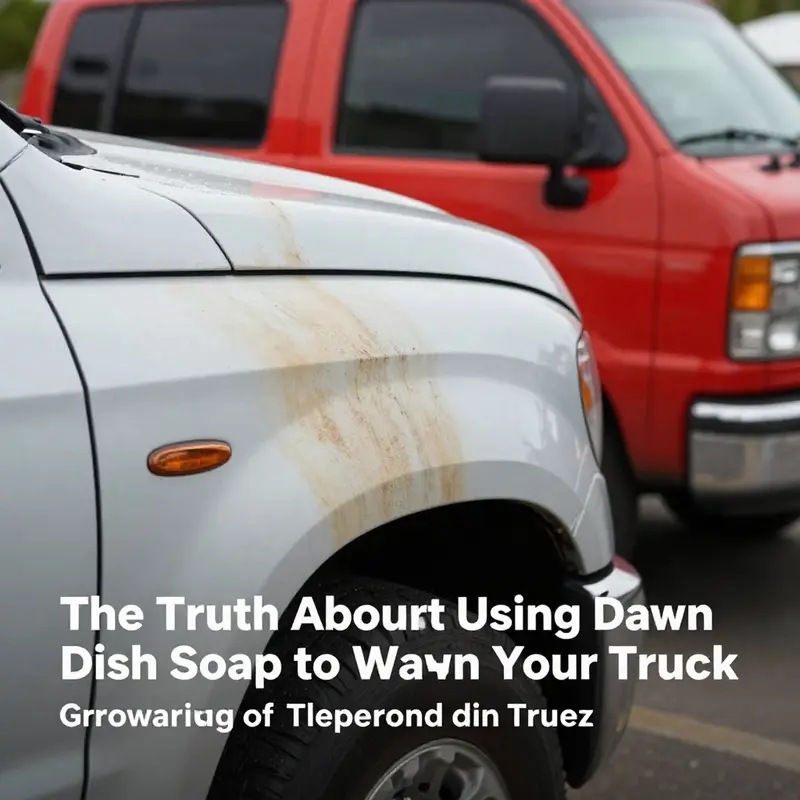
The lure of a quick wash with a common household dish soap is hard to resist when a truck hospitalizes a stubborn layer of road grime. A single wash can vanish the worst of it, but the story doesn’t end there. The paint on a modern truck is a delicate balance of pigment, clear coat, and protective layers. Dish soap is engineered to cut through fats and oils on dishes, not to preserve automotive finishes. In the moment, it seems like a neat, efficient solution. Over the long stretch, however, repeated use acts like a slow erosion of the very protections that keep a vehicle looking vibrant and resisting the elements.
What makes this more than a bad idea is not the absence of immediate damage, but the cumulative effect that creeps up wash after wash. Dish soap’s aggressive surfactants strip away wax and paint sealants that have taken decades to build up as a resilient barrier. Wax, once peeled away, leaves the paint exposed to ultraviolet rays, acid rain, bird droppings, and mineral deposits. The instant you remove the shield, you invite fading, oxidation, and dullness. The finish loses its depth and warmth, and the once-bright color appears chalky or matte in patches that stand out in sunlight. The problem isn’t just cosmetic; it alters how the surface reacts to future cleaning. Without a protective layer, dirt clings more tenaciously and micro-scratches become more noticeable.
Experts who live at the interface of cleaning and coating finishers often frame this caution in practical terms. A veteran detailer with more than fifteen years in the field describes dish soap on a car as a double-edged tool: it cleans, but it damages the natural protective barrier that keeps the finish resilient. Another ASE-certified technician compares the situation to handling delicate fabric with a harsh chemical; the cleaning effect comes with a cost to the material’s integrity. Their points converge on a single idea: you should not treat automotive paint like kitchenware. Repeated exposure to household cleaners disrupts the chemistry of the finish and creates a more fragile surface that relies on more frequent maintenance to achieve any level of protection.
From this perspective, the long-term costs become clearer. The protective layers that were meant to preserve gloss and guard against UV damage fade away sooner than expected. When those layers dwindle, the paint becomes more prone to light-induced oxidation and staining from contaminants. The result is not only a dull appearance but also a higher likelihood of needing corrective work—compounded by the fact that you may have to wax, seal, or recoat more often than with a routine, automotive-specific wash routine. The cycle can become a frustrating loop: wash, dull, wax again, wash, duller still, re-wax, and so on. It’s a pattern that erodes value as much as it does shine.
To avoid this spiral, the best practice calls for tools and products designed specifically for automotive finishes. A pH-balanced car wash soap is formulated to lift dirt without stripping protective coatings. These soaps balance cleaning power with gentleness, ensuring that the clear coat’s integrity remains intact while you remove the grime. The goal is a cleaning process that preserves gloss while safeguarding the layers underneath. The wash should proceed with a gentle touch, using a soft wash mitt and a two-bucket system to minimize drag and etching from grit. Rinsing should be thorough, and drying should be swift with microfiber towels to avoid water spotting. In short, caring for a modern paint job is less about brute cleaning power and more about maintaining a stable, protective chemistry.
The long view also means acknowledging that even with the right soap, the routine can never be treated as a one-and-done task. Protective coatings and sealants require periodic refresh. When the wax or sealant wears thin, reapplication becomes part of the maintenance plan. The schedule varies with climate, exposure, and driving conditions, but the principle remains constant: the paint needs a continuing layer of protection to perform at its best. Each wash is not just about removing grime; it is also an opportunity to reaffirm the barrier between the finish and the world beyond. Skipping this can leave the truck more vulnerable to micro-scratches, which accumulate with every hasty wipe or abrasive sponge and dull the finish over time. The incremental changes are subtle at first, but they accumulate, much like wear on a tire tread or a fade in a dashboard’s color from sun exposure.
In recognizing these dynamics, some readers may wonder about the urgency of change. If a wash with dish soap has already happened, is there a way back? The honest answer is yes, but it requires a shift in approach and an increased commitment to appropriate products and procedures. Start with a thorough wash using a pH-balanced automotive soap, followed by a careful rinse and pat-dry with a microfiber towel. Then assess the need for waxing or sealing based on observed gloss and water beading. If water no longer beads in tight, convex droplets, the protective layer has thinned and needs restoration. It’s not merely about aesthetics; it’s about preserving the vehicle’s resilience to the weather and road factors that accelerate aging.
The broader lesson extends beyond the immediate finish. When the finish is well protected, it not only looks better but lasts longer without needing heavy correction. A truck’s value is closely tied to its exterior condition, and maintaining that condition is part science and part routine discipline. The knowledge that repeated use of household cleaners can demand more frequent detailing should push owners toward steady, preventive habits rather than short-term fixes. It is entirely possible to keep a truck looking sharp without surrendering the long-term health of the finish.
For those who value practical guidance, there is a pathway that aligns with proven maintenance wisdom. Seek out cleansers that are explicitly designed for automotive finishes and pair them with proper washing technique. Limit abrasive contacts, stay mindful of wash mitts that pick up grit, and refresh protective layers at regular intervals to maintain a durable surface that stands up to the sun, rain, and pollution. In this framework, the wash becomes a proactive act of preservation rather than a reactive measure that may erode protection in the name of convenience. A single decision in the garage or driveway can set the tone for how the truck ages on the road and in the yard.
For readers seeking further strategies on removing grime efficiently while protecting coatings, there are practical, field-tested approaches that emphasize the right combination of cleaners and technique. Proven strategies for cleaning grease and tar off your trucks fast offer a template for how a careful, targeted cleaning approach can handle the toughest spots without compromising paint integrity. By integrating those methods with a maintenance-first mindset, you can manage heavy soiling without paying a serious price to the finish. See here for more details on that approach: Proven strategies for cleaning grease and tar off your trucks fast.
The bottom line is simple. A wash that smashes dirt but preserves the finish is not a luxury; it is a duty of ownership. Relying on a kitchen detergent as a regular cleaning agent may provide a quick win, but it imposes a longer, more expensive burden on the finish. The thoughtful alternative—using automotive-grade, pH-balanced products and keeping protective layers intact—offers a straightforward path to enduring shine and protection. In the long run, this approach pays for itself in better appearance, easier maintenance, and preserved value. The conversation around whether to use household dish soap on a vehicle should always return to this balance between immediate cleanliness and long-term protection.
External resource: For a broader industry perspective on why dish soaps are not suitable for car finishes, see AutoCar Australia’s discussion on this topic. It reinforces the idea that the protective integrity of automotive paints hinges on appropriate products and careful technique. External resource: https://www.autocar.com.au/why-you-should-never-use-dish-soap-to-wash-your-car-2026
The Great Debate: Dawn Dish Soap, Automotive Wash, and Your Truck’s Finish
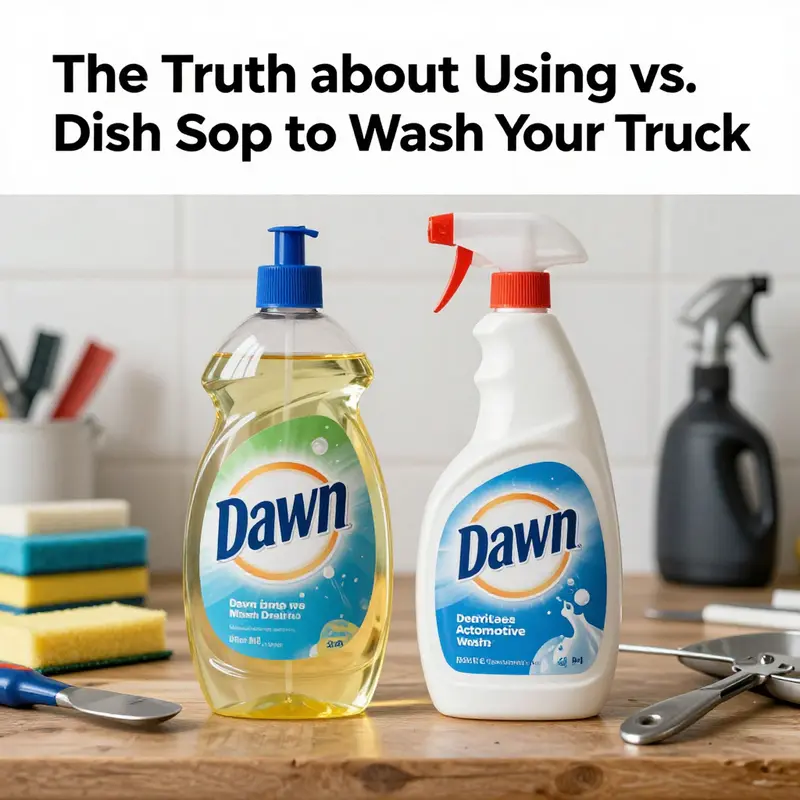
Dawn dish soap is celebrated for cutting grease on kitchen dishes, but automotive paint is a different chemical environment. The same potent surfactants that remove oil can also strip wax, dull shine, or sweep away protective layers if used regularly.
Automotive wash soaps are formulated to be pH-balanced and lubricating, designed to lift dirt without aggressively attacking the wax or clear coat. Using the right product helps preserve gloss and prolong the life of protections.
In practice, keep Dawn for rare emergencies and reapply wax or sealant after any non-automotive cleaner use. Adopting a two-bucket wash with a microfiber mitt, starting at the top, and drying with a soft towel reduces risk of swirl marks and keeps finishes looking showroom-new longer.
Bottom line: choose cleaners that respect your finish and your time horizon. The occasional Dawn emergency doesn’t doom the finish, but routine use does not align with best practices for modern automotive finishes.
Emergency Measures Under Pressure: Can a Common Kitchen Soap Wash Your Truck, and What It Means for Your Paint
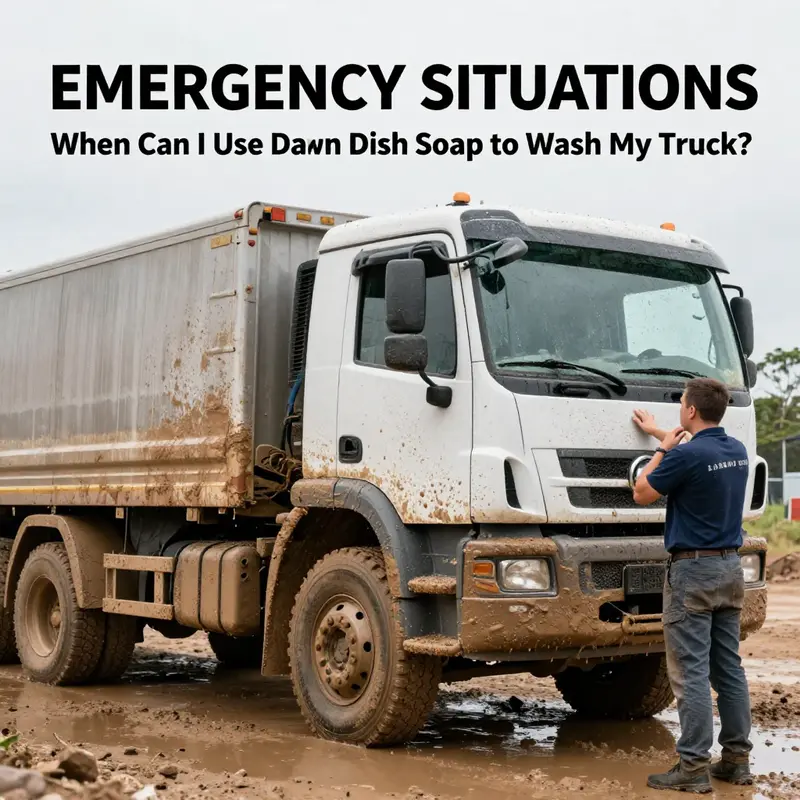
When the calendar is marked with back-to-back jobs, miles pile up, and a stubborn layer of road grime clings to a truck’s panels after a long shift, the impulse to reach for a quick, strong cleaner can feel unavoidable. In those high-stakes moments, a common kitchen dish soap may seem like a practical, even heroic, choice to rescue a finish from a stubborn mess. The impulse is understandable. After all, dish soap cuts grease with gusto, and trucks often accumulate grease, tar, and splattered contaminants that resist gentle rinses. But in the practical world of vehicle care, what seems like a fast fix in an emergency can quietly become a longer-term problem. The truth is more nuanced than a single instinct to grab a bottle from the sink. The surface you are trying to protect is not just paint; it is a layered system that includes wax or sealant, a clear coat, and the delicate balance of lubricants that keep dirt from sticking in the first place. Any discussion about emergency use must begin with a simple reality: the finish on a vehicle is engineered to withstand everyday exposure, not routine, aggressive cleansing with products that were designed for kitchen tasks. In the heat of the moment, the goal is to prevent harm while addressing the immediate need to remove the worst of the grime. The challenge lies in understanding what happens chemically when a strong detergent meets a painted surface, and what steps can be taken immediately after to restore the protective state that keeps a truck looking sharp and enduring the elements.
What makes a kitchen dish soap so effective at removing grease is not just its soap action but its ability to break the surface tension of dirt and oils. The same properties that emulsify cooking fats and grime can also strip away the protective layers that keep paint vibrant. In this context, the term protective layer refers to wax, sealants, and any polymer coatings that act as a sacrificial shield between the paint and the elements. When a heavy, humbly greasy mess is lifted with a dish soap solution, the soap surrounds and suspends the oils, but it can also lift the oily shield that was designed to shed water and dust. The result, if the soap lingers or if the surface is scrubbed aggressively, is not immediate blistering or peeling but a duller appearance over time, an increased tendency for water spots, and a reduced barrier against UV exposure and environmental contaminants.
From the perspective of long-term health for a truck’s finish, a single emergency wash with a kitchen dish soap carries a risk, but it is not a certainty of damage. What literature and field guidance converge on is a careful, corrective approach: treat the dish soap wash as a temporary exception, not a substitute, and follow up quickly with products formulated for automotive finishes. In practical terms, this means rinsing thoroughly, washing with a car wash soap designed for automotive use, and reapplying wax or sealant as soon as possible. The most reliable route to protecting the finish is to restore a proper lubrication layer on the paint and to re-establish a protective barrier that helps water sheet off and resists dirt adhesion. This sequence—emergency wash, followed by a dedicated automotive wash product, then a fresh layer of protection—acts like a repair plan rather than a permanent washing routine. The goal is not to demonize convenience but to acknowledge the limitations of a household product when the finish is counting on a specialized solution.
The scientific nuance behind this caution is rooted in pH balance and surface chemistry. A widely used kitchen product tends to sit on the alkaline side, a characteristic that can alter the surface chemistry of the painted panel. A commonly cited range places such cleaners around pH 9 to 10. While that level of alkalinity is effective for lifting many types of grime, it can disrupt the pH balance of the vehicle’s surface. This disruption has a practical consequence: it can accelerate the breakdown of factory sealants that were designed to work in concert with the surrounding humidity, UV exposure, and water chemistry. Automotive wash formulas, by contrast, are engineered with a pH-balanced approach that minimizes the risk to waxes and sealants while still delivering lubrication and dirt-shedding power. They also incorporate lubricants that facilitate a smoother glide across the paint, reducing micro-scratches that can literalize into a dull finish when compounded by repeated, improper washing.
In an emergency, the key to mitigating risk is moderation and discipline. Use only what is necessary to remove the most obstinate grime, keep contact time brief, and avoid any aggressive scrubbing or metal-to-surface contact. The fundamentals of a safe emergency rinse include keeping the vehicle cool, pre-wetting to loosen contaminants, and using a gentle, controlled wash motion rather than aggressive scrubbing. This approach reduces the likelihood of micro-abrasions that can magnify over time, especially when the finish is later exposed to sun and weather. It is also essential to rinse thoroughly. Soap residues can act like tiny magnets for dust and dirt, which defeats the purpose of cleaning and invites new grime to cling to the paint surface. Thorough rinsing, then a proper drying technique with a microfiber or plush drying towel, helps protect the finish in the immediate aftermath of the emergency wash.
After the emergency wash, an important step is immediate restoration of protective layers. The simplest, most effective way to do this is to apply an automotive-specific wash product that is designed to enhance lubrication and protect the finish while lifting dirt. This reintroduction of the protective layer, whether wax, sealant, or a ceramic coating, is critical because it reestablishes the surface’s barrier against UV damage and environmental contaminants. The upshot is straightforward: do not let the finish go unprotected after an emergency wash. A quick follow-up with the right product will help protect the integrity of the clear coat and prevent the dulling and water-spotting that can come from a period of exposure without protection. In practice, this means treating the emergency wash as a temporary solution and prioritizing a proper car wash routine as soon as possible after the incident.
The broader takeaway extends beyond the immediate aftermath. Regular maintenance washes that use purpose-built automotive products are the most reliable path to preserving gloss and longevity. When you do find yourself in a pinch, the best practice is to minimize the window of time during which a household cleaner interacts with the paint and to act quickly with the correct aftercare. That means scheduling or performing a proper vehicle wash with a dedicated product, followed by reapplication of wax or sealant. It also means avoiding the temptation to view the emergency wash as a substitute for ongoing maintenance. The protective layers are not permanent; they require attention and renewal. This is why many in the industry emphasize a disciplined wash routine and a well-stocked kit of automotive cleaning products in every fleet or personal setup.
To connect this idea to practical guidance beyond the moment of crisis, it helps to consider the broader context of truck wash operations and maintenance. Facility operations and shop practices remind technicians and drivers alike that the best outcomes come when the right products and processes are in place. A well-managed wash routine, supported by a steady supply of automotive-grade detergents and protective coatings, makes emergency moments less stressful and less risky to the finish. For readers who want to explore how facility practices influence maintenance strategies, a recognized resource on truck wash operations offers a clear frame of reference and a set of best practices to follow in everyday maintenance planning. See the discussion on facility management for truck wash businesses for a broader view of how professionals structure these routines and what philosophies guide product selection and workflow in busy fleets.
In an emergency, you are allowed to take a shortcut—up to a point. The moment you’ve finished the quick wash, your next action should be a prompt return to automotive care standards. The contrast between a household cleaner and an automotive wash product is not just about convenience; it is about safeguarding the integrity of the finish over time. The finish is not merely cosmetic. It is a barrier that protects metal from corrosion, plastic trim from drying out, and the overall aesthetic value of the truck after thousands of miles of exposure. The question that underpins this entire discussion is not whether a quick wash can remove grit; it is whether a quick wash can preserve the protective layers long enough to justify a future, better-maintained state. The answer, backed by industry guidance and practical experience, is that a kitchen dish soap wash should be treated as an emergency measure—one that is followed promptly by a proper automotive wash and a fresh protective layer.
For readers who want to delve deeper into the operational side of fleet cleaning and maintenance, practical resources exist that outline how fleets structure wash programs, select appropriate products, and train staff to minimize long-term risk while maximizing efficiency. This emphasis on process helps ensure that an occasional emergency wash does not undermine the fleet’s overall finish quality. And while it is tempting to lean on a single, quick fix, the knowledge compiled from expert guidance and hands-on practice converges on a consistent message: keep a dedicated automotive wash routine as the standard, reserve the household cleaner for rare emergencies, and act quickly to restore protection after use. By adopting this approach, drivers and fleet managers alike protect the appearance and value of the truck while maintaining the efficiency and reliability that a demanding schedule requires.
To connect this discussion with hands-on practice and industry guidance, consider the importance of aligning emergency decisions with established best practices in truck wash operations. For those responsible for fleets or long-haul vehicles, the priorities include minimizing paint damage, maximizing efficiency, and preserving the vehicle’s resale value. The internal resource linked here captures the core idea that formal wash programs, supported by appropriate products and protective coatings, deliver far superior outcomes than improvisation. If you are curious about the broader operational context, a dedicated article on facility management for truck wash businesses sheds light on how fleets structure their wash schedules, inventory, and training around preserving finish quality while staying productive on the road. This alignment of practice and policy helps ensure that an occasional emergency wash does not become a recurring pitfall.
In sum, a common kitchen dish soap should never be your regular car wash solution. It can be acceptable as a temporary, emergency measure, provided you act with restraint and follow up immediately with automotive-grade products to restore protection. The emphasis is on restoration, not normalization—restoration of the protective wax or sealant, restoration of gloss, and restoration of a finish that can withstand UV exposure, road salt, and road grime. By embracing this approach, you protect your truck’s finish and keep it looking strong mile after mile. For readers who want a concise anchor point in this guidance, the central takeaway is clear: emergency washing with a kitchen soap is a rare exception, not a rule, and proper aftercare is non-negotiable.
Internal resource: For fleet managers and shop leads looking to anchor this practice in real-world operations, see the guidance on facility management for truck wash businesses. Facility management for truck wash businesses
External resource: For broader expert perspectives on the limitations of using dish soap for automotive finishes and why automotive soaps are preferable in the long term, see this expert article. expert advice from CarInterior on washing cars with dish soap
Guarding the Gloss: Washing Your Truck Safely With Automotive Soap, Not Kitchen Detergents
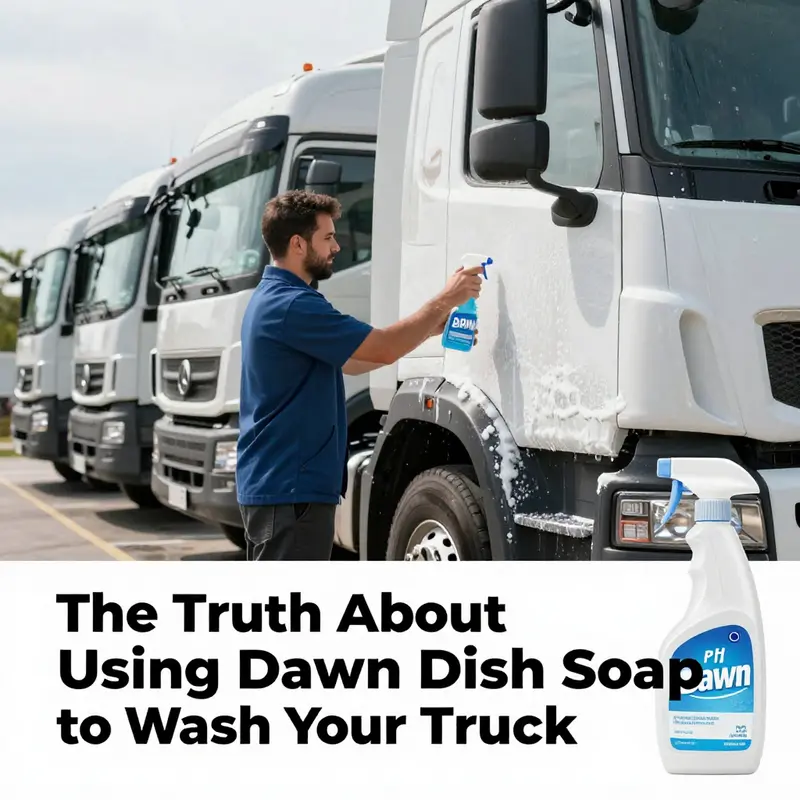
Keeping a truck looking sharp is more than vanity; it protects resale value and helps reduce corrosion from road grime. The urge to grab a familiar kitchen dish soap when a truck looks dirty is understandable. Kitchen detergents are designed to cut grease on cookware, not to cradle a vehicle’s delicate exterior. That powerful grease-cutting edge, while handy on pots and pans, can be a drawback on painted surfaces. The reality is that a product formulated to strip grease and baked-on cooking residues can also strip or dull the protective layers that keep your paint vibrant over time. It’s not just about a quick shine; it’s about the long game. When you take proper care, your truck’s finish resists the onslaught of UV rays, acid rain, and airborne pollutants. When you don’t, you may notice dulled reflections, uneven gloss, or micro-scratches that invite dirt to cling and grime to build up faster. In practice, the decisive factor is choosing the right kind of soap for the job.
There are two essential ideas that frame sound washing habits. First, avoid mixing the kitchen and the vehicle—keep the hard, everyday dish soap out of your car care kit. In ordinary conditions, a household detergent’s formulation includes surfactants and degreasers that are strong enough to strip wax and sealant. Even if you can get away with it for a splash scrub now and then, the cumulative effect over months and seasons is a finish that looks flat rather than crisp. Second, invest in the right car or truck wash soap that is pH-balanced and designed for automotive finishes. These products are engineered to clean effectively without compromising the protective layers. They strike a balance between removing dirt and preserving the wax and sealant films that shield the paint. The result is cleaner paint with a deeper, more uniform shine that lasts longer between detailing sessions.
In practice, a proper wash begins with a thorough rinse that removes loose dirt and prevents every pass of the mitt from grinding grit into the surface. A strong stream from a garden hose or other water source can lift away sand, soil, and debris that would otherwise become fine scratches. This initial step is less glamorous than the suds that follow, but it is the foundation of a scratch-free wash. After the rinse, the correct soap matters even more. Use a dedicated truck-washing soap rather than household cleaners, because these vehicles are built to tolerate repeated exposure to cleaners without compromising the paint’s integrity. The distinction may seem subtle, but it makes a real difference in how the finish holds up over time. With the right product, you can still achieve a film of suds that lifts dirt away rather than grinding it into the finish. The goal is a surface that feels smooth under a wash mitt rather than gritty or tacky with grime.
Another cornerstone of a safe wash is technique. The recommended approach is to wash from the top down. Gravity does the work, and this order minimizes the amount of dirty water tracking across the most pristine sections. If you start at the roof and work your way down, you’re less likely to drag lower dirt up onto already-clean areas. In addition, avoid brushes with stiff bristles. Hard bristles can act like sandpaper on clear coats, leaving micro-scratches that dull the finish. Instead, opt for a soft wash mitt or a microfiber cloth designed for automotive surfaces. A well-maintained wash mitt, kept clean in a dedicated rinse bucket, can glide over panels with far less resistance when you pair it with a two-bucket wash method. In the two-bucket method, one bucket holds soapy water while the other is reserved for rinsing the mitt. This simple separation prevents dirt from returning to the truck’s surface, which is a common cause of scratched paint. It’s a small habit with a big payoff, especially when the truck has chrome trim, bumpers, or other features that highlight surface irregularities.
The materials you choose matter as much as the method. A product labeled as a truck or automotive wash is designed to be gentle on clear coats while still lifting stubborn grime. These soaps are typically pH-balanced to avoid over- or under-wetting the finish, which can also affect how the paint looks after drying. When you finish the wash, the surface should feel slick to the touch. If it feels rough or shows visible water spots, you may benefit from a quick post-wash dry with a clean microfiber towel or a chamois. Drying promptly is part of protecting the surface, as it reduces the chance of mineral deposits etching into the finish if the water dries unevenly. While it may be tempting to let the surface air-dry, a careful towel dry is a better long-term practice for maintaining a showroom-worthy gloss.
Protection after washing deserves equal emphasis. Regular washing supports a longer life for wax or sealant, but it does not replace the need for protective layers. After a thorough wash and dry, applying a quality wax or sealant provides a sacrificial barrier against environmental contaminants. The protective film repels water, helps prevent UV damage, and reduces the adhesion of dirt. It’s worth noting that the protective layer itself deserves routine maintenance. If you live in an area with heavy sun exposure, winter road salt, or coastal salt spray, reapplying protective products on a cycle—such as every few months—is a practical approach to preserving the paint’s clarity and depth. The same logic applies to trim pieces and plastic surfaces, which benefit from treatments designed to seal and restore color without creating a greasy residue that attracts more dirt.
For trucks that see demanding conditions or fleets that rely on consistent appearance, implementing these practices as a standardized routine is wise. Consistency helps keep finishes uniform across multiple vehicles and reduces the risk of accidental neglect. In such cases, a practical approach might include designated wash days, a consistent set of tools, and a simple checklist to ensure that top-to-bottom washing, two-bucket rinsing, and post-wash protection are not overlooked. A steady routine makes it easier to manage maintenance and can improve job satisfaction for crews who depend on a clean, well-presented fleet. If you’re looking for expert strategies to handle persistent grime—grease, tar, or other built-up residues—there are proven strategies for cleaning grease and tar off your trucks fast. proven strategies for cleaning grease and tar off your trucks fast. This reference illustrates how methodical, repeatable processes can transform what feels like a daily chore into a straightforward, reliable routine. It’s not a replacement for automotive-specific products, but it reinforces the idea that the right sequence, tools, and products produce the best outcomes.
The practical lesson is clear: while you may reach for a familiar kitchen detergent in a pinch, it should be treated as a last resort rather than a regular maintenance product. The long-term impact on paint integrity, gloss depth, and color richness can be subtle at first but accumulate into a finish that looks dull and lacks resilience. By contrast, choosing automotive-grade soap, following a top-to-bottom wash sequence, limiting agitation to non-abrasive tools, and finishing with a quality protective layer, you establish a durable finish that stands up to the road, sunlight, and weather. The finish you preserve today pays dividends in the future, not only in resale value but also in the daily satisfaction of driving a truck that looks cared for and presentable. The steps are straightforward, the risks are measurable, and the payoff—glossy, protected paint that lasts—is worth sticking to a disciplined routine. For readers seeking deeper insight into how a fleet can embed these practices into daily operations, a visit to the fleet maintenance and facility-management resources linked in this chapter provides practical context that aligns with everyday on-ramp operations. For supplementary reading, this external guide offers a broader perspective on vehicle washing and protection: https://www.autogeek.net/how-to-wash-your-car
Final thoughts
While Dawn dish soap may be effective for specific household cleaning tasks, it does not serve the best interests of your fleet when it comes to regular maintenance. The long-term effects of using such products can lead to significant paint and protective layer damage. By understanding the right products to use, you can protect your investment and extend your vehicles’ life. Prioritize a pH-balanced automotive wash that ensures your trucks remain clean, shiny, and protected against environmental factors. Selecting the appropriate cleaning agents is essential to maintaining your fleet’s value and appearance.