
Maintaining the cleanliness of a semi truck is not merely about aesthetics; it’s a critical factor influencing longevity, compliance, and operational efficiency. For logistics and freight company fleet managers, trucking company owners and operators, as well as construction and mining fleet supervisors, understanding the cost implications of washing semi trucks can lead to significant benefits. This guide explores various aspects of truck washing costs, including basic and premium cleaning options, the investment in automated wash systems, special services, and regional price variations. Each chapter delivers targeted insights essential for making informed decisions about maintaining a fleet.
Counting the Pennies: Understanding the Basic Costs of Washing a Semi Truck
Operators know appearance matters, but the cost of a basic exterior wash often drives daily expenses. A typical basic exterior wash for a semi truck ranges from $20 to $50 per vehicle, depending on location and the level of service. Rural shops tend to price toward the lower end due to lower labor costs and overhead, while urban facilities can push prices higher to reflect higher wages, stricter environmental rules, and higher demand.
For dirtier trucks, the price moves into the $50 to $100 range as more thorough cleaning is required, including undercarriage rinses and wheel scrubbing. Some shops offer mid-range options for enhanced cleaning that still keep turnover reasonable. Full interior cleaning or detailing, while not part of a basic wash, can push costs well above $200.
Facilities may add entry fees, surcharge for heavy mud, or large-truck charges. Automation can influence price, with high-volume automated washes offering lower per-vehicle costs but requiring substantial upfront investment. When evaluating options, compare line-item details: what is included, any add-ons, and how throughput impacts total cost over time.
In short, basic wash costs are shaped by service level, location, and operational goals, and smart buyers seek a clear breakdown before committing.
null
null
From Upfront Investment to Fleet-Wide Clean: The Economics of Automated Semi-Truck Wash Systems
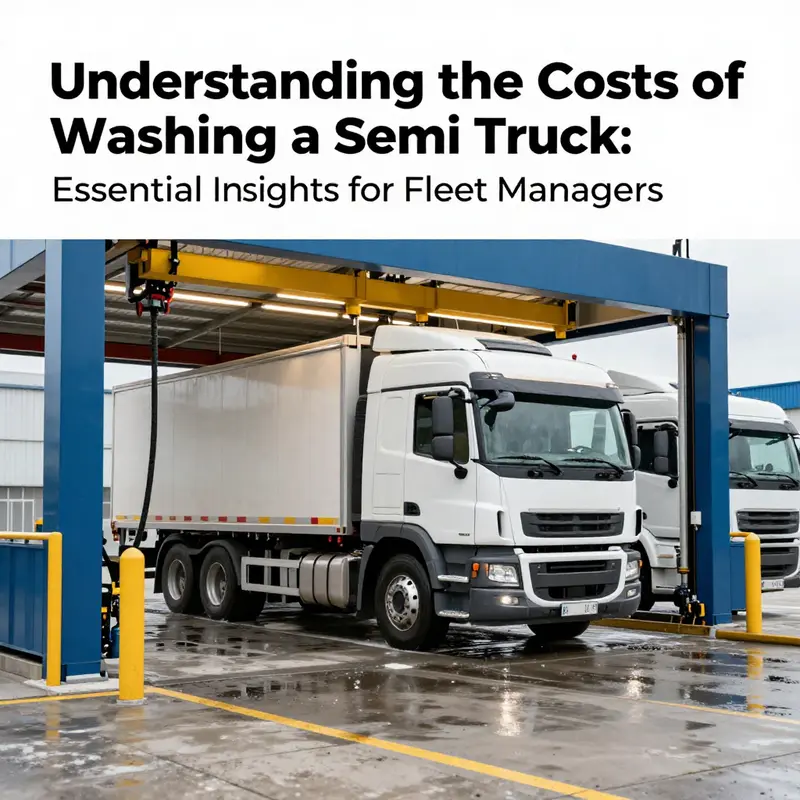
When fleets weigh the choice between manual scrubbing and an automated wash, the calculus extends far beyond the price tag of a single rinse. The question isn’t just how much a wash costs today; it’s how the system influences uptime, labor spend, consistency of results, and the long-term life of the equipment that carries goods across the country. Automated wash systems sit at the intersection of throughput and standardization. They promise a predictable, repeatable clean on every vehicle, which in turn supports a brand image that trucks and trailers present to customers every day. The financial appeal is often measured in two big bets: the reduction in labor hours and the faster turnaround that returns vehicles to service sooner, combined with a well-defined path to recovery of the upfront investment. In this light, the decision to purchase an automated wash is less a purchase and more a strategic shift in fleet maintenance economics.
The initial price of a fully automated system is nothing if not bold. On the front end, fleets commonly face a capital outlay in the broad range of roughly one hundred fifty thousand to four hundred thousand dollars. The span reflects differences in throughput capacity, system design, and control of water and chemical usage. The higher end typically accommodates greater daily volume, tighter waste management requirements, and more sophisticated filtration or reuse features. The purchase decision also hinges on the expected daily throughput: for operations washing fifty or more trucks per day, automation can unlock a level of efficiency that manual methods rarely match. The payback story, while not universal, often centers on two principal numbers: labor costs saved per vehicle and the value of reduced downtime. If a fleet owner can charge or account for around twenty dollars per wash and consistently process fifty or more vehicles each day, it is feasible to reach a payback window of roughly eighteen to twenty-four months. This is not a guaranteed outcome for every operation, but the math becomes compelling when labor costs, scheduling rigidity, and downtime penalties are weighed against the steady, high-volume use the system is designed to support.
Beyond the raw numbers, the incremental cost of each wash tends to shrink as capacity increases. In a manual model, the per-truck labor expense accrues with every wash, and the time per vehicle tends to scale with the grime present and the level of detail required. An automated system, by contrast, brings a uniform process: a pre-set sequence of rinses, detergents, and, where applicable, drying. This consistency translates into predictable maintenance windows, fewer repeat cleanings, and less variability in the finished appearance of a vehicle. The reliability of results matters, especially for fleets that use visible branding on their equipment or that transport time-sensitive goods where cleanliness signals professionalism and hygiene. The end state is not a fancy gadget but a repeatable workflow that keeps fleets moving and looking purposeful on the highway.
The environmental dimension, while sometimes overlooked in early financial analyses, often shifts the cost-benefit balance in favor of automation. Modern automated wash systems are designed to manage water use with precision. They employ controlled dispensing of detergents and advanced nozzle patterns to maximize cleaning while minimizing waste. In regions with water restrictions, runoff concerns, or stricter permit requirements, this control becomes a compliance advantage as well as a cost saver. Wastewater handling is another pivotal piece. With proper filtration and treatment, automated facilities can reduce the load on municipal systems and avoid penalties tied to improper disposal. In many markets, these environmental practices are not only good stewardship but also a prerequisite for operating at scale. The broader story, then, connects cleaner trucks to cleaner operations, reinforcing regulatory compliance and brand responsibility in one integrated approach.
Because the scope of automation is not purely mechanical, but also architectural, decisions about the system must consider everyday realities of the site. A fleet that runs a high volume must ensure the facility has enough space to accommodate the gantry, the vehicle queue, and the maintenance corridors required for ongoing service. The water supply must be reliable, and the wastewater disposal capabilities must align with local regulations. Space constraints can drive choices about the footprint of a wash bay, the layout of the approach lanes, and the staging areas for maintenance and drying. All of these considerations feed back into the total cost of ownership, shaping not only the upfront expense but also the ongoing operating expenses, energy use, and system downtime costs.
Within these practical realities, it is worth distinguishing the two broad families of automated wash approaches. Touchless systems, which rely on high-pressure jets and specialized detergents, offer the advantage of minimizing contact with the vehicle surface. This reduces the risk of paint abrasion and surface scuffing, especially for fleets with delicate finishes or less maintenance-friendly paint schemes. Brush-based systems introduce a different set of trade-offs: contact cleaning can be more aggressive on heavy soils like dried mud or industrial grime and can deliver a deeper physical scrubbing when needed. For fleets that encounter varied grime profiles—mud, salt, or tar—an informed selection between touchless and brush configurations, or a hybrid approach, becomes part of the strategic investment. Each option carries its own reliability profile, consumable costs, and maintenance schedules, which in turn shade the expected total cost of ownership.
Rather than treating the decision as a single-point purchase, many operators approach it as a lifecycle choice. A fleet that anticipates steady growth or seasonal surges in volume often benefits from a scalable automation solution that can be augmented with additional bays or integrated with existing maintenance workflows. The broader plan then includes not just the wash itself but the facility management ecosystem that supports continuous operation. For facilities pursuing this path, strong facility management for truck wash businesses is essential. This means aligning sanitation protocols, water reclamation, chemical handling, and safety standards with ongoing maintenance and scheduling. facility management for truck wash businesses is less about a single upgrade and more about building a resilient operating environment that keeps the wash line productive and compliant. When the system runs smoothly, crews can focus on routine inspections, addressing wear on brushes or nozzles, and maintaining the general integrity of the gantry and the driveline of the facility, rather than firefighting downtime caused by inefficiencies.
Yet every investment carries risk. The most persistent risk for automated systems is uptime and reliability. A paint defect-free, consistently clean outcome hinges on proper calibration, regular sensor checks, and timely replacement of wear parts. If the fleet expects to wash a large volume daily, any unplanned downtime can erode the anticipated payback period. Maintenance planning becomes the backbone of a successful deployment. Routine inspections of pumps, nozzles, filtration units, and conveyors ensure that the system performs as designed. In practice, this translates to a maintenance schedule that is not a one-off task but a continuous discipline, integrated into the broader maintenance calendar of the fleet facility. The cost of downtime must be weighed against the predictability of automated cleaning, and the decision to install should reflect the resilience of the maintenance program as much as the cleanliness outcomes.
A decision framework forms naturally from these considerations. If a fleet’s daily volume is high enough to justify the capital investment and if the site can accommodate the necessary space and wastewater controls, automation becomes a compelling option. The financial rationale strengthens when labor costs, scheduling efficiency, and the potential for reduced vehicle idle time are quantified. Conversely, for smaller fleets or those with fluctuating volumes, an automated system may be harder to justify. In such cases, continued reliance on outsourced washes or on smaller, scalable automated bays that can be added later may offer a more flexible, lower-risk path to elevating cleanliness standards without locking in heavy upfront costs. The balance is not simply per-vehicle pricing; it is the broader rhythm of fleet operations, branding, and regulatory compliance that automation can harmonize over time.
The narrative of automation also intersects with the human element of fleet management. As equipment becomes more capable, the role of technicians shifts toward preventive care, data analysis, and process optimization. Fleet managers who cultivate a culture of proactive maintenance can extract more life from their systems, reduce the likelihood of disruptive failures, and keep the wash lines running when demand spikes. This is where the investment transcends the individual bay and connects to the long arc of fleet reliability, safety, and professional presentation. In the end, automated wash systems are not just machinery; they are a strategic choice that aligns operational tempo, environmental stewardship, and brand integrity with the economics of moving freight efficiently.
For readers seeking a broader view of the technical and regulatory landscape that shapes automated wash adoption, the literature on wastewater handling and emissions considerations offers helpful context. The domain is not static, and evolving standards can influence both the design of the system and the ongoing operating costs. External references provide deeper dives into how facilities can manage compliance while pursuing throughput goals. For a deeper dive on the subject of automated truck washing systems in industrial and commercial contexts, this external resource offers detailed guidance and analysis: https://www.bayouwashesystems.com/automatic-truck-washing-systems.
As with any major capital decision, the path to automation requires a clear plan that links upfront costs to long-term cash flow. The numbers tell a story: the investment is substantial, but the payoff can be meaningful for fleets that operate at scale and demand consistent, high-quality cleaning with minimized downtime. The real value emerges when the system is integrated into a robust facility management framework, supported by disciplined maintenance and a sensitivity to environmental and regulatory requirements. In this sense, the automated wash is less a bolt-on upgrade and more a strategic pillar of modern fleet operations—one that, when executed well, turns the expense of today into reliable cleanliness and dependable service tomorrow.
The Premium Clean: Understanding Specialty Truck Wash Costs and What They Mean for Your Fleet
Washing a semi truck introduces a different calculus than washing a personal vehicle. The size, the exposure to road salt, mud, grease, and the sheer hardware involved demand more than a passing rinse. Specialty services exist precisely because standard exterior washes cannot adequately address the needs of heavy-duty tractors. What starts as a routine maintenance task can quickly become a portfolio of options, each with its own rationale and price tag. For fleets aiming to balance upfront costs with long-term value, the distinction between a basic wash and a premium package is not simply about shine. It is about protecting components, preserving resale value, and sustaining performance across miles of service. In this context, cost is not a frivolous line item; it is an investment in reliability and efficiency that pays for itself in fewer breakdowns, lower maintenance drag, and better fuel economy over time. The numbers behind specialty services may feel intimidating at first, but taken together they reveal a clear picture of what matters when you wash a semi truck.
Undercarriage cleaning sits at the core of specialty work for good reason. The undercarriage of a heavy-duty vehicle endures the worst of road grime, salt, and the debris kicked up by long-haul trips or off-road job sites. Left unchecked, this buildup accelerates corrosion and can hide damage to critical components. Professional facilities employ high-pressure water systems and biodegradable cleaning agents designed for heavy equipment. The cost range for undercarriage cleaning typically runs from about $50 to $120 per wash, depending on how contaminated the area is and where the facility sits. In regions with harsher winters or longer durations of exposure to salt and brine, the higher end of the spectrum is common, reflecting both the labor intensity and the need for specialized rinsing strategies that reach into pinch points and frame rails where dirt clings stubbornly. This investment pays dividends by staving off rust and preserving structural integrity, which, in turn, protects the truck’s resale value and reduces the risk of costly repairs caused by hidden corrosion.
Wheel well detailing, though sometimes bundled with premium exterior packages, deserves its own attention. The wheel well and brake assembly area collects brake dust, road mud, and grease that can obscure critical components and complicate inspections. Clean wheel wells improve safety by making it easier to spot leaks or worn parts, and they also support smoother airflow around the tires, which can contribute modestly to fuel efficiency. The typical price for wheel well detailing falls in the $30 to $80 range. In many cases, operators find this service included within higher-tier washes, but when charged separately it highlights the labor involved in accessing tight spaces, removing entrenched grime from the brake components, and ensuring that decorative or protective coatings do not trap dirt in crevices. The result is not just cleaner surfaces; it is a clearer view of the truck’s condition and a platform for ongoing preventative maintenance.
Cab interior cleaning constitutes the third pillar of specialty work. A semi truck cab is a mobile workspace and, for many drivers, a home away from home. Deep-cleaning seats, dashboards, flooring, and air vents requires specialized vacuums, safe cleaning solutions for fabrics and electronics, and attention to odors and mold prevention. The price for interior detailing typically ranges from $60 to $150, depending on the extent of the cleaning and whether additional treatments such as leather conditioning or fabric protection are included. For fleets using high-traffic routes or housing drivers with long daily commutes, interior detailing can dramatically improve driver comfort and morale, translating into better retention and performance. Moreover, a meticulously cleaned cab helps prevent the buildup of allergens and contaminants that can impair air quality and cab functionality over time.
Exterior paint protection represents the capstone of many premium packages. After all the hard work of cleaning the undercarriage and wheel wells, owners often want to lock in that cleanliness with protective layers. Wax, sealants, and ceramic coatings are applied to shield the paint from UV radiation, chemical exposure, and minor scratches. The cost here can range widely—from about $300 to $800—depending on the product quality, the level of prep work, and the application method. Ceramic coatings, in particular, offer durable shine and resistance that can outlast traditional waxes, though they demand meticulous surface preparation and proper curing. For fleets, the idea is not only better aesthetics but longer intervals between maintenances and fewer micro-scratches that can degrade aerodynamic performance and paint integrity over time. Some operators schedule periodic reapplications every six to twelve months to sustain protection, an approach that aligns maintenance budgeting with real-world wear patterns rather than one-off cosmetic moments.
Beyond individual services, fleet operators increasingly encounter subscription plans that bundle specialty cleaning into predictable monthly expenses. These plans can range from roughly $100 to $300 per month, depending on frequency and the mix of services included. Subscriptions offer a degree of budgeting certainty and program continuity that helps managers plan preventive maintenance without chasing sporadic price quotes. The economics of these bundles hinge on consistency: regular, thorough cleaning reduces the likelihood of surprise repairs, helps maintain fleet appearance, and supports compliance with safety and environmental standards by ensuring that waste and contaminants are properly managed during each wash cycle. For operators weighing options, the choice often comes down to a balance between cost predictability and the level of service required to keep each truck in top condition over its service life.
If one thinks in terms of return on investment rather than price, the rationale for specialty services becomes clearer. Undercarriage cleaning, wheel well detailing, cab interior cleaning, and exterior paint protection together create a protective envelope around the most valuable assets on the road. A clean undercarriage reduces corrosion risk and makes it easier to diagnose leaks or wear, while a spotless interior supports driver well-being and readiness. Exterior protection helps maintain resale value and reduces the need for frequent repaints or corrective body work caused by environmental exposure. The incremental cost of these services can be justified by improved reliability, reduced downtime, and better fuel efficiency, as a clean truck experiences less drag and more optimal cooling and lubrication conditions when the drive remains free of heavy grime and debris.
For fleets evaluating the broader market, it’s also useful to acknowledge the option of automation as a longer-term strategy. Some operators consider automated wash systems capable of handling 50 or more trucks per day. The upfront price tag on such equipment often lands between $150,000 and $400,000, reflecting the scale, maintenance, and reliability engineering behind these installations. The payoff, however, can be compelling: recoupment periods of roughly 1.5 to 2 years are cited in industry discussions when charging around $20 per vehicle. This model makes sense for high-volume operators who value throughput and consistency, as automated systems deliver standardized cleaning cycles and predictable service times that align with fleet scheduling. Even if a fleet does not automate fully, the trend toward more frequent, high-quality cleaning is likely to endure, nudging regional suppliers to offer more comprehensive service bundles.
All of this underscores the practical challenge of pricing in the specialty space. The base exterior wash may be affordable, but once undercarriage, wheel wells, cab interior, and paint protection are added, costs escalate. Yet the incremental spend corresponds to tangible benefits: corrosion resistance, safer and cleaner components, better driver comfort, and a more professional fleet appearance that can influence customer perception and driver recruitment. In practice, fleets optimize by layering services. A courteous approach is to begin with a robust exterior wash and targeted undercarriage work after peak seasons or salt exposure, then selectively add interior cleaning or paint protection based on routes, driver needs, and the truck’s condition. Where possible, negotiate bundled pricing that respects the variability of road wear and maintenance cycles, and consider a baseline subscription that ensures consistency without sacrificing flexibility.
To make sense of pricing in your own operation, it helps to map costs to outcomes. Conduct a simple audit: how many trucks, how often they operate in salt-prone or muddy environments, and how quickly they accumulate grime that demands more than a quick rinse. Compare the annualized cost of individual specialty services versus a monthly bundle, and then factor in maintenance savings: reduced rust risk, fewer unexpected repairs, and shortened downtime during inspections or paint touch-ups. If your fleet operates in regions with long winters, undercarriage protection and wheel well detailing may yield particularly strong returns because corrosion exposure remains a constant threat. If driver turnover and comfort are priorities, invest more in cab interior cleaning and periodic detail sessions to keep drivers productive and content on longer routes.
For readers seeking a practical anchor, consider the following approach. Start with a clear baseline: the basic exterior wash at the lower price tier. From there, identify two to three specialty services that align with your operational reality—undercarriage cleaning for salt belt routes, wheel well detailing for fleets running through mud-heavy areas, and exterior protection if your trucks have high exposure to sun or chemicals. Add interior cleaning as a quarterly or semiannual upgrade if driver comfort and hygiene are priorities. If you anticipate frequent exposure to heavy grime or road hazards, explore a subscription or a scheduled maintenance plan that minimizes price shocks and supports steady budgeting. As with many fleet decisions, the best choice couples practical needs with a strategic sense of total cost of ownership, not just sticker price.
For further context on how pricing is evolving in the market and what other operators are paying, you can consult industry sources that summarize semi-truck wash services costs and trend data. External resource: https://www.truckstop.com/semi-truck-wash-services-costs. And for practical maintenance strategies tied to this topic, consider a deeper dive into proven strategies for cleaning grease and tar off your trucks fast, which can be found in related practitioner resources: Proven strategies for cleaning grease and tar off your trucks fast.
Regional Price Climates: How Geography and Weather Shape the Cost of Washing a Semi Truck
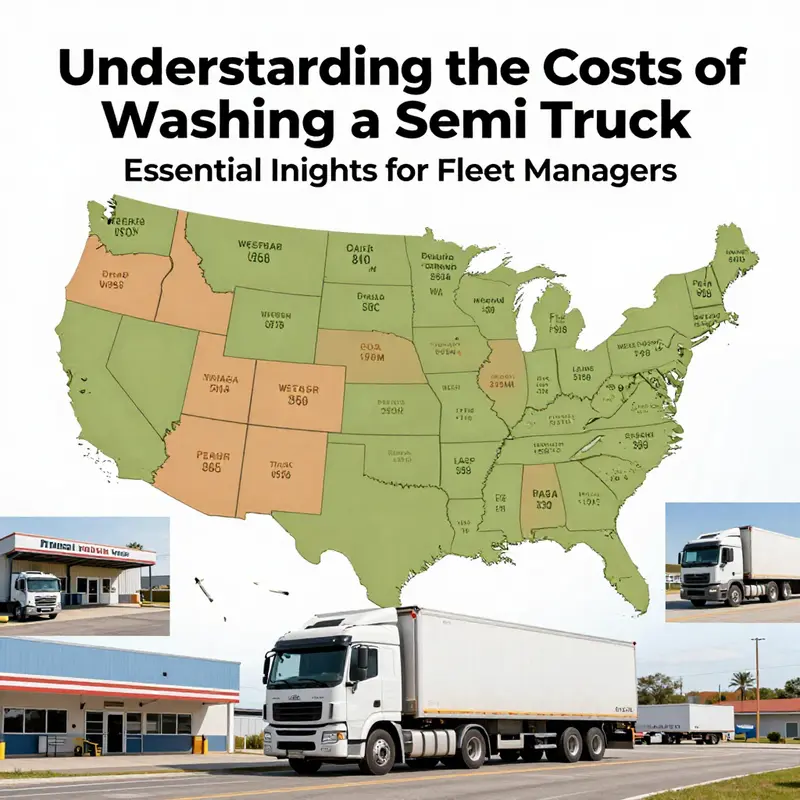
The cost to wash a semi-truck is a moving target, driven as much by geography and weather as by the level of service chosen. A basic exterior wash that covers the body and wheels is often the entry point for many fleets or owner-operators, typically landing somewhere in the low tens to the low hundreds of dollars depending on where the truck is. In more demanding markets, the same service can push toward the upper end of a price band, simply because labor costs, facility overhead, and demand for skilled washing grow with population density. When buyers consider a more thorough clean—one that aggressively tackles undercarriage grime, road grit, and oil splatters—the price climbs again. A deep clean can hover in the range of eighty to a hundred fifty dollars or more, and some specialized procedures that use high-pressure equipment or chemical treatments may push the total even higher. These figures are not arbitrary; they reflect real differences in cost structures from one place to another. For fleets that operate across multiple regions, the disparity can be even more pronounced, making it important to map how regional conditions translate into the sticker price on the bill.
The economics of washing a semi-truck also change when fleets think beyond the single truck in front of them. An automated wash system installed at a fleet facility represents a substantial upfront investment, often in the ballpark of roughly one hundred fifty thousand to four hundred thousand dollars, depending on capacity, features, and durability. Those numbers are not merely cash outlays; they are calculated bets on long-term savings. In markets with 50 or more trucks passing through per day, a well-structured automated system can recoup the cost in a couple of years if charging roughly twenty dollars per vehicle remains tenable. For smaller operators or mixed fleets, the math shifts toward balancing maintenance, energy use, consumables, and regular service costs against the savings from reduced labor and streamlined throughput. In practice, many shops and fleets explore a hybrid approach: efficient automated components for the steady volume plus flexible hand-wash options for high-margin, high-priority jobs. The result is not a single price but a spectrum of charges that reflects both the fleet’s scale and its geography.
Regional price climates do not exist in a vacuum; they are shaped by the twin forces of urban demand and rural affordability. In major metropolitan areas, mobile or on-site truck wash services are typically priced higher. The combination of higher labor costs, tighter labor pools, more stringent compliance requirements, and the overhead of operating in dense urban environments tends to push prices upward. In these settings, a mobile wash for a single truck can commonly fall in the range of one hundred to two hundred fifty dollars. The higher end of that spectrum often coincides with premium service windows, expanded cleaning packages, or the convenience of door-to-door service for fleets policing tight schedules. In contrast, rural or less densely populated regions often see a much more favorable price structure. A basic exterior wash might run from fifty to one hundred dollars, with premium or deep-clean offerings still lower than their urban counterparts due to reduced overhead costs and simpler logistics. This geographic split matters for fleets with dispersed routes or regional hubs because it directly influences budgeting, scheduling, and the calculus of outsourcing versus owning a wash facility.
Weather, perhaps surprising at first glance, is another powerful driver of price and service level. Regions that experience harsh winters, persistent snow, or frequent freezing and thawing cycles demand more intensive maintenance. Cleaning needs intensify when salt, de-icing agents, and road grime accumulate on the undercarriage, framing a scenario where more time, more water, and stronger chemicals are necessary. In these areas, prices can rise as shops allocate resources for tougher washes, longer dwell times, and safer handling of caustic agents. The impact of weather also ripples through equipment choices: some facilities invest in robust de-icing or rust-preventive treatments and in equipment optimized for uniform coverage on cold, damp days. The net effect is a higher per-vehicle cost that reflects both the difficulty of the job and the need for specialized materials and techniques. In Canadian markets, for example, winter road maintenance and the demand for durable wheel wash capabilities can push prices upward, particularly for advanced systems designed to handle repeated seasonal stress while meeting local regulatory expectations.
For fleets evaluating the economics of washing, this regional mosaic has a practical impact. The base price for a quick rinse is rarely the whole story; the final charge often embeds the expected frequency of service, the typical level of grime, and the fleet’s scheduling priorities. Operators with predictable routes and stable volumes might benefit from negotiating volume-based pricing, service guarantees, or tiered packages that reward consistency. Those who prioritize vehicle uptime and minimum downtime may opt for faster, higher-throughput solutions that, while seemingly more expensive per wash, reduce overall maintenance downtime and labor burden. The decision framework also expands to consider the potential savings from automation. An automated system promises speed and consistency, but it requires a careful assessment of maintenance costs, energy consumption, and the volume needed to justify the capital outlay. In practice, the wiser choice often blends automation with selective hand-washing for high-priority or delicate components, balancing cost, quality, and reliability in a way that mirrors the fleet’s operational profile.
The literature on pricing also points to the broader market dynamics that shape day-to-day costs. Real-time pricing varies by location and season, and a prospective customer is well served to seek current quotes rather than rely on rough averages. The geographic price spread means that a truck sitting in a high-cost city for several wash cycles may already be more expensive than a similar truck parked at a rural facility for a year. For fleet managers, this underscores the value of a regional wash strategy that aligns service level with location, weather, and load profile. It also highlights the importance of transparent cost structures. When facilities publish or share clear price ranges and what they include in a given package, operators can compare apples to apples instead of chasing vague benchmarks that drift with the wind.
To illustrate how these factors come together in practice, consider a simple decision path. A fleet owner with semi-trailers operating through both urban gateways and rural hubs might budget for an average annual wash expense that reflects regional mix rather than a single price tag. In cities, the per-vehicle cost for a standard exterior wash might be higher due to labor and overhead, while in rural zones, the same wash costs less but may require more frequent trips to maintain cleanliness standards. If winter conditions dominate the operating environment, a portion of the annual budget should be allocated to deeper cleans or specialty treatments that protect undercarriages and brake components from salt and moisture. In other words, the actual annual wash spend becomes a function of where the trucks spend most of their time, how often they travel through snow or mud, and how the fleet chooses to balance speed, quality, and cost.
For operators seeking to optimize margins, there is value in looking beyond the sticker price and toward process efficiency. A well-designed facility management framework for truck wash operations helps control labor costs, ensures consistent throughput, and reduces the risk of rework. It also supports better planning for peak seasons when demand spikes and capacity constraints can force premium pricing or longer wait times. If you are exploring how to structure or scale a wash operation, consider the broader asset-management view: scheduling, supply chain for cleaning agents, water recycling practices, and the maintenance cycle for washing equipment. Each of these details subtly shifts the final cost and the perceived value of the service, shaping long-term profitability as much as the price tag on the page.
For operators looking to explore more about how to manage and grow a truck wash business, several practical resources offer deeper guidance on facility management, staffing, and workflow optimization. facility management for truck wash businesses
In real-world terms, the pricing picture is a tapestry woven from geography, weather, and scale. The same truck can incur very different wash costs depending on whether it lingers in a hot urban corridor or in a quiet rural lane, whether winter salt demands deeper cleaning or a routine rinse suffices, and whether the shop relies on manual labor or automated systems to deliver throughput. What remains constant is the value of clarity and comparability: knowing what is included in a wash, understanding the conditions that drive costs up or down, and aligning service choices with the fleet’s operational priorities. When fleets and operators approach wash decisions with this lens, they find that the price tag is not just a number but a reflection of geography, climate, and the cadence of their daily operations.
External resource: For a broader industry snapshot on how market trends and regional factors influence mobile truck wash pricing, see this external industry article: https://www.truckinginfo.com/article/industry-trends/mobile-truck-wash-prices-and-factors-affecting-costs-47893.
Final thoughts
Understanding the various costs associated with washing a semi truck is vital for fleet managers and owners aiming to maintain their vehicles efficiently while controlling expenses. The basic wash options provide affordability, while premium and specialty services offer thorough cleaning for challenging conditions. Automated systems represent a significant investment, but they promise improved efficiency over time. Furthermore, being aware of regional price differences enables better budgeting and planning. Ultimately, making informed choices around washing can lead to enhanced vehicle performance and operational success.