

Understanding the cost to wash a box truck is essential for logistics and fleet management professionals. With a diverse range of factors influencing pricing—from service types to maintaining vehicle aesthetics—grasping these complexities ensures informed budgeting and operational efficiency. This article outlines the various costs associated with washing box trucks, the types of available services, the key factors influencing price, and a comprehensive comparison between DIY and professional washing solutions. By delving into each area, fleet managers can make strategic decisions that lead to enhanced vehicle maintenance and cost-effectiveness.
Measuring the Clean: Navigating the Cost Landscape of Washing a Box Truck
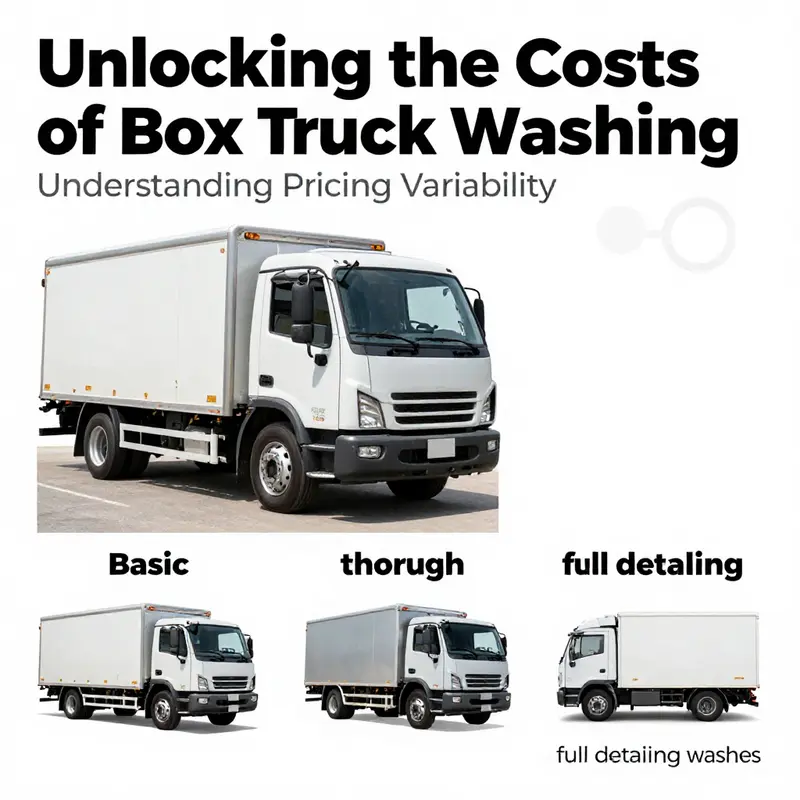
Cleaning a box truck is more than a cosmetic chore; it is a cost decision that reflects size, use, and the daily realities of fleet management. The dirt that accumulates on a box truck comes from asphalt dust, road spray, weather, and cargo residue. Each layer of grime interacts with paint and seals, potentially accelerating wear or dulling the vehicle’s appearance. For managers who rely on clean trucks to project reliability and protect cargo, understanding the cost landscape is essential. Rather than a single price, the market presents a spectrum that accounts for service type, vehicle dimensions, and the emptiness or fullness of the cargo area. The best way to approach the question “how much does it cost to wash a box truck?” is to examine the components of price, from basic exterior cleansing to full detailing, and to see how these pieces fit into a fleet’s maintenance plan.
At the most fundamental level, a basic exterior wash at a professional facility typically lands in the $50 to $100 range for a standard-sized box truck. This band reflects the essential work of removing surface dirt, rinsing grime, and applying a soap-and-water treatment that protects the finish. However, trucks in the 26-foot class—common in regional and local fleets—tend to push into the upper end of that band or beyond, because the surface area is larger and the labor time increases. In practice, many providers quote roughly $75 to $150 for a thorough exterior cleansing of these bigger units, with prices diverging based on access to the vehicle, the complexity of the body lines, and whether the wash facility applies specialized detergents or protective pre-treatments. This basic exterior work is the foundation upon which more extensive services are built, and it remains the touchstone for fleet operators calculating daily or weekly wash budgets.
For businesses that require more than a cosmetic wash, the price climbs as additional services are bundled into the package. When a fleet wants interior cleaning, window washing, wheel detailing, and perhaps a protective wax, the cost can rise to the $150 to $300 range—or higher—especially if the truck has accumulated heavy soil, mud, or dusty residue from off-road or construction work. The interior work may involve vacuuming, sanitizing exposed cargo areas, and removing odors, all of which add labor hours and supplies to the job. In some sectors, such as those handling food-grade loads or sensitive materials, the interior decontamination steps may be more stringent, pushing the total even higher. In total, a full detailing package—exterior wash, wheels and windows, interior cleaning, and waxing—can easily exceed the $300 mark when trucks are large, heavily soiled, or when a premium wax or sealant is included.
A do-it-yourself approach can dramatically reduce the outlay, but it comes with an important caveat. DIY enthusiasts can limit the direct out-of-pocket costs to roughly $20 to $50 for cleaning supplies, depending on the quality of soaps, degreasers, and protective coatings used. The lower price point is attractive for smaller fleets or individual owner-operators who can spare the time. Yet this path requires careful attention to technique and equipment. Inexperienced washing can inadvertently damage paint, trim, seals, or rubber components if high-pressure streams are misapplied or if abrasive compounds are used on sensitive surfaces. The cost calculation, then, is not simply about money spent but also about the risk of future maintenance work or repaint needs that could arise from improper cleaning methods.
Beyond the headline numbers, several modular factors shape the final invoice. The wash type often determines the bulk of the variance. Automatic tunnel washes, for example, tend to be the cheapest option and can cost roughly $30 to $50 in many markets. They provide a quick, standardized rinse that is often adequate for routine maintenance. But heavy grime, caked mud, or hard-to-reach areas near doors and seals may still require manual intervention, which adds to the bill. Manual or hand-washing services, while more expensive, offer superior results for trucks with stubborn stains or delicate finishes. The labor-intensive nature of hand-washing naturally raises prices, but fleets that prioritize cleanliness or own high-value assets may find the investment worthwhile.
Location and accessibility also play a starring role in the pricing equation. Urban or high-demand markets tend to push prices upward due to higher labor costs, stricter environmental regulations, and limited facilities. Rural areas may offer more competitive rates but at the cost of longer travel times for fleet teams and possible scheduling constraints. Water access and drainage infrastructure can also influence the overall price, especially when facilities need to run extended disposal or recycling processes to comply with local environmental rules. In some regions, trucks parked overnight may incur additional dock or lot fees when a wash facility has limited space or requires after-hours service.
Specialized needs represent another price lever. If a truck has hauled hazardous materials, food products, or other sensitive cargo, decontamination steps may be mandated by industry standards or customer requirements. Sanitization, hazard-specific detergents, and validated cleaning protocols can add to the complexity and cost of a wash. When fleets subscribe to periodic or annual maintenance, the economics can shift again. Many operators enter into contracts that bundle multiple washes across a defined period. In exchange for predictable volume, these agreements frequently offer a discount—often up to about 30 percent off the standard per-wash rate—compared to ad hoc bookings. The contract approach works particularly well for fleets with stable routes, consistent maintenance windows, and a disciplined maintenance calendar.
For fleets that must serve a mobile workforce or rely on rapid turnaround times, mobile pressure washing services have become increasingly practical. A mobile unit brings the washing crew and equipment directly to the vehicle’s location, reducing downtime and travel costs. The on-site convenience can translate into a lower total opportunity cost, especially for fleets with multiple shifts or tight delivery windows. The economics of mobile services depend on factors like travel distance, the size of the fleet, and whether the mobile unit can service several trucks in one location during a single visit. When time and reliability trump a fixed-location wash, the mobile approach can prove to be the most cost-effective option over a given period.
Within this price ecosystem, it’s essential to consider how interior cleaning intersects with exterior work. Some operators treat interior detailing as a separate service, priced on a per-cabin or per-cargo-area basis. Vacuuming, mat cleaning, deodorizing, and cargo-area sanitation add layers of labor and material costs that correlate with the truck’s use and the cargo volume transported. Likewise, wheel cleaning and window washing—though sometimes bundled into a “thorough” package—may become optional add-ons depending on the fleet’s cleanliness standards and aesthetic targets. Waxing or sealant application, which is often requested for fleets facing high sun exposure or corrosive road spray, adds a durable protective layer but can push total costs upward by a noticeable margin. The short-term savings from a lighter wash routine might be offset by longer-term paint and finish protection advantages that a wax provides.
A practical way to approach pricing for a given fleet is to anchor decisions to a base exterior wash, then layer in the higher-cost services as needed. For example, pairing a basic exterior wash with a targeted interior cleaning can address both appearance and hygiene without invoking the maximum price tier. If uptime is critical, a quoted package that includes window and wheel cleaning, plus a wax or sealant, may be justified by the extended protection and improved resale value. Fleet managers often use a forecasting approach, planning washes around route schedules and maintenance windows to minimize downtime and maximize asset utilization. In this framework, the exact dollar amount becomes less of a mystery and more a predictable line item in the fleet’s operational budget.
The pricing landscape is also shaped by how information is shared and how negotiations are conducted. Some fleets leverage preferred-provider networks or maintenance vendors that understand typical wash patterns, volumes, and seasonal demand. In those environments, price variability tends to flatten, and service quality improves as vendors compete for repeat business. For operators who seek consistency, an established relationship with a single provider can yield steadier pricing, predefined service levels, and clearer expectations around turnarounds. Within this ecosystem, the most valuable asset is not a single wash but a reliable cadence of washes that align with the truck’s duty cycle and the company’s customer commitments. A steady cadence reduces the chance of last-minute surges in cost and helps teams anticipate maintenance expenses in quarterly planning.
To connect these pricing realities with practical decision-making, it helps to anchor the discussion in a few core questions: How large is the truck and how dirty is it on a typical day? Is interior cleanliness required, and how deep should the sanitization go? What level of protection is desired for the exterior finish, and will waxing be beneficial given the sunlight exposure and road conditions? How urgent is the wash in relation to the truck’s schedule, and can a mobile service save time and fuel? And finally, would a recurring maintenance contract offer meaningful savings when weighed against variability in market rates? Answering these questions requires a measured look at current quotes, but it also benefits from a broader understanding of how the industry handles cost, risk, and value.
For fleet operators seeking a concise roadmap to cost management, a practical hinge point is to view the wash as part of overall vehicle stewardship. The goal is not simply cleanliness but the preservation of cargo integrity, vehicle value, and driver readiness. In this sense, the price of a wash becomes a reflection of the asset’s long-term health, the reliability of deliveries, and the company’s brand as a responsible operator. This broader perspective helps translate the sometimes-opaque line item into a strategic investment. As with any capital-informed decision, the most prudent approach blends transparent quotes, a consideration of size and soil level, and a clear plan for when and how often each truck should be cleaned.
For further context on how fleets balance standardization, maintenance planning, and cost control in their washing programs, see the discussion on Fleet Standardization and Emergency Response. The ongoing conversation about standardized maintenance practices can illuminate how wash costs fit into larger logistical strategies and risk management. Fleet Standardization and Emergency Response.
External resources for market-rate specifics and regional variation are valuable for calibrating expectations. In addition to local quotes, industry summaries provide a benchmark that helps fleet managers gauge whether a quote is within the typical range for a given vehicle size and wash type. For a detailed market-rate breakdown, consult industry analyses and price sheets that aggregate regional pricing data and service levels. This broader view helps ensure that budgeting reflects the realities of the market and not just the quote from a single wash location. For more granular guidance and current pricing benchmarks, you can review external resources that consolidate recent data on box truck washing costs. PremiumWashes box truck washing costs.
null

null
Washing for Value: Decoding the Real Costs Behind Cleaning a Box Truck
When fleet managers map out expenses, washing a box truck often hides behind more obvious costs like fuel and maintenance. Yet the price of a wash reveals a lot about local markets, service quality, and the specific needs of a truck that carries goods across town or across state lines. The numbers can vary widely, but they tend to align with a handful of predictable factors that customers can influence and understand. In many fleets, the goal is not to chase the cheapest wash but to secure a balance between value, uptime, and the protection of a hard working asset that logs long hours on the road. A thoughtful approach to pricing begins with recognizing that a wash is a service rendered, not a single event. It ties together labor, equipment, water use, product quality, and the level of care the operator expects for both exterior surfaces and interior spaces where drivers spend their workday. That broader perspective makes it easier to compare quotes and to plan a washing cadence that keeps the vehicle looking professional without draining the budget.
Location and local market rates shape the base price more than most operators expect. In large metropolitan areas, overhead costs for facilities, utilities, and staff push up the sticker price. A basic exterior wash in a city can easily top the $100 mark, while the same service in a smaller town might sit closer to $50. The discrepancy is not just about geography; it reflects the value chain surrounding a wash appointment. Parking density, permit requirements, and the availability of skilled technicians who can handle larger vehicles all contribute to a higher base rate. The price difference also mirrors demand cycles—busier seasons bring tighter schedules and, at times, higher charges for expedited service. When a fleet evaluates bids, it pays to consider whether the higher city price translates into a more reliable process, shorter turnaround times, or better long-term results on paint protection and exterior finish.
Size and type of the truck are the next levers in the cost equation. Box trucks vary widely in length and height, from compact delivery vans to full sized 26 footers and beyond. The larger the vehicle, the more surface area there is to wash, more water is required, and more labor time is needed to reach every nook and cranny. Some providers price on a tiered basis that directly scales with length and even height, acknowledging that a tall box with aggressive cargo residues presents additional challenges. Even among trucks in the same class, variations matter. A truck with multiple cargo doors, heavy rear door tracks, or protruding cargo cradles demands additional brushing and scrubbing. In practical terms, a straightforward exterior wash for a mid sized box might fall in the $50 to $100 range at a professional shop, while a 26 foot model could move into the $75 to $150 band for a thorough exterior clean. If the truck spent days on salt roads or in muddy fields, the extra time and product needed to remove those residues can push costs toward the higher end of the spectrum.
The level of cleaning required is the dominant driver of cost when the truck returns from a tough job site or a dusty environment. A basic wash can cover rinsing, soap application, and a quick dry. A premium exterior wash adds a more thorough scrub, attention to wheels and window surfaces, and inside the cab wipe downs that remove dust and debris tracked in by the driver. A deep interior detail takes the cost up even further: interior vacuuming, dash and console cleaning, mat refreshment, deodorizing, and upholstery care. Each tier not only increases labor hours but also the quantity and variety of products used. For fleets that routinely encounter heavy grime—think construction zones, food grade powder, or off road dust—the interior detailing portion can be a decisive portion of the bill, especially if mats and carpets require specialized cleaners and stain removal processes. In practical use, many operators pick a mid tier on most visits to maintain a solid exterior appearance while preserving interior hygiene without extending downtime too far.
The type of service provider and the facility where the wash is performed also shapes pricing. Self service options are markedly cheaper because the owner or driver performs most of the work themselves. These facilities typically charge by the minute or offer a basic unlock and rinse for a minimal fee. Automatic tunnel washes offer speed and convenience, often with consistent results and a moderate price point, but they may not address every crevice or stubborn spot. Professional detail shops deliver the highest level of care, employing skilled technicians, advanced tools, and specialized products. They are best when fleets require predictable outcomes, environmental controls, and a warranty on cleanliness. The reputation of the shop, the experience of technicians, and the capacity to handle multiple trucks in a tight schedule all influence the final bill. A fleet manager weighing options must consider not only the price of the wash but the reliability of the service, the likelihood of returns for touch ups, and the potential for damage-free, paint-safe cleaning that protects resale value over time.
Additional services add another layer of cost but can deliver meaningful benefits. Tire shine, wax coatings, window tint care, interior upholstery cleaning, and rust or corrosion protection sprays can all be tacked on. Waxing or protective sealants, in particular, can increase the upfront price but may reduce future cleaning effort and help preserve the finish against road grit and weather. These extras are not merely cosmetic; they can contribute to longer asset life and cleaner results after repeated wash cycles. The incremental cost of each extra service is typically small when viewed in isolation, but the impact compounds across a fleet operating on a monthly or yearly schedule. Fleet managers who anticipate recurring cleaning needs often negotiate bundled packages, which can lower the average cost per wash and create predictable maintenance budgets. It is worth noting that some providers offer add-on features like water reclamation or eco friendly detergents, which may appeal to fleets aiming for sustainable operations while balancing the bottom line.
Frequency of service and the economics of repetition also shape the per wash price. Regular customers may receive discounts, and some providers entice fleets with bulk packages such as a pre paid series of washes. Over the course of a year, the savings from these programs can be substantial, particularly for fleets that operate in the same markets and require consistent appearance standards. A disciplined washing cadence aligns with maintenance schedules and loading cycles, so trucks spend less time in the shop and more time on the road. The practical outcome is a more predictable expense profile that helps fleet managers forecast maintenance costs with greater confidence. In markets where labor rates are volatile, committing to a regular schedule can stabilize overall costs and reduce the risk of price spikes during peak seasons or when demand tightens.
For a fleet evaluating whether to DIY or hire a professional, the decision hinges on more than the immediate price. A pressure washer and a supply basket can bring a rough total down to the $20 to $50 range, but this approach carries opportunity costs. Labor time can stretch into hours, water usage may be higher than expected, and there is a nontrivial risk of paint etching or seal damage if cleaners are misapplied or brushes used incorrectly on delicate panels. Downtime is another factor: if a truck is out of service for a wash, even a few hours can disrupt a delivery schedule and cascade into late shipments or missed customer commitments. For many fleets, the best balance emerges when the shop handles exterior and interior cleaning during off hours or on a rolling schedule that keeps trucks available for dispatch while maintaining a presentable image. The choice, in the end, is a function of the fleet’s operational tempo, the cleanliness standard required by customers, and the value placed on maintaining a pristine exterior that invites confidence from drivers, customers, and partners alike.
The condition and operating environment of the truck also push costs up or down. Vehicles that traverse dusty deserts, muddy rural lanes, or salt sprayed coastal routes accumulate grime that resists simple rinses. In these cases, pre soaking, degreasing, and additional scrubbing cycles become necessary, increasing both material and labor costs. Heavily soiled surfaces can push a basic wash into premium territory, while interior cabins that collect dust and debris from long hauls may demand more aggressive vacuuming and deodorizing steps. Conversely, a box truck with a relatively clean load history and minimal exterior hazards may require only a light once-a-week or biweekly rinse. The key is to tailor the wash plan to the actual duty cycle of the truck rather than applying a one size fits all approach. A flexible pricing strategy that recognizes the difference between routine maintenance and post job site heavy cleaning tends to yield the best long term value for a fleet.
When a fleet considers a wash, a simple decision framework can help translate these factors into numbers. Start by establishing the required level of cleanliness and the acceptable turnaround time. Then estimate the expected frequency of washes given the operating regions and seasonal weather. Request quotes that itemize exterior, interior, wheel, window, and optional wax costs, clarifying whether the price includes pre soak, bristle scrubbing, and towel dry. Inquiring about water use, drying times, wastewater handling, and any fleet discounts clarifies the potential hidden costs and savings. A thoughtful buyer will also ask about the shop’s ability to handle back-to-back truck appointments, the availability of mobile services for on-site cleaning, and the potential advantages of bundled maintenance agreements that pair washing with other preventative services. The outcome should be a costed plan that aligns with the fleet’s uptime goals, preserve the vehicle’s value, and present a predictable, defendable budget for the year ahead.
Practical takeaway and linking: for operators seeking to optimize ongoing wash costs and workflows, a practical resource is facility management for truck-wash businesses. https://tripleatruckwash.com/facility-management-for-truck-wash-businesses/
In the end, the cost to wash a box truck is not a fixed line item but a spectrum defined by market realities, vehicle specifics, cleaning demands, and the strategic choices fleets make about their maintenance routines. With a clear view of the drivers described above, fleets can price intelligently, schedule efficiently, and keep their trucks looking professional without compromising reliability or profitability. The next step is translating these insights into precise quotes, accountability for service levels, and a wash program that supports the broader goals of the fleet, from on time deliveries to durable asset care.
Between DIY Savings and Pro Service: A Thorough Cost Guide to Washing a Box Truck
When you start calculating the cost of washing a box truck, you quickly learn that price is only one piece of a larger puzzle. A wash is not a single number on a receipt; it is a decision about time, labor, risk, and the impression your fleet makes on customers, inspectors, and terrain alike. The question—how much does it cost to wash a box truck?—has a layered answer. It depends on whether you roll up your sleeves and do it yourself, whether you hire a professional service, and which level of cleanliness and care your operation requires. It also depends on the truck’s size and condition, the regional price environment, and the added services you might need, such as interior detailing or waxing. To understand the cost landscape, it helps to walk through the main paths you might take and the practical trade-offs that accompany them. In doing so, a simple arithmetic exercise becomes a broader calculation about fleet maintenance, downtime, and how much you value a consistently clean, presentable vehicle in the field.
First, the DIY route. The core appeal of doing it yourself is straightforward: the sticker price is dramatically lower than what a professional service would charge for a similar job. In terms of raw dollar figures, a basic DIY exterior wash for a box truck begins with cleaning supplies and tools. Market prices suggest you can assemble a basic cleaning kit for about $30 to $50. This kit typically includes a truck-specific cleaner, a high-pressure nozzle attachment for your hose, brushes, and microfiber towels. If you already own a pressure washer or have access to one at a rental or a local home improvement store, the out-of-pocket spend for the wash itself can be reduced to the cost of cleaning chemicals and accessory replacements. The math becomes even more favorable when you consider longer-term use: many fleet operators wash more than one truck, turning a modest initial investment into a tool that pays for itself across multiple vehicles and wash cycles.
For a more thorough DIY wash that extends beyond the exterior, you’ll likely add interior products such as carpet shampoo and upholstery cleaner. These items typically add another $20 to $30 to the bill, bringing the DIY total for a mid-level procedure into roughly $50 to $80 if you don’t count your time. Time is an important variable here. A DIY wash requires your labor, your attention, and the risk that a rushed hand may miss spots or, worse, misapply cleaners. The risk-to-reward balance shifts if you regularly handle heavy soil or if your box truck operates in dusty, muddy environments where interior cleaning or more aggressive interior detailing becomes necessary. In that case, DIY becomes a more involved process, and you may find yourself investing extra time and money to protect fabrics, carpets, and electronics from moisture or cleaner overspray.
Time, in particular, deserves emphasis. A professional wash has the advantage of speed and consistency. A skilled operator can achieve a level of uniformity and thoroughness that is difficult to replicate in a small-batch DIY effort, especially with larger vehicles and intricate areas like wheel wells, door jambs, and the undercarriage. If your fleet is on tight delivery schedules or you need a truck back in service quickly, professional service offers a practical value beyond the dollar. It is not just about the wash; it is about turnaround time and predictable results. For a 26-foot box truck, the exterior surface area is significantly larger than a standard passenger vehicle, which translates into more labor and time. In practice, many providers price the larger trucks with higher ranges to reflect this additional work, and the price can escalate quickly when you add wheels, tires, and window cleaning into the package.
On the professional side, the market offers a spectrum of service levels. A basic exterior wash at a professional facility typically lands in the range of $50 to $100 for a smaller vehicle. When you scale up to a 26-foot box truck, the labor and surface area push the exterior-only price into a higher bracket, commonly $75 to $150 for a thorough exterior clean that targets the more visible surfaces, including the doors, roof, and sides, while addressing dirt buildup in seams and creases where grime tends to accumulate. The practical difference in price aligns with the value of time saved and the reliability of the result. A straight exterior wash is often sufficient for routine maintenance, but most fleets eventually opt for a more complete package as part of their brand standards.
If you want what many fleets consider a comprehensive service, you’ll move into the realm of interior cleaning, wheel and window care, and exterior detailing. A professional full-service wash—sometimes called a detailing package—frequently includes exterior washing, wheel cleaning, interior vacuuming, window cleaning, and, in some cases, a light wax or sealant. The price for this level typically ranges from $150 to $400. The higher end of that band appears in major metropolitan areas, where labor and overhead costs are greater. In more demanding scenarios—heavy soil, extreme weather exposure, or long travel in dusty environments—the total can creep toward the upper end of that range. It is not unusual for a luxury or specialty package to exceed $500, especially when it adds deep interior detailing, paint correction, or advanced protective coatings. While those packages can be appealing, especially for fleets that depend on pristine branding for customer interactions, their necessity depends on your goals and the truck’s operational context.
For fleets that maintain a relentless schedule or operate in regions with harsh environmental conditions, it is not uncommon to pair a thorough exterior wash with interior sanitization and a wax or sealant treatment. Exterior waxing protects the paint from UV exposure, road salt, and grime, preserving resale value and reducing long-term maintenance costs by slowing corrosion and wear. While the initial investment can be substantial, the long-term savings in paint life and easier future cleanings are a factor many operators weigh when forecasting annual fleet maintenance. The data from recent industry observations and pricing benchmarks shows that the more inclusive the service, the more the price scales upward—and with that growth comes convenience, speed, and a consistency that is particularly valuable for fleets with multiple vehicles on a region-wide route.
A crucial takeaway from the cost landscape is that the overall value of DIY versus professional washing hinges on a few practical criteria. If you value lowest possible expense per wash and you manage a small fleet or a single vehicle, a DIY approach can be a smart starting point. It allows you to control materials, tailor the process to your truck’s dirt patterns, and schedule washes during downtimes when you are not required to juggle ongoing deliveries. It also offers a learning curve: you can identify which steps yield the best results, what cleaners interact well with your truck’s paint finish, and where you can improve efficiency through better technique or improved tools. Conversely, if your objective is speed, consistency, or branding, and you need drive-away assurance with professional-grade results, investing in professional services makes more sense. The ability to offer a consistently clean truck to customers and inspectors can influence loading confidence, contract opportunities, and even lease renewals in some cases. The trade-off is clear: lower upfront cost and greater time investment with DIY, versus higher upfront cost and reduced downtime with professional services.
Another practical dimension to consider is the size and condition of the truck itself. A larger box truck, such as a 26-foot unit, presents more surface area and may demand more labor, more water usage, and more drying time. In many markets, this translates into a higher price tier for exterior washing, and if the job includes interior cleaning, the price may rise further. Heavily soiled units—think dusty construction environments, mud after a rainstorm, or thick grime along wheel wells—will require more aggressive cleaning methods, longer wash times, and possibly additional treatments. In those circumstances, some operators choose to combine an exterior wash at a lower cost with a separate interior detailing session, balancing the total price across two visits rather than one high-ticket service. It is also common for fleets to adjust wash frequency based on route density, seasonality, and the nature of the shipments. A truck that travels through muddy or sandy conditions may need more frequent cleaning to protect the vehicle’s finish and keep branding sharp, whereas a truck that operates in urban routes with less soil buildup might schedule washes less often.
Beyond the raw numbers, there is a strategic dimension to calculating wash costs. If you operate a fleet with shared drivers, you may want to standardize the wash package across your fleet to minimize scope creep and ensure uniform results. Standardization helps in budgeting and in presenting a consistent brand image across markets. It can also simplify training: drivers know exactly what to expect when they drop a vehicle at a wash bay or when they request a mobile wash service. In this vein, the decision to pursue DIY or professional washing becomes part of a broader fleet-management strategy. The interplay between maintenance, branding, and availability is where the true economic value lies. A well-maintained, consistently clean fleet tends to project reliability and professionalism, which can translate into smoother operations, better customer perception, and fewer delays caused by cleanliness concerns during inspections or loading.
To help frame a practical decision for a typical operation, consider this thought exercise. Suppose you manage two box trucks, each 26 feet long. You wash them every four weeks in a moderate climate, with no special interior detailing necessary on a routine basis. If you choose DIY, your initial spend on supplies is around $40, and you might allocate an additional $25 for interior cleaning products over a year. That would make the annual low-cost scenario roughly $40 to $80 per wash cycle multiplied by 6 washes per year per truck, or about $480 to $960 across both trucks—plus the value of your time. If you opt for a professional service that delivers a comprehensive exterior and interior clean with windows and wheels included, you could face a per-wash price of $150 to $300, depending on the market and service level. Over the course of a year, this could amount to roughly $1,800 to $3,600 per truck, depending on the exact package and whether you’re in a high-cost metro area. The math shows the potential savings of DIY are real, but so is the protection and time savings offered by professional services. If you consider time as a cost—your time, or the time your drivers are not available to perform other revenue-generating activities—the professional option can look even more favorable. Over time, the decision often comes down to whether the fleet owner prioritizes cost containment or operational efficiency and reliability.
The landscape also includes the notion of add-ons and annual planning. When a fleet embarks on a branding program or a maintenance schedule that includes paint protection, wheel detailing, and interior sanitization for health standards or high-traffic routes, the cost picture shifts. In some markets, a wax or sealant is recommended after a thorough cleaning to protect the finish from UV exposure and road grime, particularly for fleets that operate in sun-drenched regions or areas with heavy salt usage in winter. While these add-ons push the price up, they can extend the life of the paint and trim, reducing long-term maintenance expenses. The choice to invest in such protections often aligns with the fleet’s longevity expectations, resale plans, and overall asset management philosophy.
As you weigh these options, a practical step is to benchmark local prices and assess the value your customers place on appearance and reliability. Pricing dynamics are not static; they shift with geography, demand, and infrastructure. The most accurate pricing for your specific situation comes from direct conversations with local commercial vehicle detailers or auto wash facilities. They can provide quotes that reflect the exact truck size, soil level, and service level you require, along with any regional taxes or travel fees that may apply. In this sense, the cost question becomes a starting point for a broader cost–benefit conversation about fleet maintenance and service level. It is not merely a line item on a budget; it is part of a larger strategy to keep your fleet in peak condition while balancing cost, time, and branding value.
For readers who want to weave in broader industry practices as they consider their pricing and service decisions, there is value in looking at facility-level operational guidance. One practical resource that aligns with the operational aspects of running a truck wash business is deeper coverage on facility management and service delivery. This perspective helps fleet managers think through how wash processes, staffing, workflow, and equipment choices influence both cost and performance. You can explore this facet through dedicated resources that discuss how to optimize wash facilities, staffing, and maintenance practices to support a consistent, high-quality outcome across fleets. The emphasis is not only on the price of a wash, but on the reliability and efficiency of the service delivery as part of overall fleet performance.
From a broader industry standpoint, it is helpful to situate these cost considerations within the context of published pricing benchmarks. A widely cited external resource outlines typical pricing structures for box truck washing services and provides a benchmark for how different service levels translate into dollars. This external reference is useful for framing your expectations as you engage with local providers and for validating internal budgeting assumptions. It helps ensure your cost projections are grounded in current market realities rather than in anecdote or outdated pricing bands. For readers who want to compare against a broader market baseline, consulting this external guide can offer clarity about where your local quotes fit within national or regional ranges.
Internal linking note: for fleets seeking deeper operational guidance on how to manage wash facilities and ensure consistency across locations, see the guidance on Facility Management for Truck Wash Businesses. This resource can help you translate the cost insights in this chapter into practical, scalable practices across a growing fleet. facility-management-for-truck-wash-businesses.
External resource for pricing benchmarks: a comprehensive pricing guide from a leading industry provider offers a detailed look at box truck washing pricing, including exterior-only, interior-included, and luxury detailing packages. This external resource can help you compare your quotes and refine your budgeting approach as you plan maintenance cycles and service agreements. Truck Wash Pro pricing guide.
Final thoughts
Navigating the costs associated with washing box trucks is pivotal for fleet management and operational success. By comprehensively analyzing service options and understanding influencing factors, fleet managers can allocate their resources more efficiently. Whether opting for DIY solutions or professional washes, making well-informed decisions will ultimately enhance the longevity and appearance of the fleet, ensuring trucks remain operational and visually appealing. Investing in timely washes also contributes to maintaining compliance and safety standards across logistics and transportation sectors.