

In today’s logistics and freight industry, maintaining fleet vehicles is paramount, and the cleanliness of trucks plays a critical role in representing professionalism and brand value. However, questions often arise about whether trucks can be taken through car washes, especially concerning suitable facilities and cleaning techniques. This article delves into the feasibility of washing trucks at car washes and outlines essential considerations to ensure effective cleaning without compromising vehicle integrity. Each chapter will clarify the types of car washes, safety guidelines, key considerations, and differentiate between commercial and residential options, providing fleet managers, trucking company owners, and supervisors with a comprehensive guide to maintaining vehicle cleanliness efficiently.
Rinse, Route, and Reality: Truck Washes and Car Wash Compatibility
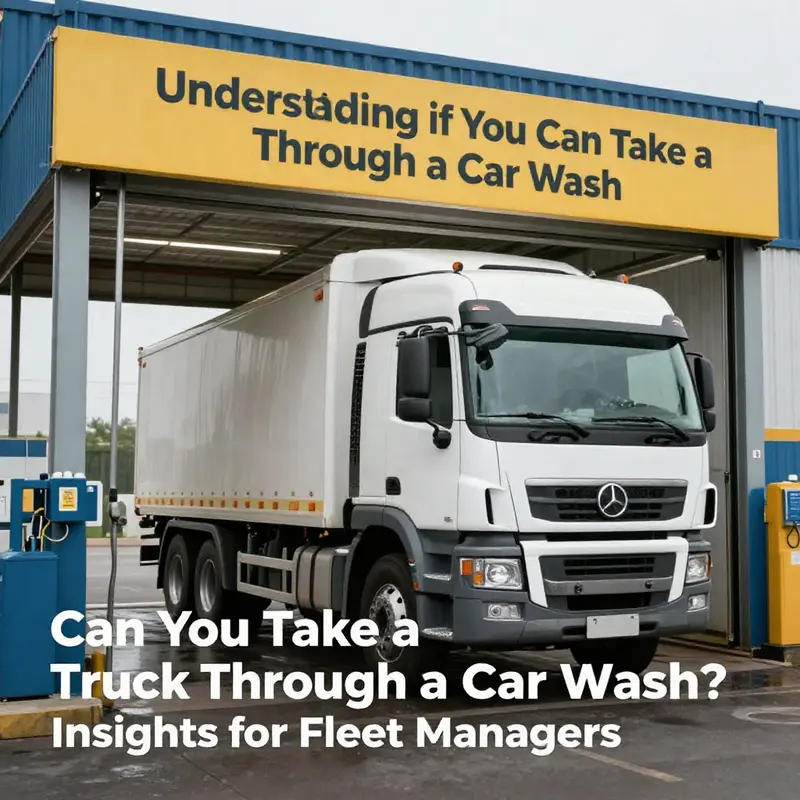
A truck through a car wash is possible in some cases, but not all. This chapter explains when standard car washes can handle trucks, what height and width clearances matter, and why specialized truck washes exist. It covers safety concerns, the design differences between light-vehicle washes and heavy-vehicle washes, and practical steps to verify compatibility before entering a wash bay. It also notes how modular or fleet-oriented facilities can bridge the gap between cars and large trucks, and ends with guidance for fleets on selecting truck-friendly service providers.
Rolling Through the Tunnel: How Modern Car Washes Handle Trucks
Can you roll a truck through a car wash? The answer isn’t a simple yes or no. It’s a calculation that hinges on clearance, design, and the facility’s policies. In practice, many modern tunnel-style washes and heavier-duty systems have evolved to accommodate large commercial vehicles, including delivery trucks, service rigs, and municipal fleet vehicles. The pivotal factors are height and width clearances, the weight rows and conveyors can manage, and whether the wash path provides adequate protection for sensitive trim, antennas, or aftermarket add-ons. The prudent move is to check the wash’s specifications before pulling in, and when possible, select facilities that explicitly state they handle heavy-duty vehicles. This approach isn’t just about convenience; it’s about protecting the truck’s finish and the wash’s integrity over time. The reality is more nuanced than a single gate height. It depends on the exact vehicle geometry, how the wash is engineered, and the maintenance cadence of the facility itself.
From the outset, the architectural core of most car washes designed for trucks centers on the tunnel, the conveyors, and the adjustable work envelope that guides the vehicle through cleaning stages. A typical heavy-duty option in many fleets is a drive-thru or tunnel wash built to accommodate greater heights, longer wheelbases, and wider tracks. These systems rely on a combination of adjustable brushes, high-pressure water jets, and robust conveyor mechanics that can process vehicles up to and often beyond 14 feet in height. They can also be configured with longer tunnel lengths to ensure the entire vehicle, including the undercarriage and rear cab areas, passes through evenly. What makes this workable is not just the machinery, but the controlled environment—timed chemical applications, sensor-based alignment, and regulated drying cycles designed to minimize water spotting on large surfaces and reduce downstream run-off concerns for urban facilities.
Yet the practical takeaway isn’t universal. Some washes are optimized for passenger cars only, with fixed brush booms, lower clearance points, and shorter lanes. These facilities may still advertise a “truck-friendly” option, but the standard parameters may not apply to every truck in every fleet. This is where pre-entry checks become essential. Drivers should verify two or three specifics: first, whether the facility explicitly accepts trucks; second, the maximum height, width, and sometimes length they can accommodate, and third, whether any special instructions apply to vehicles with aftermarket bumpers, lift kits, or roof-mounted equipment. For a truck with a custom paint job or sensitive trim, the risk isn’t just cosmetic; brush contact and abrasive detergents could, over repeated cycles, dull or mar the finish. In such cases, operators often recommend a hand-wash or a full-service option where trained personnel can precare and spot-clean delicate areas.
The spectrum of wash types further clarifies how trucks are cleaned in the field. A basic wash—whether touchless or brush-based—can be the most economical choice for routine maintenance, but it carries limitations. Touchless systems rely on high-pressure jets and chemical detergents to scrub grime away without physical contact. This preserves paint but may struggle with stubborn mud, brake dust, and caked grime on heavy-duty rigs, especially around crevices and wheel wells. Brush-based systems, when properly calibrated, can aggressively lift grime from larger panels, but there is a nontrivial risk of micro-scratches if brushes contact the wrong surfaces or if the cycle is too aggressive. The calibration challenge escalates with size; what works on a 14-foot-high truck may require different brush pressure or nylon composition to avoid mar on a custom bumper or polished trim.
For fleets that emphasize thoroughness and return on appearance, the hand-wash and full-service models present compelling advantages. Hand washing is the most adaptable method. It allows technicians to reach undercarriages, clean fenders, and repeat spot-cleaning in trouble spots that automated cycles may miss. It is more labor-intensive and, therefore, slower and typically more expensive per vehicle than automated options. But for vehicles in frequent contact with tar, grease, or chemical residues, hand detailing can prevent long-term staining and corrosion, which automated cycles might not fully address. Full-service washes merge automation with human care, offering pre-soaks, undercarriage wash, interior vacuuming, and glass cleaning. For fleets that prize a consistently pristine appearance, this combination delivers the most comprehensive care with manageable downtime, especially when you’re juggling schedules around dispatch windows.
Gantry rollover and other specialized truck-bus machines illustrate the furthest end of the spectrum toward industrial-grade cleanliness. Gantry systems deploy overhead arms that sweep across the vehicle at multiple angles, delivering high-pressure water and soap from, essentially, all directions. Brush-type auto washers for large vehicles use wide, heavy-duty bristles designed to clean broad surfaces without concentrating friction in vulnerable seams. Both approaches are designed for the dimensions and weight of large vehicles, and they are commonly found in fleet maintenance centers and industrial settings where throughput and reliability are paramount. There are also dedicated truck- and bus-wash machines that feature purposely widened lanes, adjustable brush heights, and in some cases robotic or semi-robotic arms for precise cleaning. These systems aim to minimize downtime while maximizing the vehicle’s exposure to wash cycles that can handle industrial grime. The trade-off, in many cases, is cost and complexity; the most robust systems demand specialized maintenance and trained operators, which fleets plan into budgets and facility design.
Another option increasingly used in larger facilities is the touchless-plus-cycle approach. Operators run a sequence that includes a high-pressure wash, a chemical pre-soak, and a final rinse, followed by a dedicated undercarriage wash. This approach aims to balance paint preservation with durability against road grime. It is especially useful in regions with heavy road grime or off-road work, where the wheel wells and undercarriage build-up can be dramatic. For trucks, which accumulate similar contaminants across vast exterior surfaces, creating a cleaning pathway that minimizes mechanical contact while maximizing chemical efficacy makes practical sense. The result is a safer compromise between vehicle integrity and cleanliness, particularly when fleets return to service quickly between routes.
The decision on the best wash type for a truck also depends on the driver’s workflow and the facility’s operational realities. A fleet in a city with tight turnarounds benefits from fast, reliable drive-thru systems that ensure minimal downtime. A fleet with a mix of duty cycles—long-haul tractors, regional distribution trucks, and service vans—may lean toward a blend: an initial automated pass for bulk cleaning, followed by hand detailing for critical areas and spot treatment of stubborn deposits. In every scenario, the alignment and positioning of the vehicle as it enters the wash are crucial. Most large facilities rely on a vehicle-sensing system that cues the operator to slow down, stop at a precise line, and engage the wash with the correct settings. For drivers, staying patient and allowing the system to guide the vehicle into the correct lane reduces risk and ensures a smoother experience for both truck and facility.
From an operators’ perspective, there are additional considerations that ripple through fleet life. Facility management for truck-wash operations hinges on maintenance of the equipment and the training of staff to handle large vehicles with care. It involves routine inspection of conveyor chains, brush heights, spray nozzles, chemical dosing systems, and drying mechanisms. It also means maintaining clear communication with customers about acceptable vehicle configurations, payload considerations, and entry procedures. Operators who invest in robust maintenance and clear policy communication see fewer incidents of damage, more consistent wash results, and higher customer satisfaction. For operators seeking guidance on best practices and compliance considerations, a practical resource exists that covers heavy-vehicle wash standards, performance, and industry best practices. It’s worth exploring to align shop floor policies with broader industry expectations.
As a driver or fleet manager, the core lesson is simple: know your vehicle, know the wash, and choose the path that optimizes both appearance and long-term preservation. If your truck sports aftermarket accessories, a high bumper, or a distinctive paint scheme, request a pre-wash assessment or opt for a facility that can offer a hand or full-service approach when needed. When the truck is due for a routine cleanse, having a clear understanding of height and weight constraints, the wash type most likely to deliver the best results, and the facility’s capacity for heavy-duty cleaning makes all the difference. And for operators, a focus on facility design and workforce training translates into dependable throughput and better outcomes across the fleet. For operators, facility management for truck-wash businesses offers practical guidance on scaling, staffing, and safety, and is worth reviewing as part of ongoing process improvements. facility-management-for-truck-wash-businesses.
Ultimately, the question is not merely whether a truck can fit through a wash, but whether the wash can deliver the level of cleanliness required without compromising the vehicle or the facility. It’s a collaboration between vehicle specifications, wash technology, and human judgment. When these elements align—proper clearance, appropriate wash type, careful handling of sensitive surfaces, and a maintenance-backed operation—the answer to can you take a truck through a car wash becomes a confident yes. The industry continues to innovate, expanding the range of trucks and buses that can be washed efficiently while preserving their appearance and structural integrity over time. For fleets operating in demanding environments, this alignment translates into reliable upkeep, reduced downtime, and consistent branding across the entire fleet. It’s not just about cleaning; it’s about protecting investments and sustaining performance across miles of road and job sites. For readers seeking broader context on industry standards and how facilities implement them, consult external resources that outline heavy-vehicle wash standards and best practices. In particular, standards and performance guidance can be found at the following resource: https://www.carwashindustry.org/vehicle-wash-standards-heavy-duty.
Rolling Through Clean: Safely Guiding a Heavy Vehicle Through Car-Wash Systems

The question of whether a truck can pass through a car wash is nuanced. It depends on the vehicle, the wash design, and the facility’s stated capabilities. Modern car washes increasingly accommodate larger vehicles, including heavy-duty fleets, but not every bay is suitable for a 14-foot-tall, wide, or unusually long chassis. The practical answer is that trucks can be washed in many settings, but success and safety hinge on matching the wash system to the vehicle and following disciplined operating practices that respect both the truck and the equipment.
Preparation begins before you approach the entry. Verify that the facility accepts trucks and note any published height and width limits. Some bays are configured specifically for cars, and even facilities that handle bigger vehicles may cap the height or wheelbase. If any dimension nears the facility’s limit or if aftermarket equipment protrudes, seek a wash designed for heavy vehicles. Proper preparation protects paint, seals, and trim and reduces the risk of nicks due to misalignment or misfit.
Types of systems: Most heavy-vehicle washes fall into tunnel (conveyor through rotating brushes and jets) or static/arm-based configurations. Tunnel washes are common for fleets because they offer faster throughput and more consistent coverage on larger vehicles. Arm-based systems can be effective but may require different alignment and more driver discipline since the arms operate with the vehicle stationary or near-stationary.
Before entering: Close openings that could trap water, secure loose cargo, and stow high antennas or protruding mirrors. If the truck has roof racks, antennas, or spoilers, ensure they are secured. A quick prewash inspection can reveal fragile trim or edges that need protection.
Positioning and approach: Follow facility markings and line up with the entry cues. In a tunnel wash, the front wheels should enter the conveyor guide slots smoothly and the vehicle should move slowly and straight. For arm washes, the truck typically stops in the designated area and the transmission is set to the appropriate gear while the arms sweep.
During the wash: In a tunnel, follow the facility’s standard operating protocol so the conveyor handles acceleration and deceleration. In an arm wash, keep the vehicle relatively still while the arms do the cleaning, and avoid steering inputs that might shift the vehicle’s alignment.
Post-wash checks: After exiting, walk around to verify there are no leaks, drips, or water accumulation that could cause rust or freeze in cold weather. Check door seals, mirrors, wiper pivots, and the undercarriage for remaining moisture. If you see marks or scratches, report them to the facility and document the vehicle’s condition before and after the visit to support any claims or warranties.
Long-term planning: Select facilities that explicitly accept trucks, publish clear dimension limits, and operate washes compatible with your fleet. Establish standard operating procedures for drivers and maintenance teams, and keep records of visits and incidents to inform future visits. External references on heavy-vehicle car-wash standards and best practices can help guide audits and training. For example, industry guidelines and resources are available at carwash industry associations’ portals and related bodies.
Feasibility, Safety, and the Fine Print: Can a Truck Really Go Through a Car Wash?

Can a truck really go through a car wash? The short answer is yes, but the longer answer depends on the vehicle, the wash type, and the facility’s policies. Modern car wash yards have evolved beyond the assumption that only compact passenger cars can fit and be cleaned effectively. Tunnel-style automation, high-capacity conveyors, and adjustable brushes have been designed with size and weight in mind, allowing mid-sized and larger vehicles—such as delivery trucks, service vans, and some light-duty trucks—to pass through with decent confidence. These systems can be engineered to accommodate impressive dimensions, with height clearances that reach and exceed a dozen feet and widths that can swallow wider silhouettes than the sedan era imagined. However, the practical feasibility hinges on concrete details: the wash’s published specifications, the truck’s exact measurements, and the condition of the vehicle as it enters the process. In real-world operations, success is less about a universal rule and more about a careful match between truck, wash, and expectations.
The decision to run a truck through a particular car wash begins with a straightforward verification. Facilities differ in scope and capability. Some washes are passenger-car focused by design and advertise only standard-width bays and typical clearance heights. Others, particularly those serving fleets or industrial clients, explicitly state they accept larger vehicles and even operate specialized lanes for heavy-duty traffic. Before pulling onto a wash bay, it’s prudent to confirm two things in writing or over the phone: the facility’s policy on trucks, and the exact clearance (height and width) limits for the wash tunnel or wash box. With dimensions in hand, operators can assess whether the upcoming cycle aligns with the truck’s footprint. The dimensional check may seem pedantic, but it is the baseline for avoiding scrapes or more serious damage, and it becomes especially important when a truck has aftermarket body kits, added trim, or rugged equipment mounted near the cab or along the sides.
If a wash is clearly compatible with a heavy vehicle, the next question is how that wash will actually treat the truck’s exterior. The best industrial or commercial-grade washes provide thorough, uniform cleaning across all surfaces while preserving finish integrity. Adjustable brushes and high-pressure jets arranged along a conveyor line can be calibrated to maintain adequate contact without overwhelming delicate features such as sensors, light housings, and rubber seals. The prohibition on certain aggressive contact is not mere caution—it’s a practical safeguard against premature wear or minor abrasions that may require costly touch-ups later. A wash designed for heavy vehicles might include purpose-built undercarriage rinsing or selective nucleo-cleaning zones that minimize contact with sensitive components. The key is to enter with clear expectations about what will and won’t be scrubbed or blasted, and to ensure the truck’s most vulnerable parts—door edges, light gaskets, roof-mounted hardware—aren’t exposed to undue mechanical force.
From a safety planning perspective, the interplay between vehicle preparation and operator procedures matters just as much as the hardware in the bay. The practice of pre-wash inspection is non-negotiable for mobile and fixed facilities alike. A thorough check should start with a walk-around to identify loose parts, protruding rails, damaged body panels, or degraded seals around lights and windows. Doors, hatches, and windows must be closed securely because even a minor opening can trap moisture, invite wind force into the cabin area, or cause loose items to detach and become projectiles during the wash cycle. This becomes particularly important for mobile services, where crews may not be able to re-inspect interiors after the wash is completed. A careful pre-wash inspection reduces the risk of internal damage caused by stray items and ensures that the exterior cleaning process proceeds smoothly without interruptions.
During the actual wash sequence, restraint and moderation are essential. High-pressure water is effective at dislodging stubborn grime, but it is a double-edged sword for sensitive regions. Directing a jet at the wheel wells, undercarriage, air intake systems, or around electrical connectors can result in water intrusion or actuator damage. In trucks, where electrical systems and sensors may be integrated into or around the chassis, the risk of unintended consequences rises. Operators can mitigate this risk by avoiding pointed jets at areas known to be susceptible to moisture ingress and by relying on lower-pressure, more uniformly distributed sprays on critical parts. For trucks with unusual configurations or after-market alterations, it is prudent to consult with the wash operator about particular vulnerabilities. The goal is a balanced cleaning that preserves components while delivering a complete exterior refresh.
Ground conditions and drainage are another practical concern. A car wash is a high-traffic zone, and trucks bring additional weight and potential for hydraulic strain on the surface. Mobile wash teams must operate on stable, level ground and ensure that drainage systems are functioning. Poor drainage creates slip hazards for staff and can lead to pooling that undermines the effectiveness of the wash and prolongs drying times. It can also interfere with the truck’s electronics if water seeps into vulnerable areas after the cycle ends. Environmental compliance follows closely behind, because wastewater from industrial washes can contain detergents, particulates, and cleaning aids that require proper collection and disposal. Modern fleets and wash businesses increasingly employ water-recycling or low-water systems, aligning efficiency with responsibility. In the long run, a facility that prioritizes drainage and containment contributes not only to operator safety but to environmental stewardship as well.
Cleaning agents are another facet where synergy matters. Even biodegradable, non-toxic formulas can affect paint finishes if misapplied or over-diluted. The safest approach is to rely on cleaning agents as directed by the manufacturer and to avoid mixing products. Dilution ratios, contact times, and rinsing sequences all influence results. While a strong cleaning solution can loosen heavy grime on a truck used in construction or agriculture, the same formulation may threaten rubber seals or certain paints if mishandled. The operator’s training and the maintenance schedule of cleaning equipment become important here. Brushes, sponges, and nozzles wear with use, and worn components can scratch finishes or deposit uneven amounts of cleaner. Regular maintenance logs and visual checks help catch deterioration before it translates into visible swirl marks or micro-scratches on the truck’s surface.
Speaking of training, the people who run these washes are as critical as the machines themselves. Proper handling procedures for brushes and other contact tools, safe operation of pressure washers, and adherence to environmental rules are pillars of safe practice. Staff education programs that cover all phases—from pre-inspection to post-wash inspection—help ensure consistency and reduce the chance of operator error. Training supports not just the longevity of customer vehicles, but the reputational health of the wash operation itself. When a fleet operator pulls up for service, they expect predictable outcomes: a clean exterior, minimal risk to the truck’s specialized components, and clear documentation of what was done. For owner-operators and fleet managers, this places a premium on choosing facilities and partners who maintain rigorous safety and maintenance standards. See how facility considerations and staffing choices come together in practice at https://tripleatruckwash.com/facility-management-for-truck-wash-businesses/.
Beyond the basics of safety, there are special considerations for certain workhorse trucks. Off-road or exceptionally dirty vehicles require more deliberate planning. A pre-rinse, used to loosen heavy mud and debris, is often worth the time before the main wash cycle. Without this step, spray nozzles may clog more quickly, and wash equipment may face unnecessary strain. Even a heavy-duty cleaning system can struggle with extreme grime if not pre-treated. In such cases, full-coverage cleaning systems designed for robust conditions yield better results, but they still depend on proper pre-treatment and correct nozzle selection. The overarching principle remains simple: understand what the truck carries into the wash and tailor the process to reduce risk while achieving the needed cleanliness. The more a wash operator knows about the truck’s recent activity, the better they can select the appropriate sequence of sprays, brushes, and rinse patterns to avoid rework or accidental damage.
For those who own fleets or operate mobile wash services, aligning safety with efficiency can involve more than procedural checks. It can mean designing workflows that integrate pre-wash assessments with documented post-wash inspections and client communications. When facilities invest in routine preventive maintenance, they cut down on unplanned downtime and extend the life of both the cleaning system and the vehicles they service. This alignment—between vehicle readiness, machine capability, and operator skill—produces a smoother experience for customers and a safer environment for workers. It also underpins compliance with local regulations governing water discharge and chemical use, which, in many regions, carry both environmental and financial consequences for noncompliance. For teams that want to deepen their understanding of these practices and their practical implications, many resources outline the standards and best practices that support consistent, responsible heavy-vehicle washing. External insights into mobile truck wash safety protocols can be found here: https://www.beyondthecab.com/mobile-truck-wash-service/.
Can a Truck Tackle the Car Wash? A Practical Look at Commercial vs. Residential Truck Washes

Can a truck tackle the car wash? The short answer is yes in many cases, but only if you choose a facility designed for heavy vehicles and you understand the constraints. The question is not just about height and width; it involves the capabilities of the wash system, the track geometry, and the maintenance practices that keep a large vehicle safe and clean. Modern settings for washing trucks and fleets are not mere copies of passenger-car bays. They are built around broader bays, reinforced conveyors, and powerful water jets that can reach every surface, including the often-messy undercarriage. Yet not every wash is equal, and a truck owner must be prepared to verify several practical details before rolling in. Height clearances, width restrictions, and side-door openings can block access even if the vehicle appears to fit on paper, and a few inches matter when a mirror or a trailer hitch is involved. The most reliable answer comes from choosing a facility that explicitly states it accepts trucks and then confirming the exact limits for your model. In addition, it is prudent to consider the vehicle’s finish and whether the wash process is compatible with any aftermarket parts or custom coatings that demand gentler treatment. A careful balance of fit, finish, and function becomes the deciding factor when a fleet needs timely cleaning without risking surface damage.
Commercial truck washes are engineered to handle the size, weight, and dirt that fleets bring to the curb day after day. Where residential systems focus on speed and convenience for passenger cars, commercial designs emphasize robustness and continuous operation. They feature reinforced structures, more powerful pumps, and drying systems designed to strip water efficiently from large surfaces. In many cases, these washes provide thorough cleaning across the entire exterior, including the undercarriage, wheel wells, and the areas between cab and trailer that routinely collect road grime. The goal is not merely a quick rinse but a controlled process that minimizes wear on the vehicle and reduces the risk of damage to sensitive trim. Because fleets depend on predictable service, these facilities often run longer cycles, offer adjustable wash options, and maintain a schedule optimized for high-volume use. This reliability matters when a fleet arrives after a long haul and needs to be back on the road with minimal downtime. The emphasis on durability means these systems are built to withstand continuous operation, with maintenance plans that track brush wear, jet age, and conveyor alignment so that the wash remains effective over time. Operators frequently implement sensor-based interlocks and automated shutoffs to prevent contact when a vehicle is misaligned, a feature that adds another layer of safety for large vehicles with varied wheelbases. For fleets, the advantage is clear: consistent cleaning quality, predictable turnaround times, and the capacity to service multiple vehicles in a single shift without compromising performance. When a wash is designed for trucks, it also tends to offer configurable programs that address different types of dirt—dust from highways, grease from loading docks, or mud from rural routes—each requiring distinct dwell times and cleaning intensities. This level of customization helps protect paint, trim, and seals while still delivering efficiency.
Before you pull into a bay with a full-size vehicle, approach the decision with the same care you would apply to routine fleet maintenance. First, confirm that the facility accepts trucks and check the published clearance height and width. A miscalculation here can leave the truck stuck or risk damage to mirrors, antennas, or door thresholds. Next, ensure the wash program includes an undercarriage and chassis rinse, because dirt and road grime naturally collect in those hard-to-reach places. Ask about brush wear and the availability of alternate brushes or no-contact options if your vehicle has aftermarket body parts or sensitive trim. If the vehicle carries special coatings, paint protection films, or custom decals, seek guidance on suitable detergents and brushes to avoid abrasion or dulling. Beyond the mechanics, think about safety as a shared duty. Drivers should approach slowly and stay centered in the lane, while the facility staff monitor the process and respond quickly if any anomaly appears. For fleet managers, the decision often hinges on a balance between cleaning thoroughness, turnaround time, and total operating cost. A commercial truck wash, when properly selected and maintained, can deliver a higher level of cleanliness with less risk of incidental damage than some makeshift solutions found along the road. From the fleet perspective, there is value in engaging with a provider that offers ongoing facility management for truck wash businesses; see the linked resource for practical considerations and governance practices. For a broader view of facility management in truck wash operations, consider the framework described at the facility management resource, which provides guidance on layout, staffing, and maintenance planning. facility management for truck wash businesses.
Ultimately, the choice between commercial and residential washes for trucks rests on the vehicle’s size, its finish, and the demands of its route. A standard passenger-side car wash can feel adequate for a compact service van or a light-duty pickup, but the moment height and clearance become testing terrain, the decision tilts toward a commercial solution. In fleet terms, investing in a broadly capable wash system reduces the risk of incidental damage, ensures more consistent results, and can support a schedule that keeps a fleet moving. The science behind a good wash goes beyond water pressure and soap; it includes careful planning of nozzle patterns, dwell times (how long the detergent sits on metal and paint), and the drying sequence that prevents water spots on chrome and reflective surfaces. Operators often tailor these parameters to the type of vehicle and its typical grime. For heavy-duty fleets that cover long distances, consistency of results is as important as speed. When a vehicle travels hundreds of miles per day, even small differences in wash quality can compound into wear on seals or trim. Maintenance teams track brush replacement dates, monitor jet performance, and audit water usage to keep the system efficient and compliant with local regulations. The bottom line is practical: if your truck is tall, wide, or heavily accessorized, a commercial truck wash is usually the safer, more efficient choice; if the vehicle is smaller or unusually sensitive to brushes, a residential setup might suffice but only with explicit acceptance from the facility and a clear understanding of limits. For standards and best practices, see external resource: https://www.carwashindustry.org/vehicle-wash-standards-heavy-duty
Final thoughts
Effectively managing the cleanliness of trucks is a vital aspect of fleet operations. Understanding the nuances of whether a truck can go through a car wash ensures that fleet managers and operators can maintain their vehicles without damaging them. By recognizing the right type of facility, adhering to safety guidelines, and making informed choices between commercial and residential options, fleet operators can enhance the longevity and appearance of their vehicles. Ultimately, knowing how to properly clean a truck can contribute to extended vehicle life and operational effectiveness.