
The cleanliness of a fleet vehicle significantly impacts its operational efficiency, aesthetics, and longevity. For logistics and construction companies, ensuring that trucks remain in optimal condition requires careful consideration of washing methods. This article delves into essential factors regarding truck compatibility with car washes, evaluating various wash types and their suitability. Moreover, we provide safety tips and recommendations that will empower fleet managers to make informed decisions for their vehicle maintenance routines.
Sizing Up the Wash: Can Your Truck Clear the Tunnel and How to Check
When the idea of a car wash enters the mind of a truck owner, it often stirs a practical question as simple as it is sweeping: can my truck go through the car wash? The immediate answer is usually yes, but with a host of caveats that hinge on the vehicle’s dimensions, configuration, and the type of wash you’re considering. The loyalty of most car wash operators lies in serving the broadest range of vehicles without risking damage to either the vehicle or the delicate machinery that cleans it. That means the answer is not a blanket yes for every truck, but a measured yes that comes with a careful measurement, a quick call, and a readiness to pivot to a different cleaning method if the fit isn’t exact. The process begins with understanding how car washes are designed and how trucks differ from the standard sedan or compact SUV that most tunnels assume will glide through with minimal fuss. The tunnel, the rollers, and the overhead arms are configured around typical passenger vehicles. They assume a certain height, width, and length, and the dance of brushes, foam, and sensors is calibrated to that assumption. When a truck enters, particularly a large or modified one, the ease of passage can vanish in an instant if the vehicle brushes or the sensor lanes misread the geometry. It’s not just about raw size; it’s about the entire silhouette of the vehicle as it moves through a relatively narrow conduit where every inch matters. The very question—can my truck go through car wash? invites a broader conversation about vehicle compatibility and size considerations that every owner should take seriously before committing to the wash bay. The good news is that compatibility exists in many cases. If your truck is a typical mid-size model, if its roofline sits within standard height allowances, and if you don’t carry unusual accessories that alter the vehicle’s profile, your chances are high that a standard automatic wash can handle it. But the devil, as always, is in the details. Size matters in ways that aren’t immediately obvious. The height of a truck from ground to roof can push past a wash’s limit when a rooftop cargo box, a tall roof rack, or a ladder rack is installed. The width matters as well. A broad mirror configuration, side steps, or flared fenders can push you into a lane that was never designed with your dimensions in mind. It’s easy to assume that if a truck fits behind the wheel in a driveway, it will fit into a car wash tunnel. In practice, that assumption can lead to a collision with overhead sensors or with the rigid confines of the tunnel itself. The result can be costly for both the vehicle and the equipment, sometimes forcing a rushed exit or a costly pause while the wash staff assess the situation. To avoid this scenario, the first step is a straightforward one: verify the wash’s posted limitations before you roll in. Most facilities place height and width restrictions at the entrance, sometimes near the lobby or right at the gate. If your truck’s height interacts with a rooftop load, the top of your cargo might push into the sensors or brush lines designed to skim the vehicle’s roof. If your vehicle is longer than a typical pickup and carries a long bed, the length can also become a factor in whether the tunnel’s track aligns with your wheelbase. It’s easy to underestimate how a small change in length, height, or width can cascade into a misalignment that creates friction in the wash. The practical approach is to measure and then confirm, because a measured fit is a safer fit. Start by taking three measurements: height (to the tallest point, including any load or racks), width (from the widest points on the mirrors or cargo extensions), and length (from bumper to bumper). If you have a detachable or collapsible roof rack or if you frequently carry oversized roof cargo, consider temporarily removing or lowering these items if possible. Some trucks can be lowered just enough for a wash, while others may require a different cleaning method entirely. In the absence of a precise fit, the best path isn’t to press forward and gamble on clearance. It’s to acknowledge that the wash is designed around common vehicle geometry and to seek an alternative that preserves the finish, the equipment, and the safety of everyone involved. When the geometry doesn’t align, a hand wash or a self-serve bay becomes not just a fallback but a smarter choice. The hand wash route gives you the ability to control the height and approach with care, protecting sensitive components like rooftop racks and large mirrors. A self-serve wash, on the other hand, allows you to scrub and rinse at your own pace, with access to the vehicle from a ground-level stance that minimizes the risk of contact with ceiling-mounted arms or automated sensors. For many owners, these alternatives are not merely options; they are practical necessities that ensure the truck receives a thorough cleaning without the risk of a misfit in a tunnel. In assessing compatibility, it isn’t only a matter of whether the wash can physically accommodate the truck. It’s also about whether the wash’s cleaning approach aligns with the vehicle’s needs. Some car washes rely on heavy-duty rotating brushes and enclosed spaces that rely on a closed environment to deliver consistent scrubbing. For trucks with sensitive finishes, rare chrome detailing, or aftermarket protective coatings, aggressive brushes can be a concern. If the vehicle has been recently waxed or has a ceramic coating, the choice of wash—especially whether the dealership or manufacturer recommends certain wash types—becomes a factor. In this sense, compatibility translates beyond fit and into the realm of vehicle care philosophy. There’s also the matter of logistics and signage. Even if your truck can clear the tunnel height, you might encounter a second layer of constraints: the wash’s lane width, the track’s curvature, and the angle at which the overhead arms sweep past the top of the vehicle. Some trucks with tall rooflines can encounter misalignment with the wash’s spray arms, leading to uneven cleaning or, in the worst case, contact with the vehicle’s roof rack or cargo. An informed approach thus blends practical measurement, facility checks, and a willingness to adapt the cleaning method to the vehicle’s shape. It also invites a larger conversation about the role of car wash operators in accommodating larger vehicles. Some facilities maintain a dedicated lane or a separate queue for trucks and vans, acknowledging the unique dimensions that these vehicles bring. Others, especially those with a strong emphasis on efficiency and standardization, may not be able to guarantee clearance for every truck that pulls in. In those cases, a transparent policy posted at the entrance or a quick phone call can save both time and trouble. The principle is straightforward: if you know your truck is on the larger side or if you have modifications that add height, width, or length, call ahead or check the facility’s website for vehicle-dimension guidelines. This is where the broader ecosystem around truck washes—the folks who manage facilities, signage, and lane configurations—plays a critical role. A well-run facility understands that trucks require a different kind of planning. They document height thresholds, post width restrictions, and offer explicit guidance about alternative cleaning options. For operators, this isn’t merely a matter of compliance; it’s about safeguarding their equipment, their staff, and their customers’ vehicles. If you’re curious about how a facility manages vehicles of various shapes and sizes, you can explore the broader context of truck-wash operations and facility management through resources that discuss how wash centers optimize lanes, signage, and staffing to support larger vehicles. For more detailed information on how facilities balance constraints with service, consider the facility management approach described in this related guide. facility management for truck wash businesses. This kind of resource helps illuminate how signage, lane design, and staff training converge to create safer outcomes for trucks and washes alike. In practice, most trucks that are not excessively oversized will still benefit from the same core checks you would perform with a passenger vehicle. Confirm the posted height and width limits, verify whether there is a dedicated truck lane, and ask whether the wash supports oversized items like rooftop cargo or extended mirrors. If a facility indicates a strict maximum height of, say, seven feet or seven and a half feet, that becomes a hard boundary. If yours sits just above that, it’s not a matter of stubbornness or stubborn refusal; it’s a call to avoid risk. You might opt for a hand wash in a bay designed for manual cleaning, or you might rotate to a mobile wash vehicle that can operate outside the tunnel’s constraints. The broader lesson lies in understanding that a wash is a service with boundaries, and those boundaries reflect real constraints in the physical world. The vehicle’s size, the roof configuration, and the topography of the wash tunnel all interact. Your truck’s doors and tailgate might extend into zones where the spray is more aggressive, or the undercarriage clearance may brush against the tunnel’s tracks. Even the stance of the vehicle at the entrance—whether it’s level or tilted slightly due to slope—can influence the clearance available in the first few inches of the wash. In the end, the decision to run a truck through a car wash hinges on a blend of hard measurements, facility policies, and a practical willingness to pivot to alternative options when the fit isn’t exact. The goal is not merely convenience but the preservation of the vehicle’s finish and the wash’s mechanical safety. If you’re still unsure, the safest path is to treat compatibility as a condition to verify rather than a blanket assumption. Take the time to measure, call ahead, and, if necessary, choose a cleaning method that gives you control. The automotive world is full of variations—different trucks, different roof loads, different tire configurations, and different aftermarket add-ons that can alter the vehicle’s exterior profile. A smart owner recognizes that the idea of a one-size-fits-all car wash is a myth, and the reality is that each wash has its own set of constraints. The last mile of the decision often comes down to a straightforward check with the facility: will your truck pass through their tunnel unscathed? If the answer is yes, you can proceed with confidence; if not, you still have options that protect both your investment and the wash’s operation. For those who want a deeper dive into the operational side of truck wash facilities, a broader view into facility management for truck wash businesses can shed light on how operators approach these questions on a daily basis. You’ll find insights into lane design, signage, and the training that staff receive to handle larger vehicles more smoothly. And for readers seeking external validation and guidelines beyond the facility’s own postings, consult the official resource on vehicle compatibility from a major industry source: https://www.wash.com/vehicle-compatibility. This external reference complements the practical, on-site checks with a high-level overview of compatibility considerations that apply across many brands and facility types. By combining measurement, direct communication with wash operators, and an awareness of the vehicle’s unique features, you can make an informed choice about whether a particular wash is the right place for your truck. And when it isn’t, the alternative—hand wash or self-serve—retains full cleaning potential while preserving the vehicle’s integrity and the wash’s equipment. The core takeaway is simple: size and design matter. Your truck may well clear the tunnel with a little anticipation and preparation, but you’ll benefit most from a proactive approach that respects both your vehicle and the wash’s capabilities. The next time you consider a car wash for a truck, approach it with the same careful planning you’d bring to any other specialized vehicle service. Check height, width, and length; consider roof loads and aftermarket alterations; ask about truck-specific lanes; be prepared to switch modes if needed; and remember that a transparent, informed approach protects everyone involved while keeping your truck looking its best. For further reflection on how facilities manage the unique demands of larger vehicles and the practical steps you can take, see the referenced facility-management resource mentioned above. And when you’re ready to explore broader industry context and real-world examples of truck-wash operations, you’ll find a wealth of information and case studies across related topics that tie back to the central question: can my truck go through car wash? The answer, again, is usually yes, with the caveat that fit is everything and preparation is the key to a smooth, safe wash experience.
In the Car-Wash Tunnel: Navigating Truck Fit, Facility Design, and the Right Cleaning Path
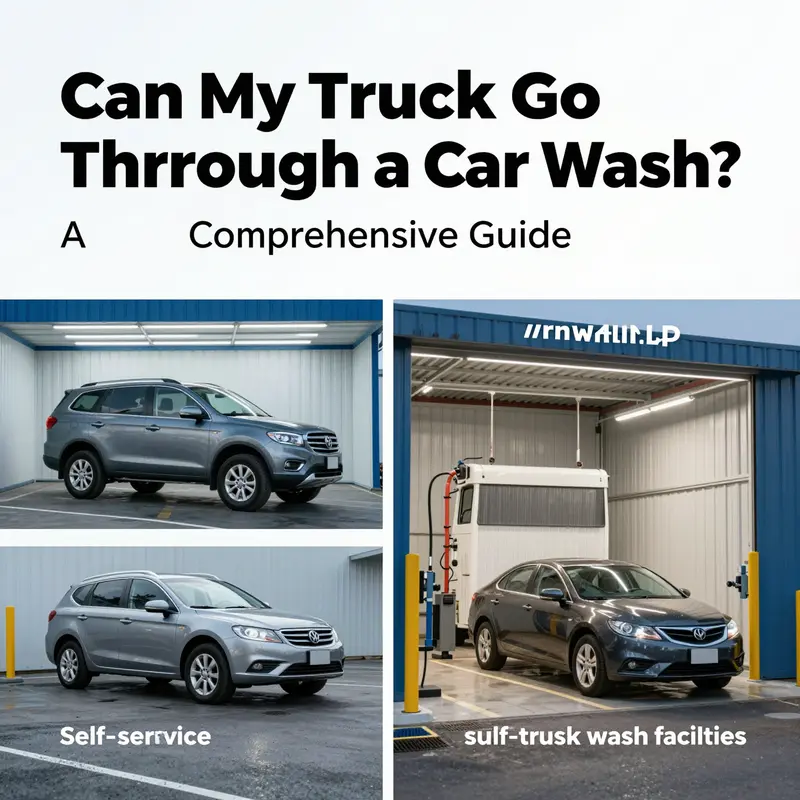
The question someone asks when they pull into a car-wash lot with a pickup that’s more utility than compact is never just about soap and water. It’s about fit, clearance, and risk. Can my truck go through a car wash? The simple answer is yes for many trucks, but not all washes are created equal, and not every truck will pass through safely. The truth lies in the details: the size and shape of the vehicle, the layout and capabilities of the wash, and the expectations you bring to the experience. To move from curiosity to a confident decision, it helps to see the car wash world as a spectrum. On one end, standard automated formats are designed to move a steady stream of passenger cars through a tunnel. On the other end, there are facilities that deliberately accommodate larger, taller, heavier vehicles with wider bays, higher clearances, and different cleaning workflows. Between these extremes sits a range of options—each with its own pros, cons, and best-fit scenarios for trucks of different shapes and needs. In practice, a truck’s ability to pass through a wash begins with a simple, practical step: know your measurements. Height, width, and length matter, but so do the way your truck changes those numbers in motion. A tall roof rack, a rooftop cargo carrier, or a second antenna on a front bumper can raise the overall height enough to strike a low-hanging nozzle or an overhead brush. Wide mirrors or oversized fender flares can push your vehicle into a narrow lane, where the bay walls or the sides of the tunnel brush system are unforgiving. If you’ve ever had a close encounter with a tunnel car wash that felt too tight, you know the feeling of the equipment’s sensors and the vehicle’s geometry arguing over space. Many facilities publish height and width restrictions at the gate, and those signs are not decorative. They’re a safety protocol, a pre-emptive warning that helps you avoid a scramble with a towering jet of water and a spinning brush. If your truck does not meet those published clearances, trying to force a pass is not a clever shortcut; it’s a shortcut to damage—the very thing you want to avoid when you’re trying to preserve paint, trim, and undercarriage integrity. The prudent route is to move past a quick impulse and into a measured plan, beginning with a clear understanding of the wash types you’ll encounter and how each one interacts with a larger vehicle.
The first lens through which to view these choices is the wash type. A Basic Wash offers a straightforward rinse and soap application. It’s often choreographed to a calendar of quick turnovers and can be gentle enough for many trucks, particularly if they’re in decent condition and free of heavy grime. But the trade-off is real: this option may leave heavier mud, road grime, or stubborn build-up on wheel wells and undercarriages. If you rely on off-road adventures, frequent mudding, or job-site work that coats a vehicle in clay or caked grime, Basic Wash can feel incomplete, leaving behind residues that become highlights in sunlight and magnetized dirt in crevices.
A Hand Wash represents the other extreme in customer-driven control. It’s a thorough manual cleaning that can focus attention on hard-to-reach areas like wheel wells, undercarriages, bumpers, and behind mirror housings. For trucks with sensitive paint finishes or custom trim, hand washing offers a gentler, more meticulous touch. The downside is time and cost. It also requires access to a station where trained personnel can reach every nook with appropriate tools. Yet for heavy-duty fleets, this option often proves the most effective long-term investment in appearance and corrosion protection, especially when higher-value finishes or custom coatings are involved.
Drive-Thru Washes form the middle of the spectrum in many urban and suburban markets. These automated systems are designed to process passenger cars quickly, and some smaller trucks can pass with careful alignment. The problem is scale: the brushes and high-pressure jets are optimized for vehicles narrower and shorter than most full-size pickups with flared fenders. The risk is not uncommon—fenders, trim, or mirrors can be nudged toward the sides if the bay is crowded or if the vehicle centers slightly off. The safety discipline here is to verify the manufacturer’s guidelines for maximum vehicle size and to insist on precise alignment. If a truck’s sheet shows it’s at or near the upper limit, it may be wiser to skip the drive-thru and opt for a more forgiving option.
Touchless Washes present another approach. This method uses high-pressure water jets with chemical agents, but without physical contact. For trucks, the appeal is obvious: the absence of brushes reduces the risk of surface scratches and abrasive contact with sensitive finishes. The flip side is performance. Touchless systems sometimes struggle with stubborn road grime, oil resins, and the thicker soils that accumulate on undercarriages or in wheel arches. If your goal is a quick, paint-safe exterior clean and your truck isn’t heavily dirty, touchless can be a sensible compromise. If you operate in a region with sticky residue or persistent road grime, you may plan for a follow-up hand wash or a more robust service later.
Full-Service Washes expand the concept beyond the exterior alone. They often include interior cleaning, window detailing, and sometimes undercarriage care. For bigger trucks—delivery vans, service fleets, or industrial vehicles—these services are compelling. The professionals running a full-service wash bring specialized tools, appropriate cleaners, and a workflow designed to handle tougher contaminants. Interestingly, even within full-service operations, there can be variance in how undercarriage washing is executed. A facility that can address thick mud around axles, or that can rinse off salt film from exposed steel, can vastly extend the life of a vehicle’s undercarriage. In practice, the full-service option is a strong fit when your truck carries functional finishes that you wish to protect, when you’re looking for a more comprehensive clean, or when your vehicle has to meet grueling cleanliness standards for a job or client.
The practical decision, then, isn’t simply about whether a car wash can accept a larger vehicle. It’s about whether the wash type and the facility’s design align with your truck’s dimensions and its cleaning needs. Some facilities explicitly advertise truck-focused lanes and equipment—designed to accommodate higher clearances, wider bays, and heavier mass. If your truck exceeds typical passenger-vehicle dimensions, the right choice may be to seek a dedicated truck wash lane or to contact the facility ahead of time. A quick call or a posted specification can save time and prevent damage. If the layout isn’t clearly defined at the entrance, a polite inquiry can make the difference between a smooth experience and a wrestling match with the wash’s mechanical components.
Beyond the gross measurements, the quality of the wash experience for trucks often hinges on one more subtle factor: the geometry of your truck’s exterior. A rooftop cargo carrier or a ladder rack can add significant height and width. Roof-mounted antennas, light bars, or even satellite mirrors can create a profile that brushes contact risk on an overhanging nozzle or on a tunnel’s interior sensor array. In some cases, the simplest way to ensure safe passage is to remove nonessential protrusions before the wash. If you operate a fleet, establish a standard pre-wash checklist that includes removing rooftop cargo, retracting or tucking mirrors, and securing loose items. A small investment in pre-clean preparation can prevent expensive paint or chrome damage and reduce the chance of a misaligned center during the wash cycle.
Signage at the entry is not merely decorative; it is a guidepost. Height or width limits notify drivers that there are constraints to be aware of. If your truck is near the threshold, treat the signs as guardrails rather than guidelines. Speak with the staff if the vehicle is close to the limit; many facilities will either guide you to an alternative service or suggest a manual approach that avoids the pitfalls of high-speed spray and robotic brushes in a tunnel environment. It’s also prudent to consider the facility’s lubrication and chemical policies. Some trucks operate in industries where heavy residues—diesel residue, grease, or corrosive compounds—accumulate more quickly. In those cases, a facility that offers touchless or hand-wash options may be better aligned with a truck’s contamination profile. A robust cleaning plan may also integrate a trip to a full-service bay that includes undercarriage and wheel-well cleaning to ensure comprehensive removal of contaminants before they can cause long-term wear.
Given these considerations, it is entirely rational to treat the decision as a balance of fit, service level, and risk. If your truck is a standard-size pickup with modest modifications, many drive-thru or touchless washes can do a respectable job, provided you verify clearance and proceed with caution. For larger or customized trucks—service vans, crew cabs with tall roof racks, or heavy-use fleet vehicles—the economics and practicality often point toward either a dedicated truck wash lane or a hand- or full-service approach. In places where you cannot be sure, the safer path is to use a hand wash or a self-service bay where you control the proximity of the brushes and jets. Self-service bays, in particular, empower you to stop and assess the situation in real time, reposition the vehicle, and tailor the cleaning approach to the vehicle’s unique contours and dirt pattern.
There is also a broader ecosystem worth considering. Some facilities position themselves as full-service or all-weather maintenance hubs for larger fleets. These locations may advertise the ability to handle heavy-duty trucks—garbage trucks, delivery fleets, or industrial service vehicles—with appropriately designed bays and the right level of staff expertise. The beauty of such operations is not only the cleaner exterior; it’s the prospect of an integrated service that includes interior cleaning and even undercarriage service that a standard drive-thru cannot match. The takeaway for readers who operate fleets or who rely on their trucks for demanding work is clear: when the job goes beyond a light wipe, a facility transition to a truck-targeted wash strategy becomes a practical, cost-effective choice. And when in doubt, a conversation with the facility about your particular truck’s dimensions and dirt profile can unlock the path to the right service line.
As you weigh options, consider the maintenance and longevity angle. Regular washing helps protect the vehicle’s finish and structural components, especially in climates with road salt in winter or with heavy off-road use. A wash designed with larger vehicles in mind often includes better-protected undercarriage access, higher-velocity jets calibrated for tough grime, and cleaning products formulated for metal and protective coatings common on trucks. If you manage a fleet, you may find it worthwhile to integrate a quarterly or monthly wash cycle that targets areas most prone to corrosion and buildup. In practice, this means coordinating with the wash facility to schedule the appropriate service level and to ensure that the truck’s location and access remain unobstructed throughout the process. The key is not to treat a wash as a mechanical necessity but as a proactive maintenance step that preserves value and safety over time.
For readers seeking a practical, fleet-wide framework, a structured approach can be especially helpful. First, measure and document the vehicle’s critical dimensions: height with any roof equipment, width with mirrors folded or adjusted, and overall length. Second, record any add-ons that could influence clearance. Third, identify the type of soil you most often encounter and pick a wash that aligns with that soil profile—heavy-duty undercarriage cleaning for muddy sites, or a gentle, paint-focused approach for high-value finishes. Fourth, educate your drivers and fleet coordinators on the importance of signaling when a truck exceeds typical dimensions and on how to verify wash capabilities before entry. Finally, build relationships with facilities that offer truck-specific lanes or services, so you can quickly route vehicles to the right line and avoid unnecessary delays.
In a broader sense, the question of whether a truck can pass through a car wash is also about safety culture. It’s about teaching drivers that machines, while precise, operate within defined tolerances. It’s about recognizing when the vehicle’s profile is pushing those tolerances and choosing to protect the asset rather than push for a quick clean. It’s also about planning ahead and communicating with wash operators—letting them know in advance when you’re bringing a larger vehicle so they can allocate the right bay and equipment. When this ethos becomes standard practice, the car-wash experience for trucks becomes less about improvisation and more about an efficient, reliable maintenance routine. And in the long run, that reliability translates into better asset protection, lower risk of incidental damage, and a clearer, more predictable path from dirty to pristine.
If you want to explore a more facility-centered perspective on how washes adapt to bigger vehicles, you can consult resources that discuss truck-wash facility management and design. For a practical treatment of operations, staffing, and workflow optimization in truck-wash settings, see the discussion on facility management for truck wash businesses. It provides context for how a site evolves to serve a wider range of vehicles while maintaining high safety and cleaning standards. facility management for truck wash businesses.
Ultimately, the question is not merely about a single wash pass. It is about choosing the right path for your vehicle’s size, its grime level, and your maintenance goals. When you know the dimensions, confirm the wash type, and align with a facility that can accommodate your truck, you move from uncertainty to confidence. The right decision preserves your truck’s finish, protects its components, and keeps your schedule intact. For many trucks, a well-chosen combination of a suitable wash type and a facility designed to handle larger vehicles will deliver a clean workhorse with minimized risk and maximum efficiency. For others, a more manual approach—hand wash or self-service—may be the best way to maintain quality while preserving time and budget. This is the practical middle ground between the extremes of a tunnel’s brushing carousel and a completely hands-off cleaning ritual. It respects the vehicle’s dimensions, honors the operator’s time, and keeps the road ready for the next job.
As you advance through the decision matrix, keep in mind that standards, performance expectations, and best practices do evolve. The linked external resource offers a deeper, standards-based perspective on heavy-vehicle car washes, including considerations that may apply to your specific truck type and operational context. By grounding your choices in established best practices, you can navigate the car-wash landscape with a sense of clarity and assurance, ensuring your valuable equipment receives the care it deserves without compromising safety or efficiency.
External reference for deeper learning: https://www.safetyandmaintenance.com/industry-guidelines-heavy-vehicle-car-wash
Big Trucks, Clean Rides: A Practical Guide to Car-Wash Safety
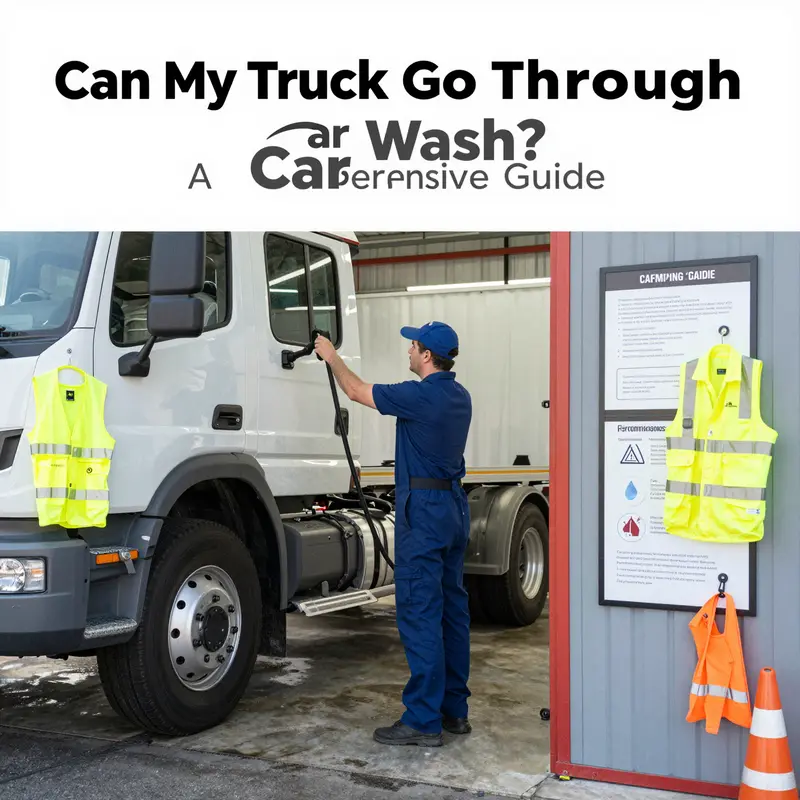
Car washes are generally built with passenger vehicles in mind. For larger trucks, fit and facility design matter as much as the speed of the wash. Height and width are the first gates: overhead rails, sensors, and spray bars assume a standard silhouette. If your truck has a high roof, rooftop cargo, wide mirrors, or ladder racks, check posted clearances before pulling in. When you see a limit you exceed, pause and seek alternatives such as a truck-specific wash, hand wash, or self-serve bays.\n\nBeyond measurements, facility geometry can create bottlenecks. Some tunnels use brush or cloth systems that require precise clearance. Brushless or touchless washes reduce contact but may not remove stubborn grime in wheel wells. For sensitive finishes, lighter programs and gentler detergents help protect coatings and trim.\n\nIf you must use an automatic wash, inspect the equipment visually if allowed and consider removing rooftop accessories if possible. Talk to the attendant about lane options and vehicle dimensions; they can direct you to a program built for trucks. Removing rooftop gear and antennas when safe reduces height and risk.\n\nFleet operators may benefit from dedicated truck wash lanes, wider bays, and trained staff who measure your vehicle against the lane clearance and suggest an appropriate program. When in doubt, call ahead with your truck’s height and width to confirm compatibility or schedule a hand-wash alternative. The goal is a safe, effective clean that preserves value, not forcing a fit through a lane that was never designed for your truck.
Final thoughts
In summary, understanding whether your truck can go through a car wash involves evaluating its size, the type of wash facility, and adhering to safety practices. By choosing the right wash method and being aware of compatibility factors, fleet managers can maintain their vehicles effectively while avoiding potential damage. Prioritize your fleet’s appearance and performance with well-informed washing routines.