
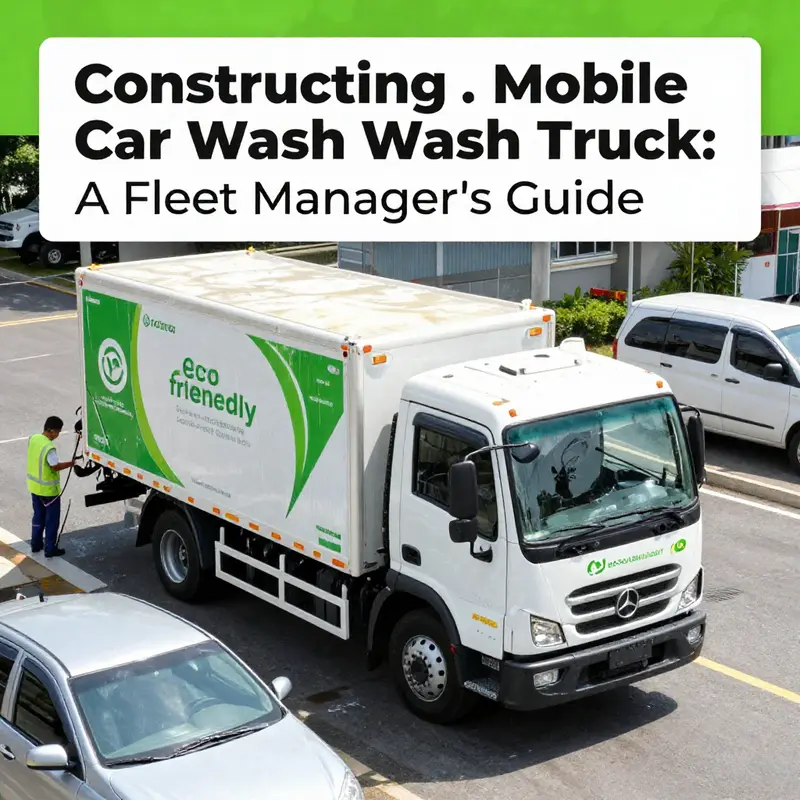
As businesses in logistics and trucking seek to maintain their fleets efficiently and sustainably, mobile car wash trucks emerge as a vital solution. Streamlining in-house vehicle cleaning, these trucks minimize downtime and align with environmental goals. This guide outlines a systematic approach to building a mobile car wash truck, from selecting the right vehicle base, installing an advanced wash system, outfitting your truck with essential tools, to designing for mobility and safety. Let’s explore the critical components that will allow your fleet to shine, reflecting professionalism while adhering to eco-friendly practices.
Foundations in Motion: Selecting the Ideal Vehicle Base for a Mobile Car Wash Truck

Choosing the right vehicle base for a mobile car wash truck is more than a preliminary step. It is the foundation upon which every subsequent system—water, power, layout, and service capability—depends. The base you select determines how much you can carry, how far you can go between refills, and how reliably you can deliver fast, effective cleaning in urban environments. It also frames your finances, since payload, efficiency, and maintenance costs are all tied to the chassis, powertrain, and body you start with. In this light, the decision deserves careful, data-driven consideration rather than quick guesswork. A well-chosen base keeps you agile, reduces downtime, and makes later upgrades smoother. It also provides a natural bridge to the more sophisticated, water-saving technologies that have transformed mobile wash from concept to scalable service model. As you weigh options, imagine the base not only as a seller’s spec sheet but as a platform designed to support a repeatable, professional experience for every customer you serve.
Payload capacity sits at the top of the list because it feeds every other requirement. Water tanks, pumps, hoses, cleaning agents, and the power system all add weight. Even when you plan for a compact build, a mobile wash truck will require substantial carrying capability. Water alone may seem light, but when you store enough to address a full day of work, that weight compounds quickly. A typical onboard water strategy uses a built-in tank in the range of 35 to 100 liters. Every liter translates to roughly one kilogram of mass. Add the weight of a high-pressure pump, a closed-loop filtration or recycling unit, hoses, piping, and brackets, and you’re easily dealing with hundreds of kilograms beyond the empty vehicle curb weight. This is where a capable base—the right chassis with a sturdy, reinforced frame—becomes non-negotiable. To avoid bottlenecks later, the base must have a payload rating that comfortably exceeds your estimated heavy-load scenario, with a margin for growth as you add features like a second tank for longer runs or an auxiliary power unit.
Fuel efficiency is another critical axis. A larger, heavier platform drains fuel faster, increasing operating costs and emissions. The most economical choice is not simply the smallest base but the one that optimizes weight distribution, engine torque, and gearing for urban stop-and-go duty cycles. A base that pairs a strong, reliable engine with smart transmission tuning and good aerodynamics can minimize fuel burn. In practice, this means looking for a chassis that delivers predictable torque delivery for start-up on hills, smooth engagement during frequent stops, and efficient idle management when the wash system is idle but the vehicle remains on standby. You may also encounter hybrid or extended-range concepts emerging in some regions, where a compact power unit reduces fuel use during shorter trips and keeps a reliable reserve for peak cleaning bursts. The key is to balance power needs with expected daily mileage and the typical duration of cleaning cycles. A plan that underpins the daily routine will keep fuel costs and maintenance surprises under control.
Reliability and serviceability loom large in daily operations. A mobile car wash truck cannot afford repeated downtime for repairs, nor can it rely on a sparse dealer network when you need urgent service in a distant market. The base you pick should come from a manufacturer or a platform with a broad service footprint, accessible parts, and a track record for durability in demanding, real-world applications. It is worth investigating the age of the chassis family, its common failure modes, and the typical cadence of component replacement. While you may not plan to push a base to its limits every day, you want predictable service intervals and ready access to components like air filters, brake components, tires, and electrical harnesses. The vehicle should also be easy to work on for your conversion crew. A logical set of access points, modular mounting brackets, and clean electrical grounding points can dramatically shorten installation time and keep your lifetime costs reasonable.
Compatibility with the wash equipment is a practical, almost architectural concern. The base you choose must provide straightforward electrical and hydraulic integration points. Your power system should be able to support a high-pressure pump, a water recycling unit, an integrated water tank, and a control interface without overtaxing the vehicle’s battery or alternator. Look for a chassis that offers robust electrical grounds, clean routing channels for wiring, and secure mounting surfaces. It helps if the base has a standard platform or rail system that allows you to attach modular brackets and rolling carts without heavy, custom fabrication. If you foresee adding components such as micro-water spray networks, foam cannons, or portable vacuum units, the base should have ample designated space and easy access to power and water lines. The last thing you want is a cramped, over-stretched configuration where cables crisscross with hoses, creating tripping hazards or heat buildup. In addition, the vehicle’s mechanical layout should support clean, safe maintenance access. Loose electrical connections or exposed pump lines in a wash bay can be dangerous and reduce system uptime. In sum, the base should be understood not as a fixed frame but as a flexible platform capable of hosting a modular, self-contained wash system while preserving throughput and safety.
A robust chassis is the backbone of durability. This includes the strength of the frame, the resilience of the suspension, and the capacity to handle heavy, repeated loading. A reinforced frame supports the weight of multiple tanks, pumps, and filtration systems without sagging or flexing, which would compromise alignment, seals, and overall performance. A sturdy suspension helps with ride quality and stability during on-site operations, where uneven pavement or parking surfaces can magnify vibration on delicate components. A high-quality braking system and stable handling are essential for urban environments where you navigate tight spaces, pedestrians, and other vehicles. The base should also account for towing capacity if you plan to run a trailer-based add-on for specialized services or larger water storage in certain markets. In practical terms, you want a platform with a proven ability to handle dynamic loads, with strong after-sales support and parts availability. You do not need to chase the flashiest option; you need predictability, longevity, and a base that will not derail your schedule with maintenance delays.
When contemplating platform choices, you face a spectrum of configurations. A van-based chassis offers the advantage of compact maneuverability, easier access to customer sites, and a lower overall footprint for urban operations. It can be a cost-efficient foundation if you anticipate a focused set of services and modest water storage. On the other end, a cutaway or box-type chassis provides more interior room for tanks, filtration, and power systems, and it can accommodate more sophisticated modular racks. A flatbed can offer unparalleled mounting flexibility for a bespoke layout, but it demands careful design to manage weight distribution and weather protection for sensitive equipment. The key is to align the platform with your service philosophy: do you emphasize fast, city-center cleanings with tight parking margins, or do you anticipate longer routes with larger water needs and more on-site equipment? The decision should reflect your operational rhythm as well as your tactical plan for growth. The ideal base does not force you to cram every function into a small space; it invites you to design an orderly, scalable workflow where each component has a defined home, and every operation can be repeated with minimal friction.
Power architecture also matters here. The base should be able to support on-board power that runs pumps, controllers, and any auxiliary devices without draining the vehicle’s primary systems. Some operators prefer a dedicated power pack or modular battery bank that can run the wash unit independently, allowing the vehicle’s alternator to keep the rest of the vehicle energized without pulling extra current. This approach reduces the risk of unexpected shutoffs during a busy day and facilitates a calmer, more predictable maintenance cycle. For those who operate in off-grid sites or in environments with strict indoor air requirements, silent operation becomes a practical benefit of a battery-based power strategy. If a generator is used, it should be compact, fuel-efficient, and properly insulated to minimize noise and heat near the customer, while still delivering reliable energy when the wash cycle demands high pressure or advanced filtration routines. Whatever the choice, ensure the base provides clean, organized paths for cables and hoses, and adequate ventilation for heat-generating equipment. A well-thought-out power plan translates into steadier performance, longer pump life, and less stress on the vehicle’s primary electrical system, which in turn guards your uptime.
Beyond the technical specifics, there is a managerial dimension to selecting a vehicle base. You must translate a features list into daily practicality. Start with a thorough requirements audit: estimate your daily wash count, average service time, likely water consumption per site, and the need for interior detailing or odor control. When you know your typical load, you can map it against payload capacity, power needs, and space requirements. Then consult with conversion specialists who understand both automotive design and the unique needs of mobile cleaning operations. Ask for a floor plan that demonstrates how equipment would be arranged, labeled, and accessed during a typical service call. Don’t assume that the most cost-effective option is the best; the long-term cost of downtime, maintenance, and limited growth potential can far outweigh initial savings. Request quotes that itemize conversion steps, mounting hardware, wiring harnesses, grounding considerations, and a defined warranty window. A robust base is not a single purchase; it is the starting point for a repeatable, scalable service model that can adapt to new markets, new cleaning protocols, and evolving customer expectations. The aim is a seamless integration of vehicle, wash system, and service operations that reduces friction at every touchpoint with the customer while delivering consistent, high-quality results.
A practical note on regulatory and industry considerations cannot be overlooked. The base you select must be compatible with the environmental and safety rules that govern vehicle-based services. Ensure there is ample space to install filtration or water-treatment components that prevent wastewater from entering municipal systems or streets. In addition, the base should support secure mounting that keeps tanks and equipment stable during transit and stops. To stay aligned with evolving regulations and emissions standards, you may wish to consult a regulatory guide that addresses mobile wash operations and vehicle-wash fleets. For regulatory considerations, see truck-wash-industry-compliance-emissions-regulations. This reference can help you anticipate the compliance checks that accompany a broader rollout and avoid costly surprises as you scale your business. In parallel, you should keep an eye on industry best practices and field-tested layouts that have proven resilient in real-world deployments.
As you synthesize these considerations, you may find it helpful to think in terms of a phased path rather than a single, monolithic build. Start with a portable, battery-powered unit to understand workflow, noise, water usage, and customer reception. Once you have field data, you can plan a more substantial vehicle conversion that expands storage and power, facing the challenge of optimizing space without sacrificing ease of use. The incremental approach reduces risk and helps you refine your design based on hands-on experience. It also buys time to align your business processes with the operational realities of the road. In the end, the goal is to anchor your decision in a vehicle base that not only supports the current wash technology you intend to deploy but also accommodates smarter, more efficient systems as technology evolves. A thoughtful base acts like a keystone: it holds together the weight of your equipment, the rhythm of your team, and the speed at which you can respond to customer needs.
External resources can provide additional context for this foundational choice. For a broader perspective on how to evaluate vehicle platforms and the implications for long-term maintenance and growth, consult the external guide at https://www.carwashesolutions.com/mobile-car-wash-truck-vehicle-base-selection-guide. This resource offers a structured approach to comparing platform options and planning a conversion that aligns with a sustainable service model. As you finalize your base decision, remember that the model you pick will shape not only the current build but the trajectory of your mobile wash operation—where you go, how fast you can adapt, and how reliably you can serve customers across different environments.
In summary, selecting the right vehicle base is about balancing payload with capability, efficiency with reliability, and flexibility with control. It requires a disciplined assessment of how weight, power, and space interact with the planned wash system. It demands a practical eye for maintenance and serviceability, and a forward-looking view toward scalability and regulatory compliance. By approaching the base decision as the central architecture of your mobile wash truck, you set a foundation that supports a professional, resilient, and environmentally responsible business. The road ahead benefits from a platform that makes the work smooth, the service consistent, and the customer experience seamless, so you can focus on delivering spotless results with minimal waste and maximum efficiency.
Blueprints in Motion: Installing a Self-Contained Mobile Wash System in Your Truck
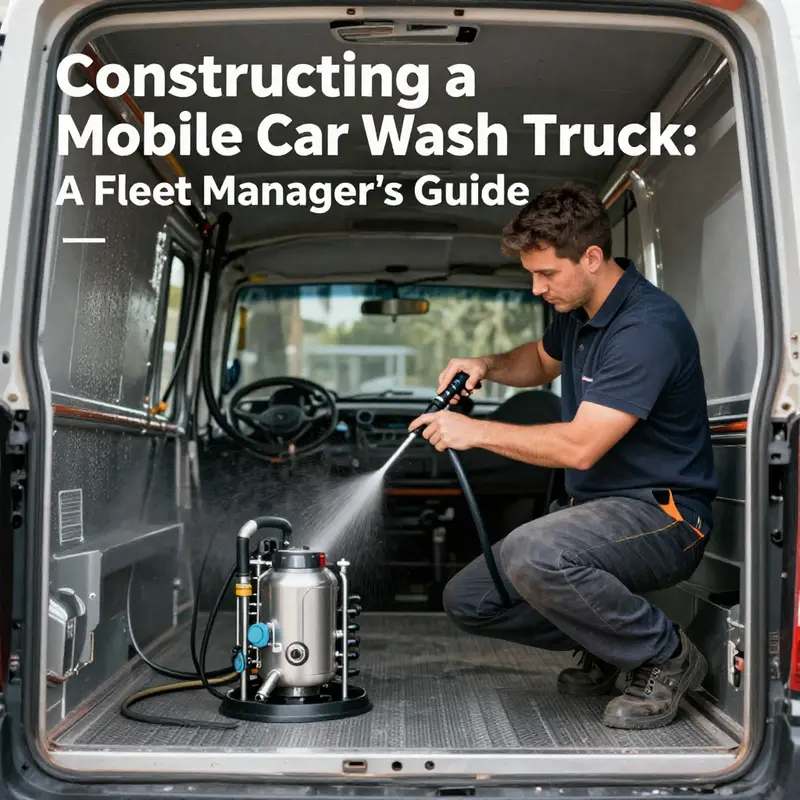
Installing a self-contained mobile wash system into a truck requires careful planning of weight, plumbing, electrical reliability, and user-friendly controls. This chapter outlines a practical approach to site preparation, mounting, plumbing and electrical integration, spray arm placement, testing, and ongoing maintenance. The goal is a balanced, safe, and scalable system that supports rapid service without compromising the chassis or the environment. Start with site preparation and structural integration to ensure the frame can support the load. Choose a location near the rear or along a side panel to minimize center of gravity impact and maintain access for maintenance. Reinforce the frame as needed and design modular mounting rails to allow future reconfiguration. Next, develop the plumbing and electrical backbone. Use a high-pressure pump powered by the vehicle battery or auxiliary power, with corrosion-resistant hoses and quick-connects. Select food-grade or stainless steel tanks and minimize hose lengths to reduce pressure drop. Consider a recycling loop to conserve water and simplify wastewater handling where local regulations allow. Route wiring in moisture-protected conduits and ensure robust grounding. Implement a simple control interface with clear indicators, and protect actuators from the elements. When testing, verify pump start-up, pressure stability, and leak-free joints. Check drainage to avoid stagnation and ensure proper operation under cold conditions. Validate automatic shutoffs and monitor heat buildup in the pump and controllers. Finally, document the installation, plan for future upgrades, and establish a maintenance routine to inspect brackets, hoses, seals, and water quality. A well-executed installation supports a reliable, eco-conscious service and can scale from a single truck to a fleet.
Armoring Your Mobile Car Wash Truck: A Seamless Suite of Multi-Functional Tools for Efficiency, Safety, and Eco-Friendliness

A mobile car wash truck is only as capable as the toolkit that wires its heart. When you design the interior around a cohesive, multi-functional tool suite, you unlock a level of efficiency that transforms a vehicle into a on-demand cleaning studio. The centerpiece is a compact, eight-function module that blends high-pressure micro-water washing, high-power vacuuming, negative ion disinfection, tire inflation, polishing and waxing, emergency jump-starting, foam washing, and interior cleaning into one cohesive system. Each function is engineered to operate from a built-in water reserve and an autonomous power source, so the operator can service vehicles anywhere, without hunting for an outlet or a hydrant. The high-pressure micro-water washing provides effective dirt removal with minimal water use by delivering a fine mist and targeted spray patterns that lift grime without saturating surfaces. The vacuum unit is powerful enough to extract dust and debris from cabins and trunks, while still conserving energy for longer jobs. Negative ion disinfection adds a hygienic layer, mitigating odors and reducing microbes in crowded interiors, which is especially valuable for fleet vehicles that see frequent use. Tire inflation keeps wheels properly aired, a quick service that reduces downtime and promotes safety when returning vehicles to the road. Polishing and waxing deliver a showroom gloss in less time than traditional methods by applying a controlled layer of protectant with minimum elbow grease. Foam washing, used in advance of the rinse, helps loosen stubborn residues and lift heavy grime while maintaining surface integrity. Emergency jump-starting is a practical safeguard for batteries in remote locations, ensuring that a vehicle can be powered up enough to move to the next stop. Interior cleaning completes the cycle by refreshing fabrics, dashboards, and trim with a gentle but comprehensive approach. The eight functions are not a collage of separate tools but a unified workflow that runs through a single hardware backbone. Sensors monitor the vehicle’s shape, paint condition, and surface texture, adjusting spray angle, flow rate, and pressure to achieve consistent coverage across curved panels, flat doors, and chrome accents alike. This kind of adaptability is crucial in urban environments where vehicles arrive in a variety of states—dusty worksites, rainy city streets, or polished showroom cars. The built-in water tank, sized for prolonged operations, and the onboard power source—often a robust battery system or a compact generator—make true mobility possible. The result is not merely a more capable truck; it is a portable cleaning studio capable of handling a spectrum of services, from an express wash to a meticulous detail, while preserving water and energy for broader use of your fleet. The efficiency gains come in layers: the equipment is strategically arranged to minimize movement between tasks, the integrated controls allow rapid switching between functions, and the modular design permits rapid maintenance or future upgrades as technology evolves. The risks associated with large, field-expedient systems—cabling, moisture exposure, or equipment drift—are mitigated through thoughtful enclosure, secure mounting, and proper grounding. Operators learn to map the eight functions to client needs, selecting a fast rinse for quick turnover or a thorough detail for high-value appointments. The result is a workflow that scales with demand, enabling you to deliver consistent quality while keeping labor and materials lean. In practice, this approach translates into shorter service times, higher customer throughput, and the freedom to schedule more visits in a single day. It also helps you communicate a compelling value proposition: you can offer a fully integrated service in a single visit, with predictable results and a transparent, verifiable process that clients can trust. The eight-function core thus acts as both a technical backbone and a strategic differentiator, turning a mobile wash into a robust mobile business asset rather than a simple add-on to a conventional vehicle wash. The integration into the vehicle is deliberate and disciplined; every gauge, hose, and nozzle is placed with an eye toward ergonomics, safety, and efficiency. The operator never hunts for a tool or climbs over hoses to reach a corner; instead, the layout anticipates the needs of a typical job and provides a smooth, uninterrupted sequence of actions. This thoughtful arrangement reduces fatigue and increases precision, allowing the operator to deliver results that meet or exceed customer expectations in less time. In effect, the eight-function module turns the truck into a compact service center, while the surrounding storage and mounting solutions ensure that everything the operator needs is within reach, clearly organized, and protected from the elements. The combined effect is a service experience that feels effortless to customers and highly professional to competitors observing from the curb. As you move from concept to implementation, the emphasis should be on reliability, water efficiency, and user-friendly operation. The integrated water tank and power source underpin mobility, while the eight-function module drives the breadth of services you can offer. This combination supports a business model built on on-site convenience, predictable pricing, and scalable service levels that can adapt to different client segments—from fleet maintenance managers scheduling routine cleanings to individual vehicle owners seeking a premium detailing. With a well-conceived core like this, you gain the flexibility to expand into related services such as odor management, interior sanitation, or light cosmetic work, all without importing additional heavy equipment or expanding your footprint on the truck. The result is a compelling, end-to-end capability that makes the mobile car wash truck not just a vehicle with cleaning attachments but a fully capable mobile operation capable of meeting a broad array of customer needs while maintaining a sustainable footprint. The market responds to this convergence of function, efficiency, and mobility with greater willingness to schedule visits, accept higher-value service packages, and perceive the truck as a trustworthy, professional partner in vehicle care. In the end, equipping a mobile car wash truck with this multi-functional core is less about adding gadgets and more about creating a cohesive, reliable system that delivers consistent results, minimizes waste, and enhances the customer experience—every time the truck rolls onto a new lot.
Steering Toward Street-Ready Mobility: Designing a Safe, Efficient Mobile Car Wash Truck
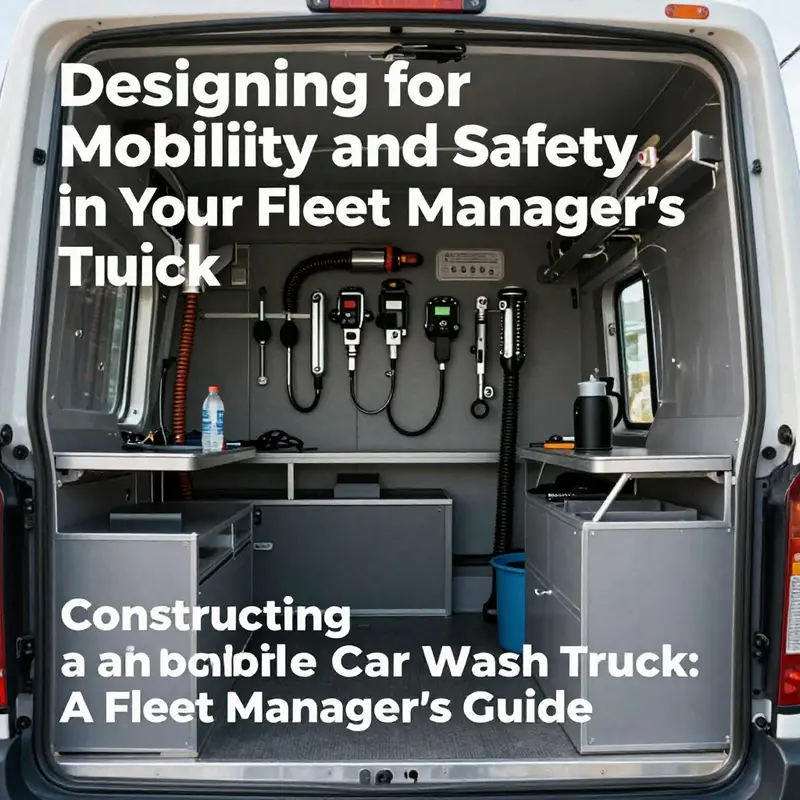
Mobility and safety are not mere checks on a planning list; they are the rationale behind every design decision when you build a mobile car wash truck. A vehicle that carries heavy cleaning equipment, a water system, and a crew must navigate crowded city streets, parking constraints, and uneven terrain while still delivering consistent service. The chapter that follows treats mobility and safety as inseparable partners in the broader objective of creating a dependable, scalable mobile wash operation. The journey begins with the fundamentals of the base vehicle and extends through the precise choreography of how weight is distributed, how systems are powered, and how the crew interacts with a compact, well-organized workspace on wheels. A strong design culture around mobility reduces downtime, increases job-site safety, and improves customer confidence—three outcomes that matter just as much as the quality of a wash.
Choosing the right vehicle base is the first decision with long-term consequences. You want a platform that is not only fuel-efficient and cost-effective but also capable of carrying a full suite of wash equipment without compromising handling and stability. A cargo van or light-duty truck offers a practical footprint and a straightforward path to mounting systems, but the true test lies in how the chassis accepts load, how the suspension responds to the weight of water tanks and pumps, and how the drivetrain modulates when the vehicle is loaded and unloaded. The goal is to keep the center of gravity as low as possible. That usually means placing the heaviest components—water storage, the high-pressure pump, and power supplies—below the primary beam line, rather than up on a rooftop rack or high shelves. A low CG improves cornering, reduces pitch during acceleration and braking, and minimizes the risk of cantilevered sway while you maneuver through tight urban corridors.
Once you select a base with ample space, the next priority is an integrated wash system that balances performance with weight discipline. A true mobile wash unit combines a high-pressure pump, a closed-loop water recycling system, and a compact, integrated water tank. The system should be designed to deliver cleaning power without excessive water use—an objective reflected in the industry’s shift from traditional methods toward water-saving approaches. A robust unit typically operates in a pressure range that enables effective soil and grime removal with spray patterns that minimize runoff and waste. The water recycling loop is essential for regulatory and environmental reasons, but it also preserves precious water in contexts where you may be treating hundreds of vehicles in a day. By filtering and reusing wash water, you extend your service window, reduce the frequency of tank refills, and lower the risk of contaminant carryover to the street. Powering these components requires an on-board energy plan. A combination of battery storage and an auxiliary generator can sustain pumps, controls, and lighting while keeping connectors and wiring protected from the elements. The objective is to create a self-contained ecosystem that operates quietly, cleanly, and predictably—a key determinant of reliability and customer trust.
The design also invites a thoughtful arrangement of tools and work surfaces. Modern mobile wash concepts emphasize modularity—the idea that you can rearrange or swap components without disassembling the entire rig. This translates into a clean, compact interior that houses micro-water spray systems, foam applicators, microfiber pads, interior detailing tools, and, when needed, scent and odor-control options. A foam cannon, micro-spray heads for misting, and soft brushes that won’t scratch paint are all integrated into a single, self-contained system. An onboard vacuum for detailing interiors and a compact air compressor for tire care can be positioned in line with workflow, ensuring quick transitions between exterior cleaning and interior detailing. A subtle but often overlooked enhancement is the inclusion of LED lighting that brightens the work area, enabling cleaner passes and better quality control during early morning or late evening visits. In this context, the objective is not to add gadgets for gadget’s sake but to create a streamlined, multi-function workspace that supports the technician’s safety and efficiency.
Mobility is also about how you move the equipment within the vehicle and how you access it on the curb or in a customer lot. A well-thought-out interior layout employs secure storage for hoses, brushes, nozzles, and chemicals so nothing becomes a projectile during sudden stops or sharp turns. Lockable compartments with damped latches protect valuable tools while keeping the workspace tidy. Non-slip flooring in the service area reduces slips when the crew is in motion or kneeling to reach a lower cabinet. Ergonomic tool placement minimizes reach distance and repetitive strain, fostering a safer, faster wash process. A rolling cart or modular rack system can simplify reconfiguration if you decide to pivot toward new services, such as expanded interior cleaning or odor remediation. The fabric of safety here extends beyond what you can see; it includes properly grounded electrical systems, moisture protection, and cable routing that prevents tangling or tripping hazards. Every cable and hose should have a dedicated path so it can flex with the movement of the vehicle and staff while maintaining a clean, hazard-free work zone.
The safety framework expands outward to the road and to the job site. Key on-road protections include anti-lock braking systems (ABS), electronic stability control (ESC), and backup cameras—features that reduce accident risk in busy traffic and in the confined space of a service area. While you might not choose the same wheelbase or suspension tuning for every route, the principle remains the same: design for stability first, then optimize for load and maneuverability. Signage, hazard warning lights, and reflective strips are not mere add-ons; they are essential for visibility in congested urban settings where pedestrians and other vehicles share the space with a mobile wash crew. The same logic applies at the job site, where the truck must stand steady on uneven pavement or a temporary lot. A stable stance protects both your team and the customers’ property. The crew’s personal safety is reinforced by interior features: non-slip floors, ergonomic handles, and tool grips that keep hands secure even when the surface is damp or oily. A carefully planned interior also reduces risk by limiting sharp edges or protrusions in the workflow zone, which lowers the likelihood of injuries during rapid scrub cycles or equipment reconfiguration between vehicles.
This design mindset naturally nests into the broader operational framework of modern mobile car wash services, which increasingly rely on smart technology to scale and optimize performance. Digital sensors and IoT dashboards can monitor water usage, battery health, and pump temperature in real time. A smart interface can guide the operator through optimized wash sequences based on vehicle size and soil level, reducing water waste and energy consumption. Booking and payment apps, real-time vehicle tracking, and remote diagnostics all contribute to smoother customer experiences. Adopting these systems ensures that mobility and safety extend beyond the vehicle to the service ecosystem surrounding the operation. The integration of smart surfaces and modular components supports a future where the mobile wash truck can adapt quickly to different neighborhoods, fleets, and subscription models without sacrificing safety or reliability. The emphasis on flexibility and resilience underpins a service that can scale as demand grows while staying true to its safety commitments.
To strengthen the operational framework further, consider how mobility interacts with fleet standards and emergency readiness. A well-coordinated setup aligns with principles of fleet standardization and emergency response, ensuring that every mobile wash unit resembles a predictable, safer asset within a broader service network. This alignment reduces downtime, simplifies maintenance planning, and improves coordination when multiple trucks operate in the same city or corporate campus. For practitioners exploring these ideas, see resources on fleet standardization and emergency response for practical guidance and case studies. This reference complements the on-truck design choices with organizational practices that reinforce safety and reliability across the fleet. fleet standardization and emergency response
Designing for mobility and safety is not a single moment of decision but a continuous discipline. It begins with a chassis and ends with a living workspace that technicians can trust every day. It requires a disciplined approach to weight distribution, ensuring the heaviest components sit low and close to the vehicle’s centerline. It demands a power strategy that keeps pumps and lighting operational through back-to-back shifts without sacrificing electrical safety. It requires a rigorous layout that prevents equipment from becoming hazards during transit and on-site operations. It also invites a forward-looking stance toward maintenance: a structured schedule that keeps every system—water recycling, filtration, battery health, hose integrity, and gasket performance—in check. When mobility and safety are designed hand-in-hand, the mobile car wash truck becomes more than a transportation asset; it becomes a high-availability service platform that can reach customers on tight timelines, in diverse environments, and with a stronger sense of professional responsibility.
In the macro arc of building a mobile wash business, the decisions around mobility and safety reverberate through every other layer—from customer experience to environmental stewardship. A street-ready design signals competence and care. It reassures condo managers, fleet owners, and individual car owners that you understand the constraints of urban spaces and the value of a predictable service window. It also aligns with the broader ethical commitments of eco-friendly cleaning practices: lower water use, responsible wastewater handling, and careful material storage. The optimization of mobility—how a truck moves, how it parks, how quickly it can deploy equipment—goes hand in hand with the discipline of safety. In that pairing, you find the foundation for a professional, scalable, and trusted mobile car wash operation.
External resource for further safety considerations: https://www.fleetowner.com/vehicle-safety/mobile-car-wash-truck-safety-tips
Final thoughts
Creating a mobile car wash truck represents a strategic investment for fleet managers and operators dedicated to maintaining their vehicles’ cleanliness and longevity. By carefully selecting the right vehicle base, installing modern wash systems, equipping with the right tools, and ensuring a focus on design for safety and mobility, companies can implement a highly efficient, eco-conscious solution. This approach not only reflects a commitment to sustainability but enhances the overall professional image of any fleet.