
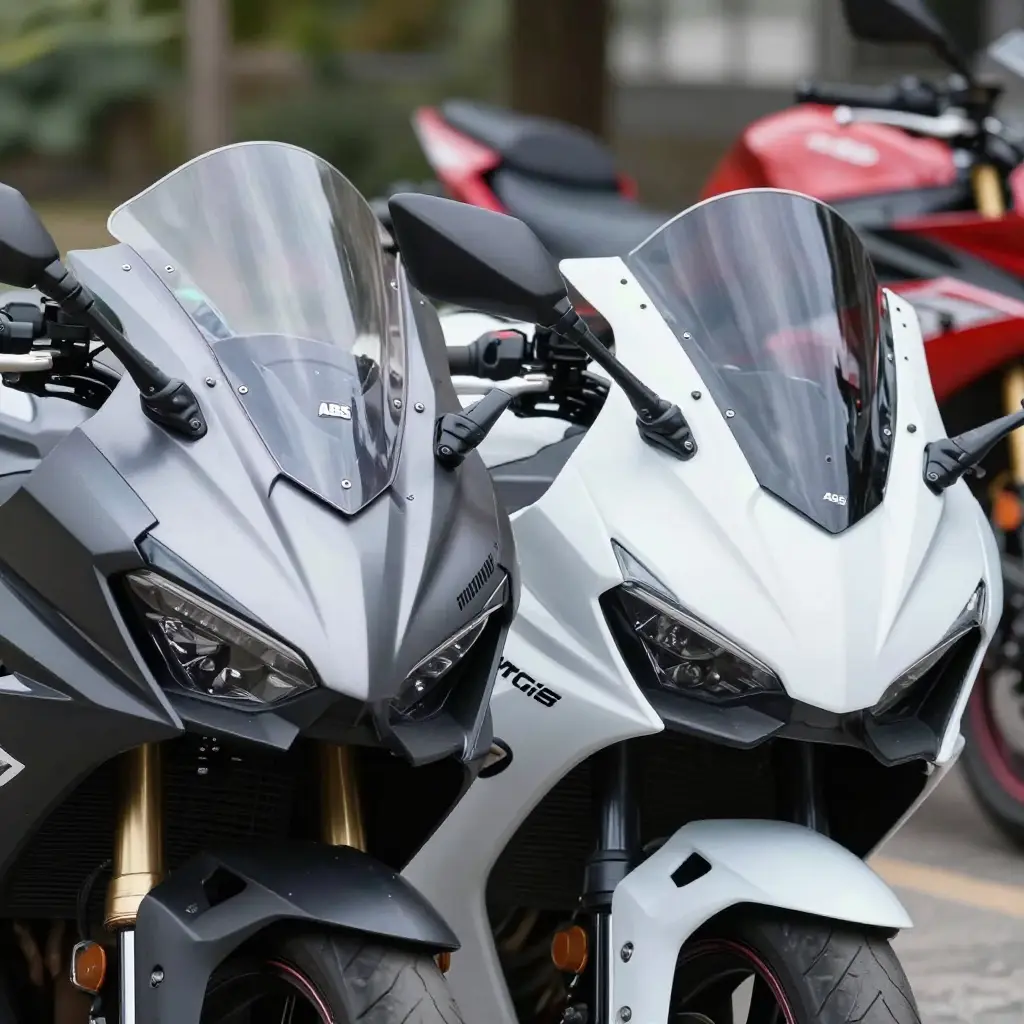
Why Fairing Material Matters More Than You Think
The plastic a fairing is made from is not a cosmetic choice off a color chart. Between them, ABS and polypropylene set the two costs owners, repair shops, and parts sellers run into constantly: what a repair costs and what shipping damage costs. Which one you have decides how a panel cracks, how it gets fixed, and whether it reaches your door in one piece.
Almost every fairing on the road is one of two plastics. ABS (acrylonitrile butadiene styrene) is the rigid, glossy standard that takes paint well and holds sharp body lines. Polypropylene is softer and more flexible; it bends before it breaks. Both are asked to do the same job, but they behave very differently on the road, on the bench, and inside a shipping box.
Because the material sets impact resistance, repairability, and weight, it also drives the bill. A brittle panel turns a parking-lot tip-over into a full replacement. A flexible one may flex back and escape with a scuff. That difference is money, and it arrives quickly.
Riders, mechanics, collectors, and parts sellers all face the same comparison. What follows sticks to the practical trade-offs rather than marketing claims.
The two materials are compared on three fronts: physical properties, repair economics, and survival in transit. By the end you should know which plastic fits your garage, your shop, or your storefront. The answer is rarely the same for everyone.
What Makes ABS Motorcycle Fairings Different
ABS is a thermoplastic blend, and that one fact explains most of what a repair shop cares about. It behaves very differently from polypropylene, and the difference shows up in labor hours and freight claims alike.
- Rigidity: ABS holds a stiff, self-supporting shape. Panels keep their molded contours without extra bracing, so they are easier to mount, template, and measure during a repair.
- Impact behavior under stress: ABS flexes to a point, then cracks or shatters rather than denting. Damage tends to stay localized instead of spreading across the panel, which helps when only one corner needs work.
- Thermal response: ABS softens gradually with heat, so it can be warmed, reshaped, and welded. It also tolerates normal paint-curing temperatures better than polypropylene.
- Surface finish: once scuffed, ABS takes primer and topcoat readily and gives a smooth, paint-ready surface.
- Repairability: ABS can be sanded, filled, and repainted. Small cracks take plastic weld, filler, or reinforcement mesh, then refinish to a factory look.
Why this matters for repair cost
Because ABS accepts filler, sanding, and paint so well, repair usually means patch and refinish rather than replace. A shop can repair the cracked section, blend it, and repaint for a fraction of the cost of a new OEM panel. That predictability is much of the material’s appeal.
Why this matters for shipping
Durability in transit depends on how a panel handles flex and vibration. ABS is rigid: bend it past its limit and it can surface-crack, and it scuffs easily when packed panels rub together. Blocking, foam padding, and corner protection save the finish, and avoiding over-tight strapping prevents stress cracks.
The takeaway
ABS fairings are stiff, heat-tolerant, and refinishable. For shops and enthusiasts that means cheaper repairs and a finish that still looks right afterward. For e-commerce sellers it means shipping is a packaging problem you can fix with padding and careful handling, not a material problem you cannot.
What Makes Polypropylene Fairings Different
Pick one up and polypropylene feels different at once. Where ABS is rigid and “clacky,” polypropylene has a springy, almost rubbery give. That trait shapes everything downstream: how the fairing survives a pallet, how it fails in a slide, and what it takes to refinish it. For owners, shops, and online sellers the effect is financial, because the material decides whether damage becomes a replacement order or a repair job.
The traits that write the rules
- Flexibility: polypropylene motorcycle fairings bend under load and spring back, so the give works as built-in shock absorption rather than a defect.
- Crack resistance under bending: the material tolerates slow, repeated flexing without developing the hairline fractures rigid panels pick up over time.
- Low surface energy: paint and adhesives struggle to grip the surface, so ordinary rattle cans and generic bonding agents bead, fish-eye, or peel.
- Impact behavior: struck hard, polypropylene panels deflect and absorb energy instead of breaking into sharp shards.
- Heat response: the plastic softens, reshapes, and re-fuses under controlled heat, which is why plastic welding and heat treatment dominate polypropylene fairing repair.
Why the trade-off matters
In shipping, the toughness pays off. A crated fairing that gets dropped, stacked, and rattled across a continent is far more likely to arrive intact if it is polypropylene, which cuts the dead-on-arrival claims and return shipping that eat into margins.
ABS works almost the opposite way. It is stiffer and accepts paint and adhesives readily, which makes it easier to refinish, but that same rigidity is its weakness. Under impact ABS cracks and shatters, so shipping damage tends to be terminal. Polypropylene flips the trade-off: it resists breakage well but punishes anyone who treats it like ABS at the paint booth.
So the money moves from parts to labor. Because polypropylene rarely needs full replacement, the cost shifts toward welding rods, heat guns, controlled temperatures, and a technician who knows how to prep low-energy plastic. A shop that cannot weld polypropylene sends the part back; one that can turn a “totaled” fairing into a billed repair.
Polypropylene fairings trade easy cosmetics for durability. If you care most about surviving the journey and the occasional drop without cracking, the material earns its place, provided your repair bench is set up for it.
ABS vs Polypropylene Fairings: Material Comparison at a Glance
The two plastics behave in opposite ways: ABS cracks, bonds, and refinishes like a body panel; polypropylene flexes, resists impact, and refuses to hold paint. Side by side:
| Property | ABS Fairings | Polypropylene Fairings |
|---|---|---|
| Impact resistance | Moderate – shatters or spider-cracks at high-speed lowsides | High – absorbs impact and often flexes back to shape |
| Flexibility | Stiff, rigid panels with almost no give | Semi-flexible, bends under pressure without cracking |
| Repairability | Good – solvent-weld or ABS slurry plus fiberglass backing restores panels | Difficult – needs specialty hot-air welding or plastic welding rod; standard adhesives fail |
| Refinish friendliness | Excellent – sands, primes, and accepts base coat/clear coat directly | Poor – low surface energy requires flame treatment or adhesion promoter before paint |
| Typical weight | Heavier, roughly 1.0-1.1 g/cm3 density, adds grams per panel | Lighter, roughly 0.90-0.91 g/cm3 density, trims overall bike weight |
| Weathering / UV behavior | Fair – chalks and fades without clear coat, but holds shape and paint | Good – resists UV yellowing and moisture, but surface texture degrades and paint adhesion stays weak |
Takeaway: Choose polypropylene motorcycle fairings when you want crash-and-ship resilience, and ABS when fast, paint-ready repairs matter more than flex.
Caption: this side-by-side comparison of ABS and polypropylene motorcycle fairings shows how each plastic affects repair cost, refinishing effort, and shipping damage risk.
How Material Choice Changes Repair Cost
Two fairings can look identical on a showroom floor and still produce repair bills that differ by a factor of two or more. The cause is not styling or thickness but polymer chemistry. ABS and polypropylene respond so differently to heat, abrasion, and paint that they drive a technician toward different workflows, timelines, and prices. That is why motorcycle fairing repair cost is one of the most material-sensitive numbers a shop puts on an estimate.
ABS Fairings: Sand, Fill, and Refinish
ABS is a rigid thermoplastic, so it can be repaired mechanically, much like a steel or fiberglass body panel. The usual workflow:
- Sanding and feathering: grind the damaged area, then blend the edges so filler has something to grip.
- Filling: apply flexible filler or a fiberglass-backed epoxy patch to rebuild cracks and missing material.
- Priming and refinishing: block-sand to profile, prime, then color-match and clear-coat.
Because ABS accepts primer and paint readily, labor runs 2-4 hours per panel. Materials such as filler, sandpaper, primer, and basecoat are cheap and widely stocked. A competent tech with moderate experience can finish a fairing in a single shift.
Polypropylene Fairings: Weld, Reshape, and Promote Adhesion
Polypropylene is flexible and has very low surface energy, so filler falls off and paint will not stick. Repair looks nothing like bodywork. It takes:
- Plastic welding: hot-air or extrusion welding with a matching polypropylene rod to fuse cracks, tabs, and mounting bosses.
- Heat-based reshaping: localized heat to bend warped or deformed panels back into shape without cracking them.
- Adhesion promoters: a specialized primer is mandatory before paint will bond, which adds cost and a failure point if applied badly.
Welding gear costs more than a sander, and the technique demands more skill. A poor weld fails invisibly; a bad adhesion coat peels within weeks. Realistic labor runs 4-7 hours, and hourly rates climb because fewer techs can do the job well.
Why ABS Repair vs Polypropylene Repair Flips the Replace-or-Fix Decision
The economics turn here. Two rows in the comparison table above matter most: ABS sands and paints easily, while polypropylene resists paint and demands welding. Those two rows cause the cost gap below.
| Cost Factor | ABS Fairings | Polypropylene Fairings |
|---|---|---|
| Primary repair method | Sand, fill, refinish | Weld, reshape, promote |
| Labor hours per panel | 2-4 | 4-7 |
| Skill threshold | Moderate | High |
| Consumables cost | Low | Moderate to high |
| Paint adhesion | Standard primer | Adhesion promoter required |
| Repair vs replace tilt | Repair usually wins | Replacement often wins |
Once labor crosses a certain threshold the math reverses. When a quote passes roughly half the price of a new panel, most owners start shopping for a replacement instead. Aftermarket ABS panels often land between $80 and $250, which makes replacement competitive on polypropylene bikes and reduces the incentive to weld.
What This Means for Riders and Shops
For riders, material choice shapes total ownership cost. An ABS-faired bike stays economically repairable for years, so small drops stay small. A polypropylene-faired bike can turn a hairline crack into a replacement purchase, because labor can outrun the panel price.
For shops, the same dynamic cuts both ways. Polypropylene work carries higher hourly margins when it is accepted, but it needs skilled welders and risks comebacks. ABS work is faster and more predictable, which keeps bays turning over. Owners weighing a bike purchase against a long-term maintenance budget should treat fairing material as a real cost variable, not a cosmetic detail. It is the same discipline that keeps a vehicle fleet’s spending in check, as these cost management insights suggest.
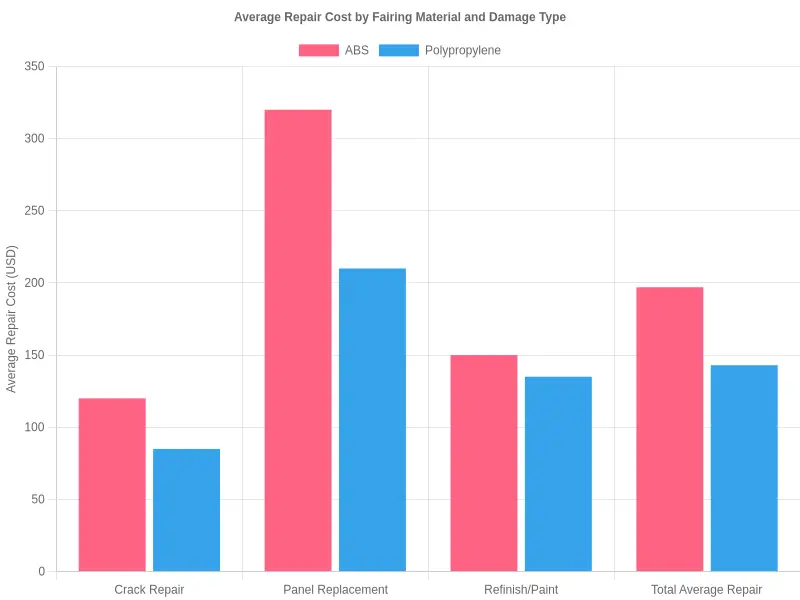
Average Repair Cost by Fairing Material and Damage Type
| Repair Category | ABS | Polypropylene |
|---|---|---|
| Crack Repair | $120 | $85 |
| Panel Replacement | $320 | $210 |
| Refinish/Paint | $150 | $135 |
| Total Average Repair | $197 | $143 |
Across these categories polypropylene fairings average lower repair costs than ABS, with the widest gaps on crack repair and full panel replacement. The figures reflect typical parts and shop pricing; the welding-labor premium for polypropylene, described above, can narrow or reverse them.
A Second Cost You Do Not See: Shipping Damage
Rigid parts break and flexible parts bend, and that one difference explains most of what happens to a fairing after it leaves the warehouse. ABS is stiff by design, which is wonderful on the road and unforgiving inside a carton.
Because ABS is rigid, impact energy has nowhere to go. A dropped carton, a shifted pallet, or a careless toss across a loading dock often shows up as a hairline crack, a chipped edge, or a web of scuffs. These are the usual signatures of fairing shipping damage: small flaws a buyer rejects and a seller has to absorb.
Polypropylene is far more ductile. When something strikes it the material flexes and springs back, absorbing shock that would shatter ABS. The payoff is fewer write-offs, not a flawless part: polypropylene can still deform permanently, warp in heat, and pick up scuffs and abrasion. Instead of cracked panels you get bent ones, cheaper to survive transit and sometimes harder to sell as “new.”
The cost lands on the seller, not the shipper. For an online parts business, every damaged fairing means a replacement, a return, a refund, and a hit to reviews. Fewer breakages mean fewer replacements and lower damage claims, which is where material choice becomes a financial decision rather than just a performance one.
Motorcycle fairing packaging designed for rigid ABS usually stacks foam at the corners and edges, where cracks begin. Polypropylene tolerates looser packing but needs support to prevent deformation under load. Either way the goal is the same: stop movement, cushion impact, and keep parts from pressing on one another.
Handling matters as much as the box. Carriers shrug at a carton the same way whether the contents are brittle or flexible. Careful loading, proper strapping, and vehicle upkeep reduce the jolts that cause fairing damage in transit. Shippers who invest in trailer and equipment care, as this guide to regular trailer maintenance explains, tend to log fewer rough-ride incidents, fewer shifted pallets, and fewer claims.
The short version: ABS rewards careful handling, and polypropylene forgives more but not everything. Knowing which material you ship tells you how much protection the packaging and the logistics actually need.
The Most Common Fairing Shipping Damage Types
The journey from factory to doorstep is rough, and how a fairing fails usually depends on what it is made of. What to watch for:
- Stress cracks – ABS fairings are more vulnerable because rigid plastic transfers impact force instead of flexing, so hairline fractures can spread across large panels.
- Edge chips – Polypropylene resists edge chipping better because its flexibility absorbs knocks, while ABS edges crack or fragment under the same blow.
- Surface scuffs – Both materials scuff, but glossy ABS shows scratches far more clearly, making cosmetic repairs harder and costlier to hide.
- Abrasion marks – ABS panel faces grind and lose texture under constant transit vibration, whereas polypropylene flexes and rebounds, so it marks less.
- Warping or deformation – ABS is more heat-sensitive, so hot containers or heavy stacked loads can distort its shape and mounting geometry.
- Mounting-tab fractures – Thin ABS mounting tabs snap easily under load stress, while flexible polypropylene tabs bend and recover, cutting breakage.
Together, these damage types show that material choice shapes how much protection a part needs in transit and how much repair a shop absorbs afterward. ABS demands heavier packing and gentler handling; polypropylene tolerates rougher journeys but can cost more and be harder to source. Every crack, chip, and warp becomes a repair bill, so buyers should weigh upfront material cost against lifetime cost. Just as fleet operators rely on keeping vehicles properly maintained to control long-term expenses, riders should treat material choice as a cost decision.
What Material Choice Means for Repair Shops and Parts Sellers
Choosing between ABS and polypropylene is not an engineering footnote; it decides how much money you make on every job and every shipment. The cost analysis above only pays off if you turn it into daily decisions. Here is how each material plays out for the two groups that handle fairings most.
For Repair Shops: Labor, Tooling, Skills, and Quotes
ABS is stiff and predictable. It cracks cleanly, accepts adhesives, sands well, and takes paint without fuss, so a tech with basic bodywork skills can turn a job around fast.
Polypropylene flexes instead of shattering, but that toughness works against you at the bench. It resists ordinary glue, demands plastic welding and heat-staking tools, and punishes anyone without the right technique. Four costs follow:
- Labor time swings widely depending on which material lands in your bay.
- Tooling costs rise when you must stock PP-specific equipment that rarely gets used on ABS.
- Skill requirements split your team into “can do it” and “shouldn’t touch it.”
- Quoting accuracy suffers when you guess the material before you actually see the part.
The fix is standardization: confirm the material before you quote and build a repeatable process so estimates match reality. The same discipline shows up in fleet and equipment work, where consistent, documented standardization and emergency response practices keep costs predictable when something unexpected happens.
For E-Commerce Sellers and Exporters: Claims, Packaging, Returns, Satisfaction
If you sell motorcycle parts online, material choice controls your margin on every parcel. Rigid ABS cracks under impact, which inflates fairing damage claims and turns a cheap part into an expensive refund.
- Damage claim rates: brittle panels need heavier packaging, so freight costs climb.
- Packaging cost: flexible polypropylene tolerates more abuse but often needs smarter bracing, not just more foam.
- Return handling: every damaged fairing triggers inspection, restocking, and replacement shipping – pure overhead.
- Customer satisfaction: fewer cracked deliveries mean fewer angry emails and better reviews.
Sourcing from a serious export partner changes the math. At summitfairings.com, buyers choose from more than 3,000 styles covering almost all motorcycle models, pay 10-40% less than other sites, and get questions answered within six hours. That combination of range, price, and response time lets sellers quote confidently and ship with fewer surprises.
The Bottom Line
Materials set your labor curve and your claim rate. Match the material to the job, standardize the process, and source from a supplier who understands both.
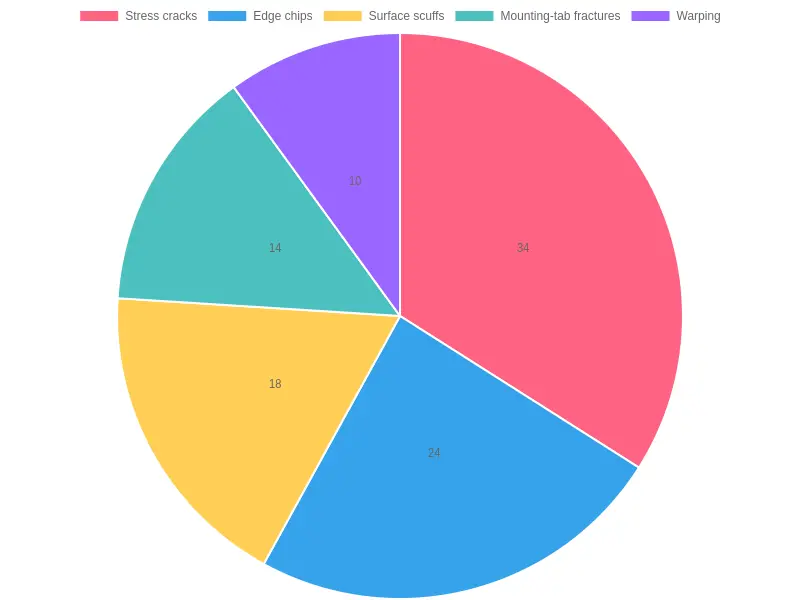
Share of Fairing Shipping Damage by Category
Stress cracks account for roughly 34 percent of reported fairing shipping damage, followed by edge chips (24%), surface scuffs (18%), mounting-tab fractures (14%), and warping (10%). The largest slice is the one packaging and material selection can attack: a more impact-tolerant polypropylene absorbs shock that brittle ABS would pass along to the mounting tabs.
Choosing Between ABS and Polypropylene: A Practical Guide
When you choose motorcycle fairing material there is no universal winner. The ABS vs polypropylene decision comes down to priorities: how often the plastic takes a hit, whether the surface must accept paint, what repair labor costs, and what survives the back of a delivery truck. Map your needs to the trade-offs below and buy with your eyes open.
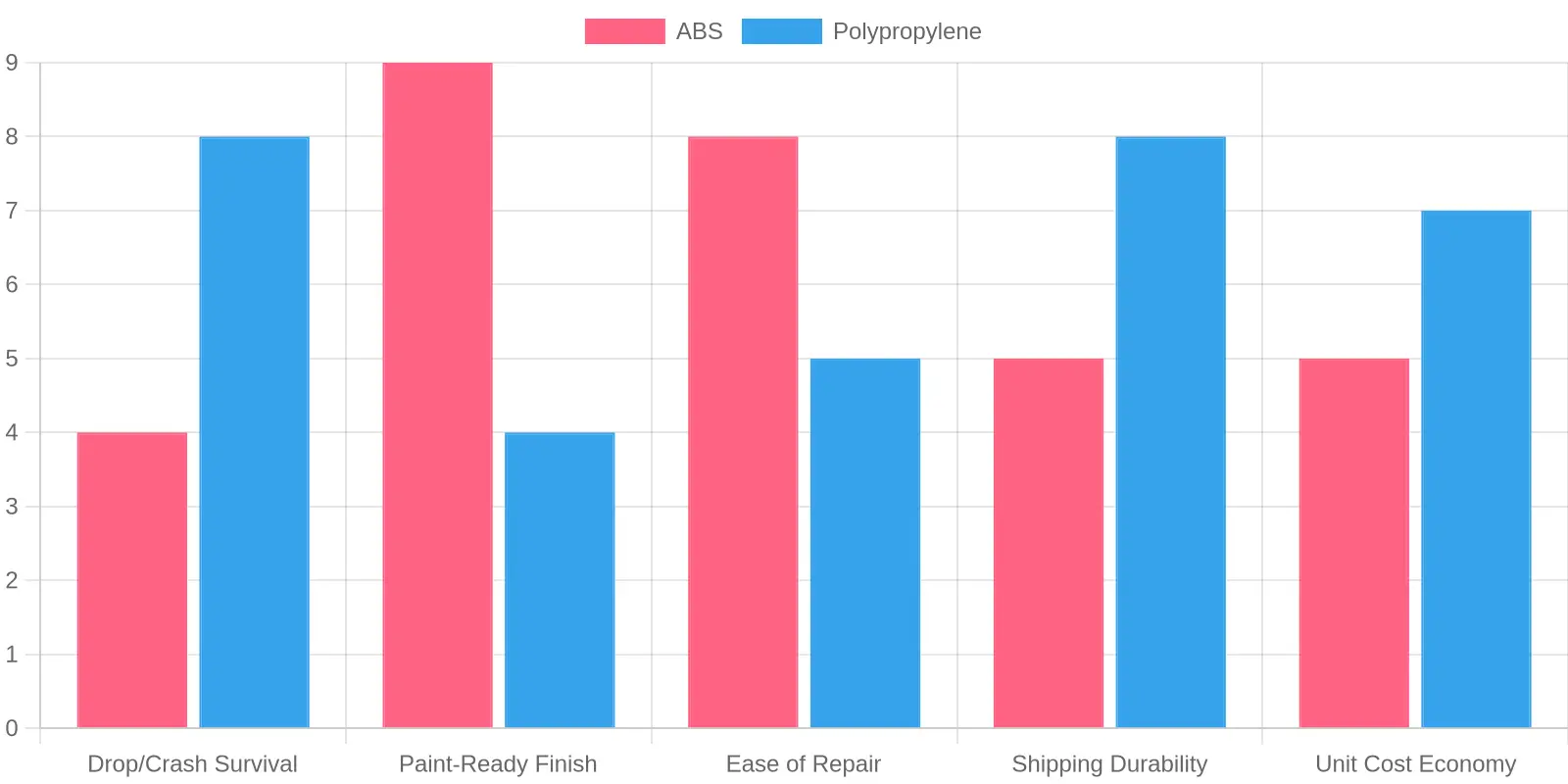
Frequent low-speed drops: lean toward polypropylene
Tip-overs in parking lots and driveways kill more fairings than anything else. Polypropylene bends and often springs back; ABS tends to crack and spider. If drops are routine, the flexibility can save a whole panel, though repairs get fussier once PP finally tears.
A finished, paint-ready surface: lean toward ABS
Enthusiasts chasing a show-quality or factory-matched look usually prefer ABS. It sands, primes, and holds gloss predictably, and body shops already know how to work it. Polypropylene resists paint adhesion, so refinishing needs special primers, an extra step and extra cost on every custom job.
Recurring repair jobs: ABS is more predictable
For a shop quoting the same repair again and again, ABS offers fast solvent and heat fixes with repeatable results. PP demands plastic welding with matching rods and careful surface prep, so every quote carries more labor risk. The discipline behind regular trailer maintenance applies here too: staying ahead of upkeep beats emergency replacements.
Transport durability: polypropylene usually wins
In transit, flexible PP panels shrug off drops and stacking pressure, which cuts damage claims for online sellers. Brittle ABS can crack when packed poorly, so you trade lower breakage for more careful handling and cushioning.
Cost logic, spelled out
- Polypropylene: lower unit cost, fewer shipping losses, but higher repair and refinish cost.
- ABS: premium finish, cheaper and faster repairs, but greater transport risk.
| Decision factor | ABS | Polypropylene |
|---|---|---|
| Survives low-speed drops | Cracks easily | Flexes, often rebounds |
| Paint-ready surface | Excellent | Needs adhesion primer |
| Repair turnaround | Fast, familiar | Slower, weld-based |
| Shipping durability | Moderate to poor | Strong |
| Typical unit cost | Higher | Lower |
Quick decision checklist
- Count your likely impacts: frequent drops point to polypropylene, while a garage-kept show bike points to ABS.
- Decide whether the surface must be paint-ready. If yes, ABS usually saves money on refinishing.
- Weigh transport damage against repair labor for your real margin, then finalize your fairing material selection.
The goal is not the “best” plastic but the one whose trade-offs match how you ride, sell, or repair. The cost math usually makes the choice obvious.
Frequently Asked Questions About Fairing Materials
Choosing your motorcycle fairing material comes down to a trade-off between repairability, shipping resilience, and total cost. These are the questions riders, shops, and parts sellers ask most often.
Are ABS fairings easier to repair than polypropylene fairings?
In most workshops, yes. Thermoplastic ABS can be plastic-welded, reshaped with heat, and refinished with standard fillers and primers, so a cracked panel often becomes a sandable, paintable surface again. Polypropylene resists most adhesives and fillers, which makes a clean structural repair much harder. For a shop billing by the hour, ABS usually means a faster, cheaper turnaround.
Which material cracks more in shipping?
ABS, by a wide margin. It is stiffer and more brittle, so a sharp impact or a badly packed pallet can run a crack across a panel. Polypropylene flexes on impact and tends to bounce back rather than fracture, which is a major reason bulk exporters favor it for long-haul freight. It is one of the most common polypropylene fairing questions we hear from sellers worried about damage claims.
Can polypropylene fairings be painted?
They can, but it is fussier and more expensive than painting ABS. Polypropylene has very low surface energy, so paint will not bond unless the surface is first treated with flame or plasma and primed with a specialized adhesion promoter. Skip those steps and the finish flakes off within weeks. Many owners run polypropylene fairings in their molded color rather than pay for a bonded respray.
Does material choice change insurance or claim costs?
It affects claim costs indirectly, not through premiums. Insurers price risk by model, rider, and riding history, not by the plastic in the panels, but the material drives what a repair or replacement costs once you file. Brittle ABS may mean a full panel swap after a tip-over; flexible polypropylene may survive with minor scuffs. Cheaper repairs generally mean fewer or smaller claims over time.
Which fairing material is cheaper overall?
The sticker price and the lifetime cost often point in different directions. Polypropylene injection-molded sets are usually cheaper in volume and survive shipping better, which lowers replacement frequency. ABS costs a little more up front but is far cheaper to repair, so riders who drop their bikes or track them may spend less overall. For high-volume resellers, polypropylene usually wins on landed cost; for individual riders, ABS often wins on repairability.
Are replacement fairings from exporters as durable as OEM?
Good aftermarket fairings from reputable exporters can match OEM durability, but it depends on the supplier. Well-made sets use the same grade of ABS or polypropylene, the correct thickness, and proper mounting tabs; cheap sets use thin material and brittle tabs that snap during installation. Ask for material specifications and finish details before buying in bulk. The ABS fairing FAQ guidance applies here too: durability is a function of material grade and tooling, not country of origin.
How can I tell which material my fairings use?
Look for a molded recycling code or a small stamped symbol on the inside of a panel. ABS is marked “ABS” or code 7; polypropylene carries the “PP” triangle with code 5. If there is no marking, a repair shop can identify the plastic with a simple bend or weld test. Knowing the material up front saves time and money, whether you are repairing one panel or standardizing a fleet of bikes.
The Bottom Line on Fairing Material and Total Cost
Choosing between ABS or polypropylene motorcycle fairings is never just a spec-sheet decision; it is a financial one that follows you through every drop, every pothole, and every mile of the shipping journey.
The material you pick shapes two costs at once: what a repair bill runs and how often a part arrives damaged. Because those numbers rarely move in the same direction, the smart choice is the one that lowers the total, not the one that wins a single line item.
ABS offers stiffness, crisp fitment, and straightforward crack repairs, but its brittleness turns impact energy into fractures. Polypropylene bends instead of shattering and shrugs off low-speed tip-overs, yet it resists paint and adhesive repairs and often costs more up front. In the repair bay, ABS panels are cheaper and faster to restore while polypropylene more often pushes a shop toward full replacement. In freight, rigid fairings demand heavier packaging and flexible ones tolerate less protection.
Keeping that cost data organized matters too, whether you are logging freight claims or repair tickets, much the way a clear JSON schema keeps API data predictable and easy to act on.
For owners, shops, and sellers, the practical move is to match material to real-world use, budget for the full lifecycle, and treat packaging and repairability as part of the price.
- ABS: lower repair cost, higher crack risk, easier to refinish
- Polypropylene: higher impact resistance, tougher repairs, pricier upfront
- Total ownership cost = purchase + repair + shipping damage
- Repairability and packaging belong in the buying decision
- Let real handling and repair data, not marketing, guide the final call