
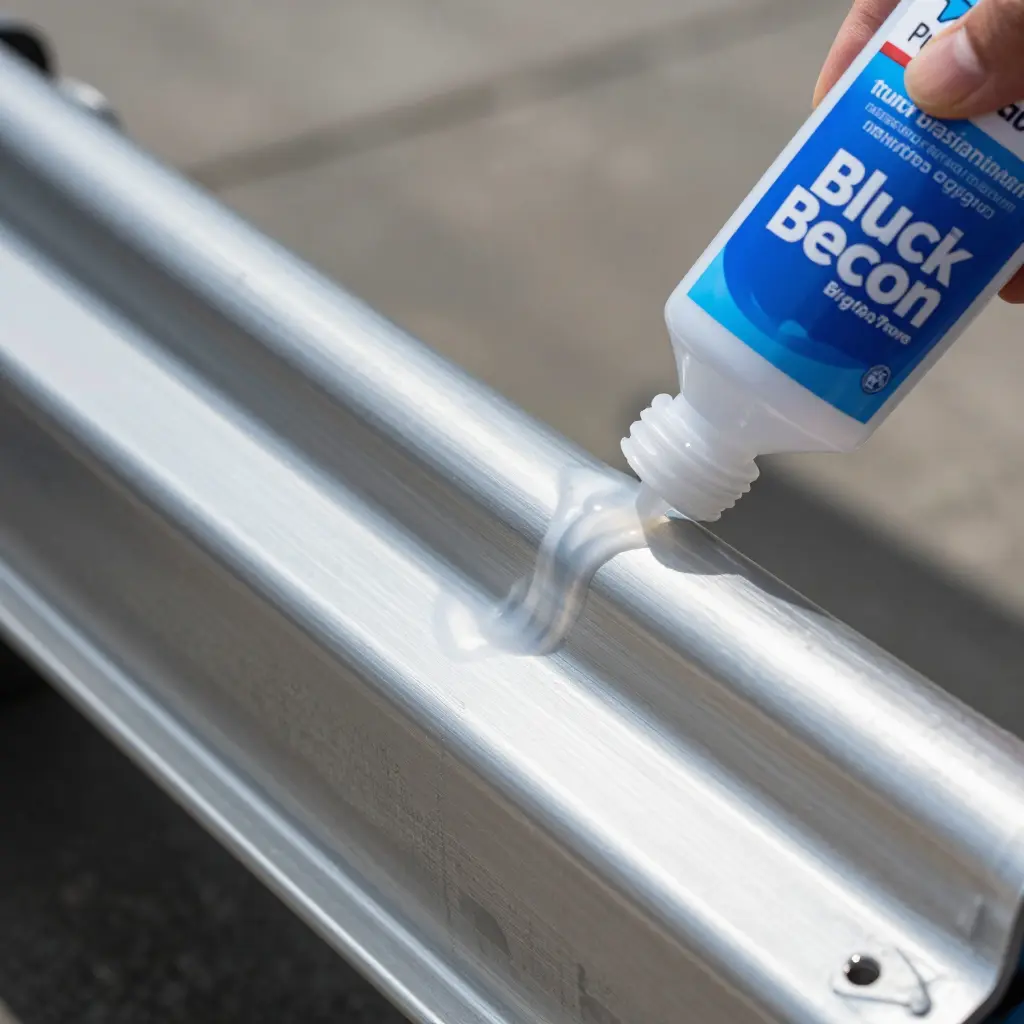
What Is a Blue Beacon Truck Wash Brightener?
A Blue Beacon truck wash brightener is a highly diluted blended acid solution applied as a step in the chain’s wash process. Blue Beacon’s published wash-process sheet describes it as less than 1% acid in water, with an average pH of about 2.9, and lists it for use on most painted and chrome surfaces and on aluminum at the customer’s request.
That detail separates Blue Beacon’s brightener from the full-strength acid brighteners sold for bare metal. Blue Beacon keeps a separate aluminum-only product, citrushine, a blend of citric and other acids that averages about pH 1.5. Its AlumAlive hand polish, offered at selected locations, is a third way to bring back shine. If you are looking for the aggressive, aluminum-only acid, the closer match is citrushine, not the wash brightener.
On aluminum, brightening is chemistry rather than cosmetics. The acid dissolves the thin, oxidized skin on the surface and rinses it away, and nothing is added on top. What shows through is the fresh aluminum that was under the oxide all along.
The same chemistry behaves differently depending on the surface. Painted panels are not aluminum oxide, and acid attacks clear coats and pigments in another way entirely. On paint, a full-strength acid brightener can leave cloudiness, streaks, or a permanent loss of gloss. That is why the strongest products are restricted to bare aluminum, and why dilution and rinse time decide whether a wash brightens a truck or damages it.
In Blue Beacon’s sequence, the brightener comes after the pre-soak and initial rinse but before the final rinse and any wax or sealer. Paired with the right methods for tackling heavy grease and tar, it is a surface-specific step rather than a general-purpose cleaner.
Used as directed, a Blue Beacon truck wash brightener lifts oxidation and road film without the damage undiluted acid can cause.
The acid brightener chemistry behind aluminum brightening
An acid-based aluminum brightener is a water-based solution built around mineral acids. The strongest formulas lean on hydrofluoric acid and phosphoric acid. They do not add a shiny layer to the truck. They change the aluminum surface itself, and that distinction is what makes the chemistry work.
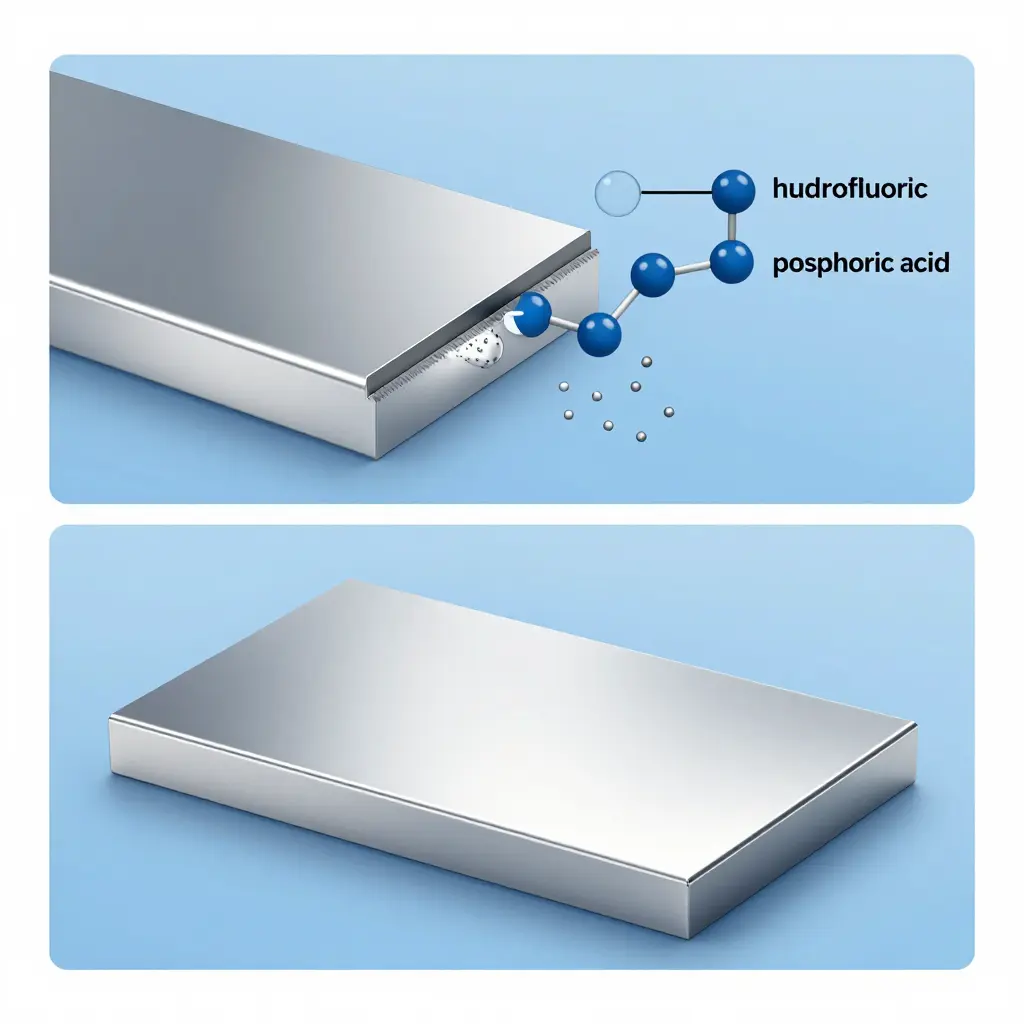
Blue Beacon does not publish the exact acid blend in its wash brightener. What the chain does disclose is the dilution, under 1% acid in water, and the average pH of 2.87. citrushine is the citric-acid option, and it is the one reserved for aluminum.
The mineral acids at work
Hydrofluoric acid (HF) is the workhorse in full-strength aluminum brighteners. It attacks the aluminum oxide layer that forms on any bare aluminum surface. Phosphoric acid (H3PO4) supports the reaction, dissolving metallic salts and keeping the surface evenly worked so a tank or wheel comes out uniform. Both are aggressive, and products built on them are meant for bare aluminum. HF in particular demands chemical-resistant gloves, eye protection, and a fast, complete rinse.
Acids handle the mineral oxide. Oily soils need something else. For heavy organic deposits, the same practical strategies for cleaning grease and tar off your trucks apply before any brightener touches the metal.
How the acids react with the aluminum oxide layer
Every aluminum fuel tank or wheel wears a thin, dull oxide skin over the shiny metal underneath. Hydrofluoric acid reacts with that oxide, converting it into soluble fluoride and aluminum complexes that rinse away with water. Once the oxide is gone, the bright aluminum below it is exposed.
Why it is controlled etching, not a coating
A coating sits on top of the metal. An acid brightener does the opposite: it removes a microscopic amount of the top layer. The result is fresh, reflective aluminum exposed to the air, which is why the process is described as a controlled etch rather than a coating.
Temperature, dwell time, and acid concentration control how deep the etch goes. Get them right and the metal gleams. Leave the acid on too long and it keeps eating into the aluminum itself, which is why these products demand careful handling.
Core reaction steps
- The acid solution wets and spreads across the aluminum surface.
- Hydrofluoric acid dissolves the aluminum oxide layer.
- Phosphoric acid complexes the dissolved aluminum and helps lift residues.
- A clean water rinse stops the reaction and reveals the bright metal.
An acid-based aluminum brightener brightens by subtraction, not addition. It etches the dull oxide skin away to reveal the reflective metal underneath.
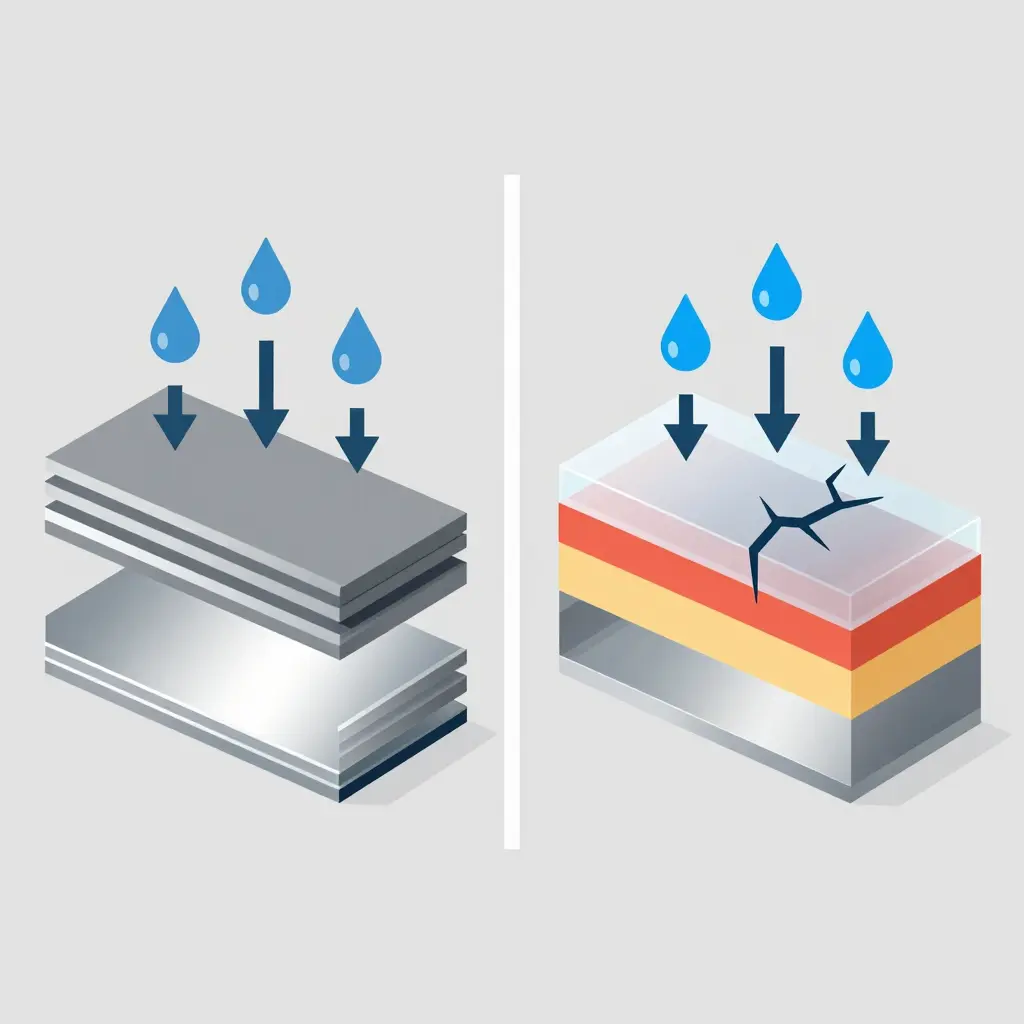
How the same acidic brightener reacts on two surfaces: dissolving oxidized aluminum to a bright finish (left), and attacking and dulling a painted panel’s clear coat (right).
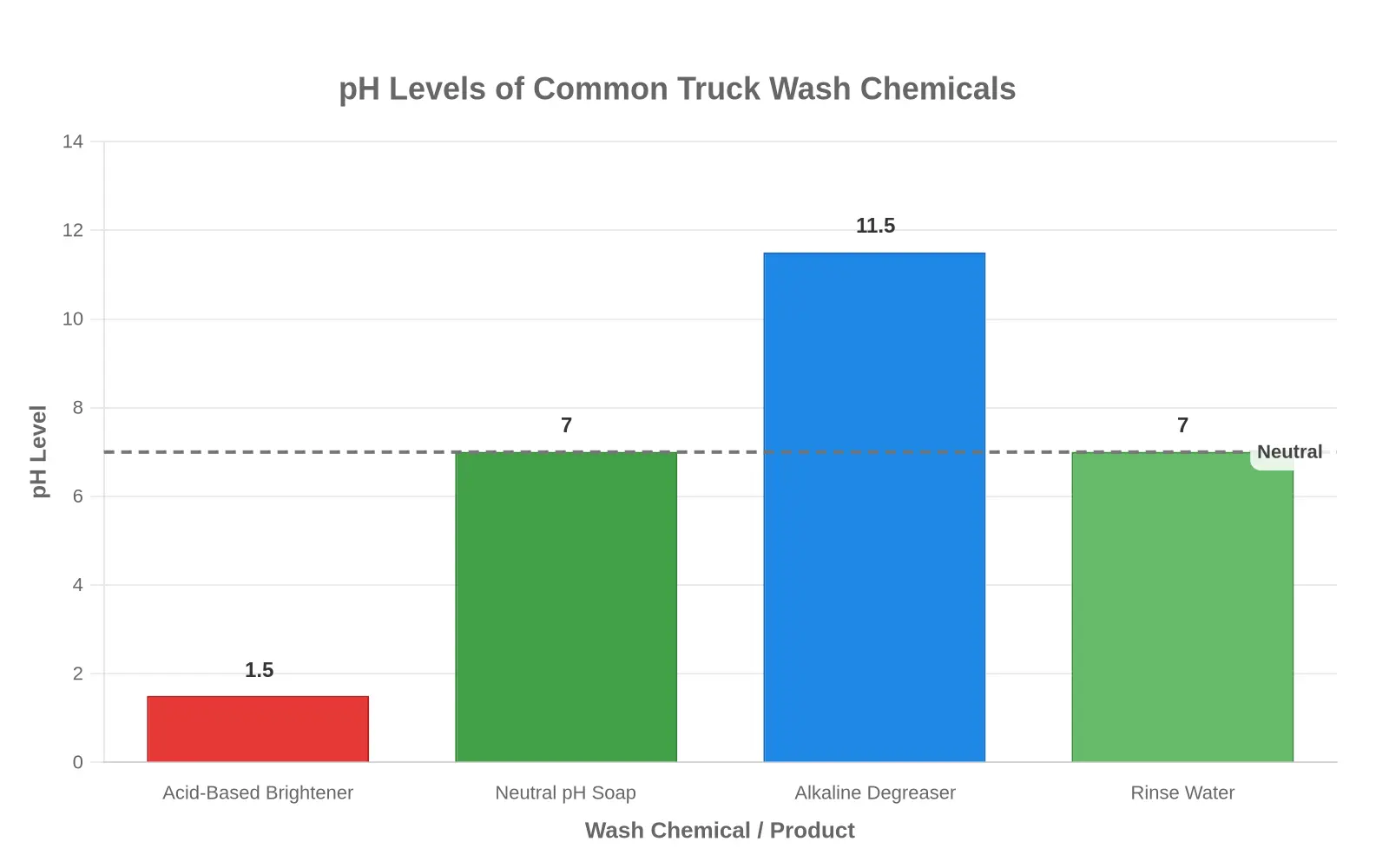
Figure: pH levels of common truck wash chemicals. A full-strength acid brightener sits deep in the acidic range, far below the neutral line, which is why it dissolves aluminum oxide so aggressively and why it attacks paint and clear coats. Neutral soaps and rinse water hover near pH 7, while alkaline degreasers push into the basic range to cut grease. Chart type: bar.
Why the Numbers Matter on Your Truck
Seeing a brightener plotted at roughly pH 1.5 makes the chemistry concrete. The bar sits a full 5.5 points below neutral, and the pH scale is logarithmic: every single point is a tenfold change in acidity. A brightener at 1.5 is thousands of times more acidic than the pH 7 soap next to it on the chart.
That extreme acidity is exactly what makes a full-strength brightener effective on aluminum. It dissolves the dull oxide layer and exposes the raw metal underneath – the whole point of the “brighten” step. The same chemistry cannot tell aluminum oxide from the pigments and resins in paint, though. Applied too often, or left to dwell too long, it eats into clear coats and fades color.
Blue Beacon’s own numbers show the other side of the trade-off. Its wash-process sheet lists the pre-soap at an average pH of 11.88 and the wash water at 9.35, both alkaline. The brightener is diluted to 2.87, and citrushine, the aluminum-only acid, sits at 1.48. Dilution is what lets the brightener touch painted and chrome surfaces; the more concentrated acid does not get that latitude.
Contrast that with the other products on the chart. A neutral pH soap is balanced for everyday cleaning, and rinse water is essentially neutral, used to flush residue before it dries. Alkaline degreasers, meanwhile, sit at the opposite end near pH 11.5, basic rather than acidic, because they are formulated to break down oils, grime, and road film instead of dissolving metal. Knowing which product lives where on the scale is the key to choosing the right tool for each surface, whether you are brightening bare aluminum or protecting a painted cab. For a closer look at matching chemistry to the job, see these practical strategies for cleaning grease and tar off your trucks.
Why the Same Acid That Brightens Aluminum Dulls Paint
The acids in a full-strength aluminum brightener are chosen for one job: dissolving the dull, oxidized skin on aluminum so the fresh metal underneath can reflect light again. Applied to a painted truck, that same acid does something very different. The answer comes down to surface chemistry, specifically what the acid actually touches.
Left: an aluminum surface where acid dissolves the passive oxide layer and exposes shiny metal. Right: a painted panel where acid breaks down the polymer clear coat instead.
Metal Oxide vs. Polymer: Two Very Different Surfaces
Aluminum naturally forms a thin, mineral layer of aluminum oxide (Al2O3) on its surface. This layer is brittle, uniform, and constantly re-forms. When an acid dissolves it, the underlying aluminum is exposed, bright and consistent. The oxide layer is sacrificial: removing it reveals the material you actually want to see.
A painted surface behaves nothing like that. Paint is an organic polymer, a clear coat over a color topcoat, both built from long hydrocarbon chains cross-linked into a flexible film. An acid does not “dissolve away a dull layer” on a polymer. It attacks the polymer itself. There is no sacrificial skin to strip off, so every molecule the acid damages is part of the finish that stays.
How Acid Attacks the Clear Coat and Topcoat
Clear coat is the outermost layer, so it takes the first hit. The acid hydrolyzes ester and urethane bonds, breaking the cross-linked network that gives the coat its gloss. As those bonds split, the surface becomes micro-rough. Light that once bounced back as a straight, sharp reflection now scatters, and the paint looks flat and hazy.
With continued exposure, the acid works into the topcoat beneath, causing etching and spotting. Acid droplets that sit and dry concentrate their effect, leaving rings or water-spot marks where pigment is disturbed. Over many cycles, repeated contact leaves a chalky, oxidized-looking film, which is simply the polymer breaking down at the surface.
Visible Warning Signs of Paint Dulling
- Loss of gloss – reflections look blurred rather than sharp
- Etched rings or droplet-shaped spots
- A chalky or hazy white film across panels
- Faded or uneven-looking color
- A rough, grippy texture instead of a smooth, slick feel
Why This Matters for Fleets
Knowing why acid dulls paint helps operators decide where each product belongs. Aluminum wheels, fuel tanks, and bare metal can take an acid step. Painted body panels, cabs, and vinyl graphics cannot take a full-strength one. Blue Beacon manages that risk by diluting its wash brightener to under 1% acid, which is why the product is cleared for painted and chrome surfaces; citrushine, the aluminum-only acid, is not. Pairing the wash with a dedicated degreasing stage, for example cleaning grease and tar off your trucks before any acid is applied, also reduces the road film that can trap acid against paint and extend its contact time. Keeping the stronger acids on metal, and rinsing painted surfaces promptly, is the simplest way to protect the finish.
How Acid Brighteners Affect Different Surfaces
| Surface Type | Immediate Visual Result | Underlying Chemical Reaction | Recommended Care / Precaution |
|---|---|---|---|
| Bare aluminum | Rapid brightening; dark oxidation lifts off, leaving a bright silvery sheen | Acid dissolves the aluminum oxide layer and lightly etches the surface, exposing fresh, unoxidized metal | Rinse fully after washing; avoid prolonged dwell time; re-seal or polish to slow re-oxidation |
| Painted panels and clear coat | Dulling, hazing, and loss of gloss from a full-strength acid; colors look chalky and faded | Acid attacks clear-coat resins and pigment binders, etching the polymer surface | Keep full-strength acids off painted surfaces; Blue Beacon’s wash brightener is diluted under 1% acid for paint and chrome; apply wax or ceramic protection |
| Chrome or polished metal trim | Brief sparkle that can give way to cloudiness, dulling, or pitting with repeated strong-acid exposure | Acid strips protective films and, with repeated exposure, corrodes chrome and nickel plating | Limit contact with full-strength acids and rinse immediately; Blue Beacon’s diluted brightener is used on chrome, though non-acidic cleaners remain the conservative choice |
Caption: One acid formulation, different outcomes depending on concentration and surface, which is why making regular trailer maintenance surface-specific matters.
Acid-based aluminum brighteners are highly effective at restoring the shine on bare aluminum, but a full-strength product can attack clear coats and painted panels if it is left to sit or applied carelessly. Dilution, contact time, and rinsing make the difference between a bright finish and a dull, etched one. The steps below will help you protect truck paint while still getting the brightening results you need.
- Pre-rinse the entire vehicle first. Soaking the truck with fresh water before applying any product removes loose dirt and evenly wets the surface. A damp surface dilutes the brightener on contact, which slows the chemical reaction on paint while still letting it work on aluminum.
- Limit dwell time. Never let an acid-based brightener sit and dry. Apply it in small sections and keep the dwell time short, following the manufacturer’s guidance, then move immediately to rinsing. Longer contact means deeper attack on clear coat.
- Avoid direct spray on painted panels when using a full-strength acid. Aim the spray at bare aluminum only, keeping the nozzle a safe distance from painted fenders, doors, and cab surfaces. Overspray is the most common reason paint dulls unevenly near brightened aluminum. Blue Beacon’s diluted wash brightener is a different product and is applied to painted and chrome surfaces by design.
- Test on an inconspicuous area. Before treating a full panel, apply a small amount to a hidden spot and observe the result. This confirms the correct dilution and contact time for your specific finish without risking visible damage.
- Use neutral pH soaps for painted areas. Reserve the strong acid for aluminum, and clean painted surfaces with a pH-neutral wash soap. This avoids needlessly exposing clear coat to acid while still lifting dirt and grime.
- Rinse promptly and completely. Flush every surface with clean water as soon as the brightener has done its job, working from the top down so runoff does not re-expose treated areas. Pay attention to seams and crevices where residual acid can linger.
- Avoid letting product dry on the surface. In sun or wind, droplets evaporate fast and concentrate the acid. Work in shade or cooler conditions, and mist surfaces to keep them wet during application.
- Follow dilution ratios and wear proper PPE. Over-strength mixes accelerate paint damage, and acids demand gloves, eye protection, and ventilation. Measure carefully rather than guessing.
For heavily soiled panels, pair these steps with proven strategies for cleaning stubborn grease and tar before you brighten, so the acid is not fighting a layer of buildup it was never designed to remove.

“A quick decision map: bare aluminum heads one way, painted surfaces the other.”
Safe Usage, Maintenance, and Operational Context
Dilution control is the first line of defense when working with any acid-based brightener. Concentrates arrive strong and must be mixed to the manufacturer’s stated ratio before they touch aluminum or paint.
A mix that is too strong accelerates etching and dulls clear coats. A mix that is too weak leaves streaks and residues that trap road grime. Use calibrated measuring cups or an in-line proportioner, and never eyeball the ratio. Blue Beacon’s wash brightener comes already diluted to less than 1% acid; the ratios matter most for concentrates you mix yourself.
Personal Protective Equipment
PPE protects the people doing the work, not just the surface being cleaned. Even a properly diluted acid brightener can irritate skin and eyes on contact or in mist form.
- Chemical-resistant gloves, sleeves, and an apron
- Safety goggles or a full face shield
- A respirator whenever the product is sprayed or misted
- Rubber boots in areas where runoff pools
Store containers sealed, labeled, and away from reactive metals or strong bases.
Rinse Protocols
Rinsing is where many wash operations succeed or fail. Acid brighteners work fast and should never be allowed to dry on a surface.
Apply the product to a cool, shaded panel, agitate if the label calls for it, then rinse thoroughly with clean water before dwell time runs long. On hot days, work in smaller sections so the solution stays wet. A final clean-water rinse removes residual acid that would otherwise keep attacking the finish after the truck leaves the bay.
Why Maintenance Protects Fleet Assets
Consistent, correct washing is itself a maintenance activity. Removing brake dust, chlorides, and acid residues at the right intervals prevents the corrosion and pitting that quietly shorten the life of tanks, frames, and wheels. Fleet maintenance schedules that pair inspections with scheduled washes catch small finish problems before they become expensive repairs.
A disciplined wash routine also supports broader operational goals. Following established trailer maintenance practices keeps aluminum looking sharp and protects the structural surfaces underneath.
Compliance and Operational Context
Truck wash operations sit inside a web of environmental rules. Wastewater, runoff, and cleaning agents are regulated, and staying current on truck wash industry compliance and emissions regulations keeps a business legal and its neighbors friendly. Selecting biodegradable or reclaim-friendly chemistry, and capturing runoff properly, is part of running a responsible wash bay.
Some cargoes demand extra care. When a trailer has hauled food products, cleaning food-grade tankers correctly is essential, and the same brightener that lifts aluminum oxide can be the wrong choice for a sanitary interior. Match the chemistry to the surface and the cargo every time.
Brighteners are powerful tools when they are diluted, applied, and rinsed with discipline. Treated with respect, they brighten aluminum and keep fleets road-ready without harming paint, people, or the environment.
FAQ: Blue Beacon Truck Wash Brightener
What is the Blue Beacon truck wash brightener made of?
Blue Beacon describes its brightener as a highly diluted blended acid solution: less than 1% acid in water, with an average pH of about 2.9. The chain does not publish the individual acids. Its aluminum-only product, citrushine, is a blend of citric and other acids.
Is it safe on painted trucks?
Blue Beacon applies its wash brightener to most painted and chrome surfaces, so at that dilution it is part of the chain’s normal wash. A full-strength, aluminum-only acid brightener is a different matter: it can etch clear coat and dull paint, which is one of the most common causes of truck wash paint damage. Painted trucks should be washed with a pH-neutral product when an acid step is not appropriate.
How often can it be used on aluminum?
Most fleets use an acid brightener a few times a year, or whenever visible oxidation builds up. Using it too frequently can gradually thin the metal and strip protective coatings. A quarterly schedule is a reasonable baseline for most aluminum wheels, tanks, and trailers.
Does it cause long-term paint damage?
Occasional contact with a diluted product may only dull the surface, but repeated exposure to a full-strength acid causes genuine truck wash paint damage. Over time the acid eats into the clear coat, leading to fading, chalking, and premature peeling. Keeping full-strength brighteners away from painted panels prevents most long-term problems; Blue Beacon’s diluted wash brightener is formulated for paint and chrome.
How can operators protect the clear coat?
Operators protect the clear coat by masking painted areas when they use a full-strength acid, rinsing thoroughly, and neutralizing residue immediately after washing. Restricting strong acids to bare aluminum limits accidental contact. Applying a wax or sealant afterward adds a protective barrier.
Should DIY detailers use acid brighteners?
Acid brighteners are powerful and easy to misuse, so they demand careful handling, proper PPE, and correct dilution. For anyone weighing gentler alternatives, it helps to review proven strategies for cleaning grease and tar off your trucks fast. When in doubt, let a professional wash handle the brightening step.
The Aluminum-versus-Paint Trade-Off, Summed Up
The story comes down to one principle: the chemical action that makes acid brighteners so effective on bare aluminum is exactly what makes a full-strength product risky on paint.
On raw aluminum, the acid dissolves the dull oxide layer that forms naturally over time. Once that gray film is gone, fresh, reflective metal is exposed, and the surface looks nearly new. This is the entire point of aluminum brightening, and on tanks, wheels, and diamond plate, nothing else works quite as fast.
Paint is a different surface entirely. A painted panel is protected by a clear coat, and a full-strength acid cannot tell the difference between unwanted oxidation and that clear coat. It attacks the coating, and the result is chalky, streaked, or hazy paint that fades faster and holds dirt more stubbornly. Dilution is what buys margin. Blue Beacon’s wash brightener is mixed to less than 1% acid so it can be used on painted and chrome surfaces, while the aluminum-only citrushine and the full-strength products sold for bare metal do not get that latitude.
Practical Takeaways
- Identify every surface first. Bare aluminum and painted panels often sit inches apart, so know what you are spraying before you spray it.
- Apply full-strength brighteners selectively. Treat aluminum brightening as a targeted step, not an all-over wash.
- Protect painted panels. Pre-wet them, shield them from overspray, and rinse immediately if a strong acid drifts onto them.
- Control dwell time and dilution. Stronger is not better on mixed surfaces.
For fleets, the smart approach is pairing careful brightener use with consistent upkeep, since regular trailer maintenance helps surface problems show up early rather than after the damage is done.
Get the chemistry and the surface matched correctly, and acid brighteners become a safe, effective part of your wash routine. Mismatch them, and you trade shine on one panel for dullness on the next.