
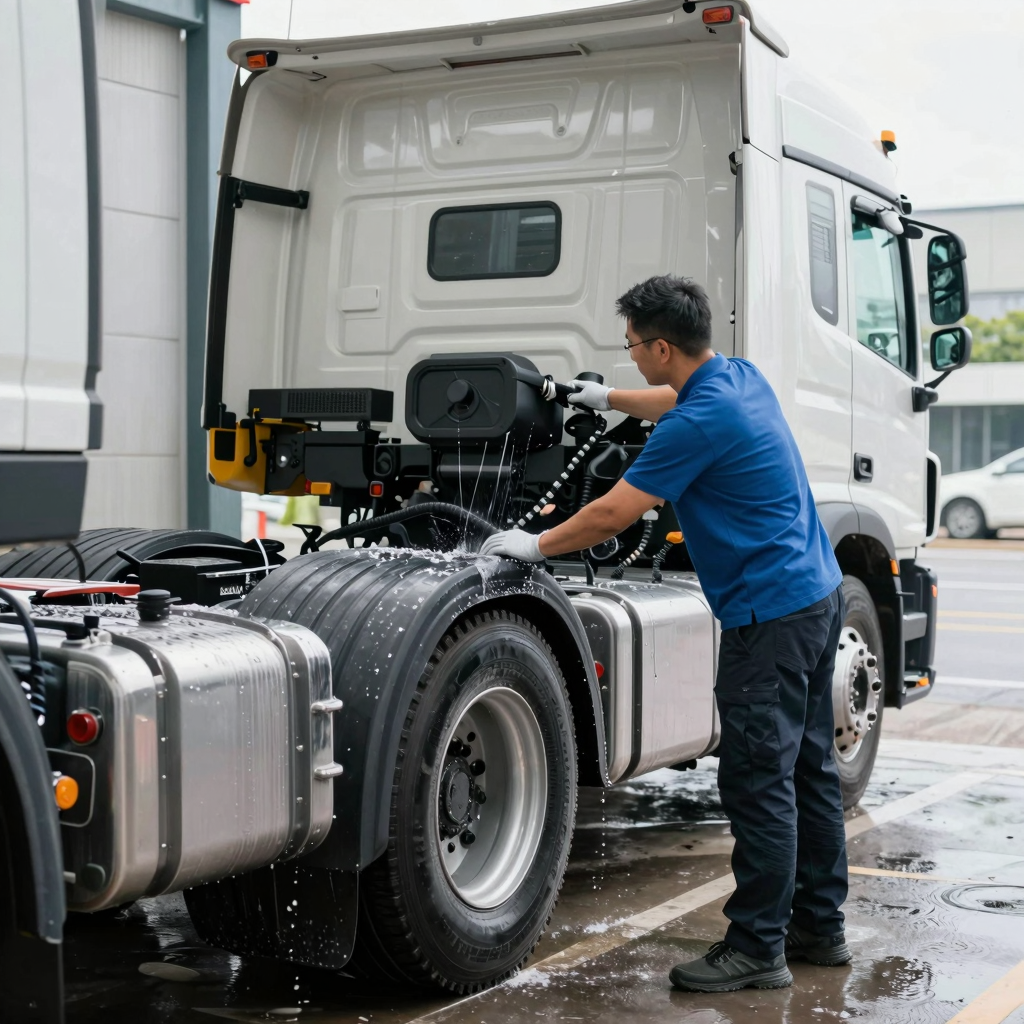
In the highly competitive landscape of logistics, freight management, and construction, the appearance of trucks plays a pivotal role in reflecting the professionalism and reliability of the companies behind them. For fleet managers, trucking company owners and operators, and construction and mining fleet supervisors, maintaining the aesthetics of their trucks is crucial for both brand image and the longevity of the vehicles. However, the process of washing trucks presents a unique challenge; the importance of cleaning without inflicting scratches and damage to the paintwork cannot be overstated. Not only can improper washing methods lead to unsightly blemishes, but they can also diminish the truck’s resale value and increase maintenance costs over time. This article will explore effective strategies and best practices for washing trucks safely, allowing fleet managers to uphold their vehicles’ appearance while ensuring they remain in optimal condition. By implementing these solutions, companies can enhance their overall operational efficiency and present a polished image that inspires trust and confidence among clients and stakeholders. Learn more about the importance of regular trailer maintenance and discover how to keep your fleet in top shape without compromising on quality.
Common Methods for Washing a Truck: Pros and Cons
Keeping your truck clean is vital for maintaining its appearance and value, especially in industries like logistics, freight, and construction. Here are three common washing methods: touchless car washes, hand washing, and pressure washing.
1. Touchless Car Washes
Touchless car washes utilize high-pressure water jets and biodegradable detergents to clean vehicles without any physical contact.
Pros:
- Scratch Prevention: Significantly reduces the risk of scratches and swirl marks, making it ideal for new or high-end vehicles.
- Speed: Quick wash cycles (approximately 5-8 minutes per vehicle), allowing for efficient fleet management.
- Environmental Friendliness: Use advanced water recycling systems and controlled chemical usage.
Cons:
- Effectiveness: May struggle with heavy mud or baked-on grime, requiring more manual intervention.
- Cost: Higher initial investment for high-quality systems, ranging from $13,860 to $45,000 depending on scale.
For more information on car washes, visit here.
2. Hand Washing
Hand washing is a manual method that allows for detailed cleaning of the truck’s surfaces.
Pros:
- Detailing: Offers comprehensive, careful cleaning, focusing on trouble spots such as wheel wells and undercarriages.
- Scratched Prevention: Using microfiber mitts and a two-bucket method (one for soap, one for rinsing) avoids transferring dirt back onto the truck’s surface.
- Versatility: Adaptable for different levels of dirtiness and paint conditions.
Cons:
- Time-Consuming: Labor-intensive; requires skilled personnel to ensure proper technique and avoid damage.
- Physical Demand: Can be tiring and inefficient for large fleets without adequate labor.
To learn best practices, check out this detailed guide on hand washing techniques.
3. Pressure Washing
Pressure washing uses high-pressure water to remove dirt, grime, and even oil, especially effective for tough jobs.
Pros:
- Efficiency: Reduces cleaning time drastically (up to 70% faster) when cleaning larger areas.
- Effectiveness: Easily removes tough contaminants, ensuring thorough hygiene compliance.
Cons:
- Damage Risk: Improper usage can harm the paint or seals. Key techniques include using a 40-degree fan nozzle, maintaining a minimum distance of 12 inches, and starting from the top.
- Training Requirement: Staff must be trained to handle equipment properly and to avoid damage.
For reliable techniques to prevent scratches while pressure washing, refer to this insightful report.
By understanding the strengths and weaknesses of each method, fleet managers and supervisors can better preserve their trucks’ appearance and longevity. Proper maintenance, including the cleaning methods discussed, is a crucial aspect of fleet management, contributing to overall operational efficiency and compliance.

Essential Cleaning Supplies for Washing a Truck Safely
To maintain the pristine appearance of a truck while avoiding damage to its finish, using the right cleaning supplies is imperative. Below are some essential items recommended for washing a truck without scratching its surface:
1. Microfiber Cloths
Microfiber cloths are a necessity when washing a truck. They are designed to trap dirt and absorb moisture without causing any scratches. Unlike traditional cloths that might leave behind lint, microfiber cloths can be used repeatedly and washed without losing their efficacy. They are exceptionally gentle on painted surfaces, making them ideal for drying and buffing.
2. Soft Sponges or Wash Mitts
Using a soft sponge or a specially designed wash mitt can significantly reduce the chance of scratching the paint. Look for mitts made from plush microfiber or dual-density materials where one side is soft and the other more abrasive for tough spots. Soft sponges are less likely to harbor grit that can scratch the surface during washing. According to NTEA guidelines, a non-abrasive sponge or wash mitt is essential.
3. pH-Balanced Truck-Specific Soap
A pH-balanced soap designed specifically for trucks is crucial. Generic household soaps can strip away the protective coatings on painted surfaces and cause damage over time. Truck-specific detergents are formulated to lift dirt and grime without compromising the integrity of the paint. As outlined in a piece from TruckTough.com, such soaps help ensure that the cleaning process is as safe as possible.
4. Soft-Bristle Brushes
When it comes to cleaning wheels, a soft-bristle brush helps remove road grime without the risk of damaging the painted surfaces. It’s better to use a brush designed for automotive use rather than anything that could scratch. This ensures that all areas, including trim and hard-to-reach parts, can be cleaned effectively.
5. Wax
Waxing your truck after a wash not only enhances its shine but also provides a protective layer that helps defend against elements that could lead to scratches and corrosion. A high-quality wax will provide a barrier that protects the paint in addition to making the truck look visually appealing. Fleet maintenance professionals assert that regular waxing can prolong the life of the vehicle’s finish and reduce damage over time.
Conclusion
Overall, carefully selecting your cleaning supplies is essential to ensure that the truck’s surface remains scratch-free and well-protected. Using the wrong materials can lead to not only cosmetic issues but can also affect the vehicle’s resale value and longevity. For fleet managers and trucking owners, investing in the right products is a small price to pay for preserving their assets.
For more insights on truck maintenance, check out our discussion on the importance of regular trailer maintenance.
Comparison Table of Truck Washing Products
To help fleet managers and trucking company owners choose the right truck washing product, here is a comparison table highlighting key features, price points, and effectiveness in scratch prevention.
| Product Name | Key Features | Price Point | Effectiveness in Scratch Prevention |
|---|---|---|---|
| Soft Touch Wash System | Foam cleaning, high-pressure wash | $40,000 – $45,000 | High |
| Touchless Truck Wash | No-contact cleaning, water-efficient | $30,000 – $35,000 | Medium |
| Fleet Washing System | Automated wash, customizable settings | $20,000 – $25,000 | High |
| Eco-Friendly Cleaner | Biodegradable, minimal residue | $15 – $20 per gallon | Medium |
For a deeper understanding of regular maintenance, you can learn more about the importance of regular trailer maintenance. To discover best practices for cleaning trucks, check out proven strategies for cleaning grease and tar off your trucks fast.
Step-by-Step Process of Washing a Truck Without Scratching It
Washing a truck effectively and safely requires a systematic approach to ensure the preservation of its paint. Here’s a detailed step-by-step guide to help fleet managers, trucking company owners, and construction supervisors wash trucks without causing any damages.
1. Pre-Wash Inspection
Before starting the washing process, perform a thorough inspection:
- Look for Dirt and Grime: Identify areas that require special attention, particularly spots with grease or tar buildup.
- Check for Damage: Note any scratches or imperfections in the paint that might worsen during washing.
- Remove Accessories: If applicable, take off antennas, removable mirrors, or any other accessories that could get in the way.
Best Practices for Washing Trucks Without Scratching
Washing trucks is essential for maintaining their surfaces, but doing so incorrectly can lead to scratches and paint damage. Here are expert recommendations from professional truck washing companies essential for fleet managers, trucking company owners, and supervisors in construction and mining fields:
1. Pre-Rinse
Start by using a high-pressure hose to remove loose dirt, dust, and debris before applying any soap. This initial step greatly reduces the risk of scratching the paint during the wash process. It is recommended to implement this before every wash.
2. Use Microfiber Wash Mitts
Opt for soft, non-abrasive microfiber wash mitts instead of sponges or rough cloths. Microfiber is designed to gently lift dirt and grime without scratching the surface of the truck. This practice should be employed during every wash.
3. Dedicated Washing Bucket
Implement a two-bucket washing system. One bucket should contain soapy water while the other is for rinsing the wash mitt. This method prevents the transfer of dirt back onto the truck, significantly reducing the risk of scratches.
4. pH-Neutral Car Shampoo
Always choose a pH-neutral car shampoo specifically formulated for automotive paint. Avoid using household detergents, as these can be too harsh and may lead to damage over time. This should be done during every wash.
5. Section-by-Section Washing
Wash the truck in sections, beginning from the top and working downward. This technique helps to manage soap and dirt better and avoids re-depositing dirt onto already cleaned areas.
6. Final Rinse
After washing, thoroughly rinse off all soap residue with clean water. Leaving soap on the surface can cause streaks and spots, affecting the truck’s appearance.
7. Drying with Microfiber Towels
Immediately after rinsing, dry the truck using separate, clean microfiber towels. This procedure prevents water spots and helps maintain a clear finish.
8. Apply Protective Wax/Sealant
After washing, apply a high-quality wax or ceramic coating. This protective layer serves as a barrier against future abrasions and enhances the shine of the truck.
Unique Tips for Scratch Prevention
- Automated Washing Systems: Consider using automated wash systems with soft brush technologies designed to minimize contact and frustration while providing superior results. These systems often use food-grade silicone or foam brushes that gently clean without causing abrasions.
- Regular Maintenance Protocol: Implement a regular maintenance schedule to ensure that the trucks’ surfaces remain in good condition and to prevent long-term damage.
- Surface Inspection: Train personnel to inspect the truck’s surface for embedded debris before washing. Addressing these issues upfront can prevent potential scratches during the washing process.
Following these best practices can help logistics and freight companies maintain their truck surfaces effectively while minimizing the risk of unwanted scratches. For more detailed guidance on maintaining truck fleet standards, learn more about regular maintenance.
Visual Summary
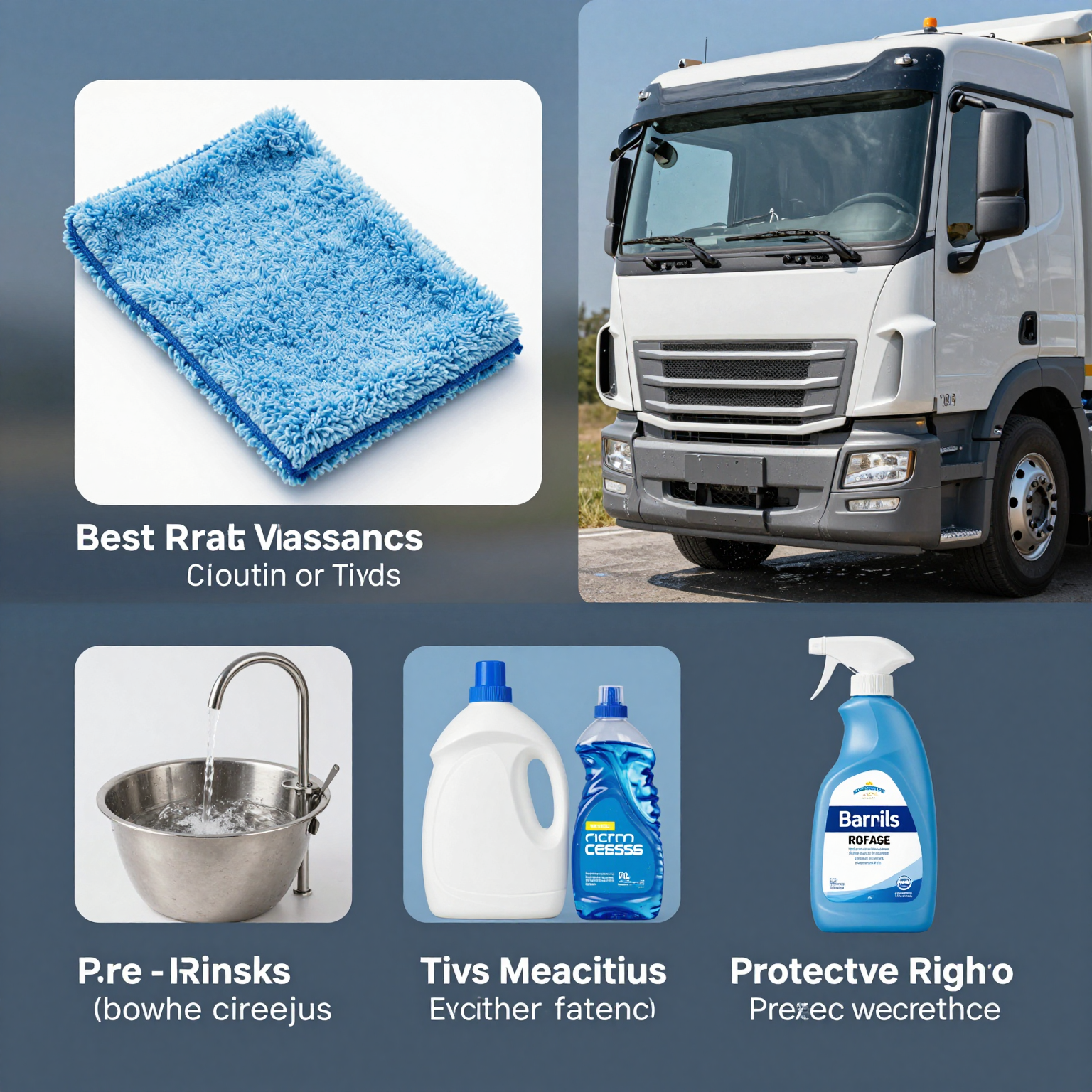
Chart Summary
Here is a chart summarizing the key best practices for washing trucks:
Best Practices for Washing Trucks Chart
| Expert Recommendation | Best Practice Details | Recommended Frequency |
|---|---|---|
| Pre-Rinse | Use a high-pressure hose to remove loose debris before washing. | Before every wash |
| Use Microfiber Wash Mitts | Employ non-abrasive microfiber mitts to gently lift dirt without scratching. | During every wash |
| Dedicated Washing Bucket | Two-bucket system to prevent dirt transfer back onto the truck. | During every wash |
| pH-Neutral Car Shampoo | Use a pH-balanced shampoo designed for automotive paint. | During every wash |
| Section-by-Section Washing | Wash in sections to avoid drying soap & dirt on the surface. | During every wash |
| Final Rinse | Rinse thoroughly to avoid streaks and spots. | After washing |
| Drying with Microfiber Towel | Dry immediately using a separate microfiber towel. | After rinsing |
| Apply Protective Wax/Sealant | Use quality wax or ceramic coating for protection. | Every 3-6 months (as per product instructions) |
Implementing these expert recommendations will vastly improve truck maintenance practices while protecting their surfaces from scratches and other damage.
Recommended Frequency of Truck Washing
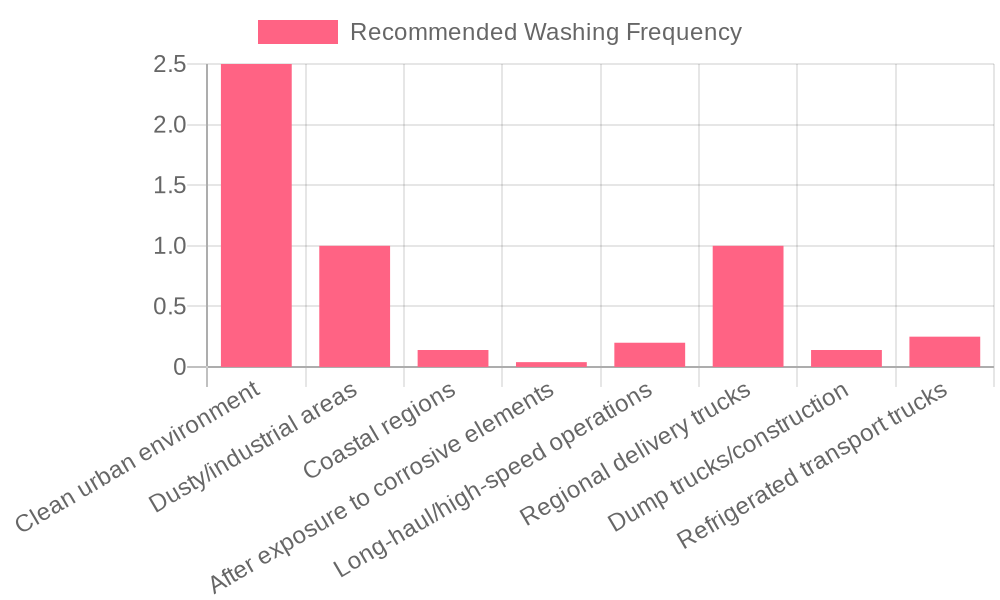
Washing trucks regularly is vital for maintaining their appearance, protecting the paint, and preventing corrosion. The frequency of washing can vary significantly based on several environmental conditions and types of trucking operations. Below is a chart that summarizes the recommended washing schedule:
| Truck Type / Environment | Recommended Washing Frequency |
|---|---|
| Clean urban environment | Every 2-4 weeks |
| Dusty/industrial areas | Weekly |
| Coastal regions | More than once a week |
| After exposure to corrosive elements | Within 24-72 hours |
| Long-haul/high-speed operations | Every 3-5 days |
| Regional delivery trucks | Weekly |
| Dump trucks/construction | After each job |
| Refrigerated transport trucks | Regularly |
Key Recommendations:
- Urban Environments: Trucks in clean areas may be fine with washes every 2-4 weeks.
- Dusty Areas: Operations near construction sites or in dusty regions should have weekly washes to prevent damage from abrasive materials.
- Coastal Operations: Salt from coastal environments calls for frequent washes to avoid rust.
- Corrosive Exposure: Immediate washing is necessary after exposure to substances like acid rain or heavy mud to prevent corrosion.
- Different Operations: Long-haul operations should tend to wash more frequently to remove debris that can harm the paint and undercarriage.
Following these recommendations not only keeps trucks looking great but also extends their lifespan and performance in demanding operational conditions. For more details about the importance of regular maintenance, learn more here.
The Importance of Maintaining Truck Surfaces
Maintaining the surfaces of trucks is critical for ensuring their longevity and operational efficiency. Regular washing and surface care not only enhance the vehicle’s aesthetic appeal but also contribute to preventing wear and tear that can compromise the truck’s structure over time.
In the words of industry expert Emily Carter, a seasoned vehicle maintenance consultant:
“Scratches are not just a cosmetic issue; they’re the starting point for potential corrosion and structural damage. Even minor scratches, if left untreated, can accelerate metal oxidation in wet or salty environments, leading to pervasive rust and ultimately affecting the vehicle’s strength and safety.”
Carter emphasizes that adopting high-quality surface protection coatings and regular cleaning routines can significantly reduce damage due to everyday friction, such as cargo loading and road debris. This proactive approach can extend the lifespan of trucks by over 30%. Fleet managers are encouraged to incorporate surface maintenance into standardized preventive care protocols.
For further insights on maintaining your fleet, don’t miss our article on the importance of regular trailer maintenance.
In conclusion, taking the necessary precautions to wash your truck without causing scratches is essential for maintaining its aesthetic appeal and structural integrity. Proper washing techniques, the use of appropriate materials, and mindful practices can vastly reduce the risk of damaging the vehicle’s surface. As a fleet manager or owner/operator, understanding the importance of protecting your trucks from unwarranted scratches will not only help preserve your assets but also contribute to the longevity of your fleet. With premium truck fairings, you can take protection a step further.
These advanced fairings are designed using high-strength materials that resist impacts, UV radiation, and environmental degradation, ensuring a consistently ‘new’ look for your trucks. By investing in quality fairings, you enhance safety and fuel efficiency while also protecting your vehicles from common wear and tear, such as scratches and stone chips.
Want to transform your truck and safeguard its condition? Explore the wide range of premium truck fairings offered by Summit Fairings. Their products are engineered for durability and performance, offering protection that lasts. Don’t compromise the look and safety of your fleet-learn more about Summit Fairings and elevate your trucks today! With the right care and protection, your trucks can continue to perform at their best for years to come, maximizing your investment and boosting your operational success.