
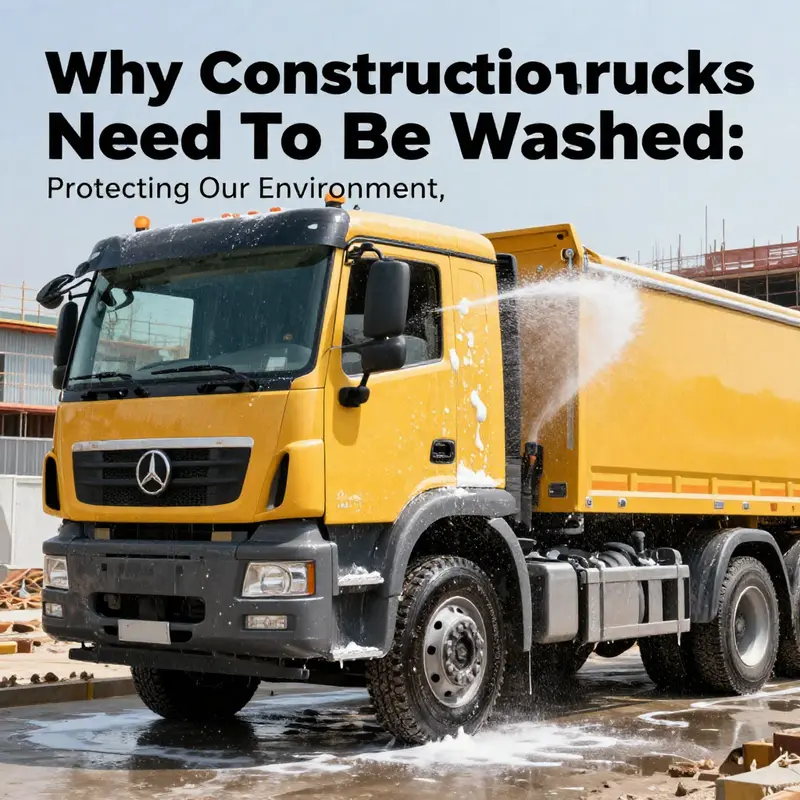
Washing trucks after they leave construction sites is more than just a cleanliness issue; it addresses critical environmental, safety, and economic factors. The accumulation of dirt, dust, and debris on construction vehicles can lead to significant dust pollution when they travel on public roads. This practice not only complies with environmental regulations but also ensures road safety and enhances vehicle longevity. In the chapters that follow, we will explore the importance of truck washing in controlling dust, the compliance with environmental regulations, the impact on road safety and vehicle maintenance, and the economic implications for construction sites. Each of these aspects is crucial for fleet managers, trucking company owners, and construction supervisors seeking to uphold standards and sustainability in their operations.
Clean Exit: The Essential Role of Truck Washing at Construction Sites
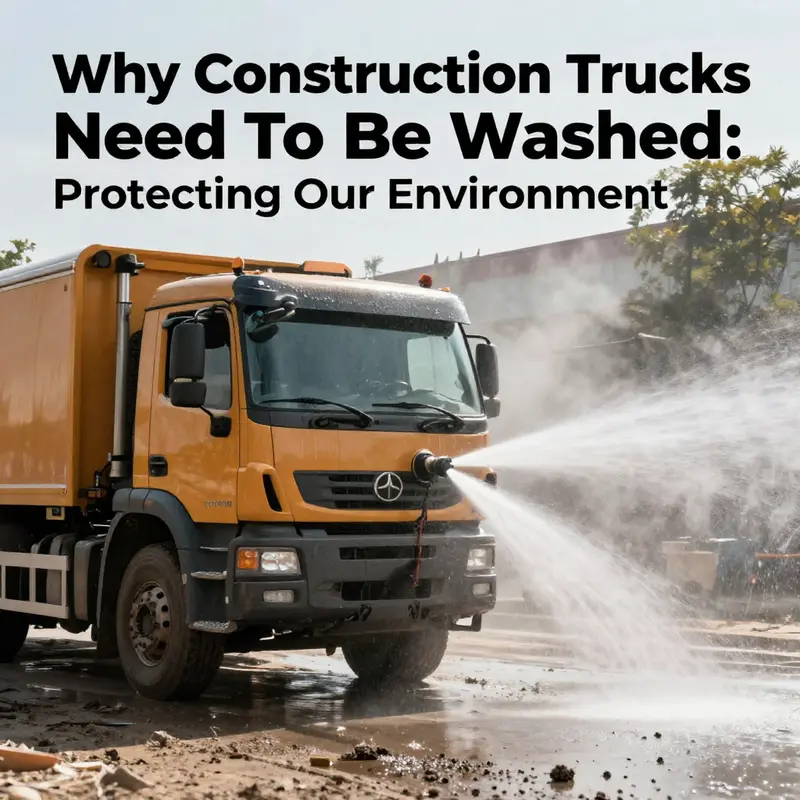
At the end of a shift on a busy construction site, washing trucks before they leave is more than a courtesy—it’s a pollution-control measure. Clean exits help prevent mud and dust from tracking onto public roads, storm drains, and neighborhoods. By removing soil from tires, rims, and undercarriages, trucks are less likely to become mobile polluters. The practice supports air and water quality, regulatory compliance, and community health and safety. Proper wash water management and containment minimize environmental risk while keeping projects on schedule and productive. Mobile washing options offer flexibility and reduce downtime, helping projects stay on track while protecting the surrounding environment.
Cleansing the Exit: Why Trucks Are Washed When Leaving Construction Sites and How It Shields Roads, Waterways, and Communities
A construction site is a moving organism of soil, dust, debris, and the momentum of heavy machinery. Trucks ferrying dirt, gravel, and material across a landscape pick up a stubborn residue that clings to tires, undercarriages, and wheel wells. The simple, pragmatic act of washing these vehicles before they roll onto public streets is more than a routine courtesy; it is a deliberate intervention designed to break the chain of pollution before it begins. The concept rests on a straightforward logic: the moment a truck leaves a site, it becomes a potential conveyor of pollution. Muddy tracks on pavement can abrade surfaces and clog storm drains; loose soil can become windborne dust that fills the air with particulate matter. Left unchecked, this combination threatens the cleanliness of neighborhoods, the health of nearby waterways, and the efficiency of urban streets, where sediment and dust increase road maintenance costs, degrade air quality, and complicate traffic safety. The practice of washing trucks at site exits emerges as a practical countermeasure anchored in environmental stewardship and regulatory expectations rather than a mere procedural ritual. It is, in essence, a boundary technique. It sets a seal at the edge of the work zone, catching what would otherwise escape into the wider ecosystem and daily life of the community.
The rationale behind this boundary practice is anchored in environmental science and public health. Construction sites are sources of fugitive dust and sediment that can travel beyond the fenced perimeter, especially during rainstorms or gusty winds. When soil and sediment are mobilized by vehicle movement, they can wash into stormwater systems or directly into nearby streams and rivers. This is not merely a local nuisance; it is a pathway for pollutants that can harm aquatic habitats, reduce water quality, and complicate the regulatory landscape that governs stormwater. The environmental logic is thus forward-looking: if the waste carried by trucks can be mitigated at the source, downstream impacts on air and water quality are significantly reduced. The act of washing is the most visible, accessible, and effective bulwark against these diffuse threats, especially when paired with broader erosion controls such as silt fences, sediment basins, and well-designed site runoff management.
Regulatory frameworks provide the scaffolding for why washing trucks has become standard practice. In many jurisdictions, environmental regulators view the exit wash as part of a comprehensive approach to erosion control and stormwater management. The U.S. Environmental Protection Agency (EPA) has framed dust and sediment control as essential to reducing fugitive emissions and to preventing soil from becoming a contaminate that migrates away from construction zones. While the specifics vary by region, the underlying principle remains consistent: construction sites must implement practical controls to limit the transport of soil and debris off-site. This often translates into mandatory or recommended vehicle washing stations at site exits, along with other measures designed to capture sediments and treat wash water before it re-enters the environment. The EPA’s guidance on controlling dust and emissions from construction sites points to a broader, interlocking system of controls that include temporary stabilization, windbreaks, water sprays, and careful material handling. The intent is not to punish but to create predictable, enforceable practices that protect air quality and water resources while allowing construction to proceed.
From a compliance perspective, the logic of exit washing dovetails with broader stormwater standards and erosion controls. The practice is frequently described as part of a package of measures to meet National Pollutant Discharge Elimination System (NPDES) or equivalent requirements for construction activities. In the United States, this means that sites must design, implement, and maintain best practices that minimize sediment discharge to storm sewers and receiving waters. The aim is to prevent the wash-off of soil from roads and vehicles from becoming a fatefully simple path to pollution, especially during heavy rains. In the United Kingdom and other jurisdictions, resources such as NetRegs explain how these measures fit into wider environmental compliance strategies, including how to manage wash water and avoid contaminant transfer. The shared throughline is clear: regulated environments demand deliberate, documented controls that reduce the chance of soil and sediment entering water bodies or stormwater systems. The exit wash, in this sense, is the visible commitment that the site intends to meet those obligations in concrete, observable terms.
The practical benefits of truck washing extend beyond regulatory compliance. A road that remains cleaner reduces abrasive wear on pavement, cuts down on the need for frequent cleaning by municipal crews, and minimizes the likelihood of slippery conditions that could contribute to accidents. Saliently, when mud and soil cling to tires and undercarriages, they create a risk for other motorists who might encounter sudden changes in traction or visibility. Clean vehicles contribute to safer traffic conditions by limiting on-road spatter, reducing the chance of mud-laden debris being flung onto adjacent lanes, and keeping signage and runoffs clearer of obstruction. In this way, washing is not simply about meeting a standard; it is about preserving the functional integrity of road networks and supporting public safety in communities that share roads with construction activity. It is a practical investment in reliability as much as an environmental obligation.
A closer look at the mechanics of how exit washing works reveals a straightforward, repeatable process that can be adapted to different site layouts and climates. Modern wash stations often feature multiple phases: an initial pre-wash to loosen caked soil, a high-pressure wash that targets tires, wheel wells, and undercarriage, and a final rinse that ensures the vehicle leaves with minimal residue. The equipment design prioritizes coverage and efficiency, so that trucks can pass through with minimal downtime and without disrupting project schedules. Behind the scenes, responsible operators also manage the wash water with careful attention to containment, filtration, and reuse. The goal is to prevent contaminated water from entering storm drains or surface water, and to minimize the generation of wastewater that would require costly treatment or disposal. These steps are not optional niceties; they are core components of responsible site management. The combined effect of thorough washing and sound water management is a twofold protection: the immediate environment is shielded from sediment, and the broader ecosystem is safeguarded from downstream contamination that can accrue during storms when soil is most active.
This is where the concept of best practices meets the realities of site logistics. An exit wash is most effective when it is integrated into a broader system of controls rather than treated as a single gesture. A well-designed site might pair a wheel wash with stabilization practices at access roads, vehicle speed controls, and routine monitoring of runoff quality. When such integrated systems are in place, compliance becomes a matter of routine rather than reaction to inspection notices. The emphasis shifts from “did we wash the truck?” to “how well did we manage the wash water, how predictable is the process, and how robust are the off-site protections?” In this framing, exit washing becomes a performance metric that operators can audit, improve, and communicate to stakeholders—including nearby residents and municipal authorities—thereby reinforcing trust in the project and its stewardship of the local environment. The practical practice—and the regulatory expectations—converge to form a disciplined approach to managing the ugly but inevitable aftereffects of construction on the surrounding landscape. The result is a more predictable and protective workflow, one that recognizes that every vehicle leaving a site carries with it a trace of the work that has occurred and a responsibility to keep it from becoming a burden on the public realm.
The decision to install or rely on exit washes is reinforced by the broader economic calculus of construction management. Clean trucks mean fewer delays caused by road cleanliness concerns and fewer disputes with municipalities over violations. They also reduce the risk of fines and sanctions that can accompany noncompliance, which can be costly even when a project is otherwise running smoothly. The long-term benefits extend to the fleet itself: clean tires and undercarriages reduce wear on transportation assets and may improve fuel efficiency by reducing drag from mud and debris accumulated during transport. For contractors, the message is simple: a modest investment in an exit washing system—coupled with proper water treatment and maintenance—can yield measurable dividends, not just in the sense of regulatory peace of mind, but in practical, day-to-day operational efficiency. The practice becomes a measurable factor in project planning, environmental performance reporting, and community engagement, shaping how a project is perceived and how its impacts are managed over time. It is a quiet but potent example of how disciplined site management translates into cleaner cities and safer streets.
For readers seeking a concrete, policy-oriented frame for what is happening at the site boundary, the broader narrative is clear: wash stations at exit points are part of an ecosystem of controls designed to prevent sediment and dust from leaving the site. This ecosystem encompasses procedural standards, training for workers, signage that explains why cleanliness matters, and engineering controls that minimize the risk of wash water entering the stormwater system. When these elements function together, the exit wash becomes a reliable, repeatable ritual rather than a sporadic effort. It signals that the project recognizes the shared responsibility of construction and the communities that host it. The practice, therefore, embodies a principle that runs through environmental regulation and everyday logistics alike: prevention is more effective and more economical than remediation after pollution has already occurred. It is a straightforward, evidence-based approach that aligns the speed of construction with the pace of a healthier environment and safer roads.
For a deeper dive into how industry guidance frames these practices, see the broader discussion on industry compliance and emissions regulations. Truck Wash Industry Compliance and Emissions Regulations. This resource helps connect the day-to-day mechanics of exit washing with the regulatory narratives that govern what counts as a compliant and responsible operation. Additionally, for a rigorous, external reference on stormwater management and construction-site controls, consult the EPA’s Construction Site Stormwater Standards. This guidance underlines the importance of controlling sediment and pollutants at the source and reinforces the idea that exit washing is part of a larger, enforceable framework designed to protect water quality and public health. External resources provide critical context for understanding the standards that construction teams strive to meet as they move dirt from site to street.
Clear Exit, Safe Roads: Why Trucks Are Washed When They Leave Construction Sites
When heavy equipment pours onto a highway after a long shift at a construction site, the image is familiar: wheels and undercarriages coated in dirt, dust swirling from tires as they roll away, and a growing concern about what happens once that truck hits the public road. The practice of washing trucks before they exit a site is not a cosmetic ritual. It is a deliberate measure designed to control dust and prevent environmental pollution while maintaining road safety, protecting vehicle integrity, and upholding a jurisdictional standard for responsible construction practice. The logic behind this routine is simple yet powerful. Loose soil, gravel, and other debris cling to treads and surfaces with a tenacity that makes subsequent travel both less predictable and more hazardous. A clean exit, by contrast, reduces the likelihood of debris being shed onto public streets, a crucial step in preserving air quality and reducing fugitive dust that can travel far from the site boundary. The act of washing at the exit creates a controlled point in the workflow where soil laden residues can be contained, captured, and managed before they escape into the broader transport system.
From an environmental perspective, the rationale is anchored in governing the spread of dust and fine particulates. Construction zones, especially those dealing with soil and loose aggregates, can become microcosms of airborne material during travel and wind events. The materials on a truck are rarely inert; they carry with them not just dirt but a mix of minerals, moisture, and sometimes chemicals used on site. Once these residues are on the road, they can become suspended, washed into drainage channels, or deposited on vegetation, watercourses, and residential areas. The cumulative effect is a pressure on air quality and an alteration of the local ecosystem that regulators prefer to minimize through proactive controls. The washing step acts as a physical barrier to this process, turning a potential source of pollution into a contained obligation that can be monitored, measured, and improved upon. The EPA has highlighted the importance of addressing fugitive dust from construction activities as part of a broader strategy to protect air quality, underscoring that controlling dust at its source can be among the most effective measures to reduce emissions that would otherwise arise during traffic movements beyond the site boundary. This emphasis on source control is reinforced by guidelines that advocate for practical, site level interventions to curb dust formation and spread, rather than relying solely on downstream mitigation.
Safety is another core pillar supporting the practice. A vehicle that leaves a site with a thick coat of mud or loose material on its tires and undercarriage creates a set of road hazards that can multiply in adverse conditions. Wet pavement, for instance, can transform a muddy smear into a slippery layer that reduces tire grip and increases braking distances. Debris on the road presents a direct obstacle that can damage tires, compromise braking systems, or affect steering response. Even small particles, when released in high volumes, can impair visibility for following drivers by clinging to lights, lenses, and reflectors. A clean truck reduces these risks by removing the smear of grime that can obscure critical signals and create rolling hazards. In addition, a clear exterior and properly functioning lights and mirrors contribute to better driver awareness, especially in low light or poor weather when every visual cue matters for safe navigation. The practical link between cleanliness and safety is not merely intuitive; it is supported by a tradition of roadside maintenance and transport safety practices that aim to minimize contamination on roadways and maximize vehicle handling performance as vehicles move from site to street.
From the maintenance angle, washing is a preventive tactic that guards the truck against longer term deterioration. Soil and chemical residues trapped in crevices, on the undercarriage, or within frame cavities can retain moisture and foster corrosion. Salt used for winter road treatment compounds this risk, accelerating rust and compromising structural components over time. Regular cleaning helps remove corrosive residues, reducing the cumulative wear and tear on critical systems such as suspension, brakes, and exhaust pathways. It also limits the abrasive action of grit on paintwork and chrome, preserving aesthetics and resale value while slowing the progression of metal fatigue. The financial logic follows the physics of maintenance: early intervention lowers the probability of expensive, unplanned repairs later. Fleets that invest in pre exit cleaning often experience longer vehicle lifespans and more predictable maintenance schedules, which translates into more stable operating costs and better uptime for essential services.
The regulatory layer adds another dimension to the decision to wash trucks at the exit. Many jurisdictions impose requirements that trucks leaving construction sites meet certain cleanliness standards. In practice this means outwardly visible cleanliness as well as functional compliance with environmental and public safety norms. Some locales even mandate automatic wheel wash systems at site exits to ensure that a baseline level of cleaning occurs regardless of weather or crew availability. These requirements are not arbitrary; they are grounded in a broader public interest in preventing roadway contamination, protecting infrastructure, and reducing the risk to unsuspecting drivers who share the road with heavy vehicles. The move toward standardizing exit cleanliness reflects a growing professional consensus: responsible construction operations should actively manage the closure of a work site by ensuring that the transition onto public infrastructure does not transfer the site’s burdens onto the community’s roads and air.
Within this regulatory and practical framework, the role of the washing step extends beyond mere compliance. It signals a company’s commitment to responsible operations and environmental stewardship. The stride toward clean exits is often accompanied by broader practices that support regulatory compliance and sustainability. For instance, robust site management programs may include dedicated wash bays, runoff containment, and filtration systems that capture sediment before it can reach storm drains. In some cases, this approach integrates with a larger water management plan that seeks to reuse or properly treat wash water, reducing waste and the potential for contaminant discharge. When a fleet can demonstrate an orderly, predictable exit sequence that begins with site cleaning, it can project reliability and responsibility to clients, regulators, and the public. That perception, in turn, can influence permitting processes, project bidding, and community relations, reinforcing the idea that a clean exit is as essential as a clean site.
The synthesis of safety, maintenance, and compliance creates a compelling case for exit washing as a standard practice. It is not just about removing soil from tires; it is about curating a safer transport corridor, extending vehicle life, and upholding the social license to operate for construction projects. The practice aligns with the public interest by reducing the chance of road contamination and by contributing to a safer and more predictable traffic environment. In this sense, the exit wash is a hinge point where the engineering of a site meets the system-level considerations of roads, communities, and ecological health. The physical act of washing becomes a symbol of a broader commitment to responsible construction that acknowledges the shared space between work sites and everyday life on public roadways.
As this conversation unfolds, it is worth noting how the broader literature frames the rationale for controlling road contamination and ensuring vehicle safety through cleaning practices. The guidance and maintenance perspectives offered by federal and industry sources converge on a simple truth: preventing contamination at the source is more effective than attempting to manage it once on the road. The Roadside Maintenance Guidelines from the Federal Highway Administration emphasize preventing roadway contamination and ensuring vehicle safety through proper cleaning practices. While the precise mechanisms and technologies may vary—different sites may deploy wash bays, wheel wash systems, or portable cleaning solutions—the underlying objective remains the same. To the fleet manager, this translates into a practical, evidence-based approach to operations that protects infrastructure, supports public health, and sustains the vehicle fleet for long hauls and short hauls alike. The convergence of engineering, environmental stewardship, and safety creates a robust justification for the seemingly simple routine of washing trucks at the exit from a construction site.
In thinking about how this practice plays out on the ground, it helps to visualize the exit as a controlled boundary between two different ecosystems: the construction site and the public road network. The boundary is a place where decisions are made in real time about how much soil and dust to let onto the roadway, and how much to remove before the truck resumes its journey. In this sense, the exit wash is a boundary management tool that translates the mess of the site into a manageable input for the road system. The process is not silver bullet perfection; it relies on consistent application, maintenance of wash infrastructure, and a culture that treats cleanliness as integral to safety and responsibility. When these pieces align, the exit becomes a reliable interface rather than a potential breach through which dust and debris would escape into the broader transportation network.
For practitioners, the practical implications are clear. Investing in a robust exit cleaning protocol pays dividends in environmental compliance, road safety, and fleet longevity. It can reduce the likelihood of fines and penalties tied to dust control violations, cut maintenance costs associated with road damage and vehicle corrosion, and improve the overall reliability of mobility for the community. It also creates a narrative for clients and regulators about the project’s commitment to reducing negative externalities. The alignment of environmental, safety, and maintenance imperatives with regulatory expectations demonstrates that the exit wash is not an optional flourish but a foundational component of ethical and efficient construction management. As construction methods and environmental standards continue to evolve, the exit wash stands as a simple yet powerful interface where best practices are translated into measurable outcomes on the road.
External resource for deeper context on dust control and construction site emissions is provided at the end of this chapter. For readers seeking to ground these practical considerations in policy and science, the EPA offers guidance on controlling dust emissions at construction sites, which complements the operational perspective offered here. This linkage between everyday practice and regulatory framework helps to complete the loop from site to street, ensuring that the act of washing before exit remains a purposeful, well-supported measure rather than a routine without purpose. In that sense, the clean exit is emblematic of a broader, disciplined approach to building and operating in a shared environment.
truck-wash-industry-compliance-emissions-regulations
External resource: Controlling dust emissions at construction sites, EPA. https://www.epa.gov/air-quality-and-transportation/controlling-dust-emissions-construction-sites
Beyond Dirt and Driveways: The Economic Logic and Community Return of Washing Trucks at Construction Site Exits
The decision to wash trucks as they leave a construction site sits at the intersection of environmental stewardship, regulatory reality, and the practical economics of heavy equipment operation. It is not merely a compliance checkbox or a cosmetic courtesy; it is a calculable business decision with long shadows across cost, risk, reputation, and future opportunity. When managers weigh the upfront costs of a washing station against the downstream benefits, a nuanced picture emerges—one where the price tag is felt not only in the ledger but in the speed of permit approvals, the reliability of fleet performance, and the trust earned with surrounding communities.
To understand the economics, it helps to start with the obvious: a wheel wash or wash-down station represents an upfront investment. The installation of a properly designed system requires space, drainage, water supply, filtration or treatment capability, and a reliable energy source. On the surface, this is a capital outlay, a line item that can appear daunting in the early budgeting phase of a project. But the true financial impact unfolds over time through a set of offsetting costs and savings that touch several parts of the project’s financial ecosystem. First, there are operating costs. The wash process consumes water and energy, and it generates wastewater that must be managed in compliance with local stormwater and wastewater regulations. Depending on the design, some sites reuse water or employ filtration to reclaim a portion of it, reducing fresh-water draw and discharge volumes. Those design choices can materially affect ongoing expenses and, by extension, the environmental footprint of the operation. The maintenance schedule for the wash equipment itself—filters, nozzles, pumps, and conveyors—adds another line item. Yet, even here, the health of the fleet benefits. Clean tires and undercarriages experience less abrasive wear, reducing tire fatigue, suspension stress, and the long-tail costs of unexpected repairs caused by grit and mud being driven into components during and after transit.
But the economics extend far beyond the machinery and mechanics of the wash itself. A central financial argument for truck washing rests on fines avoidance and regulatory risk mitigation. In many jurisdictions, tracked mud and dust onto public roads is treated as fugitive emissions or a violation of stormwater and air-quality rules. A site that allows dirt to escape can face penalties, mandatory corrective actions, or more stringent inspections. The cost of even a single violation can dwarf ongoing maintenance and energy costs. In practice, the likelihood and severity of fines depend on local rules, enforcement intensity, and the quality of the site’s dust-control program. When a site adopts a rigorous truck-washing protocol, the probability of triggering penalties declines, and that reduced risk becomes a measurable financial benefit. In the arithmetic of project costs, this is not merely a compliance convenience; it is a risk-adjusted savings that can improve the project’s overall cost of risk and, by extension, its financing terms and insurance premiums.
Beyond fines, the wear and tear on roads that connects a site to the broader transportation network matters. Abrasive soil and debris spewed from trucks can accelerate road deterioration or create aggregate hazards for other drivers. From the operator’s perspective, a cleaner exit reduces cleanup obligations for municipal authorities and can lower the likelihood of traffic incidents tied to slippery or muddy ramps and approaches. While these downstream costs may be borne by the public sector, predictive budgeting and risk-sharing contracts often reflect these externalities, subtly shifting some financial exposure back toward the construction enterprise through performance incentives, insurance considerations, or bond requirements. In aggregate, these indirect savings—fewer road repairs, reduced incident risk, and smoother regulatory interactions—accumulate into a meaningful economic advantage for projects that invest in cleaning infrastructure at exit points.
The literature and industry commentary consistently highlight another financial incentive: enhanced site reputation and smoother permitting processes. A project that demonstrates proactive environmental stewardship tends to secure stronger community relations. The improved social license to operate can translate into tangible benefits: fewer public objections, faster permit amendments, and a more cooperative stance from local stakeholders when additional phases or expansions are proposed. This reputational momentum matters because the life cycle of construction is long and iterative. Each project can become a reference point for future bids, where clients and municipalities weigh not only price and schedule but the track record on environmental performance and community engagement. When a site can point to reliable dust control, clean exits, and adherence to best practices, that record can differentiate it in competitive procurement environments. In a field where small percentage-point shifts in bid scoring can determine award outcomes, the collateral value of strong environmental performance becomes part of the economy of winning work.
A crucial, often underappreciated part of the financial calculus concerns compliance with evolving regulatory frameworks and the potential for incentives. Some jurisdictions not only mandate wheel-washing or equivalent dust-control measures but also provide grants, tax incentives, or favorable permitting timelines for projects that invest in environmental controls. Although incentives are not universal, the possibility of accessing regulatory relief or subsidized financing can tilt the economics in favor of early adoption. This is particularly true for large, multi-phase projects where the scale of environmental controls can be amortized across many years of work. The strategic cost-benefit analysis, therefore, includes a qualitative dimension: the confidence that adherence to rigorous environmental standards can smooth the path to subsequent project licenses, expansions, and capital approvals.
When talking about the lifecycle economics, it is essential to connect the dots between upfront capital, operating costs, and long-term value. The payback period—the time it takes for the present value of avoided costs and accrued benefits to cover the initial investment—will vary with local regulatory stringency, traffic conditions, the volume of material hauled, and the efficiency of the wash system. A well-designed system with water-recycling features and robust filtration can sharply reduce water and sewer costs while keeping maintenance predictable. An efficient system can also support higher throughput at exit points, minimizing bottlenecks and delay costs that often ripple through project schedules. If a site experiences frequent heavy truck movements, the incremental cost of cleaning can be justified by the gains in schedule reliability and reduced risk of costly delays caused by regulatory reviews or community complaints.
From a strategic management perspective, the economic logic of truck washing aligns with broader sustainable operations goals. Clean trucks contribute to a more predictable environmental footprint, which helps align budget planning with long-term corporate sustainability targets. This alignment can attract investors and lenders who are increasingly attentive to environmental, social, and governance (ESG) metrics. The cost of capital, insurance premiums, and even the ability to win new work can be influenced by a demonstrated commitment to minimizing fugitive dust, protecting road surfaces, and engaging with the community in a constructive, transparent manner. In this way, the economics of a wash system become part of the broader financial narrative of the project, linking operational discipline with strategic growth opportunities.
Concretely, the cumulative value proposition of truck washing rests on a chain of interrelated outcomes. First, the wash reduces onsite tracking and the associated regulatory exposure. Second, it lowers maintenance and replacement costs for the fleet by preventing abrasive debris from accelerating wear on tires, undercarriages, and suspensions. Third, it strengthens relationships with the surrounding community and local government, increasing the likelihood of smoother permit processes and fewer disputes. Fourth, it can unlock financial incentives, subsidies, or more favorable terms in financing by signaling a durable commitment to environmental performance. Each link in this chain reinforces the others, creating a compound effect that amplifies the overall return on investment beyond a simple calculation of annualized costs and savings.
The practical takeaway for project leaders is straightforward: consider truck washing not solely as a compliance expense but as a strategic investment that can yield multiple forms of risk reduction and value creation over the life of a construction program. When evaluating options, stakeholders should examine design choices that affect total cost of ownership. For example, decisions about water reuse, energy efficiency, filter design, and drainage strategy influence operating costs and environmental compliance. Thoughtful layout—placing wash stations at the most convenient and effective entry/exit points—can maximize throughput while minimizing disruption to traffic flow and site productivity. In this sense, the economics of washing is as much about systems thinking as it is about equipment, requiring coordination between environmental managers, fleet supervisors, safety officers, and project financiers.
Crucially, the conversation about economics also needs a grounded understanding of local constraints. Regulatory expectations can shift as policymakers respond to new data about fugitive dust and road contamination. Sites that keep abreast of these changes position themselves to anticipate additional costs or, alternatively, to capitalize on new assurances and incentives. The proactive stance—regular audits, transparent reporting, and ongoing improvement in dust suppression strategies—reduces the likelihood of surprises and supports steadier cash flow through fewer compliance interruptions. In practice, that means a loop of continuous improvement: measure performance, adjust the washing process, reinvest in more efficient hardware or water treatment, and document results to support future funding or permit decisions.
The chapter’s research base reinforces these themes with a clear throughline: the economics of truck washing extend well beyond the price of a wash bay. The broader financial picture includes risk management, fleet longevity, stakeholder relations, regulatory compliance, and strategic positioning for future projects. A well-executed washing program translates into a more predictable operating environment, which in turn lowers the cost of doing business in communities that increasingly expect responsible construction practices. This is not a fringe benefit; it is a central driver of project viability and long-term competitiveness in an industry defined by tight margins, complex logistics, and public visibility.
For practitioners seeking practical guidance, the path forward can be summarized in a few actionable conclusions. Invest in a wash solution that aligns with site needs while prioritizing water efficiency and reliable maintenance. Build a cost model that includes not just equipment price but the full spectrum of operating expenses, potential fines, and indirect savings from improved fleet health and road maintenance. Embed environmental performance into procurement and project governance so that everyone—from field crews to executives—understands the financial payoff of clean exits. And finally, treat community engagement as an extension of the financial plan: language in permits, clarity in reporting, and visible commitments to dust control can reduce friction and accelerate the realization of project milestones.
If readers are curious about how these practices translate into real-world cleaning strategies, a resource with concrete, field-tested approaches offers practical value. For instance, consider established approaches to cleaning grease and tar off heavy trucks, which provide transferable lessons about solvent choices, cleaning sequences, and workflow optimization that can inform wheel-wash planning without duplicating existing guidance. Proven strategies for cleaning grease and tar off your trucks fast offers a perspective on efficiency that can be adapted to the maintenance side of the fleet, complementing the dust-control focus of wash stations and supporting a holistic view of fleet health and uptime. This kind of cross-topic synthesis—where insights from fleet maintenance inform wash-system design and vice versa—helps ensure that the economics captured in the budget are realized in practice on the ground.
In evaluating external information, it is also important to anchor expectations in established guidance. The Environmental Protection Agency provides guidance on controlling dust emissions from construction sites, including practices that align with responsible truck exiting. While local conditions and regulations will shape the exact requirements, this official perspective offers a framework for understanding the environmental rationale behind wash stations and how they connect to broader air quality objectives. Access to this guidance helps practitioners justify the investment to stakeholders who demand rigorous environmental stewardship as a condition of project continuity and community trust. External resources matter because they help translate a site’s day-to-day operational choices into a narrative that resonates with regulators, lenders, and neighbors alike.
In sum, washing trucks at construction site exits should be viewed as a deliberate financial and strategic choice rather than a routine procedure. The economic case rests on a triad of cost-control, risk management, and reputational capital, supported by regulatory alignment and long-term fleet savings. When framed this way, the practice becomes a fundamental component of professional, responsible, and profitable construction management. The company that treats a clean exit as a core capability is not simply reducing dirt; it is shaping a more predictable project future, where compliance, efficiency, and community goodwill all advance in concert with the project’s schedule and budget.
External resource: For a broader regulatory context on fugitive emissions and dust control, see the EPA’s guidance on controlling dust emissions at construction sites: https://www.epa.gov/air-quality-and-transportation/controlling-dust-emissions-construction-sites
Final thoughts
In conclusion, washing trucks before they leave construction sites is an essential practice that benefits not only the environment but also road safety and vehicle maintenance. By adhering to environmental regulations, fleet managers and construction supervisors can prevent dust pollution, comply with legal mandates, and maintain the integrity of public roads. Additionally, the economic advantages of regular truck washing, including reduced road repair costs and enhanced vehicle longevity, highlight its importance in construction operations. Embracing these practices demonstrates a commitment to sustainability and public safety.