
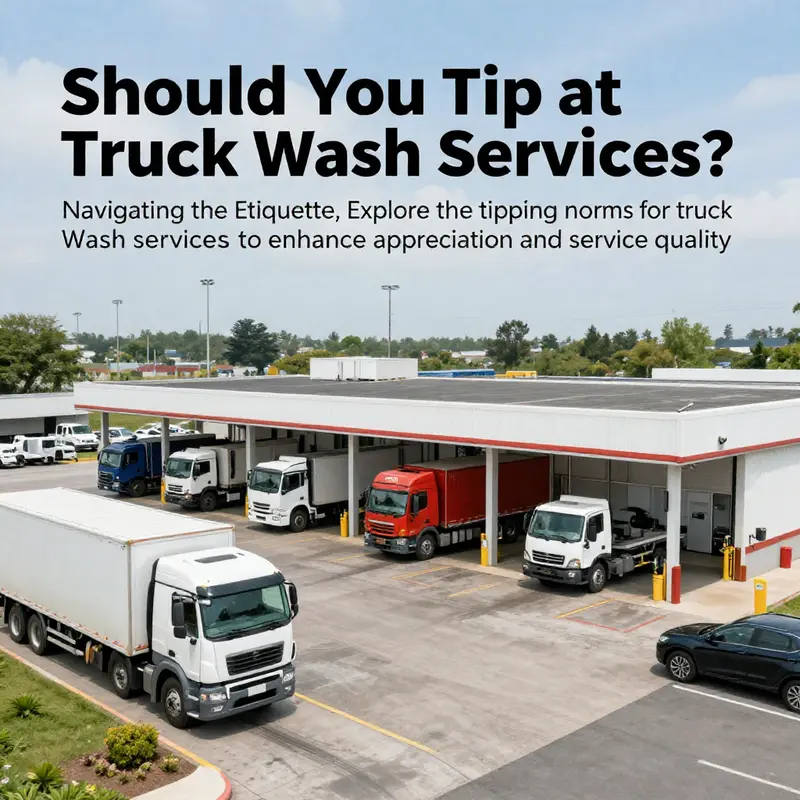
Tipping at truck wash services is a nuanced consideration that fleet managers, trucking company owners, and construction supervisors must navigate. Understanding the custom of tipping, especially in the context of mobile services and varying service types, can have significant impacts on service reliability and quality. This article delves into the expectations around tipping at truck washes, presenting insights into mobile truck washes, self-service options, and the broader implications of this practice on service culture. Each chapter will illuminate specific areas, helping you make informed decisions that reflect your appreciation for the work involved.
Gratuity on the Road: Decoding Tipping Etiquette for Truck Wash Services

When drivers ask whether they should tip at a truck wash, the answer isn’t simple. There is no universal rule. Norms shift with service type, location, and the shop’s business model. Some customers view tips as a courtesy for a job well done. Others see the posted price as covering labor and materials. The result is a flexible guideline rather than a rigid rule. In practice, tipping tends to depend on whether the service was basic and quick or thorough and labor-intensive. The landscape becomes more nuanced the moment a crew brings the wash to a yard or highway site. Mobile services carry a different rhythm than in-shop or self-serve bays, and the dynamics of tipping reflect that rhythm. No matter the setting, the central question remains personal: did the crew go above and beyond the ordinary, and does the value of that extra effort justify a gesture of appreciation?
For mobile truck wash services, the etiquette matrix grows more explicit. These crews perform labor-intensive tasks on large vehicles, often in spaces that constrain movement and require practical, physical scrubbing. In many cases, tipping 10–20 percent of the total service cost is a common expectation, mirroring the tipping norms for thorough car detailing. If a wash costs $100, a tip of $10 to $20 signals appreciation for the extra labor needed to remove stubborn road grime, tar, or contaminants from undercarriages and tight crevices. Yet this is not a universal rule; some operators incorporate labor into their pricing and rely on wages rather than gratuities to compensate their staff. The tipping decision is thus a personal one, grounded in the perceived value of the service, the technician’s attentiveness, and the extent of the effort involved. A well-executed on-site wash that eliminates downtime for the fleet and returns a truck to service more quickly can feel worthy of a tip, while a routine rinse may not.
In contrast, self-service or express truck washes—where the customer handles much of the cleaning—present a different tipping culture. Attendants in these settings may assist with select add-ons, such as vacuuming interiors, window cleaning, or helping reposition the vehicle for a thorough exterior cleanse. In such cases, a small cash tip of $2–$5 is often appreciated but not expected. Customers who perform most of the cleaning themselves typically do not encounter an automatic gratuity expectation in these environments. Some payment screens offer optional gratuity prompts, appearing much like prompts in quick-service or hospitality contexts. These prompts are best understood as courtesy options rather than mandatory requests. They exist to acknowledge service moments that deserve a reward but do not bind customers to tipping. The distinction between optional prompts and an obligation is essential for customers trying to make sense of the experience across a network of washes with varying service models.
From a broader industry perspective, the cost a customer pays for a wash generally includes the labor and materials required for the service level chosen—basic, express, or deluxe. In such structures, tipping is not a standard element of the transaction. This aligns with guidance from reputable consumer and automotive resources, which indicate that tipping is not customary at commercial car washes, whether automated or staffed. When attendants do go beyond the standard scope—such as dedicating extra time to remove heavy contamination, performing a more thorough interior cleaning, or addressing a specific problem you flagged—a tip may feel appropriate. Yet even then, the gesture remains voluntary, contingent on the quality of the outcome and on your assessment of whether the extra effort warrants extra compensation. The underlying principle is clear: tipping should reflect value, not pressure, and it should be driven by merit rather than expectation.
There is also a practical dimension tied to the wage structure of the business. In many truck wash operations, the price you pay for a service covers labor costs as well as materials. This means tipping should not be viewed as a payment for labor that has already been compensated. However, the real-world experience of drivers and fleets reveals a spectrum of practices. Some facilities operate with wage-led models that minimize or discourage tipping. Others adopt a culture that invites appreciation for exceptional service, especially in high-demand contexts where staff may invest extra time to ensure dimensions of cleanliness that matter most to a customer’s fleet. These cases illustrate how tipping norms emerge from a confluence of service quality, worker compensation, and the competitive dynamics of the wash market.
A crucial factor shaping tipping behavior is the autonomy customers feel in the transaction. In a fast-luelike, automated bay, the interaction can feel transactional and compact, leaving little room for discretionary tipping. In on-site mobile services, the encounter is more personal, with technicians arriving at a location and often explaining their approach, moving around a large vehicle, and sometimes removing stubborn residue that requires calculated effort. In those moments, many customers experience a sense of readiness to acknowledge genuine skill and effort with a tip. Still, the decision remains personal and situational. For a fleet manager or an owner-operator, the choice to tip can also reflect broader relationships with service providers—whether a single visit resolves a problem, whether the crew arrives on time, or whether the technician offers clear communication and a transparent, safe workflow in a complicated workzone.
Within this landscape, it is helpful to acknowledge how tipping practices intersect with customer feedback and business strategy. Tipping, when offered, teaches staff that customers notice and value specific behaviors—extra time spent protecting the vehicle’s trims, careful removal of heavy grime from difficult angles, or a thorough interior job that muffles years of road dust. The social signaling aspect of tipping reinforces a culture of workmanship and attention to detail. Conversely, a lack of tips may reflect cost sensitivity in the customer base, a perception that labor is adequately compensated by the base price, or simply a lack of awareness about what differentiates a high-quality result from a run-of-the-mill wash. The result is a subtle but real cue: the tipping practice can influence staff morale and the perceived value of the service, even if it does not alter the formal price or the official policy.
Behind the curtain of these everyday decisions lies the practical management of facility operations. A well-run truck wash facility controls for throughput, safety, equipment maintenance, and staffing levels, while also safeguarding the customer experience. These operational realities shape, in turn, how attitudes toward tipping develop and are communicated. A facility that emphasizes consistent, reliable outcomes and clear expectations may minimize tipping as a financial variable, while a shop with a culture of pride in meticulous work may leave more room for discretionary tips as a form of recognition. In any case, the tipping conversation is inseparable from the broader discussion of service quality and customer value.
In navigating these dynamics, readers may pursue a balanced approach. If the service meets or exceeds your expectations and the crew has taken extra steps to address a stubborn issue or to protect sensitive components of the vehicle, a modest tip can express gratitude for specialized effort. When tipping, cash remains a widely preferred method because it reaches staff without processing fees. If digital tipping is your only option, consider it as a supplemental gesture that reflects the level of service provided and the degree of satisfaction you feel after the job is completed. Yet even here, the tipping choice should be intentional and proportionate to the work performed, not a reflexive add-on.
For readers seeking deeper context on how tipping interacts with the business of truck washing, it helps to consider the governance of operations and the people who deliver the service. A facility that prioritizes strong leadership, consistent training, and clear standards for performance often frames tipping as a potential acknowledgment rather than an obligation. You can explore deeper considerations of facility management for truck wash businesses through resources that discuss operational best practices and people-focused leadership. facility-management-for-truck-wash-businesses. This link provides context on how facilities structure service levels, staffing, and customer interactions, illuminating why tipping is not baked into every transaction and how some teams use gratuities sparingly to reward standout effort.
From the broader car-care ecosystem, the tipping conversation remains nuanced. Guidance from trusted automotive resources consistently points to tipping not being customary at car washes, whether automated or staffed. When a technician performs more intensive interior cleaning or addresses a specific concern you raised, a small gesture can be appropriate, but it is optional. The central message is that tipping is a signal of value and appreciation—not a compulsory element of the transaction. The industry’s overarching aim is to deliver trustworthy, high-quality outcomes that keep fleets on the road, and tips, when given, should reinforce those outcomes rather than becoming a fixed expectation.
As fleets grow and maintenance demands evolve, tipping norms may shift again, especially for mobile units offering express, white-glove, or highly customized cleaning services in the field. In such scenarios, tipping toward the higher end of the 10–20 percent range may be justifiable if the service eliminates downtime, solves a pressing problem, or delivers results beyond what the routine wash would achieve. For stand-alone washes, the tipping question remains a quiet undercurrent—present for those who value the extra care, but not mandatory for everyone. In short, tipping etiquette at truck washes remains adaptive and situational, rather than a universal rule.
Ultimately, the question “Are you supposed to tip at truck wash?” resolves into a flexible guideline anchored in service setting, job difficulty, and the crew’s demonstrated care. The optimal approach is to assess the context: mobile on-site service, self-serve bays, or fully staffed facilities each carry distinct expectations. If you decide to tip, let it reflect appreciation for effort and outcome, not obligation. This flexible stance allows the customer to reward genuine excellence while preserving a fair, transparent price structure for everyone involved.
Tipping on the Go: Decoding Gratuity Expectations in Mobile Truck Wash Services

When fleets call for a mobile truck wash, the scene shifts from a fixed site where staff operate in a familiar environment to a roving team that arrives at your location, often under tight schedules and varying weather. In this setup, the question of tipping surfaces alongside the mechanics of service delivery, pricing, and expectations. The broader industry has long treated gratuity as a cultural signal of appreciation, but mobile truck wash services complicate that intuition. The pricing you pay for a mobile wash is typically designed to cover the entire cleaning process, including labor, equipment, travel, and materials. In many professional service sectors, a single bundled price is calculated to reflect a complete job, leaving little room or expectation for additional gratuity. Yet, the reality on the ground varies by region, company policy, and the level of service delivered. Some fleets observe tipping as a courtesy for standout effort, while others adhere to a no-tipping norm because the price already accounts for the crew’s work. This chapter moves through those dynamics with care, acknowledging the nuances without overgeneralizing what should happen in every circumstance.
The core distinction to grasp is that mobile truck wash work is a professional service. Unlike food and beverage settings, where tipping is a consistent social norm tied to perceived service care, mobile washing sits in a realm of contract labor, travel logistics, and specialized equipment. The technicians are trained to execute large-vehicle cleaning tasks, often involving high-pressure washing, degreasing, brushing, and sometimes hand detailing in hard-to-reach areas. They bring their own tools, carry out work on location, and coordinate with you to minimize downtime. In this context, the fee you pay is intended to remunerate the entire cleaning cycle: assessment, access, transport, wash, rinse, dry, and any targeted detailing. When a price tag is published for a mobile wash, it signals an offer of a complete service commitment rather than a per-task bill with variable lines for labor. From this perspective, tipping is not a formal expectation in the same way it might be in a restaurant or other consumer service industry. An important corollary is that tipping policies are not uniform across firms or regions, and the way a company frames their pricing can influence how customers perceive gratuity.
Even as the pricing architecture tends to reduce the expectation of tipping, there is room for discretionary gratitude. Some operators encourage customers to treat gratuity as a reward for extraordinary effort or unusual circumstances. If the service includes heavy manual detailing or if the crew spends significantly more time on your vehicle due to stubborn grime or tar, a tip can be a practical acknowledgment of additional labor. The decision to tip then becomes less about fulfilling a social script and more about recognizing the value of an above-and-beyond performance. In such moments, many clients favor a cash tip because it ensures the full amount goes directly to the crew, free from processing fees or administrative deductions. This practical preference aligns with what workers themselves often report: cash gratuities tend to be the most straightforward, immediate form of appreciation.
Within the broader landscape of tipping norms, there is a spectrum. For some operators, tipping is simply not expected because the pricing model already accounts for labor and travel. For others, especially when a mobile wash includes a meticulous exterior detail plus an interior vacuum, window treatment, and carpet care, a modest tip becomes a meaningful signal of satisfaction. If you are unsure, a good approach is to observe the service dynamic first. If the crew communicates clearly about the scope of work, arrives on time, stays on schedule, and handles tricky spots with care, that is often a sign that you have received professional service at a high level. In those cases, tipping is a personal choice rather than a mandate. And if you choose not to tip, you can still demonstrate appreciation through a positive review, a quick word of thanks, or a note to the supervisor about the crew’s reliability and workmanship.
When we break down practical guidelines, the numbers you might consider are not arbitrary. If the wash price is around a standard figure, a tip in the range of 10 to 20 percent is frequently cited in many detail-oriented service contexts. The logic mirrors car detailing norms, where a thorough job might warrant a more generous gratuity. With a mobile truck wash, a tip of 10 to 20 percent can be reasonable for substantial, time-intensive work, such as heavy removal of road grime, paint overspray, or the pinpoint cleaning of stubborn contaminants. Translating this to dollars, if a mobile wash costs about 100 dollars, a tip in the ballpark of 10 to 20 dollars is considered appropriate when the service goes beyond a routine cleaning. For some fleets and regions, this 10 to 20 percent standard may be more flexible, especially when the company has explicit non-tipping policies or when travel and on-site setup are logistically demanding. The central message remains: tipping should correlate with the value delivered rather than with a fixed cultural expectation.
If the service you choose is more of a self-service or express model, tipping dynamics shift again. In many express or self-serve truck wash setups, tipping is not expected unless an attendant goes beyond what is typical—such as assisting with vacuuming, wiping windows, or helping with the interior after you have already started the process. In those cases, a small cash tip of 2 to 5 dollars is appreciated but not required. This contrast helps fleets avoid paying a premium for routine services while still allowing for a channel to recognize helpful extras. In practice, you may encounter a nuanced middle ground: a company might incorporate a no-tipping stance for the main wash while encouraging discretionary tips for ancillary services or for personnel who provide hands-on assistance in unexpected ways. The key is to align your action with what you feel is fair in light of the effort and outcome you experienced.
A practical way to approach tipping is to consider the service context and the expectations set by the firm. If you have a contract with a mobile wash provider, read the policy or ask a supervisor about gratuity expectations. Some fleets treat gratuity as part of client relations, while others keep tipping separate to maintain pricing clarity. In this regard, the culture surrounding tipping can reflect broader leadership choices in the organization. For fleets seeking to foster a service-forward culture, the leadership may emphasize clear communication about what is included in the price and what constitutes an extra beyond the scope. That clarity can reduce confusion for customers and ensure the on-site team feels their work is valued in proportion to the effort—and not merely rewarded by a random social custom. For readers seeking practical inspiration on how leadership shapes service culture at the ground level, the discussion around facility management for truck wash businesses offers relevant perspectives on how operations and people practices converge to produce consistent customer experiences. Facility management for truck wash businesses.
The reality is that tipping is less about obligation and more about context. If the weather, traffic, and travel time conspire to shorten the crew’s window, or if your truck is exceptionally dirty and required more labor than a standard wash, a tip can be a simple way to acknowledge that extra mile. Conversely, if the team is punctual, efficient, and performs a routine service exactly as described, a tip may feel optional or unnecessary. Yet even in cases where tipping seems inappropriate, you can still reinforce good service through other channels: a detailed positive review, a quick note to the company about the crew’s professionalism, or a recommendation to colleagues who manage fleets. These gestures contribute to a culture where good service is noticed and valued, whether or not tipping is part of the accepted practice.
For those who want a concrete, easy-to-remember framework, consider this approach: assess the scope of work, the time invested, and the level of effort. If the job included unexpected challenges, a higher tipping range may be warranted. If the service was straightforward and completed on schedule, a smaller tip or no tip is perfectly acceptable. If you choose not to tip, you can still convey appreciation through formal feedback channels or a quick thank-you note that acknowledges the crew’s professionalism and reliability. In all cases, avoid tipping decisions that could create discomfort or awkwardness for the crew or the customer. Clear communication and respect for the staff’s time and workmanship should guide how you express gratitude.
As you weigh your options, remember that tipping is not the sole or even primary measure of service quality. The ultimate goal is a clean, well-presented vehicle that meets the expectations you set before the service began. The most reliable predictor of future service quality is how well the company supports its staff, trains them for on-site efficiency, and ensures fair compensation. In the relevant literature and practice discussions around industry operations, these factors often weigh more heavily in the long run than any single gratuity. For readers who want to see how these systemic factors play out in real-world operations, the broader discourse on industry practices and fleet management provides useful context, illustrating how leadership, staffing, and workflow design influence client outcomes. See external resources for a broader view of the mobile truck wash landscape, including specifications, types, and applications at Understanding Mobile Truck Wash: Specifications, Types, and Applications.
In sum, tipping at mobile truck wash services is not universally expected. It is a nuanced choice that hinges on the scope of work, regional customs, company policy, and the satisfaction with the final result. If you do decide to tip, a guideline of 10 to 20 percent can be appropriate for thorough, time-intensive cleanings, translating roughly to a $10–$20 tip on a typical $100 service. For express or self-service formats, a tip of 2–5 dollars is a gentle acknowledgment when an attendant provides an extra assist. Above all, communicate with the crew or their supervisor if you are unsure of the policy, and consider leaving a review that recognizes the crew’s professionalism and performance. This approach preserves the integrity of the service relationship while allowing customers to express gratitude in ways that feel natural and fair. For those who wish to explore how service culture and operations intersect more deeply, a practical route is to examine facility management concepts tailored to truck wash environments, where leadership decisions shape everyday customer experiences and staff engagement. Facility management for truck wash businesses.
External resource for broader context: Understanding Mobile Truck Wash: Specifications, Types, and Applications at https://www.truckwash.com/mobile-truck-wash-guide
Tipping On the Go: Navigating Norms, Service Levels, and Etiquette at Truck Washes
Tipping on the move is less a fixed rule and more a social signal that the people responsible for cleaning a vehicle the size of a small building deserve recognition for their effort. In the trucking world, a wash can involve more than a quick rinse. It often means careful hand work, sometimes a careful interior wipe, and the kind of labor that grows from hours of scrubbing, rinsing, and detailing large surfaces. The question, are you supposed to tip at a truck wash, does not have a single, universal answer. It does, however, come with clear guidance if you read the service context, observe what others do, and understand what the attendant has actually contributed to the result. This is especially true when the service includes manual cleaning or detailing, where the human touch makes the difference between a clean cab and a truly thorough restoration of appearance and protection for miles ahead.
For mobile truck wash services, where a team comes to you at the yard or on the road, tipping has become an expected courtesy in many regions. The standard range of 10% to 20% of the total service cost mirrors the etiquette used by car detailers and other on-site automotive services. If the bill comes to $100, a tip of $10 to $20 is not just polite, it reflects the extra time and specialized effort involved in cleaning an entire truck, often a vehicle that dwarfs a standard car in size, grime, and resistance to cleaning. When you consider the sheer scale of a tractor-trailer or a heavy-haul rig, this acknowledgment takes on tangible value for workers who may be spending multiple hours at a single location, maneuvering around wheels, undercarriages, and hard-to-reach corners that demand patience and skill. In practice, the tip should scale with the degree of difficulty or the extra services performed. A routine exterior wash might sit toward the lower end of the range, while interior detailing, wheel restoration, exhaust polishing, or waxing can push the tip toward the higher end.
In the modern truck wash ecosystem, digital payments have become a fact of daily life. Many facilities now use payment terminals or mobile apps that include a tip option at checkout. The presence of a digital tipping prompt is more than a convenience; it is a practical barometer of local norms. If a screen invites you to add a tip, it commonly signals that tipping is expected or at least customary in that location. The industry has observed this trend for several years, and recent guidelines from 2025 reinforce the point: where a tip option exists on the checkout interface, customers should view it as part of the service agreement rather than an optional add-on. This digital cue helps both customers and staff align expectations, especially in fast-paced settings where conversations about tipping can feel awkward after the fact. Yet it remains crucial to base tipping on service quality and workload rather than on a fixed ritual, because not all washes carry the same level of effort, and not all attendants have the same impact on the final result.
That said, tipping is not a universal requirement. In what you might call the “self-service or express” truck wash scenario, where customers perform most of the work and an attendant only assists with minor tasks, tipping is usually not expected. If an attendant does help with a specific task—such as vacuuming interior corners, wiping windows, or delivering extra towels—a small cash tip of roughly $2 to $5 is appreciated, though not mandated. In these settings, the emphasis shifts from a service-from-people model to a task-and-access model, so the tipping expectation naturally shrinks. When there is no hands-on labor beyond directing the wash, there is less additional value to reward, and tipping remains a discretionary gesture rather than a standard practice.
A separate but important strand in this discussion is the size and condition of the vehicle. Big, heavily soiled trucks, with years of exposure to road grime, tar, and exhaust residue, typically demand more hands-on effort. Detailing the wheels, cleaning under the chassis, and addressing stubborn stains can require more time and a higher skill level than a light rinse. In these cases, a tip of 15% to 20% may be entirely appropriate to reflect the greater labor input. If the attendant has gone beyond the expected scope—performing interior detailing or applying protective coatings—the tip should be adjusted upward accordingly, recognizing that higher-quality outcomes often require more precise, time-consuming work. Conversely, a routine exterior wash that leaves the vehicle with minor smudges or streaks could justify a tip closer to the lower end of the range, or even a small tip when the service is performed especially quickly and well.
The factors that influence tipping are not limited to labor alone. Time on site, the truck’s size, the complexity of the wash, the weather, and even the level of customer communication all shape whether a tip is appropriate and how large it should be. Trucking operations typically operate on thin margins and tight schedules, so workers’ livelihoods can hinge on a steady flow of tips that reflect consistent, dependable service. An orderly, timely, respectful interaction—clear explanations of what will be done, realistic timelines, and careful attention to sensitive areas like chrome finishes or painted surfaces—often translates into higher tips because customers feel they have received a premium level of care. In other words, service quality is the currency that tips convert into more predictable, reliable compensation for the people who keep fleets looking professional.
In many facilities, you can also observe tipping norms by paying attention to the floor conversations and the way the staff responds to paying customers. If you notice others leaving a tip after a thorough interior wipe or after a meticulous exterior/detail, that behavior often signals that the staff expect or appreciate similar recognition. When you see a digital tip prompt during checkout, you gain a practical cue that tipping is standard. In such cases, the decision becomes easier: you can align your tipping with the observable norms and, when in doubt, lean toward generosity if the service was clearly above the baseline. This approach reduces guesswork and fosters a positive service culture, which is essential in any service industry but particularly impactful in the heavy-duty sector where professional pride and customer satisfaction are closely tied to repeat business and fleet productivity.
For operators and fleet managers, tipping policies are more than just etiquette. They influence staff morale, retention, and the overall quality of service. Transparent communication about tipping expectations can prevent misunderstandings and set clear standards for what constitutes acceptable performance. Some operators publish these practices in internal guidelines or on facility management pages to help customers understand what to expect. For example, a page dedicated to service etiquette and tipping norms might frame the expected tip as a percentage range tied to the level of service, while also clarifying when a tip is optional. Such guidance helps ensure consistency across a network of service providers and supports crews who invest in getting the job done right, even under time pressure. For readers who want to explore how tip culture fits into broader operational practices, a related resource on facility management for truck wash businesses offers deeper insights into staff training, scheduling, and customer service protocols. facility-management-for-truck-wash-businesses
All of this underscores a simple practical rule of thumb: tipping is a courteous acknowledgment of labor, not a mandatory revenue stream. When a service attendant is involved in cleaning or detailing, treat the tip as a reward for skill, effort, and the tangible improvement in the vehicle’s appearance. When the encounter is more hands-off, base your decision on whether an attendant performed any extra task or provided a helpful service beyond the routine wash. Whether you’re tipping 10%, 15%, or 20%, the amount should reflect both the work performed and your satisfaction with the final result. And if you’re unsure, a candid, respectful conversation with the attendant about what was done and whether a tip is customary in that location can clarify expectations without creating awkwardness. In the long run, the goal is to support a service culture that values workmanship, treats drivers and their trucks with respect, and recognizes the human effort that keeps fleets on the move day after day.
For readers seeking a broader external perspective on tipping practices across car washes and similar services, an external resource offers practical guidance on tipping etiquette in this sector. It highlights typical ranges, situational adjustments, and considerations for different service levels. This additional context can help you calibrate your tipping decisions to be fair and consistent, regardless of the setting. External resource: ConsumerAffairs tipping guide
When Silence Keeps the Suds: Navigating Tipping in Self-Service Truck Washes
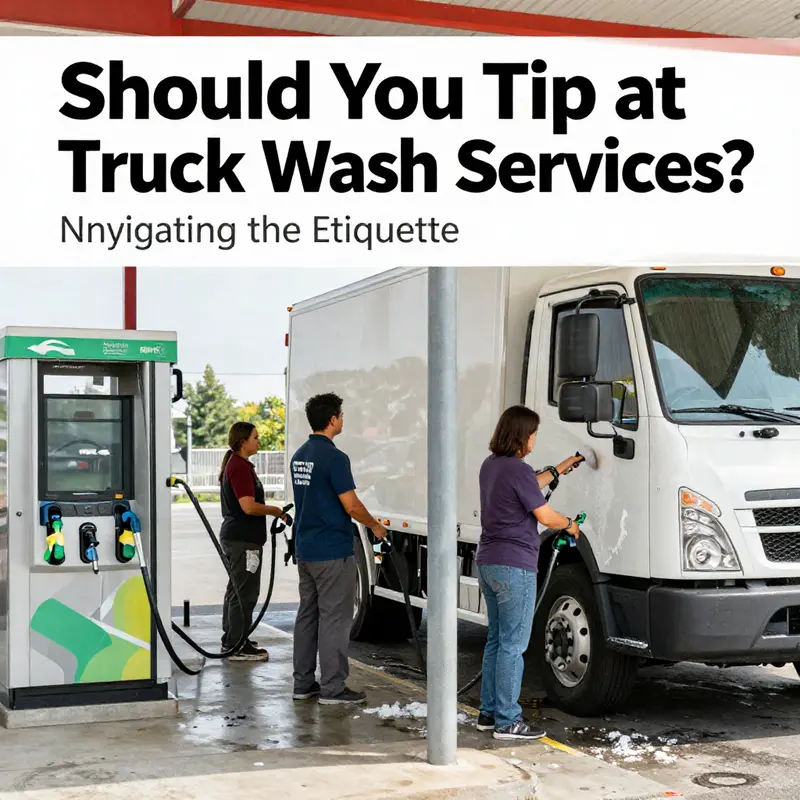
Self-service truck washes exist on a different axis from full-service bays. They lean into automation and customer-driven control, inviting truck owners to run the machines, set the wash cycle, and monitor the process from start to finish. In many markets, this model deliberately reduces the role of human labor during the washing phase. The practical upshot is that tipping—the ritual of rewarding attentive service—does not fit the standard flow of a self-service interaction. A contemporary understanding, grounded in the discipline of self-service coin-operated car wash systems, notes that these setups are designed to be entirely automated. The customer operates a touchscreen or a simple keypad, and at no point is a staff member required to engage with the vehicle beyond occasional supervision or routine maintenance tasks performed by the operator. In this light, tipping is not part of the standard customer experience; there is no expectation that a tip should accompany a self-operating wash cycle. The result is a straightforward, transparent interaction in which the customer pays for the service and completes it largely without direct labor involvement from employees.
Yet the story doesn’t end there. Reality at the curb can diverge from the ideal model for a number of pragmatic reasons. First, even within a self-service framework there can be moments when staff intervene briefly. If a customer seeks help with an unusual snag—say the wash cycle needs a restart, a machine is misreading a card, or a nozzle is clogged—an attendant may step in to troubleshoot. If that assistance goes beyond the basics, or if the attendant helps with add-ons that the system doesn’t autonomously execute, a discretionary tip may be appropriate. The guidance from recent industry notes keeps this nuance simple: tipping is generally not expected, but a small token can be appreciated when extra human effort is involved. The emphasis remains on the standard workflow, but the door is open for polite recognition if someone goes beyond routine support.
From a customer’s perspective, the clarity of a self-service wash is valuable. You know exactly what you’re paying for, you control the pace, and you assess the results on your own terms. This autonomy is a cornerstone of the self-service approach. It also helps explain why tipping is not a built-in convention here. The typical car-washing landscape around self-service shops prizes efficiency and self-reliance. When you remove labor from the core washing process, there’s less of a backdrop of service moments that would traditionally merit a tip. This is not to disdain the role of staff in any broader sense; it simply marks a different service model. The absence of a continuous, hands-on cleaning phase means there is less opportunity for a tip to align with a clearly perceived value exchange.
That said, the conversation about tipping in self-service truck washes gains texture once you consider nearby tasks and ancillary services. It is not unusual for operators to offer optional add-ons to enhance the vehicle’s appearance—automatic wax coats, interior deodorizing, or targeted detailing performed with the help of staff. If you opt into such services and a staff member assists with parts of the job that the automated system cannot complete, it is reasonable to acknowledge that extra effort with a modest gratuity. A small cash tip is often preferred for these moments, because it goes directly to the individual who provided the added service without incurring processing fees that could dilute the value of the tip. In such cases, common sense and courtesy should guide your decision, along with a nod to local norms and the specific service quality you received.
To bring this into a practical frame, consider how a customer experience evolves in a typical self-service setting. You drive up, select the wash type, pay, and begin. The time you save and the control you maintain are tangible benefits. If, during the process, an attendant intervenes to guide your vehicle into the bay, adjust a spray setting to address a stubborn stain, or help with an add-on that requires manual use of a product, that is a moment you might weigh with a small tip if you felt the service justified it. Conversely, if the attendant is merely performing routine maintenance like refilling soap or clearing a line, without any direct help to you, then the argument for tipping becomes weaker. The principle is straightforward: tipping should reflect a specific, noticeable service interaction rather than a generic expectation tied to the environment.
This is where the broader operational context comes into view. Behind the scenes, operators invest in facility management that shapes the customer experience. Lighting, equipment uptime, and the presence of staff to answer questions or provide basic assistance all contribute to how customers perceive value. When a customer encounters a smooth, well-maintained setup, the experience can feel seamless and efficient, reducing the perceived need for tipping. But when a customer encounters a hiccup—an unfamiliar control, a timing misalignment, or a request for a minor intervention—the response from staff can tilt the balance. If that response includes a quick, courteous help with an add-on, a small gratuity can be a meaningful acknowledgement. It’s important to remember that the choice to tip remains discretionary and context-dependent, not a universal rule.
In this sense, the self-service model is not merely about removing labor; it’s also about clarifying expectations. Operators who communicate clearly about what the self-service entails set the right frame for customers. A transparent description of the process reduces ambiguity and helps customers decide whether to engage with add-ons. It also helps distinguish between a purely automated experience and a hybrid interaction where staff support exists as a supplementary option. For readers seeking a concrete example of how service-oriented thinking intersects with operational design, one can reflect on resources that discuss facility management and the broader ecosystem of truck wash businesses. The idea is not to monetize every moment of service but to recognize when human intervention meaningfully enhances value. In practical terms, that means tipping remains an exception rather than a rule for self-service, while still preserving the courtesy to reward genuine extra effort when it occurs.
For readers who want a more formal framework to guide decisions in the field, consider the operational lens offered by resources focused on facility management in truck wash settings. There, the emphasis is on how well the space supports both the customer and the staff, how effectively the equipment operates, and how responsive the team is to non-routine needs. When a customer leaves a self-service wash with a sense that an attendant proactively helped optimize their experience or completed tasks that the customer could not perform, a modest tip becomes a gesture of appreciation that aligns with the interaction. In contrast, if the interaction remains entirely automatic and the attendant’s role is limited to routine monitoring, tipping should be reserved for extraordinary service rather than as a reflexive courtesy. To explore this further within the industry’s operational discourse, you can read about facility management for truck wash businesses.
facility management for truck wash businesses.
Even with a clear rule of thumb, regional and organizational variation matters. Some operators publish explicit tipping policies, while others rely on informal norms or local customs. In some places, a small tip for courteous assistance with an add-on may be embraced as a common courtesy; in others, the policy is to avoid tipping altogether for self-service. The best practice is to observe and adapt. If you notice staff routinely going beyond the basics—offering a quick wipe-down on a stubborn spot, guiding the vehicle into a tricky bay with care, or confirming you’re satisfied with the result—consider a token of appreciation. If the interaction is simply hands-off digital automation with no human touchpoints beyond payment, it is reasonable to conclude that tipping is unnecessary. The key is sensitivity to context and a commitment to fair, respectful behavior toward workers who keep the facility functioning smoothly.
The broader takeaway, then, is that tipping at self-service truck washes is not a one-size-fits-all prescription. It is a measured practice grounded in the actual service moments you experience. The default posture should be no tip, reflecting the automated, customer-driven nature of the service. Yet when a staff member adds value through targeted interventions or through assistance with value-added add-ons, a small tip can be an appropriate form of recognition. The emphasis remains on clarity, not compulsion, with the ultimate aim of maintaining a smooth, efficient operation that respects both customer autonomy and the people who support the service when it matters most. For those who want to broaden their understanding of self-service systems in the wider automotive cleaning landscape, relevant external insights can be found in contemporary studies of coin-operated car wash technology, such as the guide on self-service systems that contextualizes how autonomy and human involvement interact in modern facilities. You can explore more here: Understanding Self Service Coin Operated Car Wash: Technical Details, Material Grades, and Industrial Uses.
Tipping at the Truck Wash: Etiquette, Value, and the Quiet Change in Service Culture

In the world of trucking, the wash bay often sits at the edge of automation and hands-on care. Machines handle the bulk of the cleaning, scouring chrome and mud off steel with relentless efficiency. Yet the most meaningful moments—those that leave a lasting impression on drivers, fleet managers, and the people who labor behind the soap and steam—are the times when a human enters the scene to lift, polish, or restore. That is where tipping, as a practice, reveals the evolving relationship between customer expectations and worker compensation. The question, Are you supposed to tip at a truck wash? sits at the crossroads of practicality, culture, and fairness. To answer it in a way that respects both the service recipient and the people who do the work, it helps to parse the landscape of truck wash offerings and the reasons tipping emerges in some contexts and not in others.
The truck wash ecosystem ranges from fully automated bays to fully hands-on detailing, and somewhere in between lies a spectrum of service models that shape tipping norms. In many facilities, the primary wash is machine-driven. The vehicle travels through conveyor systems, spray arches deliver the bulk of the cleaning, and the operator’s contribution may be minimal beyond initial setup, rinse cycles, or the occasional wipe-down after the main wash. In those environments, tipping is not typically expected. Consumers tend to view the process as a standardized service, similar to how many self-serve stations feel. When the work is largely mechanized, any human touch is discrete and episodic rather than continuous, and the question of tipping loses some of its urgency.
But when a truck wash offers or includes manual cleaning, interior detailing, waxing, or other personalized services, the calculus shifts. Here, the same norm that governs tip etiquette in other service industries cars, boats, or higher-end detailing begins to apply, albeit with drivers who operate large vehicles worth substantial investment. If an attendant spends meaningful time on your truck, if you receive careful vacuuming of the cab, meticulous interior cleaning, or a thorough wax and polish that requires careful handwork, a small tip becomes a thoughtful gesture of appreciation. The range often cited in this space is modest: a dollar or two for a routine courtesy, or a more generous gesture if the service exceeded expectations or required extra labor. In many cases, a tip in the range of 1–5 signals acknowledgement of careful work, while anything beyond that depends on the scope of the job and the vehicle’s condition.
The mobile-truck-wash model adds another layer to the discussion. When professionals arrive at a fleet site or a driver’s location, the labor becomes more tangible and the relationship between service quality and tipping more direct. The on-site team often handles more specialized tasks, from engine bay blowouts to detailed interiors, and they devote time to conditions that static bays may not routinely address. In this context, a tip of 10–20% of the total service cost is common, mirroring car-detailing norms. If a site visit totals 100 dollars, a tip of 10 to 20 dollars is a reasonable nod to the labor and expertise involved. The percentage-based approach helps align the tip with the value delivered, particularly when the crew has to maneuver around a mobile setup, handle heavy equipment, or work in less forgiving weather.
Where tipping is less expected is in self-serve or express truck washes, where the customer does a significant portion of the work and attendant assistance is sporadic. If an attendant merely guides vehicles into the bay, answers questions about the wash settings, or assists briefly with vacuums or window cleaning, a modest tip—typically 2–5 dollars—can be appreciated but is not required. In these settings, tipping acts more as a courtesy for a bit of extra help rather than compensation for a complete service. Cash remains the preferred medium for tips, since service staff often receive tips directly and without processing fees that can erode the value of a digital tip.
Beyond these practical guidelines lies the broader question of how tipping sits within the evolving labor landscape of the service industry. The research landscape notes, in both Western and global contexts, that tipping cultures are undergoing reassessment. The traditional expectation—tip generously for good service—still holds in many blue-collar contexts, but there is growing awareness that wages, scheduling, and benefits must be part of the equation. Some high-end wash facilities and luxury vehicle-care centers have begun presenting tipping as a voluntary add-on at checkout. In those instances, the policy is presented as an optional gesture rather than a requirement, acknowledging that some customers prefer to compensate for extraordinary service, while others may rely on a straightforward price-for-service model. This shift does not erase the value of tipping; it reframes it as an optional signal of satisfaction, rather than a tacit wage supplement for frontline workers. The balance between tipping culture and wage policy matters, particularly in fleet operations where repeat service contracts build trust and long-term relationships with providers.
From a fleet-management perspective, tipping intersects with cost management, worker morale, and service quality. Operators who rely on third-party wash partners should consider how tipping practices influence staff motivation and turnover. If an on-site crew earns a meaningful portion of their income from tips, incentives tied to quality and efficiency can be particularly impactful. Conversely, if a shop uses a set wage structure independent of tips, customers may perceive the cost of service differently, even when the end result—clean, well-presented equipment—remains constant. In practice, establishing transparent pricing and clear expectations about service scope helps reduce ambiguity about when tipping is appropriate. It also underscores that tipping remains a discretionary gesture, not a contractual obligation.
For readers and readers who move between multiple service contexts—fleet dashboards, maintenance bays, and mobile visits—the decision to tip becomes a case of aligning expectations with the level of service delivered. If a crew spends extra time on a stubborn buildup, if weather conditions complicate the cleaning process, or if a driver has a unique, nonstandard request that requires careful attention, tipping in the range of a few dollars to reflect that extra effort becomes a meaningful acknowledgment. In contrast, when the job is routine, well-executed, and completed quickly with minimal human intervention, a tip is less customary. In such moments, the best course is to rely on the posted pricing and the perceived value of the service.
The cultural moment surrounding tipping also influences how truck wash providers present their services. Some operators actively educate customers about the value proposition of thorough, human-assisted cleaning—how careful interior detailing and surface restoration can extend the life of fleet assets, improve resale value, and reduce downtime caused by unsightly, neglected equipment. At the same time, many facilities emphasize efficiency and throughput, highlighting the time-saving benefits of automated washing to meet tight maintenance schedules. When these narratives converge, tipping becomes less about generosity and more about signaling appreciation for workmanship that aligns with fleet goals: efficiency, attention to detail, and professional care that respects the truck as a critical asset.
To deepen the practical understanding of this topic, readers may explore how facilities are evolving to balance tipping with wage structures and service quality. For instance, reading about facility management for truck wash businesses offers a comprehensive lens on how shops organize workflows, staffing levels, and customer communications to deliver value while maintaining fair compensation for workers. This perspective helps reconcile personal tipping choices with a larger picture of how service ecosystems sustain themselves and improve over time. For more on these operational considerations, you can explore resources that discuss facility management for truck wash businesses. facility management for truck wash businesses.
As with many aspects of service culture, the tipping question is seldom binary. It is a spectrum shaped by service type, labor intensity, customer expectations, and the ethos of the shop itself. When in doubt, observers can use a simple heuristic: if a human technician invests time and care beyond the basics, and the result clearly reflects that effort, a tip is a courteous acknowledgment. If the service is heavily automated with minimal manual intervention, tipping remains optional and context-dependent. In all cases, cash tips retain practical appeal, bypassing processing fees and ensuring the full benefit goes to the recipient.
The broader narrative about tipping at truck wash, then, is not simply about whether to hand over a few dollars. It is about recognizing the way automation and human craft share the workload of vehicle cleanliness, and about aligning those practices with fair labor standards and customer expectations. It is about continuity—between fleet managers who value reliable, consistent cleaning, and the workers who invest skill and pride in every spray, sweep, and polish. It is about the subtle signals we send with a tip, those little acts that reinforce mutual respect in a business landscape that moves quickly and demands high standards.
For readers seeking broader context beyond individual experiences, the evolving guidance around tipping at car washes is being shaped by ongoing discussions in the service industry. A respected media source recently highlighted expert perspectives on tipping in car-wash settings, underscoring that the practice varies with the level of hands-on service and the evolving economics of the trade. This external resource is a reminder that tipping norms continue to adapt as consumer expectations, labor policies, and business models shift over time. External reference: NPR’s expert take on tipping at car washes.
Final thoughts
Tipping at truck washes, whether for manual or mobile services, stands as a significant practice that conveys appreciation for hard work. Understanding the norms for different service types enables fleet managers and truck owners to foster positive relationships with service providers. By recognizing the labor involved in maintaining large vehicles, you can ensure not only compliance with customary practices but also incentivize quality service in the future.