
Accurate documentation of truck washes is essential for compliance and operational efficiency in today’s logistics and trucking industries. Understanding how to properly record truck wash events on Electronic Logging Devices (ELDs) can significantly impact fleet management, maintenance tracking, and regulatory adherence. This article explores critical practices for fleet managers, owner-operators, and supervisors in the construction and mining sectors. Each chapter delves into best practices for using correct statuses and timings, establishing effective documentation practices and compliance strategies, and aligning fleet policies with regulatory requirements, providing a comprehensive understanding of how to efficiently integrate truck washes into ELD logs.
Integrating Truck Wash Activities into ELD Logs
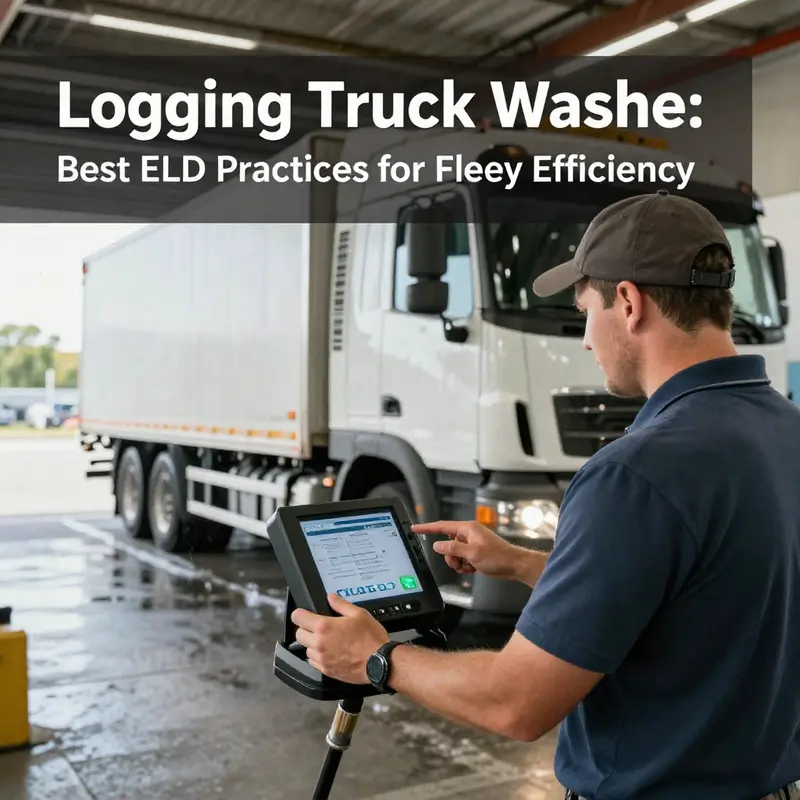
Truck washing is a routine maintenance task, but it must be recorded correctly in the Electronic Logging Device (ELD) to stay compliant with FMCSA regulations.
When a truck drives through an automatic wash, the vehicle is in motion, so the driver should select the “Driving” status and log the exact start and end times of the wash. If the wash is performed while the truck is stationary—such as a manual wash or a detailed cleaning in a wash bay—the appropriate status is “On Duty, Not Driving.” Selecting “Off Duty” or “Sleeper Berth” for a stationary wash is a common mistake that can lead to audit discrepancies.
Accurate timing is essential. Drivers should tap the ELD to capture the moment the truck enters the wash and again when the wash is complete. This creates a precise record that auditors can verify. Many modern ELD systems provide tablet‑based workflows that automatically timestamp these entries, reducing the risk of human error.
While FMCSA does not require a separate maintenance log for washes, many fleets keep an internal log noting the date, time, location, and any observations (e.g., excessive dirt, damage). This supplemental documentation helps fleet managers track maintenance patterns, schedule preventative care, and demonstrate diligence during regulatory reviews.
Company policies may further refine the process. Some operators ask drivers to add a brief note in an auxiliary log or the ELD comment field indicating “Truck Wash” and the facility name. Adhering to these internal guidelines promotes consistency and transparency across the organization.
In summary, proper truck wash logging involves:
- Determining the correct status (Driving for moving washes; On Duty, Not Driving for stationary washes).
- Recording precise start and end times.
- Using ELD features that automate timestamps.
- Maintaining supplemental internal records when beneficial.
By following these steps, drivers ensure regulatory compliance, reduce the risk of fines, and provide valuable data that supports efficient fleet maintenance and operation.
Navigating Truck Wash Documentation on ELD Logs: Bridging Accurate Record-Keeping and Regulatory Compliance
When it comes to maintaining compliance and ensuring operational efficiency, truck washes may seem like an ordinary part of a fleet operator’s daily routine; however, documenting these activities correctly within an Electronic Logging Device (ELD) system is critical to avoid potential misrepresentations in a driver’s Hours of Service (HOS) record. Although the federal mandate is not to log the truck wash as a separate event in the ELD, it is essential that any truck wash activity that intersects with a driver’s duty status is recorded in a manner that accurately reflects the true nature of the activity. This chapter offers an in-depth exploration of how truck wash activities are best managed within ELD logs, outlines best practices for documenting both involved and non-involved wash scenarios, and examines the implications these practices have on overall fleet management. At its core, the discussion highlights a nuanced approach: even if a truck wash does not trigger an explicit log entry, how it is integrated within a driver’s off-duty or on-duty period – including dedicated notes and supplementary records – helps mitigate risks of regulatory penalties while supporting internal accountability.
A key factor in this discussion is understanding the primary function of ELD systems, which are specifically designed to track driving time, location, and changes in duty status. The device’s role is to provide a clear audit trail that regulators can examine in the event of an inspection, so each entry must reflect accurate activity classifications. ELDs segment a driver’s day into several distinct statuses – including Driving, On Duty but Not Driving, Off Duty, and Sleeper Berth – and any activity that does not correspond with these direct classifications requires careful consideration. For instance, if a truck wash is completed during a designated rest period, it naturally falls under Off Duty or Sleeper Berth segments, meaning that no additional effort is needed to log it within the framework of the ELD. On the other hand, if the truck wash is performed while the driver is actively engaging with the vehicle – such as manually scrubbing the exterior or handling cleaning equipment – this activity should be recorded as On Duty, Not Driving. Misclassification by marking the truck wash as a driving activity, even inadvertently, may lead to erroneous data that not only compromises HOS integrity but could also trigger violations subject to steep penalties.
In practical terms, the process of documenting a truck wash begins with the driver selecting the appropriate duty status on the ELD at the moment the wash starts. If the vehicle is being washed while the driver is on break, the correct action is to ensure the status remains in Off Duty mode, thereby signaling that the wash does not contribute to driving or work time. It is important that the transition between statuses is clearly recorded with accurate start and end times; this complete timeline helps provide regulators and internal auditors with definitive evidence of how the driver’s time was allocated. When a driver is actively involved with the cleaning process, however, the time spent should be recorded as On Duty, Not Driving. In these cases, the use of the ELD’s notes or remarks field is strongly recommended. By adding a brief comment such as “Truck Wash – 30 minutes” into the system, the driver creates an additional layer of transparency that can be invaluable during regulatory reviews or internal audits. Such practice reinforces a company’s commitment to compliance while also streamlining processes meant to track routine maintenance activities.
Beyond the act of logging an event in the ELD, effective record-keeping for truck washes also involves maintaining separate documentation parallel to the electronic logs. Fleet operators are advised to establish a comprehensive maintenance log or dispatch sheet where each truck wash is recorded along with other maintenance activities. This additional record might include the wash date, time, location, and even any observations concerning the condition of the truck’s exterior. Such details, though not required by the FMCSA for compliance with HOS mandates, play an important role in internal management practices. Maintaining these separate records can facilitate timely inspections, enable data-driven decisions regarding vehicle upkeep, and help management detect trends that could influence future cleaning schedules or maintenance interventions.
Compliance practices, when executed correctly, become a cornerstone of responsible fleet management. Drivers need to be fully aware of the distinctions between work-related and non-work-related activities. The correct use of duty statuses in the ELD is not only a matter of regulatory precision but also a reflection of professional diligence that underscores a company’s ethos of transparency. For example, when a driver administers a truck wash during what might be otherwise classified as personal downtime, selecting the Off Duty or Sleeper Berth status negates the need for additional logging. Nevertheless, if the truck wash demands that the driver actively participates in cleaning procedures, that period needs to be explicitly allocated as On Duty, Not Driving. Failure to distinguish between these scenarios could lead to an inaccurate portrayal of the driver’s available time and jeopardize overall HOS compliance. In effect, each moment that the ELD records is a snapshot of activity; when those snapshots are blurred by misclassification, they potentially invite scrutiny from regulators who may then penalize mistakes that could have been easily avoided with diligent record keeping.
A further layer of complexity is introduced when internal fleet policies come into play. Many companies have instituted procedures that require the logging of routine maintenance activities, including truck washes, even though these actions are not directly mandated by the FMCSA. By integrating an internal policy that emphasizes consistency in documentation, fleet operators can ensure that every interaction with the ELD is captured with a standardized measure of accountability. This not only reinforces compliance with federal regulations but also contributes to a comprehensive operational framework. For instance, some fleets encourage drivers to use the remarks function to annotate observations about the truck wash process, noting details that might affect the vehicle’s performance or the timing of subsequent maintenance checks. Such practices may organically lead drivers to reflect on their scheduled routines, ultimately reducing the likelihood of errors or oversights. In today’s environment, where technological interfaces are evolving rapidly, the need for detailed and careful manual documentation—used in conjunction with automated systems like the ELD—is more important than ever.
Moreover, the careful documentation of truck wash activities has implications that stretch beyond mere regulatory compliance. In the context of broader fleet management, reliability in recorded data supports proactive maintenance scheduling and can act as an early warning system for potential issues. For example, if records consistently indicate that trucks require frequent washing due to unusually heavy grime or buildup, it might signal the need for a review of facility management practices or the adaptation of cleaning techniques. This dual layer of accountability—combining real-time digital logging with retrospective manual reviews—is reported to have a noticeable positive impact on both fleet longevity and driver satisfaction. Operators can routinely compare documented events against the actual condition of the vehicle, ensuring that the maintenance routines align with both internal benchmarks and external regulatory requirements. The ongoing evolution of these practices underscores the need for fleet managers to invest in both technological systems and training programs that emphasize proper ELD usage. In addition, reading materials on topics such as industry compliance for truck washes can reinforce these concepts while offering practical insights for everyday operations.
The integrative process of documenting a truck wash on an ELD goes beyond the technicalities of record-keeping; it speaks to an ethos of diligent management and proactive risk mitigation. Fleet operators who set clear protocols and ensure that drivers understand the rationale behind each classification are more likely to avoid inadvertent inaccuracies that could lead to costly HOS violations. Each moment logged into an ELD forms part of a larger narrative about how a company manages its resources, directs its compliance efforts, and ultimately looks after both its vehicles and its employees. When drivers are confident that the procedures in place are both sensible and supportive of their daily routines, they are more inclined to adhere strictly to guidelines, thereby enhancing transparency and operational integrity. The establishment of a standard procedure—that clearly differentiates between times when a truck wash is a simple background activity versus when it becomes a work-related task—serves to align daily operations with strategic long-term fleet management goals.
In practical application, detailed ELD logs serve as a vital tool in validating a driver’s account of daily activities, and any misrepresentation—no matter how unintentional—can have serious repercussions. A driver who incorrectly selects the Driving status to cover the period of a truck wash exposes both themselves and their employer to the risk of an HOS violation. Regulators rely on the systematic segregation of activity types to ensure that each driver complies with safety regulations designed specifically to prevent accidents caused by driver fatigue. Therefore, understanding the subtleties of when to select Off Duty or On Duty, Not Driving is essential. By adhering to these guidelines, not only does the fleet reduce legal and financial liability, but it also bolsters its reputation as a responsible operator that prioritizes both the safety of its drivers and the integrity of its records. At its heart, this discipline speaks to a culture where every logged minute has a purpose, and every recorded event is an opportunity to reinforce a safety-first mindset.
Attention to detail in the logging of truck wash activities is also significant when considering the potential interplay with other maintenance events. Operations that involve routine cleaning often occur concurrently with more intensive maintenance tasks, and mishandling the documentation of even the most menial activity could obscure a driver’s true duty hours. Establishing a clear boundary between maintenance activities that should be logged in the ELD and those that should simply appear in an ancillary maintenance record is critical. This kind of clarity provides fleet operators with a dual set of tools for balancing daily operational needs with long-term regulatory demands. Furthermore, it facilitates constructive dialogue during audits, as the internal records can serve as corroborative evidence when ELD entries might otherwise appear ambiguous. In this way, documenting a truck wash properly not only meets regulatory demands but also enriches the overall narrative of operational excellence within the fleet.
In summary, accurately recording truck wash activities on an ELD log is a multifaceted challenge that requires both adherence to federal regulations and an internal commitment to best practices in documentation. Fleet operators must ensure that they use the correct duty status based on whether a driver is actively engaged in the cleaning process or simply taking advantage of downtime for a routine wash. By ensuring that the proper ELD entry is made – whether that means remaining in Off Duty mode or switching to On Duty, Not Driving – companies can effectively safeguard themselves against potential HOS violations. Moreover, supplementing ELD entries with additional notes in the remarks field and maintaining a separate log for maintenance activities provides an extra level of transparency and accountability that is invaluable during both internal reviews and external examinations.
The seamless integration of digital logging with manual record-keeping is indicative of a broader trend in fleet management that values precision, detail, and clarity in every aspect of operations. Establishing protocols for truck wash documentation not only streamlines administrative processes but also supports a culture in which every activity – no matter how routine – contributes to the overarching goal of safe, efficient, and compliant operations. Fleet operators who invest in training and consistently reinforce the distinction between different duty statuses empower their drivers to make informed decisions on the road. In doing so, they not only adhere to FMCSA regulations but also pave the way for higher operational efficiency and reduced risk of regulatory infractions.
Ultimately, the advantage of adopting such rigorous documentation practices is twofold. First, it minimizes the likelihood of misclassification errors that could count against a driver’s HOS record, thereby protecting the company from potential fines and penalties. Second, it creates a reliable repository of data that can be instrumental in planning future maintenance schedules, optimizing cleaning routines, and even forecasting long-term fleet needs. This level of operational insight allows fleet managers to anticipate issues before they escalate, ensuring that trucks remain in peak working condition while also fostering a safer, more productive work environment for drivers. Given the evolving nature of regulatory requirements and the increasing complexity of fleet operations, the approach outlined here represents a proactive strategy that aligns practical day-to-day actions with the more strategic imperatives of long-term fleet management.
For fleet managers and drivers alike, the imperative is clear: diligence in recording truck wash activities is not merely an administrative exercise but a critical component of a broader commitment to excellence in transportation operations. The incorporation of precise ELD entries paired with robust supplementary documentation methods serves as a model for best practices that the industry continues to adopt. By emphasizing accuracy, clarity, and full compliance, fleet operators signal that every operational detail—regardless of its perceived significance—is essential to the safety and efficiency of their business. To delve even deeper into the regulatory framework of these practices, interested parties can consult the official FMCSA guidelines at FMCSA ELD Requirements – Official Guide.
In conclusion, while a truck wash in itself may appear to be a minor operational detail, the method by which it is documented in an ELD embodies a fundamental aspect of fleet management: the careful balancing of regulatory obligations with the practicalities of daily operations. Every minute recorded, every status change logged, and every supplementary note taken contributes to an integrated system designed to uphold safety, precision, and accountability. By embracing these best practices, fleet operators not only adhere to federal standards but also lay a robust foundation for long-term operational success—a strategy that reflects the very essence of sound management in an industry where every minute counts and every detail matters.
Navigating Truck Wash Documentation on ELD Logs: Ensuring Compliance and Operational Efficiency
When managing the daily routines of a truck fleet, meticulous documentation is vital—especially when it involves the recording of truck wash activities on Electronic Logging Devices (ELDs). Although ELD systems are principally designed for tracking driving time, vehicle location, and Hours of Service (HOS), there is growing recognition of the importance of accurately logging auxiliary activities such as truck washes. In this chapter, we delve into the practical aspects of logging a truck wash, the rationale behind using the appropriate duty statuses, and the broader implications of these recordings in relation to both company policies and federal regulations.
Truck wash activities, though not a primary focus of ELD regulations, can still impact the way a fleet is managed and audited. The central point is that while there is no explicit requirement to log a truck wash as a driving event or maintenance task in the ELD, the activity must be recorded correctly if it occurs during a driver’s on-duty time or break period. It is fundamental that drivers understand the guidelines set forth by regulatory authorities and complement these with any internal procedures established by their companies, ensuring absolute clarity and avoiding any potential misinterpretation during audits or compliance checks.
A driver’s interaction with an ELD is subject to strict scrutiny. Federal regulations, particularly those set by the Federal Motor Carrier Safety Administration (FMCSA), require that every log entry accurately reflect the driver’s activity. For instance, if a truck wash occurs when the driver is off-duty or in the sleeper berth during a scheduled break, selecting the appropriate status is paramount. It is crucial not to record the truck wash under a “driving” status because doing so could lead to incorrect assumptions about the driver’s time behind the wheel and, consequently, HOS violations. Instead, the correct statuses—such as “Off Duty” or “Sleeper Berth”—should be applied. This distinction not only supports compliance but also reassures safety officials that the time reporting is both honest and in line with the actual responsibilities of the driver.
Beyond the simplified choice of duty statuses, the nuances of how these logs are maintained can affect a fleet’s operational integrity. Many fleets, particularly those managed by companies that value precision and efficiency, have developed internal systems that extend beyond what the standard FMCSA mandates. For instance, certain companies have integrated aspects of their maintenance and operational schedules with digital logging systems, ensuring that non-driving activities, including truck washes, are documented elsewhere even if not directly within the ELD log itself. The practice of maintaining a separate maintenance log, where the date, time, and location of each truck wash are noted, can prove invaluable when cross-referencing daily activities. This dual approach helps reconcile the inherent limitations of ELD logs with the broader requirements of fleet management.
A detailed understanding of company policies is fundamental in achieving this dual-layer of documentation. Many forward-thinking firms have implemented systematic procedures to document all non-driving tasks. For example, a company might require that every truck wash is recorded under a specific category, such as a “vehicle maintenance” entry, within an internal system to complement the ELD log. This process not only helps drivers keep accurate records but also supports fleet supervisors in monitoring the overall operational health of their vehicles. Companies that take the initiative to blend digital recordkeeping with practical everyday activities empower their drivers by providing clear instructions on how to record truck washes during off-duty periods. This thoughtful integration ensures that all aspects of the job are documented precisely, reducing the likelihood of regulatory discrepancies and fostering a culture of accountability and safety.
From the standpoint of regulatory considerations, it is important to note that while FMCSA does not explicitly require that every truck wash be recorded in the ELD, the device must still accurately reflect all periods of activity. This means that if a truck wash is performed while the vehicle is stationary, during a legally mandated break, or within an off-duty period, the ELD must display the correct status. Even though the wash itself is a maintenance activity, its timing and the context in which it is performed might have implications for overall duty status and HOS calculations. Inaccurate logging can be misleading in audits, potentially drawing unwarranted scrutiny and creating complications during inspections. Therefore, drivers must be well versed in using the ELD system when switching statuses, ensuring there is no conflict between the reported activities and their actual operational context.
It is equally critical for fleet managers to educate and train their drivers on these nuances. Training can involve detailed instructions on the importance of choosing the right status when a truck wash occurs, along with an explanation of why misclassification can lead to significant issues. Incorrect entries in the log not only jeopardize the company’s compliance standing but can also result in serious penalties during FMCSA audits. When drivers are aware of both the operational risks and the regulatory dangers, they are more likely to adhere strictly to the guidelines provided. Regular training sessions and refresher courses help reinforce these practices, ensuring that each driver understands the proper use of the ELD and the importance of accurate recordkeeping.
The rationale for such stringent guidelines is deeply rooted in the broader responsibilities that both drivers and fleet managers bear in maintaining safety standards. The truck wash—a seemingly minor routine maintenance task—can become a critical factor in comprehensive fleet management when viewed in the context of overall regulatory compliance. Misrepresenting time spent on wash activities, even inadvertently, can lead to discrepancies that might inflate a driver’s duty hours falsely, thereby violating HOS rules. Such oversights, even when accidental, underscore the importance of a culture of diligence and precision within the trucking industry. Companies that invest in robust documentation processes and clear, driver-friendly policies create an environment where operational excellence and regulatory compliance go hand in hand.
In practice, the act of recording a truck wash, while simple, is a marker of a driver’s commitment to safety and responsibility. Drivers are often the first line of defense against potential regulatory issues. By correctly recording off-duty periods and non-driving tasks, they contribute to a transparent log that benefits everyone—from the driver on the road to the fleet manager conducting compliance audits. When a truck wash is logged at the appropriate time, it reassures regulators that no driving has taken place during that period, thereby reducing the risk of false reports and unintentional HOS violations. In essence, careful recordkeeping acts as both a shield against regulatory penalties and a tool for better fleet management, ensuring that every operational detail is accounted for.
The integration of advanced technology with daily truck operations has further revolutionized this process. Modern fleets are increasingly relying on integrated tablet-based workflows and state-of-the-art ELD systems that not only record HOS but also prompt drivers to categorize various activities accurately. By automating certain aspects of the logging process, these systems can reduce the human error inherent in manual log entries. However, even the most sophisticated digital tools are only as effective as the guidance provided to and understood by the drivers. Thus, ongoing education and clear guidelines remain essential.
One particularly illustrative example emerges from companies that have continually refined their approach to documentation by leveraging technology as a core component of their operational strategy. These organizations have demonstrated that the careful recording of all truck activities—whether a truck wash or any other maintenance task—can lead to improvements in operational efficiency, better vehicle maintenance outcomes, and enhanced overall safety. Furthermore, such practices enable fleet managers to implement preventative measures. When logs are detailed and accurate, the data collected can reveal patterns that might indicate the need for more frequent maintenance checks or adjustments in schedules. It is not uncommon for companies to conduct regular reviews of these logs to ensure that everything from minor maintenance tasks to major vehicle repairs is documented comprehensively.
Additionally, maintaining a detailed log helps companies track potential issues before they escalate. For example, if a truck is consistently presented for washes at particular intervals or locations, it may signal environmental factors that could be affecting the vehicle’s performance or the longevity of its components. By correlating these events with data from the ELD and supplementary maintenance logs, fleet managers can tailor preventive maintenance schedules and even make informed decisions regarding route planning or scheduling. This integration of operational oversight and proactive maintenance not only improves safety but also contributes to cost management and overall fleet sustainability.
The internal protocols of many companies emphasize a proactive approach to maintenance management. Drivers are encouraged to log even minor non-driving activities meticulously, a strategy that supports the notion that every detail matters. Correct classification of duty status—whether it be for truck wash activities, routine inspections, or other maintenance tasks—serves as an important part of the overall recordkeeping process. Companies often back these policies with supportive technologies and management practices that promote regular audits and internal reviews of the logs. The emphasis on accuracy and transparency in recording non-driving activities reinforces the integrity of the entire fleet operation.
A further noteworthy consideration is the potential for discrepancies in how different companies manage these logs. While the FMCSA provides a uniform set of guidelines, individual companies often have their own additional layers of documentation requirements. For drivers, this means that in addition to understanding federal rules, they must also be conversant with their organization’s specific policies. A robust onboarding process that details the correct procedures for recording activities like truck washes can be instrumental. In many cases, drivers may have access to a digital or paper-based maintenance log that complements their primary HOS records maintained by the ELD. Such complementary documentation can include precise timestamps, locations, and even remarks on the condition of the vehicle. By embracing both sets of practices, drivers and fleet managers fortify their ability to manage audits and inspections seamlessly.
Integrating external guidelines with internal policies can sometimes prove challenging, but it is a necessary exercise. Warehouse managers, dispatchers, and even mechanics all play a part in ensuring that after each truck wash, the subsequent documentation reflects the event accurately. By fostering a culture where every staff member appreciates the importance of detailed recordkeeping, companies can mitigate the risk of human error and avoid the pitfalls of misclassification. A driver who is well-informed about why it is essential to mark a truck wash with an off-duty status in the ELD helps set a tone of accountability that resonates throughout the company. This emphasis on precision often translates into enhanced operational efficiency and a lower likelihood of costly regulatory violations.
Considering the stakes involved, companies have also begun to look at the role of technological integration in reinforcing these standards. Investments in integrated systems, where real-time data entry and immediate feedback are possible, serve to automate what was once a largely manual process. With these systems, drivers can receive instant notifications if an entry appears inconsistent with the expected duty status, or if the time logged deviates from standard operating procedures. Such feedback mechanisms not only correct errors in real time but also help drivers learn the proper protocols through immediate reinforcement. In turn, these improvements bolster the overall compliance of the fleet and provide managers with a more accurate and reliable data set from which to make operational decisions.
For those managing expansive fleets, understanding the intricacies of ELD usage is not merely about regulatory compliance—it is about embedding quality and precision into every facet of operation. The process starts with the individual driver making a conscientious effort to record even brief periods, such as a truck wash, with the appropriate status. From there, the collected data provides a living history of vehicle usage, maintenance, and compliance that can aid in troubleshooting issues and optimizing fleet performance. This dynamic interplay between technology, driver behavior, and management oversight is where the true potential of accurate logging is realized.
In some instances, companies have taken the additional step of cross-referencing their ELD records with other digital logs dedicated solely to vehicle maintenance. These additional records can provide context that is not captured in the primary log used for HOS compliance, such as specific details about the cleaning process or any observations made by the driver regarding the vehicle’s condition during the wash. Such practices not only support operational transparency but also serve as an internal audit trail that can be invaluable during FMCSA inspections. By integrating supplementary documentation with standard ELD entries, fleet managers can assure regulators that every aspect of the truck’s operational status is monitored with diligence.
A practical demonstration of these principles can be found in several forward-thinking fleets that have embraced a driver-first philosophy. These organizations have recognized that the key to sustainable operations lies in empowering drivers with the tools and knowledge to record every detail of their day accurately. In doing so, they not only fulfill federal requirements but also elevate their overall business strategy. One can even explore further insights into maintaining meticulous records in the context of vehicle upkeep by reviewing guidelines on truck wash industry compliance and emissions regulations. This integrated approach underscores the value of aligning regulatory requirements with internal standards, ensuring that every truck wash, maintenance check, and downtime event is logged with precision.
The emphasis on accurate documentation, however, is only one part of a larger movement towards improved operational efficiency in the trucking industry. At its core, the value of proper log entries lies in its ability to create a reliable record that can serve multiple purposes—from verifying HOS compliance and ensuring safety to supporting preventive maintenance initiatives and reducing overall operational risk. Each truck wash captured in the log not only reflects a moment of routine maintenance but also reinforces the commitment to operational integrity that is essential to running a successful fleet.
In conclusion, while ELD systems are primarily designed for tracking driving and on-duty periods, they also play an important role in documenting non-driving activities such as truck washes. Whether the wash occurs during an off-duty break or another non-driving period, it is imperative that drivers record these events accurately using the proper duty statuses. Doing so not only aligns with FMCSA requirements but also aids in the internal management of fleet operations, ensuring that every aspect of vehicle maintenance is captured correctly. The convergence of advanced technology, comprehensive training, and stringent internal policies fosters an environment where accurate documentation is not just a regulatory necessity but also a key component of operational excellence. For additional regulatory guidance, please consult the FMCSA Official Website.
Final thoughts
Accurate logging of truck wash activities on ELDs is crucial for maintaining fleet compliance and operational efficiency. By understanding appropriate statuses, implementing robust documentation practices, and aligning with company policies and regulatory standards, fleet managers and operators can improve their overall management effectiveness. Taking these steps not only supports compliance but also enhances the longevity and performance of the fleet. Commitment to such practices will lead to optimized operations and reduced risk of regulatory penalties.