
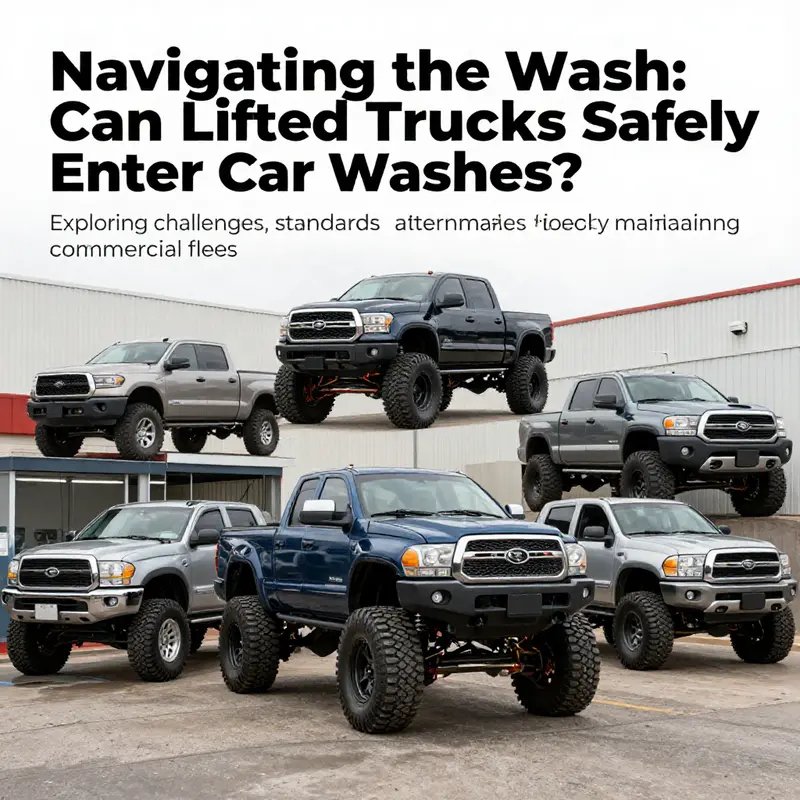
As the popularity of lifted trucks grows among logistics and construction professionals, fleet managers and operators face unique challenges in maintaining these vehicles. One such challenge is ensuring lifted trucks can effectively go through automated car washes without incurring damage. In this article, we will delve into several essential considerations, including clearance standards and their implications, alternative washing solutions, and safety recommendations specific to lifted trucks. Providing insights into each chapter will help fleet professionals make informed decisions and keep their vehicles in top condition.
Clearance, Control, and Care: Navigating Car Washes With a Lifted Truck
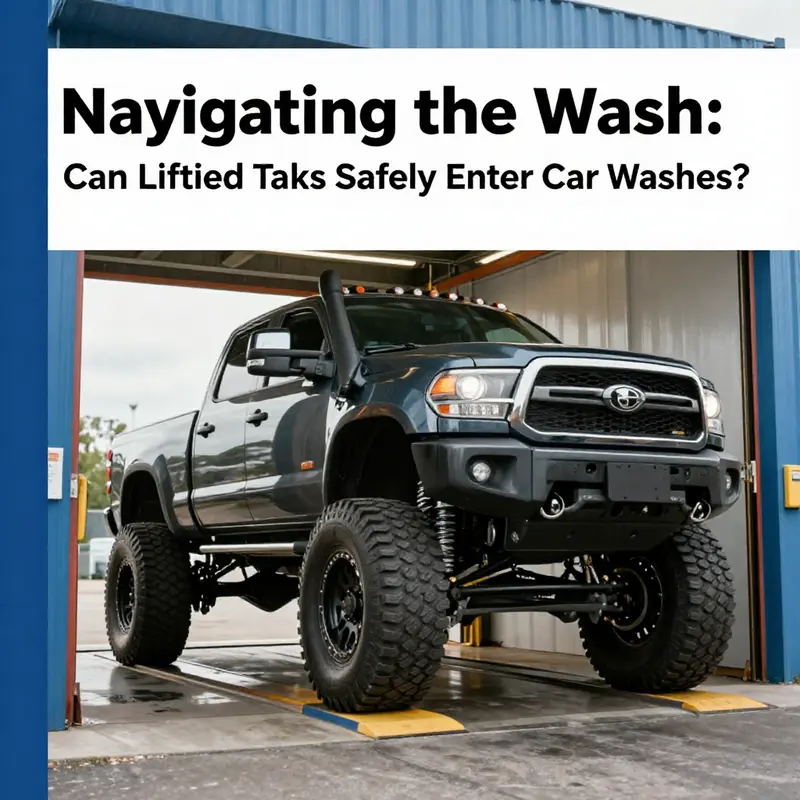
Inquiries about whether a lifted truck can pass through a car wash reveal a simple question with a surprisingly complex answer. It’s tempting to think that a lift merely adds a few inches to the height, but the reality touches every angle of vehicle design, wash system engineering, and user responsibility. The core truth is this: yes, lifted trucks can go through car washes, but only when the operator treats height clearance, undercarriage access, and delicate components with meticulous respect. The path from concern to clean truck begins with a careful assessment of the vehicle’s total height, moves through a consideration of how the wash system will interact with the raised chassis, and ends with a decision about the most suitable washing environment for that specific vehicle and its ongoing care. The process is not just about fitting through a tunnel; it is about ensuring that the wash does not become a hazard to the truck or the equipment that cleans it, and that the result is a thorough, damage-free result that preserves the lift and the integrity of the drivetrain, brakes, and suspension.
Height clearance stands as the first and most conspicuous hurdle. Car wash facilities are engineered around a standard envelope that most drivers never have to negotiate. The common ceiling in many automated washes falls somewhere around 72 inches, or six feet, in the vernacular. Some facilities, especially older or more compact sites, can be even tighter, while others, designed to accommodate larger commercial or fleet vehicles, push toward seven feet or more. Lifted trucks routinely surpass these numbers when you factor in the suspension travel, the lift kit’s height, and any added accessories such as roof racks or light bars. The consequence of misjudgment is not merely a scratch on a fender or a dent on a mirror; it can be the clash of metal against the fixed overhead infrastructure, a moment that risks damage to the truck’s roof, the lift components, and the car wash’s tunnel lining. The prudent course is to measure the vehicle’s total height with precision. Don’t rely on rough estimates or the height of the stock chassis alone. Measure from the ground to the highest point on the truck with the suspension settled, and account for any dynamic factors that could raise the height while entering the wash—such as articulation of the front end or the sway of a loaded roof rack. Then, compare that number to the maximum clearance published by the wash facility. If the truck is any fraction over the limit, the safest course is to avoid the automated wash entirely and seek alternatives. It is not just a matter of whether the truck will fit in at the entrance; it is about guaranteeing safe passage through the entire tunnel without the roof or the wash mechanism becoming an obstacle.
Even when a lifted truck clears the tunnel, the undercarriage presents another layer of complication. Lifted suspensions do more than elevate the body; they change how the chassis interacts with water jets, spray nozzles, and brush assemblies. The undercarriage, which bears mud, salt, and road grime in many climates, becomes a broader interface with the wash system. In automated washes, the lower portions of the frame, suspension components, and wheel assemblies can challenge a scrub brush or a high-pressure spray. The space between the ground and the chassis increases, which can create dead zones where dirt and salt linger, and it can also expose more sensitive fasteners or brackets to the mechanical action of brushes that are designed for stock-height vehicles. The risk here is less about a sudden collision and more about incomplete cleaning and accelerated wear on the wash equipment or on the extended components of a lifted truck. If the undercarriage cannot be cleaned effectively, you may end up with salt or mud trapped in places that corrosion, rust, or wear can exploit over time. The prudent approach is to evaluate whether the wash system can reach the lower regions reliably or whether a different cleaning environment is preferable.
Wheel alignment and suspension components introduce a further layer of caution. Lifted trucks frequently feature aftermarket components and more complex spacings in the drive-train and steering systems. A high-pressure jet or a rotating brush can impart unexpected forces on connection points, fasteners, and delicate pivot areas. If suspension lift hardware includes adjustable components, extended control arms, or reinforced mounts, these parts can be more susceptible to displacement or loosening under aggressive mechanical cleaning. Even if no obvious damage occurs during the wash, repeated exposure to high-pressure cycles while the vehicle is elevated can contribute to fatigue on mounting points. The takes here are not mere hypotheticals. They reflect real-world interactions between tube-nozzle dynamics, vertical clearance, and a lift’s characteristic geometry. Consequently, for many lifted-truck owners, the safest and most reliable option is to limit their use of automated washes and seek environments where undercarriage access is controlled and optimized for thorough cleaning without compromising fasteners or alignment geometry.
With those questions in mind, the practical recommendations become clear and logically coherent. First, manual or self-service car washes emerge as the most reliable option for many lifted-truck owners. In these settings, the operator has direct control over water pressure, nozzle angle, and the duration of contact with sensitive areas. This control translates into safer cleaning around wheel hubs, brake lines, steering components, and the lift system itself. A self-service bay allows you to regulate the spray pattern so you can target the most soiled zones—think undercarriage, frame rails, and wheel wells—without blasting high-pressure jets at components that are more vulnerable to damage when elevated. In manual-clean contexts, using a low-pressure rinse near the wheels and at potential points of intrusion reduces the risk of water ingress into seals and electrical connectors. It’s a simple principle: precision and caution beat brute force when respect for a lifted chassis is at stake.
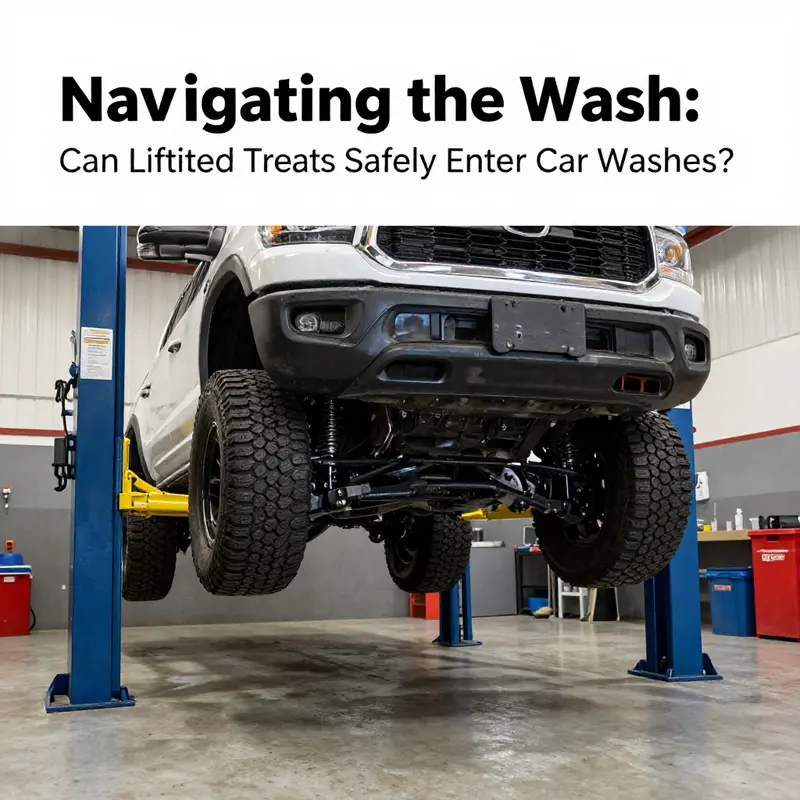
For those who require more than a cursory wash yet still want to leverage the efficiency of professional services, visiting a detail shop or commercial facility that features specialized lift configurations can offer a balanced solution. A four-post lift, for instance, provides stable, level lifting and allows technicians and vehicle owners to access the undercarriage comprehensively. In such environments, detail-focused cleaning can target hard-to-reach areas safely, and the truck can be positioned to distribute weight evenly while the wash equipment operates around it. Another viable option is an in-ground lift arrangement, which can free up floor space and maximize access from all sides. In either case, the controlled environment reduces the risk of accidental contact between the wash apparatus and a lifted component, while still delivering thorough cleaning and detailing that might be impractical in a standard automatic wash bay. These setups are especially advantageous for fleets that demand regular, consistent maintenance because they minimize the wear and tear associated with repeated automated clean cycles on lifted rigs.
For readers seeking structured guidance on choosing the right facility and optimizing maintenance routines for lift-equipped trucks, it helps to consider broader operational practices that are common to modern truck-wash facilities. A well-run facility management approach for truck wash businesses emphasizes consistent safety protocols, trained staff, equipment maintenance, and clear communication with vehicle owners about height restrictions and service options. The takeaway is not only about one wash per vehicle but about building a routine that respects the unique needs of lifted trucks while maintaining throughput and safety in a busy wash environment. If you are a fleet manager or a vehicle owner who plans to wash lifted trucks on a regular basis, delving into resources on facility management for truck wash businesses can provide a framework to standardize how you coordinate with service providers, schedule washes, and ensure that every vehicle enters and exits cleanly and safely. For additional context on how facility considerations shape wash outcomes and operational efficiency, see resources focused on facility management in truck-wash operations. The exact phrasing and approach of such guidance can be found in related discussions that address the complexities of lift-equipped vehicles and the environments designed to handle them. facility management for truck wash businesses
Despite the cautionary notes and the clear guidance toward safer alternatives, it is still valuable to recognize that each lifted truck is unique. The height of the lift, the geometry of the suspension, and the fitment of any roof accessories all contribute to a different risk profile for every vehicle. A truck with a compact lift and a moderate amount of additional height may have a different experience than a taller, more aggressively lifted model with oversized tires. For that reason, it is prudent to verify clearance for each wash facility you intend to use. If you are unsure, a quick call to the wash operator can clarify the maximum allowed height, the configuration of the wash bays, and whether any exemptions or special handling can be arranged. In some cases, facilities may offer a dedicated, pre-booked wash bay for lifted vehicles, or they may provide a manual wash option on standby, enabling the operator to guide high-pressure cleaning away from critical components while maintaining efficacy.
As you navigate this landscape, the broader lesson is that the question of whether a lifted truck can pass through a car wash is not a binary yes or no. It is a careful negotiation of space, protection, and procedure. If you choose to attempt an automated wash, do so with full awareness of the height constraints and potential undercarriage accessibility issues. If there is any doubt about clearance or reach, pivot to a safer approach that prioritizes the structural integrity of the lift and the cleanliness of the undercarriage—something that a manual or semi-manual wash can deliver more predictably. And for ongoing maintenance and operational planning, consider embedding the practice within a structured facility-management framework designed for truck-wash environments. This approach reduces risk across the fleet, improves the consistency of clean results, and protects both the investment in the lift and the long-term value of the vehicle.
For those who want broader context and validated guidance, external resources summarize the practical realities that lifted trucks face in car-wash environments, reinforcing the emphasis on measurement, controlled cleaning, and careful handling. These perspectives complement the hands-on advice discussed here and help vehicle owners assemble a comprehensive plan that aligns with safety standards and cleaning outcomes. As always, when a lift and a wash share the same space, precision, caution, and respect for the vehicle’s engineering come first, ensuring that the process of getting clean does not become a cause of damage or undue risk. For more official guidance and considerations, see industry discussions such as the overview provided by automotive care resources. https://www.autocar.co.uk/car-advice/vehicle-care/lifted-trucks-and-car-washes-what-you-need-to-know
Clearance as Gatekeeper: Why Height Limits Define the Path for Lifted Trucks Through Car Washes
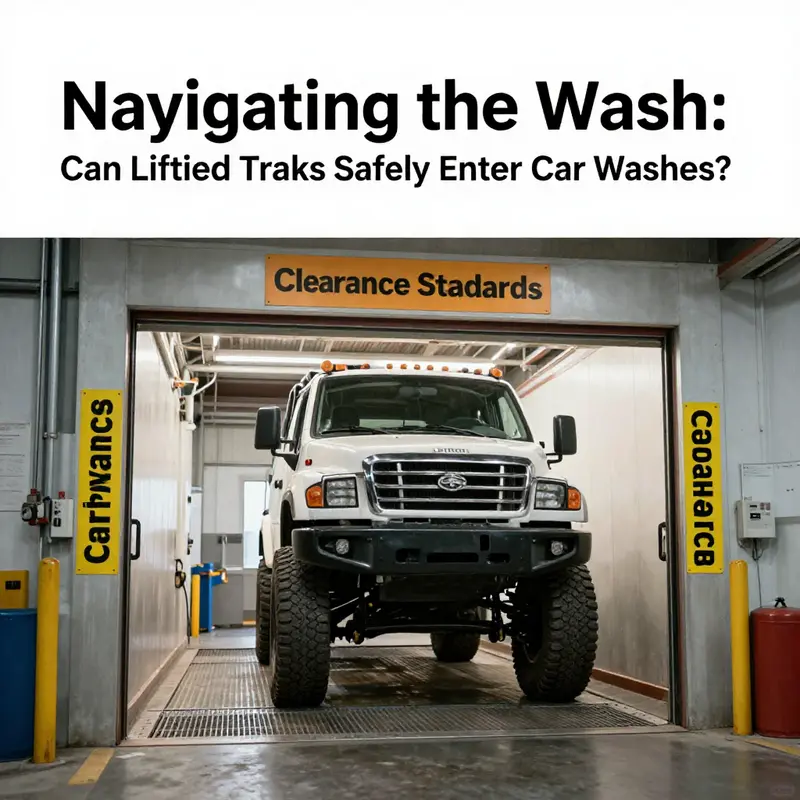
Curiosity about whether a lifted truck can roll through a conventional car wash is common enough to spark debate in online forums and at the bayside of every fleet yard. The short answer is nuanced: yes, in many cases, but only after a careful check of clearances, a clear plan for protection of vulnerable undercarriage components, and an understanding of how a lift kit shifts the vehicle’s geometry. The question sits at the intersection of vehicle physics and wash design. It isn’t just about whether the truck can squeeze through a tunnel; it’s about whether the tunnel can accommodate the truck’s total height without compromising the wash system or the truck’s body. The reality is that standard automated car wash bays, built around the dimensions of stock-height vehicles, create a high-stakes constraint for lifted trucks. In practice, many automated tunnels are designed with clearance ranges that fall between 6 feet 6 inches and 7 feet in height. That range, expressed in metric terms as roughly 1.98 to 2.13 meters, sounds generous until you couple it with modifications that add ground clearance. For a truck with a lift that adds even a few inches to the ride height, the risk becomes tangible: a collision with the tunnel roof, or interference with overhead brushes, sensors, or drying components. The geometry of the wash system expects a precise relationship between the undercarriage and the spray arms. When a truck sits higher than design, that relationship can falter. Sprays that should align with the rocker panels may miss, leaving dirt in hard-to-reach pockets, or worse, reach too high and contact the raised undercarriage, inviting caustic scrapes or misdirected jets. In turn, those misalignments can drag the wash apparatus toward the vehicle’s skin, initiating a cascade of potential damages to both machine and metal. The practical upshot is simple but real: a lifted truck might physically fit inside a tunnel, yet do so in a way that degrades cleaning effectiveness and ups the chance of a collision with the wash’s moving components. This is not mere theoretical caution. A growing chorus of lifted-truck owners has observed precisely this complication in real-world use. A widely discussed social-media post from early 2026 highlighted the friction between modified vehicles and conventional bays, underscoring the point that not every wash is capable of accommodating a tall, aggressive suspension. The narrative wasn’t a scare piece; it was a reminder that the industry is slowly waking up to broader vehicle profiles and that the status quo in many facilities remains tightly tethered to stock configurations. Yet the story also carries a thread of possibility. While standard tunnels can present a hard ceiling, the landscape is shifting toward more flexible design and service models. Some commercial washes now incorporate wider tunnel widths and adjustable brush arms, a change that visibly reduces the risk of contact with oversized tires and lifted frames. Others are moving away from tunnel-only solutions in favor of full-service detailing centers that operate outside the tunnel constraints entirely. In these settings, a lift-equipped vehicle can be serviced by trained technicians in controlled environments that maximize access to the undercarriage, corners, and wheel wells without the fear of scraping the tunnel roof or sides. This trend toward flexible design and alternative service formats reflects a broader shift in how the market responds to the growing prevalence of lifted and modified trucks. It’s a reminder that as vehicle profiles evolve, car wash operators are compelled to adapt, not only for safety but for the quality of the wash itself. The core principle guiding this evolution is straightforward: never sacrifice the vehicle’s protection or the wash’s reliability for the sake of a single pass. Instead, explore arrangements that preserve the integrity of both. For owners, the practical takeaway is to approach car wash visits with a set of deliberate steps. First, measure the truck’s total height—this includes the lift height, tires, any roof racks, antenna mounts, or other protrusions that could raise the silhouette. Second, confirm the maximum clearance posted by the wash facility. If you cannot reconcile your truck’s height with the posted clearance, abandon the idea of using that automatic wash bay in favor of an alternative approach. Third, know that safe, thorough cleaning can still be achieved by leaning on options that place undercarriage access at the center of the process. A four-post lift-based detailing facility, for example, offers stable, level lifting and full undercarriage access without the constraints of a tunnel. And for high-volume needs, in-ground lifts provide unobstructed access from all sides, preserving space while delivering precision cleaning and detailing. In practice, many lifted-truck owners discover that a careful combination of measurement, facility selection, and service format—rather than sheer willingness to push through a tunnel—produces the best balance of safety and cleanliness. If urban or suburban washes are too constrained, a detail shop or commercial facility with a four-post lift can transform a challenging configuration into a predictable, controlled process. The four-post lift paradigm is especially valuable because it enables technicians to set the vehicle on a level plane, relieving the undercarriage from uneven contact with spray jets and brushes and enabling full protection for the vehicle’s sensitive components. This approach, while perhaps slower than a high-speed tunnel wash, often yields superior results for lifted rigs because it allows technicians to tailor the cleaning to the vehicle’s unique geometry. In-ground lifts push the same philosophy even further by offering unobstructed access from every angle. They are especially well-suited to centers that focus on custom detailing, rust prevention, and undercarriage restoration. The absence of a tunnel ceiling looming overhead eliminates the risk of a roof strike, which is a common concern for very tall builds. For the vehicle owner, the experience can feel more like a precision tune-up than a quick rinse, but the payoff is a deeper clean and significantly reduced risk of accidental damage during the wash cycle. The broader takeaway, however, is not a manifesto for abandoning automated washes altogether. Rather, it’s a call to recognize the reality that lift kits alter the geometry of a vehicle in ways that standard washes were not designed to accommodate. When owners plan ahead and select the right service model, a lifted truck can still receive a thorough cleansing while preserving the integrity of both the vehicle and the wash system. In certain communities, this planning also translates into a culture of shared knowledge. Vehicle owners exchange tips about which facilities tend to offer taller bays or more flexible configurations, and wash operators take cues from incidents and feedback to adjust their layouts and protocols. This evolving dialogue helps bridge the gap between modified vehicles and the services that expect to accommodate them. It is telling that a number of operators are leaning into the notion that specialized or customized approaches—rather than a one-size-fits-all tunnel—will become a defining characteristic of high-quality wash service for lifted trucks. The industry’s forward motion appears to be moving toward two parallel tracks. The first track emphasizes safety, accuracy, and the maintenance of wash integrity, which means clear signage, measured clearances, and staff training on how to handle tall profiles without collision. The second track emphasizes accessibility, where facilities explore widening tunnel dimensions, adopting adjustable brush systems, and, in some cases, embracing alternative service models such as professional detailing studios with four-post lifts. Neither path negates the other; together they offer a broader spectrum of options for owners who want to maintain the cleanliness and condition of their lifted vehicles. As a note of practical wisdom, always consider the broader impact of your vehicle’s height beyond the wash bay. Height and ground clearance can influence ramp angles at entry and exit, the ability to navigate parking structures, and even the risk of snagging in certain urban environments. The decision to wash through a tunnel—if it’s possible at all—should be made with a clear understanding of these secondary considerations. If you commit to a car wash, bring along a simple checklist: measure the total height; check the posted clearance; review the vehicle’s profile for any overhangs or protrusions; confirm the wash bay’s capability to accommodate to your needs; and remember that if the height is marginal, a safer option is to use a facility that can guarantee undirected access via a four-post lift or in-ground lift. The takeaway is not to view height as a barrier to cleanliness, but as a critical parameter that informs safe, effective service. Lifted trucks can be cleaned comprehensively, but the process requires alignment among the vehicle’s geometry, the wash system’s design, and the facility’s service model. In the end, the goal is to achieve a high-quality wash without compromising either party’s safety or performance. For those who want to explore more about facilities designed to handle diverse vehicle profiles, a practical resource for operators is facility management guidance that details how to structure truck-wash operations to support a broader range of vehicle configurations. Facility management for truck wash businesses. This resource helps explain how to optimize bays, staff training, and scheduling to accommodate lifted trucks without sacrificing throughput or quality. While the discussion continues to evolve as more washes experiment with adjustable arms and wider tunnels, one thing remains constant: if you own a lifted truck, your best path to a safe, thorough wash is a thoughtful plan that prioritizes clearance verification, a suitable service environment, and a workflow designed for your vehicle’s unique geometry. When you pair careful measurement with flexible service options, you gain control over the outcome rather than accepting the limitations of a tunnel. If you’re curious to see how the broader community is discussing these dynamics, a recent social-media note from January 2026 emphasizes the reality that not all car washes are built to handle lifted profiles, but a growing subset is evolving to meet that demand through design modifications and dedicated detailing spaces. External reference: https://www.tiktok.com/@pavementprincess/video/7234567890123456789
Clearing the Path: Thorough, Safe Washing Solutions for Lifted Trucks
Lifted trucks carry a bold silhouette and promise off-road capability, but their height reshapes how they are cleaned. The question of whether lifted trucks can roll through a car wash is not simply yes or no. It is a test of clearance, access, and risk. In practice, the overriding rule is about overhead clearance. Most automated washes set their ceiling around 72 inches. If your truck, with the lift and any accessories, stands taller, you may encounter a collision before the first rinse. Hitting the roof of the wash tunnel can bend components, damage sensors, and trigger costly repairs to both vehicle and equipment. The consequences extend beyond a single scrape. The wash system may also shut down to prevent further damage, delaying jobs for other customers and creating a safety incident. Before you roll up to a bay, this is the kind of consequence you want to avoid, and the simplest way to prevent it is measurement and planning.
So, the first step is accurate measurement. Before you pull into a bay, measure the total height from the ground to the highest point of the truck. Include the top of antennas, roof racks, light bars, or any aftermarket equipment. Then compare that measurement with the facility’s posted maximum clearance. If your truck clears the limit, you still should proceed with caution. If it does not, you should not attempt the automated wash. Instead, plan for alternatives that keep your investment safe while still delivering a clean result. This isn’t about unnecessary caution; it’s about using your resources wisely. When a wash is already operating at peak efficiency, a miscalculated height can derail an entire service day and potentially damage the wash bay, not just the vehicle.”
A safer path is to use a detail shop or a commercial facility equipped with a four-post lift. This arrangement allows the truck to sit evenly, provides stable support, and lets technicians access the full undercarriage without worrying about scraping walls or overhead rails. Because the lift distributes weight across four points, there is less chance of tipping or shifting during scrubbing and rinsing. The undercarriage becomes a real cleaning target, not a neglected shadow, and mud and salt can be flushed away thoroughly. This approach is particularly appealing for lifted trucks with heavy mud, exposed exhaust, or disturbed suspension components that require careful cleaning and inspection. The beauty of four-post lifts lies in the predictability they offer: the vehicle remains steady while technicians work deep into crevices that standard tunnels simply cannot reach. In such a setting, you can achieve a level of cleanliness that protects vital components and extends the truck’s longevity, especially in regions where road grime is persistent or where seasonal salt is common practice.
Alternative is an in-ground lift, which opens space in the wash bay and gives technicians unobstructed access from all sides. In-ground systems remove the risk of tall overhead rails impeding the cleaning process. They also maximize floor space, making them efficient for high-volume shops. The trade-off is that not every wash facility has this option, and it often demands more extensive facility planning and maintenance to keep the bay sealed and dry. For the vehicle owner, the key takeaway is flexibility: choose a facility that can tailor the wash to the vehicle’s geometry and provide a controlled, stable environment for undercarriage work. Lifted trucks benefit from the precision of undercarriage access, where dirt hides behind frame rails, in spring hangers, and around the suspension geometry. In practice, the right lifting approach can transform a challenging wash into a thorough, professional-grade cleaning without compromising safety. A shop with an in-ground setup tends to be quieter, more predictable, and better at controlling splash and runoff, which matters for both the vehicle and the surrounding environment.
If you cannot access a four-post or in-ground lift, you may still achieve an excellent clean through mobile or on-site pressure washing services. These units are designed to bring cleansing power directly to the vehicle, often with detachable hoses, high-flow pumps, and targeted nozzles that reach the undercarriage and wheel wells. On-site washing reduces the need for transporting a heavy, tall vehicle to a facility and eliminates the risk of misjudged clearances inside a tunnel wash. The configuration can be adapted to handling lifted trucks, with stabilizing equipment and water containment measures in place. For clients in remote or rugged locations, a mobile pressure washing solution can be the only practical option. The benefit is not just convenience; it is the ability to tailor the cleaning to the truck’s specific dirt profile, from heavy mud on the running boards to caked grime in the wheel wells. Mobile units also minimize downtime and can be scheduled around the truck’s maintenance calendar, a practical consideration for fleets that rely on clean, dependable equipment without disrupting service schedules. The on-site approach, when properly executed, can rival the depth of a stationary wash, especially for high-cleaning-demand intervals right after off-road use or construction site visits.
Of course, lifted trucks require more than a rinse. A comprehensive cleaning plan targets the undercarriage first, then the wheel wells and frame surfaces. Underside components are prone to rust, road salt, and grime that can compromise performance if left unattended. A thorough wash uses degreasers and pre-washing steps to break up oily residues, followed by a high-pressure rinse to remove stubborn deposits. Wheel wells accumulate dirt and packing materials that can later interfere with suspension alignment or attract pests. The goal is to achieve both cosmetic improvement and longer-term durability. Because these areas can trap moisture and debris, it is worth allocating extra attention and time to ensure thorough cleaning. In other words, lifting changes the washing calculus: it shifts the focus from a quick, glossy finish to a deeper, more responsible maintenance routine. The result is not only a cleaner truck but a vehicle that resists corrosion and maintains performance across demanding conditions.
As owners weigh options, practical decisions flow from a few straightforward questions. Will the wash bay be tall enough? Can the staff safely access the undercarriage? Is there a plan to trap and manage runoff and chemicals in a responsible way? If the answers favor yes, a lifted truck can receive a high-quality clean without compromising equipment or vehicle integrity. When visiting a wash facility, it helps to communicate that your truck is lifted and ask the staff if they have experience cleaning elevated vehicles. If the staff can accommodate a lifted truck with a safe stance, they may offer a dedicated wash port or a designated bay. If not, the next best option is to proceed with a detailed shop that has the right lifting equipment and a careful workflow sequence, rather than attempting a traditional tunnel wash. Consulting with a shop that understands lifted geometry can save time and money while protecting the truck’s frame, axles, and oil pan.
For facility managers and shop owners, there is a broader framework to consider. Ensuring safe, effective cleaning for lifted trucks begins with thoughtful wash bay design, proper drainage, and robust equipment maintenance. A well-planned facility can host vehicles of various heights and configurations without turning away customers or risking damage. In practice, that means designing bays with adjustable clearance or clear labeling, installing lifts that distribute weight evenly, and integrating water containment systems that reduce runoff into the facility’s waste streams. It also means training technicians to recognize clearance limits quickly and to adjust the washing plan to protect high-mounted lighting, antennas, or roof racks. To explore practical, facility-focused guidance, see facility-management-for-truck-wash-businesses.
Even with careful planning, lifted trucks sometimes benefit from a hybrid approach. A pre-wash at home to loosen mud, followed by an in-depth, facility-based wash using a four-post lift, can yield the best results. The pre-wash stage is a critical step; it saves time and reduces the volume of contaminants that the wash must tackle. Starting with a garden hose or a basic pressure washer clears the loose material from the truck’s lower panels and undercarriage. This initial step can dramatically improve the subsequent cleaning, whether performed by professionals or done with a DIY setup. The idea is simple: loosen, rinse, then treat stubborn areas with appropriate cleaning agents that are safe for metal and sealants. The aim is to improve efficiency while safeguarding surfaces, seals, and coatings so that expensive finishes are not compromised by aggressive scrubbing. When done correctly, the pre-wash reduces abrasion and extends the life of protective coatings, while still delivering the deep, thorough clean that lifted trucks demand.
The broader takeaway is that lifted trucks do not have to be relegated to special cases or a few niche shops. By combining a smart assessment of clearance with access to specialized lifting solutions or mobile services, owners can achieve thorough cleaning without compromising the vehicle or the wash facility. The decision should be guided by a clear understanding of height, access, and safety. For many owners, the ideal pathway is to partner with a facility that can offer four-post lifting or in-ground access, along with a plan for undercarriage and wheel well cleaning. And for those who must rely on on-site options, a well-equipped mobile unit can deliver on-site washing with the same level of thoroughness where it counts most. In every scenario, the aim remains the same: protect the truck, maximize cleaning efficacy, and maintain a workflow that minimizes risk to people and properties alike.
External resource: An In-Depth Guide to Car Wash For Lifted Trucks: https://www.alibaba.com/product-detail/An-In-Depth-Guide-to-Car-Wash-For-Lifted-Trucks_1600435859571.html
Riding High, Washing Right: A Practical Guide to Safely Cleaning Lifted Trucks Through Car Washes
Lifted trucks sit higher than their stock counterparts, a factor that gives them a commanding presence and plans for off-road ability. Yet that extra height creates a practical challenge when it comes to cleaning. The core question—can lifted trucks go through car washes—deserves a careful, layered answer that blends geometry with safety, technique, and the realities of how cleaning environments are built. The short, practical truth is yes, lifted trucks can go through many car washes, but the decision hinges on total vehicle height, the wash facility’s clearance, and a plan that protects both the truck and the wash equipment. If your lifted truck pushes past the common garage-to-tunnel clearance, you might have to reframe your approach. Height is not just a number; it is a doorway that either opens into an efficient cleaning routine or shuts the door on a given wash option. The first, non-negotiable step is to measure. Total height means the vehicle’s height with the lift kit, tires, lights, and any accessories included. When you pull up to a wash, you must know this measurement and compare it against the facility’s maximum clearance. Many automated car washes set a standard ceiling around 72 inches, roughly six feet. It isn’t a universal rule, but it is a widely observed threshold. If your truck edges over that line, you risk a collision with the roof of the wash tunnel, not just a scraped bumper but a potentially costly disruption to the wash cycle and the undercarriage. A careful check before entering is a small investment with outsized payoffs in avoiding damage to both your truck and the wash system.
That timing and geometry awareness should shape the whole decision process. If the height check is borderline or uncertain, the safer move is to pause and consider alternatives. A detail shop or a commercial facility equipped with a four-post lift presents a stable, level platform that keeps the vehicle secure while you wash and treat the undercarriage. In that setup, you gain full access to the underbody without the alternating constraints of a tunnel wash. The four-post lift provides a broad, stable footprint that minimizes wobble when you reach the lower panels and the frame rails. It also allows you to work methodically, from the top down and across the undercarriage, with a clear line of sight to critical components such as the differential housing, suspension mounting points, and any exposed wiring. For higher throughput or more complex detailing, in-ground lifts offer even more flexibility. They maximize floor space and provide unobstructed access from every side, which many professional detail centers prize. This combination—proper height measurement plus a stable lift system—reframes washing lifted trucks from a high-risk, all-or-nothing decision into a controlled, safety-conscious process.
No matter the setting, the safety framework around washing a lifted truck remains consistent: secure the vehicle first, protect yourself, and proceed with care. Securement starts before water touches metal. Park on a flat, stable surface, engage the parking brake, and if you must use a jack or a lift, secure it with safety stands or wheel chocks. The aim is to prevent any movement during cleaning. In the same breath, your personal safety gear should follow the work—gloves, eye protection, and a clear awareness of the potential for spray misdirection. High-pressure water, especially in an automatic wash setting, can be hazardous. It can cause injuries if directed toward eyes, hands, or exposed skin, and it can propel debris toward bystanders who may not anticipate the spray pattern. Keep others at a safe distance and direct the spray with intention, never letting it roam toward sensitive areas or passersby who are not equipped to handle the force.
With security and safety in place, the method of washing becomes a conversation about where the water should go and how to protect the truck’s sensitive systems. Approved cleaning regimes emphasize gentleness around seals, bearings, electrical connections, and exposed wiring. High-pressure nozzles should not be aimed at engine bay seals, powertrain wiring, or suspension components where a sudden blast of water could force moisture into crevices and precipitate corrosion or short circuits. Where possible, use lower pressure on these areas or opt for hands-on washing with careful manual tooling. This is not a failure of the car wash but a recognition that lifted trucks introduce additional surfaces and vulnerabilities that deserve patient, targeted care. The goal is to rinse away the bulk of the dirt while preserving the integrity of seals and connections. A rule of thumb is to prioritize the exterior with a gentle approach near the doors and top panels, then transition to undercarriage attention with a brush and degreaser where needed. The undercarriage deserves special care because lifted trucks expose more of the frame rails and suspension components to road grime, mud, and potential salt exposure.
Cleaning products deserve equal attention. Choose cleaners that are biodegradable and pH-neutral for the paint, trim, and rubber components. Harsh detergents or solvent-based products can strip protective coatings and alter colors or textures over time. The sequence should begin with a top-to-bottom rinse to maintain cleanliness efficiency; rinsing the roof first and moving downward prevents dirty runoff from soiling cleaner areas. This approach reduces the risk of scratching as dirt slides across cleaner surfaces. A lifted truck’s undercarriage requires a deliberate, thorough approach. A soft brush or sponge can dislodge mud and debris from frame rails, differential housings, and suspension points. For stubborn grease and oil, a dedicated degreaser used with patience—followed by a comprehensive rinse—will help prevent residue that can attract more dirt. The cleaning of hard-to-reach corners, corners that are more visible on lifted builds, can benefit from extended brushes or specialty tools, but one should always rinse thoroughly to avoid leaving behind residues that may corrode over time.
Drying plays a critical role in rust prevention, especially for lifted trucks that travel on roads where moisture, snow, or salt lingers on hard-to-reach surfaces. A microfiber towel or chamois helps remove water from the undercarriage, wheel wells, and door sills. The goal is to minimize water pooling in places where moisture has a tendency to linger and promote rust. After drying, many owners consider protective coatings to further shield vulnerable metal areas. An undercoating or rust inhibitor can be beneficial, particularly if the vehicle operates in salty or damp environments. The idea is to create a barrier that slows corrosion and makes subsequent cleaning easier by reducing cling and caked dirt. This protective step is not a one-size-fits-all add-on; it should be chosen with an eye to climate and driving conditions, and ideally performed after the chassis has been cleaned and dried to ensure maximum adhesion.
A vigilant eye throughout the process can also double as a routine health check for the lifted truck. The opportunity to inspect for signs of wear, corrosion, loose bolts, or damaged components is an essential part of routine maintenance. Lifted vehicles, by their nature, can reveal issues that are less apparent in standard-height vehicles. When you are in a controlled, well-lit washing environment—whether a dedicated detailing center or a properly equipped wash bay—you have a chance to observe the undercarriage, suspension assemblies, and fasteners. This is not just about cleanliness; it is about early detection of issues that could escalate into more significant problems if left unaddressed. If any anomalies are found, it is prudent to consult a professional technician who specializes in lifted configurations. The goal is to correct issues before they progress, preserving both safety and value over time.
The practical route, then, balances feasibility with safety and efficacy. If your lift pushes your total height beyond the standard clearance, a car wash may not be an option at all, or it may require a facility that explicitly accommodates tall vehicles. If you do choose a car wash ride, seek out options that permit space for the vehicle’s full height and provide clear, consistent guidance on how to position the truck for the wash cycle. It is also worth noting that some wash bays are better suited for taller vehicles than others; asking ahead and confirming the facility’s policy saves time and reduces risk. The distinction between a car wash experience and a professional detailing setup with elevated safety and access is not merely about speed. It is about the quality of cleaning, the safety of the vehicle’s components, and the longevity of the lift system attached to the truck’s frame. When height becomes a limiting factor, consider scheduling a detail-focused session that uses a four-post lift or in-ground lifts to achieve thorough, controlled cleaning and undercarriage treatment without compromising the washing equipment.
For those who want additional practical strategies on keeping the truck clean while maintaining the engine and components, a trusted resource offers proven techniques for removing grease and tar efficiently. An example of a targeted approach is summarized here as a reminder that the undercarriage and heavy-soiled areas require deliberate, methodical cleaning. Proven strategies for cleaning grease and tar off your trucks fast. This kind of resource underscores the principle that lifted trucks benefit from a tailored cleaning plan that acknowledges the different demands of the undercarriage and the higher position relative to standard vehicles. When applied in a suitable setting, these strategies help ensure that even the most rugged channels of grime do not compromise the vehicle’s appearance or integrity.
In the final analysis, the question of whether lifted trucks can go through car washes hinges on measurement, environment, and preparation. The height of the vehicle must be matched to the wash’s clearance, and if there is any doubt, the wiser choice is a facility that can physically accommodate the truck rather than risk damage to either the wash or the vehicle. If a car wash is not an option, the alternative is a detail-focused shop that uses a stable lifting system for full undercarriage access. The right environment is crucial for performing the work safely and thoroughly, especially when the objective is to preserve undercarriage integrity and extend the life of suspension components. The process becomes a blend of mechanical caution and meticulous care—an approach that recognizes the unique profile of lifted trucks and honors the purpose of car wash routines as a part of responsible vehicle maintenance. In this light, cleaning lifted trucks becomes less a test of fit and more a test of planning, precision, and the respect due to a vehicle that sits higher and works harder than most.
For readers seeking further guidance on standard maintenance and safety practices beyond the scope of car wash decisions, there are official resources that outline broader safety standards and maintenance principles. These guidelines provide a foundation for safe vehicle handling in a variety of contexts, reinforcing the idea that informed choices lead to better outcomes for both people and machines. As you plan your next wash day, remember that the best results come from aligning your lifting configuration with the right cleaning environment, following a careful, step-by-step approach, and verifying all safety measures before you press the start button. For more information, refer to the Official NHTSA Vehicle Maintenance Guidelines: https://www.nhtsa.gov/vehicle-maintenance
Final thoughts
Understanding the intricacies of washing lifted trucks is crucial for fleet managers and operators seeking efficiency and safety. By focusing on clearance standards, alternative washing options, and established safety protocols, you can achieve effective maintenance solutions. The right approach not only ensures the longevity of your fleet but also minimizes risks associated with car wash systems. As lifted trucks continue to represent a significant investment in commercial fleets, professional care is essential for maintaining their performance and appearance.