
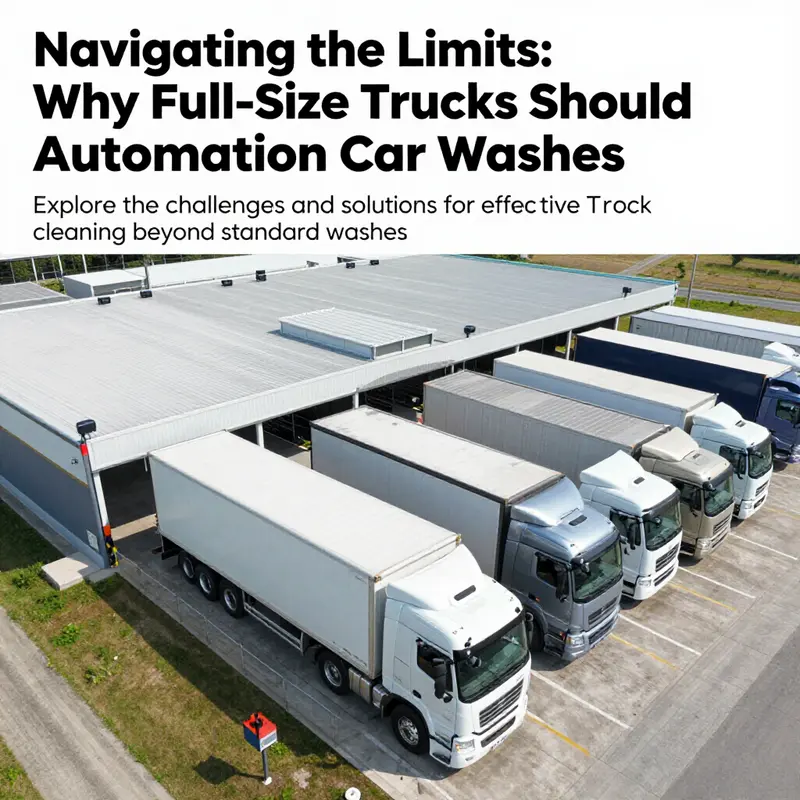
Full-size trucks play a critical role in logistics, freight transport, and construction activities, demanding specialized care for maintenance and cleaning. However, their size and design often make standard automated car washes unsuitable for effective cleaning. This article examines why these washes may not be a fit for full-size trucks, delves into viable alternatives specifically designed for larger vehicles, assesses the risks of automated washes, and provides tailored recommendations for fleet managers and trucking professionals to navigate this common issue. In doing so, we will ensure truck owners can make informed decisions and establish efficient cleaning solutions.
When Size Rules the Wash: Why Full-Size Trucks Don’t Fit Through Standard Automated Car Wash Tunnels
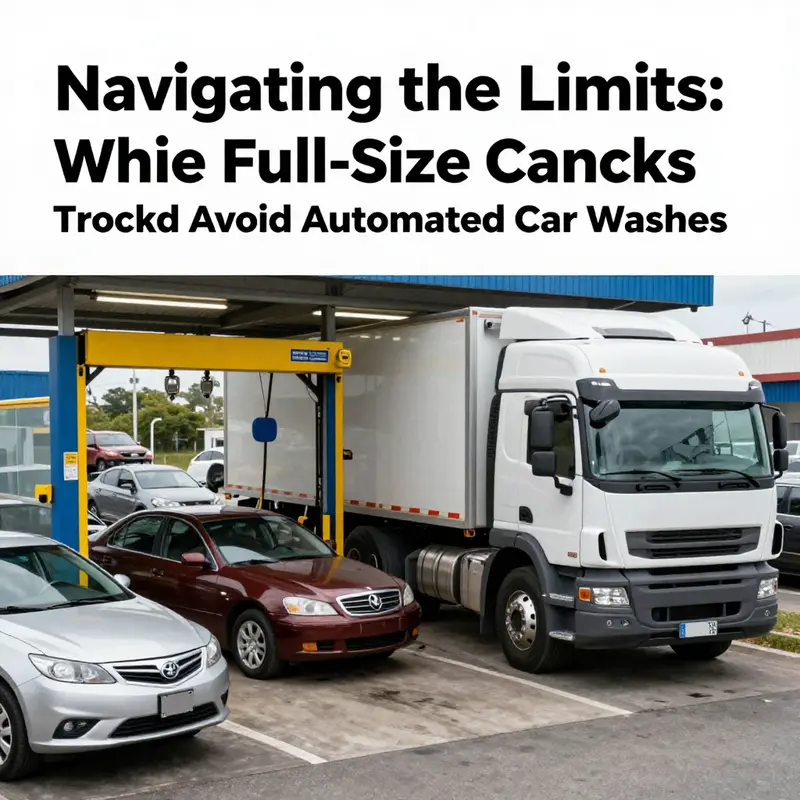
A full-size truck rolls toward a common automated car wash with the confidence of a vehicle that has weathered tougher roads than a city street. The operator at the gate checks the height, the width, and the clearance indicators, but the moment the driver advances, a quiet arithmetic unfolds in the machine room: will this be a rinse and scrub, or a collision and costly downtime? The reality is that most standard automated car washes, especially the tunnel or conveyor-style systems found at many gas stations and shopping centers, are engineered with one audience in mind—the passenger car. They are built around fixed dimensions, calibrated to the geometry of sedans, compact SUVs, and small vans. When a full-size truck—the kind that hauls a crew, a toolbox, or a bed full of gear—enters the picture, the system’s assumptions about fit begin to evaporate. The outcome is not simply a longer wash time or a momentary inconvenience; it is a fundamental misalignment between a vehicle and the wash infrastructure. And because size drives capability, trucks often reveal the invisible limits of automated washing technology before the water ever reaches the finish line. This mismatch is not a reflection on the utility or value of full-size pickups. It is a reminder that automated car wash design prioritizes throughput, standardization, and predictable interaction with a narrow vehicle envelope. It is also a reminder that, when the dimensions tilt beyond that envelope, the risks become real and tangible. In practice, height restrictions and width constraints are the gatekeepers. Tunnels and bays that seem perfectly adequate for a sedan may suddenly present a ceiling that is too close for comfort when a tall truck passes beneath the overhead spray bars. In many facilities, the height clearance hovers around seven feet, a dimension that looks generous for a typical SUV but can be a hard stop for taller cab configurations or rooftop storage. Width limits, too, quietly govern the lane width and the alignment space that automated machinery requires. When a truck’s mirrors, wide tires, or side steps push up against those limits, the sensor-guided tracking system—designed to guide a smaller vehicle through the wash—begins to work against itself. The result is not only the risk of contact with spray jets or bristle arms but, more insidiously, the danger of misalignment that leaves portions of the vehicle unclean or, in the worst case, triggers a jam or shutoff that halts the entire conveyor sequence. When engineers design a wash for a narrower family of vehicles, they do so with a mental map of typical dimensions: a predictable height, a predictable width, a predictable distance from front to rear. A full-size truck does not follow that map. The extended cab, the potential rooftop rack, or the oversized tires lengthen and widen its silhouette in ways that the system was not intended to accommodate. The calibration that positions spray nozzles and rotating brushes to strike clean panels on a mid-sized car can miss broad expanse areas on a truck. Roof surfaces, bed rails, and side steps may be left dry or streaked with water spots because the cleaning mechanisms cannot reach or safely navigate around protrusions. This mismatch is not simply a cosmetic concern. Inadequate coverage, combined with incorrect contact points, can lead to uneven cleaning, water infiltration into seals, or scrub-induced micro-scratches on trims and coatings that were not designed to withstand the particular cadence of a high-pressure wash. The risk of damage is not abstract; it is a tangible liability that can involve the vehicle, the wash equipment, and the staff operating in the bay. Technician manuals, manufacturer guidance, and industry standards consistently flag the potential for harm when heavy or oversized vehicles traverse automated systems that were not designed for them. While a well-intentioned driver might hope for a quick, affordable wash, the constraints of the machine design set clear boundaries. The result is that many full-size trucks arrive at the conclusion that a standard automated wash is simply not their path to cleanliness. And here is where the larger economic and operational implications become visible. Fleet owners and individual operators who rely on consistent, efficient vehicle maintenance must weigh risk against reward. A wash that fits a sedan is often faster to run than a wash built for a truck, but the risk of damage or miscleaning for a large vehicle introduces not only potential repair costs but also downtime that can ripple across a delivery schedule or a service route. In this context, the traditional automated tunnel wash loses its appeal for the truck segment, unless the facility has been specifically designed to handle such sizes. This is not a market failure so much as a design mismatch: the standard wash is optimized for a subset of vehicles, and full-size trucks sit outside that optimized envelope. The diagnostic takeaway is straightforward. If the vehicle cannot be fitted within the safe operating envelope of a standard system, the best practice is to avoid that wash and seek alternatives that acknowledge the truck’s dimensions and needs. Vehicle manufacturers themselves acknowledge the reality. Some warning labels and guidelines caution against the use of automated washes for vehicles with heavy-duty applications or specialized equipment. The high-pressure jets and aggressive brushes, while efficient for cars, can interact unfavorably with seals, trim, and coatings that trucks may carry—from exposed chrome to aftermarket bed liners and rooftop racks. For operators who move fleets of trucks, this caution translates into a practical policy: never assume a standard wash is universally safe for every vehicle. Instead, verify with the facility that their wash lane and equipment have been tested and rated for the truck’s exact height, width, and features. It is a simple due diligence check, yet it carries significant risk mitigation for both the vehicle and the wash system. The broader narrative, then, is not a condemnation of automated car washes but a call for smarter alignment between vehicle type and wash technology. The alternatives are clear and increasingly accessible. Mobile truck wash services have become a practical solution, bringing sophisticated, truck-specific cleaning to the location where the vehicle operates. These services leverage equipment designed for large dimensions, often with configurable equipment that can handle extended cabs, rooftop racks, and extra-long bed lengths. They can deliver anything from a quick exterior rinse to a full fleet detailing, with attention paid to protecting sensitive seals, coatings, and trim that might be stressed by high-pressure exposure. For many fleets, this model reduces scheduling friction and comes with the benefit of meticulous attention to problem areas—rails, hinges, and undercarriages—that standard car wash systems struggle to treat effectively. Another viable option is a drive-through facility that has been purpose-built for larger vehicles. These sites feature higher ceilings, wider lanes, and more robust water delivery systems designed to handle the cumulative cleaning requirements of trucks, heavy-duty service vehicles, and delivery fleets. The emphasis in these environments is on throughput compatible with truck dimensions and on the ability to clean wide surfaces without compromising the vehicle’s integrity. A third path is the self-service model, augmented by staff assistance in bays designed to accommodate larger vehicles. Some self-service centers allocate truck-friendly bays where drivers can access high-pressure washing, foam, and other treatments with supervision and guidance from attendants. This hybrid approach blends the control of a manual wash with the efficiency and accessibility of self-serve infrastructure, ensuring that larger vehicles receive uniform attention without the risk that a fully automated system imposes. Across these options, the connective tissue is the recognition that full-size trucks require tailored solutions. A fleet manager, a contractor, or a solo operator will be well served by maintaining a small playbook of trusted wash options that explicitly state compatibility with truck dimensions. The knowledge base grows from experience—what works, what doesn’t, and why. In practice, the responsible path starts with a clear, upfront inquiry when a truck approaches the wash. Height and width measurements should be confirmed, especially if the vehicle is equipped with rooftop racks, antennas, or aftermarket scaffolding that can alter the exterior footprint. The personnel manning the wash facility should be prepared to verify lane clearance, camera and sensor calibration, and the possibility of a second wash approach that avoids the automated track altogether. This approach preserves paint integrity and reduces the likelihood of mechanical interference within the wash arms and spray arrays. For readers following the broader arc of this article, the key throughline is not just the prohibition of trucks in standard automatics, but the value of choosing a washing strategy that aligns with size, shape, and purpose. It is about recognizing the limits of automation and exercising prudent judgment. It is about steering fleets toward practices that emphasize safety, efficiency, and long-term vehicle condition. It is also about the practical art of facility design and management. A facility that truly serves a diversified fleet must offer channels that accommodate trucks without forcing them into a sedan workflow. That means higher ceilings, wider bays, robust wash pressure options, and a staff model that can guide larger vehicles through a process that respects their unique geometry. The recommended path, therefore, is clear: if you own or operate a full-size truck, avoid standard automated car washes unless the facility explicitly confirms safety for your vehicle’s exact configuration. Opt for a mobile truck wash service or a truck-specific wash center whenever possible. If your schedule requires a self-service option, seek out a facility that clearly designates bays and services for larger vehicles, and always call ahead to verify compatibility before pulling into a lane that is not designed for your truck. By anchoring decision-making in vehicle size and facility capability, you protect both the truck and the wash system, and you keep maintenance routines predictable, cost-effective, and efficient for the entire fleet. For readers who want to explore deeper into the operational side of truck washing, one practical reference to consider is the facility management perspective in truck wash operations. Facility management for truck wash businesses offers insights into layout planning, equipment maintenance, and service best practices that keep larger vehicles moving without compromising clean results. External resources from the industry provide a broader benchmark as well. For an industry baseline, see the Vehicle Size Guidelines from the Car Wash Industry Association: https://www.carwash.org/industry-resources/vehicle-size-guidelines/.
Beyond the Tunnel: Practical Alternatives for Cleaning Full-Size Trucks
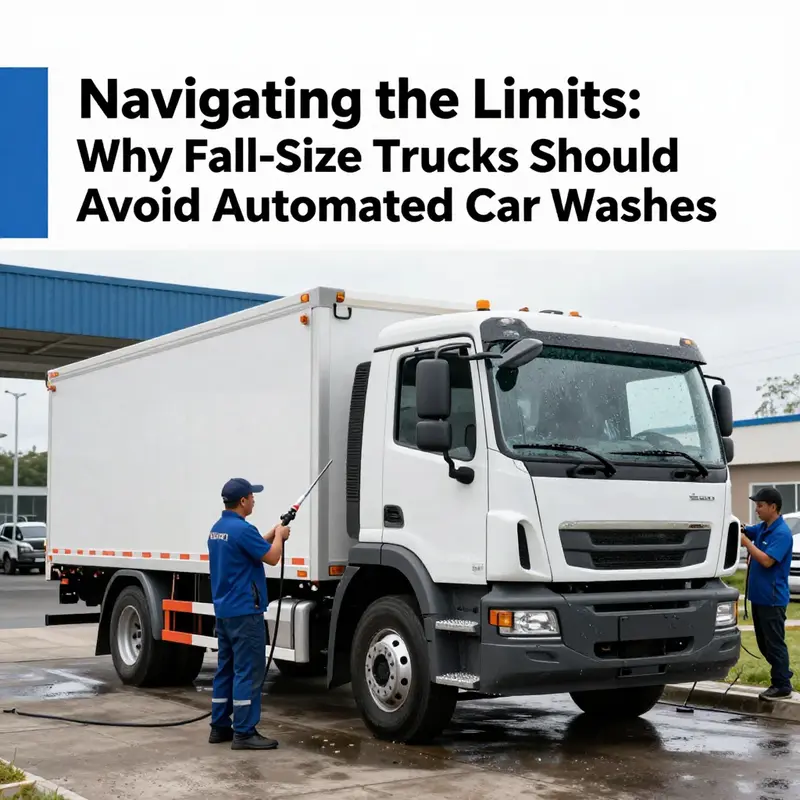
Full-size trucks have a stubborn relationship with automated car washes. Their bulk and undercarriage complexity push against the constraints built into most tunnel washes. This isn’t a matter of preference but of physics, engineering, and the realities of fleet maintenance. The standard cleaning tunnel assumes a sedan or compact SUV passes through on a guided track, brushes sized for a narrower profile, and a single, uniform pass that leaves the vehicle gleaming in a matter of minutes. For trucks, however, the hardware and the process come up short. Height limits, widened frames, and heavier wheel assemblies test the tolerance of the wash’s clearance gates. More than once, a truck’s cab height or bumper geometry has threatened contact with sensors, spray arches, or guide rails. The result is not only the potential for cosmetic damage but also the risk of a rushed, incomplete wash that leaves soils and contaminants perched in the undercarriage or around the chassis where a standard cycle rarely reaches. This practical limitation is why many operators treat full-size trucks as a separate category, steered away from the generic tunnel wash and steered toward alternatives that recognize the scale, geometry, and functional demands of these vehicles. In other words, the truck in a line of passenger cars often becomes the outlier, and not necessarily the exception one can simply overlook.
The underlying reasons for steering away from standard automated car washes are straightforward, yet worth repeating in a fleet-focused chapter like this. First, size constraints are real. The tunnels, height clearances, and width constraints that easy-to-handle passenger models slide through can be prohibitive for a heavy-duty pickup, a crew cab, or a large work truck with extended wheelbases. Even where a facility advertises “commercial” or “truck-friendly” capabilities, the throughput mindset of an automated wash—fast, uniform, and automated—may still fall short of fully cleaning the intricate underside and fenders. Second, the risk of mechanical damage is not merely theoretical. The rotating brushes, fixed spray arches, and sensitive sensors are calibrated for smaller bodies. A misalignment or a brushing contact that occurs in a high-pressure wash can mar paint, chip trim, or dislodge mirrors, leaving fleets with repair costs that dwarf a momentary savings on a cheaper wash. Third, vehicle-tracking logic designed for passenger vehicles can falter with a larger profile. If the guides misread a wheelbase, or the spray nozzles miscalculate proximity to a frame rail, the wash could stall mid-cycle, or worse, disengage the vehicle entirely from the tracking system. In short, the operational design of most automated car washes simply isn’t compatible with most full-size trucks, particularly those operating in demanding environments where mud, oil, and heavy grime are routine. The prudent conclusion, supported by fleet managers and maintenance teams alike, is simple: don’t press a truck through a tunnel wash unless the facility explicitly confirms it is safe for your specific model and configuration.
That practical conservatism yields a set of viable alternatives that are more than just accommodations. They are tailored cleaning solutions that recognize the demands of large vehicles, including the need for thorough undercarriage access, robust water delivery, and controlled handling in open spaces or purpose-built bays. Among these options, high-pressure water jetting—often described in the industry as hydroblasting—stands out as the most effective and flexible option for heavy-duty cleaning. Rather than relying on detergents and rotating brushes to lift caked soils, hydroblasting uses extremely high-pressure water to blast away dirt, oil, and mud. In practice, this method reaches the undercarriage, frame rails, and wheel wells with a power that is difficult to match with traditional car washes. A 2025 assessment in Car and Driver highlighted an essential reality for large vehicles: the truck’s mass and configuration typically require open-area cleaning rather than enclosed garages or bays, and high-pressure water alone can accomplish the job without introducing the risk of abrasives or detergents injuring sensitive components. The argument here is not about splashy showrooms but about getting a truck clean where it matters most, with minimal risk to the finish and components.
If hydroblasting represents the most thorough exterior approach, on-site truck wash services—whether mobile or fixed-location—offer a practical, scalable alternative for fleets that cover broad geographies or operate in locations where a traditional wash bay isn’t readily available. Mobile units bring industrial-grade pressure washers, large-diameter hoses, and undercarriage wash rigs directly to the vehicle’s location. They are designed to handle heavy soils, mixed grime, and the accumulation of dust and mud typical of trucks in construction, mining, or service sectors. The equipment is purpose-built for reliability and speed, allowing a crew to treat a truck’s exterior and undercarriage in a single session, often with a complete undercarriage rinse included. The advantage is twofold: reduced vehicle downtime and the confidence that every nook of the truck is addressed without transporting a vehicle to a wash facility that may not be sized for its dimensions. The value of this approach grows in fleets that depend on continuity of operation; the wash becomes part of maintenance planning rather than a standalone logistical event. In many cases, the on-site team can adapt the sequence of work based on soil type, from thick clay and shale to oily residues, ensuring a more comprehensive result than a generic tunnel wash could deliver.
A third approach broadens the toolkit without requiring the full deployment of hydroblasting or on-site services: dry ice blasting. This method, which uses pellets of solid carbon dioxide accelerated to high speed, is non-abrasive and leaves no residue. It is particularly advantageous for cleaning sensitive components or areas where water usage is constrained or undesirable—such as certain electrical housings or equipment bays where moisture could pose risk. Dry ice blasting is not a universal solution; it demands specialized equipment and trained operators, and it can be costlier than traditional washing for everyday needs. Yet for fleets that must avoid water ingress or that need to preserve delicate finishes while removing stubborn contaminants, it offers a compelling option. The broader insight here is that the cleaning ecosystem for full-size trucks is not a single tool but a spectrum of methods, each with a distinct set of strengths and constraints.
Beyond these high-impact methods, there are techniques that fill specific gaps without pretending to replace a full-vehicle overhaul. Ultrasonic cleaning, for instance, excels at cleaning complex or restricted components such as engine parts, fasteners, or small metal assemblies. It uses high-frequency sound waves to generate microscopic bubbles that collapse and dislodge contaminants. While not practical for an entire truck, it is a powerful adjunct for maintenance beyond the shop floor when the goal is to extend component life or to prepare parts for inspection or coating. Steam cleaning offers another layer of environmental consideration: it uses high-temperature vapor to loosen grease and oil, reduces chemical usage, and achieves sanitization effects. However, heat can be risky for some plastics, wiring, and electronics, so steam is best applied in controlled applications rather than as a universal approach for every surface. The common thread across these options is deliberate selection based on the truck’s condition, work environment, and the fleet’s maintenance philosophy. When used in combination, these methods yield a practical, thorough solution that addresses both the visible exterior and the hidden, stubborn soils along the frame and undercarriage.
From a fleet-management perspective, the best practice is to design a cleaning plan that leans on a mix of these alternatives rather than relying on any single method. A typical, effective model might begin with a hydroblasting session for the stubborn exterior and undercarriage soils, followed by an on-site wash to ensure that the cab area, steps, and wheel wells are fully addressed. If moisture-sensitive areas or delicate components require attention, dry ice blasting can be scheduled to minimize risk while achieving a high level of cleanliness. Ultrasonic cleaning can be reserved for parts or assemblies during maintenance downtime, and steam cleaning may be employed in specific, environmentally conscious programs where water use is a concern or chemical exposure must be minimized. The overarching message for operators is clear: respect the truck’s size and complexity, and tailor the cleaning approach to the vehicle rather than forcing it through a standard wash that was never designed for it.
The practical decision-making process should also consider facility capabilities, safety, and cost. In almost every case, a truck that undergoes any form of high-pressure cleaning should be managed by trained personnel who can monitor water pressure, surface temperature, and the proximity of sensitive components. Environmental considerations—such as runoff containment and water reclamation—are not ancillary; they are part of a responsible cleaning program that protects the operator’s investment and the local ecosystem. For fleets that want robust guidance on aligning cleaning practices with broader facility management and compliance objectives, a dedicated resource exists to help fleets optimize their wash infrastructure and personnel practices. See the resource on facility management for truck wash businesses for an integrated approach to scheduling, staffing, and equipment selection in a way that matches fleet needs and budgets.
In the end, the choice to bypass standard automated car washes for full-size trucks is not about a single missing feature but about a set of aligned capabilities: higher clearance, secure handling, comprehensive undercarriage access, and the ability to deploy high-impact cleaning methods without compromising the vehicle or the facility. The alternatives described here—hydroblasting, on-site wash services, dry ice blasting, ultrasonic cleaning, and steam cleaning—offer a coherent, practical pathway for fleets that demand reliability, speed, and thoroughness. They enable operators to preserve the structural integrity and appearance of their heavy-duty assets while maintaining composure in environments where these vehicles spend most of their working life. For those charged with keeping trucks clean in demanding settings, adopting a flexible, multi-method cleaning strategy is not a luxury; it’s a necessity that recognizes the unique challenges of size, weight, and exposure. External references on high-pressure cleaning methods provide broader context for why these approaches work so well for large vehicles and why facilities must embrace a range of techniques rather than a single, one-size-fits-all solution. For a broader look at hydroblasting concepts and their applicability to large vehicles, see Car and Driver.
Between Size and Safety: Untangling the Risks of Automated Car Washes for Full-Size Trucks
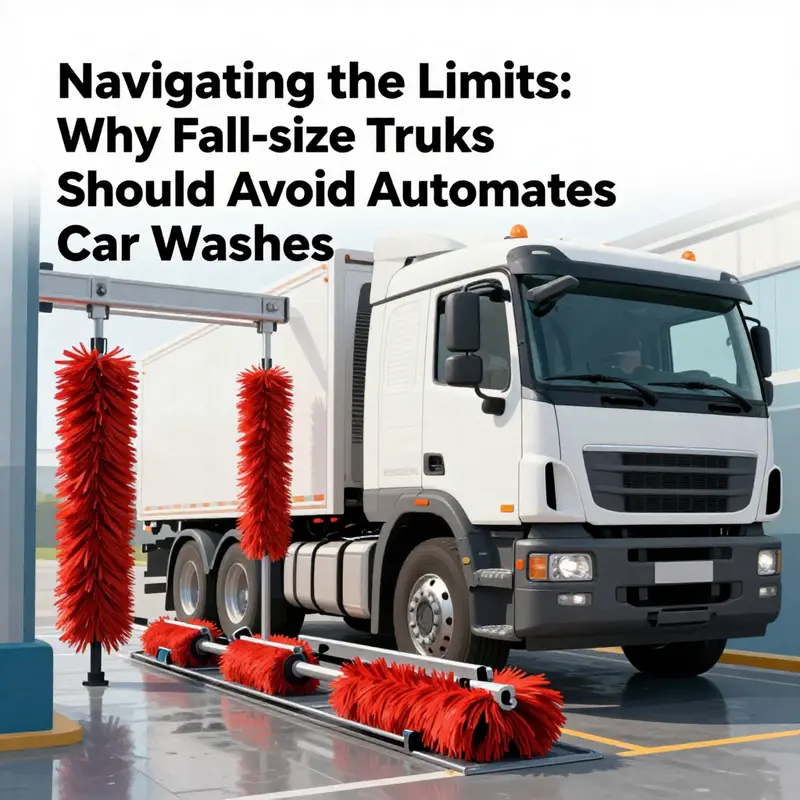
A drive to the nearest automated car wash is often framed as a routine upgrade in efficiency. For many car owners, it is a quick rinse, a cascade of soap, and a final shine that costs little time and effort. But when the vehicle in question is a full-size truck—a workhorse optimized for power, payload, and long-range capability—the same routine becomes a delicate balance between convenience and risk. The chapter you are reading does not just catalog a list of prohibitions; it maps why the encounter between a large truck and a standard automated wash is so often a mismatch. It looks beyond the chatter about convenience and cost and asks what actually happens when a machine designed for passenger cars meets a vehicle that dwarfs its dimensions and tests the tolerance of its moving parts. In doing so, it emphasizes a principle that underpins fleet care across the industry: safety and reliability must guide every decision about where and how a truck is cleaned.
The most immediate and visible risk is size incompatibility. Many automated washes are built around a corridor that assumes a vehicle width within a narrow band—typically around six to eight feet for passenger cars, with a ceiling clearance commonly around seven feet. Full-size trucks frequently push past those measurements, especially when they feature wide fenders, extended mirrors, or aftermarket accessories such as roof racks or side steps. When a truck nose enters a tunnel that is not tall or wide enough, the risk of contact with overhead frames, hydraulic arms, or side-mounted rollers becomes real. The consequences are not merely cosmetic. A single strike can misalign the vehicle, jam the track, or cause a cascade of mechanical alarms that shut down the wash. The physical dose of impact might bend or dislodge components, and the subsequent downtime can ripple through operations that depend on predictable turnaround times for a fleet.
Yet even when a truck somehow fits within the rough envelope, there is a subtler, more insidious danger—the effect of a misfit on the wash sequence itself. Automated systems rely on precise geometry to guide the vehicle through a predefined path. The rails, sensors, and conveyors assume a vehicle profile that falls within standard passenger dimensions. If the truck presents a wider body, a larger wheelbase, or protrusions from aftermarket modifications, the guiding elements may fail to engage properly. The result is not only a less effective wash but also the potential for the wash arms to overlap with mirrors, antennas, or protruding lighting. The high-pressure spray and rotating brushes, even when functioning perfectly, can deliver cleaning power in places the system was never designed to reach or protect. The sides, rear corners, and undercarriage can end up still caked with mud or road grime, not because the wash was incompetent, but because the machine could not align or adjust to a vehicle that challenges its core assumptions about size.
A broader risk umbrella covers both safety and economic considerations for wash facilities themselves. From the operator’s perspective, large vehicles exert greater mechanical loads on the wash’s drive and support structures. A truck entering a tunnel travels with a heavier mass and sometimes with a longer contact path for the rollers and guides. If the facility’s infrastructure is calibrated for lighter passenger cars, repeated exposure to heavier loads can accelerate wear on rails, bearings, and water management components. In the worst cases, repeated strain can lead to rail misalignment or rusting around the most exposed joints. This is not a hypothetical caution; industry observations have documented how high-frequency, high-volume use of washes by large commercial vehicles can escalate maintenance demands and, in some instances, shorten the equipment’s service life. The long-term implications are obvious: more frequent downtime, higher maintenance costs, and a greater risk of facility-wide shutdowns that ripple through fleets relying on timely cleaning.
Beyond physical fit, the functional design of many automated washes poses a risk to the truck’s sensitive features. Modern trucks carry a suite of sensors, cameras, and intake vents that help them operate safely and efficiently in all weather. The proximity of moving brushes and high-pressure jets to these components raises the chance of scratches or misalignment. Mirrors are among the most vulnerable parts; even a minor brush contact can flex or crack a mirror housing, necessitating replacement and downtime. Sensors installed near the front grille or along the sides can be knocked out of calibration, potentially affecting parking assist or proximity warnings inside the cab. If a truck has aftermarket or heavy-duty bumpers, skid plates, or protective equipment, the risk multiplies. Protrusions may collide with rigid wash hardware, creating a cascade of damage that ends with the vehicle requiring repairs before it can safely depart. These risks are not merely about an unlucky moment; they represent a pattern in which the standard automated wash’s design intent clashes with the realities of large, work-ready vehicles.
A third layer of concern concerns the undercarriage and drivetrain exposure. The undercarriage of a full-size truck often carries mud, salt residues, and road grime that require thorough rinsing and occasional chemical treatment. In conventional passenger-car washes, the undercarriage exposure is comparatively limited. In washes designed for smaller vehicles, the water jets and spray angles may not deliver sufficient coverage to the truck’s underside, particularly if the vehicle is tall or has a lifted suspension. When a truck’s undercarriage remains dirty, corrosion risk increases and protective coatings are stressed. The risk is compounded by how the wash’s spray cycles are sequenced. If the system prioritizes surface cleaning and neglects thorough reach to the underside, technicians may need to intervene manually or with alternative treatments, slowing the process and increasing labor costs. This hidden dimension of the risk profile suggests that even when a large vehicle can pass through a standard wash, the outcome may fall short of the clean standard required for fleets that operate in challenging environments.
The conversation about risk cannot ignore the reality of modifications that many trucks wear in daily operation. Custom bumpers, auxiliary lighting, winches, or skid plates are common on trucks used for work in difficult terrains or for specialized applications. These features may extend beyond the vehicle’s factory envelope, enhancing functionality while simultaneously creating new collision surfaces with wash equipment. The potential for entanglement or collision increases, and the wash’s mechanical logic has fewer built-in allowances for unpredictable protrusions. Each modification introduces a variable that a standard automated wash is not equipped to accommodate reliably. In practice, this means more frequent technician checks, more careful pre-wash inspection, and a greater likelihood that a vehicle will be turned away or redirected to a more suitable cleaning solution.
Another dimension—often overlooked in glossy promotional material—concerns the broader maintenance implications for the wash facility itself. A 2022 industry report highlighted that wash systems used heavily by large commercial vehicles can experience accelerated wear on foundation components due to constant exposure to water, heavy loads, and the stress of frequent use. Rust, joint wear, and fatigue in structural elements can compromise safety and reliability, especially in high-traffic fleet environments. When facilities experience this kind of wear, the risk is not isolated to a single wash stall; it reverberates through the entire operation. Downtime increases, scheduling becomes tighter, and the perceived reliability of automated washes drops among fleet operators who rely on predictable, cost-effective cleaning. This reality helps explain why many operators adopt a cautious stance: if a facility is not designed, tested, and continuously maintained for large, heavy-duty vehicles, the safer choice is to seek alternatives rather than push an accident or a costly repair.
In light of these multifaceted risks, the prudent approach for anyone operating a full-size truck is to demand clarity before placing a vehicle in an automated wash that may be unsuitable. This means asking facility staff for explicit clearance and verifying the wash’s published specifications and height, width, and vehicle-profile allowances. If a facility cannot provide a clear statement of compatibility, the safest course is to avoid the automated wash altogether. Instead, consider options that align with the truck’s size and duty cycle. Mobile truck wash services, which bring trained technicians and specialized equipment to the vehicle’s location, offer systematic exterior washing, door jamb cleaning, and in some cases full detailing without exposing the truck to the rough geometry of a conveyor tunnel. They can tailor the service to larger profiles, leverage hoses and undercarriage access that are not limited by a tight tunnel, and mitigate the risk of accidental contact with automated wash hardware.
Alternatively, a drive-through wash facility designed for larger vehicles represents a middle ground. These facilities typically feature higher ceilings, wider lanes, and sturdier wash equipment calibrated to handle heavy-duty chassis and wide bodies. They are not universal, but for fleets that frequently require onsite or on-property cleaning, they offer a controlled environment where the risk of misalignment is reduced and the cleaning can be customized to address the undercarriage and side panels with proper attention.
Self-service bays with staff assistance offer another path. In these setups, the vehicle owner or a trained operator can position the truck and receive guidance with high-pressure rinses, foam, and targeted treatments. The degree of control in this scenario is higher, and the risk to vehicle geometry is minimized because a human operator can steer the process around protrusions, mirrors, and sensors. While not as fast as a fully automated tunnel, this approach aligns the speed of operation with the realities of large, complex vehicles and supports better outcomes in terms of cleanliness and finish quality.
All of these considerations converge on a practical recommendation: for full-size trucks, always verify the wash system’s clearance limits and test the process in a medium-risk way before committing to a full wash. If there is any doubt about compatibility, opt for a truck-focused wash solution—whether it is a mobile service, a truck-specific center, or a facility configured for larger vehicle handling. The goal is not to shun all automation but to reserve it for scenarios where the vehicle and the system are in true alignment. In this sense, the decision is less about fear of damage and more about preserving value—protecting the truck’s paint, mirrors, sensors, and undercarriage while ensuring a thorough, efficient cleaning that meets the fleet’s standards.
To help fleet managers and vehicle owners navigate these choices, industry resources emphasize a proactive, data-driven approach. That includes documenting the vehicle profile, assessing frequent routes to the wash, and building a standard operating procedure that prioritizes safety, equipment compatibility, and maintenance continuity. It also means recognizing that the clean you want is a function of the right tool for the job, not the quickest path through a tunnel. For readers who want to explore broader governance and compliance aspects of truck washing, a practical reference on industry standards and emissions considerations is available here: truck-wash-industry-compliance-emissions-regulations.
In short, the risks associated with using automated car washes for full-size trucks are not abstract ideas. They are real, measurable factors that affect the safety of the vehicle, the well-being of the wash equipment, and the bottom line of fleet maintenance. The safest, most economical path is to treat washing as a bespoke service for large vehicles—one that respects the truck’s dimensions, details, and purpose. If a facility explicitly confirms safe clearance and compatibility, and if the wash sequence can be adapted to deliver a complete, high-quality result without compromising the truck or the equipment, then an automated wash can play a role. Otherwise, the alternatives—mobile or truck-specific centers—offer a clearer route to reliable cleaning while preserving the integrity of both machine and machine operator. For readers who want to dive deeper into how these choices fit into an overall fleet management strategy, the practical pathways converge around one principle: align your cleaning strategy with the actual size, features, and operating conditions of your trucks, and let safety guide the decision more than convenience alone.
External reading can provide additional perspectives on how automated systems handle large vehicles and what frameworks facilities use to manage risk. See a detailed industry analysis of challenges and mitigations in automated truck washing in the linked external resource: https://www.heavyequipmentjournal.com/automated-truck-wash-challenges/.
Sizing Up the Wash: Practical Guidance for Full-Size Trucks and Automated Car Care
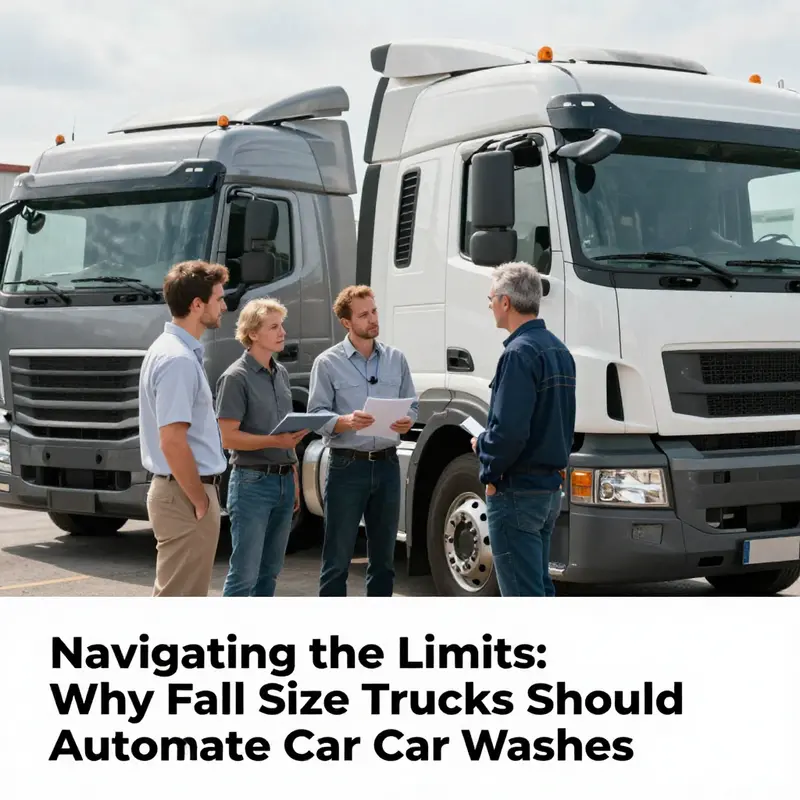
For many truck owners, the idea of slipping a full-size pickup or heavy-duty rig through an automated car wash feels like a straightforward way to keep fleets clean between longer trips. Yet the reality behind the glass and brushes is more nuanced. Automated car washes—especially the conveyor-style, tunnel washes common at many service stations and shopping centers—are designed with passenger vehicles in mind. The geometry of those systems, from clearance heights to lane widths and the way vehicles are tracked through the wash, often clashes with the dimensions and handling characteristics of full-size trucks. In practice, this mismatch is not just about a vehicle not fitting; it can translate into real risks for the truck’s bodywork and the cleanliness of the finish you expect to preserve. The question, then, becomes how to balance the desire for quick, efficient cleansing with the imperative to protect paint and finish while avoiding operational hiccups in the wash facility itself.\n\nThe most immediate and tangible constraint for full-size trucks is the physical envelope of the wash tunnel. Height restrictions in many automated systems hover around seven feet, which places true full-size pickups and larger SUVs in a precarious category even before you factor in roof racks, antennas, or aftermarket equipment. Width constraints compound the issue; trucks, especially when loaded with cargo or sporting wide mirrors and extended bumper configurations, often exceed the width that the wash is calibrated to accommodate. The result can be a near-certain misalignment of the vehicle as it enters the tunnel, or worse, a jam that triggers safety protocols and stalls the entire wash cycle. Even where a truck manages to squeeze through, the risk is not merely cosmetic. The contact zone between brushes and panels is a repeated point of vulnerability. If any part of the truck such as the bumper, mirror housing, or fender flare protrudes beyond what the wash was designed to handle, the machine’s moving parts can scrape or nudge vulnerable edges. The potential for damage ranges from paint transfer and micro-scratches to more noticeable scuffs, which can undermine your gloss and long-term resale value. In the context of fleet maintenance, those costs add up quickly.\n\nBeyond the tunnel geometry, the tracking and alignment systems used by automated washes present another layer of concern. Modern tunnel washes use sensors and guide rails to position a vehicle for optimal cleaning. Large trucks, with their longer wheelbases and sometimes irregular trailer configurations, can stress these tracking mechanisms. If the system cannot reliably align a truck, you may end up with uneven washing, missed sections, or even soap and water pooling in crevices that are difficult to reach in a vehicle of that size. These mechanical realities help explain why industry cautions about full-size trucks are not just conservative rhetoric; they reflect a pattern observed across many facilities where equipment designed for smaller vehicles struggles when faced with larger platters of metal and rubber.\n\nA central concern that often surfaces in expert analyses is paint integrity. The risk of introducing micro-scratches and swirl marks is not theoretical. A 2026 analysis highlighted by Car and Driver points to brushes in automated systems accumulating microscopic particles such as sand, metal shavings, and brake dust as they pull thousands of vehicles through daily. When a truck has a broad, high-contrast surface area, those contaminants have more opportunity to scratch or mar the finish if the wash’s brushes are not impeccably clean or if a vehicle passes through multiple times. The larger expanse of a truck’s panels means more surface is exposed to any potential transfer of grit, and the longer you operate in this cycle, the greater the chance that invisible abrasions will accumulate into visible swirl lines, especially once wax or sealants wear away and sunlight exposes irregularities.\n\nThose paint-safety concerns help explain the growing emphasis on choosing the right kind of automated wash for trucks. The most conservative approach is to favor touchless automated washes whenever possible. Touchless systems rely on high-pressure water jets, chemical cleaners, and specialized rinses without direct contact between brushes and the vehicle’s surface. This approach minimizes the likelihood of physical contact-induced scratches and swirl marks, a critical consideration for owners who rely on pristine finishes for business reputations, fleets in lease return programs, or personal pride in a vehicle that must continue to look professional after hours on the road. It is not a cure-all, however. Touchless systems still operate through the same tunnel geometries and tracking challenges as brush-based ones. They reduce contact-based risk, but they do not magically make the space more accommodating for a full-size truck. To minimize exposure to contaminants carried by the wash itself, choosing a facility with meticulous maintenance practices becomes just as important as selecting a touchless option.\n\nMaintenance is the silent partner to any wash system. A facility’s ability to keep its equipment clean, calibrated, and inspected on a regular schedule directly influences your risk profile. Well-maintained sites tend to have stricter protocols for cleaning and replacing wear components, more frequent checks of spray pressures, and better filtration and reuse systems for rinse water. In the context of trucks, where the surface area is large and the finish is under constant exposure to road grime, this maintenance matters even more. When a wash center publishes clear cleaning protocols and demonstrates consistent practices—clean brushes between shifts, verify alignment checks, and ensure that no debris is redeposited onto vehicles—these are strong signals that the operation understands the unique demands of larger vehicles. For readers who want a deeper, facility-level perspective on what good management looks like in a truck wash environment, a detailed exploration of facility management for truck wash businesses is available here: Facility management for truck wash businesses.\n\nAlongside the feasibility question and the paint-safety considerations, full-size truck owners should acknowledge the limitations that automated washes inherently carry. These systems excel at routine cleansing and quick maintenance, which makes them excellent for removing light road grime, dust, and simple residue between longer cleaning cycles. They are less effective for deep stains, oxidation, or heavy tar and grease that require more intensive treatment or specialized tools and products. Trucks, with larger panels, stubborn coatings, and variable cargo exposure, often benefit from a broader care routine that includes dedicated hand washes, professional detailing, and periodic deep-clean sessions. In practice, many fleet managers and owner-operators use automated washes as a rapid rinse and pre-wash step, followed by a more thorough hand wash or detail when time allows. This layered approach preserves efficiency while protecting investment, particularly for vehicles that operate daily or travel through harsh environments.\n\nFor those who still need to use automated washes due to schedule pressures or regional service gaps, preparing the truck properly can meaningfully reduce risk. Begin by checking height, width, and clearance. If the truck is within tolerances for a given facility, consider removing or retracting protruding accessories, as well as any oversized racks or accessories that could extend into the wash area. Confirm with the facility that they are capable of safely handling your truck’s specific configuration. Ask about brush contamination controls, water pressure ranges, and whether the wash uses a top-to-bottom cleaning sequence that minimizes drag and misalignment. A pre-inspection of the wash bay can be a smart move, though it is not always feasible on every trip. In the absence of certain assurances, prioritize alternatives and save automated washing for occasions when a dedicated truck wash facility is available.\n\nThe alternatives to standard automated car washes for full-size trucks are practical and increasingly accessible. Mobile truck wash services, which have grown in popularity as sourcing patterns shift toward on-site, turnkey maintenance, bring professional cleaning equipment directly to the vehicle’s location. These services are equipped to handle large vehicle profiles, offer a range of options—from exterior rinses to full fleet detailing—and can tailor the service to the vehicle’s use case, whether it’s daily city trips, long-haul routes, or a maintenance schedule that keeps corporate fleets looking consistent. Mobile services bypass the geometry problem entirely while delivering a level of care that aligns with the finish expectations of owners and fleets alike. Another option is drive-through wash facilities specifically designed for larger vehicles. These sites feature higher ceilings and wider lanes, built to accommodate the spatial realities of trucks, trailers, and related configurations. The availability of such centers varies by region, but they represent a growing segment of the market that recognizes the demand for truck-friendly automatic cleans without compromising safety or finish protection.\n\nFinally, self-service car washes that permit staff-assisted options in designated bays offer a balanced middle ground. In these settings, the customer can guide the water and cleaning cycles, but staff can intervene to manage high-pressure applications more precisely and apply targeted treatments to stubborn areas. For trucks with unusual contours, extensions, or trailing equipment, this hybrid approach can deliver better outcomes than an off-the-shelf tunnel wash, while still maintaining the convenience of a mostly automated flow.\n\nTo summarize, the practical guidance for full-size truck owners considering automated car washes rests on three pillars. First, acknowledge the physical and mechanical realities of the wash: height and width constraints, potential misalignment, and the risk of contact-based damage. Second, prioritize paint safety by leaning toward touchless systems when possible, while recognizing that no automated wash is a universal solution for every scenario. Third, pair automated options with a broader care strategy that includes hand washes, professional detailing, and maintenance-informed facility choices. The emphasis should be on smart triage: use automated washes for quick, routine cleansing in locations that explicitly support larger vehicles, and reserve deeper, more thorough cleaning for settings designed to handle trucks with care. The goal is a practical routine that preserves finish integrity, minimizes risk, and leverages the strengths of each washing modality rather than forcing a single approach to fit all circumstances.\n\nAs you plan your schedule, consider documenting and reflecting on each wash encounter. Note the wash type, any signs of paint wear, and the facility’s maintenance practices. This log becomes a useful tool for fleet managers and individual owners alike, guiding future decisions about where and when to wash. It also helps reinforce best practices within a broader upkeep program that may include preventative detailing, sealants, and periodic professional evaluation of the truck’s exterior condition. In a fleet context, where consistency and image matter, those small records translate into meaningful long-term value by reducing the risk of damage and extending the vehicle’s effective life on the road. For readers seeking broader guidance on how to maintain and manage a truck washing operation—whether a single owner-operator or a fleet administrator—the linked resource on facility management offers a deeper lens on how to structure, monitor, and improve wash-center performance over time: Facility management for truck wash businesses. And for those who want a deeper dive into the central question of machine versus hand washing and paint safety, a comprehensive external analysis is available from Car and Driver. See the external resource for an objective, up-to-date discussion on whether the machine can actually scratch your paint: https://www.caranddriver.com/features/a49357221/automated-car-wash-vs-hand-wash-does-the-machine-actually-scratch-your-paint/.
Final thoughts
The unique challenges posed by full-size trucks necessitate a departure from standard automated car washes, which are ill-equipped to handle their size and complexity. The alternatives available—ranging from mobile wash services to specialized truck wash facilities—enable fleet managers and truck owners to uphold vehicle cleanliness without compromising safety or efficiency. By understanding the risks involved and appreciating tailored cleaning solutions, stakeholders can ensure their vehicles remain in optimal condition, thereby safeguarding their investment and enhancing operational productivity.