
Maintaining a semi-truck’s exterior is crucial for fleet managers and operators aiming to prolong the lifespan of their vehicles while ensuring a professional appearance on the road. Proper washing prevents damage to paint finishes, preserves resale value, and upholds brand integrity. This guide offers an in-depth look into the preparation, techniques, and post-wash maintenance necessary for keeping semi-trucks in top condition, directly addressing the needs of logistics and freight company fleet managers, trucking company owners, and construction and mining fleet supervisors.
The Groundwork of a Gleam: Thorough Prep That Protects Paint and Power When Washing a Semi Truck
The groundwork of any effective wash lies in preparation, a quiet commitment to restraint, plan, and protection. A semi truck carries miles of travel, fuel, and work, and its exterior is a ledger of every mile. When you start with a solid prep routine, you treat the truck not as a single object to scrub but as a machine with layers—paint, chrome, rubber, seals, and delicate electrical and mechanical components. The prep phase is where you decide what you will touch, how hard you will touch it, and when. It is the moment when you translate a general goal—clean and protected—with a precise sequence of actions that minimizes risk and maximizes result. Yet prep is not a one-size-fits-all ritual. It requires awareness of the truck’s condition, the environment, and the tools at your disposal. The most capable wash begins with a calm assessment rather than a frantic spray. This calm sets the tone for every subsequent decision, from where you park to which brushes you pick up first.
A thorough pre-wash inspection is more than a quick glance. It invites you to look for damaged panels, loose trim, or any area that might require extra care during cleaning. Small dings or loose hardware can be aggravated by vigorous washing, and signs of rust or fatigue can worsen if you neglect them. While your eyes scan the surface, your hands can sense tension in the truck’s joints—the door gaps that feel snug or slightly loose, the undercarriage that echoes with each wheel rotation, or the mirrors that seem to rattle in a breeze. This is not about chasing cosmetic perfection alone; it is about preserving structural integrity and the finish that protects it. If you notice anything unusual, mark it in your notes and adjust the approach accordingly. You may decide to shield a particularly vulnerable area or perform a lighter touch in a place where a seam or panel is suspect. A good prep routine also involves confirming the vehicle is safe for washing. If there are signs of leaks, loose wiring, or exposed hoses, you may need to pause and address those issues before water or cleaners come into contact with sensitive components.
Park placement matters as much as brush choice. A level, flat surface is essential, not just for balance but for an even distribution of cleaners and rinses. Direct sunlight is an adversary in this stage because heat can cause quick drying, leading to water spots or streaks that complicate later steps. Even if you work early or late in the day, you want a location with shade or cooler ambient temperatures to allow cleaning solutions to dwell without drying prematurely. If you have the option, choose a spot away from high traffic and runoff restrictions to keep the process orderly and safe. The goal is to create a controlled environment where you can move around the entire truck without stepping in dirt you already cleaned, and where you can manage hoses and cords without tripping hazards. A level area also makes it easier to inspect the underbody and frame, so you can address grit and built-up grime along the rails and cross members with confidence rather than by guesswork.
As part of this preparation, consider removing removable items if feasible. Detaching mirrors, side rails, and step plates, when possible, reduces the chance of accidental damage during scrubbing and rinsing. It also frees you to clean into the corners where dirt accumulates and prevents you from bending awkwardly around hardware that can scratch when bumped by a sponge or brush. When you remove these parts, take care to store them safely so you can reinstall them without delay. The process may feel meticulous, but the payoff is a smoother wash with fewer disruptions. If fully removing items is not practical, note their positions and cover exposed edges with protective padding to avoid surface contact that could mar paint or finish. This step aligns the wash with a broader mindset of care rather than brute force.
Protecting sensitive components is a central pillar of prep. The air intake, engine compartment, electrical housings, and other exposed elements must be shielded from water or cleaners that could compromise performance. Simple covers, plastic bags, or purpose-made protective shields act as barriers without obstructing necessary ventilation. Sealing the air intake or cab ventilation, even partially, is a prudent precaution in environments where dust and contaminants are common. If you work in a region where dew or mist can cling to the truck overnight, consider a brief dry-off of critical areas before you begin to prevent moisture from becoming a challenge later on. These protective measures are not just about avoiding a costly repair; they are about maintaining reliability for the next haul. A truck that runs clean and dry in the engine bay tends to deliver better performance when it matters most.
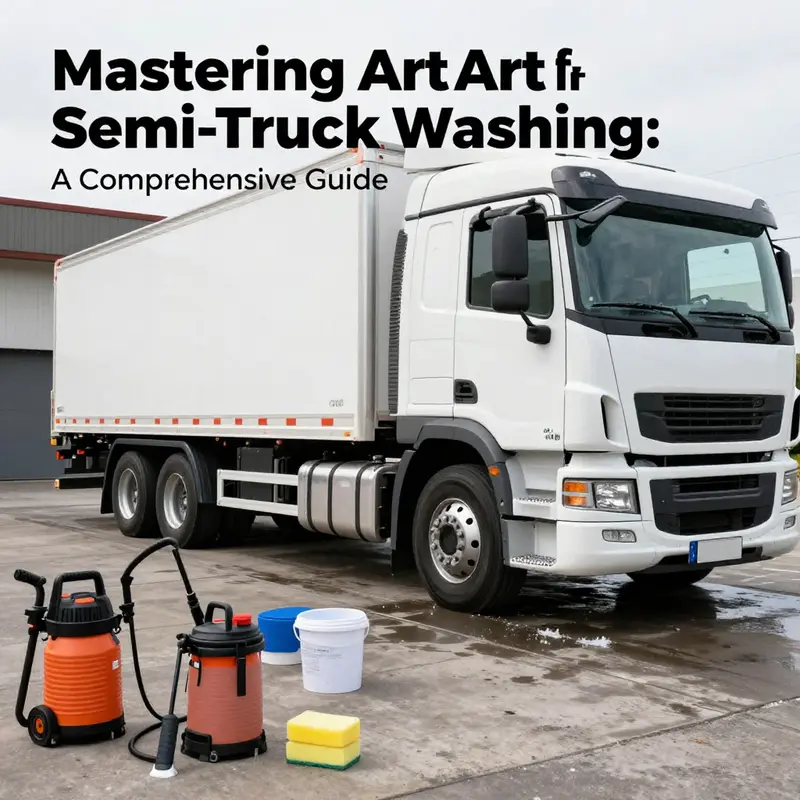
In this phase you also gather the tools and materials that will carry you through the wash with efficiency. Assemble a high-pressure washer with adjustable pressure, a large bucket, soft sponges or microfiber wash mitts, soft-bristled brushes for wheels and grilles, a dedicated tire cleaner, glass cleaner, and a clean drying towel or chamois. Having these items out in the open, organized, and within arm’s reach reduces the temptation to improvise with unsuitable tools, which often leads to damage. With semi trucks, you are dealing with wide surfaces, corrugations, and complex chrome details that respond to each stroke. The ability to switch between a gentle fabric mitt for the body and a firmer brush for the wheels without swapping gear in the middle of the job saves time and keeps cross-contamination at bay. A prepared crew, if you are washing with others, should understand the plan as well as the boundaries of their stations so that you maintain hygiene and workflow rhythm throughout the process.
Part of preparation is aligning your approach with the nature of the grime you confront. Road film, brake dust, and tar require different treatments, and you must acknowledge how stubborn residues cling to surface textures. The right detergent matters. You should choose a pH-neutral, automotive-specific car wash solution rather than household cleaners that can strip wax or dull paint over repeated use. The choice of cleaner matters because it influences the risk you take with the finish. If you plan to use a foam cannon or spray wand, test the foam pattern on a small section first to ensure even coverage and to avoid over-wetting delicate areas. The dwell time—the period the cleaner remains on the surface before rinsing—depends on the grime and the temperature. A well-chosen solution will loosen grime without requiring you to agitate it so aggressively that you risk micro-scratches. The washing plan should anticipate the top-down sequence: roof first, then sides, then doors, and finally the lower panels and undercarriage, with extra attention given to wheel wells, arches, and any chrome that reflects sunlight and draws attention to dirt.
For fleets and businesses, the prep stage is an opportunity to tie maintenance discipline to operations. You can keep references and checklists on hand so that any team member can execute the steps consistently. In many operations, the flow of wash day is a reflection of building management—how spaces are prepared, how tools are stored, and how waste water is managed. The smarter you design the prep process, the less you need to improvise during the wash itself. If you are responsible for a fleet, you may find value in viewing prep as part of facility management for truck wash businesses, where the aim is to balance efficiency with care. facility-management-for-truck-wash-businesses a guide that foregrounds how organized environments support consistent results and safer operations. This internal reference can help you implement standardized prep routines that minimize downtime and maximize uptime. In the end, the most important thing is making the truck accessible to the tools without compromising its protection. A well-prepared truck is a more predictable canvas for the actual cleaning work to follow, and the resulting appearance will reflect that calm, deliberate approach.
As you prepare, you should also consider the timing of the wash. Never wash a semi truck in direct sunlight. The heat can cause the cleaning solution to dry too quickly on the surface, leaving water spots and streaks that complicate the next steps. Planning for early morning or late afternoon light avoids this hazard and gives you a window of cooler air and longer dwell times for the cleaning agents. The sun is a powerful adversary in a busy wash, and respecting its rhythm can save you time while improving the final look. If you must wash in warmer conditions, you can mitigate the risk by shading the truck with portable screens or tarps and working with a two-person team that can rinse more efficiently, but even then the goal remains: keep the surface from drying before you rinse it away.
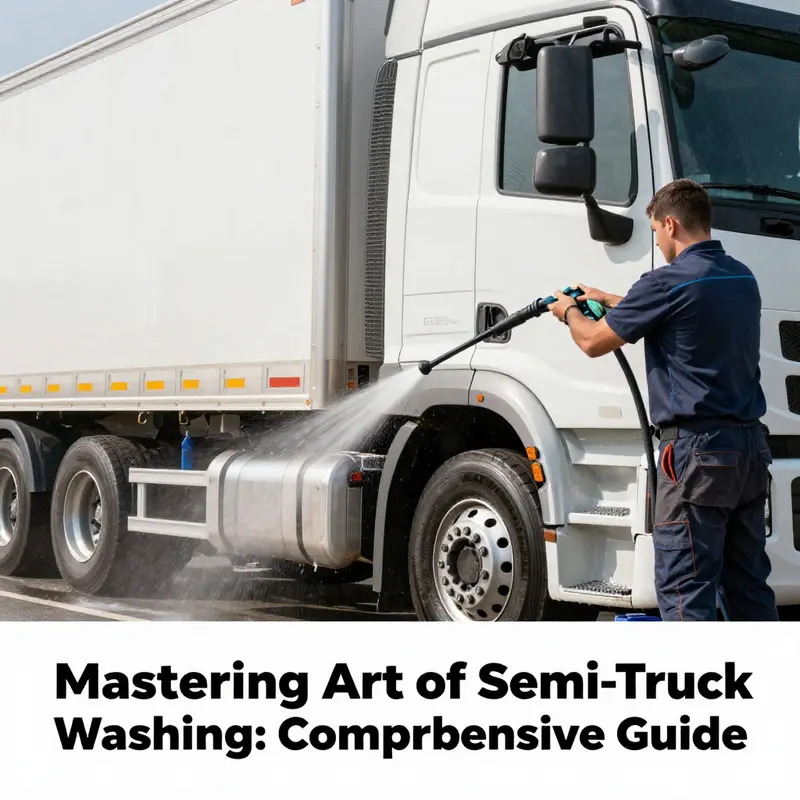
Finally, consider the sequence you will use once the vehicle is ready to wash. You will apply the cleaning solution, allow it to dwell, and then begin a controlled rinse from the top down. The undercarriage and frames should receive attention with a stiff-bristle brush and a dedicated frame cleaner if buildup is stubborn. Drying will come after a thorough rinse, using microfiber towels or an energy-efficient drying method that minimizes water spots. The prep phase ends with a clear, actionable plan that reduces guesswork and keeps the truck protected while you work. The better your preparation, the more the subsequent cleaning stages can flow; you will feel the difference in how the water moves across the surface, how the foam clings, and how the grime lifts away with minimal agitation.
In sum, preparation is not a mere hurdle to overcome before washing. It is the investment that makes the entire process smoother, safer, and more effective. It disciplines your approach to work, guards the truck’s finish, and ensures you can complete the job without returning to a point of repair in the days following. The plan you establish in this phase determines the clarity of the final result: a clean, well-protected semi truck whose paint maintains its depth and shine, whose chrome gleams without the dullness of settled film, and whose mechanical components remain safeguarded from moisture or cleaners that could compromise performance. When you begin with this level of care, the rest of the wash becomes a sequence of precise, deliberate actions, each designed to honor the vehicle’s endurance as much as its appearance. And as you continue, you can carry forward the same approach to future washes, creating a culture of meticulous prep that benefits drivers, fleets, and the road alike.
External reference for further technique and equipment recommendations can be found at a trusted industry resource: truck-washing-guide. This external guide offers expanded details on specialized tools, timing, and best practices for more challenging environments and heavier soils, complementing the prep steps outlined here. Remember that preparation is the doorway to a successful wash; once you have that door properly set, the more demanding aspects of cleaning lose their edge and become manageable routines rather than frantic scrambles. The result is a truck that not only looks good but stays in better shape for longer, ready for the next haul and the next mile of road.
null
null
Guarding the Gloss: Post-Wash Maintenance That Keeps a Semi Truck Looking Sharp and Performing Strong
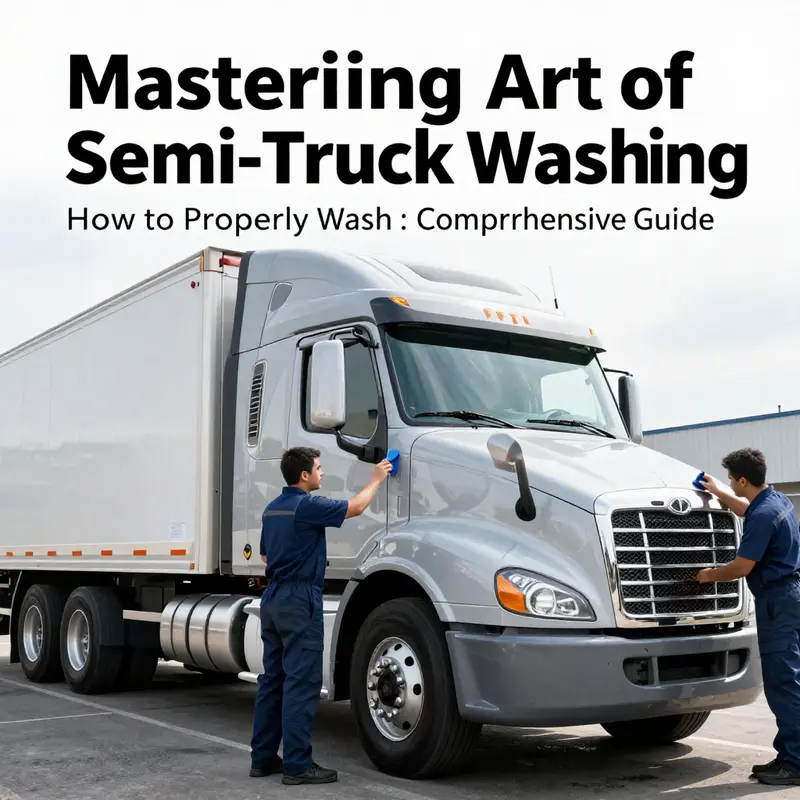
A thorough wash can leave a semi truck gleaming, but the true test of care comes after the soap dries. The post-wash routine is where protection is baked in, where the paint, seals, hardware, and moving parts are prepared to withstand road grime, UV exposure, and the daily grind of heavy use. A well-executed post-wash maintenance cycle doesn’t just preserve aesthetics; it reinforces safety, reliability, and efficiency on the highway. It is the quiet partner to every wash, the step that turns a clean truck into a durable, well-tuned machine ready for the next haul.
Drying thoroughly is the first and most critical phase of post-wash care. Even a light layer of residual moisture can leave mineral spots or promote surface corrosion in exposed metal areas, especially around wheel wells and the undercarriage where moisture tends to linger. After a rinse, a fleet-friendly process is to dry with high-quality microfiber towels or use air blowers to chase away droplets from seams, hinges, and crevices. The goal is a uniform, spotless finish, without a drying pattern that can trap minerals. The body panels, mirrors, and chrome accents benefit from careful wiping in a deliberate, overlapping pattern. When the truck is dry, take extra minutes to inspect the surface for any remaining damp spots that might tempt the formation of rust or water spots if left unrepaired.
The most revealing stage of post-wash maintenance is a thorough inspection. Grimy paint masks flaws that could otherwise go unnoticed but become obvious once the grime is removed. Look for areas where seals may be cracked or sagging, trim that has loosened from vibration, and lights or reflectors that have dulled or become misaligned. A careful eye during this step often saves time and prevents unexpected downtime by catching issues before they escalate. It’s worth running a hand along door joints and hood seams to check for looseness, and you should test the operation of doors, curtains, and any retractable components. If hinges feel stiff or creaky, that is a signal to address lubrication or wear sooner rather than later. This is also a good moment to examine hydraulic lines, electrical harnesses, and wiring looms for chafing or heat damage that grime could have concealed.
Protective coatings follow the inspection in a way that makes the maintenance feel like a long-term investment rather than a single act. After drying and assessing the surface, applying a protective layer can dramatically improve resistance to UV rays, contaminants, and weathering. A wax offers a traditional, reliable shield that enhances gloss and repels light grime, while a ceramic coating provides tougher, longer-lasting protection against mineral deposits and environmental fallout. Either choice should be applied to a clean, dry surface, allowing adequate cure time as recommended by the product guidelines. Avoid applying coatings in conditions that promote rapid drying or uneven curing, such as direct sun or high heat. The truck should have no dirt, grease, or water on the panels when you begin. A careful buffing session after curing helps achieve a uniform luster and a layer that truly repels the next round of road grime.
Glass surfaces demand their own meticulous care in the post-wash phase. Clean, clear glass is essential for visibility and safety, especially on long-haul routes where weather shifts can affect line of sight. Use a quality glass cleaner and a lint-free microfiber cloth to wipe the windshield, side windows, and mirrors. Work in a circular motion to lift residues without scratching the surface, then finish with a light, horizontal pass to remove streaks. If stubborn spots remain, a second pass with a fresh cloth is often all that’s needed. It’s important to avoid ammonia-heavy cleaners on tinted glass, as they can degrade tint film over time.
Tire and wheel maintenance takes center stage during post-wash care because it directly affects traction, braking, and the truck’s overall aesthetic. Tires are easy to overlook after a wash, but a routine treatment can extend their life and keep them looking sharp. Begin with a thorough wipe-down of the tires, then apply a tire cleaner if required and a light tire shine or sealant if desired. Be mindful not to oversaturate the rubber with products that can sling onto the body or re-deposit on wheel rims. For wheels, a dedicated brush helps reach inside the spokes and around the lug nuts where brake dust sticks stubbornly. Rinse until all residue is gone, then dry to prevent water spots on chrome or painted rims. A polished finish on the wheels not only looks good but makes it easier to monitor for cracks or corrosion during routine checks.
The post-wash phase is a natural moment to address what often gets neglected: moving parts. Hinges on doors and curtains, latches, and other mechanical interfaces benefit from light lubrication after cleaning. A small amount of lubricant on moving parts reduces stiffness and wear, which pays dividends in ease of use and reliability. The right approach is to apply sparingly and wipe away any excess that could attract dust or debris. This step is particularly important on older equipment where hinge wear can lead to misalignment, vibration, or squeaks on the road. In a well-run operation, this lubricating check becomes part of the daily or weekly routine, ensuring that the truck’s entry points and cargo enclosures continue to operate smoothly.
The final inspection is not a formality but a crucial checkpoint before the truck returns to service. Verify that all hoses are routed correctly and secure, that tools or rags were not left in hidden pockets, and that exterior lights and reflectors are intact and functional. If a truck is used for specialized tasks such as chemical transport or food-grade transport, the post-wash step may include additional checks tailored to those demands. In any case, the goal is to confirm that nothing has shifted during cleaning or transit and that safety-critical systems remain accessible and operable. A quick test drive or system check can confirm that the wheels track true, that the steering responds correctly, and that the braking system feels solid. When these checks pass, the vehicle is not just clean; it is ready to perform with confidence.
Beyond the tactile steps, there is value in building a simple, repeatable routine that aligns with fleet maintenance schedules. A dedicated checklist helps ensure that post-wash activities do not drift into a rushed, incomplete task. The checklist might include sections for drying, surface inspection, coating application, glass cleaning, tire care, moving parts lubrication, and final safety checks. Keeping records of what was done and when gives a clear history that can prove valuable for maintenance forecasting, warranty considerations, and resale value. A routine like this also supports a consistent standard across a fleet, ensuring every truck leaves the wash bay with the same level of care.
Incorporating knowledge from broader truck-wash practices can enhance the post-wash routine without complicating it. For instance, recognizing that stubborn grime—whether grease, tar, or road film—often hides behind wheel wells or underbody panels can guide a targeted approach. When such grime requires extra attention, it is useful to refer to proven strategies for cleaning grease and tar off your trucks fast, a resource that consolidates techniques and timing for tough stains. This guidance helps trim the guesswork from the process and speeds up the care cycle while protecting delicate finishes.
A note on the sequence matters as well. Starting with drying and inspection ensures that you do not smear cleaner or wax onto wet surfaces, which can compromise the finish. Proceeding to coatings, then glass, and finally tires and moving parts creates a logical flow that minimizes rework. The sequence is not just about aesthetics; it is about maximizing the durability of the finish, preserving color depth, and reducing the likelihood of water spots or mineral deposits that can accumulate if moisture lingers too long. When these steps are executed with attention to detail, the truck emerges from the wash not only looking pristine but also fortified against the next day’s grime and weather.
The post-wash routine can also be a bridge between cleaning and broader maintenance. For example, a quick check of fuel lines, air lines, and electrical connectors after cleaning helps reveal issues that grime might have masked. Light traces of oil or grime near seals can indicate dry rot, leaks, or worn gaskets that deserve immediate attention. This integrative approach links appearance with function, emphasizing that cleanliness and performance go hand in hand. A fleet operation that treats post-wash care as part of a broader maintenance culture sees fewer unplanned outages and smoother handoffs between drivers, wash staff, and maintenance teams.
Finally, the cadence of post-wash care should harmonize with the operational realities of the fleet. If the trucks run daily routes with varying weather, the crew may need to adjust the timing of the post-wash checks to ensure the surface is not exposed to direct sun for an extended period after coating. In warmer climates, allowing additional cure time before heavy exposure can prevent issues with streaking or incomplete bonding. In cooler environments, ensuring the coating remains at an appropriate temperature during cure helps achieve a uniformly hardened layer. The practical result is a truck that not only looks good when it leaves the wash bay but retains its gloss, protection, and functionality through many miles of service.
As you look ahead to the next chapters, the post-wash maintenance mindset—comprehensive, repeatable, and fleet-focused—serves as a bridge from cleaning to ongoing care. It anchors the idea that every component, from the paint to the hinges, benefits from deliberate attention after the wash. In this way, the ritual of washing becomes a sustainable practice that supports safety, efficiency, and the bottom line. For readers who want to explore more about how specific cleaning strategies translate into practical truck-care outcomes, the cited internal resource offers a deeper dive into how teams tackle stubborn grime with consistent results.
External resource note: For a broader view of mobile truck wash practices and how they fit into fleet maintenance, consult the comprehensive guide at https://www.truckwash.com/mobile-truck-wash-guide/ .
Final thoughts
Effectively washing a semi-truck is a multifaceted process that requires the right preparation, techniques, and ongoing maintenance. By adhering to these best practices, fleet managers and operators can ensure their vehicles remain attractive and in peak condition, which ultimately fosters improved brand recognition and reduces long-term maintenance costs. Investing time and resources in proper washing techniques is essential for any transportation business committed to maintaining its assets.