

The demand for professional truck washing services is surging as logistics and freight companies seek cost-effective solutions for their fleets. Efficient maintenance of commercial trucks not only extends vehicle life but also enhances brand image and operational efficiency. To meet this rising need, opening a truck wash business offers promising potential. This guide delves into critical factors including market research, legal frameworks, necessary permits, and optimal facility design that will empower fleet managers, trucking owners, and construction supervisors to effectively navigate this specialized venture.
null

null
Foundations in Compliance: How the Right Legal Structure and Registration Shape Your Truck Wash’s Future
The decision to open a truck wash is more than picking a location or selecting equipment. It is a choice about the legal skeleton that will carry the business through growth, risk, and the shifting tides of regulation. In the early days, when the lot is empty and the first hose is still wrapped in plastic, the clarity you gain about your legal structure and registration will pay dividends for years. The path to long-term stability begins with a purposeful choice of entity, a deliberate plan for naming, and a careful sequence of registrations that align with local rules and environmental expectations. This chapter is about that foundational work, the quiet but powerful decisions that define who is protected, how profits flow, and what obligations you carry into the future. The right structure can simplify taxes, shield personal assets, and make it easier to attract capital or partners when you’re ready to expand to additional sites. The wrong choice, in contrast, can complicate financing, invite unnecessary exposure, or force you into a rushed reorganization later on when opportunities or regulations change.
A fundamental tension informs every decision: you want enough protection to weather mistakes and liabilities, but you also want tax efficiency and administrative simplicity. For many small to mid-size truck wash operations, a Limited Liability Company (LLC) often hits the sweet spot. An LLC provides personal liability protection for the owner while allowing profits to pass through to a personal tax return, avoiding the double taxation that sometimes comes with a corporation. This blend of protection and flexibility is especially appealing for a business that deals with large fleets, environmental compliance, and a steady stream of service contracts. A sole proprietorship, by contrast, is straightforward to establish but exposes the owner’s personal assets to business debts and lawsuits, a risk that can be magnified by the significant capital costs and potential environmental liabilities of a truck wash. A corporation can offer advantages if you anticipate substantial growth, multiple investors, or the need to issue stock; however, it also brings greater regulatory complexity, formalities, and ongoing compliance requirements. In short, the choice should reflect current needs and the vision for scale, while keeping a clear eye on risk management, tax implications, and governance.
The cost of inaction is not merely the absence of protection; it often translates into missed opportunities. When you establish the right entity from the outset, you set the stage for smoother banking, clearer financial reporting, and better alignment with insurance and environmental coverage. Lenders frequently favor LLCs or corporations because those structures signal a formal plan for managing liabilities and operational risk. Investors and strategic partners also look for structures that demonstrate organizational discipline. Even if you start small, a thoughtful choice about structure communicates a readiness to grow responsibly and to bring in partners or lenders as needed. In practice, the process begins with naming, continues with registration, and then moves into a disciplined approach to licensing and permits that reflect your chosen form.
Naming your business is not only a branding exercise; it is a legal act that protects your rights and ensures that your customers and suppliers can clearly identify who they are dealing with. Most jurisdictions require you to register the business name with your state’s Secretary of State or equivalent agency, ensuring that no other entity uses a name that might cause confusion or legal disputes. If you plan to operate under a different name from your legal entity, you will likely file a Doing Business As (DBA) registration with the local government. This DBA step is often overlooked, but it prevents a host of headaches when you’re invoicing fleets or signing commercial contracts. Once your entity and name are secured, the next thread to pull is the Employer Identification Number (EIN). The EIN is the federal tax identifier for a business. Even if you don’t plan to hire employees immediately, an EIN is essential for opening business bank accounts, filing tax returns, and establishing a professional financial footprint. The process is typically quick and can be completed online through the Internal Revenue Service (IRS) portal. The moment you expect staff or contractors to work under your business, you will want the EIN in hand, because payroll taxes, unemployment insurance, and other statutory obligations will flow through that identifier.
Alongside these structural decisions, registration touches several critical areas where the atmosphere around a truck wash is markedly different from a typical retail operation. Environmental compliance stands as a central pillar because truck washes generate wastewater with detergents, hydrocarbons, and particulates that interact with stormwater systems. Local business licenses and zoning approvals are not optional add-ons; they are prerequisites that validate your footprint on the land and ensure that your operation aligns with traffic patterns, noise considerations, and safety setbacks. Environmental and safety concerns translate into permits and inspections that may require you to demonstrate, in concrete terms, how you will contain and treat wastewater, how you will manage chemical storage, and how you will prevent cross-contamination of the land and water ecosystem. This is not merely a formality; it is the practical acknowledgment that you are stewarding a site that touches a broader network of water quality obligations and worker safety rules.
In this context, the registration journey has a natural rhythm. First, you finalize your business structure—LLC, for example—and decide on a business name that resonates with fleets and drivers while remaining distinct within your state. With the entity and name secured, you apply for an EIN, which becomes the anchor of your financial and payroll systems. Then you pursue the necessary local licenses and permits, which will vary by city or county but reinforce a common core: your operation must comply with zoning, health and safety standards, and environmental safeguards. The registration steps are not isolated tasks; they are the operating manual for how you will run the business day to day, from issuing invoices to navigating inspections. They also lay the groundwork for a future that might include multiple sites, fleet contracts, or expanded services, since a well-structured foundation makes expansion decisions more straightforward and less disruptive.
The practical side of this foundation involves a mindful approach to liability, taxes, and governance. The entity type you choose affects liability exposure—sole proprietorships leave personal assets exposed to business liabilities, while LLCs and corporations draw a clearer boundary. Taxes follow a related logic: pass-through taxation of LLCs can simplify personal tax reporting, but certain corporate structures may offer advantages as you scale and bring investors into the picture. The governance implications also matter. An LLC offers flexibility in ownership and management while avoiding the stringent formalities of a corporation, yet it still provides a clear framework for operating agreements, distributions, and decision rights. If you foresee bringing in partners, issuing equity, or pursuing institutional financing, a corporate structure might be the better long-term fit, provided you are prepared for ongoing compliance, board oversight, and annual filings.
As you consider these structural choices, you should also map out the practical registration steps in a way that aligns with your timeline for securing the site and starting work. Registering your business name with the Secretary of State is often the first formal hurdle. This ensures you can operate under your chosen name and prevents conflicts with other similarly named businesses. If you decide to operate under a different name, a DBA filing with the county or city where you will operate becomes critical. With the name secured, obtain your EIN from the IRS. You may complete this step online, and the IRS provides immediate confirmation. The EIN is not optional once you have employees, but even if you start solo, having an EIN enables you to open a business bank account and separate your personal finances from the business—an important discipline for liability protection and accounting clarity.
Then come the licenses and permits, which are not merely bureaucratic hurdles but practical assurances to customers and regulators that you are managing the environmental and safety dimensions of a truck wash. A business license confirms your legal right to operate in a given jurisdiction; zoning approval ensures that your site is compatible with land-use plans and traffic patterns; and environmental permits—such as wastewater discharge approvals and chemical storage standards—provide a framework for containment, treatment, and reporting. In practice, these permits might involve consultations with environmental professionals, accounting for stormwater runoff, and demonstrating how your equipment will prevent harmful discharges from entering municipal sewers or surface water. The complexity here should not be minimized; it is a reality of the industry that demands not just compliance but a proactive program of monitoring and maintenance. In many communities, the regulator will expect documentation of containment systems, treatment units, and processes for waste handling, which you will need to articulate in your registration package.
Within this narrative, the link between legal structure and environmental compliance becomes vivid. The forms you choose influence your risk profile, the documentation you maintain, and the expectations you set for ongoing reporting. An LLC, for instance, allows you to separate personal risk from business risk, while your operating agreement and governance plan can spell out who makes decisions about repairs, expansions, or major contracts with fleets. The registration arc—name, EIN, licenses, permits—becomes the scaffold for everything that follows: the way you hire, how you price services, how you market, and how you respond to audits or inquiries from regulatory bodies. In the context of a truck wash, where you will manage high-pressure cleaning, rapid waste water flow, and chemical usage, this foundation is not a mere formality; it is the framework that supports trust with customers and compliance with the communities you serve.
The conversation about compliance and structure is not only about avoiding penalties; it is about enabling confident growth. If you intend to scale to multiple locations, or to negotiate with larger fleets that demand robust risk management, your structure will influence the speed and ease with which you can expand. A well-chosen entity, together with a disciplined registration approach, can simplify due diligence for lenders, streamline tax reporting for expanded operations, and clarify governance as you bring on partners or investors. The chapter you are writing, from the first line of the entity decision to the last signature on a DBA filing, is about setting a trajectory rather than merely crossing regulatory t’s and dotting i’s.
Finally, it is worth highlighting how this approach threads into the broader ecosystem of truck-wash operations. Compliance is not a standalone requirement but a daily practice that informs safety training, environmental stewardship, and customer trust. The structure you select will influence how you document procedures, how you train staff, and how you present your environmental practices to customers and regulators. In practice, this means you will maintain organized records of chemical inventories, training certifications, and maintenance logs, all tied back to the governance framework you chose at inception. It also means designing your site and your operations with an eye toward risk mitigation, so that your personnel can perform tasks—like handling detergents, managing wastewater containment, and operating high-pressure equipment—with clarity and accountability.
As you slide toward the next phases of planning and execution, the importance of this foundation becomes even more apparent. The legal structure you adopt and the registration steps you complete are not abstract boxes to tick; they are the structural beams that support every decision you will make—where you buy, how you price, whom you hire, and how you respond when fleets pressure you for faster turnaround. In this spirit, you can approach the task with a calm, methodical cadence, knowing that you are building a durable platform for your truck wash that will withstand the realities of environmental regulation, market competition, and the operational demands of serving the transportation industry. If there is a single guiding principle to carry forward, it is this: treat the formation and registration process as capital you invest in the business’s durability, not as a one-time hurdle to clear.
For readers who want to explore the regulatory landscape more deeply as they consider compliance-specific pathways, an industry resource offers detailed discussions on how environmental and industry standards intersect with operational practice. This material can provide a practical lens for translating entity choices and registrations into concrete site-level policies and procedures. truck-wash-industry-compliance-emissions-regulations
External resource: To broaden understanding of choosing the right business structure and to get official guidance, consult the U.S. Small Business Administration’s Choose Your Business Structure guide. It offers structured steps, considerations for liability and taxes, and clear explanations of how each entity type functions in practice. https://www.sba.gov/business-guide/plan-your-business/choose-your-business-structure
null
null
Foundations First: Strategic Site Selection and Intelligent Facility Design for a Sustainable Truck Wash
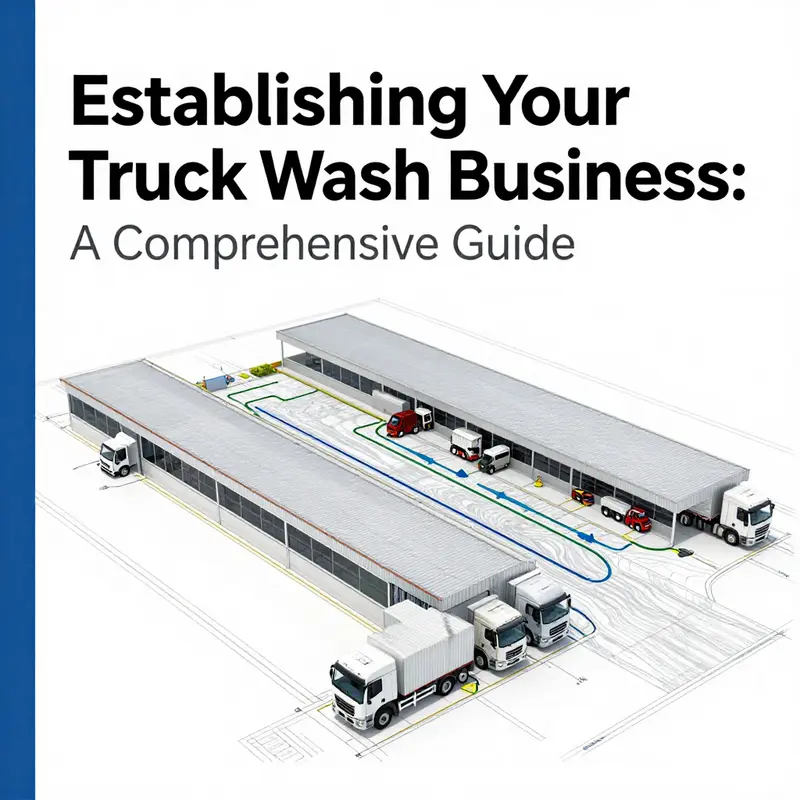
A truck wash business is more than a centrifuge of water and soap; it is a carefully engineered operation that begins long before the first rinse. The site you choose and the facility you design are not just backdrops for service—they are the core enablers of throughput, safety, regulatory compliance, and long-term profitability. In this chapter, the argument for meticulous site selection and thoughtful facility design unfolds as a single, continuous narrative: a story of how geography meets geometry, how landscape becomes workflows, and how a durable architecture can sustain growth while keeping environmental and community footprints small. The aim is to show that the work of planning a wash bay is not merely about securing a lease and choosing a car-wash style, but about aligning physical realities with the needs of fleets, the constraints of law, and the rhythms of daily maintenance.
Start with market gravity. An optimal site for a truck wash sits at the intersection of demand and practicality. Demand is not just about nearby traffic; it’s about the steady cadence of fleets that must adhere to tight schedules. Regions with high truck activity—near freight hubs, distribution centers, industrial parks, and major arterial corridors—offer the densest potential client base. Yet proximity alone does not guarantee success. The site must also translate demand into dependable throughput. A great location may be adjacent to a busy highway, but if it cannot accommodate turning radii, queue lengths, and safe staging for oversized rigs, that location becomes a bottleneck rather than a beacon. The best planners assess both the macro geography and the micro geometry—the lay of the land, the contours of access, and the capacity of surrounding road networks—to ensure fleets can arrive, be serviced efficiently, and depart with minimal delay.
Zoning and regulatory clarity form the invisible spine of any site decision. Truck washing touches on environmental stewardship, wastewater management, and noise considerations that can tilt a project from straightforward approval to prolonged negotiation. Early conversations with the local planning department help reveal whether truck washing is permitted, what environmental safeguards are expected, and how stormwater rules will shape site design. Some jurisdictions may require advanced filtration and treatment for runoff before it reaches the municipal system, while others may mandate specific containment measures to prevent infiltrating soils or waterways. A site that looks ideal on a map can become impractical if regulatory hurdles force expensive design modifications or restrict operations during certain hours. The best approach is to couple a site search with a regulatory scavenger hunt: a line-by-line review of what must be in place before shovel meets soil. This is where a seasoned environmental consultant and a proactive attorney can be as critical as the site’s soil content and its distance from the nearest sewer line.
Another practical thread in site selection is water and wastewater infrastructure. Truck washes consume substantial volumes of water, and the fate of that water—whether it returns to a closed loop, is hauled off-site, or is discharged through a permit-compliant system—drives both capex and opex. Municipal water access is advantageous, not just for the volume but for predictable quality and pressure. A municipal sewer connection often simplifies compliance and reduces on-site treatment complexity. Where on-site treatment is necessary, the facility must include robust oil-water separation, sedimentation, and filtration, with controls calibrated to meet permit limits. Even with a recycle loop, the system demands reliable electrical service, a steady water supply, and space for equipment that might include pumps, clarifiers, filters, sensors, and backwash lines. Your minimal viable layout should anticipate daily wash cycles and seasonal demand fluctuations, because a site that can scale with your growth is more valuable than a site that serves today but fails to accommodate tomorrow.
Accessibility and flow are the next critical axes. A truck wash must welcome large vehicles with wide axes, appropriate turning radii, and a queuing model that minimizes conflicts between inbound fleets and outbound traffic. Consider a linear or serpentine wash sequence that guides vehicles from entry to pre-rinse, wash, rinse, and dry with clearly defined catchment zones for drivers and attendants. The facility should minimize cross-traffic, reduce the need for backing maneuvers, and include safe waiting areas that do not trap exhaust or create pedestrian bottlenecks. In practice, this translates into generous two-way clearances, distinctly marked ingress and egress routes, and ample space for staging equipment, chemical storage, and waste receptacles without obstructing the wash process. Visibility matters too: a site with high exposure to passing motorists and fleet managers can transform brand recognition into new contracts, especially when signage is legible from the highway shoulder and a digital display highlights service options, pricing, or fleet programs.
The design of the building and its surroundings should embody a balance of durability, efficiency, and sustainability. The first decision is the basic typology: a touchless system, a brush-based system, or a hybrid that couples the speed of touchless pre-washes with the deeper clean of brushes for stubborn grime. Each approach carries implications for space planning and maintenance. Touchless systems favor shorter cycle times and lower risk of surface wear, particularly valuable for fleets with custom wraps or high-value finishes. Brush systems deliver aggressive cleaning quality on heavy soils but demand regular calibration and protective floorings due to brush wear. A hybrid approach often proves most practical for fleets and service levels that span the spectrum of contamination. The facility should be designed to accommodate whichever configuration you select, with modular bays that can be expanded or reconfigured to add new washing modalities as customer needs evolve.
Water recycling and environmental controls sit at the heart of sustainable design. A closed-loop system is not simply a cost saver; it is an essential regulatory hedge. Modern recycling units combine oil-water separation, sedimentation traps, filtration, and automated dosing to reduce fresh water demand while maintaining cleaning efficacy. Real-time monitoring for water chemistry and flow rates helps ensure compliance with discharge limits and supports proactive maintenance before inefficiencies escalate into downtime. In a well-conceived design, the wash bays, pre-rinse area, and drying zone are physically arranged to minimize water runoff and splashing, while drainage is routed through separate paths for contaminated wash water and stormwater, all labeled and monitored for security and safety. The design should anticipate environmental stewardship without sacrificing speed. A thoughtful engineer might propose a staged approach: first install the essential separation and filtration, then add recycling capacity, followed by advanced sensors and automated controls. This staged pathway reduces initial risk and keeps options open for future upgrades.
Safety is not an afterthought but a fundamental design constraint. Wet environments invite slip hazards, electrical risks, and the potential for chemical exposure. Non-slip flooring should be specified across all wet zones, coupled with robust drainage to prevent standing water. Lighting must be bright and uniform to avoid shadowed areas where workers could trip or misjudge distances when guiding large vehicles. Ventilation is critical, particularly if chemical use occurs in enclosed spaces or if staff spend significant time indoors. Emergency shutoffs, clearly marked escape routes, and accessible eyewash stations are indispensable. Moreover, ADA compliance is not merely a regulatory checkbox; it ensures that customers and staff with mobility needs can use the facility without sacrificing safety or efficiency. The facility’s layout should be mindful of eye lines and acoustics to reduce fatigue during long shifts and to help staff maintain vigilance around heavy machinery and conveyors.
Beyond the immediate wash process, facility design should anticipate future demands and technological evolution. The most resilient sites are modular, with bays that can be added or repurposed as fleets evolve or as market niches emerge. A modular approach supports different service levels, such as basic exterior cleaning at scale or premium interior detailing and fleet dashboards for maintenance teams. Smart technology—automated scheduling, payment kiosks, sensors that monitor water quality, and remote diagnostics—can be introduced in stages as the customer base grows and the budget allows. The goal is to preserve the ability to reallocate space and upgrade equipment without a major rebuild, thereby preserving value and reducing downtime during transitions.
In practice, the transfer from concept to concrete requires a delicate choreography between budget, time, and quality. Early-stage budgeting should account for land costs, permitting fees, civil and structural work, drainage and treatment facilities, and the electrical backbone to support high-demand pumps and generators. The permitting trajectory often defines the project timeline as much as the physical build, so a proactive plan for environmental permits, stormwater management, and fire safety is indispensable. While the permit process may feel like a procedural maze, embracing it as a design constraint helps shape a more robust facility from the outset rather than forcing costly retrofits later. Consider the value of engaging a cross-disciplinary team early—civil engineers, environmental consultants, electrical and mechanical specialists, and safety professionals—to anticipate clashes and identify efficiencies before construction begins.
A practical way to think about site selection and facility design is to imagine the wash as a flow system rather than a collection of discrete features. The external environment—traffic patterns, climate, and local regulations—feeds the interior workflow, which in turn dictates the equipment layout, electrical and water service requirements, and the human factors that govern daily operations. When the site aligns with the intended workflow, service times drop and consistency rises. When the facility is designed with a long horizon in mind, capital expenditures are optimized through scalable infrastructure rather than repeated rebuilds. In this sense, site selection becomes a strategic decision that unlocks operational efficiency, regulatory compliance, and sustainable growth.
The narrative of a well-chosen site and a smartly designed facility also touches on the relationships with customers and the community. Visibility is more than a marketing advantage; it reinforces trust with fleets that value reliability and with municipalities that monitor noise, traffic, and water discharge. A site near major truck routes, equipped with clear entry and exit, dedicated turning lanes, and well-policed signage, communicates professionalism and minimizes the risk of misunderstandings with surrounding stakeholders. The physical footprint then becomes a symbol of a business that respects its customers’ time and its neighbors’ quality of life. In practice, this means maintaining clean, well-lit, and orderly surroundings, with clean drainage, secure chemical storage, and an exterior that reflects the same standards of cleanliness and reliability that your clients expect from the wash bays inside.
As you move toward implementation, you will inevitably weigh trade-offs and make compromises. A site with top-tier visibility might carry higher land costs or stricter noise restrictions. A highly modular facility may require a larger initial footprint to accommodate anticipated expansions. The key is to document a master plan that captures current needs while outlining options for adaptation. The master plan should include not only layout drawings and equipment lists but also a phased timeline, with milestones for permitting, site preparation, mechanical installation, and commissioning. A thoughtful plan will also include risk mitigation strategies for common contingencies—unexpected soil conditions, supply-chain delays for critical components, or changes in regulatory interpretations that affect wastewater treatment requirements.
In discussing both site selection and facility design, it is useful to keep in view a few guiding questions: Is there a reliable water supply and a viable wastewater path that aligns with local codes? Does the site support efficient truck movement and safe personnel access? Can the layout scale to accommodate future bays or a shift to hybrid cleaning modes? Are ducting, electrical runs, and plumbing sized to deliver consistent performance during peak hours? Will the design minimize runoff and maximize water reuse without compromising cleaning quality? And crucially, is there a plan to manage the environmental footprint in a way that regulators and customers notice and respect?
To honor the full arc of planning, an integrated approach to design is essential. The site should be evaluated not only for its immediate operational fit but for its capacity to host upgrades that reduce long-term capital expenditure per unit of throughput. The facility should be imagined as a living system: a structure whose bones—foundations, utility mains, and mechanical racks—are solid, and whose skin—facades, finishes, and signage—are adaptable. In this vision, a truck wash becomes a place where fleets trust that their vehicles will emerge cleaner, safer, and ready for the road without undue downtime. It is in this trust—the blend of precise site choice, intelligent flow, and sustainable practice—that the business builds durable relationships with customers, regulators, and the communities it touches.
For readers seeking a practical touchstone after digesting this narrative, consider consulting resources that address ongoing facility management in this sector. A dedicated guide on facility management for truck wash businesses offers insights into the day-to-day realities of running the site, from maintenance schedules to compliance checks and workforce planning. Such guidance helps translate the architectural and environmental concepts covered here into tangible, repeatable routines that sustain performance over time. facility management for truck wash businesses.
As you translate these ideas into a concrete plan, remember that the most durable truck wash operations are not built in one phase but evolved through careful sequencing. Start with a sound site search rooted in demand and regulatory landscapes, then advance to a facility layout that prioritizes safe, efficient flows and scalable infrastructure. Design with environmental stewardship at the core, ensuring that water use, runoff, and chemical handling meet or exceed regulatory expectations while delivering consistent cleaning results. And always keep the human element in view: the operators who will manage these systems daily, the fleets that depend on reliable service, and the communities that host your business. In the chapters that follow, you’ll see how this foundation supports a broader strategy, from securing the right permits to assembling a workforce that can operate and maintain the facility with pride. The journey from ground zero to a thriving truck wash begins with a precise choice of location, a deliberate layout, and the disciplined execution of a design that endures.
External resource: EPA industrial wastewater treatment and discharge guidelines
Final thoughts
Embarking on the journey to establish a truck wash business requires a strategic approach, from conducting thorough market research to understanding the complex legal and regulatory landscape. Each chapter in this guide provides insights vital for successfully navigating these waters. Equip yourself with knowledge of site selection and facility design to ensure operational efficiency. By adhering to best practices and focusing on customer needs, you can create a sustainable business that serves the ever-growing trucking and logistics sector efficiently. Take the informed steps now to capitalize on this burgeoning market.