
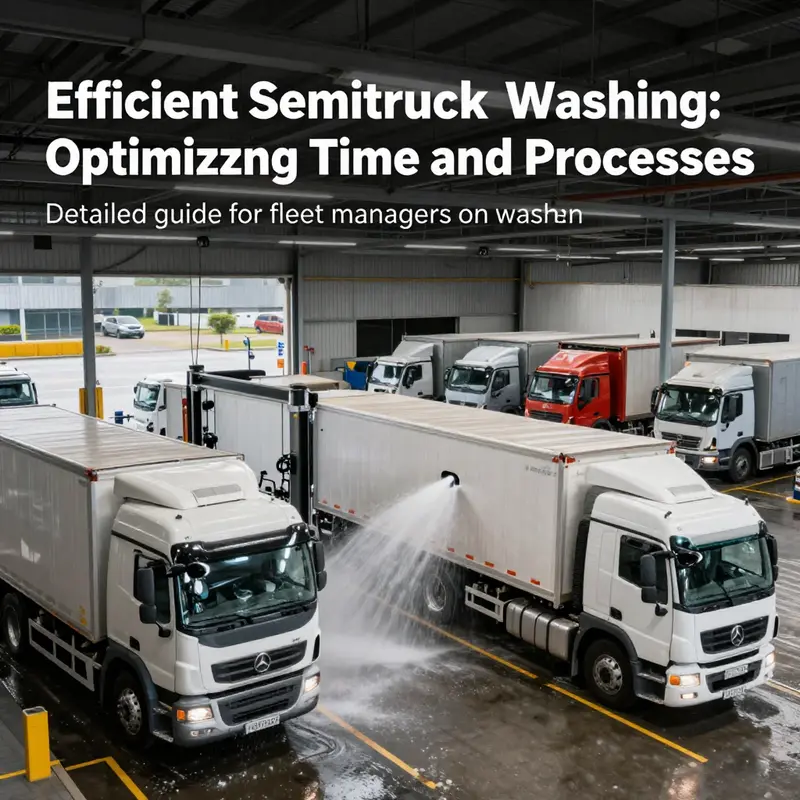
Maintaining a fleet of semitrucks requires not only logistics and freight efficiency but also cleanliness for both aesthetic and functional reasons. Understanding how long it takes to wash a semi-truck is crucial for fleet managers, trucking company owners, and supervisors in construction and mining industries. The method of washing—whether automated or manual—has a significant impact on washing duration and operational efficiency. This guide breaks down the options available, comparing automated systems to hand-washing methods, and explores how technological advances have streamlined these processes. Each chapter will delve into specific aspects of truck washing, providing valuable insights that can enhance fleet management strategies.
Seconds to Shine: Decoding the Real Timing of Automated Semi-Truck Washes
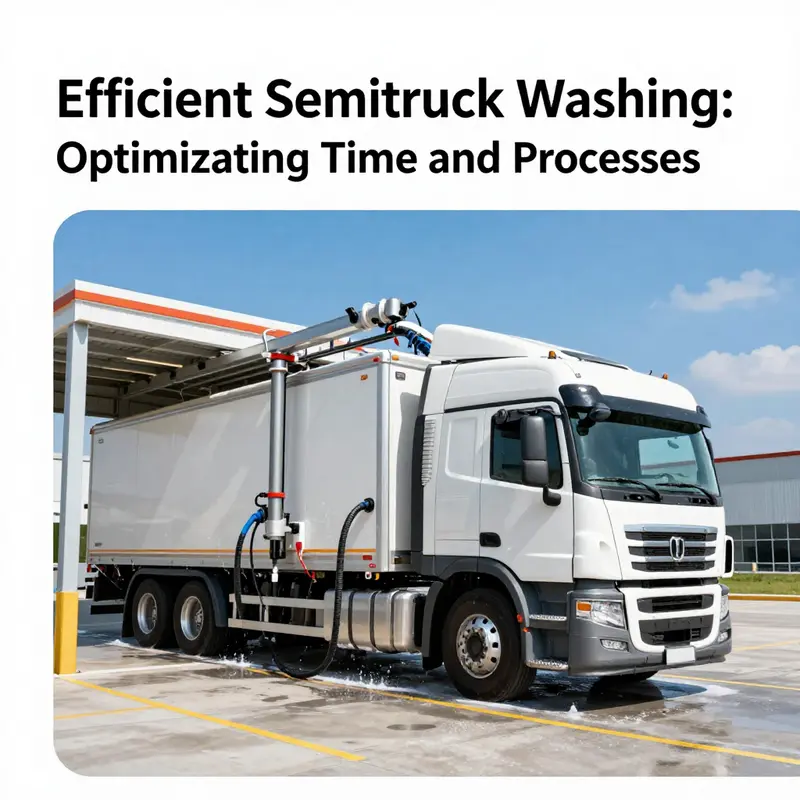
When fleets ask how long it takes to wash a semi truck, they are often seeking a straightforward answer. But the reality is a little more nuanced than a single number. Automated semi-truck wash systems have been engineered for speed and reliability, and their timing rests on a cascade of synchronized steps that transform a dirty vehicle into a clean one within minutes rather than hours. In most configurations, a full exterior wash falls into a tight window: roughly four to seven minutes per truck. That range is not a cosmetic variation but the result of deliberate design choices—from how the system applies cleaning solutions to how it rinses, scrubs, and dries the chassis and wheels. The flow is continuous, the process highly controlled, and the outcome consistent, which is exactly what high-turnover fleets need when daily cycles hinge on predictable turnaround times. In this setting, the clock starts as soon as the truck enters the wash, and every substep is calibrated to minimize delay while maximizing cleanliness. Pre-wet and pre-soak may begin as soon as the vehicle reaches the entry point, followed by detergent application that coats the surface just long enough to break down road grime, grease, or tar without saturating the vehicle in excess chemical exposure. The rinsing phase then flushes away loosened soil with high-pressure streams designed to reach every contour, from the front grille and bumper to the undercarriage, the wheels, and the chassis rails. Finally, a controlled drying sequence leaves the finish with minimal water spots and reduces the risk of streaking, so the truck can roll back onto the road without delay. Across these articulated stages, the actual duration of each truck’s wash depends on the system’s configuration and the degree of soil buildup on that particular day. If a fleet experiences heavy soil—extracted from a construction site or a mining yard—the system may slow just enough to ensure that stubborn grime is fully detached, adding minutes to the cycle. If the truck is relatively clean, the wash can complete more quickly, edging toward the lower end of the range. The best automated configurations leverage a continuous flow process where the vehicle moves through a sequence of fixed stations. Detectors guide the pace, while nozzles deliver calibrated bursts of water and detergents, and controlled brushes deliver the scrubbing action without hard abrasion. The end result is not merely speed but repeatable quality. A well-tuned automated wash system maintains consistent delivery of cleaning solutions, synchronized rinsing, and reliable drying, so each truck receives the same level of care every time. The comparison with other washing options highlights why the four-to-seven-minute window is so compelling. A thorough hand wash, even for experienced operators, can stretch into hours when you factor in physical labor, meticulous attention to every crevice, and the need to move vehicles in and out of staging areas. Standard car washes, while efficient for smaller vehicles, simply aren’t designed for the size, complexity, and durability demands of a semi-truck. Doors, mirrors, steps, exhaust stacks, and the expansive undercarriage all present extra surfaces that demand more time, not to mention the risk of incomplete cleaning if the process is rushed. In the context of industrial and construction environments, automated systems deliver the most reliable balance of speed and thoroughness. They integrate a suite of computer-controlled functions that handle rinsing, detergent application, scrubbing, and drying without staff intervention. This convergence of automation and geometry—precise nozzle angles, tailored flow rates, and synchronized conveyor timing—enables the rapid turn times that fleets rely on. The result is a predictable throughput that matches the scheduling needs of large, high-uptime fleets and helps keep maintenance windows aligned with loading and dispatch cycles. Of course, the exact time you experience in a given wash bay can depend on more than soil level and system configuration. Weather can play a role: frigid conditions might slow the drying stage as air temperature and humidity influence evaporation rates. A truck with a thick coat of road salt in winter may require a more robust rinse cycle to remove mineral residue that can dull finishes over time. Conversely, in milder conditions, drying can be completed quicker, reducing overall cycle time. The geometry of the wash bay matters too. Some layouts emphasize a streamlined highway-through model that minimizes vehicle stoppage and congestion, while others adopt a modular approach with dedicated sections for detaching trailers and cleaning undercarriages. Each layout affects the total time from entry to exit, even when the core washing stages maintain the same operational cadence. For fleets, the practical takeaway is that automated wash times are not universal constants but a function of system design, soil conditions, and operational goals. For managers focused on uptime and maintenance scheduling, this means collaborating with wash operators to tailor the cycle to their specific needs. When soil tightens the timeline, the system can be configured to prioritize speed through high-pressure rinsing and faster drying sequences, while keeping acceptable levels of cleanliness. When soils are especially persistent, there is room to adapt by engaging additional stations or extending the dwell time of certain agents, so the result remains consistently clean without compromising throughput. For those seeking further practical guidance on optimizing cleaning performance in challenging conditions, there are proven strategies for cleaning grease and tar off your trucks fast. This approach emphasizes target-specific pretreatment, selective chemical applications, and mechanical action designed to tackle persistent residues without overburdening the system. Proven strategies for cleaning grease and tar off your trucks fast can be a valuable companion to the standard automated protocol, helping maintenance managers adapt to unusual soil profiles while preserving overall cycle timing. In sum, the four-to-seven-minute spectrum captures the essence of automated truck washing: speed driven by integrated processes, accuracy driven by precise nozzle control, and reliability driven by continuous flow. It reflects a design philosophy that values turnover as a core performance metric, ensuring that fleets can maintain clean, road-ready equipment without wasting valuable hours in a lane. The importance of this timing cannot be overstated for operations that run on tight schedules, where even a few minutes of inefficiency ripple outward into delays in loading, dispatch, and fuel stops. The best systems balance rapid cycle times with a robust cleaning outcome, achieving a level of consistency that makes overall fleet maintenance planning more predictable and less stressful. For readers who want to connect this timing to broader fleet performance, consider consulting resources that address how washing practices intersect with other maintenance priorities and workforce management topics. The overall lesson is clear: when automated wash cycles are carefully calibrated to the vehicle class, soil conditions, and bay configuration, the resulting timing becomes one of the most dependable levers fleets can pull to improve cleanliness, uptime, and operational efficiency. External references and deeper dives into the mechanics and economics of automated wash systems further illuminate how these times are achieved in practice and why drivers and managers alike can rely on them to keep semi trucks looking and performing their best. For more on the workings of automated semi-truck wash systems, see the external resource linked here: https://www.truckwash.com/what-is-an-automatic-semi-truck-wash-system-how-does-it-work
null
null
Time on the Line: Demystifying How Long It Really Takes to Wash a Semi Truck
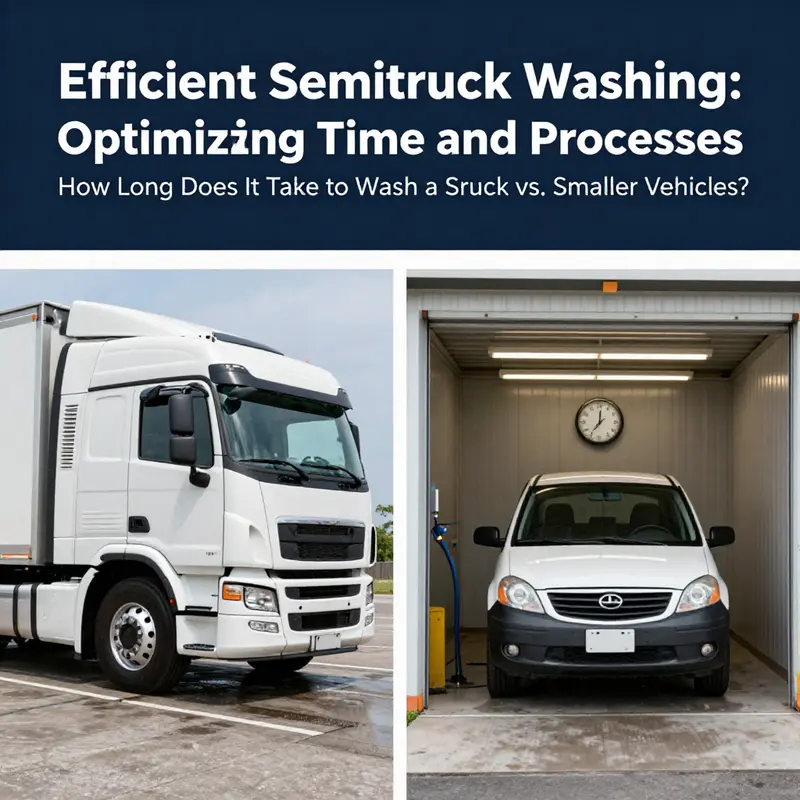
A semi truck entering a wash bay is more than a quick rinse and a splash of soap. It represents a balance between cleanliness, uptime, and the practical realities of fleet operations. The timing, in other words, is not a single fixed number but a spectrum shaped by method, dirt load, and the level of detailing required. When fleet managers ask, “How long does it take to wash a semi truck?” they are really weighing the trade-offs between speed and thoroughness, between getting a vehicle back on the road quickly and ensuring it stays in peak condition for long hauls. The short answer, in the context of automated systems, is tempting: five to ten minutes in a fully automated wash. For a truck-specific machine designed for the job, some operators report even shorter exterior cleans. Yet that brisk cadence captures only a slice of the overall picture. It reflects the efficiency of an automated rinse, detergent, and dry cycle designed for high throughput, not the broader set of tasks a fleet may require to keep a rig truly road-ready.
Beyond the automated fingerprint, the realities of real-world washing push the clock toward longer durations. A full-service mobile truck wash, which can include exterior cleaning, wheel brushing, and sometimes interior detailing, commonly ranges from forty-five minutes to two hours per truck. This wider window accounts for several factors that automated bays simply do not address in a routine cycle. Moving from the bay to the road means confronting the scale of a semi’s surfaces: the trailer sides, the wheels and tires, the undercarriage, and the difficult-to-reach crevices where mud, road salt, tar, and dust accumulate during long-haul runs. The larger the vehicle, the more surface area there is to cover, and the more attention is needed to remove stubborn grime without risking damage to seals, lights, or fragile chrome accents. In a practical sense, the difference between an exterior wash and a comprehensive service is not just time; it is the depth of cleaning, the level of inspection, and the potential grooming of features that can affect aerodynamics and maintenance.
The mechanics of why semi trucks take longer than passenger cars are straightforward but worth outlining. Cars benefit from a more compact footprint and fewer exterior components to manage. Even at the high end of car wash speeds, a car’s surface is generally smoother, with fewer protrusions and undercarriage complexities. A typical passenger vehicle, cleaned to a standard that satisfies most fleets, falls in the 15–30 minute range. Automated car washes can sometimes deliver a process under five minutes, but the speed comes with concessions—lighter cleaning emphasis, limited undercarriage work, and less thorough wheel and fender detailing. When the job scales up to a semi, the decisions change. The wheels and hub assemblies demand deliberate attention to avoid scouring brake components, while the undercarriage requires careful handling to rinse away road grime and de-icing residues that cling to every nook and cranny. The trailer, with its larger vertical and horizontal surfaces, invites a second look at reach and spray angles, ensuring every panel receives adequate contact time with detergent and water.
The timing question also highlights the role of technology in shaping outcomes. Fully automated wash systems excel at consistency and rapid throughput. They coordinate rinsing, detergent application, scrubbing, and drying via computer controls, minimizing the need for human intervention and enabling a high volume of cleans per shift. In many operations, automation represents the fastest path to routine exterior cleanliness for fleets with tight cycles and dense schedules. Yet automation has its limits. When dirt runs deep into seams, tar residues cling to wheel rims, or delicate exterior trim needs shielding from abrasives, hand work or mobile services become the preferred option. This is where the mobile wash model, often deployed at construction sites, mines, or remote fleet depots, truly flexes. It brings the wash to the truck, which saves time normally spent moving heavy assets but adds the overhead of travel time and the variability of on-site conditions. In a best-case scenario, a mobile service can deliver a robust clean in under an hour for straightforward cases, yet the realistic window, as noted by industry practitioners, tends to be broader when heavy soils are present.
From a fleet-management perspective, the implications of wash time are as much about scheduling as about the cleaning itself. Owner-operators and managers who rely on mobile wash services must often book in advance, aligning the wash with routes, fueling stops, and maintenance windows. This planning becomes an operational discipline: you buffer downtime into the route, prioritize vehicles by dirt load, and coordinate with fueling or repair tasks to keep the downtime impactful rather than a drag on productivity. The choice between an on-site mobile service and a fixed-location automated bay hinges on a few variables—distance from the next job, current workload, weather, and the truck’s grime profile. Heavier deposits from winter roads or post-construction travel can push a standard exterior wash into the longer end of the spectrum, while routine upkeep on a relatively clean rig may stay closer to the quicker end of the range. In both cases, the value proposition of a wash is not just the cleanliness achieved but the readiness gained: a truck that is clean, compliant with cleaning standards, and less prone to corrosion or abrasive wear over time.
Industry guidance and best practices reinforce the idea that there is no one-size-fits-all timer for washing a semi. The timing narrative must be read alongside performance goals: uptime, asset longevity, and regulatory compliance. A practical approach for fleet managers involves mapping wash times to maintenance cycles and route planning. If a truck’s schedule is tight, fleets may lean on automated exterior washes for quick refreshes and reserve mobile, full-service cleans for periods between high-demand runs or after long road campaigns. In other scenarios, a high-dirt period—such as after detour routes through muddy terrain or salt-laden winter roads—may justify a longer, more thorough mobile service to protect the vehicle’s integrity and preserve resale value. The key is to treat wash time as an input into the broader logistics puzzle, not as a stand-alone metric. For operators who want to deepen their understanding of how these practices intersect with industry standards and emissions considerations, a helpful resource delves into how wash practices align with compliance and environmental regulations. See truck-wash-industry-compliance-emissions-regulations.
In thinking about the real-world timing of semi-truck washing, it is helpful to balance the numbers with the daily rhythms of a fleet. A semi that carries precious cargo across cross-country lanes might justify a more deliberate maintenance routine, including periodic interior detailing and undercarriage checks, especially when the vehicle has accumulated miles on challenging routes. Conversely, a fleet focused on maximizing available driving hours and minimizing downtime may lean toward rapid exterior cleans from automated bays, supplemented with targeted cleaning in the most critical areas when necessary. The overarching theme is that wash time must be integrated with the vehicle’s duty cycle, the crew’s availability, and the fleet’s maintenance philosophy. The timing conversation, therefore, evolves from a single minute-count to a strategic tool for fleet efficiency, asset preservation, and operational resilience. In the next part of this exploration, we turn to the cost and scheduling implications that flow from these time considerations, including how to optimize wash programs across multiple vehicles and shifts. For further detail on related best practices and the broader context of semi-truck cleaning, refer to industry-focused guidance and case studies linked in reputable sources.
External resource: https://www.truckinginfo.com/article/semi-truck-washing-tips-and-best-practices-2026
Efficiency Decoded: Real Timelines for Washing a Semi-Truck by Method
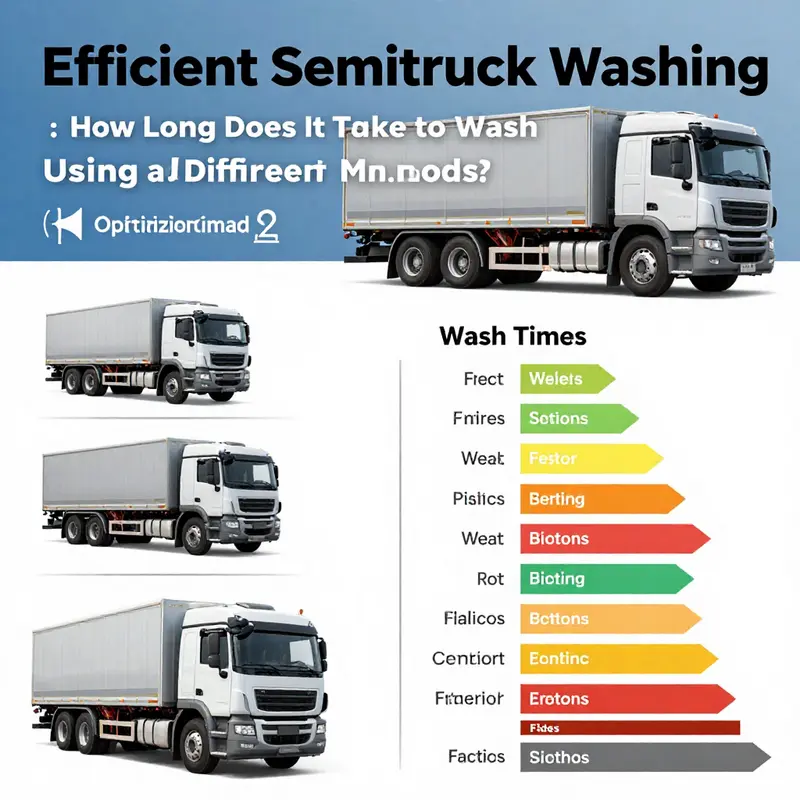
Washing a semi-truck is not a single, fixed task. The time it takes depends on the chosen method, the vehicle’s condition, and the operational goals. Measuring efficiency means balancing speed, quality, cost, and downtime. This chapter examines real-world timelines for the common methods used to wash semi-trucks, explains why those times vary, and describes the practical trade-offs fleet managers and owners face when they decide how to clean their trucks.
A simple starting point is the two main approaches in use: manual cleaning and automatic systems. Manual washing remains common for smaller operations, for trucks with special needs, and where spot cleaning is required. Automatic systems, increasingly widespread at large yards and industrial sites, promise fast throughput and consistent results. But the story is richer than a straight comparison. Each method behaves differently when confronted with heavy grime, specialized trailers, or regulatory cleaning requirements.
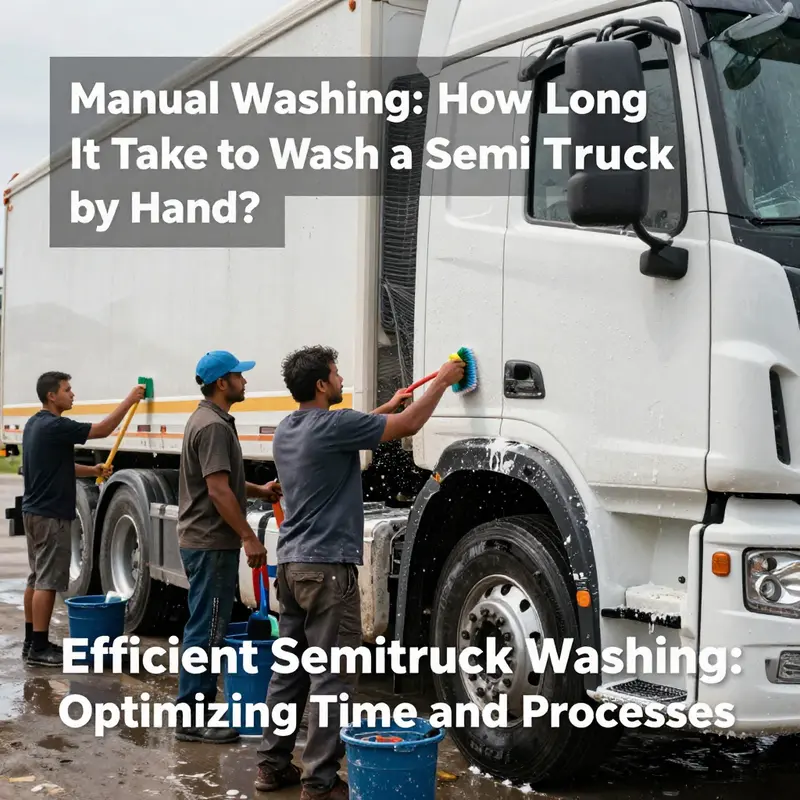
Manual washing typically requires considerably more time. For a routine exterior wash, two workers can usually complete a tractor-trailer in about 30 to 60 minutes. This range covers standard cleaning tasks: pre-rinse, detergent application, scrubbing the cab and trailer surfaces, cleaning wheels and chassis, and final rinse. When the vehicle is only lightly soiled, experienced crews can work toward the lower end of that range. When grease, caked mud, or tar are present, time balloons. Removing stubborn deposits can add hours. Attention to detail also extends time: cleaning undercarriage components, hinges, and exposed fittings is meticulous work. Manual washing gives control and can reach into tight spots that machines might miss, but it consumes labor hours and can be inconsistent between crews.
Automatic washing systems flip that script. Dedicated semi-truck automatic wash machines can clean an exterior in roughly 3 to 6 minutes, with specialized heavy-duty models performing full washes in about 5 minutes. These systems use programmed cycles for pre-rinse, detergent application, mechanical or high-pressure scrubbing, and drying. Modern installations complement powerful nozzles with water recycling and computerized controls that ensure consistent application across different vehicle sizes. The core advantage is throughput: an automated line can process many more trucks per hour than manual crews. That speed reduces truck downtime and labor costs and helps maintain schedule reliability for large fleets.
But automation isn’t a universal solution. Speed depends on vehicle type and contamination level. Flatbeds with open loads, tankers, and vehicles hauling food-grade cargo may need special attention or additional cycles. Trailers with heavy industrial grime or sticky road tar need pre-treatment that a basic automated cycle doesn’t deliver effectively. In those cases, a short manual intervention before or after the automated pass is common. Operators often pair methods: a quick mechanical wash to remove bulk soils, followed by targeted manual work on stubborn areas. For guidance on dealing with heavy grease and tar efficiently, see these proven strategies for cleaning grease and tar off your trucks fast.
Beyond contamination, the chosen wash program affects time. Quick cycles prioritize water and detergent flow and finish in minutes. Deep-clean cycles add soak times, hotter detergents, or multiple rinse passes, stretching the task. Drying matters too. Air knives and blowers add a minute or two but prevent water spots and reduce corrosion risk over time. Manual drying or towel finishing increases labor and time.
Labor and operational context also shape efficiency. Manual crews require breaks, shift changes, and supervision. Training affects how quickly teams move without sacrificing quality. Automated systems require less hands-on labor, but they need maintenance, calibration, and occasional repairs. A facility that invests in automation must still staff attendants to prepare trucks, check for damage, and route vehicles through the system. In many mixed-use yards, automation increases hourly throughput, while skilled staff handle exceptions.
Cost per wash and the value of time saved are central to decisions. Automated washes spread capital and maintenance costs across many washes. For large fleets, this makes sense. The reduction in truck downtime and labor hours creates measurable operational gains. Conversely, small operators or those with infrequent needs may prefer manual washes. The real calculus is fleet size, cleaning frequency, and the acceptable level of cleanliness. Regulatory or contractual requirements — for example, food-grade tanker cleaning — may necessitate specialized processes regardless of time considerations.
Environmental and regulatory factors influence how fast a wash can be performed. Water recycling systems let operators run shorter cycles and still meet environmental targets. But recycling units need proper management to ensure detergents and oils are treated correctly. Emissions and runoff regulations sometimes add steps, such as oil-water separation or documentation of disposal. Those requirements increase complexity and time, but they protect the operation from fines and reduce long-term environmental costs.
A final reality is scheduling and throughput planning. Automated facilities design workflows around cycle times. If a wash line takes five minutes per truck, planners account for ingress, egress, and any pre- or post-inspections. When trucks arrive with heavy contamination, the planner must reserve extra time or assign those units to a manual bay. Good scheduling minimizes idle time and keeps drivers and rigs moving. Human-centered factors matter too: a facility that respects drivers’ time often sees better compliance with recommended wash intervals.
Where the objective is clear — rapid, repeatable exterior cleaning — automation wins on time. Where the objective is precision cleaning of complex contamination, manual work still has a role. Many efficient operations combine both. They use automated washes for routine throughput and maintain manual capability for specialty tasks. That hybrid approach shortens average wash times while ensuring quality where it matters.
Understanding efficiency means looking beyond headline numbers. A five-minute wash is possible with the right equipment and clean conditions. A thorough hand wash may take an hour or more, and heavy contamination can extend that further. Choosing the right balance requires assessing fleet size, contamination types, regulatory needs, environmental practices, and cost priorities. Aligning those factors with the wash method will deliver the best mix of speed and quality for any operation.
For a technical perspective on how automatic truck wash systems are changing fleet maintenance and enabling faster, more consistent washes, industry research provides a useful overview: https://www.truckingsupply.com/blog/automatic-truck-wash-systems-fleet-maintenance.
Speed, Scale, and the Wash: How Long It Takes to Clean a Semi Truck in Today’s Tech-Driven Market
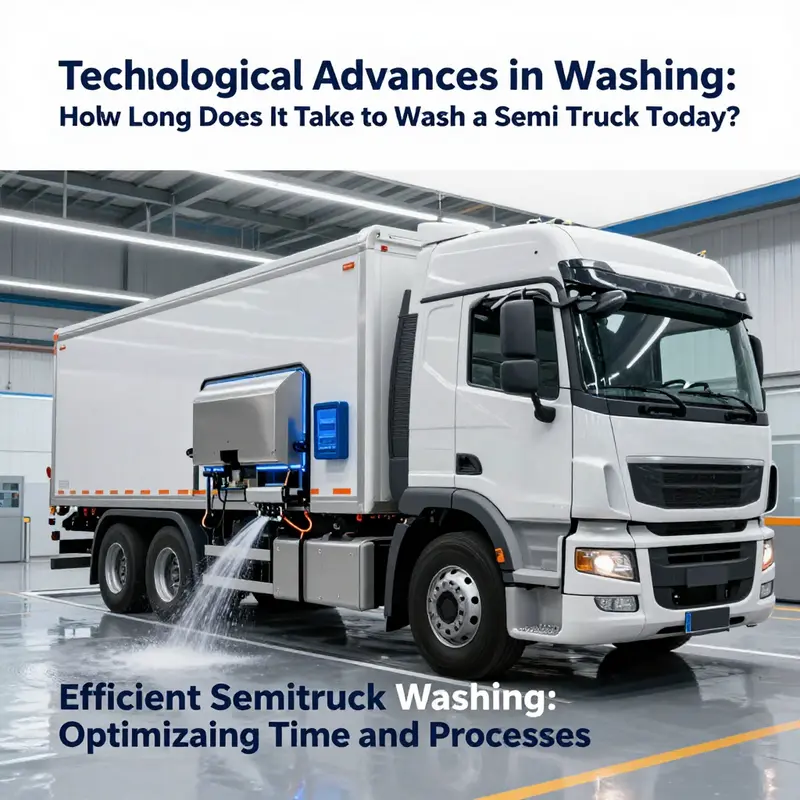
The question of how long it takes to wash a semi truck invites a careful look at the tools and the context rather than a single stopwatch figure. In early automated wash systems the exterior could be cleaned in roughly five to ten minutes, but those numbers apply to fixed facilities with standard fleets and repeatable cycles. Modern mobile truck wash services further compress the time by bringing equipment to the vehicle. High pressure water and heated water help loosen grease and road grime, while optimized detergents reduce the need for scrubbing. A typical mobile exterior wash now ranges from about thirty to forty five minutes, depending on soil level and whether wheel detailing or underbody rinse is included. If a more thorough job is requested that includes oxidation treatment, chrome detailing, or deep undercarriage cleaning, the duration can extend beyond the base window. The cost of speed is downtime and schedule alignment, so fleets often book cleanings during short downtime windows or integrate them into planned maintenance. Environmental considerations also shape the workflow, with water recycling and eco friendly detergents allowing faster turnover without increasing waste. In short, the time to clean a semi truck is not fixed, but is a function of the truck condition, service package, and the busyness of the provider, with mobile services offering the fastest and most predictable turnaround in many cases.
Final thoughts
Understanding the time required to wash a semi-truck is essential for fleet managers looking to optimize their operations. Automated systems can significantly reduce wash times, offering efficiency that hand washing cannot match. With the proper knowledge of each washing method’s pros and cons, industry professionals can make informed decisions that balance cleanliness and fleet productivity. The integration of technology continues to evolve, further enhancing these processes and setting a standard for future practices in truck washing.