

For fleet managers and trucking company owners, maintaining vehicle integrity while ensuring cleanliness is paramount. Concerns often arise around automated car washes and the potential risk to pickup truck antennas. This article aims to offer clarity and actionable insights about whether car washes can break off a pickup truck antenna. Chapter one will delve into the mechanisms of automated car washes and their safety features, while chapter two will analyze the material impact of antenna design on safety. Together, these sections will arm you with knowledge to confidently manage your fleet’s washing processes.
Antenna in the Wash: The Silent Mechanics That Decide Whether a Pickup’s Antenna Survives Car Washes

The question of whether car washes can break off a pickup truck’s antenna sits at the intersection of engineering, maintenance practice, and the everyday reality of fleet operations. It is tempting to imagine the worst—a stiff metal whip snagged by a moving conveyor or a brittle plastic mast snapped by a stray brush. Yet the truth is more nuanced. Modern car washes operate with a layered defense against component damage. They rely on thoughtfully engineered washing paths, soft contact surfaces, measured water pressure, and intelligent sensing to shield protruding parts like antennas. The result is a system that is frequently safe in routine use, but not foolproof. The dynamics of the situation hinge on three interacting realms: the design of the wash itself, the physical characteristics of the antenna, and the human and procedural factors that govern how a vehicle enters the wash bay in the first place.
On the wash side, the most common automated facilities rely on brush-based cleaning or touchless technology. In brush-based bays, the brushes are designed to be soft enough to clean without marring the paint while still presenting enough contact to remove grime from creases and contours. The brushes travel along rails or on rotating components with controlled speeds, and their guidelines are calibrated to avoid aggressive engagement with bodywork. The forces they impart are substantial enough to move dirt and soap, but they are generally moderate with the intention of protecting sensors, trim pieces, and protruding hardware. When a vehicle’s antenna is in the line of contact, the risk becomes a function of how much force is transferred to the mast, how securely the antenna is mounted, and how much slack or rigidity the mounting provides.
In contrast, touchless systems eschew physical contact altogether. They depend on high-pressure water jets, detergents, and precisely timed spray cycles. The absence of brushes dramatically lowers the likelihood of a direct snag, yet it does not eliminate risk entirely. Protruding parts can still become misaligned if the wash operates out of spec, or if sensors and programmable logic controllers (PLCs) misinterpret a protrusion as an obstruction to be cleared. In practice, touchless bays reduce the probability of snag-related damage but introduce another, subtler risk vector: sensors or control logic that interact unexpectedly with antenna shapes or positions. These systems are designed with margins and checks, but a rare calibration drift, a software anomaly, or a mounting imperfection can still yield unintended contact or errant retractions.
Antennas themselves come in a spectrum of designs and materials. A traditional whip antenna is often a metal or metal-clad element attached to a base. Its strength depends on the mounting hardware, the integrity of the base, and the adhesive or clamp that holds it to the vehicle. By contrast, more modern antennas may integrate plastic composites or flexible elements intended to tolerate minor bending without breaking. Some vehicles sport breakaway or fail-safe designs that are intended to detach easily under excessive load, thereby protecting the vehicle body from more grievous damage. The practical effect of these design choices is that an antenna’s resilience to wash-related forces is not universal; it hinges on the match between the antenna’s construction and the wash’s mechanical profile.
Age and condition are critical. An antenna that is old, loose, corroded, or poorly secured is significantly more vulnerable to detachment during a wash cycle. A mounting base with a cracked plastic housing, a loosened screw, or a compromised adhesive layer reduces the amount of energy the base can absorb before the mast yields or snaps free. In such cases, even routine brushing can become a tipping point. Conversely, a newer, well-secured antenna with a robust base and appropriate mounting torque can withstand the same wash cycle with minimal risk. This is not merely theoretical. Fleet managers and technicians who frequently run vehicles through automated washes often note that cases of detachment occur less from the washing action itself and more from the pre-existing instability in the mounting hardware or from aggressive acts of vandalism or collision that loosen fasteners beforehand.
Against this backdrop, the behavior of the wash facility becomes a central factor. Operators design bays with obstacle detection and safety interlocks that prevent brush heads from closing in on the vehicle more than a carefully measured distance. Sensors monitor not only the vehicle’s body panels but also protruding accessories, attempting to hold the cycle within safe tolerances. If a protrusion is detected, the system may alter nozzle timing, reduce brush contact, or halt progress, all in a bid to prevent damage to antennas, antennas bases, mirror housings, or trim. These protective features are part of an overall safety philosophy that acknowledges the inevitability of variability—the variation in vehicle shapes, the variety of aftermarket antennas, and the occasional misalignment caused by wind, load, or vehicle positioning.
Nevertheless, some risk persists. In the rare event that a vehicle’s antenna is particularly long, inflexible, or poorly mounted, it can be snagged by a brush segment or forced by misalignment into a higher-energy contact zone. If a blind spot exists where sensors cannot distinguish the antenna from a mechanical component, a mis-timed cycle can bring the brush into closer proximity than intended. In such moments, the margin for error narrows. Even a small miscalibration or an unobserved defect in the mounting can translate into a momentary snag that, with enough force, dislodges the mast or tears the base away from the body. The probability remains low in modern facilities, but it is not zero, and it is precisely why many drivers choose to either retract or remove antennas before entering an automated wash.
From the fleet-management perspective, the decision to remove or retract an antenna before a wash is anchored in risk management rather than superstition. It is a conservative precaution that reduces the probability of damage to near-zero levels, especially for vehicles with older or less-robust mounting systems. For the operator, that means more consistent wash cycles, fewer post-wash maintenance calls, and a lower chance that a single antenna issue becomes a larger repair bill or a breakdown in service to a fleet customer. In addition to the operational reasons, there is a broader, cost-conscious argument: antennas require replacement or repair, and each incident carries downtime and parts costs. Even when a breakaway design exists, detaching and reattaching a mast takes time and effort; the incident still disrupts the fluidity of a fleet’s maintenance schedule and can impact the perception of reliability among drivers.
The practical takeaway is that the interaction between wash design and antenna design is a negotiation between two systems: one designed to clean efficiently and safely, and another designed to communicate and receive signals under normal operating conditions. When they line up well—the wash uses gentle brushes, calibrated pressures, and intelligent sensing; the antenna is robust, properly mounted, and free of corrosion—the risk of detachment remains extremely low. When misalignment, wear, or weak mounting occurs, the risk becomes measurable. In this balance, the most effective safeguard is a proactive maintenance mindset that treats the antenna not as a decorative accessory but as a critical component whose condition can influence the entire vehicle’s operating reliability in ways that ripple through a fleet’s scheduling, downtime, and cost structure.
This is not a matter of conjecture but of practical, observable stewardship. The guidance offered by industry resources and professional associations emphasizes the importance of both recognizing the limits of automated wash systems and taking prudent steps to minimize preventable damage. The overarching principle is simple: knowledge of the wash’s capabilities, combined with an honest assessment of the vehicle’s mounting and material quality, yields the best outcomes. In the end, the question of whether car washes break off antennas is less about the inevitability of contact and more about the probability, which is shaped by design choices, maintenance discipline, and the proactive steps that vehicle owners and fleet managers take before the wash cycle begins. To that end, a deeper look at how facility design and maintenance practices intersect with vehicle hardware helps illuminate practical strategies that hold true across diverse fleets and operational contexts. For those managing wash facilities, the choice to prioritize safety margins, to invest in reliable sensor networks, and to maintain mounting hardware with regular inspections is not just about reducing risk; it is about preserving vehicle integrity, uptime, and the confidence that drivers place in the cleanliness and reliability of their fleets. The practical implications extend beyond isolated repairs; they influence maintenance budgeting, scheduling patterns, and the overall health of a fleet’s operations.
Within this broader framework, a body of guidance emerges that is worth anchoring to concrete practice. Operators often treat the issue as part of a broader asset-care program: inspecting mounting bases for signs of wear, testing the brake and drive mechanisms that position brushes, recalibrating sensors if cycles drift, and training drivers to anticipate potential issues by removing detachable accessories that could pose snag risks. There is an element of practical wisdom here: a little preventive action goes a long way toward avoiding a preventable disruption. This wisdom is reinforced by professional resources that outline best practices for vehicle care during wash cycles, and it is reinforced by the real-world lessons learned from maintenance professionals who interact with dozens of washes and hundreds of vehicles every week. In aiming for a low-risk outcome, the emphasis falls on resilience—the resilience of the wash system to operate within safe margins and the resilience of the vehicle’s antenna system to tolerate occasional contact without catastrophic failure.
For readers seeking a deeper dive into the practicalities of wash facility management as they relate to fleet operations, one useful reference is the broader conversation about facility management for truck wash businesses. This resource offers perspectives on optimizing wash throughput while preserving asset integrity, which includes attention to how obstacles and protrusions are managed within wash bays and how preventive maintenance programs are structured to catch mounting weaknesses before they become costly issues. Facility management for truck wash businesses provides context for the operational decisions that indirectly influence the safety of antennas during wash cycles. This integrated view—balancing facility design, equipment behavior, and vehicle hardware—enables fleet operators to approach the question of antenna safety with a holistic mindset rather than treating it as an isolated hardware concern.
Taken together, the landscape is nuanced and context-dependent. In most modern automated wash environments, the probability of a pickup antenna breaking off during a wash is very low, particularly when drivers take a conservative approach to antenna mounting and when facilities implement robust sensor-based controls and user-friendly safety margins. The real-world takeaway is clear: prevention is built into the system by design, with margins that tolerate minor misalignments, slight wear, and normal variances in vehicle configurations. Yet the possibility persists in edge cases—older antennas, weak mounting bases, or unusual vehicle configurations can tip the scales toward detachment. In the absence of proactive maintenance and prudent driver practices, those edge cases become the exceptions that test the limits of even well-designed systems. The fare paid for complacency in this area is higher than the price of a routine maintenance check, and it is a reminder that even the most carefully engineered processes require ongoing attention to keep them reliable in daily operation.
External resource for additional guidelines and best practices regarding vehicle care and car wash operations can be found at Car and Driver’s practical care tips, which offer a grounded, consumer-oriented perspective on wash interactions with vehicle components: https://www.caranddriver.com/car-wash-tips
Antenna Armor in Action: How Design Details Keep Pickup Truck Antennas Safe in Modern Washes
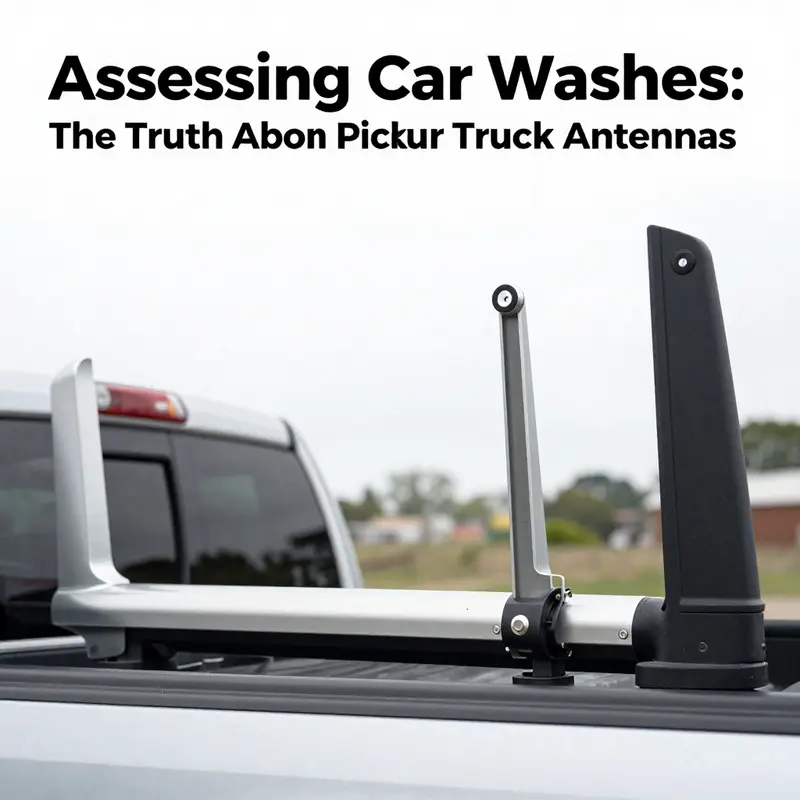
The question of whether a car wash can wrench a pickup truck’s antenna from its mount sits at the crossroads of engineering intent and real-world usage. In the broader landscape of vehicle care, the antenna is a small but telling silhouette of how a vehicle is built to withstand the everyday pressures of driving, weather, and maintenance routines. Modern car washes, especially the automated ones that most fleets and individual owners encounter, are designed to be gentle and predictable. Their success hinges on a layered safety philosophy: soft contact zones, controlled fluid dynamics, obstacle detection, and software-driven protection that all converge to protect protruding components. In this environment, the antenna is rarely a casualty, not because it is invincible but because it is designed with enough nuance to survive the typical choreography of a wash cycle. The net effect is a system where the odds of a detached antenna are low, but not zero, and where the terms of risk are shaped by the antenna’s design, the vehicle’s condition, and the specific wash method chosen.
Fundamentally, the wear and tear that car washes can inflict on any exterior feature relate to interaction dynamics. In high-quality automated washes, brushes are spring-loaded and relatively forgiving. Even when the wash machinery makes contact with a vehicle’s surface, the contact is designed to be mild at critical points. Water pressure is calibrated to remove grime while avoiding undue force on trim, mirrors, door handles, or antennas. Sensor arrays mounted along the wash tunnel—ranging from proximity sensors to flow and pressure sensors—help the system adjust movement in real time. When the vehicle comes into a sensitive zone, the wash can reduce speed, alter the angle of attack, or momentarily pause certain cleaning modules. This multi-layered safety approach, anchored in engineering practice and operational testing, is why the risk to a protruding antenna remains comparatively small.
The structure of a modern pickup’s antenna contributes to this protective margin. Many late-model vehicles feature compact, integrated antennas that sit low and flush with the vehicle’s silhouette. The aerodynamic profile reduces the likelihood that the antenna will be visually or physically snagged by wash machinery. The materials typically combine durable plastics for the housing with metal or reinforced elements for the mast or shaft, all secured to the vehicle with robust mounting hardware. On the surface, this arrangement looks simple. Yet in practice it represents a careful balance: enough rigidity to resist normal wind, speed, and car wash turbulence, but enough flexibility at attachment points to yield rather than break under unexpected loads.
The design logic extends beyond mere shape and composition. Antenna assemblies must tolerate environmental exposure—exposure to sun, moisture, temperature cycles, and the occasional salt spray in winter. They are engineered to remain reliable without requiring frequent service, yet they are not intended to be indestructible. Consequently, a critical design criterion is the ability to absorb insignificant, transient forces without transferring them into the vehicle’s body or the assembly’s mount. In other words, the antenna is engineered to flex in small, controlled ways when subjected to external influence. This is a practical defense against the accidental brushes of a tunnel’s soft-bristle system or the momentary contact with a gusting spray directed at the vehicle’s roofline.
Yet, like all mechanical systems, an antenna’s resilience is bounded by its condition. A healthy, well-secured antenna is far less likely to detach than one that has aged, loosened, or been compromised by prior incidents. The material mix—typically a durable plastic exterior paired with metal elements and a sturdy base—must endure years of weather exposure. Over time, exposure can cause plastic components to become brittle, grommets to dry out and harden, and mounting screws to loosen. When any of these compromises accumulate, the risk of detachment increases, albeit still within a narrow band, because the wash environment rarely exerts forces equal to those experienced during rough driving or a high-speed wind gust.
This is where the difference between routine maintenance and neglect shows up. An antenna that started life with a secure fit can gradually loosen if the mounting hardware is not checked at regular intervals. A common sign is a rattle at highway speeds or a wobble when the car is garaged and subjected to wind loads. In more severe cases, visible cracks in plastic housings or corrosion at metal fasteners can precede a failure event. The takeaway is simple: the more a vehicle ages in place, the greater the cumulative probability that the same protective design features will be tested by real-world conditions. This is not a indictment of the design; it’s a reminder that robust products still ride on the shoulders of ongoing care.
The conversation about safety and design naturally leads to a taxonomy of wash methods. Touchless systems are frequently highlighted as the gentlest option for sensitive exterior features. They rely on high-pressure water jets, specialized detergents, and chemical action rather than rigid mechanical contact. In theory, there is less risk of snagging a protruding piece because there is no physical brush stride across the vehicle’s curves. In practice, touchless washes still involve motion through a system of nozzles and sensors, and the very act of moving a vehicle through a tunnel introduces small, cumulative effects on all surfaces, including antennas. The advantage of touchless configurations is that the absence of direct contact reduces the chance of an antenna being pinned or scraped by a brush head. The trade-off, however, is that the cleaning outcome heavily depends on the correct formulation of detergents and the precision with which jets are aimed at grime. If a detergent is overly caustic or if jets are miscalibrated, the exterior plastics around the antenna can become stressed, leading to micro-cracking or dulling of the finish that ultimately weakens mounting components.
For owners and operators, translating these systemic ideas into practical safeguards requires attention to both vehicle design and usage patterns. Manufacturer guidelines provide a baseline for compatibility with wash types, and these guidelines are meant to be followed as part of routine vehicle care. A practical habit is to review the owner’s manual and the service literature for the specific model in question. While safety features in the wash are designed to accommodate a broad range of vehicles, retracing the manufacturer’s recommendations ensures that the chosen wash type and cycle do not unintentionally strain the antenna’s mounting hardware. In many cases, dealers and service centers will also offer a quick inspection service to verify that the base remains solid and the mast is aligned with the main housing.
From a broader perspective, the interplay between wash design and antenna resilience is part of a larger conversation about how manufacturers and wash operators cooperate to protect vehicle components. Industry bodies and educational resources emphasize the value of compatibility checks, proper mounting, and proactive maintenance as the most reliable path to reducing any risk—however small—of component detachment in automated cleaning environments. The International Car Wash Association, for instance, provides guidelines and best practices that reinforce this cooperative approach between vehicle engineering and wash operation. In practical terms, that means wash operators should be mindful of cycle selection for vehicles with challenging or aging components, while owners should be vigilant about the health of their antenna assembly and its mounting hardware before entering a wash.
The material makeup of antennas themselves also plays a crucial role in the safety equation. When designers choose plastics for housings and metal portions for internal supports, they are balancing cost, durability, and performance. The plastics must resist UV exposure and temperature cycling, and the metal elements must resist corrosion and stress cracking. The mounting interface—where the antenna meets the roof or bed of the pickup—must be robust enough to tolerate normal driving pressures and minor vibration without loosening. A well-engineered connection uses grommets or seals to prevent moisture intrusion, which can corrode fasteners or degrade the adhesive bonds that hold the assembly in place. In honest terms, even the most carefully engineered system can degrade if the owner ignores warning signs or delays basic maintenance. That is not a fault of design but a reminder of how engineering depends on human diligence to keep a vehicle’s exterior systems healthy.
In this sense, the topic travels beyond the mere physics of force distribution. It touches the philosophy of how a modern vehicle is designed to be forgiving and how the wash environment is engineered to be safe. The best outcomes arise when the vehicle and the wash system share a common language about care, maintenance, and boundary conditions. A well-designed antenna is not an isolated component but part of an integrated ecosystem, where the roofline, mounting hardware, and defensive features in the wash all contribute to a shared resilience. This unity matters because a detached antenna does not just represent a single failure in isolation. It symbolizes a breakdown in the continuity between design intent and routine operation—a lapse that can escalate if subsequent cycles of wear are left unchecked.
The practical implication for owners is straightforward: approached with awareness, the risk remains low, but not negligible. A few disciplined actions can maintain this health. Regular visual and tactile checks of the antenna housing can reveal hairline cracks or loosened screws before they become dislodgments. If a vehicle’s roof shows signs of paint chipping near the base, or if the mounting area exhibits corrosion, those signals should trigger a maintenance review rather than a blind belief that the wash system will always be gentle enough. For fleets, a simple policy of removing or retracting antennas before entering a wash can further reduce risk, especially for models with longer, more protruding masts or for vehicles that operate across a wide climate spectrum where material fatigue can accumulate more quickly. The precaution is not universal; it depends on the vehicle, the wash type, and the owner’s risk tolerance. But the option is consistently available and often prudent, particularly when the goal is to maintain the integrity of more than one exterior feature during routine cleaning.
To connect these ideas to practical workflows, consider a typical maintenance cycle for a pickup in a fleet that relies on automated washes. Before the wash, technicians or drivers can perform a quick pre-check: confirm the antenna is secured, examine mounting hardware for looseness, and verify there are no visible cracks in the housing. If the vehicle shows signs of wear or if the antenna has seen heavy use in the field, a more thorough inspection by a technician is warranted. After the wash, a brief post-check can confirm that nothing shifted during the cycle. This routine, while seemingly small, creates a cascade of positive effects: fewer surprises at the next service interval, longer life for exterior components, and a more predictable cleaning experience for the entire fleet. The practice aligns with broader best practices in facility management for truck wash environments, a topic explored in depth in industry resources that emphasize alignment between vehicle design and wash configurations. See the discussion on facility-management-for-truck-wash-businesses for a broader view on how facilities curate workflows to safeguard exposed components.
In considering the broader ecosystem, it is worth acknowledging that technical papers, user guides, and hands-on field experience converge on a consistent message: the strongest protection comes from a combination of robust design and conscientious use. A high-grade, low-profile antenna that is properly mounted offers an inherent resilience, but its long-term success depends on the care it receives. Clean, low-pressure, touchless modes reduce immediate risk to sensitive protrusions, while responsible maintenance habits address slow-developing vulnerabilities that could otherwise culminate in failure under pressure. This understanding does not merely reassure; it guides action. It translates into choices drivers and fleet managers can implement today—choices about which wash modes to default to for certain vehicle configurations, how to schedule periodic inspections of mounting hardware, and when to deploy a simple preventive step like antenna removal for certain wash cycles.
Ultimately, the question of whether car washes break off pickup truck antennas narrows to a conversation about design intention meeting real-world practice. Antenna assemblies are not mere accessories; they are functional elements that carry communications, navigation, and entertainment signals. The safety logic around them is not only about preventing detachment during a single wash but about sustaining reliability across thousands of wash cycles over the vehicle’s lifetime. When design choices prioritize low profile, material resilience, and secure mounting, and when users respect basic maintenance guidelines, the resulting system proves capable of withstanding the routine demands of automated cleaning. And when the occasional outlier occurs—a brittle plastic component, a mounting fastener that has loosened over years of exposure—the response should be a measured, proactive one: verify, tighten, replace, and re-check. This approach preserves the integrity of not just the antenna but the entire exterior system of the vehicle, including elements that are far less conspicuous yet equally important to the overall reliability and aesthetics of the fleet.
For readers who want to explore related considerations in the management and upkeep of vehicle wash facilities, the literature on facility operations points to a core principle: align cleaning configurations with exterior design realities. The practical implication is simple and actionable. Wash operators should consider the typical shapes and protrusions of vehicles commonly serviced in their facilities. By adjusting nozzle placement, cycle timing, and detergent choices to respect those shapes, operators reduce the probability of unintended contact with delicate protrusions. Vehicle owners, meanwhile, benefit from a proactive maintenance mindset that treats the antenna as a component with a known risk profile rather than as an afterthought. In combination, these perspectives form a cohesive approach to safeguarding antennas without compromising the cleaning effectiveness that wash facilities deliver. For a concise synthesis of these ideas and more, see the facility-management resource linked above, which offers a structured view of how operations design and maintenance decisions intersect in real-world truck wash environments.
In closing, the modern car wash ecosystem—whether contact-based or touchless—embeds safety into its very choreography. The antenna, a small but persistent feature on many pickups, embodies the balance between engineering resilience and practical care. It is designed to survive the everyday realities of driving, weather, and maintenance routines, yet its longevity hinges on the shared discipline of design integrity and user vigilance. By recognizing the design philosophy at play, owners and operators can approach each wash with confidence, knowing that the safety architecture is robust, the guidance is accessible, and the path to long-term durability rests on clear, repeatable practices. This integrated view of engineering and behavior makes the topic not just about a single component but about how a vehicle, its environment, and its caretakers form a resilient system under the pressures of modern maintenance.
External reference for further reading on safe antenna cleaning and maintenance practices can be found here: https://www.linkedin.com/pulse/how-safely-wash-fords-car-antenna-john-doe
Final thoughts
In conclusion, the risk of a pickup truck antenna breaking off in an automated car wash is minimal, primarily due to modern designs and safety features. However, understanding the specific materials used in antenna construction and taking proactive measures—such as removing or retracting antennas when washing—can further safeguard your fleet. By implementing these guidelines, fleet managers can achieve a thorough and safe washing process, preserving both the integrity and functionality of their vehicles.