

Maintaining the cleanliness of a truck’s undercarriage is crucial for both functionality and longevity, especially for logistics and freight operations. However, the method by which you clean this vital area requires careful consideration, particularly when it comes to power washing. Many fleet managers and operators might wonder, ‘Can you power wash under a truck?’ This article provides an in-depth look into the precautions necessary for effective and safe washing of the truck’s undercarriage. Each chapter will unravel critical considerations, common risks associated with high-pressure washing, best practices for ensuring safety during the process, professional recommendations for thorough cleaning, and alternative cleaning methods that may be more effective and safe.
Underneath the Surface: A Safe, Strategic Approach to Power Washing a Truck’s Undercarriage
Power washing beneath a truck can be tempting when mud, salt, or industrial grime cling to the underside, but the task sits at the intersection of practicality and caution. The undercarriage is where far more than aesthetics hangs in the balance: brake lines, sensors, wiring, hoses, bearings, and the exhaust path all share space with dirt and moisture. Modern trucks have some waterproofing and rust protection, yet they are also equipped with sensitive components that can fail if mistreated. The goal is not to avoid water entirely but to use it in a controlled, responsible way. With careful technique, a routine cleanse can remove stubborn grime without inviting leaks, corrosion, or performance issues. The guidelines below flow from a common-sense understanding of what a truck needs to keep moving reliably, especially when the vehicle has to contend with harsh environments, road salt, or off-road exposure. The guiding principle is simple: apply enough cleaning power to loosen and rinse away debris, but avoid the conditions that push water into places it shouldn’t go and stress components that aren’t designed to endure aggressive spray.
The first decision is how much pressure to use. A typical undercarriage cleaning should operate within a modest range, usually around 1,000 to 1,500 PSI. This level is sufficient to blast away caked grime from frame rails, cross members, and surfaces that collect dust but gentle enough not to shear seals, squeeze out boot grease, or damage delicate hardware. When pressure rises above this range, the risk to brake lines, exhaust clamps, electrical connections, and suspension hardware increases significantly. It is not a matter of a binary “will it break” test; it is a continuous risk assessment. The learner will hear the caution that higher pressure is less forgiving and more likely to dislodge protective coatings or push water into pockets where it should not linger. If the aim is a frequent, routine clean, the solution is to start with the lowest effective setting and adjust only as needed for stubborn spots, rather than blasting the entire underside with maximum force.
Equally important is nozzle selection. The nozzle acts like a doctor’s hand, directing the spray’s reach and force. A wide-angle nozzle, such as a 40-degree tip, distributes water over a broader area and reduces the likelihood of pinpoint strikes that can nick lines or disturb seals. In contrast, a narrow, concentrated jet—think a 0-degree nozzle—can rapidly concentrate energy on a single point, which is exactly what you want to avoid under a truck. The safe path uses broad coverage to lift away grime while leaving critical features intact. This approach also reduces the chance that water will be forced into housings, gaps, or sensor openings. If there are particularly stubborn residues in a localized pocket, switch to a gentler sweep of the wider spray rather than pushing a tight stream into a crevice.
Temperature matters as well. Cold water is generally the safer choice for undercarriage cleaning. Hot water may feel like a quick fix for grime, but it can create thermal stress, especially on rubber boots, plastic housings, and mounting gaskets. Sudden temperature shifts can cause expansions or contractions that weaken seals or warp plastics. While it might be tempting to rely on heat to loosen stubborn grease, the safer practice is to work with cold or room-temperature water and, if necessary, apply a degreasing agent to break bond strengths before rinsing at a moderate pressure.
Preparation beforehand is a crucial step that pays dividends in the cleanliness achieved and the protection afforded. Before you turn on the spray, give thought to guarding sensitive components. Engine air intakes, exposed electrical connectors, sensors, and wiring harnesses should be shielded with waterproof covers or plastic bags secured with tape. The aim is not to create a waterproof barrier around the entire underside, which would be impractical, but to minimize the chance that spray and splatter penetrate into connectors, sensors, or junctions. A hooded shield over the radiator or vital electronics can be a simple, effective precaution, while a little extra care around exposed wire looms reduces post-cleaning corrosion risks. This protective step aligns with the broader principle of treating water as a potential delivery system for contamination, rather than a neutral cleaning partner when directed at fragile zones.
Another critical precaution is to avoid spraying directly at bearings, seals, or other sealed components. Wheel bearings, drive shafts, and similar assemblies rely on precise tolerances and lubrication. Water intrusion can hasten wear, degrade lubrication, or corrode bearing surfaces. The practice here is not to dodge water entirely but to control its path and avoid targeting sealed, rotating interfaces. If a spray must pass near a bearing race or a seal, angle it away from vulnerable contact points and keep the spray brief, allowing time for any residual moisture to escape through designed drainage paths. After the wash, give extra attention to dry zones around hubs and seals to ensure no pooling remains where moisture can linger.
Drying time is not an afterthought but a functional part of the cleaning process. Once the undercarriage has seen the spray, allow ample time for drainage and air-drying before driving away. Moisture trapped in brake rotors, hubs, or electrical compartments can lead to rust, corrosion, or electrical inconsistencies. In a practical sense, this might mean waiting longer than you feel is necessary, and performing a brief, slow roll to help water escape from crevices if you can do so safely on a clean surface. If the vehicle must be moved, do so with the understanding that some damp spots may remain and plan for additional drying or a second pass with lower pressure on the affected areas. The sequence—spray, rinse, dry, inspect—helps catch any water in places it shouldn’t be before it causes an issue.
Beyond the mechanics of the spray lies a broader responsibility: environmental stewardship. Power washing can mobilize oils, grease, and debris that, if released into storm drains, poses risks to waterways. The prudent approach is to perform undercarriage cleaning on surfaces designed to contain runoff or in facilities with containment systems. If doing it in a location without containment, direct the spray away from storm drains and ensure the runoff is collected and disposed of properly. This is not merely about compliance; it is about responsible maintenance that keeps fleets running without creating downstream problems for the environment. For larger fleets or frequent undercarriage cleanups, a mobile wash service designed for trucks combines environmentally conscious detergents with controlled pressure systems, reducing waste and protecting surfaces at the same time.
For those who crave a practical, field-tested approach without sacrificing safety, there are strategies developed by industry practitioners that emphasize method over brute force. For example, proven strategies for cleaning grease and tar off your trucks fast offer a framework that prioritizes stepwise cleaning, appropriate detergents, and technique over sheer PSI. Integrating such strategies into a routine can elevate the effectiveness of undercarriage cleaning while reinforcing the discipline needed to protect critical components. It is not about chasing the perfect spray but about building habits that keep a truck clean and reliable year after year. Refer to: https://tripleatruckwash.com/proven-strategies-for-cleaning-grease-and-tar-off-your-trucks-fast/
In some circumstances, particularly with heavy use in harsh environments, a DIY wash under the axle might still carry residual risk. When conditions are extreme—heavy mud, deep dust, or road salt—you may reconsider. Professional cleaning services bring more than a wand and a nozzle to the job. They deploy lifts, controlled-pressure wash systems, and technicians trained to protect sensitive areas while lifting out the gunk that accumulates in the hard-to-reach parts of the undercarriage. The benefits are not limited to a brighter look; they include extended component life, reduced downtime due to corrosion, and a cleaner baseline that makes future maintenance easier. Even if you maintain a high level of DIY discipline, recognizing the boundary where professional attention becomes prudent is part of responsible fleet management.
The broader takeaway is clear: undercarriage washing can be safe and effective when executed with care, the right tools, and a respect for what lies beneath the metal skin. The underside of a heavy vehicle is not a sealed box that never needs attention; it is a living ecosystem of parts that work together. Water is a powerful aid, but it must be wielded with precision and foresight. By setting the right pressure, choosing the proper nozzle, protecting vulnerable components, avoiding direct spray on bearings, allowing sufficient drying time, and considering environmental impact, you craft a responsible cleaning ritual. When in doubt or when encountering stubborn grime that resists the water alone, turning to a seasoned mobile wash service becomes a practical option that preserves the truck’s integrity while delivering the clean you need.
External research into modern fleet cleaning underscores the shift toward controlled, safer methods rather than brute-force pressure alone. The referenced fleet cleaning solutions emphasize systems designed to minimize risk while maximizing cleanliness, an approach that resonates with the precautionary steps described here. External resource: https://www.alibaba.com/product-detail/Advanced-Fleet-Cleaning-Solutions-for-2025_1600829594369.html
Under the Apron: Recognizing and Managing the Real Risks of Power Washing a Truck’s Undercarriage
Power washing under a truck can restore appearance and remove corrosive salts and grime. It also carries concentrated risks that many DIYers overlook. The undercarriage combines durable steel and delicate systems. Exposed bearings and suspension joints sit beside electrical harnesses and sensor arrays. High-pressure water treats every surface the same, but the consequences are not equal. Understanding the likely hazards, and how they interact, is essential before you pick up a wand.
Begin by imagining the power washer as a focused tool of force. A wand that can strip paint will also strip protective grease from wheel bearings. It can pry open seals meant to keep fluids and contaminants separate. A single strong blast at the wrong angle can wedge water into bearings or force it behind rubber boots. That same spray can punch through thin insulation around wires. On modern trucks, sensors and connectors are increasingly common along the chassis and axle—places that were once mechanically simple. A high-pressure jet does not negotiate complexity. It forces its way into vulnerable layers and leaves problems that show up later as leaks, shortened component life, or electrical faults.
There is also a clear human risk. High-pressure water can cut skin and damage eyes within seconds. Confined spaces beneath a truck reduce room to maneuver. That increases the chance of an errant spray hitting exposed skin or a bystander. Slippery floors add another layer of danger. Water, soap, and loosened oil combine to make garage surfaces treacherous. A single slip while under the vehicle is a recipe for severe injury. Even outside a shop, uneven ground and shallow pits under a parked truck heighten fall risk during cleaning.
A less obvious but serious threat is thermal shock from washing a hot exhaust or engine area. Metals expand with heat and contract when cooled. Rapid cooling with cold water can crack cast or welded parts, especially exhaust manifolds and turbo housings. Engines and exhaust systems often reach temperatures that make cooling by water a structural risk. For this reason, never begin cleaning until the powertrain and exhaust are cool to the touch. Waiting is slower, but it prevents immediate damage that can be expensive and subtle.
Pressure management matters more than most people realize. Standard power washers operate at pressures that outperform a garden hose by a large margin. That punch is useful for pavement, but not for assemblies with seals, gaskets, or sensors. Overpressurization can also cause hydraulic or sealed systems to take on water. If water is forced into a transmission housing, differential case, or oil pan through a worn gasket or vent, pressurization can push contaminants into bearings or out through weak seals. The result can be gradual damage or acute leaks. Use lower pressure settings and wider spray patterns when cleaning near seals and electrical components.
Electrical vulnerabilities are a modern concern. Wiring harnesses, connectors, and sensors resist moisture to a point, but they were not designed to be subjected to repeated high-force washing. Water intrusion promotes corrosion at contacts and accelerates the breakdown of dielectric grease. It also masks small cracks in insulation where chafing occurs, allowing moisture to travel into connectors. Over time, this produces intermittent faults that are hard to diagnose and costly to repair. Special attention is required near battery trays, starter motors, solenoids, and EV-specific modules where water and electronics coexist.
Brakes and brake lines are critical and fragile under cleaning pressure. A direct jet at brake calipers, hydraulic lines, or ABS sensors can compromise seals and dislodge dust shields. Brake components are designed with precise tolerances and protective films. Aggressive washing removes these protections. Contamination from cleaner runoff or loosened particulate matter can make its way into pads and rotors, reducing effectiveness until components are cleaned properly. Pressure washing should never be used as a substitute for careful mechanical cleaning when brake components are exposed.
Correct equipment handling reduces many of the risks above. Use low-pressure nozzles and maintain distance from parts that contain seals or provide electrical protection. Shielding delicate areas with temporary covers or plastic film prevents direct impingement of water. When covering components, ensure ventilation to avoid trapping moisture. Wear protective gear: goggles, face shield, gloves, and slip-resistant footwear. These simple measures limit both bodily harm and incidental damage to the vehicle.
A pre-clean inspection is invaluable. Walk around and under the truck to look for damaged hoses, loose wiring, or brittle boots. Identify drain plugs and covers for environmental control and to avoid unwanted runoff. Note any visibly leaking components. If you find areas of concern, postpone washing and consult a technician. Cleaning often reveals issues, but it should not create them. If a component looks aged or compromised, assume it is vulnerable to forced water and either avoid direct washing or use the gentlest method available.
Professional cleaning options exist for a reason. Commercial facilities use lifts, heated drying, and controlled-pressure systems for thorough but safe undercarriage cleaning. They also control runoff to meet environmental guidelines. If your truck accumulates corrosive salts or heavy grime regularly, professional service is a smart investment. For targeted problems like heavy grease or tar, consult specific techniques before applying pressure. Helpful industry advice on removing stubborn deposits without damaging components is available; see these proven strategies for cleaning grease and tar off your trucks fast: https://tripleatruckwash.com/proven-strategies-for-cleaning-grease-and-tar-off-your-trucks-fast/.
Finally, consider the context of the wash. Avoid power washing on uneven ground or where runoff may pool. Do not operate a power washer inside an enclosed space without ventilation. Keep bystanders at a safe distance. Never spray near fuel lines, tanks, or vents. After cleaning, allow the vehicle to drain and dry completely before starting or testing systems. Follow-up inspections will catch anything that needs attention before the truck returns to service.
In short, the risks of power washing under a truck are real and specific. They combine bodily hazard with the potential for mechanical and electrical damage. The remedies are straightforward: manage pressure, protect sensitive components, allow hot parts to cool, inspect before you wash, and use protective clothing and safe working conditions. When in doubt, opt for lower pressure or professional assistance. That pragmatic approach preserves the truck’s integrity while keeping people safe. For detailed workplace guidance on power washing safety, consult OSHA’s power washing recommendations: https://www.osha.gov/SLTC/powerwashing
Under the Chassis: Safe, Low-Pressure Cleaning When Washing Under a Truck
Cleaning the underside of a truck is a task that blends practical maintenance with a careful respect for fragile, important systems. The undercarriage sits at the intersection of rugged exposure and sensitive components. Dirt, salt, and road grime can accumulate there, and in some regions, that buildup accelerates corrosion or interferes with moving parts if left unchecked. Yet the very act of cleaning beneath a vehicle carries a nontrivial risk: the wrong spray, the wrong approach, or washing a hot engine can invite costly damage or unsafe situations. The overarching message from current automotive guidelines is clear. You can remove grime under a truck, but you should do so with caution, using low-pressure methods, and with a plan that protects seals, electronics, and heat-sensitive areas. This is not a ritual of washing versus neglect; it is a calibrated practice that preserves the vehicle’s integrity while reducing the hazards of the job for the person performing it.
A practical frame for approaching undercarriage cleaning begins with the basics of safety and posture. Park the truck on level ground, set the parking brake, and turn off the engine. Engage wheel chocks if the vehicle is on any slope or if you suspect movement could occur. If you have access to a lift, consider it, but only if you are trained to use it and comfortable with the added risk considerations. The aim is to keep the truck steady and the workspace stable. A clean, dry workspace minimizes slips and makes it easier to spot loose debris that could be caught in moving parts once the engine is restarted. Before you reach for any spray, walk the area with your eyes as you would before a maintenance task: look for blown fuses or exposed wiring, for frayed hoses, for rust lesions, and for any puddles or pools that might trap you or cause an electrical hazard. PPE is not optional here. Non-slip boots, gloves, and eye protection should be part of your standard kit. The risk of splashing water into sensitive zones around the frame, wiring harnesses, and sensor units is real enough to demand preparedness.
The central technical issue is pressure. The undercarriage may tolerate some exposure to moisture, but not all moisture is created equal. A high-pressure jet can dislodge protective coatings, push water into seals, and force liquids into places they should not go. In modern vehicles, where seals around bearing housings, gaskets, and electronic connections are integral to long-term reliability, it is easy to underestimate how a jet can disrupt the micro-seals that keep oil, coolant, and electrical systems separate. For routine cleanup, the guidelines advocate a low-pressure approach. A gentle spray or a focused stream from a garden hose with a nozzle is usually enough to loosen caked mud, silt, and road grime. The key is not to brute-force the cleaning but to invite the dirt to come off without pressing water into gaps that could trap it or cause corrosion down the line. When you do engage spray, keep the nozzle at a reasonable distance and move it continuously rather than holding it in one spot for too long. This helps avoid concentrated pressure that could erode protective coatings.
This approach also serves a broader purpose: it gives you a chance to inspect the undercarriage as you work. With a quiet, patient rinse, you can notice wear patterns on suspension components, the condition of rubber hoses, and any unusual pooling around seals and joints. If you come across wires, you can assess whether any shielding has become exposed or if a routing harness has shifted toward a moving part. The moment you identify a potential issue, pause and reassess. Do not press forward with more aggressive cleaning; instead, document and, if needed, consult a professional. The goal is to prevent new damage while facilitating a cleaner, safer area to perform subsequent maintenance tasks.
A practical cadence emerges from these principles. Begin with the vehicle secured and the area inspected. Move to a low-pressure rinse that prioritizes dirt removal and avoids sensitive zones. Reach slowly toward the most stubborn deposits, but never point the water directly at engine blocks, exhaust components, catalytic converters, or electrical connectors. The engine block and exhaust system are particularly sensitive to thermal and moisture-induced stress, and even a momentary spray can drive water into channels that should remain dry. If the exhaust manifold or catalytic converter is warm, postpone any rinse near those parts, as thermal shock from sudden cold water can create microcracks in metal components or compromise metal alloys designed to breathe with heat. Patience is more protective than a quick blast here.
An often overlooked but crucial aspect is ventilation. Many undercarriage cleaning tasks occur in outdoor spaces, but even there, moisture and fumes can collect near the wheel wells and frame cavities. Adequate ventilation helps disperse any fumes from cleaning agents or residual exhaust. If you are working in an enclosed area, ensure there is sufficient airflow and avoid stacking moisture against any ignition sources. This is more about personal safety than about protecting the vehicle, but the two are intertwined. When you finish the cleaning pass, inspect the area again. Recheck the ground for slippery patches and confirm you did not leave tools or hoses in a position where someone could trip. The ritual of a careful post-check reduces the risk of mishaps and reinforces the habit of thoroughness that keeps both people and machines safe.
For drivers and workshop teams with trucks operating in particularly harsh environments—mud from rural roads, salt from winter routes, or dust and tar from construction sites—there is a natural temptation to escalate cleaning efforts. The guidance remains consistent: a thorough, professional cleaning is advisable if the job demands it. Specialized shops can offer lifts and controlled-pressure wash systems that balance effective grime removal with protective measures for seals and sensors. They also possess the right environment to manage runoff and protect nearby equipment from overspray, a factor sometimes overlooked by DIY cleaners. If you do consider a professional service, view it as preventive maintenance rather than a cosmetic expense. The investment preserves not just appearance but reliability, efficiency, and resale value. In the long run, the undercarriage benefits from the expertise and precision that a professional setting provides, especially when the truck is exposed to harsh conditions for extended periods.
It is worth tying these practices to a broader framework of safety and industry standards. The National Institute for Occupational Safety and Health offers extensive guidance on preventing injuries in automotive and heavy equipment settings, including best practices for cleaning and maintenance in environments where heavy machinery operates. Their resources underscore a simple, universal principle: keep the person, the machine, and the environment in clear focus at every step of the process. By aligning undercarriage cleaning with that philosophy, you enhance safety without compromising the cleanliness or integrity of the vehicle. Integrating this mindset with the practical steps outlined here builds a robust habit that can be carried from a home driveway to a professional shop floor. For readers seeking a wider, industry-wide perspective on compliance and emissions considerations related to truck washing and maintenance, see the broader discussion on truck wash industry compliance and emissions regulations.
To bring the discussion full circle, the core recommendation remains consistent: avoid high-pressure jets against sensitive undercarriage components, resist washing hot metal portions with cold water, and opt for low-pressure rinsing when possible. If you suspect deeper cleaning is necessary, if there is exposure to heavy salt use, or if the grime seems stubborn beyond what a gentle rinse can handle, the safest course is to seek professional assistance. The undercarriage is designed to tolerate moisture, but that tolerance is not unlimited. Treat it with respect, approach it with a plan, and you will minimize the risk of damage and injury while keeping the truck ready for the next mile. For ongoing industry context and compliance considerations, the linked resource on truck wash industry compliance and emissions regulations provides a broader lens through which to view these maintenance decisions. And for readers who want a consolidated safety framework, the official safety resources from the National Institute for Occupational Safety and Health offer authoritative guidance on preventing injuries in automotive and heavy equipment settings, accessible at https://www.cdc.gov/niosh.
Under the Frame: Professional Guidelines for Power Washing a Truck’s Undercarriage
When the question arises whether you can power wash under a truck, the answer sits at the intersection of practicality and caution. The undercarriage is constantly exposed to road grime, mud, and corrosive elements, especially in salt-prone regions or harsh industrial environments. Modern vehicles are built to shed water, but they also house a complex array of seals, sensors, wiring, and components that don’t welcome high-velocity water. A thorough cleaning can be a boon for maintenance, reducing corrosion and extending the life of moving parts, yet the method matters as much as the motive. The line between effective cleaning and inadvertent damage is thin, and professional practice has learned to respect that boundary with a disciplined approach. In fleet operations and heavy-duty service, the aim is not simply to blast away grime; it is to do so in a way that protects seals, protects electronics, and leaves the chassis in a condition that supports long-term reliability. With that frame of reference, professional guidance centers on three core pillars: the right equipment, the right technique, and the right safeguards for people and parts.
First, the choice of equipment is not cosmetic. A true industrial-grade cleaning system, deployed correctly, delivers the performance needed to break down thick mud and grease while still preserving critical substrates. These systems combine substantial power with precise control. They are designed to work under the chassis, where space is tight and the surface geometry is complex. The goal is to apply enough cleansing force to dislodge stubborn material without forcing water into sensitive spaces. This is where professional practice diverges from a casual garden-hose approach. In fleet maintenance bays and mobile service units, operators favor high-flow capabilities paired with controllable pressure. The emphasis is on a balance: enough momentum to lift grime, but not so much that seals, gaskets, or sensors are compromised. It’s a nuanced, context-driven decision rather than a one-size-fits-all spray.
Equipment in this professional class often includes mobility features that adapt to the dirty realities of undercarriage work. A portable unit with self-suction capability can draw water from a nearby bucket or tote, reducing the need to transport large quantities of water and allowing technicians to operate around varying work sites. A rugged, anti-static hose protects sensitive electronic pathways and helps prevent discharge concerns in damp environments. A robust pump system maintains steady performance through long cycles, a common requirement when fleets face repeated cleanings across multiple vehicles. Some machines incorporate advanced techniques that enhance the cleaning action without relying solely on brute force. Sonic pulse technology, for instance, uses high-frequency modulation of the water stream to loosen embedded contaminants such as stubborn grease and bird droppings that cling to the frame and suspension components. While the specifics of such features vary, the underlying principle remains consistent: leverage physics that aid dirt removal while staying mindful of the vehicle’s architecture.
Alongside these capabilities, safety and durability become non-negotiable criteria. A professional-cleaning setup should offer a level of waterproofing and environmental resilience appropriate to wet, dusty shop floors and open-air yards. An IPX5 rating or higher is a common benchmark, ensuring that the machine and its connections can withstand splashes and incidental exposure to moisture and grit. Automatic shut-off mechanisms when the trigger is released protect against overheating and conserve energy, which is essential during extended sessions that can occur when fleets require routine heavy-duty maintenance. Durability also translates into ease of maintenance for the equipment itself, because a machine that breaks down mid-cleaning creates risk to both operator and vehicle.
But the equipment is only the vehicle for the work. The procedure matters just as much as the hardware. A professional approach treats the undercarriage as a sensitive zone rather than a dumping ground for wash water. The engine block, exhaust components, catalytic converters, and electrical connections are not targets for aggressive spraying. Directing force at these parts can drive water into seals, disrupt sensors, or introduce contaminants into electrical junctions. For that reason, experienced technicians begin with a careful assessment of the chassis. They map out vulnerable zones, identify wiring looms that straddle the undercarriage, and determine which areas can tolerate more aggressive cleaning versus those that require gentler attention. The sequence is deliberate: start with debris removal in loose and accessible regions, then address built-up grime with a calibrated approach that avoids creating water-backed pockets behind obstacles.
Another practical dimension is distance and nozzle selection. In professional practice, operators avoid blasting at close range because that concentrates momentum in a confined space. Instead, they maintain a measured distance and deploy nozzles designed to regulate flow and spray characteristics. Instead of a fixed, brute-force stream, the technique emphasizes sweeping motions that lift dirt without forcing water into gaps or seams. When stubborn deposits persist, technicians may intensify the treatment gradually, applying more controlled pressure in a localized area rather than applying a high-force torrent broadly. This measured method helps protect fragile components such as electronic connectors and wiring harnesses that wind their way along the frame. It also reduces the risk of hydrolocking or pushing water into cavities that are not meant to be wet.
A further layer of professional practice involves workflow integration. Deep cleaning in fleets benefits from planning—coordination with maintenance schedules, environmental controls, and waste-water handling. Industrial cleaners often operate within bays or under inspection shelters that prevent debris from flying and help capture runoff. In mobile settings, teams prepare containment strategies to manage dirty rinse water and to maintain a clean work zone around the vehicle. This is important not only for the vehicle’s welfare but for site safety and compliance with environmental regulations. In short, the professional route treats undercarriage cleaning as a maintenance activity with a defined scope, boundaries, and responsibilities, rather than a quick cosmetic rinse. It acknowledges that the chassis is a living part of the vehicle’s ecosystem, integrating metal, rubber, polymer seals, and electrical pathways into a single, functional whole.
For those who want to explore the topic further from a practical standpoint, a trusted resource exists that highlights strategies for handling tough grime without compromising integrity. It outlines how skilled technicians blend industrial capability with careful targeting to remove grease, tar, and road grime efficiently. The guidance there emphasizes not only the power of the equipment but the discipline of technique, and it serves as a useful companion to the concepts described here. When you read material like that, you’ll notice a common thread: professional undercarriage cleaning thrives on balance—between pressure and distance, between speed and safety, between aggression against grime and reverence for components that keep the vehicle alive on the road. In that spirit, the decision to engage a professional service for a thorough undercarriage clean becomes not just a matter of capability but of prudence and stewardship for your fleet.
From a fleet-management perspective, the takeaway is clear. DIY power washing under a truck can be a workable option for light, routine flushing with a low-pressure rinse, provided that the engine is cool, sensitive areas are protected, and the operator recognizes the limits of what high-pressure cleaning can safely achieve. For heavy buildup, corrosion risk, or vehicles operating in harsh environments, professional-grade cleaning—performed with purpose-built equipment and governed by strict safety protocols—offers a superior balance of efficacy and protection. Even then, the aim remains conservative: use the minimum effective force, in the right places, with the right safeguards, and with a plan for waste-water handling that respects the environment and the integrity of the vehicle.
For readers who want to relate this discussion to broader practice, consider how the principles translate to related tasks in truck-wash operations and maintenance facilities. The same core ideas—select the right tool for the job, apply methodical, accident-averse technique, and protect critical components—apply whether you are tackling the undercarriage, the wheel wells, or the more exposed areas of the frame. Heavily soiled fleets may justify higher-capacity systems and customized setups that optimize workflow while keeping risk at bay. In every case, the goal is clear: clean the undercarriage effectively without inviting new problems that could compromise performance, reliability, or safety. That balance is the essence of professional recommendations for power washing under a truck, and it deserves careful consideration from anyone responsible for maintaining a fleet’s health and profitability.
Internal link note: for readers seeking actionable approaches to stubborn grime beyond general guidelines, you can explore the detailed strategies discussed in one industry-focused article here: proven strategies for cleaning grease and tar off your trucks fast.
External resource for further reference and specifications: when moving from principle to practice, many shops reference industrial-grade equipment designed to handle undercarriage cleaning in demanding environments. For detailed specifications and professional consultation, see the following external source: https://www.guanjie.com.cn/.
Cleaning Beneath the Beast: Safe, Effective Alternatives to Power Washing a Truck
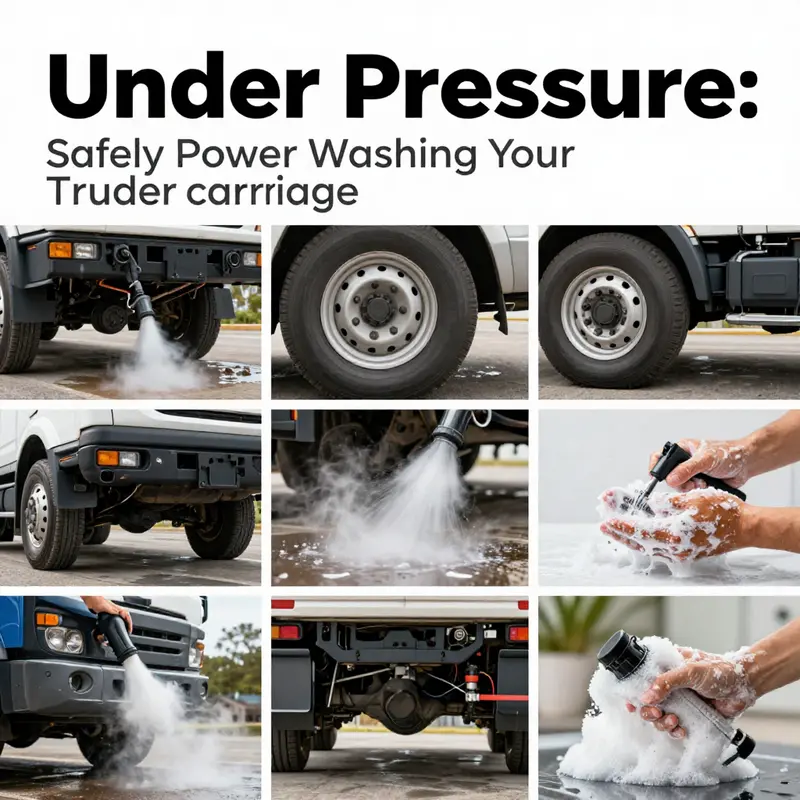
Cleaning Beneath the Beast: Safe, Effective Alternatives to Power Washing a Truck
When you decide not to use a high-pressure power washer under a truck, you still have a range of reliable options that remove mud, salt, grease, and brake dust without risking seals, sensors, or welded connections. The underside of a truck is built to handle exposure to moisture and road grime, but many components are sensitive. This chapter explains practical, hands-on methods and step-by-step habits that get the job done while protecting fragile parts. The narrative combines tool choices, technique, safety measures, and routine tips so you can clean confidently.
Start by preparing the vehicle and work area. Park on level ground and ensure the truck is fully cooled. Never spray or scrub a hot exhaust or engine bay; cold water on hot cast metal can cause thermal shock and cracks. If you need access beneath the truck, use sturdy ramps or a lift. If you use a jack, place the vehicle on solid jack stands and block the wheels. Wear gloves and eye protection, and lay down absorbent pads or gravel to catch run-off where possible. These small steps protect you, the vehicle, and the environment.
A high-pressure garden hose with a versatile spray nozzle is the most accessible alternative to a power washer. Set the nozzle to a steady, medium-strength jet or a wide spray setting. Work from the rear forward so you push debris away from the cab and toward the road. Keep the nozzle moving and hold it at a safe distance—about 12 to 24 inches—from surfaces to avoid concentrated force on seals and wiring. Aim to dislodge loose mud, flaked road salt, and caked dirt first. A steady flowing stream loosens grime without forcing water into bearings or electronic connectors. If your hose has a pulsating or adjustable jet, avoid the narrowest, highest-pressure settings entirely.
For stubborn grime, pairing water with manual scrubbing is often the safest approach. Use a long-handled, stiff-bristled brush to reach frame rails, wheel wells, and suspension components. Mix warm water with a mild detergent in a bucket and apply it to soiled areas. Scrub with steady strokes rather than aggressive stabbing motions. Manual scrubbing lets you moderate pressure exactly where needed. It also allows you to avoid sensitive spots like sensor housings, rubber bushings, and exposed wiring. After scrubbing, rinse with the hose, again maintaining distance and movement to prevent damage.
When the undercarriage needs a gentler touch, revert to a bucket and sponge or soft cloth. This is useful for oil stains, residual grime, and painted surfaces where preserving finish matters. Use warm, soapy water and a soft pad to wipe surfaces. Take time to work small sections and rinse them thoroughly before moving on. A sponge method is slower, but it significantly lowers the risk of pushing water into connectors or deforming plastic clips. Finish these areas with an air-blast from a leaf blower or compressed air on low settings to remove moisture from seams and brackets.
Specialized undercarriage cleaners are another practical option. These cleaners are usually foaming agents designed to dissolve grease, oil, and road film. Apply according to instructions, allow the product to dwell for the recommended time, and then rinse with a gentle hose spray or wipe away with a damp cloth. Choose formulations safe for rubber and plastic to avoid drying or cracking seals and bushings. These products work well on heavy-duty trucks that pick up tar, grease, or industrial residues, and they reduce the need for rough mechanical abrasion.
Steam cleaning offers a powerful middle ground: high heat without destructive pressure. If you can access a commercial steam cleaner or a steam-equipped detailing shop, steam loosens grease, kills bacteria, and dissolves grime while using low physical force. Steam penetrates crevices and evaporates quickly, which reduces drying time and corrosion risk. Be cautious around sensitive sensors and electrical connectors. Keep steam head movement continuous and maintain a moderate distance to prevent direct exposure to extreme heat.
Manual degreasing and targeted solvent application are effective when localized oil or tar spots persist. Use a solvent designed for automotive use, apply it to a rag, and blot stubborn areas. Never saturate bearings, seals, or rubber bushings with solvent, and always follow the product’s safety guidelines. After using solvents, rinse the area with warm, soapy water and dry it thoroughly. For heavy tar or hardened grease, a plastic scraper or a nylon brush helps remove bulk before applying any chemical cleaner.
Access and visibility matter. Use an inspection light or headlamp to reveal trapped grit inside crevices and behind brackets. Tilted mirrors and a telescoping inspection mirror reveal corrosion-prone spots. Clean out drain holes in the frame and rocker panels to prevent trapped water. After any cleaning, always allow the undercarriage to dry completely. Open drain plugs and let the truck sit in a sunny, ventilated spot if possible. If water collects in tight cavities, use compressed air on a low setting to evacuate moisture.
Protect sensitive components during any cleaning. Cover exposed electrical connectors with plastic bags and tape, or use removable foam covers. Avoid directly spraying wheel bearings, CV joints, and steering rack boots; water and high-pressure streams can wash grease away and introduce contaminants. Never spray the catalytic converter, engine block, or oxygen sensors. Avoid aiming a hose or steam wand at seals, especially around the differential and transmission. When in doubt, step back and clean the surrounding area by hand.
Environmental and legal considerations also guide your method. Avoid letting contaminated rinse water enter storm drains. Use absorbent pads to capture oil runoff and dispose of any collected waste per local regulations. If you clean at home regularly, consider a designated wash area with proper drainage to an approved sewer or a containment system. These practices protect waterways and keep you within local ordinances.
Routine maintenance is the best defense against severe undercarriage buildup. Regularly rinse off salt in winter and remove mud after off-road trips. Light, frequent cleaning reduces the need for intense scrubbing later. Inspect rubber bushings, brackets, and fasteners for wear during cleaning sessions. Treat any bare metal with a rust inhibitor or touch-up paint to prevent corrosion. When extensive buildup or hidden damage appears, seek professional service; trained technicians use lifts, controlled-pressure equipment, and chemical agents safely and effectively.
For heavy-duty tasks beyond accessible tools, professional undercarriage service saves time and reduces risk. Detail shops and truck-wash facilities use adjustable-pressure systems, steam, and environmentally compliant reclamation systems. If you frequently haul in corrosive conditions or drive construction routes, professional service intervals should be more frequent. For those troubleshooting stubborn grease, tar, or industrial residues, industry-focused cleaning guides provide additional techniques; see the practical guide on proven strategies for cleaning grease and tar off your trucks fast for hands-on tips and workflows.
Finally, match the method to the problem. Use a hose for routine rinses. Combine a brush and soap for caked-on grime. Reach for solvents or specialized foams for oil and tar. Opt for steam or professional cleaning for heavy contamination. Throughout, prioritize safety: cool vehicle, protect electricals, avoid bearings and seals, and dry thoroughly. When you treat the undercarriage with care, you preserve the truck’s function and extend its service life—without the risks that a high-pressure power washer can bring.
For manufacturer-specific limits and recommended cleaning techniques, consult the official maintenance documentation provided for your vehicle. Additional authoritative guidance on vehicle maintenance and safety can also be found through national vehicle safety resources: https://www.nhtsa.gov
Final thoughts
In conclusion, while power washing the undercarriage of a truck may seem like a convenient method to ensure cleanliness, it entails significant risks that can lead to costly repairs if not done appropriately. Following the recommendations outlined in this article will enable fleet managers and truck operators to maintain cleanliness without compromising the integrity of their vehicles. By understanding the critical considerations, recognizing common risks, and employing best practices or opting for professional services, the undercarriage can remain in optimal condition—a matter of essential importance for the longevity of any trucking fleet.