
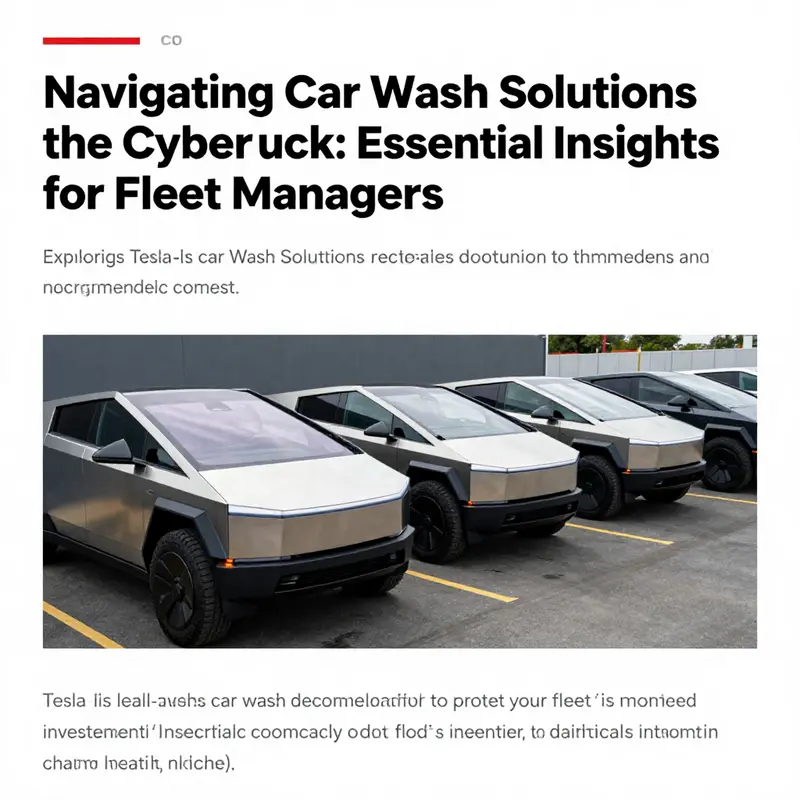
As electric trucks like the Tesla Cybertruck become more prevalent in logistics and construction fleets, understanding their unique maintenance needs is critical. Among these needs is the proper cleaning method to avoid damaging the vehicle’s distinctive materials and design. This article examines Tesla’s recommendations for car wash practices, highlighting the inherent risks of automatic washes, and offers alternative cleaning methods tailored for the Cybertruck. Each chapter dives deep into these aspects, providing fleet managers and operators with the insights necessary to make informed decisions about maintaining the pristine condition of their vehicles.
Through the Wash: Navigating Automated Cleaning for the Steel Exoskeleton of the Electric Pickup
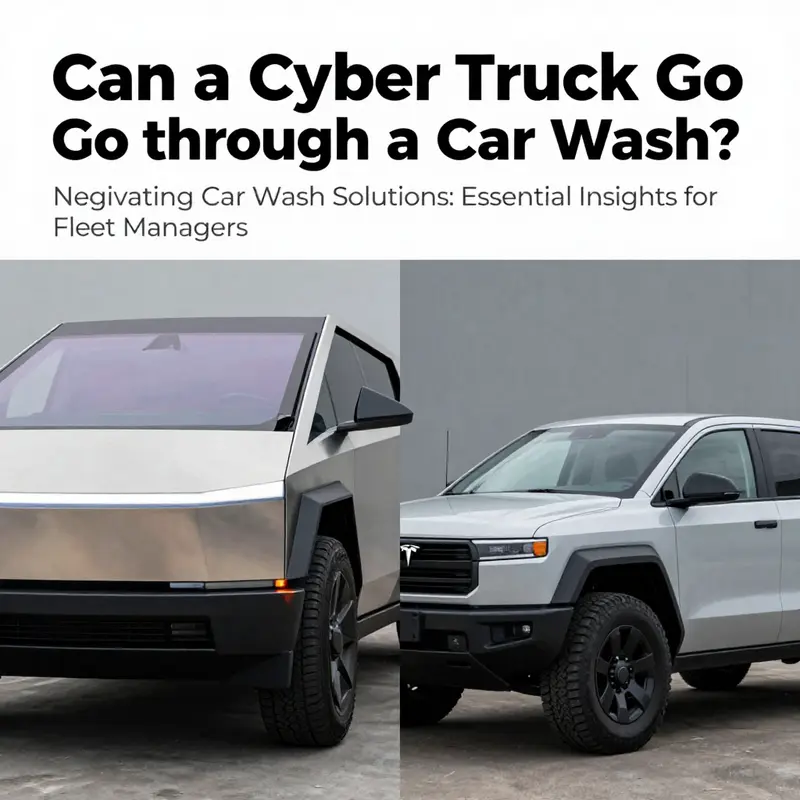
The question, plain and unresolved on many shop floors and driveways, is this: can a Cybertruck endure the rhythm of an automatic car wash and still roll out with its finish intact? The answer, while seemingly simple, unfolds into a careful blend of design realities, manufacturer guidance, and practical stewardship of a vehicle that was built to challenge conventional ideas of what a pickup should look and behave like after a wash. On the surface, the stainless steel body and angular silhouette conjure images of a vehicle that can absorb a lot of punishment. In practice, the recommendation is nuanced. The overarching message from the maker is not a blanket prohibition against car washes, but a call to use care, to favor certain wash styles over others, and to prepare the vehicle in specific ways so that the wash process does not become a test of its durability. In the middle of that guidance sits a tool called Car Wash Mode, a feature that is not merely a convenience but a deliberate safeguard designed to align the car’s systems with the realities of automated cleaning. Franchise-like car wash environments often tempt owners to default to the quickest, most automated solution. Yet for a vehicle that embraces a distinctive design language—stainless steel panels, sharp edges, and a cabin sealed and specialized for electric performance—the path through a car wash becomes a negotiation of risk and reward, speed and protection, routine maintenance and long-term resilience.
When a driver contemplates the wash bay, the logic of Car Wash Mode begins to unfold as more than a set of toggles. It is a small, precise choreography aimed at preserving the vehicle’s core systems during exposure to high-pressure jets, detergents, and the mechanical contact that brushes can impose. The feature closes all windows, a preventive measure against water intrusion that could, in the worst cases, seed interior humidity or fogging of sensors. It also locks the charge port to prevent any accidental water exposure to charging circuitry, a prudent safeguard given how critical it is for the vehicle to manage high-voltage systems without interruption or moisture ingress. At the same time, Car Wash Mode disables the windshield wipers. This is not a cosmetic concession; it prevents the wipers from being activated by errant spray or forced movement from the wash apparatus, which could otherwise shear or bend wiper arms and rubber. In addition, Sentry Mode is deactivated during the wash to avoid false alerts that could complicate the operation or prompt a response that distracts the vehicle operator from the process. Together, these steps are not about making the car wash easier; they are about reducing the likelihood of sensor confusion, water exposure to delicate components, and mechanical interference during a moment when the vehicle is momentarily vulnerable.
The practical upshot is that automatic car washes—with their range of brush designs, jet configurations, and chemical cleaners—can still be a viable option, but only when approached with the same deliberation that a driver uses when performing a meticulous hand wash in a driveway. The design reality is that while the Cybertruck is engineered to withstand many ordinary wash conditions, the automated environment introduces a set of variables that are not always part of the everyday wash routine for other vehicles. Brushes, particularly those with stiff bristles or overlapping contact surfaces, can pose a risk to sharp edges and to the precision-toleranced joints where panels meet. The high-pressure water jets, while effective at removing grime, can over time contribute to micro-scratches or water-spot patterns if the surface is not properly buffered by the right detergents and rinse sequences. The same logic applies to the chemical cleaners used in some automated bays; even a stainless-steel surface is not impervious to etching, dulling, or residue buildup if exposed to aggressive cleaning agents in a repeated cycle without adequate protection.
Tesla’s guidance is not an invitation to experiment with every wash bay door, but a framework for making an informed choice. If the goal is to maximize convenience while preserving the vehicle’s finish and battery safety margins, many owners gravitate toward a touchless or low-pressure option that minimizes physical contact and abrasive forces. A touchless wash uses high-velocity water streams and detergents designed to lift grime without brushing, reducing the potential for micro-scratches along the sharp intersections of the exoskeleton. A self-serve, low-pressure option counts as another attractive alternative, especially when the operator can control the spray intensity and duration. The key, with any automated choice, is to avoid the types of wash configurations that rely on brushes or aggressive mechanical contact. The risk calculus changes when a vehicle’s outer shell is a single, continuous piece of stainless steel with disinfecting measures and sensor housings tucked beneath the surface. In that context, Car Wash Mode becomes an operational imperative, not a mere convenience.
Of course, there are practical limits to any wash, even with Car Wash Mode engaged. The detritus that can accumulate in and around wheel wells, the undercarriage, and the lower rocker panels may demand a more targeted pre-wash approach if the vehicle is particularly dirty with mud, road salt, or tar. In such cases, a pre-rinse, followed by a controlled wash with mild soap, remains a prudent path. The emphasis is on gentle handling and careful drying. Microfiber towels and soft mitts—designed to lift grime without abrading the metal—play a crucial role in maintaining the surface sheen. A dry-off with a clean microfiber can help to limit water-spot formation, which is not merely an aesthetic concern but also a sign that minerals may have interacted with coatings or the surface finish. The habit of thorough drying becomes more important as the wash frequency increases and as seasonal conditions change, since road film and mineral deposits can accumulate with time, especially in areas with frequent precipitation or high mineral content in the water supply.
All this sounds precise, almost clinical, and that is exactly the point. The vehicle’s designers have created a framework in which the wash process can be predictable, repeatable, and safe. Car Wash Mode does not turn the wash into an entirely risk-free operation, but it does align the vehicle’s internal responses with the operational realities of a modern wash bay—the aim being to reduce the probability of water breaches, sensor suspicions, or mechanical misfires that could arise if the vehicle interpreted the wash as a threat rather than a routine cleaning event. The manufacturer’s official cleaning and maintenance guidance, while detailed, is not a bureaucratic checklist; it is a practical manual for sustaining the vehicle’s performance and appearance in a world where car washes are as common as gas stations once were.
Within this framework, the decision to wash in an automated environment becomes a matter of context. If the wash bay is known to employ gentler, touchless technology and the operator agrees to keep the water pressure within a moderate range, the wash can be a convenient way to manage time, especially for fleets or owners who rely on regular maintenance to keep miles and grime separate. For private owners who wash at home or in a familiar facility, the choice may depend on the frequency of use and the willingness to perform a brief follow-up hand wash for any stubborn spots. In either case, the underlying principle remains: prepare, protect, and verify. Prepare by arming the vehicle with Car Wash Mode and removing or stowing any accessories that could be snagged or damaged in the wash. Protect by ensuring the interior is sealed, the charge port is secured, and the wipers will not respond to spray or movement. Verify by inspecting the exterior after the wash for any moisture accumulation around sensors or near the seals, and by performing a quick visual check for any stray debris that the wash’s jets may have pushed into crevices.
Beyond the mechanics of Car Wash Mode and the choices of wash style, there is a broader context to consider—the environment in which the vehicle is washed and the ongoing maintenance habits that affect long-term finish and corrosion resistance. Stainless steel does offer exceptional resistance to corrosion and staining, but it is not immune to the kinds of micro-scratches, fingerprint smudges, or mineral streaks that accumulate with repeated exposure to detergents and water. The exact composition of the detergents and the mineral content of the water can matter more than many owners anticipate, particularly when washes are performed frequently or in regions with hard water. A thoughtful approach to detergents—favoring mild, non-abrasive cleaners and avoiding harsh solvents—helps preserve the satin-like or polished appearance that many owners value as a hallmark of the vehicle’s aesthetic. When cleaning by hand, the same rules apply: use a soft cloth, work in small sections, and follow the grain or contour lines of the panels to minimize friction against the metal. With respect to the panels themselves, it is wise to keep an eye on any joins, seams, or integrated trims where residues can settle. A routine, gentle wipe-down after a wash can prevent water spots and micro-residues that, if left unattended, could gradually dull the surface or affect the sensor housings and filamentary components embedded near the surface.
The design philosophy behind a vehicle that signals a future of rugged capability is also a reminder that care routines should evolve with a vehicle’s life cycle. There is no reason to treat washing as a mere maintenance chore; it is an ongoing dialogue between the vehicle’s structural integrity and the human operator who uses it. The more the owner adopts a measured approach—favoring touchless or low-pressure wash options when feasible, engaging Car Wash Mode as a standard practice, and complementing automated cleaning with mindful hand washing when necessary—the more durable and consistent the vehicle’s finish and performance will be over time. The interplay between automated convenience and manual care becomes a shared discipline that keeps the vehicle looking as purposeful as it performs. In that sense, the question of “can a car go through a car wash?” becomes a question about the quality of the care that follows: a little planning, a little restraint, and a lot of respect for the engineering that makes this vehicle possible.
In the broader ecosystem of truck wash facilities and fleet care, the specifics of facility layout, wash bay design, and operator practices can influence the outcome of every wash. For those who manage fleets or run transporting operations, the planning surrounding wash schedules, water quality, and the particular wash technology used becomes an operational consideration with real, measurable payoff. The choices extend beyond the single wash to a holistic approach that considers the facility’s maintenance protocols, the training of staff, and the expectations of drivers who rely on consistent cleaning to maintain both aesthetics and safety. In this sense, the value of a well-run wash operation is not merely cosmetic; it touches the rhythm of maintenance cycles, the reliability of sensors and mechanical systems, and the overall efficiency of a fleet’s daily routines. For organizations seeking to optimize these outcomes, the idea of integrated care—where wash strategy, surface preservation, and driver education converge—becomes more important than any single wash pass. See how such integration can look in practice at the broader discourse around facility management for truck wash businesses.
Given these considerations, the practical recommendation remains clear and coherent. If you are planning to wash a Cybertruck in an automated bay, prepare by engaging Car Wash Mode. Choose a wash that prioritizes touchless or low-pressure contact, and avoid brushes that can mar the exterior or misalign the edges. If the vehicle is heavily soiled, a pre-rinse to loosen grime followed by a hand wash in a controlled, gentle manner may be the best path to preserve the finish. After the wash, a careful drying with a clean microfiber will help maintain the appearance while preventing micro-droplet drying that could leave mineral residues on the surface. This approach aligns with the manufacturer’s guidance and represents a balanced compromise between the convenience of automation and the care required to keep the vehicle’s exterior pristine. For owners who want to explore the topic further, the integration of wash facility practices into fleet management discussions offers a broader perspective on how automated cleaning fits within daily operations. It is a reminder that the wash is not a terminal event but a recurring step in the ongoing care of a high-tech vehicle that sits at the intersection of rugged capability and refined engineering.
The dynamic conversation surrounding car washes and modern electric pickups continues to evolve, as new wash technologies emerge and as owners share first-hand experiences. Yet the core principle persists: maintain a disciplined approach to how you wash, protect the finish, and monitor the system’s responses during cleaning. Car Wash Mode is not a one-time setup; it is a standard operating condition that signals the vehicle’s readiness to endure routine maintenance with minimal risk. The more consistently this practice is applied, the more predictable the wash experience becomes, and the more likely it is that the vehicle’s exterior, sensors, and electrical components will emerge unscathed after each cycle. In that sense, the wash is not merely a means of removing dirt; it is a test of how well a driver and vehicle can collaborate within a shared ecosystem of care and engineering precision.
For readers who work within the broader framework of truck wash operations, or who are considering how this specific cleaning approach translates to fleet-level maintenance, a closer look at facility management for truck wash businesses can provide practical, actionable guidance. The right facility design, staff training, and wash protocol can help ensure that automated cleaning remains a reliable, high-quality service, even when dealing with high-end, high-tech vehicles that require extra attention. In turn, drivers benefit from a predictable cleaning experience that does not compromise safety, electronics, or surface integrity. The convergence of vehicle design strategy and wash facility practices stands as a reminder that the car wash experience is not merely a service interaction; it is part of a broader system that supports performance, longevity, and reliability on the road. To explore more about how facility ecosystems support efficient, compliant truck washing, see facility management for truck wash businesses.
As a closing note, the practical path through the wash for a high-tech pickup with a stainless steel body is not about choosing between caution and convenience. It is about choosing a measured, informed approach that respects both the vehicle’s engineering and the realities of maintenance environments. By recognizing Car Wash Mode as a safeguard, selecting the appropriate wash style, and combining automated cleaning with attentive hand care when needed, owners can enjoy the convenience of automated cleaning without compromising the vehicle’s finish, sensors, or performance. In this light, the car wash becomes not a potential hazard but a well-managed aspect of owning a vehicle built to redefine what a pickup can withstand—and what a driver can expect from a modern, technology-forward ownership experience.
External resource for further guidance: Tesla’s official cleaning guidelines provide the authoritative framework for caring for your electric pickup in a wash setting. See https://www.tesla.com/support/cybertruck/cleaning for the most up-to-date instructions and nuanced recommendations tailored to this vehicle family.
Why an Automatic Car Wash Is a Gamble for a Cybertruck: Risks, Reality, and Safe Alternatives
Why an Automatic Car Wash Is a Gamble for a Cybertruck: Risks, Reality, and Safe Alternatives
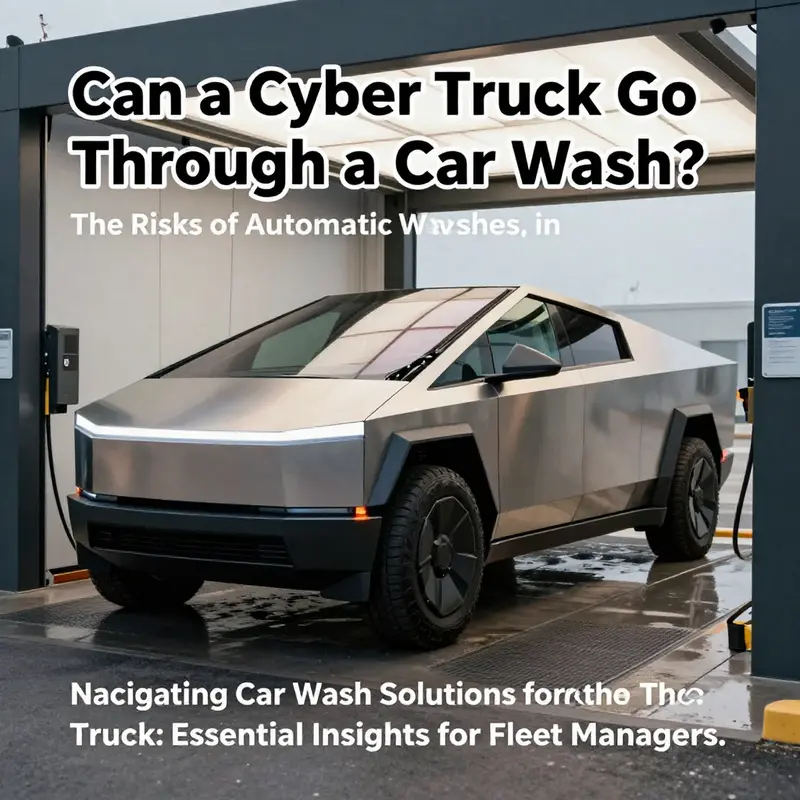
When owners ask whether a Cybertruck can pass safely through an automatic car wash, the direct answer is cautious: it can, but it often should not. The vehicle’s stainless steel exoskeleton and its sharp, angular geometry change the rules for cleaning. Standard automated systems were built around rounded, pliable bodywork. Those systems often rely on soft but abrasive brushes, rotating arms, and high-pressure jets. For most vehicles, this mix hits the balance between thorough cleaning and acceptable wear. For a Cybertruck, the same mix can create visible mar marks, scratches, and uneven abrasion that are hard to repair.
The primary danger comes from mechanical contact. Brushes press against flat panels with inconsistent force. They conform poorly to abrupt edges and folded surfaces. When a brush meets a hard edge, the pressure localizes. That concentration of force increases friction on a small area. The result is often marring or distinct linear scratches. Even when brushes appear soft, repeated runs magnify microscopic damage. Over time, those marks collect dirt and become impossible to hide without specialized polishing.
High-pressure water introduces another set of risks. Wash systems use narrow, high-velocity jets to push grime from seams and crevices. These jets excel at removing stuck-on dirt. They also exert powerful shear forces on seams, fasteners, and sensor seals. On a vehicle with nonstandard panel joins and flat faces, a concentrated jet can wedge into creases and blast the edges. That can lift the edge, introduce moisture behind panels, or erode protective seams. If a high-pressure stream targets a camera or sensor housing, it can disturb its calibration or leave residue in front of optics.
Chemicals used in automated washes matter as well. Alkaline detergents, industrial degreasers, and aggressive tar removers work quickly. But they can interact unpredictably with stainless steel finishes. Some stainless surfaces are passivated with a thin oxide film. Harsh chemicals can alter that layer’s appearance. The result may be streaking, discoloration, or a dull surface that attracts fingerprints. Many owners prefer pH-neutral, automotive-specific soap to preserve both finish and tactile feel.
Anecdotal tests and owner reports underscore these technical concerns. In controlled runs through conventional automated systems, owners have seen visible wear after just one pass. Those reports match guidance available in the vehicle’s official cleaning instructions, which advise avoiding automatic brushes. The mismatch between the vehicle’s geometry and a brush system’s flexible heads is the recurring theme. Whether a brush touches flat paneling, slides over a distinct fold, or scrapes a corner, the outcome risks creating a visible defect.
Beyond direct physical damage, automated systems can complicate maintenance of cameras and sensors. The Cybertruck’s external cameras and sensors are integral to driver assistance features. Automated sprays and cleaning agents may leave films on camera lenses. Brushes may repeatedly strike housings, fine-tuning their position through abrasion. If an optical surface acquires streaks or residue, it can confuse camera calibration routines. If a sensor housing is disturbed, the vehicle may require a software recalibration. That creates time and cost where an owner expected convenience.
Not all automated washes are equal. Newer, AI-driven systems are changing the calculus. Some advanced facilities scan a vehicle with optical sensors, then generate a precise 3D model in fraction-of-a-second time. With that model, they modulate brush pressure, avoid contact at problematic points, and deliver highly controlled flows of water. In concept, these systems allow even angular vehicles to receive a mechanically gentler wash. They can use soft, flexible materials with pressure control measured in precise units. They can also slow down how brushes travel past edges, reducing shear.
However, real-world availability of these high-tech systems remains limited. Many local and regional bays continue to operate older equipment. A quick visual inspection rarely reveals whether a facility uses a conventional brush system or an AI-aware, adaptive rig. For owners who value predictability, that uncertainty is often decisive. Choosing a facility without confirmed equipment specs is a risk.
Given the variety of wash infrastructure, the safest course divides into two clear options: hand washing and touchless washes. Hand washing allows the owner or a trained professional to clean every nook and seam with gentle tools. Microfiber mitts, two-bucket rinses, and dedicated stainless-safe soaps let an owner remove grime while preserving finish integrity. When done correctly, hand washing minimizes points of friction and avoids unintended abrasive contact.
Touchless or brushless automated systems are the other practical option for convenience. These systems rely on chemical softening of contaminants and high-volume rinses. Because there are no brushes, there is no mechanical abrasion from bristles. But not all touchless systems are equal. Those that rely on strong alkaline chemistry can still harm some finishes. In addition, high-pressure jets remain part of many touchless processes. That means you must know the system’s pressure settings before you let a vehicle pass. Opt for systems advertising low-pressure operation and pH-neutral cleaning agents.
If you ever face a choice between a brush wash and a touchless wash, choose touchless. If touchless is not available, opt for a full-service hand wash at a reputable detailing shop. Both choices reduce the chance of unexpected abrasion. If neither is an option, self-serve bays provide a middle ground. In these setups, the owner controls the pressure wand and choice of chemicals. A self-serve wash lets you use a low-pressure setting and rinse methodically. It also allows a cautious operator to avoid high-pressure flushing near seams, camera housings, and exposed bolts.
Before any wash, take time to inspect the vehicle for vulnerable spots. Lift grilles and taped seams can catch brushes. Rubber seals around doors and trunks deserve a gentle touch. Camera lenses and sensor housings should be examined for residue. Remove loose items from the bed and secure any external accessories. If your vehicle uses a raw finish stainless steel, check for protective films or coverings. Some owners install temporary protection on high-friction edges. These coverings can reduce contact damage during an automated wash. If you plan to run through an automatic bay anyway, consider temporarily taping delicate trim with painter’s tape. It’s a small effort with a meaningful payoff.
When washing at home, adopt a methodical routine. Use two buckets: one with clean water for rinsing your mitt and one with soap. That two-bucket method prevents grit from being rubbed back onto the surface. Choose a fine, microfiber wash mitt and a soft drying towel. Use a pH-neutral, automotive-safe soap designed for painted or metallic surfaces. Rinse thoroughly between steps. Avoid circular rubbing when drying and focus on straight-line motions instead. That reduces swirl marks. If you encounter bird droppings, bug residue, or tree sap, remove them promptly. Those contaminants are acidic and can etch into the surface. Use a soft, non-abrasive detailer spray or a product labeled safe for stainless steel finishes.
Stainless steel behaves differently from painted surfaces. It does not hide small defects as well. When it receives a scratch, the mark often has higher contrast. That makes it more visible at different viewing angles. Some finishes accept light polishing, but others will show buffing marks if not treated properly. Seek a detailer familiar with stainless finishes if you require paint correction or polishing. Avoid heavy cutting compounds unless a specialist confirms their suitability. On many stainless exteriors, restorative techniques use fine abrasives and controlled polishing sequences. Those processes require skill and the right tools to avoid creating new visual inconsistencies.
Protective coatings offer another layer of defense. Ceramic-type coatings and specialty sealants can reduce surface friction and make contaminants easier to remove. They do not make the vehicle immune to brush damage. But when combined with careful washing, such coatings decrease the number of full-service detail cycles you will need. If you plan to run through automated facilities occasionally, a professional-grade coating reduces the severity of abrasion. It also simplifies maintenance between deeper cleans.
Addressing sensors and cameras demands attention. Wipe optics gently with a microfiber cloth and a manufacturer-recommended cleaner. Avoid ammonia-based glass cleaners. If a wash leaves residue in front of a lens, remove it right away. Persistent films degrade image clarity. For sensor housings, check seals and mounting points. If a wash appears to have dislodged a sensor or created an alert, follow the vehicle’s guidance for recalibration. That may require a diagnostic session or a manual recalibration routine.
For owners who prefer a hands-off approach, develop a dependable plan with local service providers. Ask wash operators about their equipment and request touchless or low-pressure options. If a facility advertises adaptive scanning and pressure control, ask for specifics. Verify what chemicals they use and check whether they have experience with angular or stainless-clad vehicles. Some operators offer specialized packages for nonstandard truck geometries. Work with those providers when possible. If you operate a fleet or manage vehicle upkeep, consider writing a facility checklist. That helps ensure consistency from one visit to the next and reduces surprising results.
From the perspective of facility managers, accommodating angular vehicles requires some changes. Adjust nozzle heights, reduce brush pressure, and update wash programs. Staff should be trained to spot hard edges and weak fasteners. A small investment in adaptive technology or revised operating procedures can open a new customer niche. For operators looking to learn more about managing these demands, facility management resources for wash businesses explain best practices. Those resources cover equipment selection and maintenance guidelines that help reduce vehicle damage and customer complaints. You can learn more about those operational strategies here: https://tripleatruckwash.com/facility-management-for-truck-wash-businesses/.
If you decide to accept the risk and use an automatic wash, follow these field-tested steps. First, choose a touchless or brushless program. Second, remove loose accessories and apply painter’s tape to delicate trim. Third, avoid programs advertising heavy degreasing or solvent-based cleaners. Fourth, verify that the wash operates with low-pressure jets on delicate settings. Fifth, inspect the vehicle immediately after the wash. Look for new marks, lifted seals, or lens residue. If you find damage, photograph it, speak to the operator, and then follow up with a professional detailer.
Damage that appears after an automated wash often falls into two categories: cosmetic and functional. Cosmetic issues include scratches, swirl marks, and dull patches in the finish. Those are visible and primarily affect aesthetics. Functional issues affect cameras, sensors, and seals. If a camera misbehaves after a wash, it can impact driver assistance features. Cosmetic fixes often involve polishing or localized refinishing. Functional repairs sometimes require part replacement or recalibration, which costs more.
Owners should weigh the cost of convenience against potential repair bills. For some, the occasional brush wash may result in no noticeable harm. For others, a single pass can produce visible and lasting wear. If you value a near-pristine finish, favor hand washing and professional detailing. If you need frequent cleaning and prefer convenience, seek out touchless systems or self-serve bays where you control pressure and chemicals.
A practical mindset yields the best outcomes. Inspect before and after each visit. Build relationships with trustworthy detailers and operators. Use soft tools and gentle chemicals. Protect camera lenses and sensor housings. When in doubt, wash by hand. These steps reduce the chances that a routine cleaning becomes an unwanted repair.
For authoritative guidance on washing and maintaining the vehicle’s exterior, consult the official cleaning instructions provided by the manufacturer. They outline recommended soaps, drying methods, and sensor-care procedures. Those instructions are the best reference for aligning cleaning practice with warranty and maintenance expectations: https://www.tesla.com/support/cybertruck/washing-cleaning
The Clean Dilemma: Navigating Car-Washes and the Cyber Truck’s Stainless Edge
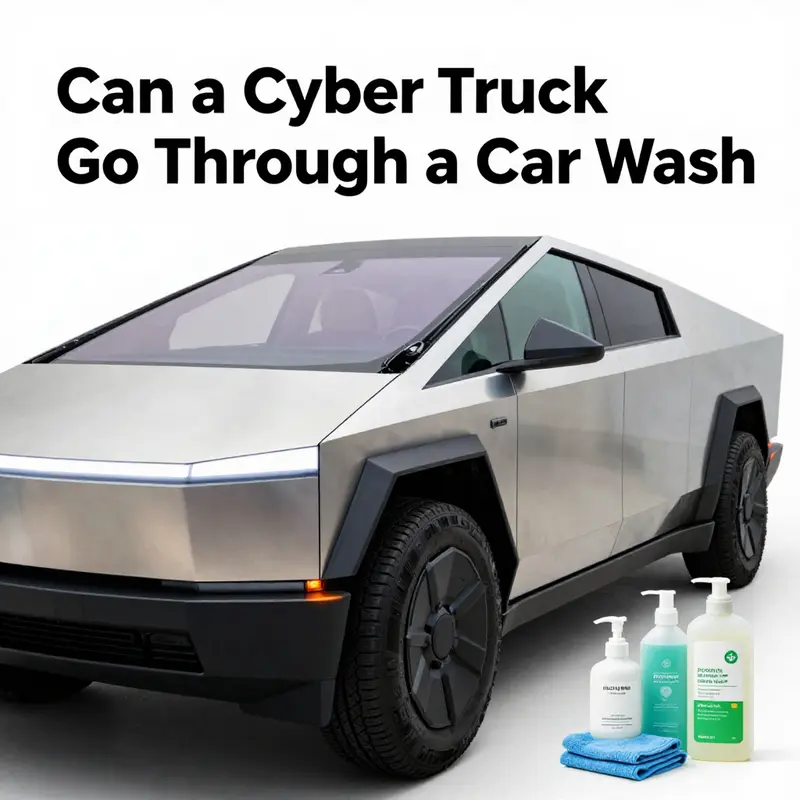
The question of whether a Cyber Truck can safely pass through a car wash sits at the intersection of design philosophy, materials science, and practical vehicle care. It is not just a matter of whether a machine can propel a car through a tunnel of jets and brushes; it is a test of whether a vehicle’s exterior, engineered with a bold, angular geometry and a distinctive stainless steel skin, can withstand the kinds of mechanical and chemical challenges that a car wash routinely poses. The discussion invites a broader reflection on how such a vehicle, built around a premise of rugged minimalism and future-oriented materials, interacts with environments that assume a more conventional, paint-based finish and familiar curvature. In this sense, the Cyber Truck becomes a lens through which we examine the limits and possibilities of cleaning technology itself, rather than merely a test of whether it can tumble through a tunnel of rotating brushes without immediate catastrophe.
From the outset, the core caution is straightforward. Automated car washes are designed around a set of assumptions: a smooth surface, standard curvature, and a continuous layer of conventional coatings that tolerate a range of intensities and contact pressures. The stainless steel skin of the Cyber Truck, with its sharp lines, flat facets, and abrupt transitions between panels, challenges these assumptions. The geometry is not the kind most automatic wash systems were tuned for. In a typical brush-based wash, rigid or semi-rigid brushes rely on contact with curved surfaces to scrub away grime. Where a curve ends and a flat plane begins, there is a potential for snag points. The aggressive geometry of the Cyber Truck — its angular silhouette, reinforced edges, and the deliberate exposure of hardware in some designs — creates a perimeter where misalignment with a brush can translate into micro-scratches, scuffs, or wear that is not trivial to repair in situ. Even if the surface materials themselves are resilient, the interaction with a high-contact process raises the probability of localized damage, particularly at corners, ridges, or the points where panels meet. The risk is not merely aesthetic; even shallow scratches in stainless steel can become focal points for corrosion if protective coatings are compromised, especially in environments with salt or other deicing chemicals.
The manual and public-facing maintenance guidance that will be familiar to any owner of such a vehicle tend to emphasize caution. Hand washing with a soft microfiber cloth and a mild soap remains the gold standard because it affords the most control. A wash mitt can be treated to lift dirt without dragging it across the surface. The sequence matters: start at the top, work downward, and rinse thoroughly before applying soap to avoid forcing grit across lower panels. This approach reduces the chance of dragging abrasive material across sharp edges and corners. It is a disciplined form of care that recognizes the vehicle’s geometry and the potential consequences of using aggressive cleaning methods. When an owner considers a car wash, the guidance shifts toward more careful selection: what type of system is it, does it rely on brushes or solely water jets and eco-friendly cleaning agents, and can the facility confirm that the equipment is tuned to handle specialty finishes? These questions reflect a broader theme: the safest cleaning approach for a vehicle with a distinctive exterior is not a universal answer but a tailored assessment that weighs the equipment’s capabilities against the vehicle’s design realities.
There is, of course, a real-world counterpoint that adds complexity to the discussion. A widely circulated test by a popular automotive channel presented a practical, though cautionary, data point: a standard automatic wash, with brushes and relatively conventional cleaning routines, resulted in visible surface scratches and a need for professional repair. The takeaway from this anecdote is not to vilify all automatic washes, but to illustrate that not every system is equal in its risk profile for a vehicle with the Cyber Truck’s particular surface treatment and geometry. It is easy to imagine a spectrum of wash technologies, from traditional brush-based bays to the more modern, high-tech configurations that seek to minimize contact. The moral is nuanced: the risk is contingent on the system’s design philosophy just as much as on the vehicle’s own attributes. If a wash is designed to minimize contact, and if its sensors and controls are calibrated to the vehicle’s geometry, the risk can be reduced. If, conversely, a facility relies on rigid brushes that cannot adapt to a complex silhouette, the potential for damage rises appreciably.
What emerges from this discussion is not a binary answer but a decision framework. The first piece of guidance is to avoid the default path of the most traditional, brush-based automated washes. The second is to seek out facilities that emphasize gentleness and precision over speed and brute force. In practical terms, this means favoring wash systems that operate with minimal physical contact and whose control logic can map a vehicle’s surface with high fidelity. Contemporary wash concepts that rely on AI-driven mapping, soft, pliant cleaning elements, and dynamically adjusted contact areas represent a category of wash that is more compatible with complex surfaces. In theory, such systems could be designed to accommodate the Cyber Truck’s geometry, providing sufficient cleaning action without the risk of brushing across edges or corners. In practice, however, even these advanced systems must be scrutinized for their exact operational parameters: contact pressure, dwell time, the chemistry of cleaners, and the degree to which the vehicle’s surface is allowed to move freely within a fixed frame. The practical takeaway is straightforward: when in doubt, err on the side of caution and prioritize hand washing, or a carefully chosen touchless alternative, over a standard wash cycle that relies on physical contact.
This is where the question becomes as much about process as about products. The modern car wash industry is not monolithic. It encompasses a spectrum of technologies, from high-velocity water jets to the softest of fabric-based wipes, from fully contactless sprinklers to hybrid systems that attempt to minimize contact while delivering a reasonable cleaning result. The most relevant distinction for the Cyber Truck lies in the degree of contact and the precision of the vehicle’s mapping. If a facility claims to operate with an AI-guided, 3D surface scan that informs where and how a cleaning arm should move, the risk profile is inherently different from a traditional bay that uses a one-size-fits-all approach. In other words, the compatibility of the Cyber Truck with any given wash comes down to the sophistication of the wash’s geometry-handling approach and its adherence to gentle contact pressures. The absence of a universal compatibility guarantee underscores a practical philosophy: owners should treat each wash facility as a potential risk evaluation scenario, asking pointed questions about equipment, safety protocols, and how the system handles sharp edges and different panel gaps.
The nuanced reality can be framed through a simple example. Imagine two automated washes. The first uses stiff brushes and rigid friction to scrub dirt from a broad, flat surface. The second uses soft, flexible bristles that yield to the vehicle’s contours, aided by sensors that map the exact dimensions and angles of the vehicle in real time. The first scenario carries a higher risk of micro-scratches and edge discrepancies, especially on the sharp corners and panel junctions that define the Cyber Truck’s look. The second scenario, while not risk-free, presents a pathway to safer cleaning action. It is not enough to claim that a wash is “gentle.” The wash must demonstrate, through its operational parameters, that it can adapt to the vehicle’s unique geometry, minimize contact pressure to the lowest feasible level, and maintain a consistent cleaning result without compromising the finish. In the absence of such verification, the prudent choice remains to limit exposure to automated wash environments and lean toward careful, hands-on care.
This framework naturally leads to a broader conversation about maintenance philosophies for premium electric utility vehicles. The Cyber Truck is more than a mechanical shell; it is a vehicle whose exterior design communicates intent—industrial, resilient, and forward-thinking. The cleaning approach, then, should echo that philosophy: it should honor the integrity of the finish, preserve the sharpness of the lines, and avoid situations that could undermine the long-term appearance. If the exterior finishes are designed for easy maintenance, that does not automatically translate into universal compatibility with every wash system. The owner’s responsibility expands beyond following the manual. It becomes an ongoing assessment of where the vehicle is cleaned, how it is cleaned, and what changes in the wash industry—driven by new materials science or new processing methods—might alter the risk calculus in the future. In this evolving landscape, keeping a careful set of guidelines at hand helps ensure that the Cyber Truck’s distinctive aesthetic remains intact, while the car-wash ecosystem continues to innovate in ways that can responsibly accommodate such bold designs.
In the push toward practical cleanliness, a single actionable pathway stands out: adopt a rigorous routine of hand washing at home, supplemented by professional detailing when needed, and treat automated options with a critical eye. The aim is to preserve the vehicle’s finish and its structural longevity without compromising the vehicle’s utility or its iconic silhouette. The alternative cleaning methods, which include hand washing with microfiber tools, touchless automatic washes with careful chemical compatibility, professional detailing, and portable at-home systems, collectively offer a spectrum of safety nets. Each option has trade-offs. Hand washing offers the most control but requires time and effort. Touchless washes reduce mechanical contact but may leave heavier grime behind if not paired with proper chemical compatibility. Detailing services bring specialized care but come with cost and scheduling considerations. Portable systems can be a middle ground, delivering more control than a drive-through while preserving water and resource efficiency. The decision is personal and practical, anchored not only in the vehicle’s engineering but also in the owner’s routine, environment, and priorities.
In this sense, the Cyber Truck’s relation to car washes becomes a narrative about risk management, not about a simple yes-or-no verdict. The vehicle invites a careful, context-aware approach to cleaning that respects its unusual exterior while embracing the best of what modern washing technology has to offer. The safest path, for most owners, is a deliberate, non-automated routine that maximizes control over every stroke and every rinse. When automation is necessary, it should be approached with due diligence: inquire about the wash’s safety protocols, confirm that the system is brushless or uses ultra-soft, adaptive brushes, and verify that the water pressure and chemical formulation are compatible with stainless steel finishes. Above all, maintain a healthy skepticism about “one-size-fits-all” claims and recognize that the vehicle’s design intentionally challenges conventional assumptions about exterior care. This stance is not a refusal to adopt new technologies but a thoughtful embrace of where and how those technologies can be integrated into a maintenance routine that preserves the Cyber Truck’s distinctive presence for years to come.
To anchor this discussion in practical terms, consider the broader ecosystem of vehicle maintenance in the context of a modern fleet or individual ownership. The choice to avoid brush-based automated washes does not occur in a vacuum. It complements a broader strategy of preserving the integrity of high-value, high-end finishes across a line of futuristic, high-performance vehicles. If a fleet manager is weighing the pros and cons of automated wash contracts for a small batch of these trucks, the prudent approach is to run a controlled pilot program. The pilot should test not only the cleanliness outcomes but also the condition of the edges, the resilience of the finish against the specific chemical profiles used by the wash, and the post-wash inspection results. This process can illuminate the boundary conditions of automated systems and help facilities calibrate their equipment or policy to better accommodate complex geometries. For individual owners, the takeaway remains to prioritize hand washing or trusted detailing services, and to approach automated options with a clear understanding of the potential risks and the specific system’s capabilities.
As the cleaning technology landscape continues to evolve, the question will remain contextual: under what circumstances can a vehicle with an advanced stainless-steel exterior confidently pass through a car wash without compromising its finish or its long-term durability? The answer hinges on the sophistication of the wash system, the precise mapping of the vehicle’s unique geometry, and the operator’s commitment to gentleness and precision. Until a universally accepted standard emerges for this particular silhouette, the safe, informed path is to treat each wash as a potential risk assessment exercise rather than a guaranteed convenience. In that light, hand washing, augmented by selective professional care and, where necessary, carefully selected touchless options, provides the best balance of cleanliness, protection, and preservation for the Cyber Truck’s distinctive exterior.
For readers seeking a broader, policy-minded view of how the industry handles the issue of washing high-design vehicles within regulated environments, there is a connected strand of literature that discusses industry best practices and standards. These resources illuminate how facilities justify equipment choices, manage chemical exposures, and train staff to recognize and respect a vehicle’s sensitive design features. This broader context reinforces the central lesson: the care of a vehicle with such an unconventional exterior is not a matter of chasing convenience, but a commitment to preserving its finish and performance over the long haul. The decision to wash, or not wash, through a given tunnel should be informed by a combination of manufacturer guidance, observed outcomes from controlled tests, and a facility’s demonstrated capability to adapt its equipment for nonstandard geometries.
When the calculus is drawn together, the practical recommendation crystallizes. The Cyber Truck can technically pass through some automated car washes, but the situation demands careful qualification of the wash system and clear communication with the facility about the vehicle’s geometry and finish. The safest path, for most owners, is still to avoid brush-based automated washes and rely on meticulous hand washing, or on touchless or highly specialized services that explicitly assert compatibility with modern, complex EV bodies. The conclusion is not a wholesale rejection of automation; it is a disciplined selection of where automation makes sense and where the owner’s hands, with proper tools, remain the best guarantor of the vehicle’s pristine condition over time.
Internal link for related industry practices and safety considerations:
truck-wash-industry-compliance-emissions-regulations
External resource for exact, up-to-date cleaning guidelines:
https://www.tesla.com/support/cybertruck/washing-cleaning
Final thoughts
Understanding how to properly care for the Cybertruck is vital for fleet managers in preserving their investment. Tesla’s recommendations highlight the need for careful cleaning practices, steering clear of potentially damaging automated methods. By opting for hand washing, fleet operators can ensure their vehicles remain in top condition while prolonging their lifespan. Ultimately, well-maintained trucks not only enhance brand reputation but also support operational efficiency. In the rapidly evolving automotive landscape, staying informed about maintenance standards is as crucial as the vehicles themselves.