
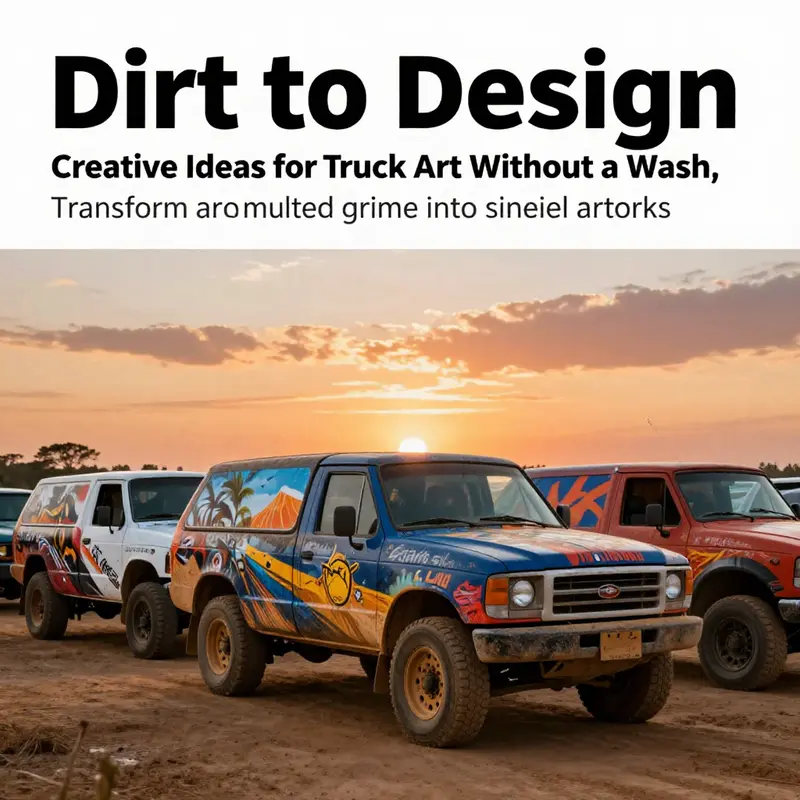
In an era where aesthetic presentation significantly impacts branding, even a dirty truck can become a canvas for creativity. Trucking and logistics companies, as well as construction and mining fleet supervisors, can leverage the natural layer of dirt and grime accumulated on vehicles to create unique art. This not only adds character but also prompts engagement with customers and the public. The chapters that follow will delve into how to transform your truck into a ‘Dirty Canvas,’ explore thematic murals that resonate with your brand, and offer ideas for personalized messages and temporary art that can enhance visibility and foster connections.
Dirty Canvas on the Move: Creating Rolling Murals from a Truck That Never Gets a Bath
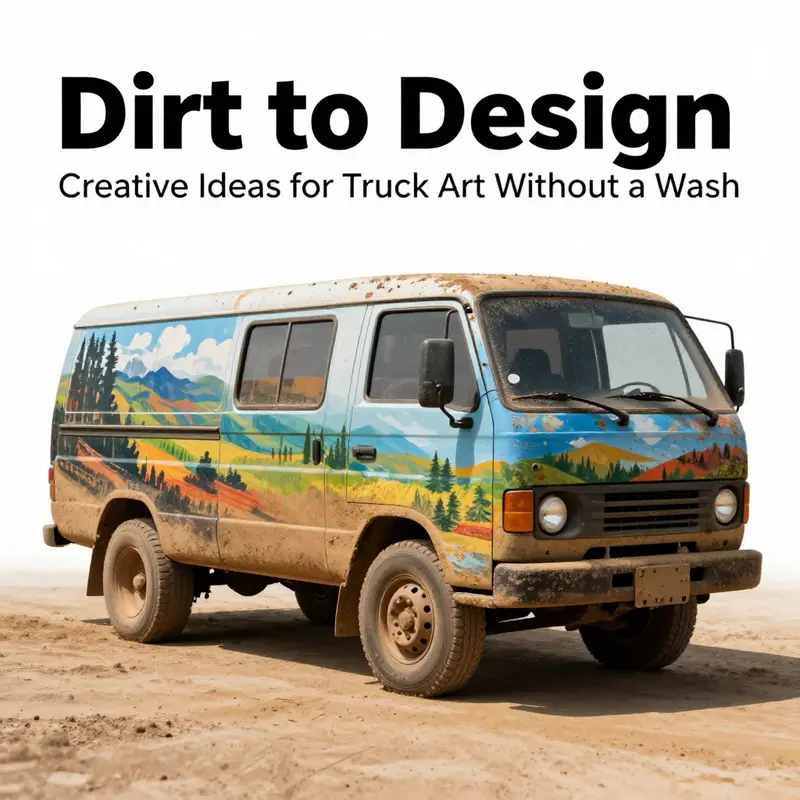
On the open road, a truck can become more than a conveyance; it can turn into a roaming gallery, a moving testament to personality, time, and a little stubborn stubbornness. The idea of painting on a vehicle without a wash seems counterintuitive to many, yet it taps into a long tradition of artists using the offered textures of the world as raw material. When you let dirt, dust, and grime accumulate, you unlock a kind of pigment that real painters would envy if they could bottle it—shadows born of exhaust soot, smudges of road salt, and the microtextures of a road-worn finish that paint alone could never reproduce. In recent years, a handful of practitioners have shown that a heavily soiled surface can become a deliberate, considered canvas. They don’t just smear dirt for the sake of mess; they curate images and messages by guiding the grime into intentional forms. The result is not chaos but a kind of improv art that travels with the truck, changing with every mile and every weather system the vehicle encounters.
To understand how this works, it helps to look at the philosophy behind dirt art on moving machines. The technique borrows from draw-on-fog play and street-art spontaneity, but with the gravity of an industrial surface and the weathered patina that only years on the road can deliver. The dirt is not an obstacle; it is the base layer and the texture. The human hand, in turn, becomes the conductor, translating the random patterns of dust into discernible shapes. The approach is not to erase the history of the surface but to incorporate it into something new. The metaphor is apt: life writes itself on metal, and the artist only flips through the pages, selecting lines and silhouettes that already exist within the grime. When seen through this lens, the truck is less a dirty problem and more a portable canvas that tells a story about routes traveled, services rendered, and networks built in the rhythm of traffic.
The most famous early examples in this lineage came from artists who treated heavily soiled vehicles as living canvases. They used their fingers and small brushes to coax images from the layers of dust and mud, revealing hidden scenes in minutes. The palette is accidental and ecological: the environment supplies most of the color—browns, grays, ochres, and the occasional rust red—while the artist provides the composition, the contrast, and the final reveal. What makes this practice so compelling is its balance between chance and control. A good dirt painter doesn’t fight the surface; they listen to it. They notice where grime forms soft edges and where it wears away to reveal smoother metal beneath. They see where the light catches a ridge along the fender and uses that to sharpen a silhouette. In other words, the truck’s grime becomes not a constraint but a co-artist in the process.
The themes are as varied as a road trip’s soundtrack. A patriotic touch can translate through a bold eagle or a stylized flag, routed along the side like a mural that could belong on a rest-stop wall rather than a vehicle. A giant dinosaur on a flat delivery surface, for instance, leverages the length of the cab or the panel as a stage for scale, letting the grime’s texture amplify the creature’s rugged presence. Classic scenes or Mona Lisa-like portraits can emerge with a subtle blend of shading created by the grime’s marbling. The dirt plays the part of an underpainting, with the actual design appearing as the viewer’s eye moves and the dust settles into the creases and edges that were already there, waiting to be framed by a message or a motif. The effect can be startlingly immediate—a viewer who stumbles upon a dusty roadside mural may do a double-take, realizing that the image was not sprayed on but allowed to appear through the accumulation of weather and miles.
A key virtue of this method is its accessibility. You don’t need expensive equipment, specialty paints, or a climate-controlled studio to begin. The practice invites a conversation with the surface itself and with the audience who will pass by, sometimes at highway speeds, sometimes at a casual roadside stop. It can carry a sense of humor and whimsy that resonates with everyone from long-haul veterans to weekend drivers. A grumpy cat drawn with careful smudge lines can become a shared joke, a “Hello, I’m a work of art” sign drawn in dust that invites a smile rather than scorn. Other times, the messages carry social or historical resonance, a small tribute to essential workers during difficult times, an echo of events that shaped a community. The context matters as much as the image: the grime follows the route, the miles tell a story, and the viewer completes the tale in their mind as they pass.
Yet the practice must be handled with care. There is a tension between artistry and neglect, between creative expression and damage to the vehicle. The realities of paint and clear coats mean that long-term neglect can harm the finish. The goal is not to turn the truck into a ruin but to treat the grime as a temporary medium that invites transformation without sacrificing the integrity of the base layer. Eco-friendly approaches are essential. The emphasis is on minimal intervention, using the dirt and the truck’s own textures as the primary tools, and avoiding harsh solvents or chemical cleaners that could strip away the protection beneath. The emphasis on eco-friendliness is not merely a virtue signaling gesture; it’s a practical acknowledgment that roads, dust, and weather are part of the canvas’s life cycle, and that a responsible artist respects the surface long after the festival of miles has passed.
If you intend the dirt-art experiment to be temporary, you can design it with rain and runoff in mind. The big maintenance lesson is that the artwork will fade, smear, or blur under precipitation. That ephemerality is not a flaw but a feature—a sign that the piece belongs to the moment, a snapshot of a specific journey and weather pattern. The ephemeral nature aligns beautifully with the concept of art as a public performance rather than a permanent installation. The audience may only catch a glimpse from a passing car or at a fuel stop, and that moment becomes the essence of the work: visual poetry that lives and dissolves with the environment.
For those who want to preserve a moment, there is a practical technique that some practitioners use: remove the body panel and frame it like a painting. This is more than a trick; it’s a deliberate acknowledgment that the surface held a narrative worth saving beyond its transit. Framing a panel turns a garage-floor memory into a keepsake, a physical artifact that captures a particular road story and the hands that coaxed it into being. It also serves as a bridge between the dirt-formed art and the world of traditional painting, reminding viewers that the lines between genres are porous and the road itself is a muse with multiple expressive possibilities.
Of course, the conversation around dirty canvas art should acknowledge the practical realities of vehicle care. The surface deserves respect, and a responsible owner will not abandon long-term neglect that could compromise the finish. The eco-friendly note becomes a practical guideline: avoid chemical residue, use gentle, surface-friendly methods, and keep up with routine cleanliness that preserves the protective layers when the artwork has run its course. The message here is not a license to trash a truck at will but an invitation to experiment within boundaries that honor the vehicle’s longevity and performance. The dirt artist’s pride is not in how dirty the truck looks; it is in how thoughtfully the grime is arranged and how gracefully the piece integrates with the truck’s silhouette and functional lines.
For readers who crave a sense of community around this form of expression, it helps to study the public reception and the communities that celebrate a dirt-based approach to art. In different regions, viral videos and social posts have showcased how a passing glance can turn into a shared moment of appreciation. People become co-curators in real time, offering ideas to extend or reinterpret the piece on the fly. In one sense, the moving sculpture becomes a collaborative effort among the artist, the vehicle, and the viewers who encounter it. The truck’s path becomes the exhibition schedule, its route the gallery’s corridor, and the grime the medium that invites interpretation rather than a fixed verdict.
As with any art practice, there is a practical impulse to ground the dream in reality. If you want to explore the more technical side of maintaining a truck that doubles as a canvas, you can read about proven strategies for cleaning grease and tar off your trucks fast. That resource provides a realistic counterbalance to the fantasy of perpetual dirt, offering guidance on how to manage the surface with care so the artwork does not become a long-term liability. The tension between expression and care is what makes this form resilient: it thrives when you treat it as a momentary, evolving collaboration between human hands and the surface that carries it. In that sense, dirty canvas art on a moving vehicle is not about flaunting neglect; it is about embracing the road’s textures as part of a living, dynamic artwork that reflects the journey itself.
If you allow yourself a brief moment to imagine a world where every truck on the road carried a private, evolving mural, you might notice how much this idea resonates with broader human impulses. We are drawn to things that carry stories, artifacts that speak of travel, work, and shared humor. A rolling mural becomes a way to make the road feel personal, to humanize a machine that is otherwise built for efficiency and utility. It invites conversations, not just about aesthetics, but about the routes, the people, and the moments that compose a lifetime of movement. In this light, the dirty canvas is not a reckless statement but a thoughtful, performative act—a reminder that beauty can emerge even in places that seem most ordinary or worn. It is art born from endurance, from miles logged in all kinds of weather, from the stubborn streak of a driver who would rather sketch with the world than wash away its marks before the next delivery.
The practice also echoes a broader lesson about creative constraint. When a surface is not pristine, you must work with the constraints rather than in spite of them. The irregularities—the speckling, the ridges, the patches—become part of the composition. The idea that you can coax images from something that appears busy or chaotic invites a rethinking of how we measure skill. The dirt is not just a nuisance; it is a resource with inherent texture. The hand-eye coordination required to guide grime into a meaningful form mirrors the discipline of any painter who learns to see the negative space, the silhouettes, and the breath of light that falls across a surface. In the end, dirty canvas art on a truck is about noticing what is already there and then choosing what to reveal, layer by deliberate layer, as the vehicle travels through the day and into the night.
For readers inspired to try it themselves, the process begins with observation before any marks are made. Spend time with the surface, study how light hits the grime at different times of day, and think about what story you want to tell as the truck moves. Sketch in your mind the major shapes that will anchor the piece, whether you’re aiming for a bold silhouette, a delicate portrait formed by negative space, or a playful scene that plays with scale. Then start small. A single, confident stroke in a corner can set the tone, followed by a few strategic lines that define a larger shape. Let the natural texture do its work in the background, and avoid forcing a perfect uniformity where it doesn’t belong. A gentle hand and a patient eye can coax the grime into a surprisingly clear image without erasing the history that lives in every streak and smudge.
The artistry is most fully realized when the artist remains open to the changing face of the canvas. A gust of wind during a pause, a rain shower that briefly blurs the lines, or the random path of a solar glare can alter the image in subtle ways, inviting the viewer to re-interpret what they see. The best dirt canvases are not static; they invite ongoing dialogue. They survive not through a single moment of triumph but through a sequence of encounters, each one offering a new perspective as the truck continues its steady pilgrimage across the landscape. In this sense, the dirt on the truck becomes a living medium, a partner in the voyage rather than a passive coating that merely obscures color beneath.
If you are curious about how this practice intersects with professional truck aesthetics and fleet management, you will find that it complements a broader ethos of attentive care rather than a reckless disregard for maintenance. Art on wheels does not absolve owners from routine upkeep; it rather situates maintenance as part of a seasonal ritual that includes cleaning, restoring, and, when appropriate, preserving moments of creativity. The same energy that drives a driver to keep a vehicle reliable and ready for a long haul can also drive a desire to celebrate the road through one-of-a-kind visuals. The two aims are not mutually exclusive: you can protect your investment while still allowing the surface to speak in a language that is uniquely yours. This balance—that tension between performance and expression—gives dirty canvas art on trucks its lasting appeal as a form of practical creativity, a reminder that art can be practical, personal, and portable all at once.
In closing, the idea of transforming a truck without a wash is less about rebellion against cleanliness and more about a nuanced conversation with the surface, the road, and the community that watches from the other side of the highway. It is a prompt to notice the art that already exists in transit, to listen for the stories etched into the grime, and to recognize that a rolling mural can be both a statement and a conversation. If you decide to embark on this path, give yourself permission to experiment with texture, scale, and the tempo of the road. Treat the grime as a collaborator, not an obstacle, and let the design evolve as your journey unfolds. And if you want practical guidance on how to balance expression with surface care, consider the approach of the professional maintenance world, which shows that care and creativity can share the same stage. For hands-on maintenance that helps you sustain the canvas while you explore the art, see Proven strategies for cleaning grease and tar off your trucks fast. The road is a gallery, and your truck is its most mobile exhibit—an artifact that carries not just freight but a story that only dirt can tell. As you travel, let the grime reveal its own silhouette, and you may find that the most powerful image on your truck is not the one you planned but the one that appeared naturally, page by page, mile by mile.
External inspiration can be found in the real-world work of artists who treat heavily soiled vehicles as canvases. If you want to see the forms their hands coax from dust and mud, you can explore examples on the creator’s Instagram, which capture the immediacy and charm of dirt-based automotive art: https://www.instagram.com/nikita_golubev/. The literature and videos from these practitioners emphasize that the dirt is the paint, and the wheel of time is the brush. Their work reminds us that art can emerge from the unlikeliest conditions and that the road itself often supplies the texture and context that make a piece legible and evocative to bystanders who stop and stare at a passing car loaded with personality. It is a reminder that creativity thrives where constraint meets opportunity, and the highway is full of opportunities to respond with color, line, and meaning rather than with merely a spotless surface.
Internal link note: for readers who want a practical balance to this artistic impulse, a resource on basic maintenance and cleaning strategies is linked here with the exact wording that helps readers recognize the value of care even as they experiment with dirt as a medium. Proven strategies for cleaning grease and tar off your trucks fast. This link provides concrete steps and a reminder that preserving the vehicle’s longevity should accompany any artistic exploration. In the end, the dirt artist’s path is not a reckless shortcut but a deliberate, thoughtful practice that respects both form and function, leaving room for art to thrive on the move while the truck remains ready for the road ahead.
Thematic Murals on a Dirty Canvas: Public Art, Personal Expression, and the Mobile Message
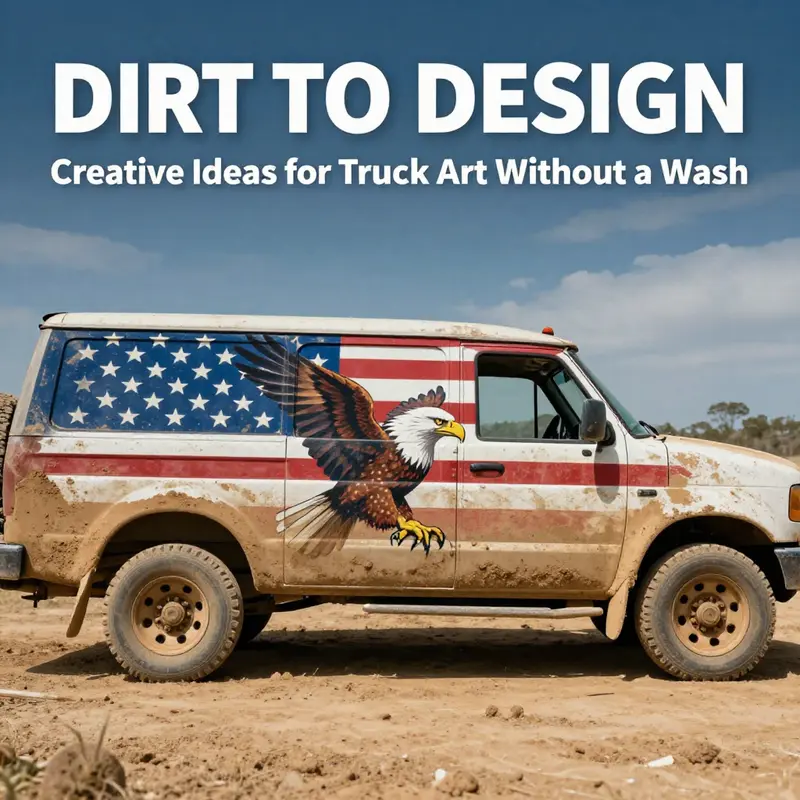
A vehicle’s neglected exterior can be more than grime; it can be a canvas. Thematic murals on dirty trucks transform routine work vehicles into traveling artworks that start conversations, reflect identity, and invite collaboration. This chapter examines how intentional design, community engagement, and practical planning turn a dusty surface into portable public art.
Begin with a clear theme that will read from a distance and reward close viewing. Use the dirt as a compositional element: let natural patterns inform shadows, texture, and subtle highlights. Sketch the major shapes, then apply color in layers so the grime contributes to the final image rather than fighting it. Simple tools—brushes, sponges, even gloved fingers—are often enough when the artist respects the surface history.
Collaboration amplifies impact. Projects that bring people together across divides—neighbor to neighbor, youth groups, or members of different communities—create social value in addition to visual interest. Shared painting sessions can function as informal art therapy and as exercises in intergroup contact, building trust through cooperative creation. A truck painted by many hands becomes a moving statement about common ground and collective identity.
Practical considerations matter. Paint applied to a vehicle will face weather, abrasion, and cleaning; many such murals are intentionally temporary. If preservation is desired, panels can be removed and conserved like framed works. Decisions about permanence affect materials, techniques, and maintenance planning.
Aesthetic choices range from playful motifs to political commentary. The grime itself can be incorporated into portraits, symbolic compositions, or regional storytelling. Bright, saturated colors pop against earthy dust, while limited palettes can highlight texture and form. Successful projects balance a strong central motif with room for improvisation so the work reads clearly on the move yet reveals details up close.
Ethics and legality should guide practice: obtain owner consent, respect workplace rules, and be mindful of messaging in public space. When done with care, a dirty-truck mural can function as advertising, tribute, or community artwork without romanticizing neglect. The goal is intentional creativity that honors both vehicle function and expressive purpose.
Finally, document the process and decide whether the piece is meant to last or to be ephemeral. Whether temporary or preserved, these murals democratize art by bringing it into everyday routes, parking lots, and neighborhoods. By treating surface history as a collaborator rather than a flaw, artists can turn utility into meaning and create moving installations that spark dialogue, memory, and connection.
Mobile Notes and Momentary Murals: Saying Something on a Dirty Truck
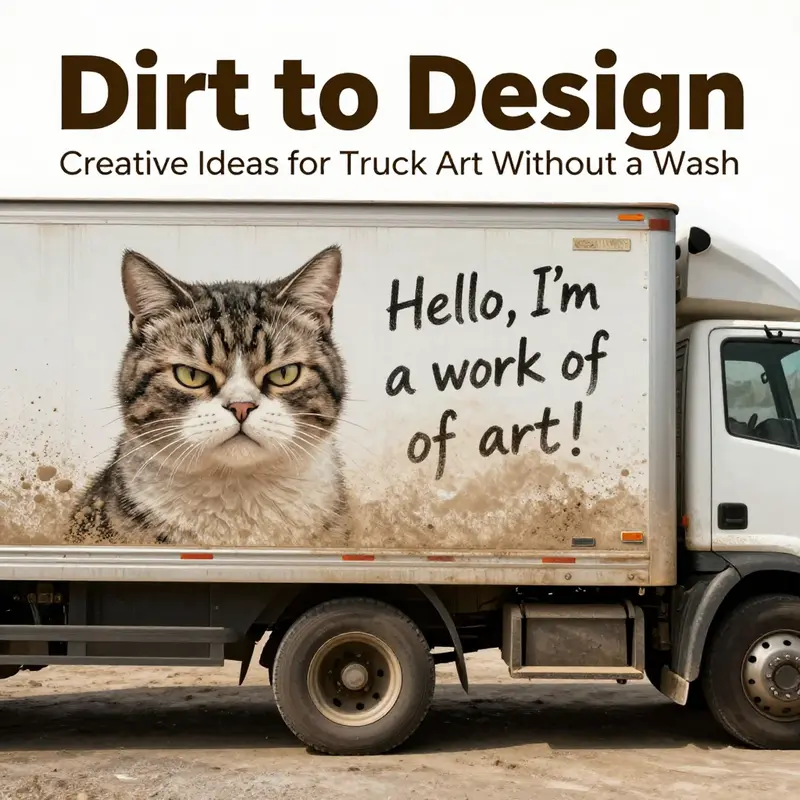
Mobile Notes and Momentary Murals: Saying Something on a Dirty Truck
A truck that hasn’t been washed is often written off as neglect. Look closer and you’ll see potential. Layers of dust, mud, and road grime form a textured, unpredictable surface. That surface can carry messages, portraits, jokes, or statements. It can be a public sketchbook for a passing moment. This chapter explores how to turn a dirty truck into a vehicle for personal messages and temporary art while balancing aesthetics, practicality, and responsibility.
Treating dirt as a medium changes how you approach the truck. Instead of removing grime, you use it. Scratching, brushing, or wiping away selectively reveals the underlying color of the paint. The contrast creates lines and shapes. The uneven density of road dirt adds shading and tone. With a little planning, even casual gestures become readable images. Artists who work this way use fingers, brushes, and soft tools to coax portraits and scenes from layers of accumulated matter, often completing striking pieces in minutes. The result is immediate and honest: an artwork made of what the road leaves behind.
Begin with intent. Decide whether you want a personal note, an image that reflects identity, or something designed to make strangers smile. A short, well-placed message can stand out: a name, a hometown, a short quote, or a simple greeting. Visual motifs—hearts, arrows, or silhouettes—translate well and don’t require fine detail. For larger-scale expressions, think about composition. The truck’s side panels, tailgate, and windows offer different proportions. Flat, square areas accept more detailed work. Curved panels distort perspective but give dynamic flow to illustrations. Consider the angle and distance from which most viewers will see the truck. Designs that read well at a glance work best in traffic or at stops.
Temporary art thrives on simplicity. Bold gestures read clearly from a distance. Use the natural texture of grime as a kind of grain in your design. For example, when creating a portrait, rely on high-contrast areas—wipe away the grime where highlights belong and leave dirt to form midtones and shadows. For a simple cartoon or message, clean lines using a gloved finger or cotton rag make crisp strokes. If you want more control, use soft brushes or foam swabs to refine edges. Avoid abrasive tools that can scratch the paint beneath the grime. The goal is expressive removal rather than harsh scrubbing.
Personal messages benefit from being small, specific, and sincere. A dedication to a loved one, a humorous label, or a short motivational line can turn the truck into a moving message board. Personal portraits are possible too. By studying the face you want to portray and simplifying key features—hairline, eye shapes, chin—you can suggest likeness rather than attempt a photographic copy. Surreal blends work well: integrate the truck’s dirt patterns into hair textures or clothing shadows. This technique connects the subject to the vehicle’s condition and underscores the temporary nature of the image.
Play with themes. Patriotic icons, symbolic animals, and pop-culture nods read easily on dirty surfaces. Use scale to make a point: a giant paw print that spans a door can be humorous and legible. A subtle message tucked near the handle invites closer inspection. Themes can be personal, political, or purely playful. Temporary art is an opportunity to test ideas in a public forum without permanent commitment. It invites reactions and starts conversations.
Ephemeral creativity invites audience interaction. Encourage people to contribute by leaving short notes or small drawings in a designated area. If the truck travels a route near communities you care about, rotation of contributors can create a collective diary. This turns a single vehicle into a mobile community canvas. Keep rules light—no hateful speech, no offensive symbols—to keep engagement positive. The truck can become a communal stage where strangers add small marks to a shared narrative.
For those who want a preserved memory, digital planning changes everything. Use a tablet or any photo-editing tool to mock up designs on a photo of your truck. This saves time and reduces on-truck trial and error. Create layers for different levels of dirt removal, experiment with color inversion to mimic the reveal of paint beneath grime, and test typography for legibility. Once you have a mockup, translate it to the truck, working from broad shapes to details. A digital draft also makes it possible to produce versions for social sharing, so your ephemeral work has a life online after the rain comes.
There’s a satisfying process in moving from planning to execution. Start by mapping zones and marking key points lightly on the truck with a washable marker or painters’ tape. Clear large negative spaces first. Then refine. Step back often to check composition at viewing distance. Work in layers: rough shapes, then midtones, then highlights. Use natural light to your advantage; shadows and reflections can complicate perception. If possible, choose a covered area to work in; wind and drizzle can spoil precise lines.
Temporary art also carries ethical and legal considerations. Avoid messaging that could be misread as a commercial advertisement if you’re operating a vehicle for hire. Some jurisdictions restrict signage on commercial vehicles. If you belong to a fleet or company, consider discussing your plan with management. Personalizing a truck can boost morale and express identity, but it should not conflict with brand guidelines or safety obligations. If a vehicle is registered to a business, ensure the message won’t be confused with an official statement. When in doubt, keep messages personal rather than organizational.
Safety is another priority. Avoid obscuring lights, license plates, mirrors, windows, or any safety-critical surfaces when creating art. Do not draw across the windshield unless the artwork is intentionally placed away from the driver’s line of sight and does not reduce visibility. Some creative approaches place the main design on the tailgate or sides, leaving critical surfaces clear. If a design needs to wrap near a moving part, make sure nothing can catch or smear into mechanisms while driving.
There are environmental and maintenance issues to manage. Dirt is a handy medium, but it is still corrosive over time. Road salt, chemical residues, and abrasive grit can damage paint if left in place for months. Temporary art is best enjoyed in the short term with occasional washing to protect the vehicle’s finish. If you want to preserve a particularly successful piece, photograph it from multiple angles at high resolution. Some artists remove panels to frame a preserved section as a keepsake. That approach is labor-intensive but turns a transient expression into a long-term artifact.
If you prefer to keep the art visible longer without damaging the surface, consider safe preservation techniques. Clear adhesive films and removable protective covers can shield delicate areas while allowing the image to show. However, such materials must be chosen carefully to avoid trapping moisture or accelerating corrosion underneath. A safer route is to recreate the design using non-permanent materials like chalk markers on a removable panel or to translate the design into a vinyl decal. Vinyl can reproduce the look of a dust drawing and can be removed cleanly when you want a fresh canvas.
Integrating temporary truck art with broader community projects can amplify impact. Use the truck as a roving poster for local events, fundraisers, or neighborhood messages. Coordinate with local groups to host short, supervised art sessions where children or neighbors contribute designs. This kind of engagement turns a simple visual joke into a community ritual. It fosters a sense of ownership and encourages interaction between drivers and the people they pass every day. The truck becomes more than hardware; it becomes a social connector.
For those in fleet environments, personal messages can support employee engagement when handled thoughtfully. Allowing drivers to personalize company vehicles on brief, temporary bases can boost pride and morale. One way to frame this is as a rotating program: drivers have a set period to display approved personal designs, after which the truck returns to standard appearance. This balances individuality with corporate cohesion and prevents long-term wear. Consider tying the program to charitable campaigns or awareness weeks to align personal expression with company values. For an example of how investing in personal initiatives strengthens teams, see investing in people as a strategy for fleet success.
Humor plays exceptionally well on a dirty truck. Cause laughter with exaggeration—paint tire tracks leading to an imaginary crash, or write a playful apology note: “Sorry for the mess, honest.” Handprints, footprints, or a pet’s paw framed by the slogan “I helped” create charming, shareable moments. These perform well on social platforms and often travel farther than the truck itself. When creating humorous messages, keep the tone inclusive and avoid content that might alienate observers.
Political or activist statements are possible but come with heightened stakes. Such messages can provoke strong responses, both supportive and hostile. If you choose this route, be prepared for feedback and potential vandalism. Consider whether the truck’s route and audience match the statement you want to make. Temporary art is powerful because it’s low-commitment and can be changed quickly; use that flexibility to test responses before committing to larger, permanent expressions.
The joy of temporary truck art is in its impermanence. Rain will erase it. Wind will smear it. That transience is also what frees you from perfectionism. You can try a portrait, fail, and try again the next week. The truck becomes an evolving diary, a rolling sketchbook that documents moods, seasons, and places. Many who practice this form of expression appreciate how quickly the city responds: smiles, thumbs up, conversations at stoplights. The truck’s mobility embeds the artwork in a living context, letting it interact with the world rather than staying in a gallery.
Finally, capture and share. Photograph your work in natural light from several vantage points. A time-lapse video of the creation process adds narrative and shows how the design emerges from the grime. Share selectively and respectfully—avoid posting faces of people who haven’t consented. Digital documentation preserves the memory while keeping the truck’s finish safe. If you plan to translate a temporary design into a permanent wrap or painting later, use your photos and mockups as reference materials.
Temporary truck art is a practice that balances creativity with care. It encourages improvisation, invites participation, and amplifies personal voice in public space. By respecting safety, legal boundaries, and the vehicle’s longevity, you can use dirt as a medium without creating long-term harm. Whether you leave a small, heartfelt message or orchestrate a community mural, a dirty truck can say something meaningful as it moves through the world.
External resource for design planning: https://www.picsart.com
Internal link for related thinking on people and fleet culture: investing in people
Final thoughts
Embracing the accumulated dirt on your trucks as a medium for artistic expression can positively impact your brand visibility and message delivery. From dirty canvases to thematic murals and personalized messages, the potential for creativity is vast and engaging. By transforming dirt into art, fleet managers and company owners not only showcase their individuality but also create meaningful connections with their audience. Let your trucks tell a story that resonates and represents your brand every mile they travel.