
Maintaining a truck’s undercarriage through effective pressure washing is not merely about aesthetics; it represents a crucial aspect of vehicle management, especially for Logistics & Freight Company Fleet Managers, Trucking Company Owners & Operators, and Construction & Mining Fleet Supervisors. The costs associated with pressure washing the undercarriage of trucks can vary significantly based on multiple factors. This article explores these factors in depth through five key chapters: identifying cost variations, evaluating services offered, comparing DIY with professional services, understanding vehicle size and condition impacts, and analyzing regional pricing differences. By gaining insights from these chapters, stakeholders can make informed decisions that align with their fleet maintenance strategies and budgets.
Undercarriage Economics: Unpacking the Real Cost of Pressure Washing a Truck’s Undercarriage
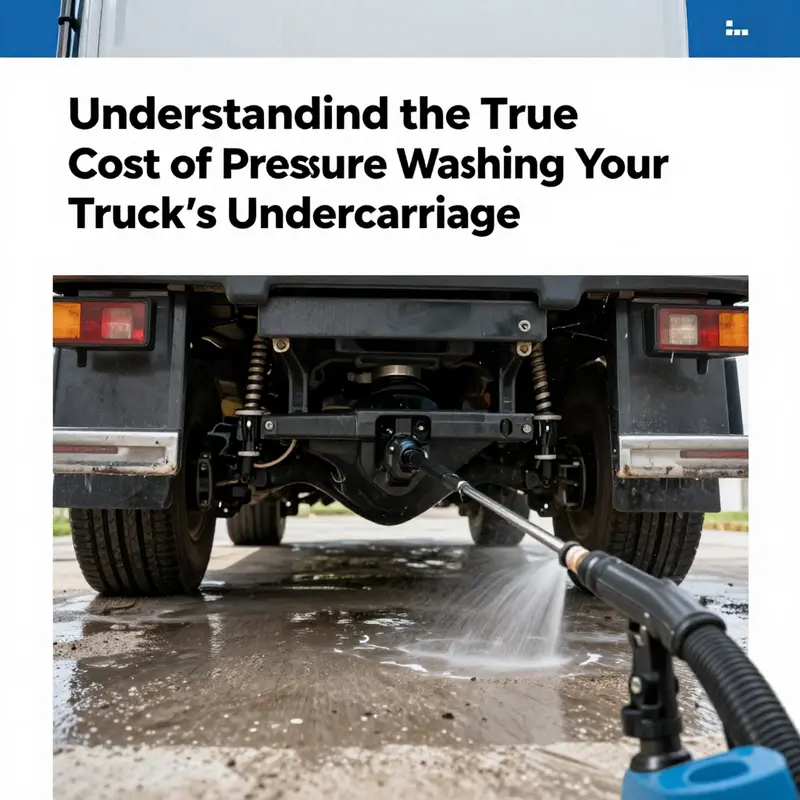
Commercial pressure washing services frame the baseline reality: you can expect a wash in roughly the fifty-dollar to one-hundred-fifty-dollar range, depending on region and provider. The broad scaffolding remains similar across operators, but the concrete price you see on the invoice is scaffolded by several interacting factors. Vehicle size matters because larger trucks demand more water, more energy, and more time. A heavy-duty tractor-trailer or a construction dump truck imposes higher-pressure work and may require additional passes, pre-treatment of stubborn deposits, or extended dwell times to loosen salt crusts and mud that have baked into the undercarriage. In turn, the undercarriage condition itself matters. A frame encrusted with dry clay, road salt, or heavy grease can slow progress and raise the price because more labor is needed to loosen, rinse, and verify that every nook is clean. Location is another driver. In urban markets with high demand and tighter scheduling, you’ll pay more for both labor and convenience. Mobile services, which bring the wash to a yard or depot, often carry a premium to cover travel, setup, and the on-site logistics of operating water and power in a non-dedicated space. Some providers offer discount schedules or maintenance plans for fleets that require regular washes, helping to smooth out the cost over time for ongoing upkeep.
The nature of the service also sways price. Basic undercarriage cleaning, focused on removing caked mud and loose debris, tends to cluster in the lower-to-mid range. Add-ons—rust inhibitors that slow corrosion on exposed metal, wheel cleaning that prevents brake dust and road grime from migrating upward, or a full exterior detail that includes rinsing, waxing, and solvent-based cleaning—can push the total well past the initial figure. In effect, the undercarriage is a gateway to a larger scope of care; vendors frequently bundle options that improve the long-term performance of the truck, and those options carry corresponding price marks.
Beyond just the immediate wash, the cost landscape expands with the service model. DIY options exist for hands-on owners who want control over timing and technique. A basic residential pressure washer typically sits in the two-hundred-to-six-hundred-dollar range for the unit itself, with most of the ongoing cost arising from water and electricity. The upside is potential long-term savings, but there is meaningful risk: improper technique can bend or break lines, damage exhaust components, or misalign suspension parts. The learning curve matters; the undercarriage contains delicate channels and components that require careful handling, especially when hoses and nozzles are maneuvered around fuel lines, brake lines, and electrical conduits. Even with a capable unit, the time investment and physical effort are nontrivial. For a fleet or a homeowner who is serious about frequent maintenance, there is a compelling case for DIY when the driver understands best practices, has a safe drainage plan, and can manage the environmental footprint.
The network of service delivery models adds another layer to the cost equation. Mobile wash services provide convenience by visiting a defined location rather than towing the vehicle to a shop. The cost structure often includes a premium to cover travel, on-site setup, and the coordination required to service multiple vehicles in a single day. Conversely, fixed facilities, especially fleet depots or wash bays designed for high volumes, tend to offer better per-vehicle economics thanks to scale. In these facilities, gantry systems with rotating brushes and spray nozzles can move over the vehicle in a controlled sequence, delivering consistent undercarriage coverage even in the most hard-to-reach zones. The trade-off is that fixed facilities require scheduling and may be less flexible for irregular fleets, but they commonly deliver lower unit costs for fleets that wash regularly due to volume discounts and process automation. From the fleet manager’s perspective, understanding whether mobile or fixed-location services align with maintenance cadence, route planning, and yard layout is essential to managing total ownership costs.
The environmental and regulatory context cannot be ignored when calculating actual cost. Commercial settings increasingly employ water recycling systems and containment to minimize runoff, protect storm drains, and comply with local environmental rules. In some jurisdictions, regulatory burdens—such as containment requirements or permit considerations—can shape both the upfront capital and the ongoing operating costs of a professional wash program. While these factors might sound abstract, they translate into real dollars through reduced water usage, lower waste disposal fees, and avoided penalties. The most responsible shops integrate containment and recycling as standard practice because it protects the broader ecosystem and reduces long-term expenses, even if the short-term costs appear higher. For the customer, these environmental safeguards typically manifest as smoother operations, steadier scheduling, and, in some cases, tax or utility incentives that reward sustainable practices.
For those charged with keeping a fleet in peak condition, the question often becomes whether to lean toward a one-off deeper cleaning or to integrate undercarriage washes into a routine maintenance regimen. The rationale for regular scheduling is straightforward: a clean undercarriage makes inspection easier, helps detect early signs of wear, and reduces the likelihood that salt, mud, or tar will cause corrosion or damage to critical components. In practice, regular maintenance washes can stabilize the total cost of ownership over the life of the vehicle, because issues are identified before they escalate into costly repairs. This is particularly important for trucks operating in harsh environments—winter roads with salted surfaces, off-road routes with heavy mud, or regions with aggressive road tar—that accelerate deterioration and complicate cleanup.
In considering how to approach undercarriage cleaning, many operators find it helpful to frame the decision around three lenses: frequency and predictability, risk tolerance for component damage, and the broader cost of downtime. The more predictable the wash schedule, the easier it is to negotiate favorable terms with a provider or to justify the capital outlay for a fixed facility that can handle a predictable flow of trucks per hour. The risk axis weighs the potential for accidental damage during aggressive cleaning against the long-term benefit of removing corrosive deposits that could compromise brake lines or suspension parts. The downtime dimension considers how long a truck is out of service for cleaning. A mobile wash can minimize yard downtime by visiting during idle periods or at the end of a shift, while a fixed facility can optimize throughput with a well-tuned scheduling system and gantry-based cleaning cycles. In either case, the goal is to balance immediate expenditure with long-term reliability and operational uptime.
For operators seeking practical pathways, one approach is to blend professional care with disciplined maintenance routines. Use professional undercarriage cleaning for deep cleans on a quarterly or semiannual cadence, particularly after exposure to heavy salt or mud. Between professional sessions, a lighter rinse that targets exposed zones and a quick check for corrosion-prone areas can keep the overall condition stable without duplicating labor. When data-driven fleet management is in play, tracking cleaning frequency, cost per wash, and incident rates tied to undercarriage wear can inform smarter procurement and better budgeting. And for fleet leaders navigating the broader ecosystem of truck wash operations, there is value in considering facility management for truck wash businesses as a strategic topic—an area where process design, equipment choice, staffing, and maintenance planning converge to shape cost efficiency over time. facility management for truck wash businesses. This perspective helps frame undercarriage cleaning as a component of an integrated maintenance program rather than a standalone expense.
Ultimately, the most practical answer to the price question is that cost is not a fixed number but a function of scope, scale, and strategy. A straightforward undercarriage wash for a standard, well-maintained truck in a mid-sized city will land in the high fifty-dollar to mid-hundred-dollar range, with the potential to rise toward the higher end if the job requires pre-treatment, rust inhibitors, or more extensive exterior detailing. For fleets that wash frequently, establishing a recurring maintenance arrangement—with shared scheduling, predictable service windows, and standardized add-ons—can yield meaningful long-term savings by reducing downtime, extending component life, and smoothing cash flow. In the end, the true value of the service lies not in the ticket price alone but in the quality of cleaning, the protection it offers to critical components, and the degree to which it supports reliable, efficient operation across the fleet. For practitioners who manage large operations, the conversation about undercarriage cleaning often circles back to strategic questions about facility design, environmental stewardship, and workforce deployment, all of which matter more than any single price tag in isolation. Understanding these facets helps owners and managers translate a dollar figure into tangible improvements in uptime, longevity, and overall fleet performance.
External reference for deeper context on the engineering and standards that underlie commercial truck washing: https://www.equipmentworld.com/industrial-cleaning/understanding-commercial-truck-washing/.
Undercarriage Pricing for Trucks: What Factors Drive Cost and What It Covers
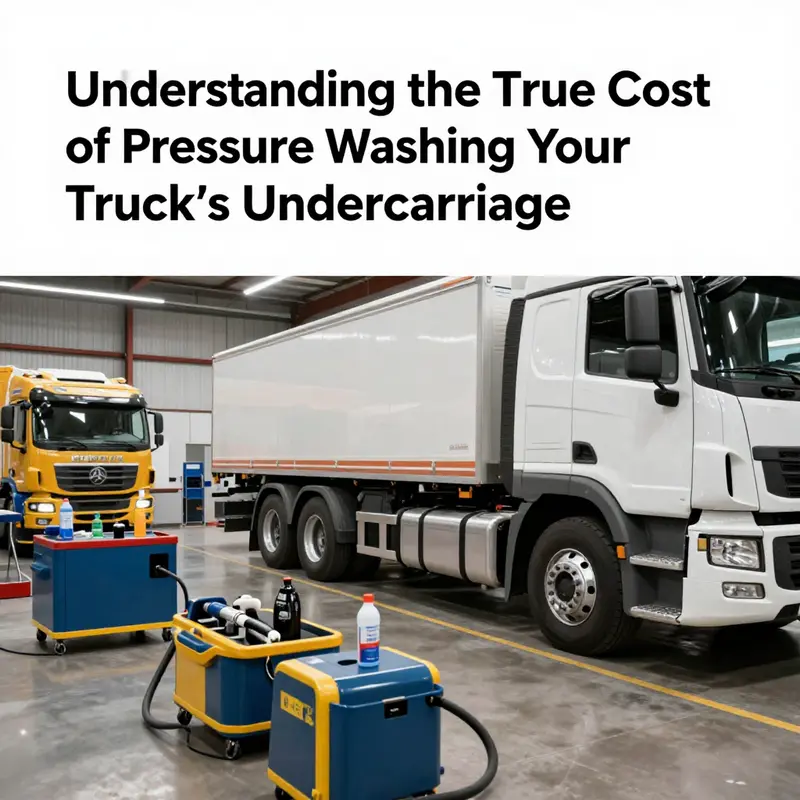
The undercarriage of a truck is more than a shadowy silhouette beneath the chassis; it is the backbone that carries the stresses of every mile driven. When owners and fleets think about washing a vehicle, the obvious focus is the exterior shine, but the true value often hides beneath the frame rails, in wheel wells, and around axles and crossmembers. Pressure washing the undercarriage is not merely about aesthetics; it is a preventive maintenance step that guards against corrosion, salt damage, and stubborn accumulations of mud and grime that can accelerate wear. The price for cleaning the undercarriage is typically higher than a standard wash because this portion of the vehicle is harder to access and requires more deliberate technique. Most shops quote a range that starts around sixty dollars and can climb toward the one hundred fifty dollar mark or more, depending on the circumstances. For a standard, well-kept truck, a thorough undercarriage wash generally falls in a mid-range of roughly seventy-five to one hundred twenty-five dollars. Those numbers begin to tilt upward once you add heavy contamination, extra services, or a larger vehicle with a complex undercarriage layout.
Prices reflect the real costs of labor, time, and equipment. A basic undercarriage wash may require only a quick pass with a high-pressure nozzle and a runoff plan that protects sensitive components. If the vehicle has road salt encrusted into frame rails, or mud pooled in crevices around the suspension, a cleaner may perform multiple passes, apply a mild rust inhibitor, and ensure there is no water intrusion into critical areas. The same service can look cheaper in one estimate and pricier in another. In some cases, the charge is bundled with other services such as wheel cleaning, interior detailing, or engine bay dressing. The goal for the provider is to secure a level of cleanliness that protects the vehicle’s integrity while accounting for the extra time, labor, and specialized steps required by the undercarriage.
Delivery formats reshape the cost landscape. Mobile wash services, which bring cleaning rigs to the truck’s location, tend to set higher base prices because they shoulder travel, setup, and operating in varied conditions. A fixed-site facility may offer a lower price by streamlining workflows, having dedicated rinse bays, and providing a predictable schedule. The trade-off is less convenience for fleets that need rapid, on-site service or those operating in remote locations. Geography matters as well. Urban centers with higher operating costs often push the sticker price higher, while rural areas with lower overhead can offer more affordable options. When you add all-inclusive packages—interior cleaning, tire shine, or engine bay detailing—the price can rise further. These bundles appeal to fleets seeking a single maintenance visit rather than separate appointments.
Vehicle characteristics shape pricing. Vehicle size is a major driver: flatbeds, dry vans, refrigerated trailers, and oversized chassis require more water, more surface access, and more careful navigation around undercarriage components. Complex undercarriage designs increase labor time and the likelihood of needing specialized equipment. The level of contamination also plays a major role. A vehicle that spends weeks in a dusty yard or travels salted winter roads will require more attention to remove stubborn grime and slow corrosion. In these cases, a single pass may not suffice, and technicians may perform staged cleaning or use targeted treatments to address deposits in hard-to-reach pockets. For fleets, this is where recurring cleaning becomes appealing—a predictable service that protects a valuable asset against cumulative damage.
Service location and provider type influence the bottom line. A mobile operator bears travel and on-site logistics, which adds cost but can save a fleet the downtime needed to move trucks to a shop. A fixed-location detail shop, especially one with specialized undercarriage equipment, may complete the job faster and offer cheaper incremental pricing for repeat customers. Urban facilities can charge more due to wages and environmental controls, while rural outlets may pass savings along to customers who visit for routine maintenance. Economics improve when a shop can process multiple vehicles efficiently; fleets that schedule regular cleanings may negotiate reduced per-truck rates by leveraging volume, particularly if undercarriage cleaning is part of a monthly package.
Add-ons and bundled services can change the final price considerably. A rust inhibitor can add a noticeable surcharge, even though it adds long-term value by slowing corrosion. Wheel cleaning, braking-system inspection, light exterior detailing, or engine bay spray can all be included in a single package. Each adds cost but also contributes to broader preventative maintenance. The decision to include extras hinges on exposure to corrosive elements, the owner’s maintenance philosophy, and the budget for preventative care.
For fleets, there is a longer-range option that ties pricing to return on investment. Some fleets install dedicated undercarriage cleaning systems, such as gantry-based automated washers, to handle high-volume needs. The upfront setup is significant, but per-truck costs can drop over time with consistent results at speed and with less manual labor. These automated setups are designed to handle three to six trucks per hour and are most advantageous at large depots. Smaller operators or occasional users may find that a well-chosen mobile or fixed-site solution delivers the needed cleanliness without the capital investment.
Across the pricing landscape, anchor expectations with a practical baseline. For a standard, clean truck, you will often see a range near seventy-five to one hundred twenty-five dollars for a thorough undercarriage wash when the package focuses on critical underbody areas and excludes high-end detailing add-ons. If the vehicle is especially dirty or if the service includes additional features, the price can climb toward or beyond the upper end of the spectrum. Reputable providers will be transparent about what is included and will explain the steps taken to protect sensitive components while achieving a solid clean. In some cases, customers report that getting a clear upfront written estimate helps prevent sticker shock after the work begins, especially when multiple passes or chemical treatments are involved. For any business or individual considering undercarriage cleaning, asking pointed questions about process, timing, and post-wash protection provides a clearer view of what the price actually covers.
Finally, the pricing conversation extends beyond numbers. A well-maintained undercarriage can slow the onset of corrosion, extend suspension life, and reduce the frequency of more invasive repairs. For fleets, regular, effective undercarriage cleaning can translate into lower maintenance expenses and less downtime, improving uptime and profitability. The decision to invest in on-site, mobile, or fixed-location service should balance convenience, cost, and long-term asset protection. This balance often aligns with operating goals and regulatory expectations that govern truck-wash practices across the industry.
Undercarriage Clarity: Weighing DIY and Professional Pressure Washing for Trucks
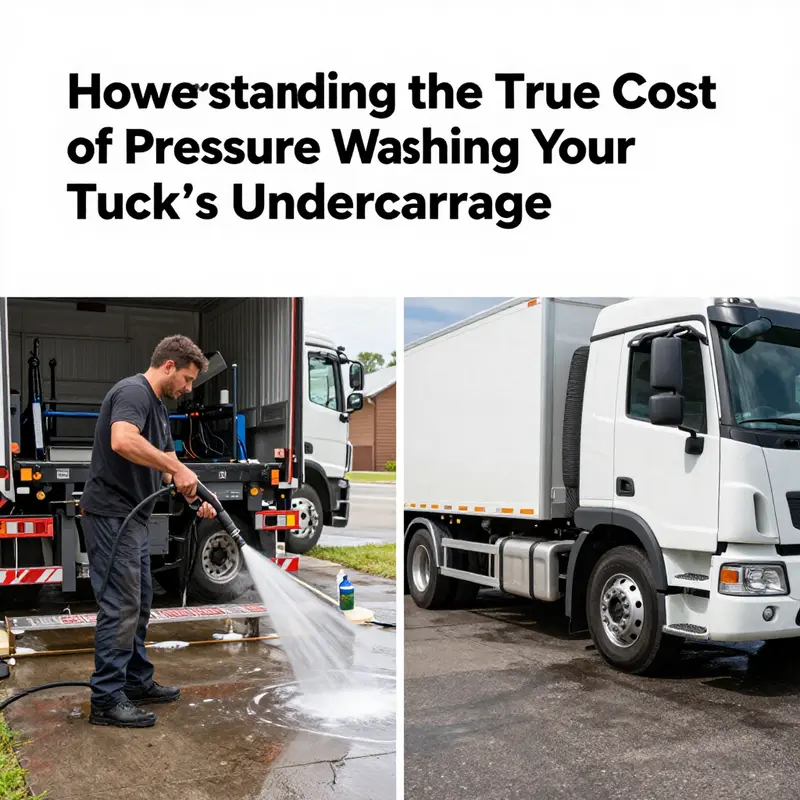
Choosing how to remove the stubborn grime that clings to a truck’s undercarriage is more than a simple matter of price. It is a decision that folds in factors of time, safety, equipment, and the kind of wear the vehicle endures on a daily basis. For many operators, the question isn’t whether to pressure wash at all, but how to balance cost with effectiveness over the long haul. The undercarriage is a crucial battlefield in that balance. Mud, road salt, grease, and tar can all accelerate corrosion and disguise structural wear. Cleaning it regularly is less a luxury than a maintenance practice that preserves value and reliability. And yet, the path to consistency can diverge: a DIY approach that costs little upfront but demands skill and time, or a professional service that promises speed, uniform results, and equipment optimized specifically for higher surface areas and tougher grime. Understanding the practical differences between these paths helps truck owners and fleet managers forecast expenses, schedule maintenance, and protect investment without second-guessing every wash cycle.
From a pricing perspective, undercarriage washing sits in a broad band that reflects the diverse realities of real-world trucking. In many markets, a basic undercarriage clean falls in the range of around $60 to $90 for a straightforward job where mud and loose debris are the primary concerns. When the grime is heavier—think heavy clay, built-up grease, or residual salt from winter operations—the price tends to climb toward the $100 to $150 mark. This scale mirrors the extra time, labor, and, sometimes, the use of stronger detergents or rust-preventive measures. In practice, a standard, well-executed undercarriage wash for a typical day-to-day vehicle might settle around the $75 to $125 window, with the final figure reflecting the exact condition of the chassis and the scope of accompanying services.
The decision to DIY or go pro hinges on a few pivotal questions. First, what is the truck’s size and service history? Large trucks, heavy-duty work vehicles, or fleets with multiple units naturally demand more surface area to treat, and the grime in those cases is often more entrenched. A professional shop, equipped with industrial pressure washers in the 3000 to 4000 PSI range and specialized undercarriage nozzles, can tackle thick mud and salt residues more efficiently than a consumer-grade rig. The second question is location and availability. Urban areas—especially those with a high concentration of fleet operations—tend to command higher labor rates, while rural or less-demanding markets may offer cheaper hourly windows. The third question concerns the scope of cleaning. A basic wash is one thing; adding services like degreasing, rust inhibitors, or protective coatings shifts the value proposition and the price. For fleets, there is often a compelling economics case for package deals. When a business maintains multiple vehicles, a single provider can optimize time and equipment use, lowering the per-vehicle cost and delivering consistency across the fleet. That is a practical advantage often overlooked by individual operators.
On the DIY side, the initial outlay can create a compelling case for independence. A quality portable pressure washer capable of delivering 3000 PSI or more is commonly the centerpiece of a DIY setup, with hoses, nozzles, and safety gear bringing the entry cost to roughly $100 to $500. The ongoing costs are modest—a few dollars per wash for water and detergents—yet the real investment is time and safety awareness. A thorough undercarriage wash can take from one to three hours, depending on how clumped the grime is and how accessible the chassis is from ground level or on ramps. This time demand is not trivial, especially for operators who balance several daily tasks. Safety cannot be overstated here. High pressure can damage rubber seals or plastic components if aimed carelessly. A wide-angle nozzle is typically recommended for undercarriage work to distribute the spray more broadly and reduce the risk of concentrated, high-intensity impacts on vulnerable parts.
A core advantage of DIY lies in control. If an operator prefers to stage washes around the workday, or wants to target problem areas immediately after a heavy haul, DIY can offer unmatched flexibility. It also aligns with a broader culture of regular maintenance, where quick, frequent sessions replace long, infrequent deep cleans. Yet the environmental responsibility question remains important. The dirty wash water contains mud, grease, and residual cleaners that must be managed properly. Practically, this means planning for a suitable catch system or ensuring that waste water is disposed of or recycled in an environmentally responsible manner. The undercarriage often houses critical components—exhausts, brake lines, sensors, wiring harnesses, and protective shields. Even with careful technique, the risk of inadvertent damage exists if the operator uses aggressive nozzles or direct high-pressure streams beneath the frame. Proper technique matters as much as proper equipment.
When considering professional services, the value proposition shifts toward efficiency and consistency. In addition to the basic cleanliness, pros can deliver benefits like rust inhibitors and protective coatings that act as a barrier against future corrosion. For fleets operating in harsh winter climates or muddy terrains, that extra layer of protection can translate into meaningful long-term cost savings by slowing the progression of rust and extending component life. The speed of service is another data point. A trained technician with industrial gear can complete a thorough undercarriage treatment faster and with less equipment stress on the vehicle, reducing downtime and keeping the truck on the road. The downside is the per-vehicle cost, which can appear steep when viewed in isolation, but tends to reveal its value when scaled across a fleet or used as part of a broader maintenance package.
Context matters when weighing the better option. If you frequently drive through salt corridors, track heavy mud, or operate in environments that generate a constant drape of road grime, the professional option offers reliability and repeatability. For smaller fleets or individual operators who can align washes with downtime or weekends, a DIY approach can be financially prudent while still maintaining high standards if done regularly and with the right precautions. The contrast also taps into the broader question of equipment quality. A professional shop’s investment in industrial-grade washers and specialized nozzles is no accident; these tools are calibrated for the tough undercarriage work where conventional consumer equipment struggles. The operator who undertakes DIY must weigh the same issues against the cost considerations, personal time availability, and the willingness to invest in proper safety gear and PPE that stands up to repeated use.
Among the practical details, you will often find a nuanced truth: there is not a universal winner. For many operators, a hybrid approach can deliver the best balance. A routine, light undercarriage rinse performed in-house, followed by periodic professional deep-cleaning with rust-inhibiting treatments, creates a rhythm that preserves the chassis without letting the build-up become prohibitive. Fleet owners sometimes seek out package deals for multiple vehicles, recognizing that a provider who can service an entire yard reduces per-vehicle friction and creates predictable budgeting. This approach also reduces the variability that can accompany a DIY-only or a single-shop-only strategy. The predictability matters when maintenance windows are tightly scheduled around operations or delivery deadlines.
To help frame the decision in tangible terms, consider the practical cues that separate a good outcome from a rushed one. First, assess the condition of the undercarriage before washing. If you see flaking paint, exposed metal, or rust spots, you may want to adjust the plan to include protective measures or to schedule a professional evaluation that can detect early corrosion risks. Second, think about the wash’s frequency. A once-a-year deep clean can be a nice complement to more frequent light cleans, but neglecting the undercarriage for long stretches invites more severe corrosion and costly repairs down the line. Third, reflect on the driver’s daily route. Sand, salt, and heavy clay respond differently to cleaning strategies. The same undercarriage wash that works after a dry spell may require additional attention when contaminants are persistent or chemically aggressive.
A useful lens for this topic is the broader economics of maintenance. The cost of neglect—more frequent repairs, replacement of corroded parts, or downtime for large fixes—often dwarfs the price of routine cleaning. The ratio of cost to benefit improves when you combine regular cleaning with preventive measures like rust inhibitors or coatings. Several fleet managers report that a small increase in maintenance spend today yields a larger reduction in downtime and unplanned service calls in the coming months. The math is not only financial; it translates into smoother operations, fewer headaches during peak seasons, and a cleaner, more recognizable fleet identity that stakeholders associate with reliability and care.
If you are exploring this topic further, a practical principle worth following is to treat undercarriage cleaning as a maintenance service rather than a one-off cosmetic intervention. The frequency and intensity should reflect the vehicle’s duty cycle, exposure to corrosive elements, and the time you can allocate to care. For some operators, a quarterly professional treatment paired with monthly DIY touch-ups may hit the right balance. For others with a steady stream of off-road or winter work, monthly professional assistance becomes more advantageous. The cost questions then align with tangible outcomes: longer vehicle life, fewer interruptions, and a more predictable maintenance budget.
As you consider the path that makes sense for your operation, it can be helpful to draw on the broader craft of maintenance and the knowledge shared by practitioners who navigate the same decision space. For example, you can explore proven strategies for cleaning grease and tar off your trucks fast, which echoes many of the practical insights about undercarriage care and the balance between DIY effort and professional efficiency. This kind of guidance reinforces the idea that the right approach is not simply about choosing a price point, but about aligning technique, timing, and material choices with the realities of your routes and fleet structure. Proven strategies for cleaning grease and tar off your trucks fast.
In the end, the choice between DIY and professional undercarriage washing is less about a single best practice and more about a sustainable maintenance philosophy. Professionals offer efficiency, uniform results, and protective treatments that can extend the life of crucial components. DIY offers control, cost savings, and the satisfaction of hands-on care when performed with proper equipment and safety measures. The most resilient approach often blends both: regular in-house rinses to keep grime at bay, with periodic professional deep-cleaning to address stubborn residues and corrosion protection. This strategy aligns with the broader aim of keeping a truck reliable, compliant with maintenance schedules, and ready to navigate the road ahead with confidence.
External resource for pricing context and current market dynamics: https://www.mechanicalliance.com/pressure-wash-truck-cost/
Decoding Undercarriage Pressure-Wash Costs: How Truck Size and Condition Shape Cleaning Bills

Grime under a truck’s frame is more than a cosmetic issue. It’s a signal that maintenance, fleet budgeting, and service choices all intersect at the undercarriage wash. When owners or fleet managers ask how much it will cost to pressure wash the undercarriage, the instinctive answer often comes in a single figure. But the number is really a spectrum, bending with size, soil, and the context of the cleaning. Prices commonly cited in the industry range from modest, base-cleaning fees to higher, all-inclusive packages, reflecting a blend of labor, equipment, and optional add-ons. A practical takeaway for anyone managing a fleet is that the sticker price is a function of three core variables: vehicle size, current condition, and the service structure of the provider. Where you operate and whom you hire further tilt that price. A small, plain job in a rural shop can be closer to the lower end, while a large, heavily soiled truck in a city with high overhead might land toward the upper end or beyond. The essential principle remains: bigger rigs and messier undercarriages demand more time, more specialized gear, and more careful handling, all of which push the price upward. For a typical truck, this means the difference between a quick, no-frills rinse and a thorough, condition-aware treatment that includes detergents, rust-prevention considerations, and perhaps a bit of wheel and exterior touch-up as part of a package. The broad spectrum makes it clear that pricing is not a one-size-fits-all figure; it’s a tailored estimate that reflects both the vehicle and the operational realities of the shop delivering the service.
To anchor the discussion, most providers separate the base undercarriage wash from the add-ons. A basic undercarriage cleaning often sits in a modest range, roughly $60 to $90 in many markets. If you’re in a busy metropolitan area or you request additional services—such as rust inhibitors, thorough wheel cleaning, or a full exterior detail—the price can rise substantially. For a standard, clean truck, the expected ballpark tends to land around $75 to $125 for a comprehensive undercarriage rinse that includes a careful inspection of running gear and a spray designed to target salt, mud, and road grime. This framing helps fleet managers budget more predictably while giving shops the flexibility to tailor the job to each truck’s needs.
The first major variable to unpack is vehicle size. When you compare a light-duty pickup to a large commercial or heavy-duty freight truck, the differences multiply in practice. Larger vehicles demand more time on the rack, more labor to reach hard-to-access areas, and more robust equipment capable of producing the right balance of cleaning force without risking damage. A standard light-duty pickup can often be serviced efficiently, with a cleaning fee in the lower ranges, sometimes as low as $20 to $50 for basic service. In contrast, a large commercial truck may fall into a wider bracket—roughly $75 to $150 or more—depending on the shop, the region, and the exact scope of work. The math behind this spread is straightforward but telling: more surface area, more undercarriage components to reach, and the potential for heavier soil loads that require additional passes or stronger cleaners. Time is money in this setting, and time scales with size. The choice of nozzle, pressure settings, and the extent of the undercarriage exposure all contribute to the final tally.
But size alone doesn’t determine the bill. The undercarriage’s condition—the amount and type of buildup, the presence of winter salt, rust, or stubborn grime—plays an equal, if not greater, role in shaping cost. A relatively clean frame with minimal salt residue is a straightforward operation: one or two passes with standard detergents, followed by a rinse, a quick inspection, and roped-off areas for safety. On the other hand, heavy mud, caked grime, or salt convergence, especially from winter driving, triggers more involved processes. The operator may need to apply specialized detergents, pre-soaks, and multiple passes to fully dislodge bonded material. Each additional pass consumes time, uses more cleaning agents, and raises the likelihood that the service will run longer than a baseline wash. The same logic applies if rust is present or suspected; a shop may implement rust-preventive washes or conditioning, which adds steps and materials, all translating into a higher price point.
An additional consideration is whether the cleaning includes inspection or diagnostic steps. If the undercarriage shows damage, loose components, or corrosion, some providers will incorporate a brief inspection as part of the service or offer it as an add-on. This adds value by catching issues early but can elevate the total cost. Conversely, a straightforward wash that stays within a tight schedule tends to stay near the lower price band. In any case, it is useful to approach the service as a small, proactive maintenance investment. Clean undercarriages contribute to longer-term component life by reducing corrosion risk and helping to reveal safety concerns before they escalate.
For fleet managers who weigh cost against control and consistency, a DIY approach may appear attractive, particularly for smaller fleets or single-vehicle operations. DIY undercarriage cleaning often relies on portable high-pressure washer kits designed to reach beneath the frame, with accessories that help direct spray and manage runoff. In this context, the price ceiling for a do-it-yourself setup is often similar to, or slightly above, a professional basic wash—roughly in the neighborhood of $60 to $150 for equipment that enables regular maintenance. The upside is a degree of independence in scheduling and the potential to bring down ongoing costs by performing routine cleanings in-house. The downside is the learning curve, the need for appropriate safety practices, and the time required to achieve consistently thorough results. Regardless of method, the undercarriage wash remains a practical touchpoint for fleet maintenance and budgeting, reinforcing the idea that a smart cleaning plan is less about chasing the lowest dollar and more about balancing labor, capability, and vehicle readiness.
From the perspective of fleet operations, the decision calculus extends beyond the immediate wash. Consider how often the undercarriage should be cleaned, what level of risk you’re willing to tolerate for corrosion or structural wear, and how the wash fits within your broader maintenance cadence. Some operators align undercarriage cleaning with rust prevention programs and shell out for rust inhibitors or protective coatings as a proactive layer of defense. Others treat it as a reactive measure, reserving thorough cleaning for after road strikes or seasonal salt exposure. Either approach can be valid; the critical piece is recognizing that the price is not merely a line item but a reflection of a broader maintenance philosophy. When owners and operators adopt a systematic approach—defining clean thresholds, scheduling cadence, and service levels—the cost becomes more predictable and easier to justify in annual budgeting conversations.
For those aiming to ground the decision in practical insights, it helps to consult operators who have integrated undercarriage cleaning into a larger maintenance framework. In many fleets, the undercarriage wash is treated as a facet of a broader discipline, including facility management for truck wash businesses. This perspective emphasizes the cross-functional value of regular cleaning: it supports vehicle longevity, reduces downtime, and aligns with safety and compliance expectations. If you want to explore how a fleet can structure its maintenance operations around undercarriage cleaning, you can deepen that understanding through discussions on facility management for truck wash businesses.
For readers seeking a more hands-on, DIY pathway while still acknowledging professional options, the mix of approaches becomes especially practical. A DIY setup can be used to augment regular cleaning between professional sessions, ensuring certain critical zones are kept clear of buildup, while professional services handle the more time-intensive, larger-scale washes that require greater equipment and labor. This blended approach can offer predictable costs while preserving flexibility for unexpected grime or road-salt seasons. The overall lesson is clear: the undercarriage wash is a maintenance decision, one that benefits from a clear plan rather than ad hoc, last-minute actions.
If you’re curious about implementing a more formalized approach to truck wash maintenance, the internal perspective offered by industry discussions on facility management for truck wash businesses can be enlightening. It highlights how operators balance throughput, quality, and cost, creating a framework that makes sense for both single-truck owners and larger fleets. In the end, the price you pay for an undercarriage wash is a signal of the care you invest in your rolling assets. A well-timed wash with the right level of service can prevent corrosion, extend component life, and keep the fleet in service longer.
For readers who want to explore examples of DIY undercarriage cleaning options, many online sources describe high-pressure kits that are designed for undercarriage access. While the exact product names may vary, the principle remains the same: a portable system with multiple spray options and mobility features can bring the undercarriage cleaning into your own shop or yard. If you’re considering this route, a minimal investment in a capable kit can pay off across a fleet’s maintenance cycles, especially when paired with a scheduled cleaning cadence. Remember, though, that the choice between DIY and professional service hinges on your fleet’s size, the soil load you encounter, safety considerations, and your willingness to allocate time for regular upkeep.
External resource: For readers exploring DIY options and product options outside the professional service realm, this guide to undercarriage cleaning equipment offers practical insights into what to look for in a kit. https://www.amazon.com/Washer-Undercarriage-Cleaner-Pressure-Truck/dp/B0CZBQJYXH
Regional Pricing Realities: Unpacking What Undercarriage Pressure Washing Costs for Trucks Really Mean Across the Country
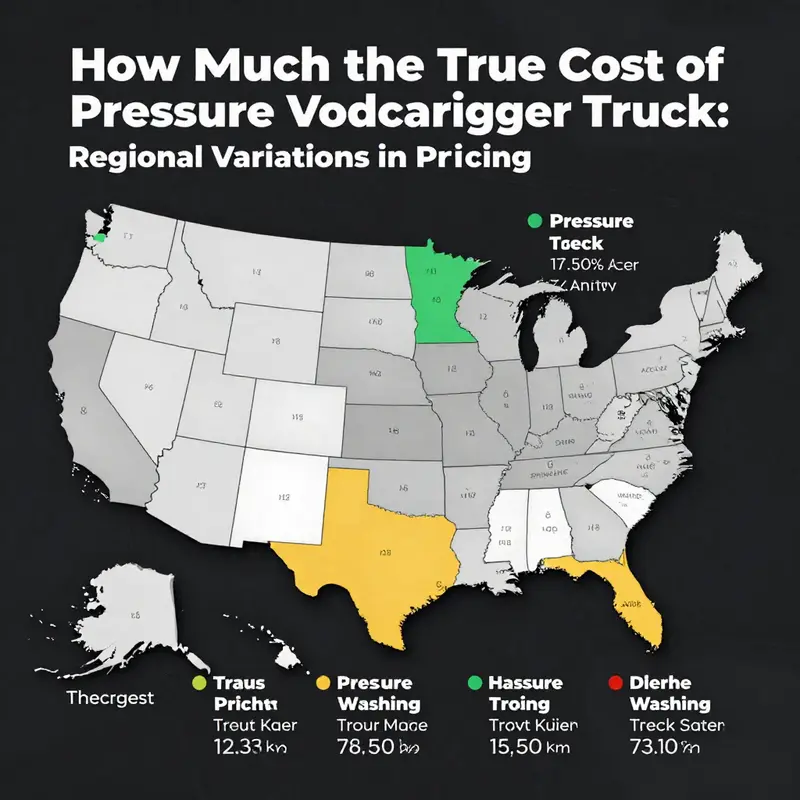
Pricing for pressure washing a truck’s undercarriage is rarely a single number, and it rarely feels universal. It is a moving target shaped by location, the type of service provider, vehicle size and condition, and the scope of the cleaning package. For fleet managers and owner-operators alike, understanding these levers helps avoid sticker shock and aligns expectations with what a thorough undercarriage wash should deliver. At its core, the price reflects not only water and labor but the economics of running a service operation in a given place and time. A clean undercarriage can extend the life of critical components by removing corrosive road salts, mud, and grime, yet the price is as much about where you are as about what you want cleaned.
In the United States, a typical price band for an undercarriage wash sits roughly between fifty and one hundred fifty dollars. Within that range, you will notice a clear geography-driven split. Urban centers with higher costs of living and more intense competition often push prices toward the upper end. Think of cities with dense commercial activity and higher wage expectations, where shops need to cover elevated overhead, real estate costs, and extended service windows. Rural areas, where competition is fierce and operational costs run lower, generally offer more affordable options, sometimes as low as fifty to seventy-five dollars for a standard, thorough clean. These regional delta points matter because they reveal not just price but the underlying service dynamics that come with each location. A shop in a bustling metro may emphasize speed, availability, and comprehensive add-ons, while a rural outfit might lean toward straightforward, no-frills efficiency and a leaner menu of extras.
The size and condition of the truck are equally decisive. A light-duty pickup or a medium-duty rig with a relatively clean frame may require only moderate effort and time. In contrast, a heavy-duty tractor-trailer, a trucking fleet vehicle with persistent road grime, or a unit suffering from heavy salt exposure will demand more passes, more water volume, and perhaps specialized techniques to reach the undercarriage nooks that stubborn grime hides in. When mud builds up on the frame, axles, exhaust, and fuel lines, or when road salt has etched into metal crevices, a standard wash becomes more of a restoration job. Prices then drift upward, sometimes noticeably, to account for the extra labor and safer handling required to protect sensitive components.
Beyond location and size, the choice of service provider plays a critical role. Specialized detailing shops often maintain more controlled workflows, better equipment, and a broader menu of options—rust inhibitors, wheel and brake cleanings, degreasers, and even rust-prevention treatments. They typically price these enhancements separately, so a basic undercarriage clean might sit around the lower end of the range, while adding rust inhibitors or a full exterior detail can raise the total substantially. Mobile services, which bring the wash to the vehicle’s door, carry different economics. The convenience factor they provide—no moving the truck to a shop, saving downtime for a fleet—can justify a higher labor rate or a service call fee. In some markets, a mobile unit may command a premium for the same undercarriage treatment, reflecting travel time, fuel, and the logistics of servicing dispersed fleets.
Another factor that colors pricing is the level of chemical and equipment investment behind the service. The dollars spent on professional-grade cleaning solutions, rust-control chemistries, and heavy-duty cleaning apparatus filter through to the customer price. This is not just about what is used on the frame, but about the reliability and speed of the equipment and the service provider’s ability to safely manage wastewater and rinse protocols. High-end facilities may boast automated or semi-automated setups for efficient throughput, while smaller outfits rely on portable high-pressure machines and careful manual technique. For context within the broader industry, equipment investments in related segments demonstrate why prices can diverge so widely. For example, in the commercial vehicle cleaning space, full automated undercarriage and body-cleaning systems can run in the tens of thousands of dollars, reflecting a different business model than simple hand-wash services. A full automated garbage truck cleaning system, for instance, is priced in the mid four-figure range, while high-pressure cleaning trucks used for sewage and heavy-duty cleaning can be significantly lower on the equipment spectrum. While such equipment may be out of reach for small operators, it helps explain why some providers bring higher price tags to the table when the service package promises robust throughput and industrial-grade results.
In practical terms, most customers encounter price points in the familiar range of sixty to one hundred fifty dollars for a standard undercarriage wash. When a truck arrives with heavy caking, salt build-up, or substantial road grime, the bill can climb toward the upper end or beyond. If additional services are bundled—such as wheel cleaning, brake dust removal, a rust-inhibitor treatment, or a full exterior detail—the total clean price can rise accordingly. This is where the distinction between value and price becomes important. A lower price may reflect a shorter process, lighter cleaning agents, or fewer safety and protection steps. A higher price, while not guaranteed, often signals a more thorough approach, stronger rust-prevention measures, and a workflow designed to protect the vehicle’s undercarriage during aggressive cleaning.
For readers evaluating quotes, the most effective approach is to treat the process as a package rather than a single line item. Ask providers to itemize what is included in the base undercarriage wash versus add-ons. Clarify whether the price covers a full undercarriage rinse, the removal of stubborn mud, salt residue treatment, and underbody protection post-clean. In areas where winters are harsh and road salt is a persistent threat, inquire about rust inhibitors or protective coatings and how they affect the price. Also consider whether the service includes wheel cleaning, frame blasting of tough grime, or the use of specialized nozzles to reach hard-to-access areas. When you collect quotes, compare apples to apples: identical service scope, same travel considerations, and similar vehicle size categories.
Local guidance from industry observers suggests that the most accurate pricing strategy is to obtain multiple local quotes and to check what each price includes. In practice, the best-performing shops balance speed, thoroughness, and sustainable pricing. They may offer tiered options: a basic undercarriage wash with core benefits, a mid-tier package that includes rust-prevention measures, and a premium package that adds full-wheel, exterior, and undercarriage detailing. The expectation, however, should be clear: the lowest price should not always win if the goal is long-term protection for critical components and consistent fleet readiness. A cheaper wash might push grime back onto the chassis after a few drives, or fail to treat corrosion-prone areas with the care they require. In contrast, a higher-priced option should demonstrate measurable value through better cleanliness, longer-lasting results, and proactive protection.
As you map pricing across regions, it can be helpful to view the decision through the lens of capability and reliability. For organizations that operate multiple trucks, it makes sense to standardize a service level rather than chasing the lowest local price. A consistent undercarriage cleaning protocol helps ensure uniform maintenance, which reduces downtime and helps extend the life of the vehicle’s critical underneath systems. If you’re evaluating your own fleet’s maintenance strategy, consider partnering with a provider that can offer not only value but also predictable scheduling, clear invoicing, and transparent expectations about what constitutes a complete clean. To gain broader perspective on how pricing integrates with running a truck-wash operation, you might explore resources on facility management for truck wash businesses, which discusses how pricing, operations, and customer expectations intersect in real-world settings. facility management for truck wash businesses.
In sum, the regional pricing reality for undercarriage pressure washing reflects a blend of geography, service model, vehicle characteristics, and the level of post-clean protection a customer requests. The general rule remains practical: expect roughly sixty to one hundred fifty dollars for a standard, thorough undercarriage wash in many markets, with adjustments up or down based on local costs, truck condition, and the breadth of services bundled. When shopping around, treat price as a signal rather than a verdict—use it as a starting point to assess what is included, what value is added, and how the service will protect your asset over time. And as you align quotes with your maintenance strategy, keep in mind the broader context of what undercarriage cleanliness means for fleet reliability, safety, and total cost of ownership.
External resource for further context: https://www.alibaba.com/product-detail/4X2-6000L-High-Pressure-Cleaning-and-Sewage_1600397731437.html
Final thoughts
The necessity of pressure washing truck undercarriages extends beyond appearance; it plays a vital role in enhancing vehicle longevity and performance. The costs associated with these services fluctuate based on various integral factors including service types, vehicle conditions, and geographic locations. By being informed of these nuances, fleet managers and operators can better strategize their maintenance budgets and practices. As industry stakeholders prioritize the upkeep of their vehicles, understanding these costs will facilitate informed, budget-conscious decisions that ultimately safeguard their investments.