
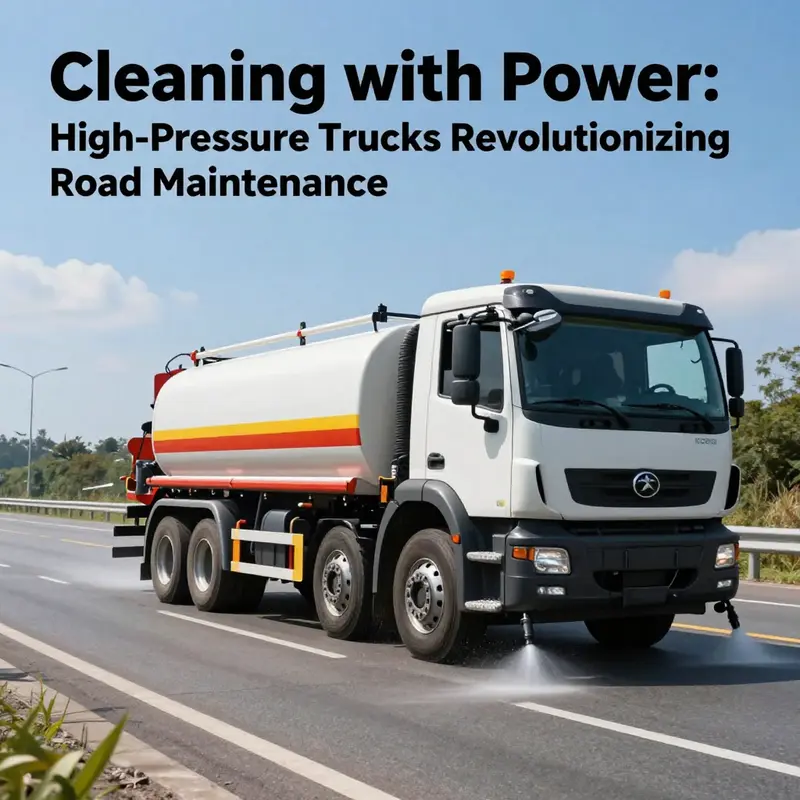
Machine trucks equipped with high-pressure washing systems are becoming essential tools for maintaining clean and safe roadways. For fleet managers in logistics, trucking companies, and construction supervisors, understanding how these vehicles can streamline operations, reduce costs, and foster environmental responsibility is crucial. This article delves into the technology and functionality of high-pressure road washing trucks, the economic benefits of their use, and their environmental impact, offering a comprehensive view on why integrating these machines into road maintenance strategies is a wise investment.
Washing the City: The Technology, Reach, and Quiet Rhythm of High-Pressure Road-Cleaning Trucks
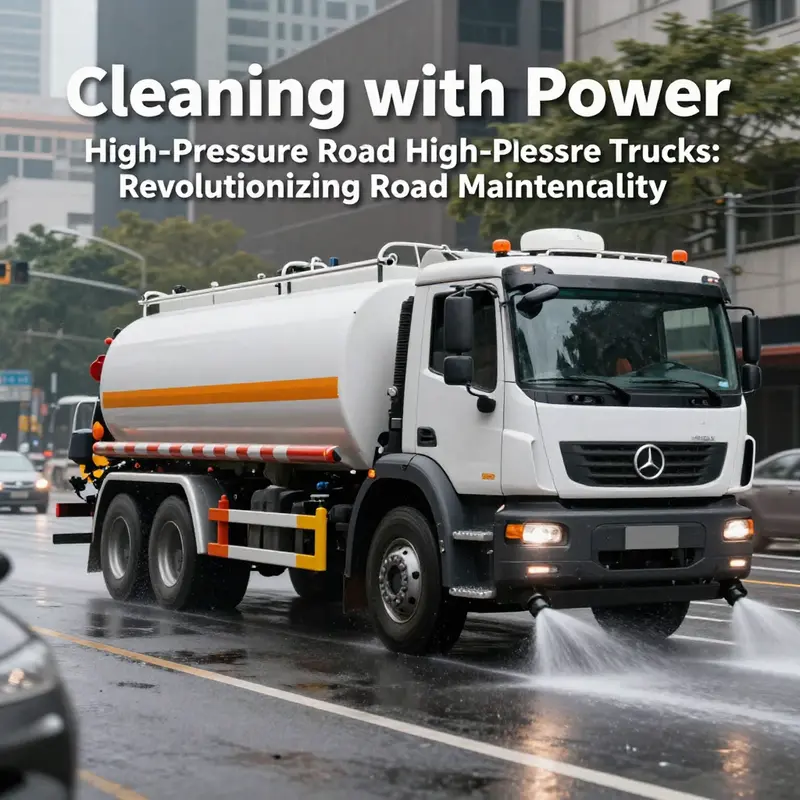
Across crowded corridors of asphalt, the daily choreography of city cleaning unfolds not as a string of disjointed tasks but as a single, purpose-built operation. High-pressure road-cleaning trucks sit at the center of this choreography, a fusion of water power, mechanical precision, and mobility that converts a street sweeping routine into a robust, adaptable system. These machines are designed to tackle a spectrum of contaminants, from the fine dust that billows in busy intersections to stubborn oil traces that cling to lane lines after a spill. They are made to work in the weather, to endure the grit of industrial zones, and to operate in the flow of traffic without becoming a hazard or a bottleneck. The result is a vehicle that acts like a rolling sanitation plant, a compact refinery for urban grime, capable of turning a polluted road into a surface that looks and feels cleaner, safer, and more hospitable for pedestrians, cyclists, and motorists alike. In the broad arc of municipal maintenance, these trucks represent more than a line item in a fleet; they embody a shift in how cities think about cleanliness, efficiency, and environmental impact on the ground where people live and move every day.
The heart of the technology lies in a carefully engineered synthesis of high-pressure water and purposeful contact with the pavement. A patented, high-efficiency turbine-driven pump pushes water through an array of nozzles and jets that can generate pressures well beyond the reach of conventional street wash methods. This capability is not merely about brute force; it is about delivering the right force at the right moment to dislodge deeply embedded soils, oil residues, and caked grime without resorting to aggressive scrubbing that could damage the surface. The design emphasizes reliability under continuous use, with seals, bearings, and pumps shielded by durable materials and protected against corrosive runoff. Engine power ranges broadly in these machines, typically between 150 and 220 horsepower, chosen to balance robust jet pressure with fuel efficiency and longevity in the demanding, urban-duty cycle. The result is a platform that can sustain rigorous cleaning while meeting the constraints of modern municipal fleets, from maintenance budgets to emission standards and the need for predictable performance across shifts and seasons.
The functionality extends far beyond spraying water under high pressure. A defining feature is the integration of mechanical sweeping systems with vacuum collection, creating a dual-action capability that can perform dry sweeping and wet washing in a coordinated sequence. In practice, this means a single vehicle can begin its route by sweeping away loose debris with rotating brushes, then transition to jetting and washing to remove embedded grime, all while a vacuum system captures the dusty byproducts that would otherwise become airborne. Some configurations feature four independent sweeping brushes, deployed on either side or in tandem, which expands the machine’s reach and maneuverability. Operators gain the ability to tailor the cleaning pattern to curbs, intersections, or narrow lanes without having to reposition the truck repeatedly. The sweeping and vacuum apparatus are often synchronized with the wash cycle so that debris picked up by the brushes is immediately managed by the suction system, reducing the risk of resuspension and ensuring the surface remains relatively dry after cleaning in high-traffic zones.
Dust control is not a secondary concern but a core design consideration. In many models, rear-mounted spray pipes and dedicated nozzles provide a targeted mist that settles suspended particles during the wash. The dust suppression feature is especially relevant in industrial districts, construction sites, or city centers where air quality is a priority. This integration keeps particulate matter from becoming a nuisance for nearby residents or workers and helps the machine operate without triggering dust-related regulatory concerns or neighborhood complaints. The effectiveness of dust suppression depends not only on water pressure but on precise spray patterns, nozzle geometry, and the timing of the mist relative to the sweeping action. When done well, the process minimizes visible dust plumes and reduces the nuisance dust that often accompanies heavy road cleaning in arid or windy conditions.
A closer look at construction and durability reveals a chassis and tank design built to endure the tempo of city and industrial environments. The tanks are typically stainless steel or coated to resist corrosion from salted roads in winter and from industrial effluents that may emerge at docks or in chemical zones. The hydraulic and mechanical components are chosen for resilience, with hydraulic pumps and control systems configured to tolerate frequent daily start-stop cycles, exposure to heat, and the occasional grit intrusion that comes with real-world use. The overall payload capacity and tank volumes are designed to balance cleanliness power with mobility and roadway access. In practice, these trucks tend to carry water in volumes sufficient to cover several cleanings per shift, with the option to refill at depots, hydrants, or on-site water supply points. The combination of a sizeable water reserve, robust pumping, and a flexible drive train allows the vehicle to both reach distant segments of a city and sustain prolonged cleaning tasks without frequent returns to base.
When a truck moves through urban terrain, the operator’s role blends technical skill with situational awareness. The control system manages a suite of parameters: pump pressure, nozzle arrangement, brush speed, and vacuum suction, all while coordinating with the vehicle’s steering and speed to maintain coverage. The ability to adjust pressure locally means the operator can tackle a light sweep on a residential street or deploy the full intensity on an industrial roadway where grime has built up over months. This adaptability is essential when the road surface types vary—from smooth asphalt to rough concrete or pitted industrial pavements—and when traffic densities change throughout the day. The operator’s toolkit also includes safety features such as collision avoidance sensors, audible warnings for nearby pedestrians, and the capability to pause washing when a vehicle is detected in the lane. In all cases, the machine’s intelligence is designed to keep workers out of harm’s way while ensuring the street receives a consistent, repeatable clean across the entire route.
The practical implications of this technology extend into the management of streets and the health of the urban environment. Clean roads reduce the accumulation of oil and fuel residues that can lower traction and contribute to slippery conditions after rain. They also limit the spread of dust and fine particles that cling to tire treads and are tracked into buildings, where they can contribute to indoor air quality concerns. By combining spray‑jet washing with brush‑based sweeping, these trucks deliver a more thorough cleansing than either technique could achieve alone. The coverage gains are particularly noticeable at curb lines, intersections, and near entrances to transit hubs, where the volume of foot traffic and the potential for residue accumulation are higher. In practice, the enhanced efficiency translates into shorter cleaning windows, fewer passes required to achieve a given level of cleanliness, and reduced labor costs over time. These improvements matter not only in terms of project economics but also in terms of urban livability, because cleaner streets contribute to a perception of safety, order, and care in public spaces.
From a durability and performance standpoint, the trucks are built to withstand the rigors of demanding environments. The use of stainless steel or corrosion-resistant materials in critical wet areas protects against chemical exposure, while imported hydraulic components and rugged engine packages provide the necessary torque and endurance for long shifts. The typical payload capacity and tank volumes offer flexibility: tanks can range from modest capacities suited for small urban wards to larger, multi-cubic-meter reservoirs that power weekend or emergency cleaning operations. The configuration of the vehicle—whether it emphasizes sweeping power, spray reach, or vacuum capacity—depends on the primary cleaning challenges faced by the deploying city or site. In practice, operators value a balance between a high-pressure capability that can remove stubborn residues and a robust sweeping system that prevents recontamination. The best designs feature modular elements that can be swapped or upgraded as cleaning protocols evolve, allowing fleets to adapt to new contaminants, evolving regulations, or shifts in industrial activity near roadways.
The applications for these machines clearly extend beyond simple street washing. In steel mills, chemical plants, and power stations, the same principles apply: water under significant pressure to dislodge stubborn residues, combined with mechanical action to collect debris and a sealed system to control dust and spray. In docks and other transit-heavy zones, the ability to quickly decontaminate wheel tracks or loading lanes reduces the risk of cross-contamination and helps maintain safer, cleaner working areas. In emergency response scenarios, rapid decontamination may be required to manage chemical or radiological hazards, and the ability to perform large-scale, controlled washing operations from a mobile platform becomes a critical asset. The versatility of these trucks arises not from a single capability but from a carefully engineered ecosystem where high-pressure jets, dust suppression, sweeping, and vacuum work in concert to achieve thorough cleaning with operational efficiency.
For readers who want to visualize the scale and capability of modern road-washing trucks, consider the integration of multiple technologies in a single chassis. The heart of the system—the high-pressure pump and its turbine rotor—needs to be matched to an efficient drive line and a durable frame. The spray arrays, often arranged to cover multiple angles, require precise calibration so that nozzles deliver consistent flow across the corridor being cleaned. The four- or more‑brush configurations provide broad coverage but also require synchronized control to avoid redundant brushing or interference with each other. Simultaneously, the suction system must handle the debris generated by both the sweeping action and the wet wash, maintaining a clean, dry surface behind the vehicle to minimize runoff and to prevent residue from becoming airborne when the truck passes through windy conditions. In short, these machines are a complete ecosystem on wheels, capable of transforming a grimy urban surface into a foundation suitable for safe, daily use by the city’s residents and visitors.
The chapter would be incomplete without noting the broader context in which these vehicles operate. Urban cleanliness is increasingly tied to public health goals, traffic safety, and environmental stewardship. The ability to suppress dust at the source helps protect nearby workers and residents from fine particulate matter. The precise control of water usage, coupled with effective recycling or containment of wash water, supports responsible resource management and compliance with local environmental rules. The fleet perspective matters as well: a well-maintained, highly capable machine reduces downtime, extends service life, and lowers total cost of ownership through fewer repairs and longer intervals between major overhauls. The leadership of maintenance teams—who train operators, schedule wash routes, and supervise compliance with safety and environmental regulations—directly influences how effectively these capabilities translate into real-world outcomes. In this sense, the trucks are as much about people and processes as they are about hardware.
To connect the discussion with practical, day-to-day realities, several fleet managers have emphasized how operator expertise and continuous training amplify the benefits of high-pressure road cleaning. A coordinated program that covers machine operation, safety norms, maintenance routines, and efficient routing can dramatically increase throughput and consistency. The interplay between people and machines matters because the most sophisticated nozzle configurations and the strongest suction system are only as effective as the operator who knows when to modulate pressure, when to sweep aggressively, and how to adapt to surface variations or traffic conditions. This is where the social and organizational dimensions of road cleaning intersect with engineering, shaping outcomes that exceed what any single component could achieve alone. For readers who want a deeper look at how fleets integrate maintenance discipline with workforce development, a useful perspective can be found in discussions on fleet engagement and growth, which highlight how teams collaborate to maximize machine uptime, safety, and productivity. Derrick Wolfe trucking employee engagement growth.
Looking forward, the evolution of high-pressure road-washing trucks is likely to be shaped by ongoing advances in sensor integration, control software, and modular design. Pressure and nozzle control may become smarter, with adaptive patterns that respond to real-time feedback about surface texture or moisture levels. Brush assemblies could be redesigned for easier maintenance and quicker replacement, while vacuum systems might incorporate advanced filtration to capture smaller particles more efficiently. The potential for automation and semi-autonomy also looms, with safety protocols ensuring that autonomous movements do not compromise pedestrian spaces during peak hours. The overarching trajectory is toward more precise, more adaptable cleaning, achieved with less manual intervention and greater consistency across fleets. In practice, cities and industrial sites will want machines that can be deployed rapidly, operate quietly enough to respect nighttime or mixed-use streets, and deliver dependable results across a broad range of environmental conditions. The balance among power, efficiency, durability, and workforce readiness will remain central to how these vehicles are designed, deployed, and upgraded, shaping a future in which clean streets are achieved through a disciplined blend of engineering prowess and human expertise.
For readers seeking a snapshot of the technical catalog in a single reference, a widely cited external resource provides a concise overview of a high-performance road-washing platform that combines pressure washing with road-sweeping capabilities. This resource illustrates how the core components—turbine-powered pumps, high-pressure jets, rotating brushes, and integrated dust suppression—fit together in a practical product framework, offering a useful foil to the broader narrative about technology and functionality in road cleaning. External reference: https://www.alibaba.com/product-detail/High-Performance-220HP-Road-Sweeper-Truck-with_1600798583707.html
Wheels of Cleanliness: The Economic Case for Machine-Driven Road Pressure Washing
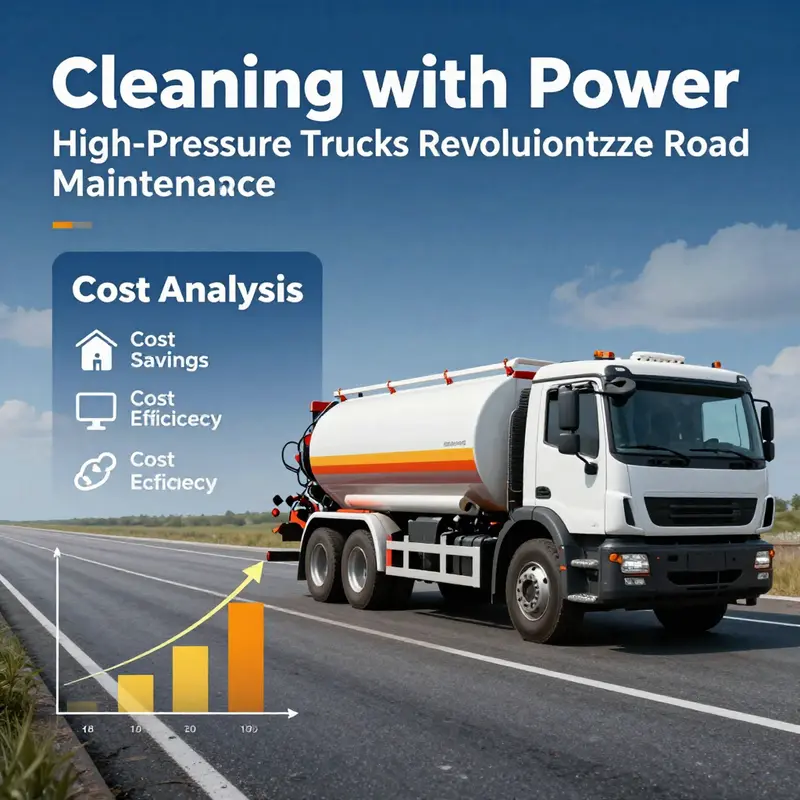
When cities talk about street cleanliness, the first image that often comes to mind is a fleet of durable trucks gliding through traffic, spraying water with sufficient force to lift oil stains, dust, and stubborn grime from pavement. Yet behind that image lies a layered economic logic: machines that wash roads are not merely speedier cleaners; they are strategic investments that redefine labor, materials, time, and even environmental outcomes. The shift from hand-cleaning and manual scrubbing to machine-assisted road washing reframes street maintenance from a pose of disciplined labor to a calculus of capital efficiency. This chapter follows that logic, tracing how machine-driven road washing translates into tangible financial benefits for municipalities, contractors, and sanitation operations, while also delivering broader social and ecological advantages that reinforce the value of technology-driven cleaning on a city’s public stage.
At the core of these machines is a straightforward but powerful technology synthesis: a heavy vehicle houses a water reservoir, a robust high-pressure pump, and an array of nozzles or rotating brushes designed to dislodge dirt and contaminants that accumulate on road surfaces. In practice, the system is purpose-built for frequent, urban-scale cleaning where traffic is continuous and debris varies—from fine dust to spilled lubricants, from mud to salt residue after winter. The geometry of the work is simple to describe yet complex in execution: a vehicle must deliver sufficient water pressure to lift grime without sacrificing efficiency, it must carry enough water to cover broad swaths of pavement between fills, and it must be nimble enough to navigate city streets and construction zones without becoming a moving obstacle. These are not cosmetic features; they are the backbone of an economic argument—one that links equipment, labor, and city budgets in a way that favors mechanization when properly scaled and managed.
The most immediate and persuasive economic argument for machine-driven road washing rests on labor cost reduction and productivity. Traditional manual cleaning relies on hands-on labor, hoses, brooms, and a schedule that often stalls when workers are fatigued or when weather changes temporarily halt operations. In contrast, mechanized systems automate the most physically demanding tasks. The result is not only faster cleaning but also the opportunity to redeploy human resources toward tasks that require judgment, planning, and coordination—areas where human labor remains essential but where the volume of repetitive scrubbing can be substantially reduced. In practical terms, the efficiency gains of mechanized road washing have been described in industry results as a performance increase by more than a factor of ten compared with manual methods. While the exact figures can vary by locale, crew size, and road conditions, the core pattern is consistent: a single machine can cover the same miles with far fewer labor hours, multiplying output without a commensurate rise in staffing costs.
Cost-effectiveness emerges not only from faster work but also from lower marginal costs per unit of cleaned road. The economic logic is reinforced by cross-domain evidence from related high-pressure cleaning technologies: in one regional program, a high-pressure pipeline cleaning device demonstrated a cost per meter that was less than 5 percent of the cost associated with traditional demolition and reconstruction methods. Although that example focuses on pipelines rather than roadways, it signals a broader principle: high-pressure, high-efficiency cleaning technologies can dramatically reduce the life-cycle cost of maintenance when they replace more labor-intensive or invasive approaches. For road cleaning, the implication is clear: if the same pressure and precision that displaces manual labor can be applied consistently to roadways, the costs of routine cleaning shrink, enabling more frequent maintenance and better pavement health over time.
A pivotal driver of long-run savings is the upfront capital investment in adaptable, self-contained equipment. In a notable municipal case, a self-developed high-pressure device installed on a 25-ton water truck cost less than 3,000 yuan per unit. While these numbers sit in a local context, they illustrate a compelling pattern: upgrading to a robust, self-contained cleaning platform need not require a prohibitively large outlay, particularly when the device is integrated into a vehicle that serves multiple roles. The savings here are twofold. First, the per-vehicle cost is modest enough to justify fleet-wide adoption across a city’s sanitation and road maintenance departments. Second, the comparative expense relative to commercially packaged models can be striking—nearly 180,000 yuan in savings per vehicle, when a city reaches scale and replaces or augments a large portion of its aging fleet.
Scale amplifies value. When a city shifts from single-truck pilots to a coordinated fleet program, the per-unit savings compound. The payback period, which might appear elongated in a small pilot, shortens dramatically as more units operate daily and create cumulative efficiency. The financial arithmetic becomes straightforward: if a machine reduces labor hours by a large share, and if the equipment itself costs a modest fraction of competing models, the aggregate savings over the asset’s lifetime can become transformative for municipal budgets. In addition to direct cost reductions, the city benefits from more predictable maintenance budgets, better asset utilization rates, and a stronger ability to plan around peak cleaning windows—factors that enable disciplined financial planning and fewer budgetary surprises in the utility line items that fund street cleaning.
Beyond the immediate bottom line, environmental and operational considerations enrich the economic narrative. Multi-functional cleaning vehicles—those capable of spraying, high-pressure washing, and sweeping in a single pass—offer a compelling value proposition. By consolidating tasks, these vehicles reduce the number of trips to and from operations bases, cut fuel consumption, and minimize the generation of construction waste associated with multiple separate cleaning passes. The environmental footprint of street cleaning thus shifts from a linear, resource-intensive process to a more integrated workflow with lower per-pass environmental impact. This is not only an ecological win; it tightens budgets by reducing fuel costs and wear on aging road networks, both of which can be substantial over the lifetime of a fleet.
The social and labor dimensions of this shift deserve particular attention. Mechanized cleaning changes the daily work environment for sanitation workers, moving them from heavy manual scrubbing to roles that emphasize operation, maintenance, and quality control. The safer, cleaner, and more efficient workflow can enhance worker morale and retention, which in turn reduces the costs and disruptions associated with high employee turnover. The broader public health and urban air quality improvements that accompany cleaner streets are not easy to quantify in the same unit terms as labor or fuel, but they feed directly into city sustainability goals and can influence grant eligibility, political support for reinvestment, and the long-term resilience of urban infrastructure.
From the perspective of small and medium-sized enterprises operating in the road-cleaning space, the economics of machine-driven cleaning also presents a persuasive case for investment and diversification. A typical mid-sized high-pressure washer, valued at around eighty thousand yuan, may break even within six to eight months when deployed for daily cleaning tasks. This is not just about cost recovery; it translates into reliable monthly savings that exceed sixty thousand yuan, with profit margins that can surpass sixty percent after the breakeven point. When these machines are used as part of a diversified service menu—covering industrial equipment cleaning, vehicle maintenance, and bundled cleaning packages—the annual revenue potential for a single machine can exceed five hundred thousand yuan. Those figures, while contingent on local demand, reflect a robust economic proposition: the combination of hardware efficiency, multi-task capability, and service diversification can unlock meaningful returns for private operators who align their fleets with a city’s cleaning calendar and market demand.
To translate these numbers into actionable practice, municipalities and contractors should view machine-driven road washing not as a one-off upgrade but as a strategic program. The economic logic favors staged rollouts that allow fleet managers to test performance in representative districts, calibrate maintenance schedules, and refine fuel and water usage policies. A well-structured program will also consider data-driven optimization: tracking metrics such as cycle times, water consumption per square meter cleaned, labor hours per kilometer, and maintenance downtime. By coupling high-performance cleaning with disciplined data, cities can quantify gains in a way that supports continuous improvement and justifies ongoing reinvestment. In this sense, the road washing truck becomes less a stand-alone utility and more a hub in an interconnected system of fleet management. This interface between equipment, workforce, and governance is where the broader value emerges—far beyond the visible sparkle of cleaner pavements.
A practical approach to maximizing these gains involves integrating fleet standardization and emergency response capabilities into maintenance planning. Standardized fleets simplify procurement, maintenance, and training, enabling crews to swap components, share spare parts, and reduce downtime. They also streamline safety protocols, which lowers the risk and cost of accidents or spills during cleaning operations. For organizations pursuing this path, a streamlined framework for fleet standardization and emergency response can be a deciding factor in achieving consistent results across districts, weather conditions, and shifting municipal priorities. For further reading on this integrated approach, see the discussion on fleet standardization and emergency response in related industry resources: Fleet Standardization and Emergency Response.
In terms of broader policy, the economic case aligns with environmental and public health objectives. Cleaner streets reduce pollutant residue and curb slip hazards, contributing to safer pedestrian environments and less wear on vehicle tires and road surfaces. When combined with appropriate water and energy efficiency measures, machine-driven street cleaning supports climate and air-quality goals that cities are increasingly obligated to meet. The resulting financial benefits—lower maintenance costs, improved worker conditions, and enhanced public health outcomes—create a powerful, multi-stakeholder case for sustained investment in mechanized cleaning fleets. The combined effect is a city that cleans more efficiently, uses resources more wisely, and maintains streets that are safer, healthier, and more appealing for residents and visitors alike.
Taken together, these strands—labor productivity, capital efficiency, environmental stewardship, worker well-being, and scalable city-wide impact—form a coherent economic narrative. A materially cleaner city driven by machine-based road washing is not merely the result of a favorable cost structure. It represents a reimagining of urban maintenance where technology, process discipline, and tactical investment converge to produce a higher return on public assets and a higher quality of life for the urban community. As municipalities continue to grapple with aging infrastructure, tight budgets, and rising expectations for service delivery, the case for machine-driven road washing stands out not as a theoretical ideal but as a practical, realizable pathway to deliver measurable benefits today and enduring value for generations to come.
For operators seeking to maximize the economic returns from these machines, the architecture of the fleet matters as much as the hardware. A single high-capacity vehicle is a powerful asset; a well-coordinated, standardized fleet is transformative. The goal is to balance upfront capital with ongoing operating costs, water and energy efficiency, maintenance reliability, and the ability to adapt to evolving city needs. In this balancing act, the numbers speak clearly: when you deploy capable, well-maintained machines across a city, you are not simply replacing a labor-intensive task with a machine. You are enabling a system that can maintain cleaner streets more frequently, with lower marginal costs per square meter cleaned, and in ways that support broader urban sustainability objectives. In that larger frame, the economic benefits of machine trucks for road pressure washing extend beyond the ledger—reaching into the vibrancy, safety, and livability of the city itself.
External reference for further reading: https://www.epa.gov
Washing for Green Streets: The Environmental Footprint of Road-Pressure Trucks and the Path to Cleaner Pavements
Road-cleaning trucks with high pressure washers help keep pavements safe and legible. Their environmental footprint comes from energy used to run pumps and engines, water management, and how wastewater is collected and treated. This chapter outlines the three linked dimensions, then offers practical practices to reduce impact.\n\nEnergy use is driven by pump power, engine operation, and duty cycles. Operators can reduce energy by optimizing nozzle selection and travel speed, minimizing idle time, and using efficient equipment. Battery electric or hybrid options can further lower emissions, though they require attention to charging and weight tradeoffs.\n\nWater management focuses on reducing water use and capturing or reusing wash water. On-board collection, filtration, and recirculation systems help prevent polluted runoff. In many places, regulated disposal requires treating the wastewater to meet local standards before discharge.\n\nWastewater management treats the wash water as a resource and a potential hazard. Separation, filtration, and appropriate disposal minimize environmental risk. Regular inspection of hoses, tanks, and seals reduces leaks.\n\nPractical recommendations include: investing in energy-efficient pumps and insulated tanks; implementing a closed-loop or reuse system where feasible; training operators in environmentally aware practices; and maintaining transparent records of energy, water use, and wastewater handling.\n\nThe social and economic benefits accrue when fleets save energy, conserve water, and avoid penalties, building trust with communities and regulators.\n\nThe path forward involves standardizing data collection, pursuing lighter-weight materials, and exploring cleaner powertrains as technology matures. By treating environmental performance as a core design feature rather than a compliance add-on, road-washing operations can deliver clean streets with a smaller footprint.
Final thoughts
Integrating machine trucks equipped with high-pressure washing systems into road maintenance operations provides substantial advantages for logistics and construction fleets. These vehicles not only enhance the cleanliness and safety of roadways but also deliver significant economic and environmental benefits. By embracing this modern technology, fleet managers, trucking companies, and construction supervisors can ensure their fleets operate efficiently while contributing to sustainable practices. The investment in high-pressure road washing trucks is a step towards a cleaner future.