

The logistics and trucking industries are constantly seeking solutions that enhance operational efficiency and minimize downtime. A mobile truck wash service presents a unique opportunity to address these needs directly by providing high-quality cleaning where it’s needed most—at the customer’s location. This article outlines pivotal strategies for effectively selling mobile truck wash services, particularly aimed at fleet managers and industry supervisors. As we navigate through defining your unique value proposition, leveraging online marketing channels, forging partnerships, offering diverse service packages, and emphasizing sustainability compliance, you’ll gain insights on how to position your services as an irreplaceable asset in fleet management.
Crafting a UVP That Sells: Positioning Your Mobile Truck Wash for Profit and Trust
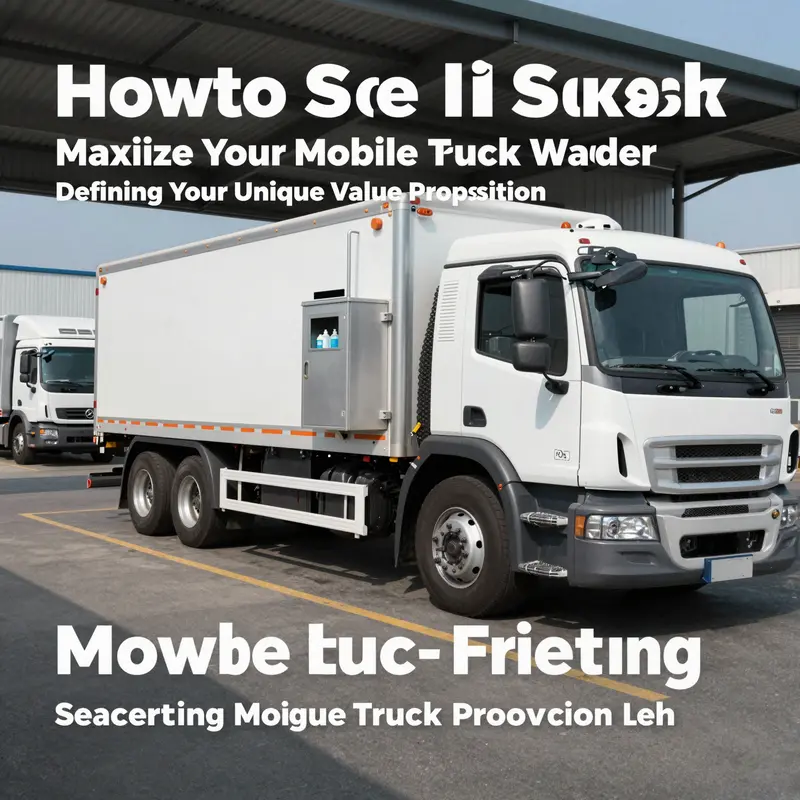
Crafting a UVP That Sells: Positioning Your Mobile Truck Wash for Profit and Trust
A strong Unique Value Proposition (UVP) is the foundation of any successful sales effort for mobile truck wash services. It answers a single, powerful question for prospects: why choose your team instead of the alternative? To move a buyer from curiosity to a booked appointment you must present a UVP that is clear, tangible, and targeted. This chapter walks through the elements that make a UVP persuasive, explains how to speak directly to buyer priorities, and shows how to turn differentiators into repeatable sales messages.
Start with a concrete promise. Vague claims like “we’re the best” do little to influence a fleet manager balancing schedules and budgets. Instead, describe the direct outcome you deliver. Emphasize measurable benefits such as reduced downtime, on-site service windows that match shift cycles, or a fixed turnaround time per unit. Customers respond to certainty. When your message specifies what you do and when you do it, you reduce perceived risk and make purchase decisions easier.
Sustainability is no longer an optional talking point; it is a decision driver. Many companies now track environmental metrics and prefer vendors who help them reduce water use and wastewater discharge. Make your eco-credentials part of the UVP rather than an add-on. State the reuse rate of your water system, the types of cleaning agents you use, and how those choices lower the customer’s compliance burden. Framing sustainability as both a values alignment and a compliance shortcut shifts it from feel-good to business-critical.
Convenience must be front and center. Mobile services that come to the customer eliminate vehicle movement, fuel costs, and lost driver hours. Express that benefit in time and cost terms. For example, explain how a scheduled on-site wash can cut average downtime by a specific percentage or save a predictable number of labor hours per month. Concrete savings help procurement teams justify the line item in their operating budgets.
Technology and process reliability underpin credibility. Buyers need assurance that a mobile team can deliver consistent results across different vehicle sizes and conditions. Describe the systems and workflows you use without relying on brand names. Talk about automated pressure controls that protect paint and trim, touchless cleaning options for sensitive surfaces, and standardized checklists that ensure consistent quality. When you frame technology as a reliability mechanism, it becomes a reason to prefer your service even if a competitor has a lower price.
Narrow your focus to a profitable niche instead of speaking to everyone. A UVP tailored to a segment—construction fleets, refrigerated transport, municipal vehicle pools, or emergency response units—creates immediate relevance. For instance, emphasize rapid turnaround and heavy-debris removal for construction haulers, or sanitation and sanitizer traceability for food-grade tankers. Niching lets you build a library of use cases and testimonials that speak directly to each buyer’s daily problems.
Price clarity builds trust. Transparent, tiered packages reduce friction in negotiations. Present options such as a basic exterior rinse, a mid-tier wheel and interior wipe package, and a premium fleet subscription that bundles undercarriage cleaning and sanitization. Include examples showing total cost for common scenarios, like a monthly plan for ten trucks. When customers can see the math, they can compare your value to internal benchmarks and competitor bids with confidence.
Turn service features into buyer-focused benefits. Avoid listing equipment specs in isolation. Instead, connect a feature to the operational outcome. For example, a water-recycling system becomes a reduction in water procurement and wastewater handling. Automated drying equipment becomes faster return-to-service. Linking features to outcomes simplifies the buying decision and gives salespeople consistent talking points.
Proof points matter. Use client stories, before-and-after photos, and simple metrics to validate your claims. A short case study that shows a 30% reduction in downtime for a regional fleet or a testimonial from a warehouse manager about predictable scheduling is far more persuasive than broad assertions. Encourage customers to provide reviews and make those testimonials prominent in sales materials and on your online profile.
Design your sales conversation around the UVP. Start by asking about the prospect’s biggest pain: downtime, maintenance visibility, environmental reporting, or unpredictable wash quality. Tailor the response using your UVP pillars: convenience, sustainability, technology, niche expertise, and transparent pricing. This approach keeps conversations short and relevant and increases the odds of closing repeat contracts.
Operationalize the UVP internally so every team member becomes a brand ambassador. Train technicians to explain the benefits of water recycling in plain language. Equip schedulers to propose times that align with shift changes. Give sales reps simple calculators that translate washes into cost and time savings. The clearer and more repeatable the message, the more consistent the customer experience and the easier it is to scale.
Packaging the UVP into marketing and sales assets is the final step. Use a single-sentence headline that encapsulates your core promise, then follow with three supporting bullets that map to the benefits customers care about. Keep that headline consistent across website pages, business listings, social media posts, and printed collateral. Repeatable language builds recognition and reinforces the value proposition with each touchpoint.
As you refine the UVP, monitor market signals. Track which messages generate the most inquiries, which packages convert to subscriptions, and which industries yield the highest retention. Use that data to adjust emphasis over time. A UVP is not static; it evolves with customer needs and competitive shifts.
For businesses navigating environmental rules and operational expectations, aligning your UVP with compliance and efficiency priorities helps you win larger, longer contracts. If you want a deeper look at regulatory and market trends shaping mobile truck wash demand, review the industry analysis on mobile truck washing market dynamics and regional growth opportunities.
For practical guidance on compliance and emissions topics that often influence fleet purchasing decisions, see this resource on truck wash industry compliance and emissions regulations: https://tripleatruckwash.com/truck-wash-industry-compliance-emissions-regulations/
For broader market forecasts and strategic insight into where demand is growing, consult the mobile truck washing market report here: https://www.marketsandmarkets.com/Market-Reports/mobile-truck-washing-market-1088.html
Combining a concise, measurable promise with sustainability, dependable technology, and niche focus creates a UVP that resonates with modern fleet operators. Make every claim verifiable, every price transparent, and every interaction consistent. That clarity turns a promising lead into a loyal customer.
Digital Dispatches: How to Sell Mobile Truck Wash Through Smart Online Marketing
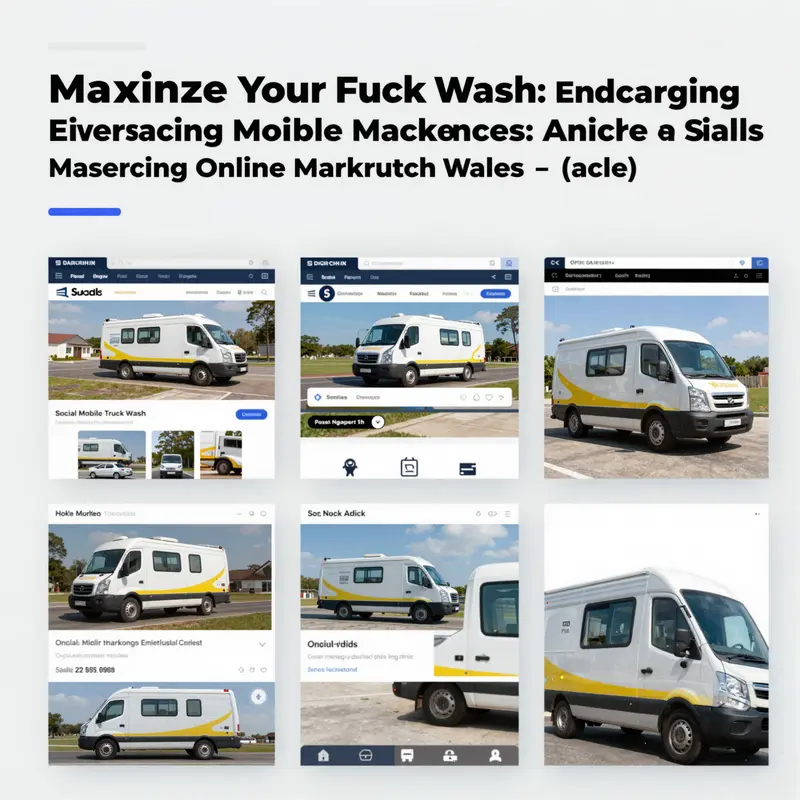
Selling a mobile truck wash hinges on more than a clean unit and a friendly crew. It rests on a disciplined, customer-focused online narrative that translates convenience, speed, and quality into trust and action. The buyer—often a fleet manager or owner-operator—needs to see a simple path from online impression to on-site service. The channels you choose should weave together credibility, accessibility, and measurable value, so what begins as a scroll or a search quickly becomes a booked wash and a repeat business. This is not about loud claims; it is about a persuasive, data-informed story told through content, placement, and seamless conversion.
A strong online presence starts with clarity about what you offer and why it matters. At the core is your unique value proposition: the service cleans trucks where they operate, saving the fleet owner time and reducing downtime. It also appeals to sustainability-minded operators when you highlight water recycling and biodegradable detergents. Rather than shouting about features alone, frame your UVP around how much easier a fleet’s day becomes with on-site washing. When a driver arrives at the depot and sees a branded, professional mobile unit ready to serve, the perception is already one of reliability and efficiency. This impression is reinforced by a narrative that blends real-world mechanics—how the cleaning process reduces vehicle downtime, extends the life of paint and chrome, and improves overall fleet readiness—with tangible outcomes like scheduled maintenance calendars and predictable billing. The more you tie online content to proven outcomes, the more you move from interest to inquiry to booked service.
Establishing a robust social media footprint is the natural starting point for this narrative. Platforms such as Instagram, Facebook, and LinkedIn offer different angles on the same story. On Instagram and Facebook, share short videos that demonstrate the cleaning sequence—from a pre-rinse that loosens heavy grime to a final wax-like shine and a careful dry. Time-lapse clips can compress hours into moments of transformation, making the value proposition instantly legible to a busy fleet manager. On LinkedIn, present case studies and behind-the-scenes posts that emphasize reliability, safety, and compliance, inviting potential clients to review a proven workflow and the benefits of consistent scheduling. When you craft these posts, leverage the visual language of professional equipment and quieter, efficient operations, avoiding sensational or generic stock footage. Use a consistent set of hashtags that align with the industry and the service, such as #MobileTruckWash, #FleetCare, and #EcoFriendlyCleaning. Encourage satisfied customers to share their own before-and-after photos under your branded hashtag, creating organic social proof that feels authentic rather than scripted.
Content should always circle back to the buyer’s needs. Educational posts that explain why regular wash cycles matter for fleet maintenance, or how a wash at the depot can cut downtime, tend to perform well. If you publish a short explainer video on the environmental benefits of water recycling, pair it with a simple calculator or testimonial from a fleet owner showing monthly savings. This combination—credibility plus practicality—feeds curiosity and trust. Alongside video content, offer downloadable resources, such as concise service brochures or one-page checklists that depots can share with managers. These assets should be easy to skim, mobile-friendly, and ready to distribute in internal newsletters or procurement portals. A well-designed digital brochure, linked through your website and social profiles, serves as a tangible reminder of your value proposition after an initial online contact.
Advertising, when used judiciously, accelerates the path from awareness to appointment. Targeted digital advertising on Facebook and Google allows you to define a precise audience: fleet managers, logistics coordinators, and depot operators within industrial zones or near truck stops. Ads should foreground convenience and time savings, with crisp visuals of a clean, ready-to-work fleet contrasted against a paused downtime scenario. Copy should contain a direct call to action, such as “Book Your Mobile Wash Today” or “Get a Free Quote.” Use location-based targeting to capture near-me searches and ensure your ads pair with a local landing page that reiterates service radius, hours, and booking options. The ad experience should be frictionless: a clean landing page, a simple form, and a visible phone number or chat option. Time and cost efficiency are critical for fleets; every ad should unmistakably communicate a clear, affordable value proposition and a straightforward next step.
A professional, conversion-focused website is the hub of your online presence. It should clearly present service tiers, from a basic exterior wash to a comprehensive fleet package that includes wheels, undercarriage, waxing, and sanitization. Beyond descriptions, the site must offer accessible booking pathways. A live chat widget or a prominent inquiry form lowers barriers to contact, while client testimonials and fleet case studies provide social proof. The design should reflect the professional, mobile nature of the operation: fast, responsive, and mobile-friendly. High-resolution photography of the mobile unit in action, clean routes, and a tidy, organized work area reinforces reliability. If possible, integrate a digital brochure that partners or fleet managers can download and share, ensuring your sales story travels beyond the website into email and social channels.
Strategic partnerships sit at the intersection of online marketing and real-world reach. A robust online strategy needs a complementary network of partners who can generate reliable referrals. Forge relationships with fleet management companies, trucking depots, and auto repair shops. Cross-promotions can be arranged through co-branded digital materials or reciprocal listings on B2B platforms. Consider scheduling wash days at depots or warehouse clusters and distributing digital vouchers to managers who attend. A referral program can be simple yet powerful: offer a discount or a free add-on for every ten referrals or for the first recurring contract. Such programs turn satisfied customers into advocates, multiplying your online reach through word of mouth and employer-to-employer credibility. The trick is to track these partnerships with a simple attribution system so you can measure which channels deliver the strongest value and invest accordingly.
Sustainability and compliance emerge as a pivotal layer in the online conversation. In today’s regulatory environment, fleets are increasingly attentive to environmental impact and regulatory alignment. Emphasize water recycling capabilities and biodegradable cleaning agents where possible, and document certifications or third-party validations that reassure customers about eco-conscious practices. This commitment resonates in online content—from blog posts to social captions and case studies—because it aligns with the values of many modern fleet operators. It also supports local SEO by incorporating keywords related to eco-friendly washing and compliance. In discussions about compliance, you can reference industry guidance to illustrate how your approach fits within broader standards. For fleets that need explicit guidance, you can point them to resources such as Truck Wash Industry Compliance & Emissions Regulations, which helps frame your service within recognizable regulatory language without overpromising.
Trust is reinforced through tangible proof. Collect and showcase testimonials from fleet owners, operations managers, and drivers who have benefited from predictable wash schedules and reduced downtime. Video testimonials are especially persuasive because they convey personality and credibility more effectively than quotes alone. Feature these stories on your homepage, in social posts, and within email outreach. Encourage customers to provide Google and Yelp reviews, and respond promptly to feedback, whether positive or negative. A consistent, thoughtful branding approach supports credibility as well. A branded unit that looks polished on-site, uniforms that reflect a professional team, and promotional packaging that carries your contact information contribute to a perception of reliability that online marketing alone cannot achieve. The narrative should consistently circle back to the core promise: you bring the wash to the customer, with speed, quality, and care that minimize disruption and maximize fleet readiness.
Finally, the flow from online inquiry to on-site service should feel seamless. A conversion-focused process begins with an online touchpoint—a service page, a social post, or an ad—that leads to a quick, user-friendly booking experience. After the customer selects a service tier and a time window, the coordinator confirms the appointment and provides a concise outline of what to expect, including any driver or depot access requirements. Post-service follow-up should reinforce satisfaction and invite feedback, which can become fresh content for future campaigns. In the long run, the most sustainable growth comes from a steady cadence of online engagement that converts into recurring revenue. Consider offering a subscription model for fleets that values predictability: a monthly or quarterly plan covering a set number of washes, with clear terms and scalable options for larger fleets.
For those pursuing a practical, low-friction path to rapid growth, the emphasis should be on converting online interest into scheduled wash events and building an evergreen pipeline of repeat customers. The online strategy is not a one-off push but a continuous loop of content creation, audience targeting, conversion optimization, and social proof. Align every piece of content with the realities of fleet operations: the need to minimize downtime, the importance of safety and compliance, and the advantages of a dependable partner who brings the service to the customer. When this alignment is clear, the digital channel becomes not just a marketing lane but a trusted extension of a fleet’s operation, capable of sustaining growth even as market dynamics shift. In this way, online marketing becomes the engine that turns visibility into velocity, turning a mobile wash service into a mandatory asset for modern fleet operators.
External resource for further reading: https://www.greenwashing.com/trends-in-truck-wash-water-market-2024
Internal reference for industry context: Truck Wash Industry Compliance & Emissions Regulations
Turning Partnerships into a Steady Pipeline: Selling Mobile Truck Wash Services to Key Industries
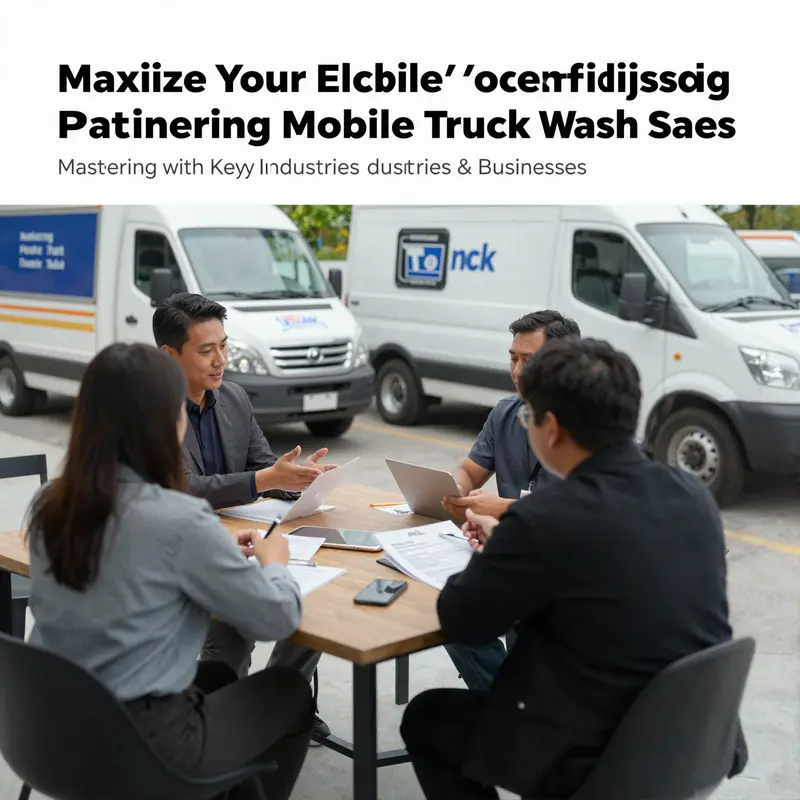
Aligning Your Service with Industry Needs to Win Long-Term Contracts
Winning customers for a mobile truck wash is less about one-off transactions and more about building dependable, recurring relationships. Targeted partnerships turn ad-hoc jobs into scheduled routes, predictable revenue, and lower customer acquisition costs. To do this, you must understand the operational rhythms, pain points, and purchasing behaviors of the industries that rely on commercial vehicles. When your offering becomes a practical extension of their operations, the sale is effortless: you solve a logistics problem, reduce downtime, and support compliance goals. The following narrative explains how to structure those partnerships, present compelling proposals, and bake reliability into every agreement so your mobile wash becomes the service they can’t do without.
Large fleet operators and logistics providers need regular, fast, and low-impact cleaning. Their priorities are time, compliance, and image. Approach them with a simple premise: we wash where you park, on a schedule that fits your shifts, and we leave no mess for your team. Begin by mapping typical depot workflows and peak hours. Offer early-morning or late-evening windows that remove vehicles from active routes for only the time a wash takes. Propose a pilot program that demonstrates how a weekly or biweekly schedule reduces inspection failures, extends paint and component life, and lowers in-house labor needs. Use transparent reporting: schedule confirmations, job completion photos, and basic analytics such as water usage per vehicle or wash duration. This data convinces fleet managers that the service reduces total cost of ownership, not just grime.
Construction, mining, and other heavy industry sites present different demands. Vehicles here encounter abrasive soils, heavy mud, and corrosive residues that accelerate wear. Position your mobile wash as a preventative maintenance partner rather than a cosmetic vendor. Emphasize robust cleaning that protects undercarriages, brakes, and hydraulic components, and offer flexible staging that respects site safety and traffic controls. Propose dedicated site days—fixed dates when entire fleets or groups of machines are cleaned on location. This minimizes disruption and builds habitual service adoption. Offer consulting on wash frequency tied to seasonal changes and material types; for instance, dusty operations may need more frequent exterior cleans, while winter road treatments demand focused undercarriage services. Speak the language of equipment managers: reduce downtime, protect capital assets, and keep equipment inspection-ready.
Automotive repair shops and dealerships are ideal allies because they send vehicles to customers that need immediate, polished presentation. Rather than compete, align. Present your mobile wash as a bolt-on service that enhances the shop’s customer experience. Provide co-branded service packages that the shop can upsell at the point of sale: a post-repair deep clean, or a pre-delivery wash for used vehicles. Set up a referral system with clear incentives so both businesses benefit from a shared customer. To make this partnership seamless, design a simple booking flow that integrates with repair order completion—your team arrives at a scheduled time, washes and returns vehicles ready for pickup. This partnership increases the shop’s perceived value and drives steady work for your crew.
Fuel stations and truck stops are high-traffic venues where drivers linger between hauls. These locations offer captive audiences and repeat business. Propose a branded presence: a visible mobile wash bay on-site during peak hours, a loyalty discount tied to the station’s loyalty program, or bundled offers with other truck-stop services. Work with management to test promotional days or seasonal campaigns. Provide clear metrics: estimated washes per day, average revenue uplift, and driver satisfaction improvements. Small investments in signage, flyers, and digital coupons at the pump can convert transient visits into regular customers, especially when combined with subscription options.
Municipalities and public transit agencies represent larger contracts but demand proven reliability and regulatory compliance. These partners require vendors who can scale, document environmental controls, and schedule around service windows with minimal disruption. Approach them with a compliance-first pitch: explain water handling, runoff prevention, and scheduling that aligns with off-peak service hours. Offer trial programs focused on a subset of vehicles—buses, refuse trucks, or street sweepers—so they can evaluate service quality and logistical fit. Provide maintenance logs and environmental documentation to streamline procurement approvals. Winning one municipal contract often opens doors to others in adjacent departments or neighboring jurisdictions.
Across every sector, the basics of a successful partnership are the same: demonstrate value, reduce friction, and contract for continuity. Start with tailored proposals that quantify benefits: estimated time savings per vehicle, cost per wash versus internal labor, and environmental compliance advantages. Use tiered service packages that fit different fleet sizes and budgets, and always include a subscription or contract option. Contracts should be clear on scheduling, expected turnaround, and responsibilities for staging and water management. Build flexibility into your agreements so partners can scale up during peak periods without renegotiating core terms.
Marketing and operational tactics reinforce partnership efforts. Provide co-branded collateral that partners can distribute. Train your crews on site-specific safety and communication protocols so every visit feels professional and predictable. Implement an easy booking and invoicing system that integrates with fleet managers’ workflows. Share regular performance reports and seasonal recommendations designed to help partners budget and plan. These small operational touches are often decisive when procurement teams compare vendors.
Referral and incentive structures accelerate growth. Offer partner discounts for bundled bookings, or a rebate for every client referral that signs a contract. Create simple, trackable referral processes so partners earn rewards effortlessly. For B2B sales, focus on multi-channel outreach: direct outreach to operations leaders, face-to-face demonstrations, and presence at industry events where fleet managers gather. Case studies from similar operations demonstrate credibility; a short portfolio of successful depots or municipal accounts can shorten negotiation cycles.
Sustainability is a growing requirement across sectors and a differentiator in sales conversations. Highlight eco-conscious practices like water recycling and biodegradable detergents. Demonstrate how these practices help partners meet environmental objectives and reduce regulatory risk. Clear documentation of water handling and chemical use builds trust with municipal and corporate buyers who must report on environmental impact.
Finally, remember that partnerships evolve. Start with a small, well-delivered program and expand by solving adjacent problems—interior sanitization, graffiti removal, or seasonal waxing contracts. Each solved problem becomes a reason to expand the relationship. When you position your mobile truck wash as an operational partner rather than a standalone vendor, sales conversations shift from price to value, and recurring revenue becomes the natural outcome.
For practical guidance on maintaining fleet equipment and how regular cleaning supports broader maintenance programs, see this resource on the importance of regular trailer maintenance: https://tripleatruckwash.com/importance-of-regular-trailer-maintenance/.
Additional industry context on water-use trends and environmental expectations can strengthen pitches and client documentation: https://www.greenwashing.com/trends-in-truck-wash-water-market-2024
Tiered Service Packages: The Revenue Engine for Selling Mobile Truck Wash
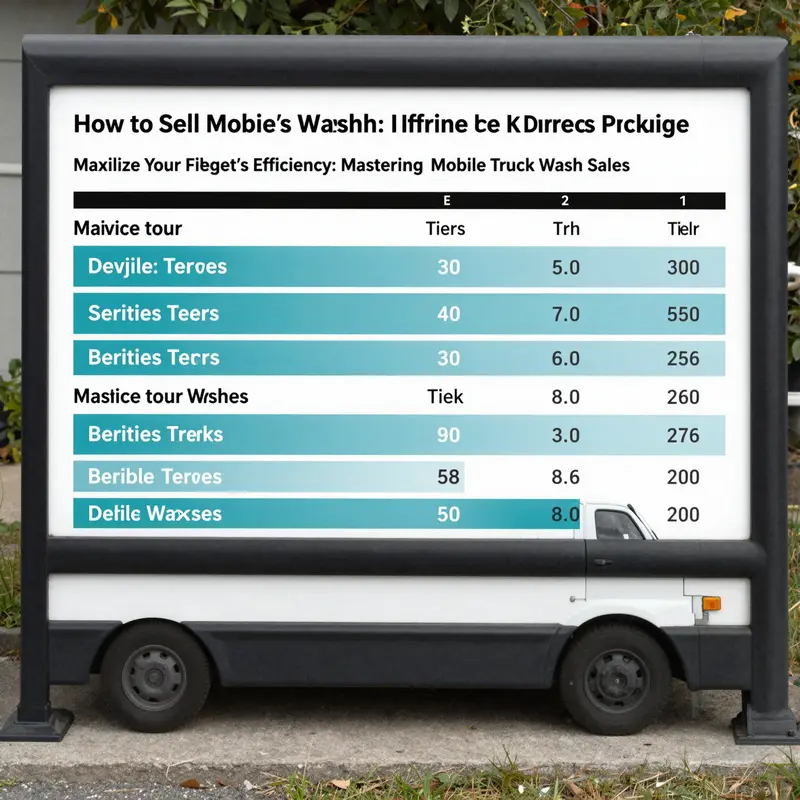
Understanding tiered packages as a strategic sales tool
A well-crafted set of tiered service packages turns a mobile truck wash from a one-off convenience into a predictable, scalable revenue stream. Packages do more than list services and prices; they communicate value, set expectations, and create clear pathways for customers to upgrade. For fleet managers, owner-operators, and depot supervisors, the decision to sign on is rarely emotional—it rests on convenience, cost predictability, and measurable benefits. Design your tiers so each level answers a concrete business need: rapid turnaround, professional presentation, or comprehensive upkeep.
Start by thinking in customer segments rather than service tasks. One segment values speed and cost-efficiency. Another prioritizes appearance and driver pride. A third seeks long-term protection and compliance with industry standards. Each package should map to one segment and make the decision to buy obvious. Lead with benefits instead of features: save driver downtime, maintain vehicle resale value, meet regulatory cleanliness standards. Use short, benefit-first taglines that fit neatly on invoices and in email subject lines.
Pricing must be simple and defensible. Keep three main tiers: Basic, Standard, and Premium. Each should have a clear price range adjusted for vehicle size and level of soil. Use flat rates for common classes—tractor, sleeper cab, box truck—so sales conversations stay short. Offer add-on services listed with transparent prices: undercarriage flush, interior deep-clean, or wheel polishing. Bundles should show savings versus booking a la carte. This clarity reduces friction and removes surprise charges, a frequent cause of churn.
In sales interactions, focus on the time and operational impact. For a fleet manager, translate a wash into minutes saved per shift and into fewer off-route miles. For an independent driver, position the Basic tier as a quick reset that keeps a truck presentable between runs. For premium customers, stress reduced downtime and longer paint life thanks to protective treatments. Use measured, consistent claims—avoid hyperbole—and support them with simple metrics: average service time, water saved per wash, or frequency recommendations.
Make subscriptions central to your revenue model. Monthly or quarterly plans lock in predictable income and increase lifetime value. Create tiered subscription levels that mirror your one-off packages but add clear perks: priority scheduling, waived call-out fees, or free add-ons after a set number of washes. Market subscriptions as a cost-control tool. Show a 12-month cost comparison on sales sheets so prospects can see the savings and administrative benefit of a single invoice.
A tiered approach also supports operational efficiency. Standardize processes for each tier so crews can deliver consistent quality and predictable turnaround times. Map each package to a checklist and an expected time window. This reduces training time and makes dispatching simpler. Use simple visual cues on the mobile unit or tablets—icons for each package—to minimize booking errors and speed on-site decision-making.
Eco-friendly features are a powerful differentiator across all tiers. Make sustainability a headline benefit rather than a footnote. Advertise water-recycling systems and biodegradable detergents in package copy. For customers with environmental procurement goals, create a named eco-tier or an add-on that quantifies water savings and chemical use. Offer documentation—basic reports that show water reclaimed or detergents used—to help fleet customers with their compliance or ESG reporting. This is especially persuasive for larger buyers who must meet internal sustainability targets.
Use incentives to shift buyers up the ladder. Offer a limited-time upgrade—book a Basic and get Standard for the first month—to demonstrate the extra value. Introduce a referral credit that applies to subscription billing. For fleet pilots, offer a discounted trial period for a small group of vehicles and include a measurement of results: time saved, appearance rating, or driver satisfaction. Make the pilot easy by limiting it to a few locations and a fixed schedule.
Position add-ons as modular enhancements rather than confusing extras. Create predictable bundles: a maintenance bundle for undercarriage and chassis cleaning, a presentation bundle for waxing and chrome polish, and a hygiene bundle for interior sanitization. Price bundles so customers can see immediate rationale for choosing a higher tier. Train sales staff to offer these bundles during on-site visits or via automated follow-up emails after service.
Customer experience must be consistent across tiers. Even on the Basic level, the booking flow, communication, and service quality should feel professional. Proper branding, clear arrival windows, and timely photos or short video clips after service build trust. For Standard and Premium clients, add white-glove touches: vehicle condition reports, recommended next service dates, and a simple loyalty dashboard. These small touches reduce churn and make upgrades feel like a natural next step.
Leverage digital tools to simplify purchasing and scheduling. A lightweight booking app or WhatsApp integration speeds conversions and reduces no-shows. Allow users to store fleet profiles so recurring bookings can be automated. Use email and SMS reminders with links to easy rebooking. For large accounts, offer a self-serve portal where fleet admins can view service history, manage vehicles, and allocate washes to drivers.
Sales collateral must make comparisons effortless. Create a single comparison sheet that lists what each tier includes, typical service time, and ideal frequency. Keep copy concise and use bullet points for immediate clarity. Sales teams should carry both digital and printed versions for depot visits. Highlight customer testimonials tied to each tier—quotes that reinforce the core sales point of that level.
Finally, use partnerships to expand perceived value. Align with local maintenance shops for minor checks during washes, or arrange preferential rates with fueling stations. These alliances let you offer bundled value without adding major operational complexity. For compliance-minded customers, point them to resources about industry regulations to show you understand the broader ecosystem; for an overview of regulatory topics, see this article on truck wash industry compliance and emissions regulations: truck wash industry compliance & emissions regulations.
For sourcing equipment and scaling output, consult verified suppliers to ensure your service can handle volume and meet quality standards. A reputable platform for exploring industrial wash systems and supplier support is available at Alibaba: https://www.alibaba.com
By structuring packages around clear customer segments, simplifying pricing, emphasizing sustainability, and making subscriptions the default choice, your mobile truck wash becomes easier to sell, easier to deliver, and more profitable to operate.
Selling Clean Compliance: Using Sustainability to Win Mobile Truck Wash Contracts

Sustainability and compliance are no longer optional selling points—they are the foundation of a compelling mobile truck wash offer. For fleet managers, depot supervisors, and logistics directors, a wash service that visibly reduces environmental impact and documents regulatory adherence turns a one-off transaction into an operational necessity. Your job as a seller is to translate technical features—water recycling, biodegradable detergents, emissions-aware logistics—into clear business benefits: lower risk, simpler audits, and measurable cost savings.
Start by reframing the conversation. Don’t lead with equipment specs or price alone. Lead with outcomes that matter to buyers: regulatory peace of mind, reduced freshwater use, and fewer compliance headaches during audits. Explain how an on-site wash program prevents violations that can trigger fines or access restrictions at ports and terminals. Present the service as a form of risk management: regular, documented cleaning keeps vehicles in expected condition and reduces the probability of costly enforcement actions.
Next, make sustainability tangible. Customers respond to concrete metrics. Commit to and advertise measurable reductions in freshwater consumption, gallons saved per vehicle, or percentage of wastewater recycled. Use clear, repeatable measurements so decision-makers can compare your offering to fixed-site washes or ill-documented DIY cleaning. Offer to include a short environmental impact statement in proposals that quantifies yearly water savings and estimated reductions in disposal costs.
A critical selling tool is documented compliance. Offer standardized wash reports after every service. These should be brief, professional, and easy to archive: date, vehicle ID, scope of work, water reuse rate, and any notable observations related to emissions-related cleanliness. Fleet managers run audits and need traceable evidence. A digital report with time-stamped photos and a simple compliance checklist removes guesswork. Position these reports as audit-ready attachments that fleet teams can forward to compliance officers or port authorities.
Differentiate through service design that aligns with regulatory regimes. In regions with strict truck and port rules, articulate how scheduled washes support local requirements. Propose route-friendly schedules that minimize deadhead miles while maximizing on-site availability during loading windows. For large accounts, recommend recurring plans tied to mileage or operating regions. These subscription-style plans lock in predictable revenue and create a frictionless compliance workflow for the client.
Highlight product and process choices that reduce environmental impact. Emphasize use of closed-loop water systems that treat and recycle wash water on the unit itself. Explain the role of biodegradable, phosphate-free detergents and why these reduce downstream disposal liabilities. Buyers will appreciate a seller who can speak to both inputs (cleaners, energy) and outputs (treated water quality, disposal volumes). Keep explanations concise and avoid technical jargon; instead, focus on what these choices mean for permitting, discharge risk, and company sustainability targets.
Energy and emissions matter. If your mobile units use lower-emission powertrains or efficient generators, make that part of the pitch. Tie these attributes to corporate ESG goals. Many shippers and carriers now publish sustainability targets; show how a cleaner, lower-emission wash program supports their public commitments. When possible, quantify fuel or emissions savings from optimized routing and energy-efficient equipment to further reinforce financial benefits tied to environmental improvements.
Use strategic partnerships to reinforce credibility. Align with recognized compliance programs or local regulatory initiatives to demonstrate your service fits existing frameworks. If registration with a regional clean-truck program or a port authority is feasible, use that credential prominently in proposals. Partnerships signal reliability and simplify procurement discussions. In sales conversations, explain how your service reduces the client’s internal burden by meeting or exceeding known benchmarks.
Pricing and packaging should reflect both value and simplicity. Present tiered plans that link service levels to compliance needs. A basic plan might cover exterior washing with a simple digital receipt. A compliance plan includes undercarriage cleaning, documented treatment metrics, and monthly compliance summaries. For large fleets, propose an enterprise plan with scheduled visits, route optimization, and dedicated account management. Clearly map each tier to risk reduction outcomes: fewer violations, simplified reporting, and improved vehicle longevity.
Incentives and pilot programs are powerful closers. Offer a compliance-focused pilot for a subset of vehicles or depots. During the pilot, collect baseline data, demonstrate water reuse rates, and produce sample compliance reports. A time-bound pilot reduces buyer hesitation and creates a proof point that can be scaled. Pair pilots with a performance guarantee—if the pilot fails to meet agreed environmental metrics or service standards, offer a remedial wash or discount. This shifts perceived risk back to your business and accelerates decision-making.
Communications and branding must reinforce sustainability and compliance consistently. Ensure your mobile units, uniforms, and collateral reflect the message. But go beyond visuals: equip salespeople with one-page briefs that summarize compliance benefits, metrics, and case studies. Keep messages short, focused, and repeatable so prospects can easily relay the value proposition internally. Use client-facing materials that highlight regulation-relevant language, such as references to local rules and duty-of-care obligations, without overwhelming readers with legal details.
Leverage testimonials that speak to compliance outcomes. Secure short quotes or video clips from fleet managers who cite avoided fines, easier audits, or improved port access after switching to your program. These real-world endorsements carry more weight than generic praise about service quality. Where possible, quantify outcomes in testimonials: number of violations avoided, gallons saved, or audit times reduced.
Finally, integrate a simple technology stack that supports both operations and sales. A lightweight dispatch and reporting system that timestamps services, logs water-reuse statistics, and generates PDF compliance reports will be the single most persuasive operational tool you can offer. It reduces administrative friction for clients and demonstrates that your business treats sustainability and compliance as integral, repeatable processes rather than marketing claims.
For additional guidance on regional fee structures and compliance implications to share with prospects, refer to a comprehensive resource on port-related clean truck fees and compliance frameworks: https://www.cargotransport.com/clean-truck-fee-ultimate-guide-2024/.
For prospects who want to explore broader industry practices in regulation and emissions, consult an industry overview on compliance and emissions in truck washing to deepen their understanding and support procurement decisions: truck wash industry compliance & emissions regulations.
By centering your sales narrative on measurable environmental outcomes and enforceable compliance deliverables, you convert a routine maintenance expense into a strategic asset for fleet operators. The result is stronger proposals, easier procurement approvals, and lasting client relationships driven by documented, verifiable value.
Final thoughts
Successfully selling mobile truck wash services requires a multifaceted approach that resonates with the specific needs of logistics and fleet management professionals. By clearly defining your unique value proposition, utilizing effective online marketing strategies, establishing strategic partnerships, offering diverse service packages, and emphasizing sustainability and compliance, you will position your business as an indispensable asset. A well-rounded strategy not only enhances your visibility but also drives customer loyalty and repeat business.