
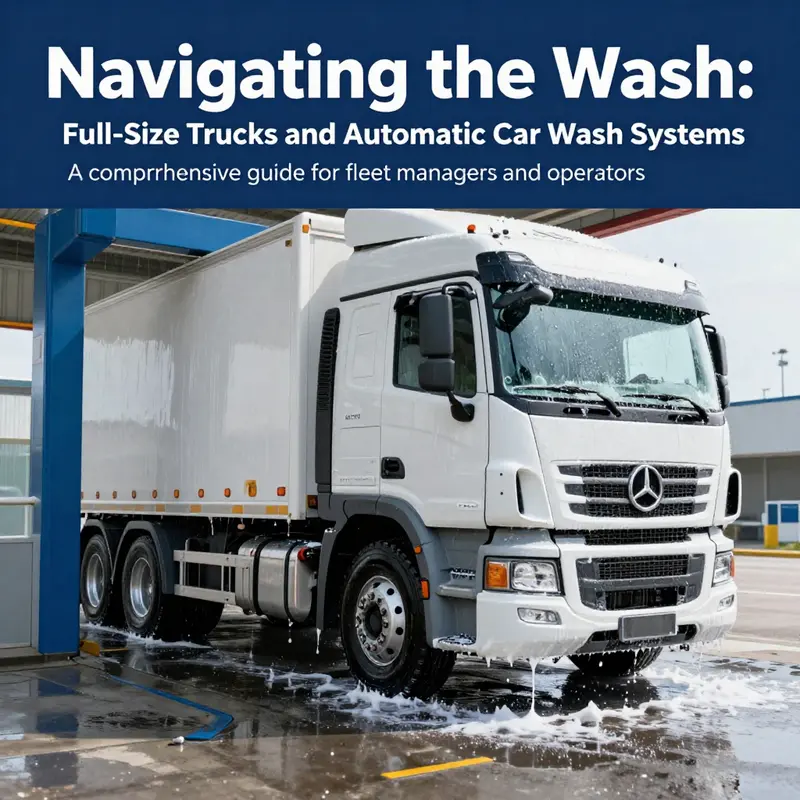
Understanding the compatibility of full-size trucks with automatic car wash systems is crucial for logistics and transportation companies looking to maintain their vehicle fleets efficiently. With a significant number of trucks on the road, whether in construction, mining, or logistics, ensuring the cleanliness and maintenance of these vehicles is imperative for operational efficiency and vehicle longevity. This article explores the vital considerations of safely navigating full-sized trucks through automatic car washes, with particular focus on design specifications, potential risks, and economic impacts that come with choosing the right washing facilities. By delving into these pertinent chapters, fleet managers and operators will be equipped with valuable insights to optimize their vehicle washing processes.
Crossing Through with Confidence: The Reality of Full-Size Trucks in Automatic Car Wash Systems
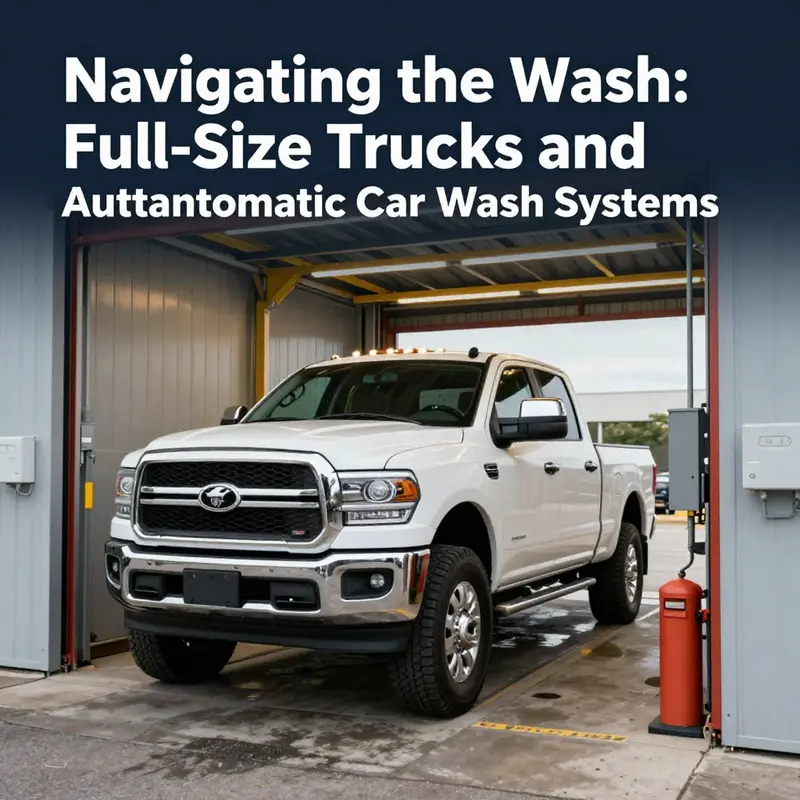
The question of whether a full-size truck can safely and effectively pass through an automatic car wash is more nuanced than a simple yes or no. It hinges on the vehicle’s actual dimensions, the design parameters of the wash facility, and the type of washing system in use. In many modern car wash facilities, the operating principle is straightforward: if the truck fits within the facility’s defined maximum dimensions, and if the wash sequence is calibrated to handle larger profiles, the ride-through can be smooth and effective. From a practical standpoint, full-size trucks—especially those used for work, haulage, or heavy-duty tasks—often share a size envelope with larger SUVs in terms of height and width, and their length can push near or beyond the thresholds of standard car wash bays. The central reality is that truck compatibility is not a universal guarantee; it is, rather, a condition that must be verified against the specific dimensions and capabilities of each wash. Facilities designed to accommodate long, tall, and wide vehicles often extend their operational envelope to include trucks and even buses. These specialized wash systems are engineered with generous heights, wide entrances, and longer tunnel paths, enabling more efficient throughput for fleets that require regular, high-volume cleaning. The practical implication is that if a truck owner or fleet operator encounters a facility that publicizes compatibility with larger vehicles, there is a reasonable expectation of safe passage—provided the truck’s measurements stay within the facility’s stated limits. It is not enough to rely on a facility’s reputation or past performance in the area of vehicle sizing; owners must actively verify the exact size requirements. There are facilities whose design and maintenance histories permit only certain heavy-duty configurations, and older sites, in particular, may lack the clearance or structural adjustments needed to prevent interference with doors, arches, or overhead equipment. When in doubt, a quick measurement—length, height, and width—paired with a call to the wash’s support line or a pre-visit inspection can avoid costly misjudgments. The difference between a successful wash and a troublesome encounter often rests on this preliminary step. The broader industry narrative suggests that several categories of automatic wash systems are better suited to larger vehicles. In tunnel and conveyorized formats, the walls and the floor plan are typically optimized to guide a vehicle through in a controlled, continuous process. The benefit here is the potential for higher throughput and more thorough cleaning, as staging areas move the vehicle from the initial rinse to the soap application, through bristle or high-pressure stages, and into a final rinse and drying sequence with minimal manual intervention. For full-size trucks, this translates into a well-troduced sequence of spray patterns, adjustable pressure zones, and, in some cases, the ability to tailor cycles to the truck’s profile. It matters, however, that the system be designed to accommodate semi-structured shapes and the extra overhangs that trucks frequently exhibit. The spacing between wash components, the reach of spray arms, and the calibration of nozzles must harmonize with the truck’s geometry. If the brushes or jets are not calibrated for a larger vehicle, certain areas—such as the undercarriage, wheel wells, and the rear corners—may not receive the same cleaning intensity, leading to compromise in overall cleanliness. Even in touchless configurations, trucks can present challenges. While touchless systems avoid physical contact, they also depend on precisely programmed sensors and nozzles that can reach into the crevices and contours of a larger body. A truck with mirrors, exhaust stacks, or other protrusions can create gaps in coverage if the wash’s detection logic assumes a smaller, more uniform silhouette. The risk here is twofold: incomplete cleaning and, in some instances, accidental contact with the wash’s structural components if the truck’s profile interacts with the facility’s geometry in unexpected ways. Given these realities, the best practice for drivers and fleets is a twofold approach: first, confirm the specific car wash’s acceptance of full-size trucks, including any height, width, and length limits; second, when possible, choose facilities that advertise dedicated or universal systems designed for heavy-duty vehicles. The distinction between a general-purpose wash and a facility optimized for trucks can be subtle in marketing, yet it is meaningful in everyday operation. The difference is not solely about the vehicle’s silhouette; it also encompasses the wash’s internal capabilities. Specialized truck wash systems are not just taller or broader; they are engineered to accommodate the wear and tear that large vehicles accumulate, from mud and tar to road grime and salt. These systems commonly feature adjustable spray architecture, higher-capacity nozzles, and reinforced conveyance mechanisms that maintain steady positioning throughout the wash cycle. The idea is to create a controlled corridor in which a truck can traverse without need for hand-guided corrections or manual intervention. Advances in technology have further strengthened the case for full-size trucks in automatic washes. Modern facilities increasingly include real-time monitoring and automated diagnostics to ensure that the wash sequence remains aligned with the vehicle’s dimensions and condition. Sensors can detect misalignment early, triggering a pause or adjustment in the cycle to prevent damage or unsatisfactory cleaning outcomes. Water recycling and eco-friendly practices also come into play, especially for fleets that travel long distances or operate in regions with strict wastewater regulations. Full-auto truck wash systems are often configured to optimize water use, recycle rinse water, and manage chemical concentrations in a way that minimizes environmental impact while preserving cleaning effectiveness. These features are not merely about compliance; they also reduce operating costs for the wash facility and, by extension, for the customers who depend on consistent, thorough cleaning of large vehicles. Operational considerations extend beyond the wash sequence itself. Maintenance, downtime, and access are critical factors that determine whether a facility can sustain reliable service for trucks. Larger systems require more frequent inspection of conveyor rollers, spray arm supports, and high-pressure lines. Technicians need access to areas that standard washes may not require, and scheduling must account for potential downtime without disrupting throughput. The most forward-looking facilities plan for these realities by incorporating modular components, remote diagnostics, and clear pathways for maintenance personnel. From a fleet perspective, the implications are practical and financial. A truck that can be washed efficiently in a regular interval supports uptime and reduces the burden of interior and exterior upkeep on the vehicle’s appearance and corrosion resistance. Cleanliness matters not only for aesthetics but for safety and maintenance. Road grime can conceal mechanical issues, while salt and chemical residues can accelerate wear on undercarriage components. Regular, effective washing, particularly for commercial fleets that operate in harsh environments, can extend vehicle life and preserve resale value. For truck operators, this underscores the importance of choosing washes that explicitly invest in suitability for larger vehicles. The alignment between vehicle needs and wash capabilities should be documented and revisited as fleets evolve. It may be tempting to assume that a single wash facility will meet all vehicle types, but reality often requires a deliberate selection process. In practice, fleet managers may map out a network of preferred facilities, prioritizing those with proven compatibility for full-size trucks and with a track record of stable operations. This approach helps maintain consistent cleaning standards while reducing the risk of damage or unsatisfactory results. A well-run facility that caters to trucks should also reflect sound facility management for truck wash businesses. For operators exploring this area, it is useful to refer to resources that discuss the broader organizational considerations, from staffing and maintenance planning to wastewater handling and equipment lifecycle management. Facility Management for Truck Wash Businesses provides a lens on how a facility can balance throughput with care for large vehicles, and it highlights the kinds of structural and procedural supports that keep a truck-friendly wash performing reliably over time. As with any specialized operation, not every site will be able to accommodate every truck at all times. The responsible course of action is to verify, before pulling into a lane, that the facility has explicit acceptance for your truck’s dimensions and that the wash system is appropriate for a commercial or heavy-duty vehicle. When this verification is part of a routine, drivers can approach the wash with confidence, knowing that their vehicle will pass through a cycle designed to maximize cleanliness while minimizing risk. For fleet operators who want a broader industry perspective, there is a growing body of analysis that emphasizes the innovations shaping full-auto truck wash systems. These innovations range from refined nozzle geometry and dynamic spray scheduling to smarter water management and embedded diagnostics. They reflect an industry moving toward precision, efficiency, and sustainability, all of which matter when trucks repeatedly traverse automatic wash tunnels. The conversation about compatibility is not a single moment of decision but an ongoing assessment that ought to evolve with fleet needs, maintenance schedules, and environmental considerations. In conclusion, the compatibility of full-size trucks with automatic car wash systems depends on a careful alignment of three elements: the vehicle’s actual dimensions, the facility’s stated capacities, and the sophistication of the wash technology in use. When these elements align, the wash experience can be efficient, effective, and safe for the truck—and for the facility that serves it. For those who manage fleets or operate heavy-duty service vehicles, recognizing that there are specialized systems designed to handle larger profiles is essential. It encourages a thoughtful, ask-first approach to vehicle washing, one that prioritizes accuracy in measurements, a clear understanding of facility capabilities, and an openness to leveraging advanced wash technologies that optimize cleaning outcomes while supporting sustainable practice. For further industry context and evolving standards, readers may consult external analyses that explore the trajectory of truck wash systems and the role of continuous improvements in automated cleaning solutions. https://www.industryinsights.com/truck-wash-systems-compatibility
null
null
Sizing for Throughput: How Car-Wash Design Enables Full-Size Trucks to Move Through Automatic Systems
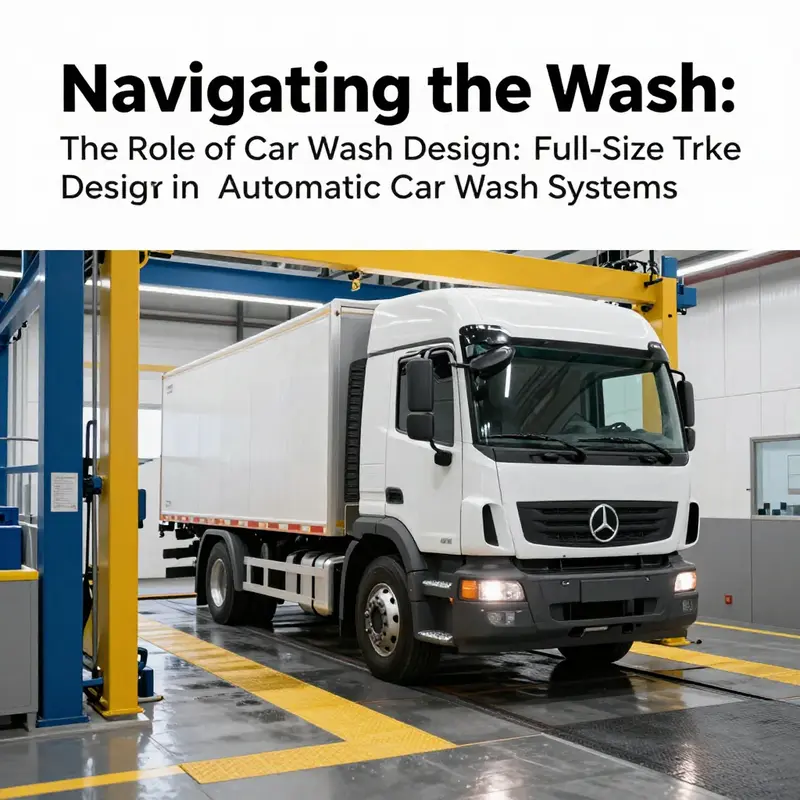
The question of whether full-size trucks can pass through automatic car washes is not merely about width or length in a single snapshot. It is about how the entire wash environment is curated to respect the realities of large vehicles while preserving cleanliness, safety, and speed. In practice, many automatic car washes are designed with larger vehicles in mind. The industry trend has shifted toward facilities that explicitly accommodate trucks and other commercial vehicles, recognizing that fleet operations, maintenance fleets, and long-haul services all rely on dependable, high-throughput washing solutions. Yet capability is not universal. A facility’s ability to handle a full-size truck hinges on precise dimensional thresholds, the geometry of the approach and exit, and the orchestration of equipment within the wash tunnel. When these elements align, the result is a smoother flow that minimizes bottlenecks and reduces the risk of damage to both vehicle and facility equipment. When they don’t align, the risks multiply: vehicles that are too tall may jam against archways, too wide can scrape sidewalls, and overly tight turns can bind in the ingress lane, triggering alarms or operator intervention that slows the line to a crawl. The path from question to throughput is thus a matter of design discipline as much as capability.
The most fundamental constraint is dimension. The overarching guidance observed across a spectrum of contemporary automatic washes is that trucks up to roughly 18 meters in length, 4.2 meters in height, and 2.7 meters in width can typically pass through without structural or mechanical conflicts, provided the wash is configured to accept heavy-duty traffic. These figures are not universal absolutes, but they offer a practical yardstick for evaluating whether a given machine layout can accommodate a large vehicle in active service. Vehicle owners who operate full-size trucks should, of course, verify the exact specifications of any facility they intend to use. Old or less-equipped sites may feature lower clearances, narrower bays, or aging conveyors that are less forgiving of tall or broad profiles. A careful pre-entry assessment — including measuring the vehicle and comparing it against the wash’s published limits — is a prudent first step to avoid embarrassing or costly missteps.
Beyond the raw numbers, the geometry of the wash playfully tests a truck’s maneuverability: turning radius, lane width, and the vertical clearance through archways and doorways all interact with the precise position of the vehicle as it progresses. A facility designed for large vehicles attends to those angles with a conscious, integrated approach. The approach lane should provide adequate sightlines and space for a driver to center the vehicle before positioning it within the wash corridor. Inside the tunnel, generous clearance around the vehicle is essential. The placement of brushes, spray arches, dryers, and the conveyor elements must be calibrated so that these components reach every surface without collision. With large vehicles, even small misalignments can translate into scuff marks or equipment interference, so designers often embed tolerances that accommodate slight deviations in positioning that would be unacceptable in standard passenger-car washes.
A well-considered layout also buffers the flow from one stage to the next. Spacing between wash bays, clearances for the height of the entrance and exit doors, and the sequencing of equipment along the tunnel collectively create a rhythm that reduces backpressure and keeps the line moving. When a wash is optimized for trucks, you see a deliberate alignment of spray zones with the widest points of an egregiously long vehicle, followed by drying sections that are long enough to capture the tail end of the truck as it clears the exit. The result is throughput that approximates the pace of a busier standard-system, yet with the extra width and height that large vehicles require. The design intention is not simply to fit a taller truck into a standard car wash; it is to knit the entire process into a single, continuous procession where each element knows its place and acts in harmony with the next.
Inside this choreography, the placement of equipment becomes a defining constraint. Brushes and spray arches must deliver complete coverage without striking mirrors, antennas, or protrusions. Drying systems need to follow the final rinse with a sequence long enough to evaporate significant moisture from a tall vehicle, yet efficient enough to sustain a high throughput. The layout may favor longer tunnel configurations and, in some cases, enhanced intake sections where trucks can be guided through an initial heavy cleaning stage before the main wash begins. The goal is to avoid any congestion that would force a truck to stall mid-process while the line behind it grows impatient. In practice, this often means designing for a little more space in critical zones and positioning sensors and guards so that the machine responds gracefully to the presence of larger profiles rather than triggering abrupt slowdowns.
The operational efficiency of a truck-friendly wash also hinges on how the facility handles the peak flow. A tunnel and conveyorized system, for instance, can be particularly advantageous for larger vehicles because they provide a continuous or semi-continuous sequence of stages. The conveyor transports the vehicle through the wash at a controlled pace, which reduces the need for frequent operator intervention and minimizes the risk of human error at a sensitive point in the process. This is especially important for trucks that carry substantial dirt and grime, where a staged approach is essential to prevent recontamination as the vehicle passes from one stage to another. The ability to service multiple trucks in a staged fashion, without forcing them into the same narrow corridor at the same moment, helps in achieving higher total throughput per hour while preserving the quality of the cleaning.
But throughput is not merely a function of equipment and tunnel length. It también rests on robust traffic-management principles that guide how trucks enter, circulate through, and exit the facility. The wider the vehicle, the greater the risk of impasses in the ingress or egress zones. As a result, the design often incorporates wider entry bays, gentler ramp angles, and clear sightlines that reduce the necessity for drivers to reposition their vehicles once they are inside the gating area. In more sophisticated facilities, the layout may reflect a simplified, modular approach to flow management, with pre-defined spacing that allows for the staging of multiple trucks in adjacent lanes before they reach the cleaning bays. In this sense, the car wash becomes not merely a cleaning machine but a compact, purpose-built traffic system tuned for large vehicles.
The need for careful planning extends to the surrounding infrastructure as well. For example, the axis and curvature of the entry path must consider the turning frames of the largest trucks using the space. In many operations, a key principle is to provide generous radii and ample clearance at all critical junctures, thereby reducing the chance of a vehicle being misaligned when reaching a wash stage. Even the smallest misalignment can cause a cascade of issues, from off-center contact with a brush to misalignment of the spray system that could compromise cleaning quality or damage. The design philosophy, then, is to anticipate these challenges and build in forgiving tolerances that keep the vehicle moving with minimal manual assistance.
An increasingly important aspect of truck compatibility relates to maintenance and reliability. Large vehicles place greater stresses on the wash system. Conveyors must handle heavier loads without fatigue, and spray components must withstand higher flow rates without leaking or deforming. This reality pushes designers toward stronger materials, more robust mounting points, and redundant safety interlocks that prevent a cut in the workflow due to equipment failure. The emphasis on durability is not merely about avoiding downtime; it is about protecting the truck itself from accidental contact with damaged equipment, which can occur when a turn is too tight or when a brush misreads a profile that protrudes from the truck body. The more precisely a facility anticipates the physical footprint of a full-size truck, the less incidental contact occurs, and the less downtime is required to re-stabilize the system.
Even as we celebrate the capacity of these facilities to accept large profiles, it remains essential for operators to ensure that the wash system suits commercial or heavy-duty vehicles. Verification should be an ongoing practice. Operators might calibrate sensors to detect tall profiles or watch for clearance warnings that appear when a vehicle is too tall for a given arch. Routine inspection should focus on critical points where high-load vehicles travel, such as entry gates, the tunnel crown, and exit zones. Daily checks, paired with periodic structural assessments, help maintain both safety and efficiency. In addition, cleaning programs in truck-up environments must address the way residual grime, grease, and tar behave on large surfaces, since these substances can require more aggressive or more targeted washing strategies. Cleaning schedules should reflect the realities of larger fleets and heavier soils, ensuring that the wash system returns results that meet or exceed customer expectations.
The research and practice around large-vehicle car washes are not merely pragmatic; they reflect a broader pattern in the industry toward adaptability and resilience. Facilities that design around large trucks do not merely add mass; they re-think the entire throughput equation. They balance the spatial constraints with the dynamic realities of heavy-use periods, ensuring that a queue is not created at the critical choke points, and that a single oversized vehicle does not undermine the experience for others waiting in line. A forward-looking approach might incorporate features borrowed from broader traffic management concepts, including optimized approach corridors and controlled merging strategies, to maintain smooth flows even under peak demand. In fact, such cross-disciplinary thinking can illuminate how car-wash designers can borrow ideas from urban design and highway engineering to improve the performance of industrial wash facilities. The central insight is simple: make the path predictable, give large vehicles enough room to maneuver, protect sensitive equipment, and calibrate the system to reduce idle time while preserving cleaning quality.
To borrow a principle from broader highway practice, one can imagine the wash as a micro-traffic system in which roundabout-like features channel and regulate the movement of heavy vehicles through a sequence of tasks with minimal back-and-forth. While a car wash is not a road network, the analogy helps underscore why certain design choices matter so profoundly. When a facility uses well-planned approach angles, clear signage, and a predictable sequence of stages, trucks can pass through with minimal stops, and the overall cycle time for each vehicle becomes shorter. The result is a higher hourly throughput, more predictable service levels for fleets, and a cleaner vehicle at the end of the process. For operators, this translates into better resource utilization, fewer lane conflicts, and a more robust ability to scale operations as demand grows.
In closing, the practical feasibility of full-size trucks navigating automatic car washes rests on a holistic design philosophy. It is not enough to claim that a wash can accommodate a large vehicle; the facility must prove it through careful planning of dimensions, spacing, equipment placement, and flow management. It requires a balance between generous clearances and efficient use of space, between robust equipment capable of withstanding heavy use and sensors that protect against misalignment, and between the physical realities of a long, wide vehicle and the desire for quick, repeatable, high-quality cleaning. When these elements are thoughtfully integrated, full-size trucks can indeed pass through automatic car washes with confidence, achieving a level of throughput that serves fleets and everyday users alike. For practitioners and scholars who want to examine the operational considerations in greater depth, there is value in turning to adjacent domains of traffic engineering and facility design. A resource that encapsulates some of these design considerations for large vehicles in complex traffic scenarios can illuminate how to translate theory into practice in the car-wash environment. For further reading on facility management and the practicalities of scaling up to large-vehicle operations, see the internal reference facility-management-for-truck-wash-businesses.
Beyond the walls of any single wash bay, the broader takeaway emphasizes two linked truths. First, capacity for large vehicles emerges from the interplay of dimensions, kinematic space, and the choreography of equipment. Second, achieving efficient throughput is as much about anticipating variability in vehicle size and behavior as it is about meeting a fixed set of dimensional criteria. When designers embed flexibility into the layout — generous radii, forgiving clearances, modular staging zones, and resilient, low-maintenance components — they create a wash that can adapt to changing fleets and evolving expectations without sacrificing cleanliness or speed. That adaptability is the essence of operational efficiency in the modern car-wash industry, especially as the use of full-size trucks grows and fleets demand reliable, scalable solutions.
External reference for broader design principles: Design and Operational Considerations for Large Trucks at Roundabouts, Federal Highway Administration, U.S. Department of Transportation. https://www.tfhrc.gov/ops/roundabout/truck_roundabout.htm
Economic Realities of Automatic Truck Washing for Full-Size Vehicles
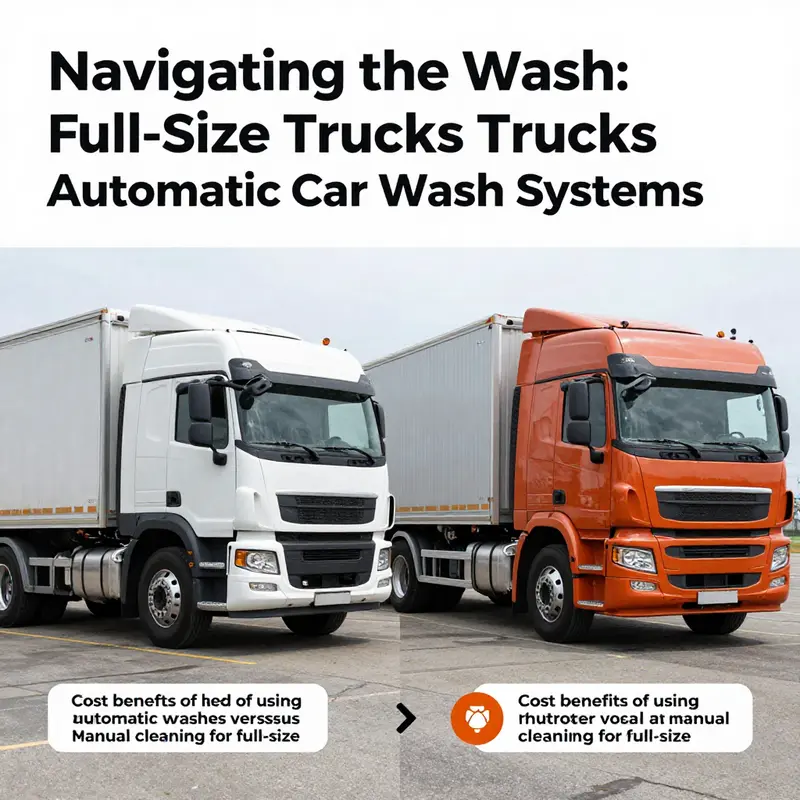
The economics of automatic truck washing for full-sized vehicles depends on vehicle dimensions, system design, and total operating costs. Large, heavy-duty washes are built to handle trucks, buses, and other sizable loads, but not every facility can process every truck. Operators should verify the envelope of the chosen wash against typical fleet dimensions to avoid damage or downtime. When a site can accommodate a full-size truck, the payoff comes from reduced labor, lower variability in wash results, and higher throughput over time. Capital costs for automated systems range from tens of thousands to six figures, with savings accruing from automated cycles, minimized manual labor, and more predictable schedules. Water, energy, and chemical usage are central to the economic equation, with modern systems offering recycling, efficient chemical delivery, and configurable wash programs to balance cleanliness against resource use. Labor costs drop as automation increases, though skilled technicians remain essential for preventive maintenance and system calibration. Vehicle protection, reduced paint wear, and consistent quality support customer trust and long-term demand. Service networks, warranties, and spare parts ecosystems reduce downtime and preserve ROI. In urban or space-constrained facilities, compact in-bay designs can be economically attractive even if their throughput is lower than tunnel systems. Volume drives payback; high-volume depots may recoup investments in months, while low-volume sites may need phased upgrades or shared resources. The strategic value of automation extends beyond per-wash margins to fleet reliability, maintenance planning, and capital allocation across a facility. This chapter sketches the core economic logic and points to practical levers for managers: confirm vehicle envelopes, align configuration with expected throughput, invest in recycling and efficiency, curate adaptable wash programs, and build a robust support network. Ultimately, automatic truck washing is a capital asset whose value accrues from consistent performance, reduced downtime, and the ability to meet evolving environmental and regulatory expectations.
Final thoughts
In conclusion, acknowledging the compatibility of full-size trucks with automatic car wash systems is essential for logistics, construction, and trucking companies. This understanding fosters enhanced safety measures that can protect fleets from operational inefficiencies or damage during the washing process. The specialized design facilities not only accommodate larger vehicles but also boost cleaning effectiveness, bringing tangible economic benefits to fleet management operations. By ensuring vehicles are washed in environments tailored to their dimensions, companies can maximize vehicle lifespan, reduce maintenance costs, and sustain their operational edge in the competitive transport landscape.