
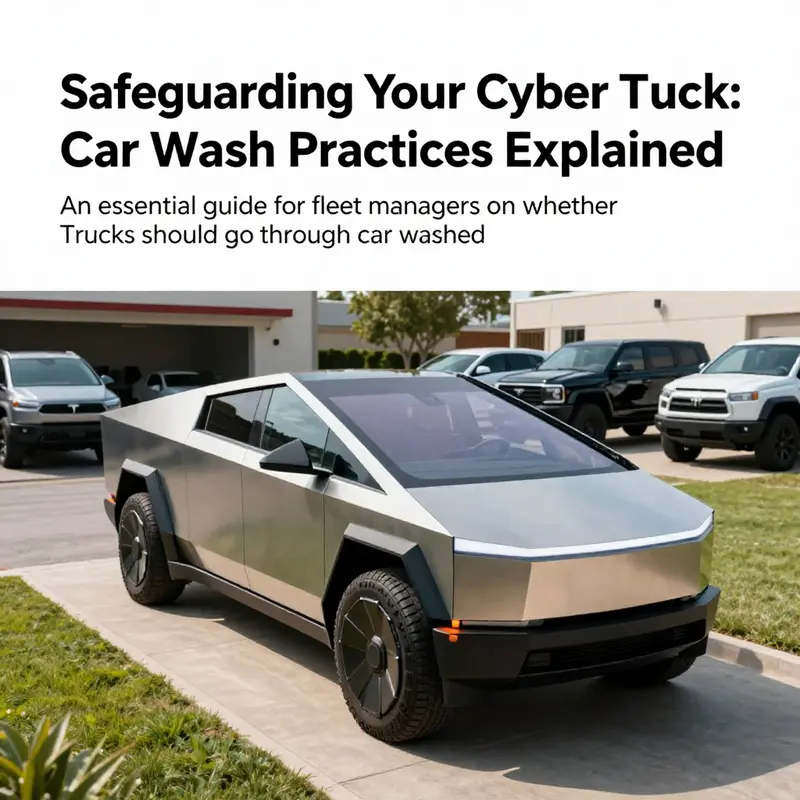
As the popularity of Tesla’s Cyber Truck increases within logistics and construction sectors, understanding its maintenance, particularly washing practices, has become paramount for fleet managers and operators. With its innovative materials, the Cyber Truck poses unique cleaning considerations that are crucial to preserving its integrity and appearance. This article explores the risks associated with automating its wash process, best practices for manual cleaning, and outlines consumer recommendations to support informed decisions among fleet supervisors and operators. Each chapter distinctly addresses vital aspects related to the topic, ensuring readers gain comprehensive insights necessary for effective fleet maintenance.
Rethinking the Wash: The Hidden Hazards and Practical Realities of Cleaning a Bold, Stainless-Steel Electric Pickup
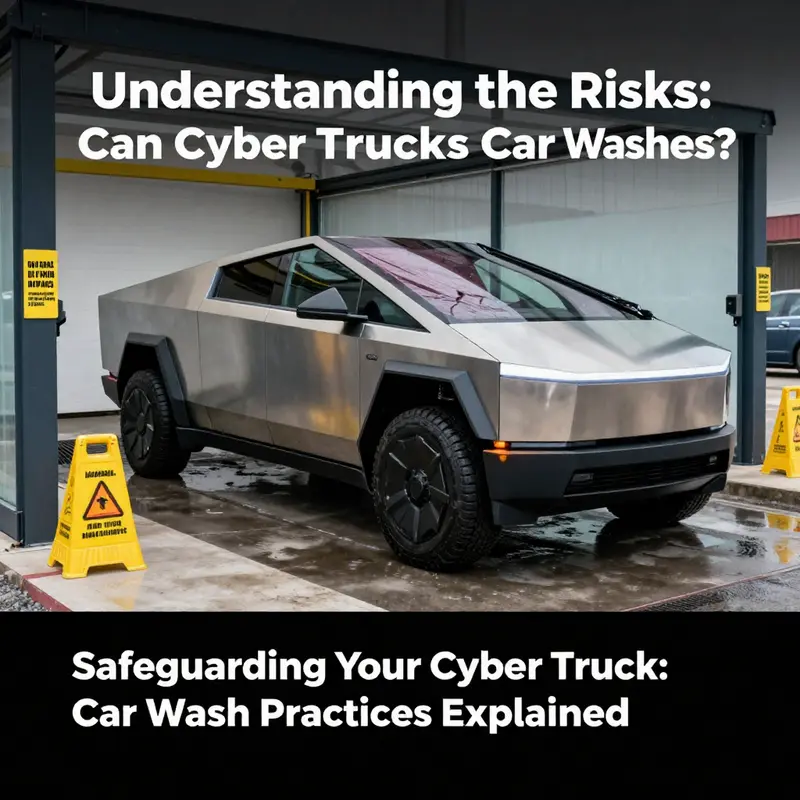
Curiosity about whether a certain high-visibility, angular electric pickup can survive the suspended choreography of an automatic car wash is a question that sits at the intersection of design, materials science, and daily practicality. The short answer, grounded in official guidance and field experience, is not simply yes or no. It hinges on the vehicle’s distinctive construction, the wash system in question, and the owner’s willingness to prioritize long-term preservation over short-term convenience. This chapter moves through the core considerations that shape that decision, weaving together design realities, maintenance logic, and the broader implications for fleets and individual owners who value both performance and appearance. It is not a technical refusal of innovation; rather, it is a measured acknowledgement of how some clever ideas in vehicle design intersect unfavorably with conventional maintenance ecosystems when the goal is to keep a highly engineered exterior in pristine condition over many miles of use and countless hours outdoors. When we examine the core factors—material choices, structural geometry, and the way debris and grime interact with seals and joints—the path becomes clearer: automatic, brush-based car washes introduce risks that many owners would rather avoid, especially for a vehicle with a stainless-steel body and sharp, edge-driven contours that invite careful, deliberate cleansing rather than aggressive scrubbing.
The most salient starting point is the vehicle’s materials and geometry. The exterior language of this pickup is defined by a high-strength stainless-steel body and a design language that features bold angles and pronounced joints where panels meet. Those design features are not decorative flourishes; they are engineered to deliver strength, aerodynamics, and a certain visual identity that signals capability and durability. Yet the same materials and angles that inspire confidence in rough terrain can invite unexpected damage in a washing tunnel. The brushes and rotating elements that define a traditional tunnel wash are designed to reach, scrub, and spray with predictable patterns. When a vehicle’s surface presents broad planes, sharp creases, and metal edges, those patterns can become contact points. The risk is not merely cosmetic; a scratch or a dent in a critical juncture can alter the surface’s chromatic behavior, accelerate corrosion in hidden micro-settings, or affect gaps and seals that help keep moisture and debris from infiltrating crevices that are essential to the vehicle’s long-term integrity.
In many cases, the surfaces most vulnerable to wash-induced harm are not the obvious large panels but the junctions and seal lips where panels meet. A wash tunnel’s brushes can push abrasive particles into corners or nooks that are difficult to inspect after the fact. Even when a system is described as “no-brush” or “brushless,” the reality is that water jets, high-pressure sprays, and adaptive nozzle motion may still involve contact, edge interaction, or micro-abrasion in harder-to-see zones. The modern no-brush concept — which relies on strong jets and careful spray patterns to dislodge dirt — reduces risk compared with traditional brushes, but it does not eliminate it. The curvature of the glass and the way glass meets metal at certain angles can still be a point of vulnerability if the water pressure and spray trajectory are misaligned with the surface geometry. In practice, the most prudent owners view these systems not as risk-free options but as specialized equipment that demands careful selection and a conservative approach.
From a maintenance standpoint, there is also a practical management layer to consider. The exterior of any high-strength, angular pickup is not a single flat plane but a mosaic of planes, edges, seals, and fasteners. Road grime, mud, and off-road residue behave differently across such a surface. A standard wash system, equipped to handle everyday grime on a conventional sedan or crossover, can struggle to dislodge heavy mud without repeated passes or aggressive water application. This is particularly true after off-road use or in adverse weather where dirt contains mineral grit, sand, or road salt. In those cases, the owner may be tempted to push the wash process toward higher pressures or more aggressive cycles to achieve a cleaner look. Yet pressure and proximity to edges have a tipping point. The same high-pressure jets that remove stubborn grime can also push moisture into seams, wheel wells, and underbody components where seals are designed to perform over long service intervals. The result is not only the potential for immediate cosmetic damage but the longer-term risk of accelerated corrosion or unintended ingress that could compromise protective coatings, gaskets, or drainage paths.
The official voice on this matter is clear, though its messaging often travels through cautious language. The manufacturer’s owner’s manual emphasizes that automatic car washes are not recommended for this particular design. The reasoning is not merely a preference or tradition; it is grounded in the specific combination of a stainless-steel exterior and the vehicle’s distinctive geometry. The manual notes that brushes, tensions, or high-pressure impacts can create scratches or dents, and it highlights the proximity of sensitive surfaces where coatings are thinner or where panels abut. The guidance does not condemn automation outright; it acknowledges that some automations use brushless designs and adaptive water modes. Even so, the overarching recommendation remains: owners should err on the side of safety and opt for more controlled cleaning approaches that minimize contact with the most vulnerable areas.
A core part of this conversation is how to handle adverse conditions that follow normal driving. The reality of modern roads includes mud, clay, and organic debris that can be tough to shift with a quick wash. The manual’s recommended approach in such scenarios is not to push a wash system to the limit, but to begin with a gentle rinse to loosen and remove loose matter. In many cases, the best first step is simply a thorough, careful rinsing with water to remove the bulk of the debris before any surface treatment is applied. Removing mud before it hardens into a crust reduces the likelihood that bits will become trapped in crevices as the vehicle moves through a wash system or as the owner attempts a more aggressive cleaning routine later. This incremental approach emphasizes control over speed and force, minimizing the chance that the undercarriage, wheel wells, or door thresholds will be the site of micro-damage that compounds over time.
When you examine the removal of road grime more deeply, you see why hand washing becomes the recommended method. A manual wash allows the owner to decide where to apply pressure, what kind of cloth or sponge to use, and how to work around delicate features such as the door seams and the edges that meet the body panels. It also invites the use of purpose-made cleaning tools designed to lift grime without abrading metal or coatings. For many owners, hand washing is not just a matter of preference; it is a disciplined ritual that aligns with the longer-term objective of preserving finish, preventing corrosion, and maintaining the integrity of seals and joints that endure through years of operation. The capacity to inspect closely during a hand wash is also a significant benefit. As the cleaning progresses, it becomes possible to detect micro-scratches, chip points around the wheel arches, or moisture trapped near fasteners. Early detection affords an opportunity to address issues before they escalate, a practice that stands in stark relief to the more impersonal cadence of automated systems.
Thinking about fleet management adds another layer to the decision. For operators who manage multiple vehicles, the choice to avoid automated washes in favor of hand cleaning is not a personal preference alone; it becomes a policy that affects maintenance scheduling, downtime planning, and the cost calculus of upkeep. The reality is that a fleet must balance cleanliness with durability. If a wash system is perceived as a potential source of damage, a fleet manager may decide to standardize cleansing practices around manual washing or selective use of brushless, low-impact wash configurations, paired with careful post-wash inspection routines. This is not a retreat from automation but a strategic alignment of cleaning practices with the vehicle’s design philosophy and the fleet’s overall lifecycle goals. In such contexts, the ability to route a vehicle to a trusted washing process—one that emphasizes surface care, controlled water exposure, and periodic detailing—becomes part of a broader operational discipline. A robust approach might even incorporate a dedicated washing station at a facility that is explicitly designed to handle high-strength, angular exteriors, with specialists who understand the nuances of seal integrity and edge protection.
The aesthetic dimension of this discussion should not be underestimated. A stainless-steel exterior, particularly when subjected to aggressive cleaning regimes, can reflect light in ways that reveal micro-scratches or subtle changes in surface texture. For owners who value a flawless finish, the temptation to treat every dirt spot as a badge of effort is strong. Yet cosmetic perfection after every wash is not the sole measure of a vehicle’s value. The longer-term protection of the surface—keeping it free of micro-contaminants, preventing corrosion at seams, and preserving the structural joints—often trumps a perfectly uniform appearance. The manual’s guidance, therefore, is not anti-cleanliness but anti-carelessness. It asks owners to make deliberate, informed choices about how, where, and when to wash, recognizing that care taken at the right moments yields benefits across many miles of driving. In practical terms, this translates into scheduling hand washes at intervals that suit driving patterns, avoiding high-pressure, high-friction environments, and selecting cleaning products that are compatible with stainless steel and the specific protective coatings employed on the vehicle’s surface.
Partnering with the right resources is essential to sustain such a cleaning regimen. For operators managing the upkeep of a fleet, partnering with facilities that understand the needs of high-strength exteriors can be a smart move. The goal is not to reject all automation but to curate choices that minimize risk while maintaining efficiency. An informed facility strategy might include what is sometimes described as a locker-room-to-lift approach: a controlled environment where vehicles are rinsed, inspected, and dried using tools designed to avoid contact with critical edge lines and seal areas. In this context, the decision to avoid automatic brushes in tunnel washes aligns with a broader policy of proactive risk management. It becomes a choice about how to preserve the vehicle’s structural and aesthetic integrity over time, rather than a one-off effort to achieve a quick, pristine look after a long road journey.
As we approach the practical bottom line, it is helpful to translate these considerations into a mental model that owners can carry into real-world scenarios. If the wash choice offers a guaranteed degree of edge protection and a fully controlled environment, it may be tempting to trust it. But the combination of an angular exterior, a strong metallic finish, and complex seam geometry introduces a nontrivial probability of surface compromise when exposed to automated cleaning in typical tunnel configurations. The prudent course, as recommended by the manual, is to treat vehicle cleaning as a staged activity: begin with a rinse to dislodge large debris, then move to a hand wash using soft cloths or mitts and cleaning agents that are explicitly compatible with the metal and seal design. Pay particular attention to the undercarriage, wheel wells, and door seams, which are the most likely sites for debris to become trapped and for moisture to linger. Drying should follow a careful, deliberate process to minimize water spots and residual dampness that could foster corrosion over time. For those who operate in regions where road salt is a seasonal concern, additional measures such as reapplication of protective coatings or frequent inspection of metal seams after winter months can further reduce long-term risk.
It is also worth acknowledging that technology, when used judiciously, can still support responsible cleaning without becoming a threat to the vehicle. Some wash systems are designed to minimize contact with the surface and to manage water pressure in a way that reduces risk to sensitive edges. Even then, the use of such systems requires an informed operator who understands the vehicle’s geometry and how it interacts with the cleaning process. The decision to rely on automation, in this sense, becomes a matter of selecting a facility with a proven track record of handling advanced exteriors and adjusting the cleaning protocol to emphasize contact-free or low-contact methods whenever possible. At the same time, the manual’s guidance underscores that even with the best equipment, the onus remains on the owner to supervise the process, ensure that the appropriate settings are used, and perform post-cleaning checks to confirm that no residue has remained in critical areas where it could cause future issues.
For those who manage fleets or who frequently drive in environments that create heavy grime, investing time in a structured cleaning routine can yield dividends beyond the obvious aesthetic benefits. A disciplined routine reduces the likelihood of corrosion at vulnerable points, preserves the integrity of sealing systems, and extends the life of protective coatings. It also supports the broader objective of minimizing downtime and maintenance costs. In practice, this means that the choice to avoid automated, brush-based car washes is not simply about avoiding a potential scratch; it is about committing to a cleaning philosophy that protects the vehicle’s core engineering and the reliability of its critical interfaces. In the end, the question of whether a particular model can go through a car wash is not a binary verdict. It is a nuanced assessment that weighs the vehicle’s design against the wash system’s characteristics, the owner’s maintenance priorities, and the long horizon of miles that the vehicle will travel. The right answer, for many owners, is a cautious no for conventional tunnel washes and a considered yes for carefully chosen, low-risk cleaning options conducted with hands-on care and precise attention to material compatibility.
For readers who may want a practical anchor as they navigate their own cleaning decisions, consider the broader ecosystem in which vehicle washing sits. Cleaning is part of a larger maintenance culture that includes routine inspections, seasonal protective treatments, and a careful calibration of expectations about what a given cleaning process can achieve. The choice to pursue manual cleaning or a controlled, low-contact approach is not merely about keeping a shine; it is about sustaining the vehicle’s performance envelope, preserving the integrity of joints and seals, and defending against corrosion that can quietly undermine reliability over the long term. The alignment of this philosophy with fleet management practices—where consistent outcomes and predictable maintenance intervals matter—helps to justify the extra time and attention that manual cleaning requires. It also invites a broader conversation about the role of specialized facilities. As the industry evolves, more wash operations will likely tailor offerings to the needs of high-strength exteriors and to vehicles that combine rugged capability with sensitive surfaces. In the meantime, owners who adopt a careful cleaning regimen will find that their vehicles retain their original character and capability longer, even as they carve out the time to perform these routines with intention and care.
From a narrative standpoint, the takeaway is not simply a verdict but a frame for thinking about cleaning as a preventive habit rather than a reactive fix. The cleaner you keep a vehicle’s exterior, the less likely you are to encounter surprises after a road trip, after a day on rough terrain, or after a winter in salted environments. The manual’s stance nudges owners toward patience and precision, qualities that align well with the broader ethos of responsible ownership. It invites readers to imagine a future where maintenance is not a chore to be rushed but a deliberate sequence that honors the engineering choices that define the vehicle in the first place. In such a future, the decision to bypass a traditional automated wash is not a concession; it is a disciplined practice that protects the investment and the performance without compromising the vehicle’s presentation.
For readers who wish to explore allied perspectives on cleaning strategy within the broader truck-wash ecosystem, there is value in examining how facility management practices can adapt to high-strength exteriors. A well-designed program can integrate protective, low-contact wash options with routine inspections and targeted detailing. This integrated approach is especially relevant for fleets that operate in challenging environments or that place a premium on the longevity of the exterior finish. It represents a practical synthesis of care, science, and operational efficiency. The core idea remains simple: when a vehicle is built to withstand tough use, maintenance should be equally thoughtful about the surface that meets the world first each time it leaves the driveway. The distinction between convenience and care is where intelligent decisions are made, and where the choice to avoid conventional automatic washing becomes part of a broader strategy for durability and reliability over time.
To close the circle on this discussion, the practical stance is clear. Automatic car washes—especially those with traditional brush configurations—pose meaningful risks to a high-strength, angular exterior designed for rugged use. While no-scrub or low-contact wash technologies offer improvements, they do not guarantee elimination of all risk to edges, seals, and sharp lines. The safest, most durable approach is a controlled cleaning process conducted by hand, with attention to material compatibility and seal integrity. This does not condemn modern cleaning technology; rather, it places it within a thoughtful framework that respects the vehicle’s design and the owner’s long-range maintenance goals. It also invites a practical, fleet-oriented mindset: when in doubt, prioritize care, perform targeted inspections after each cleaning, and leverage facilities equipped to support a deliberate, high-integrity washing routine. In doing so, owners can preserve both the appearance and the function of their distinctive electric pickup for miles to come, while enjoying the confidence that comes from a maintenance plan grounded in the realities of its construction and the demands of real-world use.
For readers seeking additional context on how facilities can support careful cleaning strategies, the broader literature and industry insights emphasize that the right cleaning approach is not a one-size-fits-all solution. It is a tailored concept that aligns with the vehicle’s materials, with the kind of grime typically encountered, and with the owner’s or fleet’s long-term objectives. The call to action is practical: if you are considering a wash that involves brushes or high-pressure jets, pause and evaluate whether your vehicle would benefit more from a controlled rinse, a hand wash with appropriate products, and a thorough post-cleaning inspection. When in doubt, lean toward care and prevention rather than aggressive cleaning that may produce immediate shine at the expense of future reliability. The goal is not merely to look clean but to stay clean—clean in a way that respects the engineering that goes into a vehicle built for capability and endurance. In that spirit, the decision to avoid automatic wash tunnels for this class of exterior becomes a prudent, long-horizon choice that aligns with responsible ownership and durable performance.
Internal resource for further consideration: facility management for truck wash businesses.
External reference for further reading: https://www.tesla.com/support/owners-manual/cybertruck/cleaning-and-maintenance#cleaning-the-vehicle
Rethinking Cleanliness: Why Cybertrucks Should Bypass Car Washes and How to Safely Maintain Stainless Steel Exteriors
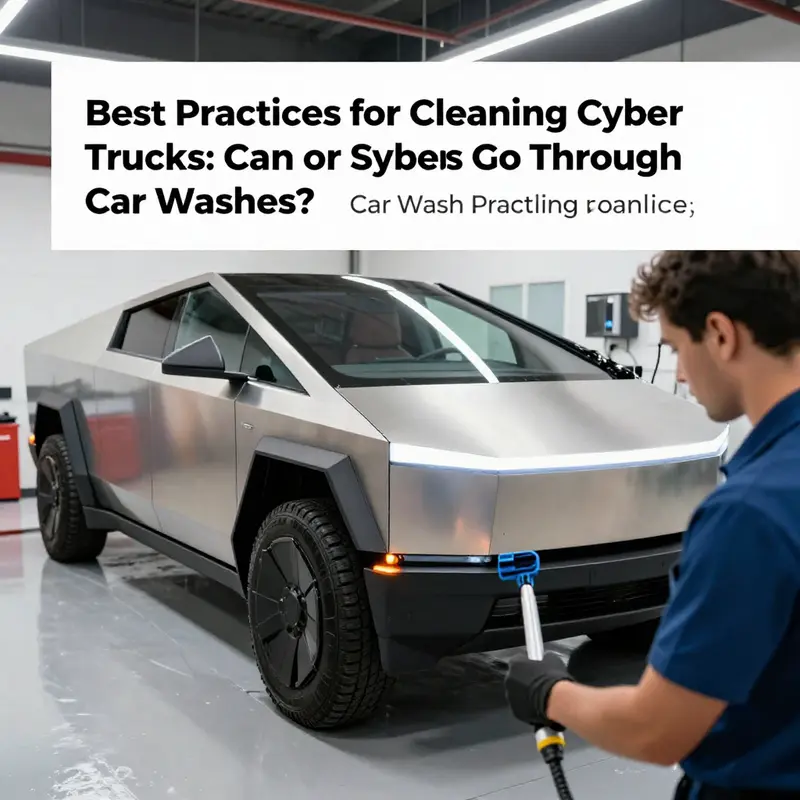
The simplest question about a vehicle as futuristic as the Cybertruck often yields the most conservative answer: can it go through a car wash? The short, evidence-backed response is no. The longer, more useful narrative explains why this stance exists, what it means for everyday ownership, and how to maintain the truck’s distinctive stainless steel surface without compromising its durability or appearance. This chapter treats cleanliness not as a single chore but as a continuity of care that aligns with the vehicle’s design philosophy and the realities of its materials. It weaves together the logic behind the official guidance, the science of cold-rolled stainless steel, and the practical steps an owner can take to keep the exterior looking pristine while avoiding the micro-scratches and subtle corrosion that emerge when the wrong washing method is used. In doing so, it also situates cleaning as part of a broader maintenance discipline—one that fleet operators and individual owners alike can adopt by integrating best practices into routine vehicle care and facility workflows.
Tesla’s official guidance on cleaning the Cybertruck is unequivocal about car washes. The manual notes that automated, tunnel-style wash systems—even those promoted as brushless or “soft-chord” designs—pose risks for the distinctive surface of the Cybertruck. The vehicle’s body is crafted from cold-rolled stainless steel, a material choice that delivers exceptional strength and a striking, utilitarian aesthetic. Yet those same attributes require a different approach to cleaning than traditional painted panels. The brushing, scouring, and high-pressure jets that are common in many automatic washes can introduce micro-scratches and may disturb the protective surface layer that stainless steel relies on to resist corrosion and maintain its luster. The manual makes clear that sweeping strokes of abrasive brushes can mar the surface, while aggressive detergents or improper water chemistry can leave residues or provoke staining—residues that are not merely cosmetic but potentially corrosive when combined with environmental pollutants.
What matters most, then, is the interaction between the cleaning method and the material itself. Stainless steel, especially the kind used in the Cybertruck, is not like conventional automotive paint. It carries a different type of oxide layer and a different kind of response to contaminants. The surface is active in a way that paint is not: free iron and other trace elements on the surface can, under certain conditions, participate in reactions with water, oxygen, and pollutants. These reactions manifest as what engineers sometimes describe as rust behavior or surface contamination that can appear even when the metal itself has not suffered a structural failure. In practice, this means that a car wash’s combination of mineral-rich water, cleaning agents, and cleaning mechanics may leave behind fine particulates or scouring marks that accelerate the look of dullness or, worse, invite localized corrosion over time.
The risk is not simply aesthetic. The protective effect of the surface oxide film on stainless steel depends on maintaining a clean, intact surface. Abrasive brushes, gritty wash water, and even mild abrasives used in some automatic wash cycles can disrupt that film, creating micro-contaminations that attract pollutants or moisture. Over weeks and months, these micro-aggressions accumulate. The Cybertruck’s polarizing geometry—its flat panels, sharp edges, and expansive planar surfaces—amplifies the risk; micro-scratches catch light differently across broad planes, making any imperfection more noticeable. The same geometry, with its intentional minimalism, rewards careful maintenance. Therefore, the official stance is not a preference for manual cleaning as a stylistic choice but a practical one: to preserve the stainless steel’s integrity and appearance, avoid automatic washes and instead adopt a controlled hand-cleaning routine.
The recommended approach is straightforward in its logic and gentle in its execution. A hand-wash protocol for a stainless-steel surface begins with an initial rinse to remove loose dirt and road grime. This is followed by a wash using a mild, neutral detergent formulated for stainless steel environments, applied with a soft, non-scratch washing medium. The goal is to lift and suspend contaminants without abrading the surface. After washing, the vehicle should be rinsed again to remove all detergents and residues. Drying is the final, crucial step; moisture left on the surface can contribute to water-spotting or, in the presence of contaminants, slow-weathering effects. A soft, absorbent microfiber cloth is ideal for drying, applied with a light touch so as not to introduce new micro-scratches. This sequence—pre-rinse, gentle wash with neutral cleaner, thorough rinse, careful dry—forms a disciplined routine that aligns with the surface’s material properties and the vehicle’s design intent.
What, then, should owners avoid? The most important item on the long list is the automatic car wash. Even with modern “no-brush” or sensor-guided systems, there remains an inherent risk when a vehicle’s surface is repeatedly exposed to mechanical cleaning elements and high-pressure water jets. In the Cybertruck’s case, those risks are magnified by the need to protect the stainless steel’s oxide layer and to prevent surface contamination that can lead to rust-like staining or dulling over time. Owners who pursue the other options—spot cleaning, mild hand washing, and periodic professional detailing that emphasizes stainless steel care—tend to preserve the design’s integrity longer and reduce the total cost of ownership over the vehicle’s lifetime.
The best way to convey this is not to demonize all automated washing systems but to acknowledge their limitations for unique materials. If a car wash is absolutely necessary in a pinch—say, a fleet operation requires quick turnaround—one might consider the absolute safest, brushless, low-agitation options. Nevertheless, the consensus among engineers and seasoned detailers is that even the most conservative automated wash should be avoided for the Cybertruck unless the operator can verify the system’s suitability for stainless steel care. In practice, this means erring on the side of manual cleaning and scheduling professional details that have experience with stainless steel vehicles and the specific panel geometry of the Cybertruck. This approach minimizes risk while maximizing the exterior’s longevity and the vehicle’s distinctive visual impact.
From the perspective of fleet operations, the implications extend beyond the individual vehicle. A vehicle that returns to service with surface imperfections can trigger additional maintenance, fuel and downtime costs, and even perception challenges among customers or stakeholders who expect the appearance of a well-kept and robust machine. For fleets, this can mean implementing a standardized cleaning protocol that explicitly excludes auto washes and prescribes hand washing only, with clear guidelines on the detergents, pads, and cloths suitable for stainless steel. Such protocols can be integrated into a broader maintenance program that also covers the removal of contaminants carried in by road salt, industrial fallout, or urban pollutants. In this context, the cleaning protocol becomes part of a larger quality-control framework, ensuring that every Cybertruck in service adheres to a consistent standard of cleanliness that reflects its rugged design and advanced engineering.
In thinking about how to structure this standard, the material realities of stainless steel offer a practical blueprint. For dirt that adheres stubbornly to the surface, a cleaner designed for metal finishes can be used in combination with a gentle non-abrasive pad or a non-woven pad. The key is to avoid anything with abrasive grit or metal fibers that can drag across the surface. When contaminants are stubborn, an appropriately formulated stainless-steel cleaner can help loosen deposits without compromising the underlying oxide film. After application, the surface should be rinsed thoroughly to remove all cleaning residues, which can otherwise attract more grime if left to dry. Finally, drying with a soft, lint-free microfiber cloth ensures that no new residues are introduced during the final wipe-down. This sequence—cleaner, pad, rinse, dry—encapsulates a methodical approach that respects the material’s needs and the vehicle’s aesthetic goals.
The science behind this approach is consistent with the idea that stainless steel is not a passive surface. It is an active, reactive material that interacts with its environment. Road grime, industrial pollutants, and even ordinary rain can deposit ions and residues on the surface. If these deposits are not properly removed, they can become nuclei for oxidation or staining, especially in the narrow crevices and along edges where water can linger. A careful, hands-on cleaning process, therefore, is not merely a cosmetic exercise. It is a protective measure that helps maintain the surface’s integrity and ensures that the Cybertruck remains resistant to the wear that comes from daily use and varied weather conditions.
This leads to another important point: the role of routine maintenance in preserving the exterior’s appearance. A stainless-steel exterior can retain its striking, utilitarian look for many years if cared for consistently. The best practice is not to rely on luck or infrequent, aggressive cleaning sessions but to embed maintenance into a regular cadence. A simple, repeatable routine—wash with neutral detergent, rinse, dry, and occasionally apply a stainless-steel polish or protector designed for metal surfaces—can keep the finish vibrant and resilient. The polish, when used, should be chosen carefully so as not to leave a film that would attract dirt or stain when exposed to the elements. It should also be compatible with the metal’s oxide layer and not interfere with the surface’s ability to shed water and repel contaminants. In other words, a maintenance mindset, not a one-off detailing spree, is what sustains the Cybertruck’s distinctive look over time.
To connect this approach to broader industry considerations, consider how fleets manage maintenance across diverse vehicle types and surfaces. Facilities that service large fleets must adopt standardized cleaning protocols that accommodate the specific needs of each vehicle type while also maintaining efficiency and minimizing downtime. For the Cybertruck, this means training detail operators to recognize when a surface requires extra care, ensuring that the cleaning agents used are appropriate for stainless steel, and calibrating workflow so that each vehicle receives consistent treatment without the harsh mechanical actions that a car wash would impose. It also means evaluating the physical layout of wash bays and detailing spaces to ensure that tools, detergents, and drying materials are readily available and used in a controlled environment that minimizes the potential for cross-contamination or surface damage.
In this context, the question of whether Cybertrucks can go through car washes becomes not just a yes-or-no inquiry but a hinge point for a broader philosophy of care. The answer aligns with the vehicle’s design intent: celebrate the robust, industrial aesthetic while protecting the surface with a careful, informed cleaning routine. The best practice is clear: avoid automated car washes, and instead invest in hand washing and professional detailing that respects the stainless steel. This approach yields a durable finish, reduces the risk of micro-scratches and staining, and preserves the unique character of the Cybertruck’s exterior. For those who manage fleets, the implications extend to training, procurement, and the design of maintenance programs that keep the vehicle in service longer and with fewer surface-related maintenance events. It is, in short, a disciplined approach to care that honors both form and function.
As owners and operators reflect on the path forward, it is essential to reference authoritative guidance. The official resource on Cybertruck maintenance and cleaning provides the framework for these decisions and reinforces the emphasis on hand cleaning with appropriate tools and cleaners. The principle remains: protect the material, protect the finish, and avoid processes that introduce risk to the surface. Within that framework, the Cybertruck’s stainless steel can continue to symbolize a bold, resilient future of mobility, while a careful maintenance routine sustains its appearance and performance across long service lives.
For those seeking practical, fleet-oriented context that extends beyond the single vehicle, consider the broader discipline of facility management for truck wash businesses. Integrating stainless-steel care into your cleaning protocols, staff training, and equipment selection helps ensure consistency, safety, and efficiency across a fleet. This holistic approach recognizes that the cleanliness and appearance of a truck are not solely about aesthetics; they are about protecting asset value, reducing downtime, and maintaining a reputable image for the fleet. See more at the facility management resource focused on truck wash operations to align cleaning procedures with industry best practices and to help translate the Cybertruck-specific guidance into scalable, real-world routines.
In summary, the Cybertruck’s stainless steel exterior calls for a careful, respectful cleaning approach. Automatic car washes, even those marketed as gentle, are not aligned with the material’s needs and the vehicle’s design. A hand-cleaning protocol that employs neutral cleaners, non-abrasive tools, thorough rinsing, and meticulous drying offers a reliable path to preserving the exterior’s integrity and appearance. The disciplined maintenance habit protects the protective oxide layer, mitigates the risk of surface staining and corrosion, and sustains the distinctive, utilitarian beauty of the Cybertruck for years to come. For owners and operators who value reliability and a consistently premium look, this is the practical route that honors both engineering and aesthetics.
As the discussion evolves, the practical takeaway remains clear: respect the material, follow official guidance, and implement a thoughtful cleaning routine that can be embedded into daily or weekly maintenance cycles. The result is a vehicle whose stainless-steel surface remains as striking and resilient as its engineering promises, free from the compromises that car washes can impose on such a unique exterior. For those who want to explore related maintenance considerations in a broader fleet-management context, a window into the discipline of facility management for truck wash businesses provides useful perspectives on how to design, staff, and operate cleaning workflows that protect asset value and keep fleets in service with minimal disruption. facility management for truck wash businesses.
For readers seeking the original, authoritative guidance, Tesla’s official cleaning recommendations for the Cybertruck stainless steel body are available here: https://www.tesla.com/support/cybertruck/cleaning
Washing the Wave: Navigating the Cybertruck’s Cleanliness Without a Brush

The question that often surfaces whenever Cybertruck owners plan a routine visit to the wash bay is deceptively simple: can this distinctive, angular vehicle safely pass through a car wash, especially a tunnel with brushes and high-pressure jets? The instinctive answer is no, but the reasoning behind that stance deserves a deeper look. The Cybertruck stands apart in both form and function. Its exoskeleton is crafted from high-strength stainless steel, a design choice that creates a gleaming, industrial silhouette with sharp edges and flat planes that cast reflections in almost cinematic ways. The glass assemblies that crown the cabin carry their own legacy of strength and resilience, yet they are not invincible. Together, these materials and shapes demand a cleaning approach that respects their peculiarities. For many owners, the practical takeaway is that cleaning the vehicle should be done with care, attention, and methods that minimize risk to the finish, the seals, and the glass itself. The question then shifts from “what can it endure?” to “what will keep it in its best condition over time?” The answer, in short, is that while certain automated systems advertise themselves as gentle—often branded as brushless—the safest course remains manual washing with deliberate, controlled technique. This is not merely a precaution tied to aesthetics. It is about preserving the integrity of the finishing and the long-term performance of exterior components, which for this vehicle are unusually exposed in public-facing ways: large, flat surfaces that can accumulate dirt, salt, and mineral deposits; complex gaps and seams where water can linger if not dried properly; and the possibility, however slight, of micro-scratches that compound with every wash if abrasive contacts occur. The result is a cleaning routine that favors slow, attentive care over the convenience of a quick pass through a tunnel. The guidance from the vehicle’s maker has become a touchstone for owners and service professionals alike. The official recommendation emphasizes caution with automated wash systems that rely on rotating brushes or aggressive mechanical action. Even when the wash is advertised as “no-brush” or as using adaptive spray patterns, the underlying physics of cleaning still involve water pressure, flow direction, and contact with edges and corners that can be sensitive to impact. The message is clear: for a vehicle with this profile, the smallest brush bristle or the highest jet can, over repeated cycles, leave behind micro-marks or alter the nanoscale texture of coatings. The safer path is to prioritize manual cleaning, applying a degree of control that automated systems cannot replicate with the same finesse. This stance aligns with the broader philosophy many owners adopt when caring for high-value, uniquely designed machinery: invest time in meticulous, hands-on care, and treat automated conveniences as exceptions rather than the rule. The emphasis is not on resistance to technology but on recognizing the trade-offs between speed and long-term appearance and structural integrity. The manual approach provides a tailor-made experience for the Cybertruck’s surface, allowing the operator to adjust pressure, angle, and contact based on the panel, the seam lines, and any protective coatings that may be present. In practice, this translates to a two-bucket method, a soft wash mitt, and a careful drying ritual that minimizes streaking while maximizing the removal of salt, road grime, and mineral residues. It also means inspecting the vehicle at several stages of cleaning to catch any potential issues—such as the accumulation of grime in the corners that could, if ignored, lead to pitting or corrosion over time. The decision to favor hand washing is rarely about fear of damage; it is about an informed risk management mindset that seeks to preserve the vehicle’s design language and engineering choices over decades, not just the next wash cycle. The human eye, augmented by a microfiber cloth, remains a powerful tool in this approach. There is something to be said for the intuitive knowledge that builds up from repeated, careful cleaning: the angle of the wand or the direction of the streaks, the way light catches the brushed lines, and the way water beads along the surfaces—all of these become cues for a technician who treats each wash as a bespoke process, not a one-size-fits-all. In this sense, the Cybertruck’s care routine echoes broader lessons from the fleet and maintenance communities: when complexity and material science meet practical, real-world use, the most reliable maintenance script is often the simplest, executed with patience and discipline. The decision to avoid automated wash tunnels is reinforced by the vehicle’s architecture. The exoskeleton’s large, uninterrupted planes invite attention to detail; the edges and joints can trap grit if the wash does not handle these zones effectively; and the glass assemblies, while robust, benefit from a cleaning technique that minimizes friction and pressure. The risk calculus is not merely about scratches; it also concerns the potential for micro-scratches to become focal points for corrosion or staining if cleaning agents and water residues linger, especially in climates that see road salt or mineral-rich water. For the typical owner, this translates into a straightforward practice: prefer manual washing with a mild, automotive-appropriate soap and a soft sponge or microfiber mitt, rinse thoroughly with clean water, and dry with gentle, absorbent towels. The emphasis on gentle cleaning cannot be overstated. Harsh chemicals, abrasive sponges, or high-pressure scrubbing are precisely the behaviors that the manual guidance seeks to dissuade. This is not a stance born out of fear but out of respect for the cybernetic design and the goal of preserving a vehicle that stands apart from the ordinary in both function and form. As with any piece of high-design machinery, the care routine becomes part of the ownership experience, a ritual that reinforces the bond between vehicle and owner. It also echoes a broader truth in automobile maintenance: the best protection against cumulative wear is a consistent, mindful cleaning routine. When pursued with care, manual washing mitigates the risk of contamination from road grime, salt, and other aggressive substances that can attack unprotected surfaces over time. It is a practice that respects the material realities of stainless steel, while acknowledging that even the most resilient surfaces demand respect and gentle handling. For those who crave convenience, there is a legitimate conversation to have about automated systems, particularly those with brushless designs and adaptive water patterns. They do reduce some risks, but they cannot eliminate all the variables. The length of exposure, the drying method afterward, the vehicle’s orientation in the wash bay, and the residual moisture on tightly toleranced seams can still influence outcomes. In the end, the recommended policy—said in many owner-operator communities and echoed by the manual—is conservative by design: wash the Cybertruck by hand whenever possible, avoid tunnel washes with any sort of brushing or aggressive contact, and treat automated wash cycles as exceptions rather than routine. This approach embodies a prudent compromise between the desire for convenience and the aim of preserving the vehicle’s appearance and structural integrity across years of ownership. It also respects the fact that this model is not simply another pickup; its design ethos is about a futuristic, almost industrial aesthetic that invites stewardship rather than aggressive, repetitive mechanical cleansing. Because the exterior is a canvas that has to withstand exposure to weather, road debris, and environmental contaminants, keeping the finish pristine is not about vanity alone. It is about maintaining the barrier functions of coatings and the optical clarity of glass and reflectivity of the stainless surfaces. With that in mind, many owners incorporate protective measures that can ease cleaning over time—though even here, the principle remains one of gentle maintenance. If a coating or sealant is applied, it is crucial to follow the specific care instructions that accompany it, using only approved cleaners and avoiding any scrub tools that might compromise the coating’s integrity. The long view matters. A vehicle with a thoughtfully crafted exterior deserves a care routine that does not gamble with its future. The recommendation to forego automated car washes—especially those with brushes—reflects a broader understanding of how modern materials interact with automated cleaning physics. It is about preserving the vehicle’s geometry, its surface texture, and its coatings across repeated cycles. It is also about ensuring that any protective or aesthetic enhancements perform as intended for as long as possible. For readers who want to connect this approach with broader maintenance practices, there is value in grounding the practice within industry-like guidelines that govern fleet cleanliness and vehicle appearance standards. In this sense, the Cybertruck follows a path similar to other high-value fleets where specialists advocate for hands-on care, meticulous drying, and the selective use of automation. The aim is not to reject technology but to harmonize it with a careful, disciplined care routine that preserves investment and readiness for use in any environment. As you weigh the decision about car washes, consider not just the convenience, but the potential cumulative effects of repeated automated cycles on a surface that prides itself on precision engineering. The small, almost invisible marks acquired over many washes can, over time, influence the vehicle’s overall aesthetic and the perceived value of the finish. The practice of hand washing—slow, controlled, mindful—acts as a counterbalance to the speed of modern life. It offers a chance to assess the vehicle’s condition, notice paint or sealant wear, and address issues before they become more serious. It is not a ritual performed in isolation. It is part of a comprehensive maintenance philosophy that keeps the Cybertruck looking and performing as its designers envisioned. For readers seeking practical validation in the broader community, the conversation often centers on the nuanced trade-offs between convenience and preservation. Fleet managers, home garages, and professional detailers alike tend to converge on a simple truth: when a vehicle has a distinctive structure and surface finish, a deliberate, manual approach to cleaning is the most reliable way to sustain its unique characteristics over time. That shared understanding can help readers, whether they are solo drivers or part of small teams, develop routines that are both efficient and protective. It also underscores a key point: while car washes offer undeniable efficiency, the Cybertruck’s design asks for a more thoughtful engagement with its care. The story of its care is, in many ways, a story of balancing modern tools with traditional skill, using the best of both to keep the vehicle’s exterior looking as purposeful as its performance. As you prepare for your next cleaning session, you might reflect on the idea that a vehicle’s surface is more than a cosmetic layer; it is an interface between engineering and environment. The more intentional your approach, the more likely you are to retain the crisp lines, the seamless seams, and the robust feel that make the Cybertruck instantly recognizable. For those who want to situate this approach within a wider ecosystem of best practices, consider exploring industry discussions around cleaning discipline and maintenance standards in truck-wash environments. These conversations emphasize that even in high-volume facilities, some vehicles require additional caution to protect their finishes and structural components. In short, the path to keeping a Cybertruck pristine is not about resisting automation forever; it is about choosing the right tool for the right job, with a bias toward manual care when the surface demands it. The end result—a vehicle that continues to reflect its extraordinary design while remaining practical for daily use—depends on a thoughtful, patient cleaning routine that respects its unique physics, geometry, and materials. To summarize the core takeaway: avoid tunnel washes with brushes, prefer manual cleaning with mild soap and a soft wash mitt, and treat every wash as an opportunity to inspect, protect, and preserve. This approach harmonizes the Cybertruck’s bold, futuristic presence with a dependable, long-term care strategy that keeps it looking and performing at its best, season after season, mile after mile. For readers who want to dive deeper into related maintenance practices and fleet-care considerations, the topic of care extends into how washing intersects with scheduling, staffing, and environmental compliance across the broader trucking ecosystem, which you can explore further here: truck-wash-industry-compliance-emissions-regulations. And for those seeking official word from the manufacturer on cleaning, the primary guidance is clear: hand wash and avoid automated systems that rely on brushes or high-pressure cycles. Official guidance can be found at the following resource: https://www.tesla.com/support/cybertruck-cleaning.
Final thoughts
Maintaining the aesthetic and structural integrity of Cyber Trucks is crucial, particularly given their unique design and construction materials. The insights provided in this article highlight the necessity of avoiding automatic car washes that could potentially cause damage. Instead, adopting recommended manual cleaning techniques will not only ensure the longevity and appearance of your fleet but also safeguard your investment in these advanced vehicles. As a fleet manager or supervisor, prioritized care in vehicle maintenance is essential to sustaining efficient operations and maximizing asset value.