
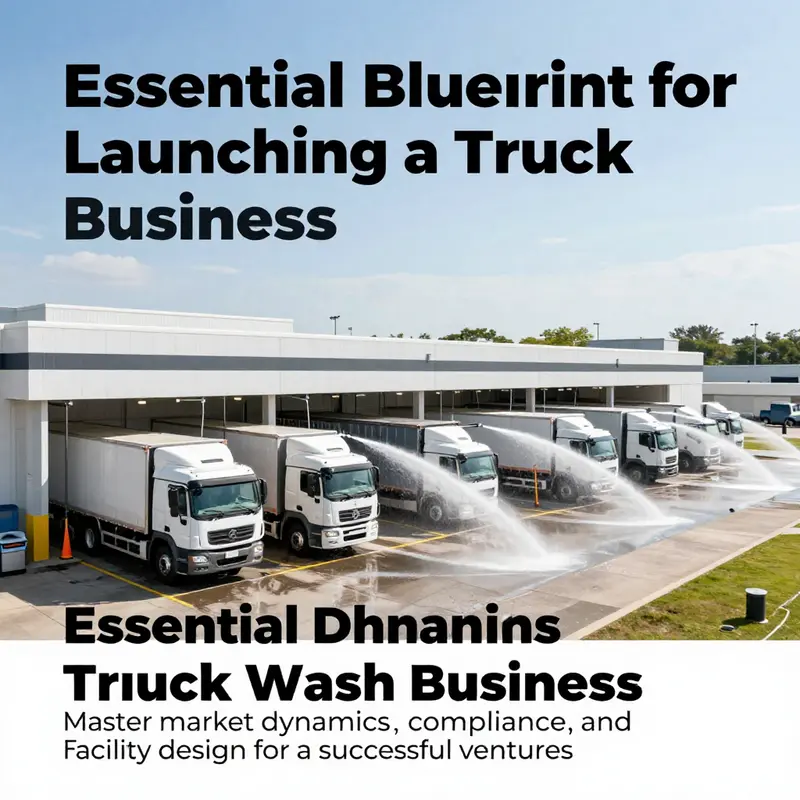
Establishing a truck wash business requires understanding not only the demands of the trucking industry but also the intricacies of providing high-quality services that cater to fleet managers and company owners. The first step to success lies in conducting thorough market research and strategic business planning. Following this, ensuring legal compliance protects your investment and underpins your operations. Finally, the right site selection and a well-planned facility layout are critical for efficiency and customer satisfaction. Together, these elements create a roadmap for a profitable truck wash business.
From Market Signals to a Solid Blueprint: Market Research and Strategic Planning for a Truck Wash Start

Market research and business planning sit at the heart of a truck wash venture. They are the engines that drive throughput, profitability, and long-term resilience. This chapter threads market dynamics, technology trends, and practical planning steps into a cohesive narrative that guides a new operator from curiosity to a finance-ready blueprint. The goal is to translate market signals into operational decisions that lock in speed, reliability, and value for trucking customers.
Begin with scale and momentum. The global heavy-duty truck wash market has grown into a sizable arena, propelled by expanding logistics and freight networks, stricter fleet appearance standards, and a push toward automation. Market data from late 2025 place the sector’s size around several billions with a mid-teens CAGR through the early 2030s. The real value lies in translating that momentum into neighborhood demand and serviceable capacity. Understanding where trucks pass daily—highways, hubs, industrial zones, and rest stops—helps identify the windows when a wash facility can achieve sustained utilization.
In the competitive landscape, operators range from regional players to multi-site networks, each weighing pricing, service mix, and hours through fleet demand. A startup should carve a niche aligned with local demand while maintaining flexibility to upgrade as fleets’ expectations evolve. Global figures inform bold planning, but the local lens keeps you honest about community needs.
Technology and customer preferences shape how that need is fulfilled. Washing systems span semi-automatic to fully automatic, with roll-over and touchless concepts dominating efficiency and safety. Roll-over systems emphasize programmable cycles for different configurations, maximizing throughput without sacrificing quality. Touchless approaches emphasize high-pressure jets and chemistry to minimize contact with painted surfaces. The choice hinges on the target customer—fleet managers seeking speed and consistency versus premium operators prioritizing gentler cleaning. A blended approach—high-throughput exterior washing with optional premium services—often yields the best returns.
Application scenarios illustrate demand beyond traditional highways: food processing facilities, cold-chain centers, port terminals, and large industrial parks. Vehicles in these settings may carry regulatory or hygiene requirements that elevate cleaning standards. A wash operation that emphasizes reliability, speed, and compliance earns trust among operators with tight schedules. As electric and other energy-efficient vehicles enter fleets, customers increasingly seek low-water, energy-efficient cleaning solutions. The market signals point to a broader role: a partner in fleet hygiene programs, environmental stewardship, and asset longevity.
Planning the niche first helps map site design and throughputs. Should the business emphasize full external and internal cleaning with add-ons, or focus on rapid exterior cleaning for tight turnarounds? The local market and traffic patterns should drive the decision. A high-throughput exterior wash with optional undercarriage care can serve a broad base, while a streamlined exterior option with express interior service might anchor a lean operation. Niche services—such as DEF system cleaning or specialized undercarriage work—can complement the core offering once throughput is proven.
The financial plan should balance upfront investment with a sustainable operating model. Startup costs include infrastructure, drainage and water treatment, heavy cleaning equipment, and a safety-focused staffing plan. A robust model starts with a break-even analysis based on realistic daily washes, ticket size, and seasonality. A phased capital plan—essential throughput first, then value-enhancing upgrades—keeps risk manageable while enabling growth.
Operationally, location and reliability are anchors of performance. Proximity to major routes and logistics hubs translates into daily demand. The site should accommodate multiple trucks with clear entry/exit lanes and plan for evolving traffic patterns. Environmental compliance is essential from day one, including permits, wastewater management, and water treatment. A well-designed site supports steady throughput while protecting the environment and staying within regulatory limits.
To translate market insight into a financing plan, craft a narrative around customer acquisition and retention. Fleet managers and drivers are the primary audience, with partnerships and a credible reputation as multipliers. Marketing should emphasize reliability, transparency in pricing, and environmental responsibility. A professional online presence and simple scheduling help convert interest into bookings, while a loyalty program can drive repeat business. The aim is a facility that serves trucks at the gate and becomes a trusted partner for fleet hygiene programs.
Technology can support planning and operations. Scheduling software, payment processing, and customer loyalty systems help manage demand and retention. Equipment data informs maintenance and uptime optimization. The market’s emphasis on efficiency and environmental stewardship invites long-term considerations like water reuse or closed-loop systems. Early decisions balance immediate demand with flexibility to adopt higher-efficiency technologies as the market grows.
The plan is a living document. Soft launches, pilot programs with local fleets, and KPI tracking refine the model. Monitor washes per day, average revenue per wash, customer satisfaction, and equipment uptime to detect shifts in demand or performance. If misalignment emerges between market expectations and capability, pivot—adjust service mixes, extend hours, or recalibrate pricing.
People matter. Hire experienced technicians who understand industrial cleaning, safety, and customer service. Training should cover equipment operation, chemical handling, environmental compliance, and safety. A capable crew reduces the risk of equipment damage and strengthens customer trust, supporting growth in regular customers and fleet partnerships.
External benchmarking and context help frame growth. The driver is smarter cleaning and smarter facilities—sites designed for peak demand without compromising quality or compliance. Choose equipment and layouts that scale, and design sites to minimize wait times with clear flows from entry to wash to dry and exit. Reliable, fast service builds loyalty and profitability.
Bringing it together, the chapter’s roadmap should define a precise market map—volumes, service tiers, and fleet targets—and translate that into a site plan that supports throughput and sustainable water use. The financials should prove fundability, with clear milestones for deploying capital to raise capacity or enhance efficiency. Finally, embed a culture of learning: collect driver and fleet feedback, schedule preventive maintenance, manage chemicals, and stay adaptable to regulatory and technological changes. This is a living blueprint that grows with the market and the business.
For further practical reading, see external resources on heavy-duty truck wash market trends and facility management guides. This context helps anchor decisions in global momentum while remaining grounded in local reality.
Permits, Permits, and Compliance: Laying the Legal Foundation for a Truck Wash Startup

Launching a truck wash is as much a legal and operational launch as it is a service venture. The most successful starts treat compliance not as a hurdle to clear but as a foundational discipline that shapes site selection, design choices, budgeting, and daily operations. The landscape is layered and real, spanning federal standards, state and local regulations, and the myriad rules that govern land use, water quality, worker safety, and business conduct. A startup that embeds due diligence from day one reduces the risk of costly delays, fines, or forced shutdowns, all of which can erase early market momentum and damage reputation long before a single truck passes through the wash. The objective is not to chase every rule for fear of penalties but to build a governance frame that supports reliable service delivery, environmental stewardship, and predictable costs. In practice, this means thinking through permits, licenses, zoning, environmental controls, insurance, and workforce safety as intertwined elements of a single compliance thread rather than as isolated checklists.
Environmental compliance is the spine of a truck wash operation. The Clean Water Act governs how facilities manage stormwater runoff and wastewater, and the practical implications extend far beyond a single spill plan. At the federal level, regulators expect facilities to prevent pollutants from entering public sewers or waterways. In many jurisdictions, this expectation translates into an environmental program that features an oil–water separator, sediment traps, and stormwater containment basins designed to capture and treat contaminated runoff before it leaves the site. The reality is that truck washes generate a complex mix of detergents, oils, grease, and road debris that must be treated at the source and disposed of responsibly. States often add their own performance standards, water quality thresholds, or additional treatment requirements that tailor the baseline federal framework to local hydrology, climate, and infrastructure. The upshot is clear: success hinges on selecting a site and a system that can accommodate high-volume water use while maintaining strict controls on discharges. A practical approach is to model the site around a closed-loop or semi-closed-loop water system where feasible, paired with filtration stages that reduce solids and emulsified oils before any discharge or recycling step. Such a configuration can substantially lower both regulatory risk and operating costs over time, reinforcing the argument for upfront design consideration rather than retrofitting later. For a practical synthesis of the key regulatory considerations in this sector, see the detailed discussion on truck wash industry compliance and emissions regulations.
Alongside environmental obligations, zoning and land-use rules set the stage for whether a truck wash can exist where planned. Local municipalities often separate industrial, commercial, and residential zones with rules on off-street parking, traffic flow, noise, lighting, and signage. The absence of alignment with zoning can halt construction or trigger costly relocation. Before breaking ground, a prospective owner should secure a zoning determination and, if needed, a zoning permit and variances that reflect the site’s intended use. Signage requirements matter too, because visible, compliant signage informs drivers where to queue, how to access the wash, and what services are available, while adhering to local aesthetics, lighting standards, and setback rules. Early consultation with planning, building, and public works departments can reveal non-obvious constraints and foster goodwill with neighbors and regulators alike. These conversations are not mere formalities; they reduce uncertainty and speed the approval process, which is critical when financing hinges on a clear path to opening.
The business-licensing landscape is the practical prelude to every customer interaction and vendor arrangement. A general business license, a state sales tax permit, and an employer identification number (EIN) are the minimum scaffolding needed to operate in a compliant manner. Depending on jurisdiction, additional licensing may cover air emissions, hazardous materials handling, or fire code compliance. Insurance is inseparable from licensing in most markets. A robust package typically includes general liability, property insurance, workers’ compensation if there are employees, and pollution liability insurance to cover potential environmental incidents. The breadth of required coverage will depend on the business model, staffing, and the anticipated risk profile of the cleaning processes and detergents used. The process of acquiring these licenses and insurances is not merely a bureaucratic step; it also communicates financial reliability to lenders and partners, signaling that the venture has a structured risk-management posture and a plan for continuity even in adverse conditions.
Safety and labor standards further anchor regulatory readiness. OSHA obligations require safe work practices, appropriate training, and documented procedures for high-pressure equipment use, chemical handling, and spill response. Fire codes and local building codes govern storage areas for cleaning agents, ventilation, electrical installations, and emergency egress paths. A well-planned safety program goes beyond compliance to protect workers, reduce downtime from accidents, and improve customer confidence. It also aligns with best practice in fleet services where a reputation for safety can be a differentiator in competitive bids or fleet contracts. The cost of noncompliance is not only monetary; it is reputational and operational. Consequently, many operators invest in a formal onboarding program that covers hazard communication, PPE usage, incident reporting, and regular drills for emergency scenarios. The real value emerges when safety becomes a cultural habit rather than a checklist item, influencing every decision from chemical choice to truck routing on the property.
A pivotal theme in compliance is the due diligence pathway. Prospective operators should engage regulatory counsel or environmental consultants early to map out the exact permit set and compliance milestones required by the project’s location. A comprehensive plan typically starts with a regulatory gap assessment that inventories applicable federal, state, and local requirements. The next steps include scoping the required permits, drafting a schedule for permit applications, and compiling technical documents such as stormwater pollution prevention plans, spill prevention, control, and countermeasure plans, wastewater management plans, and energy and water use projections. This is not a one-time exercise. Regulations evolve, and the most resilient operators are those who maintain a dynamic compliance calendar, updating procedures as rules change and as the facility grows. A capital plan that accounts for anticipated compliance expenditures—monitoring, reporting, testing, and maintenance—also reduces the likelihood of financial strain if early milestones are missed.
From a design and operations perspective, compliance should influence every major decision. For instance, the wastewater treatment approach should be selected with flexibility in mind. If a site permits direct discharge, stringent monitoring and treatment may be required; if not, a robust filtration and recycling system can be a prudent investment that lowers water costs and enhances environmental stewardship. In regions with water scarcity, the ability to recycle water and minimize withdrawal is not only good practice but often a regulatory advantage. The physical arrangement of the wash bays, undercarriage cleaning zones, and solvent storage must reflect safety and environmental controls while enabling efficient throughput. Roles and responsibilities should be codified in a written safety manual and an environmental management plan that clearly assigns accountability for monitoring, reporting, and corrective actions. These documents are not static; they should be reviewed quarterly and updated in response to regulatory changes or internal process improvements.
The internal link above points to a resource that synthesizes sector-specific regulatory considerations and can serve as a practical companion for operators who want to align operations with industry standards. Beyond specific laws, the broader aim is to cultivate an operating discipline that keeps the business out of the penalty box while building trust with customers, regulators, and the communities in which the facility sits. The daily reality of compliance is not abstract law but a series of concrete, actionable steps: securing the right permits before construction begins, installing and maintaining natural and mechanical filtration systems for stormwater, implementing a closed-loop or semi-closed-loop water system where feasible, training staff to handle hazardous materials safely and efficiently, and maintaining meticulous records that demonstrate ongoing adherence to performance standards. Taken together, these steps create a predictable operating environment, support steady cash flow, and reduce the risk of costly disputes with municipalities or environmental agencies. In other words, compliance becomes a competitive advantage rather than a burden when it is integrated into the business model from the outset.
Internal and external stakeholders increasingly expect transparency about environmental performance and public health safeguards. The value proposition for a compliant truck wash is clear: lower long-run operating costs through reduced water use and waste disposal fees, fewer regulatory interruptions, better access to financing, and a stronger standing with fleet customers who themselves face stringent supplier requirements. For a growing fleet network, knowing that a partner facility operates under a robust legal and environmental framework offers a tangible reassurance that operations will be stable, predictable, and aligned with broader sustainability goals. This is not merely about avoiding penalties; it is about creating a durable platform for growth where compliance supports reliability, safety, and customer confidence—qualities that matter most when freight moves around the clock and across borders. The journey to a compliant truck wash is not a single milestone but a continuous discipline that informs site selection, capital budgeting, vendor selection, and day-to-day management. As you proceed, keep in mind that the regulatory landscape is dynamic, and the most resilient operators treat compliance as a strategic asset rather than a compliance burden. For ongoing updates and deeper policy context, consult authoritative resources and consider periodic audits to stay ahead of changing requirements.
External resources can provide authoritative guidance in particular areas of environmental regulation. For authoritative guidance on environmental standards, consult the EPA resources on the Clean Water Act and stormwater management: https://www.epa.gov
Grounded for Throughput: Site Selection and Facility Design for a Truck Wash That Scales
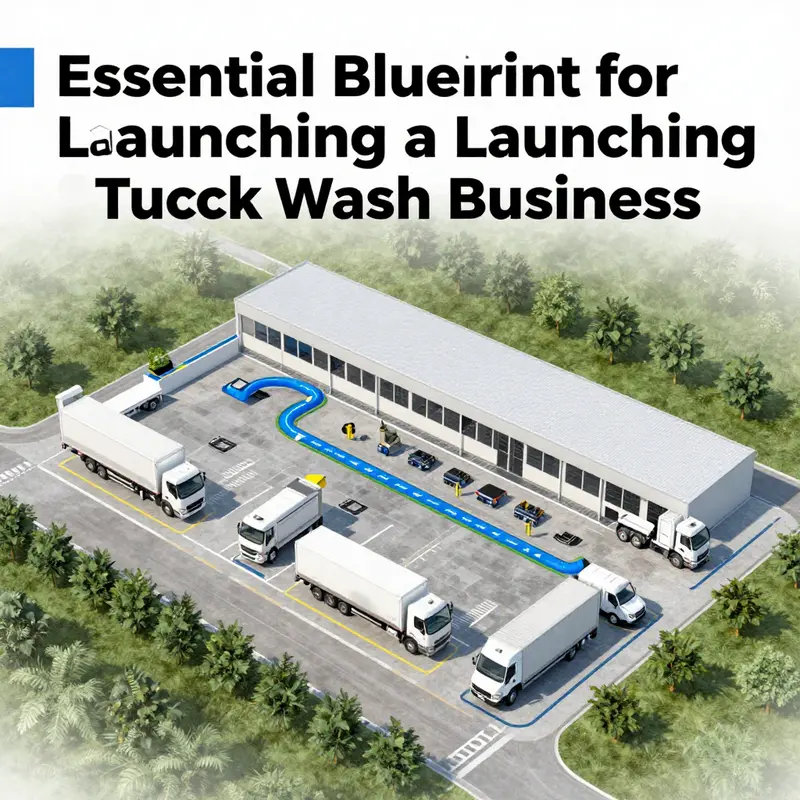
Choosing the right site and designing the facility are the twin pillars that determine how fast a truck wash can operate, how clean it can get vehicles, and how well it manages costs and compliance over time. A location that sounds convenient on a map must translate into real throughput and steady, repeatable service. The best layouts treat the truck as a moving part of a line: entry, pre-wash, main wash, rinse, and dry—each stage flowing into the next with minimal hesitation. In practice, this means turning a plot of land into a well-orchestrated system where space, utilities, equipment, and safety all align with the objectives of speed, quality, and environmental responsibility. The starting point is understanding that site selection is not merely about land ownership but about cultivating an operational environment that enables consistent, scalable washing for fleets and drivers alike.
First, the geography of demand should guide location strategy. High-traffic corridors, proximity to logistics hubs, truck stops, distribution centers, and large industrial clusters are not just convenient; they are essential to sustaining volume. A site near major entry points to expressways offers the advantage of capturing passing fleets without forcing drivers to detour far from their routes. Yet proximity alone is not enough. The site must also support rapid, safe maneuvering for vehicles as large as multi-axle tractors and trailers. The space between the bays and the turning radius of the vehicles determines how many trucks can be processed in an hour. This is not a minor nuance. It governs the business’s capacity to meet demand and to maintain a steady cash flow.
Size matters, but so does layout. A typical auto-cleaning station requires a footprint that accommodates a wash bay long enough to accommodate oversized rigs, plus dedicated lanes for entry and exit, staging areas for pre-wash prep, and space for water treatment and chemical storage. In many markets, 500 to 1,000 square meters is a practical minimum to allow for a single line of operation with room to incorporate undercarriage cleaning, spray arches, and drying zones. Planning for future expansion from the outset reduces the risk of costly retrofits later. If land is scarce or expensive, a phased design that starts with a robust core and a modular add-on plan can preserve capital while preserving the option to grow. The key is to ensure that the chosen parcel includes the space, or the right easements, to scale as demand deepens.
Another vital factor concerns infrastructure. Water is the lifeblood of a truck wash, and the reliability of water supply often becomes the bottleneck for operations. The local water utility should be consulted early to confirm sustained pressure and capacity. In areas with variable supply, a closed-loop system that recycles and treats wash water can dramatically reduce dependence on new water. The goal is to minimize fresh-water intake while meeting environmental standards and maintaining cleaning efficacy. Electrical infrastructure must support high-power equipment like high-pressure pumps, conveyors, and wash arches. Three-phase power with ample headroom is not optional; it is a prerequisite for keeping downtime to a minimum and allowing equipment to operate at full capacity when volumes spike.
Drainage and wastewater management sit at the intersection of performance and compliance. A well-designed facility channels water and contaminants away from the work area through a sequence of control measures: sedimentation, filtration, and disinfection, followed by discharge through permitted channels or, ideally, internal reuse. An oil-water separator separates hydrocarbons before any water leaves the site, and sediment traps capture heavy solids before they reach drainage lines. Local and federal regulations about effluent control commonly require these features. When a site plan includes a robust water-treatment loop, operators can demonstrate environmental stewardship while also reducing operating costs in the long run. The same thinking applies to stormwater management. Proper grading, berms, and containment strategies reduce flooding risk and prevent contaminants from migrating into surrounding soil or waterways.
Regulatory expectations shape the site selection process as much as the physical layout. Prospective operators should check zoning classifications to ensure that industrial or semi-industrial use is permissible and that the site can accommodate wastewater treatment and odor management requirements. The permitting timetable should be mapped early, including environmental impact assessments (EIA) if mandated, noise studies, and traffic analyses. At some locations, even small design choices, such as the angle of approach for incoming trucks or the placement of a loud compressor, can influence permit outcomes and community relations. A thoughtful approach is to anticipate objections, involve local stakeholders early, and document how the facility meets or exceeds environmental and safety standards. This proactive posture pays dividends when licenses are issued promptly and inspections proceed smoothly.
When it comes to the facility design itself, the goal is to convert the site into a quiet, efficient, and safe working corridor that respects drivers and the neighborhood. A linear flow that minimizes backtracking reduces vehicle idle time and speeds throughput. The ideal layout segregates functions with clear visual and physical boundaries: an area for pre-wash that loosens dirt, a main wash zone with automated or semi-automated equipment, a thorough rinse, and a drying and detailing area for optional services. Between these zones, a buffer zone or corridor should prevent spray and debris from migrating toward parking or office spaces. The positioning of wash bays relative to utility lines, storage rooms, and the customer lobby can dramatically affect cycle times and staff ergonomics. Accessibility should be built in from day one: wide drive lanes, ample turning radii, clearly marked pedestrian paths, and safe, well-lit working spaces minimize the risk of accidents and speed up routine maintenance.
A critical, often overlooked element is the integration of equipment into the space with a mindset toward ease of maintenance. The most durable machines operate at the intersection of robust engineering and accessible service access. The placement of spray arches, brushes, and conveyors should consider the ease of reach for daily cleaning, quick replacement of worn parts, and straightforward drainage access for routine cleaning of the floor. Electrical panels, chemical cabinets, and maintenance bays should be located to minimize cross-traffic with customers and to streamline service calls. The layout should reflect a maintenance calendar where parts inventories and consumables are stored within a few steps of the equipment, not in a remote warehouse. This principle of repairability and accessibility reduces downtime and extends the life of critical assets.
In this design ethos, sustainability is not a separate add-on but an integral driver. Water reuse, energy-efficient pumps, and intelligent lighting reduce operating costs and fulfill regulatory expectations. The design should also accommodate future automation—such as a conveyor-based system or integrated IoT monitoring—without requiring a full rebuild. A facility that can evolve is inherently more resilient, enabling a plan to scale as fleets expand or as service levels intensify. The trend toward green, tech-enabled operations is not merely aspirational; it is increasingly a market expectation. Smart sensors can track water usage, chemical concentrations, and equipment performance, enabling proactive maintenance and precise reporting for regulators and customers alike.
The human element must also be woven into design decisions. A customer-facing lobby with clean restrooms and comfortable seating can transform a routine wash into a more predictable service experience for drivers on long hauls. An intuitive front desk workflow shortens check-in times and reduces confusion for first-time customers. A well-planned break area for staff, with visible safety protocols and clear lines of authority, supports a culture of safety and reliability. Even the smallest details—clear signage directing trucks to the correct lane, non-slip flooring, and emergency shutoffs within easy reach—contribute to smoother operations and fewer incidents. In practice, the most successful sites blend precision engineering with an empathetic understanding of a truck driver’s needs and rhythms.
Beyond the mechanics of space and structure, there is a strategic mind-set about capacity. A facility designed with modular expansion in mind enables a gradual ramp-up that mirrors market demand. This approach is particularly important for new ventures that want to test a model in a real market without tying up capital in a single, irreversible build. The ability to add an additional wash bay, expand the water treatment system, or upgrade to a higher-throughput console can maintain momentum during growth phases. The simplest path to scale is a core design that anticipates a future addition, with conduits, plumbing, and power provisions laid in place but not yet activated. In this way, growth becomes a matter of timing rather than a complete rebuild.
As trends emerge in the industry, the integration of digital control and remote monitoring becomes a differentiator. An operator who can see equipment performance in real time, adjust water volumes for different vehicle types, and predict maintenance needs is less likely to face unexpected downtime. The most effective facilities use a centralized management approach that links scheduling, payments, and customer loyalty to the day-to-day operations of the wash bays. This level of integration is not just a luxury; it is a path to consistent service quality and repeatable customer satisfaction. The best sites marry physical design with a data-informed operational backbone, turning physical space into a reliable, scalable machine that can serve fleets as they grow.
In sum, successful site selection and facility design hinge on a few non-negotiables: secure access to adequate land with room for growth; reliable water, power, and wastewater infrastructure; a layout that supports a smooth, one-way flow through pre-wash, wash, rinse, and dry; strong environmental and safety features; and a capability to incorporate automation and monitoring without forcing a costly rebuild. The clearest signals of a good fit are the ability to process more trucks per hour as volumes rise, the ease of maintenance that keeps downtime minimal, and the regulatory posture that supports a long, stable operating life. When these elements align, the site itself becomes a strategic asset, not just a place to park a machine. For practitioners who want to translate these principles into concrete actions, the best approach is to treat site selection and facility design as a coordinated project rather than two isolated decisions. A well-chosen site paired with a thoughtful, scalable layout lays the groundwork for profitability, compliance, and resilience in a competitive market. To explore practical guidance on ongoing facility management and operations, this chapter draws on insights from industry primers that emphasize integrated planning and continuous improvement.
Internal link reference: facility management for truck wash businesses offers practical perspectives on maintenance planning, asset control, and service level optimization that complement the site and design considerations discussed here. facility management for truck wash businesses.
External reference: as the industry shifts toward greener and more automated systems, global benchmarks and regulatory expectations continue to evolve. A comprehensive external source that captures these dynamics is available at https://www.china-automotive.com/industry-reports/automatic-truck-wash-system-market-trends-2025. This resource provides context on market trends and how automated systems can influence site design choices and future-proofing strategies.
Final thoughts
Launching a truck wash business is a multifaceted endeavor that begins with detailed market research and strategic business planning, ensuring compliance with legal obligations, and culminating in meticulous site selection and facility design. By focusing on these key areas, fleet managers and company owners can establish a service that meets both operational efficiency and high standards of cleanliness, paving the way for sustained success.