
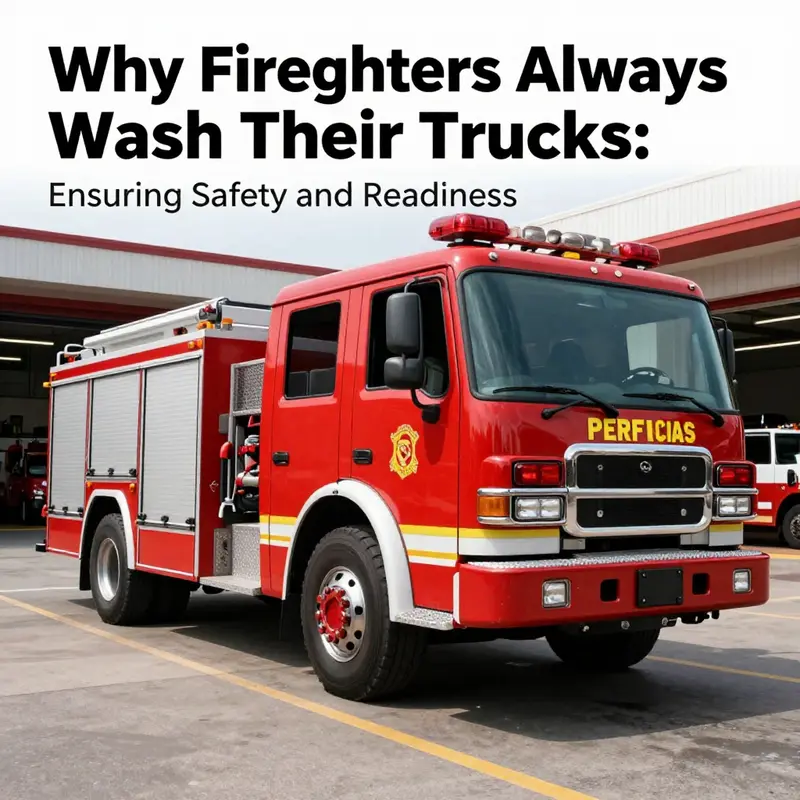
Washing fire trucks is often seen as a routine maintenance task, but its importance extends far beyond mere cleanliness. For fleet managers in logistics, trucking, and construction, understanding the rationale behind washing fire trucks can illuminate best practices for vehicle management. This article explores the critical reasons why firefighters regularly wash their trucks, detailing the importance of maintaining vehicle integrity and longevity, ensuring operational readiness, protecting crew health, and conducting routine maintenance checks.
Guardians on Wheels: The Quiet Power of Washes Behind Every Firefighter’s Readiness
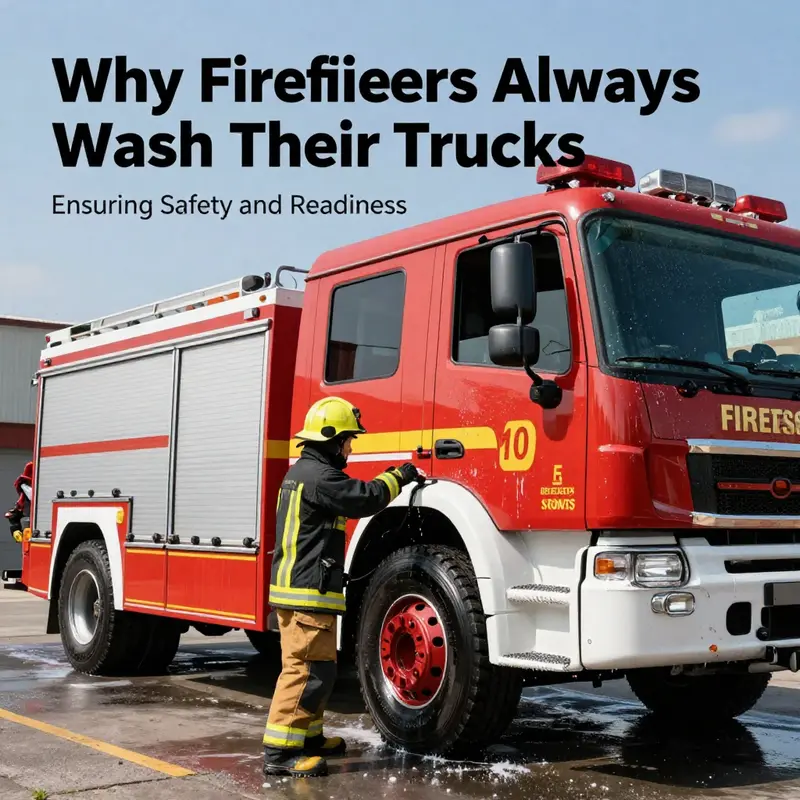
Fire trucks are more than steel and hoses. They are mobile lifelines, carefully built to withstand heat, pressure, and the unpredictable chaos of an emergency. When a call flashes across the station’s screens, these machines spring into action, carrying people, water, and the tools that save lives. Yet the moment the siren fades and the last ember smolders, the work does not end. In fact, it is only beginning. The regular washing of fire apparatus is not a vanity ritual or a cosmetic routine; it is a disciplined, essential practice that shields the vehicle, protects the crew, and preserves the team’s readiness for the next alarm. The habit of washing the truck after every mission—especially after hazmat responses or operations that leave the apparatus coated in soot, mud, or corrosive residues—is a quiet but powerful act of maintenance that reverberates through safety, performance, and longevity.
The first reason is structural and chemical durability. Fire trucks endure exposure to elements that would corrode lesser vehicles. After battles with flames, the body panels bear soot and chemical residues. In winter, the snowfall and road salt combine with moisture to form a corrosive cocktail that can silently gnaw at paint, undercarriage components, and fasteners. A high-pressure rinse followed by careful drying helps to remove salts, acids, and oxidants before they settle into crevices. This is not merely a matter of keeping paint pristine; it is a preventive shield against metal fatigue and hidden corrosion that can compromise the chassis, frame rails, and vital brackets. The consequences of neglecting such washdowns can accumulate over years, eroding the steel that carries hundreds of pounds of pump equipment, hoses, and water under extreme pressure. In practical terms, regular cleaning translates to fewer surprises when a truck is hauled into service for a response, and it extends the life of parts that would otherwise demand early replacement.
Beyond the metals, the cleaning ritual also guards the hoses, pumps, valves, and seals that define a fire engine’s reliability. The pump, a central piece of equipment, operates under high pressure and requires clean fluid pathways free of sediment and debris. Dirt, road grime, and chemical residues can cling to interior passages during and after a run. A thorough washdown, combined with targeted inspection of hoses and couplings, helps identify wear, cracks, or small leaks that could escalate under load. The practice becomes a form of early warning. While crews scrub away the grime, they also visually verify that hose beds close cleanly, that nozzles seat properly, and that clamps and connections align with the system’s design tolerances. When the vehicle is clean, the likelihood of unnoticed faults drops, and the team can deploy with confidence.
Hygiene and safety form a second, equally vital pillar of the washing habit. Firefighters work in close proximity to one another and to a complex array of gear that moves between truck and crew throughout a shift. The interior of a fire truck can accumulate bacteria, viruses, and other contaminants from calls involving smoke, fuel spills, or bodily fluids. Regular wiping down, cleaning, and disinfection help minimize the transfer of pathogens from one incident to the next and from one crew member to another. Clean surfaces and sanitized equipment mean that every grip, handle, and control is less likely to carry contaminants into the living spaces and vehicles that firefighters use every day. This is not solely about personal health; it is about operational health. An ill or temporarily sidelined crew reduces the team’s overall capability when lives hang in the balance. Keeping the interior clean, including the cabin, seating, and storage compartments, contributes to a safer, more reliable crew environment.
Regular cleaning also supports the reliability of onboard tools and safety features. The hoses, gauges, and electrical panels must respond immediately to the operator’s touch and command under pressure. Debris or chemical residues can mask signs of wear, conceal corrosion, or create false readings. A wash that incorporates a quick but thorough visual inspection allows crews to catch loose clamps, frayed hoses, cracked gaskets, or rust around the pump intake before those issues become emergencies. In this sense, washing becomes a practical checkpoint, a daily readiness ritual that blends hygiene with inspection. It aligns with broader maintenance protocols that many departments follow, where the act of cleaning is paired with a purposeful check of critical systems. The routine is not a mere afterthought; it is a deliberate, proactive approach to mission readiness.
The maintenance protocols surrounding fire apparatus extend well beyond the cleaning itself. In many departments, after each operation, crews perform a comprehensive wash to remove contaminants and replenish supplies. This is particularly important when the call involves hazardous materials, fuel spills, or floodwater, where residues can cling to surfaces and wheels, elevating corrosion risks and potentially affecting traction or braking performance. The process often includes a careful scrub of the exterior, a wipe of the interior surfaces, and a systematic inspection that doubles as a quick diagnostic scan. Vehicles age, and with age comes a heightened emphasis on preemptive care. Beyond a certain threshold, the maintenance program must scrutinize worn parts, seals, and driveline components with extra vigilance. The more a department emphasizes these checks, the more the fire truck remains robust and dependable across seasons and shifts.
A post-mission wash also keeps the vehicle visually and technically ready for deployment. Heightened state readiness means that when the next call arrives, no time is wasted on uncovering hidden grime, re-pressurizing a neglected system, or re-priming a stubborn pump. Cleanliness reduces the friction of transition from incident to incident, enabling crews to move swiftly and with certainty. This is especially important for wildland or industrial responses, where the environment may deposit stubborn debris and corrosive substances on the apparatus. In those settings, the ability to immediately deploy a clean, ready-to-run engine translates into real-world time saved in critical moments. The maintenance discipline thus becomes a cascade: wash, inspect, replenish, and redeploy, all in a rhythm that keeps the fleet dependable and the crew in control.
The social and cultural dimensions of truck washing deserve mention. Teams that embrace a regular cleaning routine tend to cultivate a shared sense of ownership and accountability. When everyone participates in the process, the truck becomes a common responsibility rather than a single technician’s burden. This shared practice reinforces a culture of care, where attention to detail is valued as a frontline safety measure. It also supports transparency: visible cleanliness and visible inspections reassure the community and leaders that the department treats its most valuable assets with seriousness and respect. In turn, this culture extends to how crews approach every call, every maintenance task, and every moment when seconds matter and nothing can be left to chance.
To connect this practice to the broader ecosystem of emergency response, consider the principle of fleet standardization and its role in readiness. A well-maintained, consistently cleaned fleet is easier to inspect, repair, and deploy across different shifts and teams. Standardized procedures reduce variability, so a captain on a night shift or a recruit on a day shift encounters the same expectations, the same checks, and the same clean baseline. The consistency builds confidence; it also simplifies training and auditing, helping departments meet collective standards and regulatory requirements without sacrificing speed or responsiveness. For a deeper look at how standardized fleets support emergency response, see the discussion on fleet standardization for emergency response.
The narrative of washing fire trucks is incomplete without acknowledging the role of official guidance and industry standards. Fire apparatus care is not an arbitrary practice; it rests on established principles that prioritize safety, reliability, and the longevity of critical assets. Agencies and professionals align their routines with documented best practices, recognizing that a disciplined washing and decontamination cycle is an essential element of risk management. When crews clean and inspect after every operation, they are applying a practical, day-to-day manifestation of professional responsibility that protects the vehicle, the equipment, and the people who rely on them. This is not idle maintenance; it is ongoing protection against corrosion, wear, and contamination, a form of preventative medicine for the fleet.
In this light, the act of washing becomes a bridge between yesterday’s response and tomorrow’s readiness. It marks the end of one mission and the quiet preparation for the next—the moment when the truck’s exterior looks back at the night’s heat and grit, and then, with deliberate care, looks forward to the next call. The vehicle is not merely cleaned for cleanliness; it is restored to its full state of operational health, its tools are sanitized and verified, and its systems are prepped for another day of life-saving work. The crew benefits as well. A clean cabin and tidy access routes reduce fatigue, minimize the risk of accidental exposure, and reinforce the discipline that every firefighter must carry onto the scene. In short, washing is a practical act with outsized returns: it safeguards hardware, protects health, speeds deployment, and sustains morale.
If readers wish to explore related themes of maintenance and readiness in a broader fleet context, a related discussion on fleet standardization for emergency response provides useful context and actionable guidance for departments seeking to harmonize their cleaning and maintenance protocols across the entire apparatus lineup. Consistency matters as much as the act of cleansing itself, and the synergy between hygiene, inspection, and preparedness creates a robust foundation for rapid, reliable response.
External reference: For broader standards and guidance on fire apparatus maintenance and safety, see the National Fire Protection Association resources on fire apparatus standards and updates. https://www.nfpa.org/Code-Development/2021-NFPA-1917-Fire-Apparatus-Standard-Update-FAQs
Why Clean Means Ready: How Washing Fire Trucks Keeps Firefighting Fast, Safe, and Reliable
A fire truck is more than a symbol of a station; it is a moving toolkit that must perform when the siren screams. Cleanliness is not vanity but a practical discipline that supports safety, reliability, and fast response. The wash ritual, done after a run or a rough shift, keeps the fleet ready for the next emergency. Each spray of water and wipe of a hose coupling contributes to a state of readiness that is visible and measurable.
The case for washing begins with the elements. Rain, mud, road salt, and soot promote corrosion and wear. In winter, salt that clings to the undercarriage can accelerate rust and degrade coatings. A regular wash removes these residues, protecting metal, fittings, and protective coatings and extending the life of the chassis and pumps.
Washing is also a built-in inspection. As crews scrub and rinse, they check hoses for kinks and wear, inspect tires for tread and cuts, test gauges and switches, and note signs of leaks or corrosion. This joint task of cleaning and inspection catches problems early and supports a smoother maintenance cycle.
Beyond the hardware, the wash protects crew health and safety. The cab and compartments can harbor bacteria and other contaminants from prior calls. A disciplined cleaning routine reduces contamination risk and keeps the crew fit for duty.
Finally, washing supports fleet readiness. Standardizing washing practices across a department reduces variability and improves reliability when units work together on multi-unit incidents. A clean, well-maintained truck is a sign that the entire system is prepared to respond fast and safely.
In short, the simple act of washing a fire truck is a practical investment: it preserves equipment, guards health, and strengthens readiness so that when the alarm sounds, the response is quick, predictable, and capable.
Clean Trucks, Safe Crews: How Decontamination Protects Health After Every Alarm
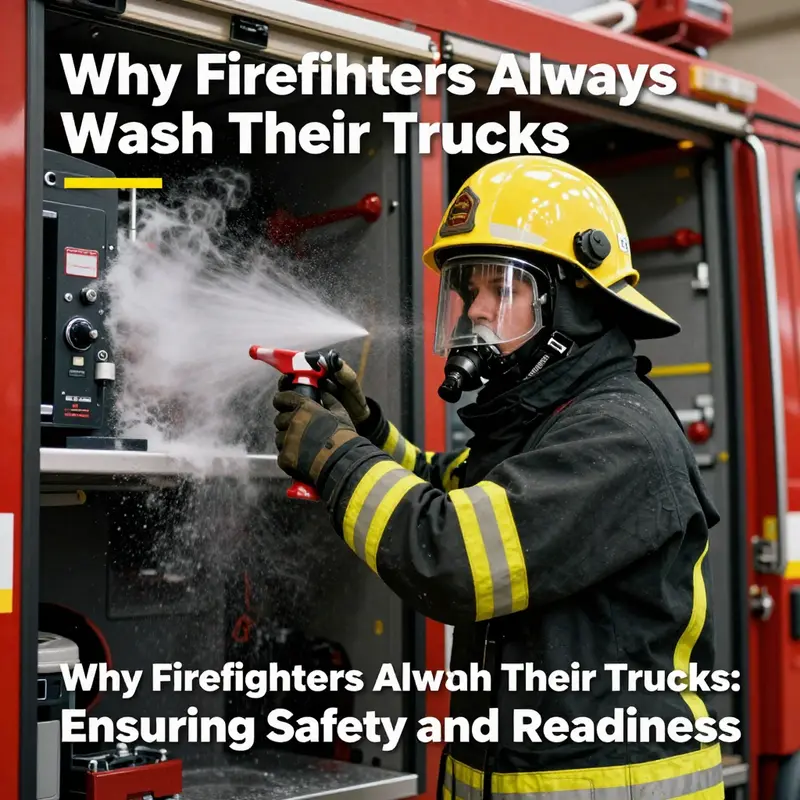
When the siren fades and the last ember dies, the work of safeguarding lives is not finished. The truck returning to the bay bears more than soot and water spray; it carries residues from the scene that can threaten the very people who will respond next. This is why washing the engine is not a cosmetic ritual but a critical health and safety practice. A fire engine is a moving laboratory, and every call writes a new chemical, biological, and particulate fingerprint across its surfaces. The truck’s exterior might gleam again after a wash, but the real protection happens inside: in the compartments, hoses, pumps, and, most importantly, the air that feeds the crew when they suit up for the next mission. Post-incident decontamination is a shield against a host of hazards that can linger long after the flames are out and the scene is darkened by emergency scene tape and the distant wail of ambulances receding into the night. Firefighters face a complex spectrum of risks after an incident. Toxic chemicals may spill onto roads or into structures; biological contaminants from fires and releases can cling to fabric and metal; debris from collapse or firefighting operations can become embedded in crevices that are hard to see and harder to reach. If these hazards are allowed to persist, they can become a persistent exposure risk for the crew as soon as the doors open and the gear comes off. In the most visceral terms, washing the truck is about preventing the next exposure, and that means washing away the traces of risk that can travel back into the station and onto the turnouts and scbas that will be used again. The health stakes are high. Respiratory issues can arise from inhaling fine particulates and chemical residues; skin irritation and dermatitis can develop from contact with contaminants; more insidious, long-term exposure may contribute to chronic conditions that undermine a firefighter’s fitness for duty. The job is physically demanding and mentally taxing; any compromise to health or stamina has ripple effects for the entire crew and for the communities they serve. The emphasis on decontamination reflects a mature, evidence-informed approach to occupational health, one that prioritizes prevention as a core element of readiness. The practice is not merely about removing visible grime or restoring the vehicle’s aesthetic; it is about creating a safer work environment that protects firefighters’ lungs, skin, and immune systems, while keeping gear and equipment in peak operating condition. The decontamination process in its most effective form is thorough, systematic, and tightly integrated with the vehicle’s overall maintenance regime. It begins with the gross removal of residues, mud, soot, and fluids that can obscure surfaces and harbor micro-contaminants. Yet it does not stop at surface cleaning. Decontamination extends into every compartment where contaminants may accumulate, including hoses, pumps, valves, and interior surfaces that are often overlooked when the truck is in motion or simply parked in the bay. The rationale is clear: even seemingly inert residues can become airborne or embedded in porous materials during subsequent operations. That is especially true for protective gear and equipment carried in the truck’s compartments, where chemical residues can cling to fabrics and plastics and create a reservoir for exposure when the gear is donned again. The role of decontamination in maintaining gear integrity should not be underestimated. Self-contained breathing apparatus and respirator components require specialized attention because contaminants can degrade performance if residues remain. The cleaning protocols for such equipment are designed to minimize any potential compromise of fit, seal, or breathing quality. The principle is straightforward: clean gear thoroughly, and you reduce the chance that contaminants will transfer from one incident to the next. In practice, this means a deliberate, methodical workflow that begins with containment and ends with verification. After a scene, crews often perform a staged cleaning that starts with removing contaminants from exterior surfaces and then proceeds to interior areas where toxic residues might accumulate. A high-pressure wash initiated in a controlled decon area or in a dedicated decontamination vehicle can be used to flush away particulates from undercarriages and wheel wells where moisture and grit are stubbornly trapped. The use of chemical neutralizers and specialty cleaners is guided by the types of contaminants encountered. The goal is not to scorch metal or erode paint but to neutralize hazardous residues safely and effectively while preserving the vehicle’s structural integrity. It is the careful balance of aggressive cleaning and protective care that ensures the truck remains reliable in the short term and durable over the long haul. The broader significance of decontamination emerges when considering the station as a system rather than a collection of individual duties. The truck is a moving workplace, and its cleanliness directly influences the health of the people who work there. A clean interior reduces the microbial load in the crew compartments, which in turn reduces the likelihood of cross-contamination from one shift to the next. The crew’s health hinges on the consistency of this practice, and consistency is achieved through routine, standardized cleaning. It is this routine that helps normalize the expectation of safety across every shift. In some departments, decontamination has evolved into a coordinated operation supported by specialized equipment and dedicated vehicles. These assets are equipped with high-pressure wash systems and even chemical neutralizers designed to handle the most challenging residues. Rather than relying on ad hoc scrubbing with general-purpose detergents, the decontamination process is now a disciplined protocol. Such protocols are not invented in a vacuum; they reflect decades of experience and the accumulation of best practices in the fire service. The science behind decontamination is complemented by a culture of accountability. It is not enough to scrub the exterior until it shines; the team must inspect all accessible and hidden areas for signs of wear, corrosion, or residue. If a leak, a compromised seal, or a crack in a container is found, it is logged, repaired, and re-tested. The step from observation to repair is a crucial one because small, undetected problems can become serious failures under the high demands of a fast, unpredictable rescue mission. In this way, washing is inseparable from ongoing maintenance. The wash underlines that maintenance is not a separate schedule but a continuous, integrated activity. The visual cues during a wash—leaks around fittings, fractures in hoses, or salt deposits near joints—are important indicators of service life. The crew learns to translate these cues into action quickly, coordinating with technicians to implement repairs before the next deployment. This integrated approach minimizes downtime and keeps the fleet ready for rapid response. The emphasis on post-incident decontamination also aligns with a larger conversation about protecting the health of the firefighting team as an occupational standard. NFPA guidelines underscore the necessity of decontamination soon after exposure events to minimize risk. The timing matters: the sooner contaminated materials are removed, the lower the chance that hazardous residues will linger and be flung into the air during subsequent operations or during routine vehicle checks. The guidelines consistently encourage priority cleaning of equipment that comes into direct contact with contaminants, including hoses, nozzles, pumps, and interior surfaces. In practice, this translates into a disciplined routine: after a call, the crew performs a rapid decontamination of the exterior, followed by a more thorough interior clean, and then the gear and equipment are decontaminated using established procedures before the truck is redeployed. The connection between health, safety, and cleanliness extends beyond the immediate crew. It touches the service culture and the community’s trust. When the public sees a well-maintained, clean apparatus returning from a call, it reinforces the sense that safety protocols are comprehensive and that the department takes precaution seriously. There is a concrete, tangible link between washing the truck and the ongoing protection of the people who depend on firefighters in emergencies. This is why the practice is reinforced through training, drills, and routine practice. New recruits learn the reasons behind every step of the decontamination protocol, often hearing veterans describe close calls where residues would have caused issues if not properly removed. The education is practical and experiential: you learn to handle a hose and a pump not just for performance in the field but for the health and well-being of your team. It is through this lens that the charging argument for washing gains its moral force. The aim is not to pursue vanity or to engage in a ritual; it is to safeguard health, ensure reliability, and preserve readiness. In the broader scheme, this chapter of care for the truck is an extension of the department’s commitment to its people. The preparation for the next call begins with a clean slate. The interior is sanitized; residues are neutralized; and all consumables are replenished so that the team can re-engage immediately with the same energy and focus that characterize a well-run operation. The careful orchestration of cleaning, decontamination, inspection, and replenishment becomes a single, continuous loop that keeps the fleet alive and the crew healthy. For readers who want to connect these practices to broader industry standards, it is worth noting that many departments view washing and decontamination as part of a compliance framework. The practice reflects a broader obligation to maintain equipment and protect personnel in line with evolving safety expectations for vehicle operation and emergency response. This perspective helps explain why washing a fire truck is so much more than a matter of cleanliness; it is a careful, science-informed approach to preventing injury, extending equipment life, and preserving a crew’s capacity to face the unexpected with confidence. To learn more about how these standards are operationalized within the industry and how departments balance efficiency with safety, see the discussion on truck wash industry compliance and emissions regulations. truck wash industry compliance and emissions regulations. Additionally, the formal standard that guides post-incident wash and decontamination practices can be explored in depth through NFPA 1917, which provides the official requirements for automotive fire apparatus wash and decontamination. For a detailed, authoritative specification, refer to nfpa 1917: standard for automotive fire apparatus – wash and decontamination. https://www.nfpa.org/codes-and-standards/all-codes-and-standards/list-of-codes-and-standards/detail?code=1917
Shining the Shield: How Routine Washing Keeps Fire Trucks Ready for Action
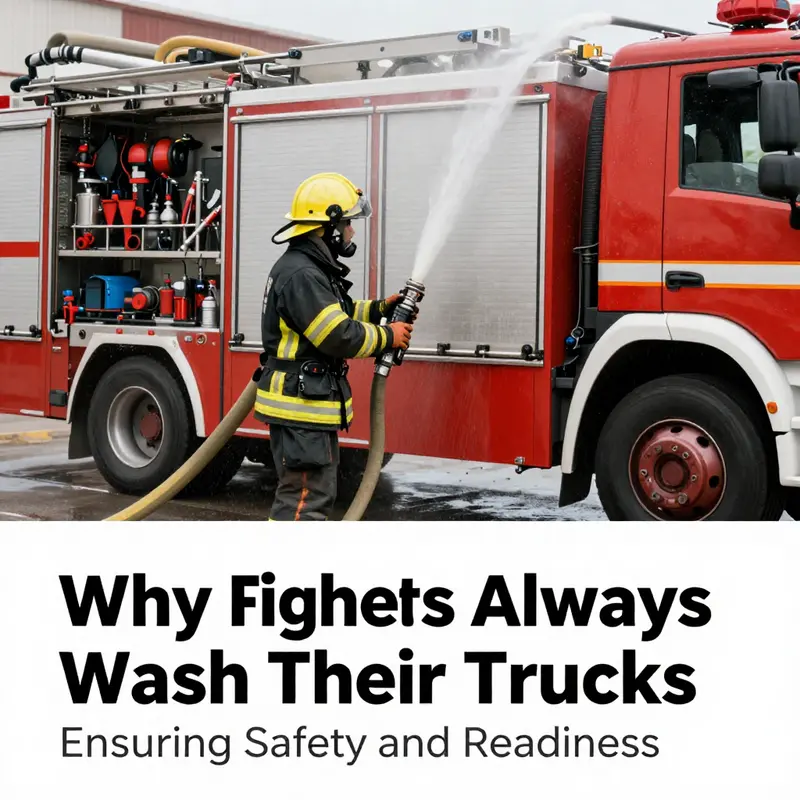
Fire crews fight fires with vehicles that look clean on the outside yet carry a long, hidden ledger of wear, exposure, and deferred maintenance. The truck is not merely a conveyance; it is a mobile workshop, a protective shell for the crew, and a critical link in a chain that must stay unbroken from the moment a call comes in to the moment the next alarm sounds. In this light, routine washing emerges as more than a cosmetic ritual. It is a disciplined practice that safeguards metal and rubber, preserves sensitive equipment, and reinforces the rhythm of readiness that underpins every successful response. When people ask why firefighters always wash their trucks, they are really asking how departments translate a visible act into a suite of operational guarantees. The answer lies in a sequence of interconnected reasons that begin with the simple act of washing and extend into every layer of vehicle maintenance, crew health, and mission capability. These reasons do not stand alone; they mesh with established safety standards, departmental culture, and the day to day realities of field work whenever engines, pumps, and hoses come under the heavy demands of duty.
From the moment a fire engine leaves the station, it begins a process of exposure that tests its resilience in ways the average vehicle rarely encounters. Rain, snow, mud, road grime, and the corrosive byproducts of combustion all press against the metalwork and undercarriage. In winter climates, road salts and de-icing chemicals intensify this assault, accelerating corrosion on vulnerable seams, fasteners, and painted surfaces. The need to remove corrosive residues promptly is not just about keeping paint shiny; it is a protective measure that slows gradual deterioration of structural members and protective coatings. A 2021 article from FireRescue1 highlights a practical detail often overlooked by the outside observer: after a winter call, crews must wash the truck immediately to remove acidic and corrosive materials that could otherwise linger in crevices and heat-exchange zones. The point is not vanity but preventive care, a frontline defense against rust and fatigue cracking that could, in time, undermine a vehicle’s livability and its ability to perform.
Yet cleanliness serves a second, closely tied purpose: maintaining operational readiness. After a response, especially those involving hazardous materials or heavy debris, the interior and exterior of the vehicle demand thorough cleaning and sanitization. This is not merely about appearance; it is about ensuring every tool is ready for deployment in the next incident. Modern fire apparatus carry a host of sensitive components—pumps, hoses, nozzles, valve controls, electronic dashboards, and electrical connectors—that rely on a clean environment to function reliably. The 2026 maintenance guidelines for wildland fire engines, which emphasize post-mission cleaning as part of an overall readiness protocol, reinforce a core principle: grime is a risk to performance. When dirt accumulates in the pump area or along a hose rack, it can obscure inspection signs, conceal wear, and complicate quick access during an emergency. Cleaning serves as a practical check, a time when crews can wipe away debris and revisit the equipment with fresh eyes.
Hygiene and crew safety form another crucial axis of the washing discipline. Fire trucks operate in environments that may expose personnel to biohazards, soot, and chemical residues from burns, spills, or exposure to hazardous materials. Regular interior cleaning and disinfection of control panels, seating surfaces, and equipment storage areas reduce the likelihood of cross-contamination and the spread of illness within a crew that might already be stressed by fatigue and injury. The rationale is straightforward: a clean, sanitized cockpit and tool bays help ensure that a wounded or fatigued firefighter can rely on clean controls and predictable equipment handling. This is especially important when crews must perform under pressure, where even a small lapse in hygiene can contribute to a broader health risk in the tight confines of a fire station or a mobile command post. The emphasis on hygiene within a routine washing cycle also supports morale and concentration, two factors that influence decision making in the most demanding moments of a response.
A broader, practical benefit of regular washing emerges in the realm of response efficiency. A clean vehicle is a clear vehicle. Debris and clutter can hide equipment, obscure labels, or obstruct rapid access to tools that are time-sensitive in emergencies. When hoses coil neatly, nozzles are seized in their proper holders, and compartments are wiped down and reorganized as part of the wash process, firefighters develop and maintain a tactile sense of where everything should be. This familiarity translates into faster, safer actions during a crisis. It is not merely about grabbing the right tool; it is about reaching, recognizing, and using it with minimal hesitation. Over time, this translates into measurable improvements in response times, a vital factor when every second matters for life safety and property conservation.
Maintenance philosophy and safety standards also shape the practice of washing. Across departments, there is a recognition that cleaning is part of a larger maintenance ecosystem. Visual inspections routinely accompany the wash, turning the process into a dual diagnostic session. While crews rinse away grime, they also check for leaks, worn tires, damaged lights, corroded fittings, or signs of excessive vibration. The discipline of paired tasks—cleaning and inspection—helps identify issues early before they become costly repairs or dangerous failures. When a technician flags a leaking hydraulic line or a frayed electrical cable during a wash, the incident can be contained and scheduled for repair, preventing unpredictable downtime that could leave a fire engine unavailable when needed. This proactive approach aligns with broad standards that authorities impose for vehicle maintenance, and it resonates with the culture of accountability that characterizes many fire departments. The weekly vehicle days, mentioned in maintenance reports and in line with NFPA safety expectations, provide a structured cadence for these examinations, reinforcing the message that maintenance is an ongoing habit rather than an episodic chore.
The ongoing dialogue between washing, inspection, and readiness reflects a deeper understanding of how a department sustains its capability to protect lives and property. When a crew commits to a routine of washing after every call, they are also committing to a habit of vigilance. They acknowledge that neglect in one area can ripple into another, that the cost of a small oversight can multiply across a fleet and across a shift. The wash becomes a ritual that strengthens discipline and cohesion, a moment when individuals synchronize their actions with shared standards of care and safety. The cultural weight of this habit should not be underestimated. In many departments, the same team that hands a hose to a rookie at the end of a shift is the team that must trust that hose the next morning. Regular washing reinforces that trust by ensuring that equipment remains familiar, reliable, and ready to perform in a very short window of time between alarm and arrival on the scene.
From a practical standpoint, the act of washing is a flexible conduit for broader maintenance goals. It helps extend vehicle longevity by mitigating the cumulative effects of exposure to harsh weather, road debris, and corrosive compounds. It supports the protection of electrical systems by removing salts and moisture that could promote corrosion or short circuits. It preserves the integrity of paint and protective coatings, reducing the likelihood that rust will creep through to structural members. It also supports the longevity of seals, gaskets, and lubricants that keep moving parts free of grit and functioning smoothly. All these factors contribute to a lower total cost of ownership for the fleet. They minimize unscheduled downtime, reduce the frequency of major overhauls, and improve the probability that a truck will be ready when an incident demands it. In essence, routine washing is a cost-aware practice that pays dividends through reliable service and predictable maintenance needs. The more a department commits to this habit, the more the equipment behaves like a trusted partner rather than a brittle tool that demands spare parts and complicated logistics at the worst possible moment.
In tying these threads together, it is helpful to acknowledge the connection to the concept of fleet standardization for emergency response. When a department emphasizes uniform cleaning practices, standardized inspection protocols, and consistent tool placement, it creates a more predictable operating environment. Crews can train with a shared vocabulary and a common expectation of how equipment should look and feel after a wash. This coherence reduces variability in equipment handling, enabling faster, more confident action under stress. A practical example of this principle is the practice of aligning wash routines with documented standards and checklists. By following a consistent sequence—wash, wipe, inspect, replenish—crews can quickly verify the status of water, foam, and containment systems, and they can confirm that consumables are replenished. The alignment between routine washing and standardized maintenance is not accidental; it is a deliberate design choice that strengthens resilience in the field. For readers who want to explore this connection further, the linked resource on fleet standardization for emergency response offers a detailed discussion of how standardization underpins readiness and rapid decision-making in real-world operations.
The habit of washing thus sits at the intersection of safety, performance, and stewardship. It is a visible reminder that a fire truck is more than a machine; it is a living part of a larger safety system that depends on routine care to stay effective. When the bell sounds and a crew jumps into a clean, organized cab, the confidence that the equipment will perform as needed is not just a belief but a product of countless small, deliberate actions that begin with a wash. The discipline of cleaning translates into measurable returns: fewer breakdowns, quicker deployments, healthier crews, and a fleet that remains ready through seasons of extreme demand. In that sense, washing is not ancillary; it is a core practice that embodies the philosophy of prevention that underpins all good fire service work.
External resources and standards underpin this practice, reminding readers that the focus on cleanliness is grounded in formal safety programs and maintenance codes. For departments, the washing routine represents a practical, repeatable ritual that yields safer, more reliable gear and, ultimately, better outcomes for communities during emergencies. The way a truck shines after a thorough clean is not merely an image aesthetic; it is a tangible signal that the vehicle has been cared for, checked, and prepared to perform under pressure. The routine is a reminder that readiness is an ongoing project, one that hinges on daily decisions and the disciplined habits of every member of the crew. The truck’s gleam becomes a quiet testament to teamwork and the steady discipline that makes life-saving work possible, even when the weather is unkind and the clock is ticking.
External resource: https://www.nfpa.org/Code-and-Standards/Detailed-Information/NFPA-1917/2023-Code-Changes?source=google
Final thoughts
Washing fire trucks is a fundamental practice with significant implications. From maintaining vehicle integrity and ensuring operational readiness to protecting crew health and conducting routine maintenance checks, the process is integral to fleet management in emergency services. For logistics and fleet managers, adopting similar practices can ensure your vehicles remain safe, effective, and ready for any challenges they may face. The lessons learned from firefighters can inform and enhance management strategies for other fleet operations.